
CHAPTER XXXIV:老練な軍馬 のポイント
第34章では、ブラック・ビューティーがロンドンで出会った年老いた馬から、かつて軍馬として戦場にいたころの話を聞きます。華やかに見える軍馬の過去の裏には、命の危険、けが、激しい恐怖、そして人間の戦争に巻き込まれる馬たちの苦しみがありました。
読みどころは、馬の仕事が馬車を引くことだけでなく、戦争の道具にされることもあったという広がりです。老いた軍馬の語りは、動物が人間社会の都合に従わされてきた歴史を感じさせ、ブラック・ビューティーの物語にさらに重い現実感を与えます。
この章の英語学習ポイントを開く
- war horse:軍馬。戦場で働かされた馬の過去を示す、この章の中心語です。
- battle:戦い、戦場。老いた馬が語る危険な経験を理解するために重要です。
- wounded:傷ついた、負傷した。戦争が馬の体に残す傷を表す語です。
- charge:突撃。軍馬が兵士を乗せて敵へ向かう場面の緊迫感を表します。
- service:奉公、勤務、軍務。馬が人間のために働かされる長い年月を考えるうえで大切な表現です。
カラフル対訳で紹介している作品について
カラフル対訳で紹介している作品は、すべてパブリックドメインの作品です。
このサイトで使われている作品は、著作権の切れた名作などの全文を電子化し、インターネット上で公開している Project Gutenberg(プロジェクト・グーテンベルク)、 および朗読音声を公開している LibriVox(リブリヴォックス/朗読図書館) の作品を出典としています。
原文はProject Gutenberg、音声はLibriVoxで公開されているパブリックドメイン作品を出典としています。
『黒馬物語』Chapter XXXIV: An Old War Horse
『黒馬物語』第34章を、英単語の意味が直感的に入るように色分けしながら、英文と日本語訳をセットで読める形式に整えています。
表示設定
カテゴリ別ハイライト
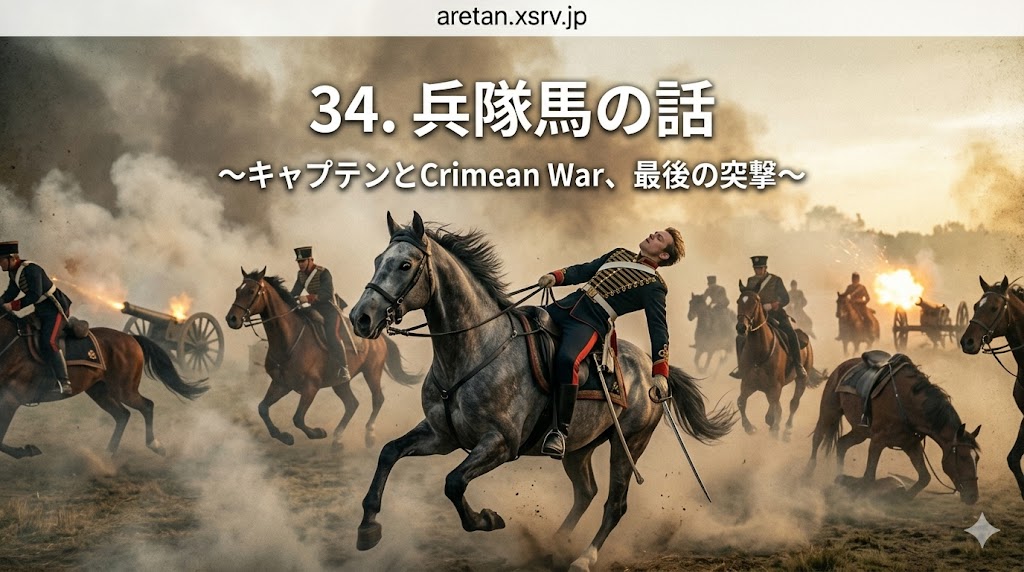
Captain had been broken in and trained for an army horse.
キャプテンは軍馬として馴らされ、訓練されていました。
His first owner was an officer of cavalry going out to the Crimean war.
彼の最初の主人は、クリミア戦争へ向かう騎兵隊の将校でした。
He said he quite enjoyed the training with all the other horses.
彼は、ほかの馬たちと一緒に受ける訓練をかなり楽しんでいたと言いました。
Trotting together, turning together, to the right hand or the left.
一緒に速歩し、右へ左へと一緒に向きを変える訓練です。
Halting at the word of command, or dashing forward at full speed at the sound of the trumpet or signal of the officer.
号令で停止したり、ラッパの音や将校の合図で全速力で突進したりする訓練でした。
He was, when young, a dark, dappled iron-gray, and considered very handsome.
若いころの彼は、暗いまだら模様の鉄灰色で、とても美しいと見なされていました。
His master, a young, high-spirited gentleman, was very fond of him.
彼の主人は、若く気概のある紳士で、彼をとてもかわいがっていました。
And treated him from the first with the greatest care and kindness.
そして最初から、最大限の注意と親切をもって彼を扱いました。
He told me he thought the life of an army horse was very pleasant.
彼は、軍馬の生活はとても楽しいものだと思っていた、と私に言いました。
But when it came to being sent abroad over the sea in a great ship, he almost changed his mind.
しかし、大きな船で海を越えて海外へ送られる段になると、彼はほとんど考えを変えそうになりました。
“That part of it,” said he, “was dreadful!”
「その部分は」と彼は言いました。「恐ろしいものだった!」
“Of course we could not walk off the land into the ship.”
「もちろん、私たちは陸から船へ歩いて入ることはできなかった」
“So they were obliged to put strong straps under our bodies.”
「そのため、彼らは私たちの体の下に強い吊り革を通さなければならなかった」
“And then we were lifted off our legs in spite of our struggles.”
「そして私たちは、もがいたにもかかわらず、脚から持ち上げられた」
“And were swung through the air over the water, to the deck of the great vessel.”
「そして水の上を空中で揺らされ、大きな船の甲板へ運ばれた」
“There we were placed in small close stalls, and never for a long time saw the sky, or were able to stretch our legs.”
「そこで私たちは小さく狭苦しい馬房に入れられ、長いあいだ空を見ることも、脚を伸ばすこともできなかった」
“The ship sometimes rolled about in high winds, and we were knocked about, and felt bad enough.”
「船は時々強風で揺れ、私たちはあちこちにぶつけられ、かなり具合が悪くなった」
“However, at last it came to an end, and we were hauled up, and swung over again to the land.”
「しかし、ついにそれも終わり、私たちは引き上げられ、再び揺らされて陸へ移された」
“We were very glad, and snorted and neighed for joy, when we once more felt firm ground under our feet.”
「再び足の下にしっかりした地面を感じたとき、私たちはとても喜び、うれしさに鼻を鳴らし、いなないた」
“We soon found that the country we had come to was very different from our own.”
「私たちはすぐに、やって来た国が自分たちの国とはまったく違うことに気づいた」
“And that we had many hardships to endure besides the fighting.”
「そして戦闘以外にも、多くの苦難に耐えなければならないこともわかった」
“But many of the men were so fond of their horses that they did everything they could to make them comfortable.”
「しかし多くの兵士たちは馬をとても大切にしていたので、馬を快適にするためにできることは何でもしてくれた」
“In spite of snow, wet, and all things out of order.”
「雪や湿気、そしてあらゆる混乱にもかかわらず」
“But what about the fighting?” said I.
「でも戦闘はどうだったのですか」と私は言いました。
“Was not that worse than anything else?”
「それが何よりもひどかったのではありませんか」
“Well,” said he, “I hardly know.”
「そうだな」と彼は言いました。「よくわからない」
“We always liked to hear the trumpet sound, and to be called out, and were impatient to start off.”
「私たちはいつもラッパの音を聞き、呼び出され、出発したくてたまらなくなるのが好きだった」
“Though sometimes we had to stand for hours, waiting for the word of command.”
「もっとも、時には号令を待ちながら、何時間も立っていなければならなかったが」
“And when the word was given we used to spring forward as gayly and eagerly as if there were no cannon balls, bayonets, or bullets.”
「そして号令が出ると、まるで砲弾も銃剣も銃弾も存在しないかのように、私たちは陽気に勢いよく飛び出したものだった」
“I believe so long as we felt our rider firm in the saddle, and his hand steady on the bridle, not one of us gave way to fear.”
「乗り手が鞍にしっかり座り、手綱を握る手が安定していると感じているかぎり、私たちの中に恐怖に負ける者は一頭もいなかったと思う」
“Not even when the terrible bomb-shells whirled through the air and burst into a thousand pieces.”
「恐ろしい榴弾が空中をうなりながら飛び、千の破片に破裂したときでさえも」
“I, with my noble master, went into many actions together without a wound.”
「私は気高い主人とともに、多くの戦闘に出たが、傷を負うことはなかった」
“And though I saw horses shot down with bullets, pierced through with lances, and gashed with fearful saber-cuts…”
「そして、馬たちが銃弾で撃ち倒され、槍で貫かれ、恐ろしいサーベルの斬撃で切り裂かれるのを見たが……」
“Though we left them dead on the field, or dying in the agony of their wounds, I don’t think I feared for myself.”
「彼らを戦場に死んだまま、あるいは傷の苦悶の中で瀕死のまま残していったにもかかわらず、私は自分自身のことは恐れていなかったと思う」
“My master’s cheery voice, as he encouraged his men, made me feel as if he and I could not be killed.”
「主人が部下を励ます陽気な声を聞くと、私と彼は殺されるはずがないように感じた」
“I had such perfect trust in him that while he was guiding me I was ready to charge up to the very cannon’s mouth.”
「私は彼を完全に信頼していたので、彼が私を導いているかぎり、大砲の口元にまで突撃する覚悟があった」
“I saw many brave men cut down, many fall mortally wounded from their saddles.”
「私は多くの勇敢な人々が斬り倒され、多くの人が致命傷を負って鞍から落ちるのを見た」
“I had heard the cries and groans of the dying.”
「私は死にゆく者たちの叫びとうめき声を聞いた」
“I had cantered over ground slippery with blood.”
「私は血で滑りやすくなった地面の上を駆け足で進んだ」
“And frequently had to turn aside to avoid trampling on wounded man or horse.”
「そして、負傷した人や馬を踏みつけるのを避けるため、何度も横へそれなければならなかった」
“But, until one dreadful day, I had never felt terror; that day I shall never forget.”
「しかし、ある恐ろしい日まで、私は恐怖を感じたことがなかった。その日を私は決して忘れない」
Here old Captain paused for awhile and drew a long breath.
ここで老キャプテンはしばらく黙り、長く息を吸いました。
I waited, and he went on.
私は待ちました。そして彼は話を続けました。
“It was one autumn morning, and as usual, an hour before daybreak our cavalry had turned out.”
「それはある秋の朝のことだった。いつものように夜明けの一時間前、私たちの騎兵隊は集合していた」
“Ready caparisoned for the day’s work, whether it might be fighting or waiting.”
「その日の仕事が戦闘であれ待機であれ、すぐに動けるよう馬具を整えていた」
“The men stood by their horses waiting, ready for orders.”
「兵士たちは馬のそばに立ち、命令を待っていた」
“As the light increased there seemed to be some excitement among the officers.”
「明るくなるにつれ、将校たちの間に何かざわめきがあるように見えた」
“And before the day was well begun we heard the firing of the enemy’s guns.”
「そして一日が本格的に始まる前に、敵の大砲の砲撃が聞こえた」
“Then one of the officers rode up and gave the word for the men to mount.”
「その時、一人の将校が馬で近づき、兵士たちに騎乗の号令を出した」
“And in a second every man was in his saddle, and every horse stood expecting the touch of the rein, or the pressure of his rider’s heels.”
「すると一瞬で全員が鞍に乗り、すべての馬が、手綱の合図や乗り手のかかとの圧力を待って立っていた」
“All animated, all eager.”
「皆が活気づき、皆が意気込んでいた」
“But still we had been trained so well that, except by the champing of our bits, and the restive tossing of our heads from time to time, it could not be said that we stirred.”
「それでも私たちはよく訓練されていたので、はみをかむ音や、時々落ち着かず頭を振ることを除けば、動いたとは言えなかった」
“My dear master and I were at the head of the line.”
「私の親愛なる主人と私は、隊列の先頭にいた」
“And as all sat motionless and watchful, he took a little stray lock of my mane which had turned over on the wrong side.”
「そして皆が身動きせず注意深く座っている中、彼は反対側に倒れていた私のたてがみの小さな房を取りました」
“Laid it over on the right, and smoothed it down with his hand.”
「それを正しい側へ戻し、手でなでつけたのです」
“Then patting my neck, he said, ‘We shall have a day of it to-day, Bayard, my beauty; but we’ll do our duty as we have done.’”
「それから私の首をなでて、彼は言いました。『今日は大変な一日になりそうだ、ベイヤード、私の美しい馬よ。しかし、これまで通り、我々は務めを果たそう』」
“He stroked my neck that morning more, I think, than he had ever done before.”
「その朝、彼はこれまでになく何度も私の首をなでてくれたと思います」
“Quietly on and on, as if he were thinking of something else.”
「まるで何か別のことを考えているかのように、静かに何度も」
“I loved to feel his hand on my neck, and arched my crest proudly and happily.”
「私は彼の手が首に触れるのを愛し、誇らしく幸せな気持ちで首筋を弓なりにしました」
“But I stood very still, for I knew all his moods, and when he liked me to be quiet, and when gay.”
「しかし私はとても静かに立っていました。私は彼の気分をすべて知っており、彼が私に静かでいてほしい時と、陽気でいてほしい時を知っていたからです」
“I cannot tell all that happened on that day, but I will tell of the last charge that we made together.”
「その日に起こったことをすべて話すことはできませんが、私たちが一緒に行った最後の突撃について話しましょう」
“It was across a valley right in front of the enemy’s cannon.”
「それは、敵の大砲の真正面にある谷を横切るものでした」
“By this time we were well used to the roar of heavy guns, the rattle of musket fire, and the flying of shot near us.”
「このころには、私たちは重砲の轟音、マスケット銃の連続音、そして近くを飛ぶ弾にもすっかり慣れていました」
“But never had I been under such a fire as we rode through on that day.”
「しかし、その日に私たちが駆け抜けたほどの砲火を受けたことは、かつてありませんでした」
“From the right, from the left, and from the front, shot and shell poured in upon us.”
「右から、左から、そして前から、砲弾と榴弾が私たちに降り注ぎました」
“Many a brave man went down, many a horse fell, flinging his rider to the earth.”
「多くの勇敢な兵士が倒れ、多くの馬が乗り手を地面へ投げ出して倒れました」
“Many a horse without a rider ran wildly out of the ranks.”
「乗り手のいない多くの馬が、隊列から狂ったように走り出しました」
“Then terrified at being alone, with no hand to guide him, came pressing in among his old companions, to gallop with them to the charge.”
「そして導いてくれる手もなく一頭きりになることに怯え、昔の仲間の中へ押し寄せ、彼らとともに突撃へ駆けようとしました」
“Fearful as it was, no one stopped, no one turned back.”
「それは恐ろしいものでしたが、誰も止まらず、誰も引き返しませんでした」
“Every moment the ranks were thinned.”
「一瞬ごとに隊列は薄くなっていきました」
“But as our comrades fell, we closed in to keep them together.”
「しかし仲間たちが倒れると、私たちは隊列を保つために間を詰めました」
“And instead of being shaken or staggered in our pace our gallop became faster and faster as we neared the cannon.”
「そして、大砲に近づくにつれ、私たちの走りは動揺したりよろめいたりするどころか、ますます速くなりました」
“My master, my dear master was cheering on his comrades with his right arm raised on high.”
「私の主人、私の親愛なる主人は、右腕を高く上げて仲間たちを励ましていました」
“When one of the balls whizzing close to my head struck him.”
「その時、私の頭のすぐ近くをうなりながら飛んできた砲弾の一つが彼に当たりました」
“I felt him stagger with the shock, though he uttered no cry.”
「彼は叫び声を上げませんでしたが、私は彼が衝撃でよろめくのを感じました」
“I tried to check my speed, but the sword dropped from his right hand.”
「私は速度を落とそうとしました。しかし剣が彼の右手から落ちました」
“The rein fell loose from the left, and sinking backward from the saddle he fell to the earth.”
「手綱は左手からゆるんで落ち、彼は鞍から後ろへ沈むように倒れて地面へ落ちました」
“The other riders swept past us, and by the force of their charge I was driven from the spot.”
「ほかの騎手たちが私たちのそばを押し流すように通り過ぎ、その突撃の勢いによって、私はその場から押し出されました」
“I wanted to keep my place by his side and not leave him under that rush of horses’ feet, but it was in vain.”
「私は彼のそばに留まり、馬の足の奔流の下に彼を置き去りにしたくありませんでした。しかしそれは無駄でした」
“And now without a master or a friend I was alone on that great slaughter ground.”
「そして今、主人も友もなく、私はその大きな殺戮の場に一頭きりでした」
“Then fear took hold on me, and I trembled as I had never trembled before.”
「その時、恐怖が私をつかみ、私はこれまでにないほど震えました」
“And I too, as I had seen other horses do, tried to join in the ranks and gallop with them.”
「そして私も、ほかの馬たちがしていたように、隊列に加わって一緒に駆けようとしました」
“But I was beaten off by the swords of the soldiers.”
「しかし私は兵士たちの剣で追い払われました」
“Just then a soldier whose horse had been killed under him caught at my bridle and mounted me.”
「ちょうどその時、自分の馬を下で殺された兵士が私の手綱をつかみ、私に乗りました」
“And with this new master I was again going forward.”
「そしてこの新しい主人とともに、私は再び前へ進みました」
“But our gallant company was cruelly overpowered.”
「しかし私たちの勇敢な部隊は、残酷に圧倒されました」
“And those who remained alive after the fierce fight for the guns came galloping back over the same ground.”
「そして大砲をめぐる激しい戦いの後に生き残った者たちは、同じ地面を駆け戻ってきました」
“Some of the horses had been so badly wounded that they could scarcely move from the loss of blood.”
「馬の中にはひどく負傷して、失血のためにほとんど動けないものもいました」
“Other noble creatures were trying on three legs to drag themselves along.”
「ほかの気高い生き物たちは、三本の脚で自分の体を引きずって進もうとしていました」
“And others were struggling to rise on their fore feet, when their hind legs had been shattered by shot.”
「また、後ろ脚を砲弾で砕かれ、前脚で立ち上がろうともがいている馬たちもいました」
“After the battle the wounded men were brought in and the dead were buried.”
「戦闘の後、負傷者は運び込まれ、死者は埋葬されました」
“And what about the wounded horses?” I said; “were they left to die?”
「では、負傷した馬たちはどうなったのですか」と私は言いました。「死ぬまで放っておかれたのですか」
“No, the army farriers went over the field with their pistols and shot all that were ruined.”
「いや、軍の装蹄師たちが拳銃を持って戦場を回り、もう助からない馬たちを撃った」
“Some that had only slight wounds were brought back and attended to.”
「軽い傷だけの馬たちは連れ戻され、手当てを受けた」
“But the greater part of the noble, willing creatures that went out that morning never came back!”
「しかし、その朝出ていった気高く進んで働く生き物たちの大部分は、二度と戻ってこなかった!」
“In our stables there was only about one in four that returned.”
「私たちの馬小屋では、戻ってきたのは四頭に一頭ほどだけだった」
“I never saw my dear master again.”
「私は親愛なる主人に二度と会わなかった」
“I believe he fell dead from the saddle.”
「彼は鞍から落ちたとき、すでに死んでいたのだと思う」
“I never loved any other master so well.”
「私はほかのどの主人も、あれほど深く愛したことはなかった」
“I went into many other engagements, but was only once wounded, and then not seriously.”
「私はその後も多くの戦闘に出たが、負傷したのは一度だけで、それも重傷ではなかった」
“And when the war was over I came back again to England, as sound and strong as when I went out.”
「そして戦争が終わると、私は出発した時と同じように健全で強いまま、イングランドへ戻ってきた」
I said, “I have heard people talk about war as if it was a very fine thing.”
私は言いました。「人々が戦争を、とても立派なもののように話しているのを聞いたことがあります」
“Ah!” said he, “I should think they never saw it.”
「ああ!」と彼は言いました。「そういう人たちは戦争を見たことがないのだと思う」
“No doubt it is very fine when there is no enemy, when it is just exercise and parade and sham fight.”
「たしかに、敵がいない時、ただの訓練や行進や模擬戦であれば、それはとても立派に見える」
“Yes, it is very fine then.”
「そう、その時はとても立派だ」
“But when thousands of good brave men and horses are killed or crippled for life, it has a very different look.”
「しかし、何千もの善良で勇敢な人間や馬が殺され、一生不自由な体にされる時、それはまったく違ったものに見える」
“Do you know what they fought about?” said I.
「何のために戦ったのか知っていますか」と私は言いました。
“No,” he said, “that is more than a horse can understand.”
「いいや」と彼は言いました。「それは馬には理解できないことだ」
“But the enemy must have been awfully wicked people, if it was right to go all that way over the sea on purpose to kill them.”
「だが、わざわざ海を越えてそこまで行き、彼らを殺すことが正しいのだとしたら、その敵はよほど邪悪な人々だったに違いない」