
CHAPTER I:小さいころの家 のポイント
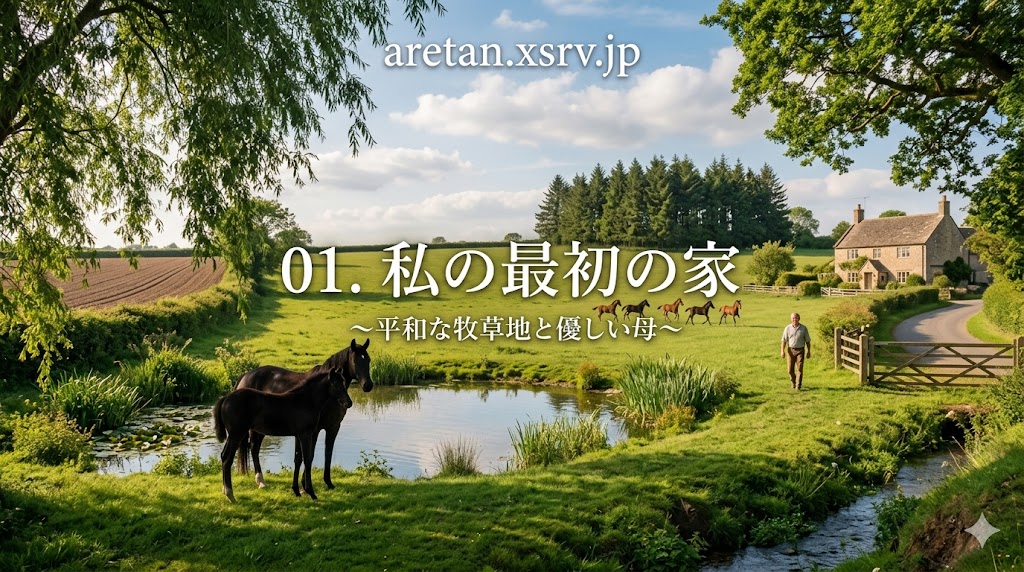
第1章では、ブラック・ビューティーが幼いころに過ごした牧草地、母ダッチェスとの暮らし、優しい主人との関係が語られます。水辺や木陰のある穏やかな場所で、若い馬たちと走り回りながら、彼は最初の記憶を形づくっていきます。
読みどころは、母が語る「穏やかで善良に育つこと」という教えです。この章は、後にさまざまな人間や環境に出会うブラック・ビューティーの人格ならぬ“馬格”の原点を示しており、物語全体の倫理的な土台になっています。
この章の英語学習ポイントを開く
- meadow:牧草地。ブラック・ビューティーの最初の記憶を形づくる重要な舞台です。
- colt:若い雄馬。幼い馬たちの遊びや未熟さを表す語として、この章で大切です。
- whinny:いななく。母馬が子どもを呼ぶ場面に出てくる、馬の感情を伝える表現です。
- well-bred:育ちのよい、血統のよい。母がブラック・ビューティーに誇りと品位を教える場面で重要です。
- gentle:穏やかな、優しい。この物語全体を貫く、馬にも人間にも求められる大切な性質です。
カラフル対訳で紹介している作品について
カラフル対訳で紹介している作品は、すべてパブリックドメインの作品です。
このサイトで使われている作品は、著作権の切れた名作などの全文を電子化し、インターネット上で公開している Project Gutenberg(プロジェクト・グーテンベルク)、 および朗読音声を公開している LibriVox(リブリヴォックス/朗読図書館) の作品を出典としています。
原文はProject Gutenberg、音声はLibriVoxで公開されているパブリックドメイン作品を出典としています。
『黒馬物語』Chapter I: My Early Home
『黒馬物語』第1章を、英単語の意味が直感的に入るように色分けしながら、英文と日本語訳をセットで読める形式に整えています。
ボタンで和訳・色分け・日本語ミニ訳を切り替えられます。カテゴリを選ぶと、学習したい種類の表現だけを目立たせられます。
The first place that I can well remember was a large pleasant meadow with a pond of clear water in it.
私がよく覚えている最初の場所は、澄んだ水の池がある、大きくて気持ちのよい牧草地でした。
Some shady trees leaned over it, and rushes and water-lilies grew at the deep end.
木陰をつくる木々が池の上に枝を伸ばし、深い端のほうにはイグサやスイレンが生えていました。
Over the hedge on one side we looked into a plowed field, and on the other we looked over a gate at our master’s house, which stood by the roadside.
片側の生け垣越しには耕された畑が見え、反対側では門の向こうに、道ばたに立つ主人の家が見えました。
At the top of the meadow was a grove of fir trees, and at the bottom a running brook overhung by a steep bank.
牧草地の上のほうにはモミの林があり、下のほうには急な土手が覆いかぶさるようにして流れる小川がありました。
While I was young I lived upon my mother’s milk, as I could not eat grass.
幼いころ、私はまだ草を食べることができなかったので、母の乳で育ちました。
In the daytime I ran by her side, and at night I lay down close by her.
昼間は母のそばを走り、夜には母のすぐ近くに横になりました。
When it was hot we used to stand by the pond in the shade of the trees, and when it was cold we had a nice warm shed near the grove.
暑いときには池のそばの木陰に立ち、寒いときには林の近くにある、暖かくて快適な小屋で過ごしました。
As soon as I was old enough to eat grass my mother used to go out to work in the daytime, and come back in the evening.
私が草を食べられる年ごろになると、母は昼間には仕事に出かけ、夕方になると戻ってくるようになりました。
There were six young colts in the meadow besides me; they were older than I was; some were nearly as large as grown-up horses.
牧草地には、私のほかに六頭の若い雄馬がいました。彼らは私より年上で、中にはほとんど大人の馬ほど大きいものもいました。
I used to run with them, and had great fun; we used to gallop all together round and round the field as hard as we could go.
私はよく彼らと一緒に走り、とても楽しく過ごしました。私たちはみんなで、できるかぎり力いっぱい野原をぐるぐる駆け回ったものです。
Sometimes we had rather rough play, for they would frequently bite and kick as well as gallop.
時にはかなり乱暴な遊びになることもありました。彼らは駆け回るだけでなく、しょっちゅう噛んだり蹴ったりしたからです。
One day, when there was a good deal of kicking, my mother whinnied to me to come to her, and then she said:
ある日、蹴り合いがひどくなったとき、母は私にこちらへ来るようにいななき、それからこう言いました。
“I wish you to pay attention to what I am going to say to you.”
「これから言うことを、よく注意して聞いてほしいのです」
“The colts who live here are very good colts, but they are cart-horse colts, and of course they have not learned manners.”
「ここにいる若い馬たちはとてもよい馬です。でも、彼らは荷馬車用の馬の子どもたちで、当然まだ行儀を学んでいません」
“You have been well-bred and well-born; your father has a great name in these parts.”
「あなたはよく育てられ、よい血筋に生まれました。あなたのお父さんは、このあたりでたいへん名の知られた馬です」
“And your grandfather won the cup two years at the Newmarket races; your grandmother had the sweetest temper of any horse I ever knew.”
「それに、あなたのおじいさんはニューマーケット競馬で二年続けて優勝杯を取りました。あなたのおばあさんは、私が知るどの馬よりも穏やかな気性を持っていました」
“And I think you have never seen me kick or bite.”
「そして、私が蹴ったり噛んだりするところを、あなたは一度も見たことがないはずです」
“I hope you will grow up gentle and good, and never learn bad ways.”
「あなたには、穏やかで善良な馬に育ってほしいのです。そして決して悪い癖を覚えないでほしいのです」
“Do your work with a good will, lift your feet up well when you trot, and never bite or kick even in play.”
「仕事は気持ちよく行い、速歩をするときには足をよく上げ、遊びの中でさえ決して噛んだり蹴ったりしてはいけません」
I have never forgotten my mother’s advice; I knew she was a wise old horse, and our master thought a great deal of her.
私は母の忠告を一度も忘れたことがありません。母が賢い年老いた馬であることを、私は知っていましたし、主人も母をとても大切に思っていました。
Her name was Duchess, but he often called her Pet.
母の名前はダッチェスでしたが、主人はよく母を「ペット」と呼んでいました。
Our master was a good, kind man. He gave us good food, good lodging, and kind words.
私たちの主人は、善良で親切な人でした。私たちに良い食べ物、良い住まい、そして優しい言葉を与えてくれました。
He spoke as kindly to us as he did to his little children.
主人は、自分の小さな子どもたちに話しかけるのと同じくらい優しく、私たちにも話しかけてくれました。
We were all fond of him, and my mother loved him very much.
私たちはみんな主人が大好きで、母は主人をとても愛していました。
When she saw him at the gate she would neigh with joy, and trot up to him.
母は門のところに主人を見つけると、喜んでいななき、主人のところへ小走りで近づいていきました。
He would pat and stroke her and say, “Well, old Pet, and how is your little Darkie?”
主人は母を軽くたたいたり、なでたりして、「やあ、ペット、君の小さなダーキーは元気かい」と言いました。
I was a dull black, so he called me Darkie.
私はくすんだ黒い色をしていたので、主人は私を「ダーキー」と呼びました。
Then he would give me a piece of bread, which was very good, and sometimes he brought a carrot for my mother.
それから主人は私にパンを一切れくれました。それはとてもおいしいものでした。時には母のためにニンジンを持ってきてくれることもありました。
All the horses would come to him, but I think we were his favorites.
すべての馬が主人のところへ来ましたが、私たちは主人のお気に入りだったのだと思います。
My mother always took him to the town on a market day in a light gig.
母は市の日にはいつも、軽い二輪馬車で主人を町へ連れていきました。
There was a plowboy, Dick, who sometimes came into our field to pluck blackberries from the hedge.
ディックという農場の少年がいて、ときどき私たちの野原に入り、生け垣からブラックベリーを摘んでいました。
When he had eaten all he wanted he would have what he called fun with the colts, throwing stones and sticks at them to make them gallop.
食べたいだけ食べると、彼は自分で「遊び」と呼んでいることを若い馬たちにしました。馬を走らせるために、石や棒を投げつけるのです。
We did not much mind him, for we could gallop off; but sometimes a stone would hit and hurt us.
私たちは走って逃げることができたので、彼のことをあまり気にしていませんでした。しかし、ときには石が当たって痛い思いをすることもありました。
One day he was at this game, and did not know that the master was in the next field.
ある日、ディックはまたその遊びをしていましたが、隣の畑に主人がいることには気づいていませんでした。
But he was there, watching what was going on; over the hedge he jumped in a snap.
しかし主人はそこにいて、何が起きているのかを見ていました。主人は生け垣をひょいと跳び越えて入ってきました。
And catching Dick by the arm, he gave him such a box on the ear as made him roar with the pain and surprise.
そしてディックの腕をつかむと、主人は彼の耳を強く打ちました。その痛みと驚きで、ディックは大声で泣き叫びました。
As soon as we saw the master we trotted up nearer to see what went on.
私たちは主人を見るとすぐ、何が起こるのか見ようとして、さらに近くへ小走りで寄っていきました。
“Bad boy!” he said, “bad boy! to chase the colts.”
「悪い子だ!」と主人は言いました。「悪い子だ! 若い馬たちを追い回すなんて」
“This is not the first time, nor the second, but it shall be the last.”
「これは初めてではない。二度目でもない。だが、これが最後だ」
“There—take your money and go home; I shall not want you on my farm again.”
「ほら、賃金を持って家へ帰りなさい。もう私の農場には来なくてよい」
So we never saw Dick any more.
それで、私たちは二度とディックを見ることはありませんでした。
Old Daniel, the man who looked after the horses, was just as gentle as our master, so we were well off.
馬たちの世話をしていた年老いたダニエルも、主人と同じくらい優しい人でした。ですから、私たちはとても恵まれていました。