
『白痴』のカラフル対訳について
カラフル対訳で紹介している『白痴』は、パブリックドメインの作品を出典としています。
このサイトで使われている作品は、ロシアの文豪フョードル・ドストエフスキーによる小説 The Idiot を出典としています。 英文は Eva M. Martin による英訳版をもとにしています。 原文は、著作権の切れた名作などの全文を電子化し、インターネット上で公開している Project Gutenberg(プロジェクト・グーテンベルク)、 朗読音声は LibriVox(リブリヴォックス/朗読図書館) の公開音声を出典としています。
原文はProject Gutenberg、音声はLibriVoxで公開されているパブリックドメイン作品を出典としています。
“`『白痴』英文/和訳 PART III CHAPTER X
Fyodor Dostoyevsky『The Idiot』PART III CHAPTER X です。公爵が三通の手紙を読み、ナスターシャと再会し、ロゴージンと短く言葉を交わす場面までを、英文・和訳ペアで整理しています。
The prince understood at last why he shivered with dread every time he thought of the three letters in his pocket, and why he had put off reading them until the evening.
公爵はついに、自分がポケットの中の三通の手紙のことを考えるたびに恐怖で震えた理由、そして夕方までそれを読むのを先延ばしにしていた理由を理解した。
When he fell into a heavy sleep on the sofa on the verandah, without having had the courage to open a single one of the three envelopes, he again dreamed a painful dream.
三つの封筒のうち一つを開ける勇気もないまま、ベランダのソファで深い眠りに落ちたとき、彼は再び苦しい夢を見た。
And once more that poor, “sinful” woman appeared to him.
そしてもう一度、あの哀れな「罪深い」女が彼の前に現れた。
Again she gazed at him with tears sparkling on her long lashes, and beckoned him after her.
彼女はまた、長いまつげに涙をきらめかせて彼を見つめ、後について来るよう手招きした。
And again he awoke, as before, with the picture of her face haunting him.
そして彼は以前と同じように目を覚まし、彼女の顔の像が心にまとわりついて離れなかった。
He longed to get up and go to her at once—but he could not.
彼は起き上がってすぐに彼女のところへ行きたいと切望した。しかし、それはできなかった。
At length, almost in despair, he unfolded the letters, and began to read them.
ついに、ほとんど絶望しながら、彼は手紙を広げ、読み始めた。
These letters, too, were like a dream.
これらの手紙もまた、夢のようだった。
We sometimes have strange, impossible dreams, contrary to all the laws of nature.
私たちは時に、自然の法則すべてに反する、奇妙で不可能な夢を見ることがある。
When we awake we remember them and wonder at their strangeness.
目覚めたとき、私たちはそれを思い出し、その奇妙さに驚く。
You remember, perhaps, that you were in full possession of your reason during this succession of fantastic images.
おそらくあなたは、一連の幻想的な映像の中でも、自分が完全に理性を保っていたことを覚えているだろう。
Even that you acted with extraordinary logic and cunning while surrounded by murderers who hid their intentions and made great demonstrations of friendship, while waiting for an opportunity to cut your throat.
それどころか、あなたは自分の意図を隠し、友情を大げさに示しながら、あなたの喉を切る機会を待っている殺人者たちに囲まれながらも、並外れた論理と狡猾さで行動していたことを覚えているかもしれない。
You remember how you escaped them by some ingenious stratagem.
あなたは、何か巧妙な策略によって彼らから逃れたことを覚えている。
Then you doubted if they were really deceived, or whether they were only pretending not to know your hiding-place.
それから彼らが本当に欺かれたのか、それともあなたの隠れ場所を知らないふりをしているだけなのかと疑った。
Then you thought of another plan and hoodwinked them once again.
それから別の計画を思いつき、彼らをもう一度出し抜いた。
You remember all this quite clearly, but how is it that your reason calmly accepted all the manifest absurdities and impossibilities that crowded into your dream?
あなたはそれをすべて実にはっきり覚えている。だが、なぜあなたの理性は、夢の中に押し寄せてくる明らかな不条理や不可能を、平然と受け入れていたのだろうか。
One of the murderers suddenly changed into a woman before your very eyes.
殺人者の一人が、あなたの目の前で突然女に変わった。
Then the woman was transformed into a hideous, cunning little dwarf.
するとその女は、醜く狡猾な小人に変わった。
And you believed it, and accepted it all almost as a matter of course.
それでもあなたはそれを信じ、ほとんど当然のこととして受け入れた。
While at the same time your intelligence seemed unusually keen, and accomplished miracles of cunning, sagacity, and logic!
同時に、あなたの知性は異常なほど鋭く、狡猾さ、洞察力、論理において奇跡のような働きを成し遂げていたのだ。
Why is it that when you awake to the world of realities you nearly always feel, sometimes very vividly, that the vanished dream has carried with it some enigma which you have failed to solve?
なぜ現実の世界に目覚めたとき、消え去った夢が、解きそこねた何かの謎を持ち去ってしまったように、ほとんどいつも、時には非常にはっきりと感じるのだろうか。
You smile at the extravagance of your dream, and yet you feel that this tissue of absurdity contained some real idea.
あなたは夢の突飛さに微笑む。それでも、この不条理の織物の中に、何か本当の思想が含まれていたように感じる。
Something that belongs to your true life,—something that exists, and has always existed, in your heart.
それはあなたの本当の人生に属するもの、あなたの心の中に存在し、いつも存在してきたものなのだ。
You search your dream for some prophecy that you were expecting.
あなたは自分が期待していた何らかの予言を、その夢の中に探す。
It has left a deep impression upon you, joyful or cruel.
それは喜ばしいものであれ残酷なものであれ、あなたに深い印象を残している。
But what it means, or what has been predicted to you in it, you can neither understand nor remember.
しかし、それが何を意味しているのか、その中で何が予言されたのか、あなたには理解することも思い出すこともできない。
The reading of these letters produced some such effect upon the prince.
これらの手紙を読むことは、公爵にそれに似た効果をもたらした。
He felt, before he even opened the envelopes, that the very fact of their existence was like a nightmare.
封筒を開ける前から、彼はその手紙が存在しているという事実そのものが悪夢のようだと感じていた。
How could she ever have made up her mind to write to her? he asked himself.
彼女はどうして、あの人に手紙を書く決心などできたのだろうか、と彼は自分に問うた。
How could she write about that at all?
そもそも、どうしてそんなことについて書くことができたのだろうか。
And how could such a wild idea have entered her head?
そして、どうしてそんな荒唐無稽な考えが彼女の頭に入り込んだのだろうか。
And yet, the strangest part of the matter was, that while he read the letters, he himself almost believed in the possibility, and even in the justification, of the idea he had thought so wild.
それでも最も奇妙だったのは、手紙を読んでいるあいだ、彼自身が、その荒唐無稽だと思っていた考えの可能性を、さらには正当性さえ、ほとんど信じかけていたことだった。
Of course it was a mad dream, a nightmare, and yet there was something cruelly real about it.
もちろん、それは狂った夢であり、悪夢だった。それでもそこには、残酷なほど現実的な何かがあった。
For hours he was haunted by what he had read.
彼は何時間ものあいだ、自分が読んだものにつきまとわれた。
Several passages returned again and again to his mind.
いくつかの箇所が、何度も何度も彼の心に戻ってきた。
And as he brooded over them, he felt inclined to say to himself that he had foreseen and known all that was written here.
そしてそれらについて思い悩むうちに、彼は、ここに書かれていることすべてを自分は前から予見し、知っていたのだと、自分に言いたくなった。
It even seemed to him that he had read the whole of this some time or other, long, long ago.
それどころか、彼には、このすべてをずっと昔、いつかどこかで読んだことがあるようにさえ思われた。
And all that had tormented and grieved him up to now was to be found in these old, long since read, letters.
そして、これまで彼を苦しめ、悲しませてきたすべてが、これらの古い、ずっと前に読んだことのあるような手紙の中に見いだされた。
“When you open this letter,” so the first began, “look first at the signature.
「この手紙を開いたら」と最初の手紙は始まっていた。「まず署名を見てください。
The signature will tell you all, so that I need explain nothing, nor attempt to justify myself.
署名がすべてを語ってくれるでしょう。ですから私は何も説明する必要も、自分を弁明しようとする必要もありません。
Were I in any way on a footing with you, you might be offended at my audacity.
もし私が少しでもあなたと対等な立場にあるなら、あなたは私の大胆さに腹を立てるかもしれません。
But who am I, and who are you?
しかし私は何者で、あなたは何者でしょうか。
We are at such extremes, and I am so far removed from you, that I could not offend you if I wished to do so.”
私たちはあまりにも両極端にあり、私はあなたからあまりにも遠く隔たっているので、たとえ望んだとしても、あなたを怒らせることなどできません」
Farther on, in another place, she wrote: “Do not consider my words as the sickly ecstasies of a diseased mind, but you are, in my opinion—perfection!
さらに別の箇所で、彼女はこう書いていた。「私の言葉を病んだ心の病的な恍惚だと思わないでください。けれども、私の考えでは、あなたは――完全な人です!
I have seen you—I see you every day.
私はあなたを見ました。私は毎日あなたを見ています。
I do not judge you; I have not weighed you in the scales of Reason and found you Perfection—it is simply an article of faith.
私はあなたを裁きません。私はあなたを理性の秤にかけて、あなたを完全だと判断したのではありません。それはただの信仰箇条なのです。
But I must confess one sin against you—I love you.
しかし私は、あなたに対する一つの罪を告白しなければなりません。私はあなたを愛しています。
One should not love perfection.
完全なものを愛してはならないのです。
One should only look on it as perfection—yet I am in love with you.
それはただ完全なものとして眺めるべきなのです。それでも私はあなたに恋しています。
Though love equalizes, do not fear.
愛は人を等しくするものですが、恐れないでください。
I have not lowered you to my level, even in my most secret thoughts.
私はどんな秘密の思いの中でさえ、あなたを自分の水準まで引き下げたことはありません。
I have written ‘Do not fear,’ as if you could fear.
私は『恐れないでください』と書きました。まるであなたが恐れることなどありうるかのように。
I would kiss your footprints if I could.
もしできるなら、私はあなたの足跡に口づけするでしょう。
But, oh! I am not putting myself on a level with you!—Look at the signature—quick, look at the signature!”
でも、ああ! 私は自分をあなたと同じ高さに置いているのではありません!――署名を見てください。早く、署名を見てください!」
“However, observe,” she wrote in another of the letters, “that although I couple you with him, yet I have not once asked you whether you love him.
「しかし、注意してください」と彼女は別の手紙に書いていた。「私はあなたを彼と結びつけているけれど、それでもあなたが彼を愛しているかどうか、一度も尋ねてはいません。
He fell in love with you, though he saw you but once.
彼はあなたを一度見ただけで、あなたに恋したのです。
He spoke of you as of ‘the light.’
彼はあなたのことを『光』のように語りました。
These are his own words—I heard him use them.
これは彼自身の言葉です。私は彼がその言葉を使うのを聞きました。
But I understood without his saying it that you were all that light is to him.
しかし私は、彼がそう言わなくても、あなたが彼にとって光のすべてなのだと分かりました。
I lived near him for a whole month, and I understood then that you, too, must love him.
私は丸一か月、彼のそばで暮らしました。そしてその時、あなたもまた彼を愛しているに違いないと理解したのです。
I think of you and him as one.”
私はあなたと彼を一つのものとして考えています」
“What was the matter yesterday?” she wrote on another sheet.
「昨日はいったい何があったのですか」と彼女は別の紙に書いていた。
“I passed by you, and you seemed to me to blush.
「私はあなたのそばを通り過ぎました。そして私には、あなたが赤面したように見えました。
Perhaps it was only my fancy.
たぶん、それは私の思い込みだっただけかもしれません。
If I were to bring you to the most loathsome den, and show you the revelation of undisguised vice—you should not blush.
もし私があなたを最も忌まわしい巣窟へ連れて行き、隠されない悪徳の姿を見せたとしても、あなたは赤面すべきではありません。
You can never feel the sense of personal affront.
あなたは個人的な侮辱の感覚を感じることが決してできません。
You may hate all who are mean, or base, or unworthy—but not for yourself—only for those whom they wrong.
あなたは卑しい者、下劣な者、値しない者すべてを憎むかもしれません。しかし自分のためではなく、彼らに傷つけられた人々のためにだけ憎むのです。
No one can wrong you.
誰もあなたを傷つけることはできません。
Do you know, I think you ought to love me—for you are the same in my eyes as in his—you are as light.
ご存じですか、私はあなたが私を愛すべきだと思っています。私の目には、あなたは彼の目に映るのと同じで、あなたは光のような人だからです。
An angel cannot hate, perhaps cannot love, either.
天使は憎むことができません。おそらく愛することもできないでしょう。
I often ask myself—is it possible to love everybody?
私はよく自分に尋ねます。すべての人を愛することは可能なのだろうか、と。
Indeed it is not; it is not in nature.
実際、それは不可能です。自然には反しています。
Abstract love of humanity is nearly always love of self.
人類への抽象的な愛は、ほとんどいつも自己愛です。
But you are different.
しかしあなたは違います。
You cannot help loving all, since you can compare with none, and are above all personal offence or anger.
あなたは誰とも比べられず、あらゆる個人的な侮辱や怒りを超えているので、すべてを愛さずにはいられないのです。
Oh! how bitter it would be to me to know that you felt anger or shame on my account.
ああ! あなたが私のことで怒りや恥を感じたと知ったなら、私にはどれほどつらいことでしょう。
For that would be your fall—you would become comparable at once with such as me.
なぜなら、それはあなたの堕落だからです。あなたはたちまち私のような者と比べられる存在になってしまうでしょう。
“Yesterday, after seeing you, I went home and thought out a picture.
「昨日、あなたに会ったあと、私は家へ帰り、一枚の絵を考えました。
Artists always draw the Saviour as an actor in one of the Gospel stories.
画家たちはいつも、救世主を福音書の物語の一場面の登場人物として描きます。
I should do differently.
私なら違うように描くでしょう。
I should represent Christ alone—the disciples did leave Him alone occasionally.
私はキリストを一人で描くでしょう。弟子たちも時には彼を一人にしていたのですから。
I should paint one little child left with Him.
私は、彼のもとに残された一人の小さな子どもを描くでしょう。
This child has been playing about near Him, and had probably just been telling the Saviour something in its pretty baby prattle.
その子はキリストのそばで遊んでいて、おそらく今しがた、かわいらしい幼児の片言で救世主に何かを話していたのです。
Christ had listened to it, but was now musing—one hand reposing on the child’s bright head.
キリストはそれを聞いていましたが、今は物思いに沈んでいます。片手は子どもの明るい頭の上に置かれています。
His eyes have a far-away expression.
彼の目は遠くを見つめる表情をしています。
Thought, great as the Universe, is in them—His face is sad.
宇宙のように大きな思想がその目に宿っています。彼の顔は悲しげです。
The little one leans its elbow upon Christ’s knee, and with its cheek resting on its hand, gazes up at Him, pondering as children sometimes do ponder.
小さな子は肘をキリストの膝に乗せ、頬を手にのせて、子どもが時々そうするように考え込みながら、キリストを見上げています。
The sun is setting.
太陽は沈みかけています。
There you have my picture.
それが私の絵です。
“You are innocent—and in your innocence lies all your perfection—oh, remember that!
「あなたは無垢です。そしてあなたの無垢の中に、あなたの完全さのすべてがあります。ああ、そのことを覚えていてください!
What is my passion to you?
私の情熱など、あなたにとって何でしょうか。
You are mine now; I shall be near you all my life—I shall not live long!”
あなたは今、私のものです。私は一生あなたのそばにいるでしょう。もっとも、私は長くは生きません!」
At length, in the last letter of all, he found:
ついに、最後の手紙の中で、彼は次の言葉を見つけた。
“For Heaven’s sake, don’t misunderstand me!
「お願いですから、私を誤解しないでください!
Do not think that I humiliate myself by writing thus to you.
このようにあなたに書くことで、私が自分を辱めているのだと思わないでください。
Or that I belong to that class of people who take a satisfaction in humiliating themselves—from pride.
あるいは、誇りから自分を辱めることに満足を覚えるような人々の仲間だとも思わないでください。
I have my consolation, though it would be difficult to explain it—but I do not humiliate myself.
私には私の慰めがあります。それを説明するのは難しいでしょう。けれども私は自分を辱めてはいません。
“Why do I wish to unite you two?
「なぜ私はあなた方二人を結びつけたいのでしょうか。
For your sakes or my own?
あなた方のためでしょうか、それとも私自身のためでしょうか。
For my own sake, naturally.
当然、私自身のためです。
All the problems of my life would thus be solved; I have thought so for a long time.
そうなれば、私の人生のすべての問題が解決されるでしょう。私は長いあいだそう考えてきました。
I know that once when your sister Adelaida saw my portrait she said that such beauty could overthrow the world.
あなたの姉アデライーダが以前、私の肖像を見て、そのような美は世界を覆すことができると言ったことを私は知っています。
But I have renounced the world.
しかし私は世界を捨てました。
You think it strange that I should say so, for you saw me decked with lace and diamonds, in the company of drunkards and wastrels.
あなたは私がそう言うのを奇妙に思うでしょう。あなたは私がレースとダイヤモンドで飾り立て、酔っぱらいや放蕩者たちの中にいるのを見たのですから。
Take no notice of that; I know that I have almost ceased to exist.
そんなことは気にしないでください。私は自分がほとんど存在しなくなっていることを知っています。
God knows what it is dwelling within me now—it is not myself.
今、私の中に宿っているものが何なのか、神だけがご存じです。それは私自身ではありません。
I can see it every day in two dreadful eyes which are always looking at me, even when not present.
私は毎日それを、二つの恐ろしい目の中に見ます。その目は、その場にいない時でさえ、いつも私を見ています。
These eyes are silent now, they say nothing; but I know their secret.
その目は今は沈黙していて、何も語りません。しかし私はその秘密を知っています。
His house is gloomy, and there is a secret in it.
彼の家は陰気で、その中には秘密があります。
I am convinced that in some box he has a razor hidden, tied round with silk, just like the one that Moscow murderer had.
彼はどこかの箱の中に、絹で巻かれた剃刀を隠しているに違いないと私は確信しています。ちょうど、あのモスクワの殺人者が持っていたもののように。
This man also lived with his mother, and had a razor hidden away, tied round with white silk, and with this razor he intended to cut a throat.
その男も母親と一緒に暮らしていて、白い絹で巻いた剃刀を隠し、その剃刀で喉を切るつもりだったのです。
“All the while I was in their house I felt sure that somewhere beneath the floor there was hidden away some dreadful corpse, wrapped in oil-cloth, perhaps buried there by his father, who knows?
「私が彼らの家にいたあいだずっと、床下のどこかに、油布に包まれた恐ろしい死体が隠されていると確信していました。ひょっとすると、彼の父親がそこに埋めたのかもしれません。誰に分かるでしょう。
Just as in the Moscow case.
モスクワの事件とまったく同じです。
I could have shown you the very spot!
私はその場所そのものをあなたに示すこともできたでしょう!
“He is always silent, but I know well that he loves me so much that he must hate me.
「彼はいつも黙っています。しかし彼が私をあまりにも愛しているために、私を憎まずにはいられないことを、私はよく知っています。
My wedding and yours are to be on the same day; so I have arranged with him.
私の結婚式とあなたの結婚式は同じ日に行われることになっています。そうなるように私は彼と手配しました。
I have no secrets from him.
私は彼に何一つ隠していません。
I would kill him from very fright, but he will kill me first.
私は恐怖のあまり彼を殺してしまうでしょう。しかし彼のほうが先に私を殺すでしょう。
He has just burst out laughing, and says that I am raving.
彼はいま突然笑い出し、私が錯乱していると言っています。
He knows I am writing to you.”
彼は私があなたに手紙を書いていることを知っています」
There was much more of this delirious wandering in the letters—one of them was very long.
手紙には、このような譫妄のさまよいがさらに多く書かれていた。そのうちの一通は非常に長かった。
At last the prince came out of the dark, gloomy park, in which he had wandered about for hours just as yesterday.
ついに公爵は、昨日と同じように何時間も歩き回っていた暗く陰気な公園から出てきた。
The bright night seemed to him to be lighter than ever.
明るい夜は、彼にはいつも以上に明るく思われた。
“It must be quite early,” he thought.
「まだずいぶん早いに違いない」と彼は思った。
He had forgotten his watch.
彼は時計のことを忘れていた。
There was a sound of distant music somewhere.
どこかで遠くの音楽が聞こえていた。
“Ah,” he thought, “the Vauxhall! They won’t be there today, of course!”
「ああ」と彼は思った。「ヴォクソールだ! もちろん、今日はあの人たちはそこにはいないだろう!」
At this moment he noticed that he was close to their house.
その瞬間、彼は自分が彼女たちの家の近くにいることに気づいた。
He had felt that he must gravitate to this spot eventually, and, with a beating heart, he mounted the verandah steps.
自分はいずれこの場所へ引き寄せられるに違いないと感じていた彼は、胸を高鳴らせながらベランダの階段を上った。
No one met him; the verandah was empty, and nearly pitch dark.
誰も彼に会わなかった。ベランダは空で、ほとんど真っ暗だった。
He opened the door into the room, but it, too, was dark and empty.
彼は部屋へ通じる扉を開けたが、そこもまた暗く、空だった。
He stood in the middle of the room in perplexity.
彼は困惑して部屋の中央に立った。
Suddenly the door opened, and in came Alexandra, candle in hand.
突然、扉が開き、アレクサンドラがろうそくを手に入ってきた。
Seeing the prince she stopped before him in surprise, looking at him questioningly.
公爵を見ると、彼女は驚いて彼の前で立ち止まり、問いかけるように彼を見た。
It was clear that she had been merely passing through the room from door to door.
彼女はただ、扉から扉へと部屋を通り抜けようとしていただけなのは明らかだった。
And had not had the remotest notion that she would meet anyone.
そして、そこで誰かに会うなどとは少しも思っていなかった。
“How did you come here?” she asked, at last.
「どうしてここへいらしたのです?」と、彼女はついに尋ねた。
“I—I—came in—”
「私は――私は――入ってきたのです――」
“Mamma is not very well, nor is Aglaya.
「母はあまり具合がよくありません。アグラーヤもです。
Adelaida has gone to bed, and I am just going.
アデライーダはもう寝ましたし、私もこれから寝るところです。
We were alone the whole evening.
私たちは夕方ずっと家にいました。
Father and Prince S. have gone to town.”
父とS公爵は町へ出かけています」
“I have come to you—now—to—”
「私はあなた方のところへ来たのです――今――その――」
“Do you know what time it is?”
「今が何時かご存じですか?」
“N—no!”
「い、いいえ!」
“Half-past twelve. We are always in bed by one.”
「十二時半です。私たちはいつも一時までには寝ます」
“I—I thought it was half-past nine!”
「わ、私は九時半だと思っていました!」
“Never mind!” she laughed, “but why didn’t you come earlier?
「気にしないでください!」と彼女は笑った。「でも、なぜもっと早く来なかったのですか。
Perhaps you were expected!”
もしかすると、あなたは待たれていたのかもしれませんよ!」
“I thought,” he stammered, making for the door.
「私は思ったのです」と彼は口ごもりながら、扉へ向かった。
“Au revoir! I shall amuse them all with this story tomorrow!”
「ごきげんよう! 明日、この話でみんなを面白がらせてあげますわ!」
He walked along the road towards his own house.
彼は自分の家へ向かって道を歩いた。
His heart was beating, his thoughts were confused, everything around seemed to be part of a dream.
彼の心臓は打ち、思考は混乱し、周囲のすべてが夢の一部のように思われた。
And suddenly, just as twice already he had awaked from sleep with the same vision, that very apparition now seemed to rise up before him.
そして突然、すでに二度同じ幻を見て眠りから覚めたように、そのまさに同じ幻影が今、彼の前に立ち上がったように見えた。
The woman appeared to step out from the park, and stand in the path in front of him, as though she had been waiting for him there.
その女は公園から歩み出て、まるでそこで彼を待っていたかのように、彼の前の小道に立ったように見えた。
He shuddered and stopped; she seized his hand and pressed it frenziedly.
彼は身震いして立ち止まった。彼女は彼の手をつかみ、狂ったように握りしめた。
No, this was no apparition!
いや、これは幻影ではなかった!
There she stood at last, face to face with him, for the first time since their parting.
ついに彼女はそこに立っていた。別れて以来初めて、彼と向かい合っていた。
She said something, but he looked silently back at her.
彼女は何かを言ったが、彼は黙って彼女を見返した。
His heart ached with anguish.
彼の心は苦悶で痛んだ。
Oh! never would he banish the recollection of this meeting with her.
ああ! 彼はこの彼女との再会の記憶を決して追い払うことはできないだろう。
And he never remembered it but with the same pain and agony of mind.
そして彼はそれを思い出すたびに、いつも同じ痛みと心の苦痛を伴って思い出した。
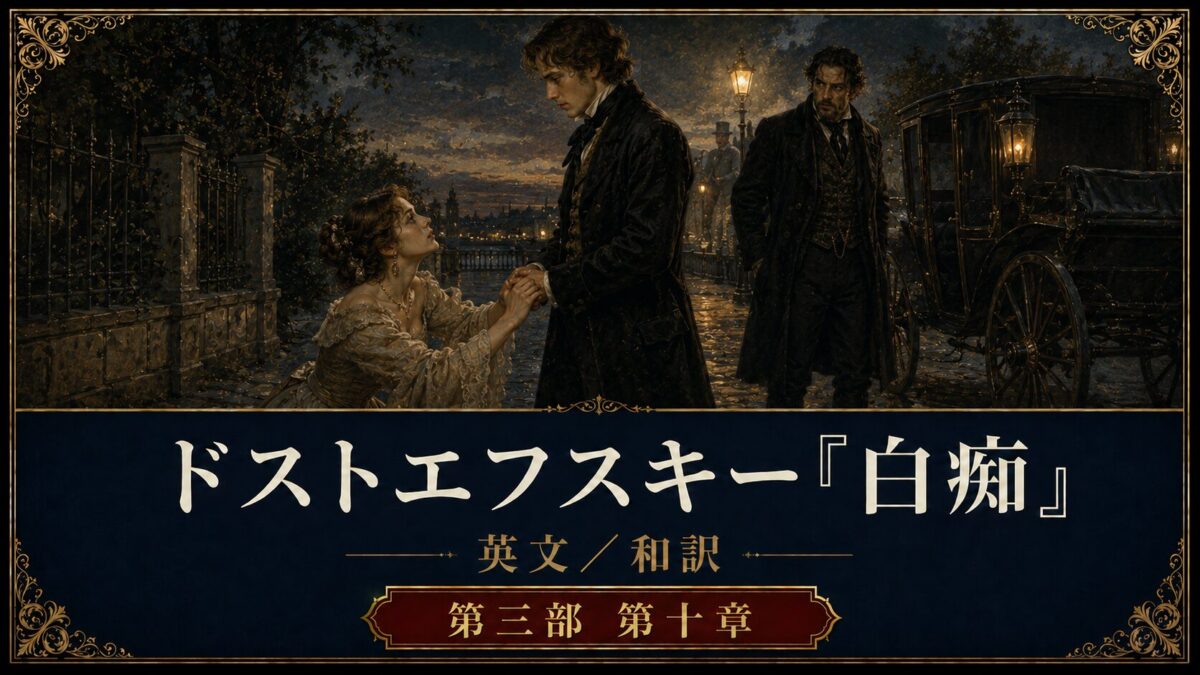
She went on her knees before him—there in the open road—like a madwoman.
彼女は彼の前で膝をついた。あの開けた道の上で、狂った女のように。
He retreated a step, but she caught his hand and kissed it.
彼は一歩後ずさりしたが、彼女は彼の手をつかんで口づけした。
And, just as in his dream, the tears were sparkling on her long, beautiful lashes.
そして、彼の夢の中と同じように、彼女の長く美しいまつげには涙がきらめいていた。
“Get up!” he said, in a frightened whisper, raising her.
「立ってください!」と彼は、怯えたささやき声で言い、彼女を起こした。
“Get up at once!”
「すぐに立ってください!」
“Are you happy—are you happy?” she asked.
「あなたは幸せですか――幸せですか?」と彼女は尋ねた。
“Say this one word. Are you happy now? Today, this moment?
「その一言だけ言ってください。今、幸せですか? 今日、この瞬間に。
Have you just been with her? What did she say?”
あなたは今、彼女と一緒にいたのですか? 彼女は何と言いましたか?」
She did not rise from her knees; she would not listen to him.
彼女は膝をついたまま立ち上がらず、彼の言葉を聞こうともしなかった。
She put her questions hurriedly, as though she were pursued.
彼女は、まるで何かに追われているかのように、慌ただしく質問を重ねた。
“I am going away tomorrow, as you bade me—I won’t write—so that this is the last time I shall see you, the last time!
「私は明日出て行きます。あなたがお命じになった通りに。もう手紙も書きません。だからこれがあなたに会う最後です、最後なのです!
This is really the last time!”
本当にこれが最後なのです!」
“Oh, be calm—be calm! Get up!” he entreated, in despair.
「ああ、落ち着いてください、落ち着いて! 立ってください!」と彼は絶望の中で懇願した。
She gazed thirstily at him and clutched his hands.
彼女は渇くように彼を見つめ、彼の手を握りしめた。
“Good-bye!” she said at last, and rose and left him, very quickly.
「さようなら!」と彼女はついに言い、立ち上がると、非常に急いで彼のもとを去った。
The prince noticed that Rogojin had suddenly appeared at her side, and had taken her arm and was leading her away.
公爵は、ロゴージンが突然彼女のそばに現れ、彼女の腕を取り、連れて行こうとしていることに気づいた。
“Wait a minute, prince,” shouted the latter, as he went.
「少し待っていてくれ、公爵」と、去りながらロゴージンが叫んだ。
“I shall be back in five minutes.”
「五分で戻る」
He reappeared in five minutes as he had said.
彼は言った通り、五分後に再び現れた。
The prince was waiting for him.
公爵は彼を待っていた。
“I’ve put her in the carriage,” he said; “it has been waiting round the corner there since ten o’clock.
「彼女を馬車に乗せた」と彼は言った。「馬車は十時からあそこの角の向こうで待っていたんだ。
She expected that you would be with them all the evening.
彼女は、お前が夕方ずっとあの人たちと一緒にいると思っていた。
I told her exactly what you wrote me.
俺はお前が俺に書いたことを、そのまま彼女に話した。
She won’t write to the girl any more, she promises; and tomorrow she will be off, as you wish.
彼女はもうあの娘に手紙を書かないと約束している。そして明日、お前の望む通り、出て行く。
She desired to see you for the last time, although you refused.
お前は拒んだが、彼女は最後にお前に会いたがっていた。
So we’ve been sitting and waiting on that bench till you should pass on your way home.”
だから俺たちは、お前が家へ帰る途中で通りかかるまで、あのベンチに座って待っていたんだ」
“Did she bring you with her of her own accord?”
「彼女は自分からあなたを連れてきたのですか?」
“Of course she did!” said Rogojin, showing his teeth.
「もちろんそうだ!」とロゴージンは歯を見せながら言った。
“And I saw for myself what I knew before.
「そして俺は、前から知っていたことを自分の目で見た。
You’ve read her letters, I suppose?”
お前は彼女の手紙を読んだんだろう?」
“Did you read them?” asked the prince, struck by the thought.
「あなたも読んだのですか?」と公爵はその考えに打たれて尋ねた。
“Of course—she showed them to me herself.
「もちろんだ。彼女が自分で俺に見せたんだ。
You are thinking of the razor, eh? Ha, ha, ha!”
お前は剃刀のことを考えているんだな? ははは!」
“Oh, she is mad!” cried the prince, wringing his hands.
「ああ、彼女は狂っています!」と公爵は手をもみしだきながら叫んだ。
“Who knows? Perhaps she is not so mad after all,” said Rogojin, softly, as though thinking aloud.
「誰に分かる? 結局、彼女はそれほど狂っていないのかもしれない」とロゴージンは、独り言のように静かに言った。
The prince made no reply.
公爵は何も答えなかった。
“Well, good-bye,” said Rogojin.
「では、さようなら」とロゴージンは言った。
“I’m off tomorrow too, you know.
「俺も明日出て行くんだ、知っているだろう。
Remember me kindly!
俺のことをよく思い出してくれ!
By-the-by,” he added, turning round sharply again, “did you answer her question just now?
ところで」と彼は付け加え、急にまた振り向いた。「さっきの彼女の質問に答えたのか?
Are you happy, or not?”
お前は幸せなのか、そうでないのか?」
“No, no, no!” cried the prince, with unspeakable sadness.
「いいえ、いいえ、いいえ!」と公爵は言い表せない悲しみをこめて叫んだ。
“Ha, ha! I never supposed you would say ‘yes,’” cried Rogojin, laughing sardonically.
「はは! お前が『はい』と言うとは、俺もまったく思っていなかったよ」とロゴージンは冷笑的に笑いながら叫んだ。
And he disappeared, without looking round again.
そして彼は、もう振り返ることもなく姿を消した。