
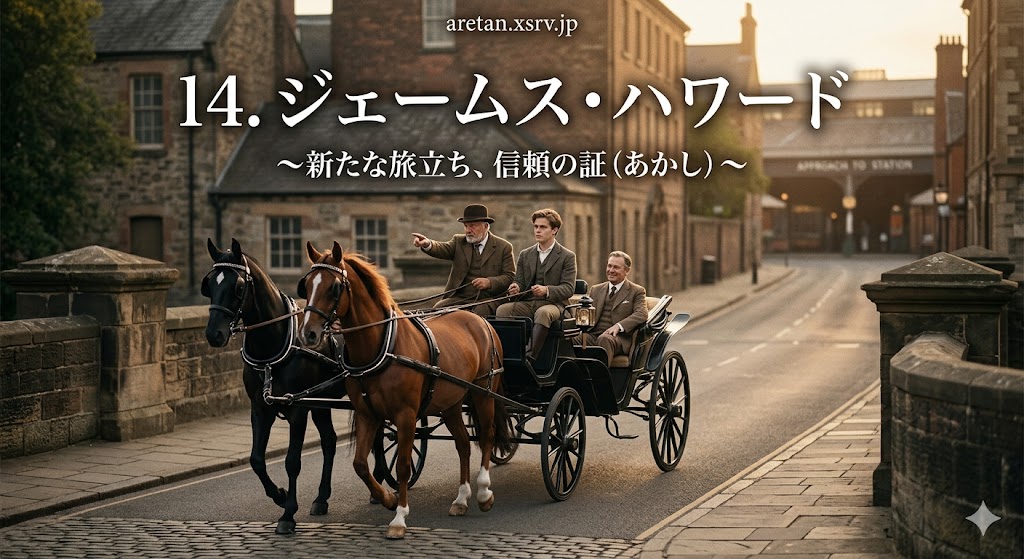
CHAPTER XIV:ジェームズ・ハワード のポイント
第14章では、若い馬丁ジェームズ・ハワードに、新しい仕事の話が持ち上がります。彼はバートウィックで誠実に働き、ジョンや主人から信頼されるようになっており、その働きぶりが次の道へつながっていきます。
読みどころは、馬を大切に扱う技術だけでなく、人柄や責任感が評価される点です。ジェームズの旅立ちは寂しさを伴いますが、バートウィックで学んだ思いやりが、別の場所へ広がっていく希望も感じさせる章です。
この章の英語学習ポイントを開く
- recommendation:推薦。ジェームズの誠実な働きが次の仕事へつながる重要な語です。
- coachman:御者、馬車の運転手。ジェームズが目指す仕事を表し、馬との関わりの深い職業です。
- character:人格、人柄。技術だけでなく、信頼される人間かどうかが問われる章です。
- steady:落ち着いた、堅実な。ジェームズの働きぶりや態度を表すのに重要な表現です。
- responsibility:責任。馬を預かり、人を運ぶ仕事の重さを理解するための語です。
カラフル対訳で紹介している作品について
カラフル対訳で紹介している作品は、すべてパブリックドメインの作品です。
このサイトで使われている作品は、著作権の切れた名作などの全文を電子化し、インターネット上で公開している Project Gutenberg(プロジェクト・グーテンベルク)、 および朗読音声を公開している LibriVox(リブリヴォックス/朗読図書館) の作品を出典としています。
原文はProject Gutenberg、音声はLibriVoxで公開されているパブリックドメイン作品を出典としています。
『黒馬物語』Chapter XIV: James Howard
『黒馬物語』第14章を、英単語の意味が直感的に入るように色分けしながら、英文と日本語訳をセットで読める形式に整えています。
表示操作パネル
Early one morning in December John had just led me into my box after my daily exercise.
十二月のある早朝、ジョンはいつもの運動を終えた私を、ちょうど馬房へ連れて入れたところでした。
And was strapping my cloth on and James was coming in from the corn chamber with some oats, when the master came into the stable.
ジョンが私に馬布を固定しており、ジェームズが穀物部屋からオート麦を持って入ってきたとき、主人が馬小屋へ入ってきました。
He looked rather serious, and held an open letter in his hand.
主人は少し真剣な顔をしていて、手には開いた手紙を持っていました。
John fastened the door of my box, touched his cap, and waited for orders.
ジョンは私の馬房の戸を閉め、帽子に手をやり、命令を待ちました。
“Good-morning, John,” said the master. “I want to know if you have any complaint to make of James.”
「おはよう、ジョン」と主人は言いました。「ジェームズについて何か不満があるか知りたいのだ」
“Complaint, sir? No, sir.”
「不満ですか、旦那さま。いいえ、ありません」
“Is he industrious at his work and respectful to you?”
「彼は仕事に勤勉で、おまえに対して礼儀正しいかね」
“Yes, sir, always.”
「はい、旦那さま。いつもそうです」
“You never find he slights his work when your back is turned?”
「おまえが見ていないときに、彼が仕事を手抜きしているのを見たことはないか」
“Never, sir.”
「一度もありません、旦那さま」
“That’s well; but I must put another question.”
「それはよい。しかし、もう一つ尋ねなければならない」
“Have you no reason to suspect, when he goes out with the horses to exercise them or to take a message, that he stops about talking to his acquaintances?”
「彼が馬を運動させに出たり、使いに出たりするとき、知人と立ち話をしているのではないかと疑う理由はないか」
“Or goes into houses where he has no business, leaving the horses outside?”
「あるいは、馬を外に置いたまま、用もない家に入っているようなことはないか」
“No, sir, certainly not; and if anybody has been saying that about James, I don’t believe it.”
「いいえ、旦那さま。決してありません。もし誰かがジェームズについてそんなことを言っているなら、私は信じません」
“And I don’t mean to believe it unless I have it fairly proved before witnesses.”
「そして証人の前できちんと証明されないかぎり、信じるつもりもありません」
“It’s not for me to say who has been trying to take away James’ character.”
「誰がジェームズの評判を傷つけようとしているのか、私が言うことではありません」
“But I will say this, sir, that a steadier, pleasanter, honester, smarter young fellow I never had in this stable.”
「しかし、これだけは申し上げます。旦那さま。この馬小屋で、彼ほど落ち着いていて、感じがよく、正直で、きびきびした若者を私は持ったことがありません」
“I can trust his word and I can trust his work.”
「私は彼の言葉を信頼できますし、彼の仕事も信頼できます」
“He is gentle and clever with the horses.”
「彼は馬に対して穏やかで、扱いも上手です」
“And I would rather have them in charge with him than with half the young fellows I know of in laced hats and liveries.”
「飾り付き帽子や制服を着た若者たちの半分に任せるくらいなら、私は馬を彼に任せたいです」
“And whoever wants a character of James Howard,” said John, with a decided jerk of his head, “let them come to John Manly.”
「そして、ジェームズ・ハワードの人物証明がほしい者がいるなら」とジョンはきっぱりと頭を動かして言いました。「ジョン・マンリーのところへ来させてください」
The master stood all this time grave and attentive.
主人はこの間ずっと、厳粛で注意深い様子で立っていました。
But as John finished his speech a broad smile spread over his face.
しかしジョンが話し終えると、主人の顔には満面の笑みが広がりました。
And looking kindly across at James, who all this time had stood still at the door, he said, “James, my lad, set down the oats and come here.”
そして、その間ずっと戸口に立っていたジェームズを優しく見やり、こう言いました。「ジェームズ、こちらへ来なさい。オート麦を置いて来るのだ」
“I am very glad to find that John’s opinion of your character agrees so exactly with my own.”
「ジョンのおまえの人柄についての意見が、私自身の考えとまったく一致していることがわかって、とてもうれしい」
“John is a cautious man,” he said, with a droll smile.
「ジョンは慎重な人間だ」と主人は、おどけた笑みを浮かべて言いました。
“And it is not always easy to get his opinion about people.”
「だから、人についての彼の意見を聞き出すのは、いつも簡単とは限らない」
“So I thought if I beat the bush on this side the birds would fly out, and I should learn what I wanted to know quickly.”
「そこで、こちら側から藪を叩けば鳥が飛び出し、私が知りたいことをすぐに知ることができると思ったのだ」
“So now we will come to business.”
「では、本題に入ろう」
“I have a letter from my brother-in-law, Sir Clifford Williams, of Clifford Hall.”
「クリフォード・ホールのサー・クリフォード・ウィリアムズ、つまり私の義理の兄弟から手紙が来ている」
“He wants me to find him a trustworthy young groom, about twenty or twenty-one, who knows his business.”
「彼は、二十歳か二十一歳くらいで、仕事をよく知っている信頼できる若い馬丁を探してほしいと言っている」
“His old coachman, who has lived with him thirty years, is getting feeble.”
「三十年も彼のもとで働いてきた年老いた御者が、弱ってきているのだ」
“And he wants a man to work with him and get into his ways.”
「そこで、その御者と一緒に働き、彼のやり方を身につける人物を求めている」
“Who would be able, when the old man was pensioned off, to step into his place.”
「そしてその老人が年金付きで退職したとき、その後任になれる者がほしいのだ」
“He would have eighteen shillings a week at first, a stable suit, a driving suit, a bedroom over the coachhouse, and a boy under him.”
「最初は週十八シリング、馬小屋用の服、御者用の服、馬車小屋の上の寝室、そして部下の少年一人が与えられる」
“Sir Clifford is a good master, and if you could get the place it would be a good start for you.”
「サー・クリフォードは良い主人だし、おまえがその職を得られれば、よい出発点になるだろう」
“I don’t want to part with you, and if you left us I know John would lose his right hand.”
「私はおまえを手放したくはない。そして、おまえがいなくなれば、ジョンが右腕を失うようなものだとわかっている」
“That I should, sir,” said John, “but I would not stand in his light for the world.”
「その通りです、旦那さま」とジョンは言いました。「しかし、何があっても彼の出世の邪魔はいたしません」
“How old are you, James?” said master.
「ジェームズ、おまえはいくつだ」と主人は言いました。
“Nineteen next May, sir.”
「来年の五月で十九歳です、旦那さま」
“That’s young; what do you think, John?”
「若いな。どう思う、ジョン」
“Well, sir, it is young; but he is as steady as a man, and is strong, and well grown.”
「そうですね、旦那さま。確かに若いです。しかし彼は大人と同じくらい落ち着いていて、強く、体格もよく育っています」
“And though he has not had much experience in driving, he has a light firm hand and a quick eye.”
「そして御者としての経験は多くありませんが、軽く確かな手綱さばきと素早い目を持っています」
“And he is very careful, and I am quite sure no horse of his will be ruined for want of having his feet and shoes looked after.”
「それに彼はとても注意深いです。彼に任された馬が、足や蹄鉄の手入れ不足でだめになることは絶対にないと確信しています」
“Your word will go the furthest, John,” said the master.
「ジョン、おまえの言葉が最も重みを持つだろう」と主人は言いました。
“For Sir Clifford adds in a postscript, ‘If I could find a man trained by your John I should like him better than any other.’”
「というのも、サー・クリフォードは追伸で『あなたのジョンに訓練された者が見つかるなら、ほかの誰よりもその人物がよい』と書いているからだ」
“So, James, lad, think it over, talk to your mother at dinner-time, and then let me know what you wish.”
「だから、ジェームズ、よく考えなさい。夕食の時にお母さんと話し、それから自分がどうしたいか知らせてくれ」
In a few days after this conversation it was fully settled that James should go to Clifford Hall.
この会話から数日後、ジェームズがクリフォード・ホールへ行くことが正式に決まりました。
In a month or six weeks, as it suited his master, and in the meantime he was to get all the practice in driving that could be given to him.
主人の都合に合わせて、一か月か六週間後に行くことになり、その間に彼はできるかぎり多くの運転練習をすることになりました。
I never knew the carriage to go out so often before.
私はそれまで、馬車がこれほど頻繁に出るのを見たことがありませんでした。
When the mistress did not go out the master drove himself in the two-wheeled chaise.
奥さまが出かけない時には、主人自身が二輪軽馬車を運転しました。
But now, whether it was master or the young ladies, or only an errand, Ginger and I were put in the carriage and James drove us.
しかし今では、主人であれ若いお嬢さまたちであれ、あるいはただの使いであれ、ジンジャーと私は馬車につながれ、ジェームズが私たちを走らせました。
At the first John rode with him on the box, telling him this and that, and after that James drove alone.
最初のうちは、ジョンが御者台で彼のそばに乗り、あれこれ教えていました。その後、ジェームズは一人で運転しました。
Then it was wonderful what a number of places the master would go to in the city on Saturday.
それからというもの、土曜日に主人が町の実に多くの場所へ出かけるのには驚くほどでした。
And what queer streets we were driven through.
そして私たちは、いろいろな奇妙な通りを通って走らされました。
He was sure to go to the railway station just as the train was coming in.
主人は必ず、列車が到着するちょうどその時に鉄道駅へ行きました。
And cabs and carriages, carts and omnibuses were all trying to get over the bridge together.
そこでは、辻馬車、馬車、荷車、乗合馬車がみな一緒に橋を渡ろうとしていました。
That bridge wanted good horses and good drivers when the railway bell was ringing.
鉄道のベルが鳴っている時、その橋では優れた馬と優れた御者が必要でした。
For it was narrow, and there was a very sharp turn up to the station.
なぜなら橋は狭く、駅へ上がるところにはとても急な曲がり角があったからです。
Where it would not have been at all difficult for people to run into each other, if they did not look sharp and keep their wits about them.
そこで人々が油断なく見て、機転を保っていなければ、互いに衝突するのはまったく難しいことではありませんでした。
操作パネルで、和訳・色分け・ミニ訳ラベルを切り替えられます。カテゴリ別ボタンを押すと、指定した種類の重要語句だけが見やすく残ります。