
CHAPTER X「地獄の罠」上 のポイント
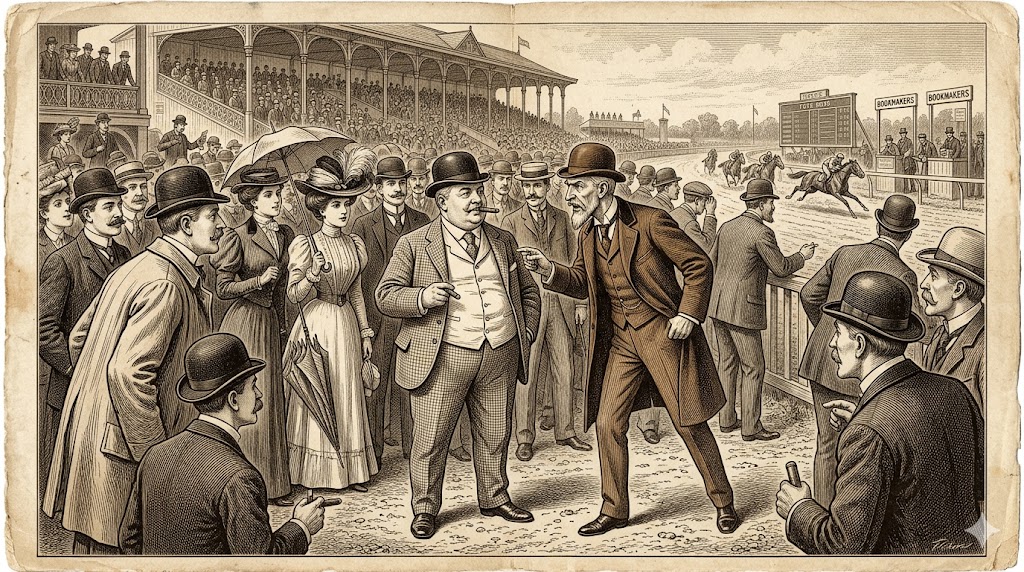
競馬場でニコラ・デュグリヴァルは、警部を名乗る男に誘導され、全財産である五万フランを盗まれてしまいます。絶望した彼は自殺し、世間は事件に騒然となりますが、その後ルパン名義で同額の金が未亡人へ送られ、さらに彼女の部屋で第二の強盗事件が起こります。
この章の読みどころは、最初の盗難、自殺、ルパンの不可解な送金、そして密室めいた第二の強盗が連続して起こる不気味な展開です。ガニマールでさえ「ルパンらしいがルパンではない」と感じるほど事件は混乱し、次章の「罠」へ向けて謎が大きく膨らみます。
この章の英語学習ポイントを開く
- detective-inspector:刑事警部。偽者がこの肩書きを使ってデュグリヴァルを信用させるため、事件の出発点として重要です。
- pari-mutuel:馬券売場、相互賭博方式。競馬場の場面を理解するための語で、混雑と盗難の舞台になります。
- sharper:詐欺師、いかさま師。警部を名乗った男の正体を表し、デュグリヴァルの破滅に直結します。
- calumny:中傷、誹謗。ルパンが自分への疑いに抗議する電報で使われる語で、彼の芝居がかった性格も表れます。
- incomprehensible:理解不能な。第一の強盗と第二の強盗の関係が見えない、事件全体の不可解さを示す重要語です。
アルセーヌ・ルパン「地獄の罠」上
物語の冒頭です。競馬場でのスリ事件、偽の警部、五万フランの消失、デュグリヴァルの自殺、そして未亡人のもとに起きる第二の強盗事件までを扱います。罠・変装・盗難・警察の混乱に関わる語句を多めに色分けしています。
IV
第四章
THE INFERNAL TRAP
地獄の罠
When the race was over, a crowd of people, streaming toward the exit from the grand stand, pushed against Nicolas Dugrival.
レースが終わると、観覧席から出口へ流れ出る人々の群れが、ニコラ・デュグリヴァルを押した。
He brought his hand smartly to the inside pocket of his jacket.
彼は素早く上着の内ポケットへ手をやった。
“What’s the matter?” asked his wife.
「どうしたの?」と妻が尋ねた。
“I still feel nervous … with that money on me! I’m afraid of some nasty accident.”
「まだ不安なんだ……あの金を身につけているからな! 何か嫌な事故が起きそうで怖いんだ」
She muttered:
彼女はぶつぶつ言った。
“And I can’t understand you. How can you think of carrying such a sum about with you?”
「あなたの考えがわからないわ。そんな大金を持ち歩くなんて、どうして考えられるの?」
“Every farthing we possess! Lord knows, it cost us trouble enough to earn!”
「私たちの持ち金すべてなのよ! あれを稼ぐのに、どれだけ苦労したか神様だけがご存じだわ!」
“Pooh!” he said. “No one would guess that it is here, in my pocket-book.”
「ふん!」と彼は言った。「それがここ、私の手帳の中にあるなんて、誰にもわかるものか」
“Yes, yes,” she grumbled. “That young man-servant whom we discharged last week knew all about it, didn’t he, Gabriel?”
「ええ、ええ」と彼女は不満げに言った。「先週解雇した若い召使いは、そのことを全部知っていたじゃないの。ねえ、ガブリエル?」
“Yes, aunt,” said a youth standing beside her.
「はい、おばさん」と、彼女のそばに立っていた青年が言った。
Nicolas Dugrival, his wife and his nephew Gabriel were well-known figures at the race-meetings, where the regular frequenters saw them almost every day.
ニコラ・デュグリヴァルとその妻、甥のガブリエルは競馬場ではよく知られた人物で、常連たちはほとんど毎日彼らを見かけていた。
Dugrival, a big, fat, red-faced man, who looked as if he knew how to enjoy life.
デュグリヴァルは、大柄で太った赤ら顔の男で、人生の楽しみ方を知っているように見えた。
His wife, also built on heavy lines, with a coarse, vulgar face, and always dressed in a plum-coloured silk much the worse for wear.
妻もまたがっしりした体つきで、粗野で俗っぽい顔をしており、いつもかなり着古したすもも色の絹の服を着ていた。
The nephew, quite young, slender, with pale features, dark eyes and fair and rather curly hair.
甥はまだ若く、ほっそりとしていて、青白い顔立ち、黒い目、金色がかったやや巻き毛をしていた。
As a rule, the couple remained seated throughout the afternoon.
たいていの場合、その夫婦は午後の間ずっと座ったままだった。
It was Gabriel who betted for his uncle, watching the horses in the paddock, picking up tips to right and left among the jockeys and stable-lads, running backward and forward between the stands and the pari-mutuel.
叔父の代わりに賭けをするのはガブリエルだった。彼はパドックで馬を見て、騎手や厩務員たちからあちこちで情報を拾い、観覧席と馬券売場の間を行ったり来たりしていた。
Luck had favoured them that day, for, three times, Dugrival’s neighbours saw the young man come back and hand him money.
その日は運が彼らに味方していた。デュグリヴァルの近くにいた人々は、若者が三度戻ってきて金を渡すのを見ていたからだ。
The fifth race was just finishing. Dugrival lit a cigar.
第五レースがちょうど終わるところだった。デュグリヴァルは葉巻に火をつけた。
At that moment, a gentleman in a tight-fitting brown suit, with a face ending in a peaked grey beard, came up to him and asked, in a confidential whisper:
その時、体にぴったりした茶色のスーツを着て、尖った灰色のあご髭を生やした紳士が彼に近づき、内密なささやき声で尋ねた。
“Does this happen to belong to you, sir?”
「これは、もしかしてあなたのものではありませんか?」
And he displayed a gold watch and chain.
そして彼は金時計と鎖を見せた。
Dugrival gave a start:
デュグリヴァルはぎくりとした。
“Why, yes … it’s mine…. Look, here are my initials, N. G.: Nicolas Dugrival!”
「ええ、そうです……私のものです……見てください、ここに私の頭文字があります。N. G.、ニコラ・デュグリヴァルです!」
And he at once, with a movement of terror, clapped his hand to his jacket-pocket.
そして彼はすぐに、恐怖に駆られた動作で、上着のポケットへ手を当てた。
The note-case was still there.
紙幣入れはまだそこにあった。
“Ah,” he said, greatly relieved, “that’s a piece of luck!…”
「ああ」と彼は大いに安心して言った。「これは幸運だ!……」
“But, all the same, how on earth was it done?… Do you know the scoundrel?”
「だが、それにしても、いったいどうやってやられたんだ?……その悪党を知っているのですか?」
“Yes, we’ve got him locked up. Pray come with me and we’ll soon look into the matter.”
「はい、捕まえて拘束してあります。どうぞ私と一緒に来てください。すぐに事情を調べましょう」
“Whom have I the honour …?”
「失礼ですが、あなたは……?」
“M. Delangle, detective-inspector. I have sent to let M. Marquenne, the magistrate, know.”
「ドゥラングル、刑事警部です。マルケンヌ判事にも知らせを出してあります」
Nicolas Dugrival went out with the inspector; and the two of them started for the commissary’s office, some distance behind the grand stand.
ニコラ・デュグリヴァルは警部とともに出て行き、二人は観覧席の少し後方にある警察署の事務所へ向かった。
They were within fifty yards of it, when the inspector was accosted by a man who said to him, hurriedly:
そこまで五十ヤードほどのところで、警部は一人の男に呼び止められ、その男は急いで言った。
“The fellow with the watch has blabbed; we are on the tracks of a whole gang.”
「時計を持っていた男が白状しました。私たちは一味全体の足取りを追っています」
“M. Marquenne wants you to wait for him at the pari-mutuel and to keep a look-out near the fourth booth.”
「マルケンヌ判事は、あなたに馬券売場で待ち、第四窓口の近くを見張っていてほしいそうです」
There was a crowd outside the betting-booths and Inspector Delangle muttered:
馬券売場の外には人だかりがあり、ドゥラングル警部はつぶやいた。
“It’s an absurd arrangement…. Whom am I to look out for?… That’s just like M. Marquenne!…”
「ばかげた段取りだ……誰を見張ればいいんだ?……まったくマルケンヌ氏らしい!……」
He pushed aside a group of people who were crowding too close upon him:
彼は近づきすぎてくる人々の一団を押しのけた。
“By Jove, one has to use one’s elbows here and keep a tight hold on one’s purse.”
「まったく、ここでは肘を使って押し分け、財布をしっかり握っていなければならない」
“That’s the way you got your watch pinched, M. Dugrival!”
「あなたの時計も、そうやって盗まれたんですよ、デュグリヴァルさん!」
“I can’t understand….”
「私にはわかりません……」
“Oh, if you knew how those gentry go to work! One never guesses what they’re up to next.”
「ああ、あの連中がどうやって仕事をするかご存じならね! 次に何をするか、まったく読めません」
“One of them treads on your foot, another gives you a poke in the eye with his stick and the third picks your pocket before you know where you are….”
「一人が足を踏み、別の一人が杖で目を突くようなことをし、その間に三人目が、あなたが気づく前にポケットを探るのです……」
“I’ve been had that way myself.”
「私自身もその手でやられたことがあります」
He stopped and then continued, angrily.
彼はいったん黙り、それから怒ったように続けた。
“But, bother it, what’s the use of hanging about here! What a mob! It’s unbearable!…”
「しかし、まったく、ここでうろうろして何になるんだ! 何という群衆だ! 耐えがたい!……」
“Ah, there’s M. Marquenne making signs to us!… One moment, please … and be sure and wait for me here.”
「ああ、マルケンヌ氏がこちらに合図している!……少々お待ちください……必ずここで私を待っていてください」
He shouldered his way through the crowd.
彼は群衆を肩で押し分けて進んでいった。
Nicolas Dugrival followed him for a moment with his eyes.
ニコラ・デュグリヴァルは、しばらくその姿を目で追った。
Once the inspector was out of sight, he stood a little to one side, to avoid being hustled.
警部の姿が見えなくなると、彼は押し合いを避けるために少し脇へ立った。
A few minutes passed.
数分が過ぎた。
The sixth race was about to start, when Dugrival saw his wife and nephew looking for him.
第六レースが始まろうとしていた時、デュグリヴァルは妻と甥が自分を探しているのを見た。
He explained to them that Inspector Delangle was arranging matters with the magistrate.
彼は、ドゥラングル警部が判事と事を処理しているのだと説明した。
“Have you your money still?” asked his wife.
「お金はまだ持っているの?」と妻が尋ねた。
“Why, of course I have!” he replied.
「もちろん持っているさ!」と彼は答えた。
“The inspector and I took good care, I assure you, not to let the crowd jostle us.”
「警部と私は、人混みに押されないよう十分気をつけていたんだ。本当だよ」
He felt his jacket, gave a stifled cry, thrust his hand into his pocket and began to stammer inarticulate syllables.
彼は上着を触り、押し殺した叫びを上げ、ポケットへ手を突っ込み、意味をなさない音を口ごもり始めた。
Mme. Dugrival gasped, in dismay:
デュグリヴァル夫人は狼狽して息を呑んだ。
“What is it? What’s the matter?”
「何なの? どうしたの?」
“Stolen!” he moaned. “The pocket-book … the fifty notes!…”
「盗まれた!」と彼はうめいた。「手帳が……五十枚の紙幣が!……」
“It’s not true!” she screamed. “It’s not true!”
「嘘よ!」と彼女は叫んだ。「そんなの嘘よ!」
“Yes, the inspector … a common sharper … he’s the man….”
「本当だ、あの警部だ……ただの詐欺師だ……あいつがやったんだ……」
She uttered absolute yells:
彼女はまさに絶叫した。
“Thief! Thief! Stop thief!… My husband’s been robbed!… Fifty thousand francs!… We are ruined!… Thief! Thief …”
「泥棒! 泥棒! 泥棒を捕まえて!……夫が盗まれたの!……五万フランよ!……私たちは破滅だわ!……泥棒! 泥棒!……」
In a moment they were surrounded by policemen and taken to the commissary’s office.
たちまち彼らは警官たちに囲まれ、警察署の事務所へ連れて行かれた。
Dugrival went like a lamb, absolutely bewildered.
デュグリヴァルは子羊のようにおとなしく、完全に呆然として進んだ。
His wife continued to shriek at the top of her voice, piling up explanations, railing against the inspector:
妻は声の限りに叫び続け、説明をまくし立て、警部を罵った。
“Have him looked for!… Have him found!… A brown suit…. A pointed beard….”
「あいつを探して!……見つけて!……茶色のスーツ……尖ったあご髭……」
“Oh, the villain, to think what he’s robbed us of!… Fifty thousand francs!…”
「ああ、あの悪党、私たちから盗んだものを思うと!……五万フランよ!……」
“Why … why, Dugrival, what are you doing?”
「え……ちょっと、デュグリヴァル、何をしているの?」
With one bound, she flung herself upon her husband.
彼女はひと跳びで夫に飛びかかった。
Too late!
遅すぎた!
He had pressed the barrel of a revolver against his temple.
彼は拳銃の銃口をこめかみに押し当てていた。
A shot rang out. Dugrival fell. He was dead.
銃声が響いた。デュグリヴァルは倒れた。彼は死んでいた。
The reader cannot have forgotten the commotion made by the newspapers in connection with this case.
読者は、この事件に関連して新聞が引き起こした大騒ぎを忘れてはいないだろう。
Nor how they jumped at the opportunity once more to accuse the police of carelessness and blundering.
また、新聞がこの機会に飛びつき、警察の不注意と失態を再び非難したことも忘れてはいないだろう。
Was it conceivable that a pick-pocket could play the part of an inspector like that, in broad daylight and in a public place, and rob a respectable man with impunity?
真昼間の公共の場所で、スリが警部を演じ、立派な人物から金を盗んで罰を受けずに済むなど、考えられることだろうか。
Nicolas Dugrival’s widow kept the controversy alive, thanks to her jeremiads and to the interviews which she granted on every hand.
ニコラ・デュグリヴァルの未亡人は、あちこちで受けた取材と嘆きの訴えによって、この論争を燃え続けさせた。
A reporter had secured a snapshot of her in front of her husband’s body, holding up her hand and swearing to revenge his death.
ある記者は、夫の遺体の前で手を上げ、その死に復讐すると誓う彼女の写真を撮っていた。
Her nephew Gabriel was standing beside her, with hatred pictured in his face.
甥のガブリエルは彼女のそばに立ち、その顔には憎しみが浮かんでいた。
He, too, it appeared, in a few words uttered in a whisper, but in a tone of fierce determination, had taken an oath to pursue and catch the murderer.
彼もまた、ささやくような短い言葉ながら、激しい決意のこもった口調で、殺人者を追い詰め捕らえると誓ったらしい。
The accounts described the humble apartment which they occupied at the Batignolles.
記事は、彼らがバティニョールで暮らしている質素なアパートについても描写した。
And, as they had been robbed of all their means, a sporting-paper opened a subscription on their behalf.
そして彼らが全財産を奪われたため、あるスポーツ紙が彼らのために募金を始めた。
As for the mysterious Delangle, he remained undiscovered.
謎のドゥラングルについては、彼は発見されないままだった。
Two men were arrested, but had to be released forthwith.
二人の男が逮捕されたが、すぐに釈放されなければならなかった。
The police took up a number of clues, which were at once abandoned.
警察はいくつもの手がかりを追ったが、それらはすぐに放棄された。
More than one name was mentioned; and, lastly, they accused Arsene Lupin.
複数の名前が取り沙汰され、最後にはアルセーヌ・ルパンが疑われた。
An action which provoked the famous burglar’s celebrated cable, dispatched from New York six days after the incident:
そのことが、有名な怪盗による有名な電報を引き出した。その電報は事件から六日後、ニューヨークから送られたものだった。
“Protest indignantly against calumny invented by baffled police.”
「困惑した警察がでっち上げた中傷に、憤然として抗議する」
“Send my condolences to unhappy victims. Instructing my bankers to remit them fifty thousand francs.”
「不幸な被害者たちへ哀悼の意を送る。私の銀行家に、彼らへ五万フランを送金するよう指示している」
“LUPIN.”
「ルパン」
True enough, on the day after the publication of the cable, a stranger rang at Mme. Dugrival’s door and handed her an envelope.
実際、その電報が公表された翌日、見知らぬ人物がデュグリヴァル夫人の扉のベルを鳴らし、彼女に封筒を手渡した。
The envelope contained fifty thousand-franc notes.
その封筒には、千フラン紙幣が五十枚入っていた。
This theatrical stroke was not at all calculated to allay the universal comment.
この劇的な一手は、世間の噂を鎮めるどころではなかった。
But an event soon occurred which provided any amount of additional excitement.
しかし間もなく、さらなる興奮を十分に提供する事件が起きた。
Two days later, the people living in the same house as Mme. Dugrival and her nephew were awakened, at four o’clock in the morning, by horrible cries and shrill calls for help.
二日後、デュグリヴァル夫人と甥が住む同じ家の住人たちは、午前四時、恐ろしい叫び声と甲高い助けを求める声で目を覚ました。
They rushed to the flat.
彼らはその部屋へ駆けつけた。
The porter succeeded in opening the door.
門番が扉を開けることに成功した。
By the light of a lantern carried by one of the neighbours, he found Gabriel stretched at full-length in his bedroom.
隣人の一人が持つランタンの明かりで、彼はガブリエルが寝室で全身を伸ばして倒れているのを見つけた。
With his wrists and ankles bound and a gag forced into his mouth.
その手首と足首は縛られ、口には猿ぐつわが押し込まれていた。
While, in the next room, Mme. Dugrival lay with her life’s blood ebbing away through a great gash in her breast.
一方、隣の部屋では、デュグリヴァル夫人が胸の大きな傷口から命の血を流しながら横たわっていた。
She whispered:
彼女はささやいた。
“The money…. I’ve been robbed…. All the notes gone….”
「お金が……盗まれたの……紙幣が全部なくなった……」
And she fainted away.
そして彼女は気を失った。
What had happened?
何が起きたのか。
Gabriel said—and, as soon as she was able to speak, Mme. Dugrival completed her nephew’s story—that he was startled from his sleep by finding himself attacked by two men.
ガブリエルの話によれば、そして話せるようになるとデュグリヴァル夫人が甥の話を補ったところによれば、彼は二人の男に襲われて目を覚ましたのだという。
One of whom gagged him, while the other fastened him down.
一人が彼に猿ぐつわをかませ、もう一人が彼を縛りつけた。
He was unable to see the men in the dark, but he heard the noise of the struggle between them and his aunt.
暗闇の中で男たちを見ることはできなかったが、彼らと叔母との格闘の音は聞こえた。
It was a terrible struggle, Mme. Dugrival declared.
それは恐ろしい格闘だった、とデュグリヴァル夫人は語った。
The ruffians, who obviously knew their way about, guided by some intuition, made straight for the little cupboard containing the money.
その悪党たちは、明らかに部屋の構造を知っており、何か直感に導かれるように、金の入った小さな戸棚へまっすぐ向かった。
And, in spite of her resistance and outcries, laid hands upon the bundle of bank-notes.
そして彼女の抵抗と叫びにもかかわらず、紙幣の束を手にした。
As they left, one of them, whom she had bitten in the arm, stabbed her with a knife, whereupon the men had both fled.
彼らが去るとき、彼女が腕に噛みついた男の一人が彼女をナイフで刺し、その後二人とも逃げた。
“Which way?” she was asked.
「どちらへ逃げましたか?」と彼女は尋ねられた。
“Through the door of my bedroom and afterward, I suppose, through the hall-door.”
「私の寝室の扉から出て、そのあと、おそらく玄関の扉からです」
“Impossible! The porter would have noticed them.”
「ありえません! 門番が気づいたはずです」
For the whole mystery lay in this: how had the ruffians entered the house and how did they manage to leave it?
この謎の核心はここにあった。悪党たちはどうやって家に入り、どうやって出て行ったのか。
There was no outlet open to them.
彼らに使える出口はなかった。
Was it one of the tenants?
住人の誰かだったのか。
A careful inquiry proved the absurdity of such a supposition.
綿密な調査により、そのような推測はばかげていることが証明された。
What then?
では、いったい何だったのか。
Chief-inspector Ganimard, who was placed in special charge of the case, confessed that he had never known anything more bewildering:
この事件を特別に担当することになったガニマール主任警部は、これほど不可解な事件は経験したことがないと認めた。
“It’s very like Lupin,” he said, “and yet it’s not Lupin….”
「ルパンに非常によく似ている」と彼は言った。「だが、ルパンではない……」
“No, there’s more in it than meets the eye, something very doubtful and suspicious….”
「いや、見た目以上のものがある。非常に怪しく、疑わしい何かがある……」
“Besides, if it were Lupin, why should he take back the fifty thousand francs which he sent?”
「それに、もしルパンなら、なぜ自分が送った五万フランを取り戻す必要があるのか?」
“There’s another question that puzzles me: what is the connection between the second robbery and the first, the one on the race-course?”
「もう一つ私を悩ませる疑問がある。第二の強盗と、競馬場での最初の強盗との間に、どんな関係があるのか?」
“The whole thing is incomprehensible and I have a sort of feeling—which is very rare with me—that it is no use hunting.”
「全体が理解不能だ。そして私には、これは捜査しても無駄だという感覚がある。私にはめったにないことだがね」
“For my part, I give it up.”
「私としては、お手上げだ」
The examining-magistrate threw himself into the case with heart and soul.
予審判事は全身全霊でこの事件に取り組んだ。
The reporters united their efforts with those of the police.
記者たちも警察と協力して努力を重ねた。
A famous English sleuth-hound crossed the Channel.
有名なイギリスの名探偵も海峡を渡ってやって来た。
A wealthy American, whose head had been turned by detective-stories, offered a big reward to whosoever should supply the first information leading to the discovery of the truth.
探偵小説に夢中になった裕福なアメリカ人は、真相発見につながる最初の情報を提供した者に多額の報酬を出すと申し出た。
Six weeks later, no one was any the wiser.
六週間後、誰一人として真相に近づいていなかった。
The public adopted Ganimard’s view; and the examining-magistrate himself grew tired of struggling in a darkness which only became denser as time went on.
世間はガニマールの見方を受け入れ、予審判事自身も、時間が経つにつれてますます濃くなる闇の中でもがくことに疲れていった。