
PUBLIC DOMAIN SOURCES
『ミス・ブリル』のカラフル対訳について
カラフル対訳で紹介している『ミス・ブリル』は、パブリックドメインの作品を出典としています。
このページの英語原文は、Katherine Mansfieldの Miss Brill を公開している Project Gutenberg(プロジェクト・グーテンベルク)を出典としています。掲載範囲は作品集 The Garden Party, and Other Stories の「Miss Brill」全文です。朗読は LibriVox(リブリヴォックス/朗読図書館)の作品ページから、Peter Dannによる朗読をお聴きいただけます(作品集 The Garden Party, and Other Stories version 2 の第10トラック)。
英語原文はProject Gutenberg、朗読はLibriVoxの作品ページで確認できます。
Miss Brill
Complete Story / 全編
『ミス・ブリル』全編 対訳英語学習リーダーです。
重要語句が8つのカテゴリーに色分けされ、ルビ形式で日本語訳が確認できます。
Although it was so brilliantly fine—the blue sky powdered with gold and great spots of light like white wine splashed over the Jardins Publiques—Miss Brill was glad
まばゆいほどの晴天でした。金粉をまぶしたような青空の下、公園には、白ワインをこぼしたような大きな光の斑が広がっていました。それでも、ミス・ブリルは、
that she had decided on her fur. The air was motionless, but when you opened your mouth there was just a faint chill,
毛皮を着けてきてよかったと思いました。空気は静止していましたが、口を開けると、かすかな冷たさが感じられました。
like a chill from a glass of iced water before you sip, and now and again a leaf came drifting—from nowhere, from the sky.
氷水の入ったグラスに口をつける前の、あの冷たさに似ています。ときどき一枚の葉が漂ってきました。どこからともなく、空から。
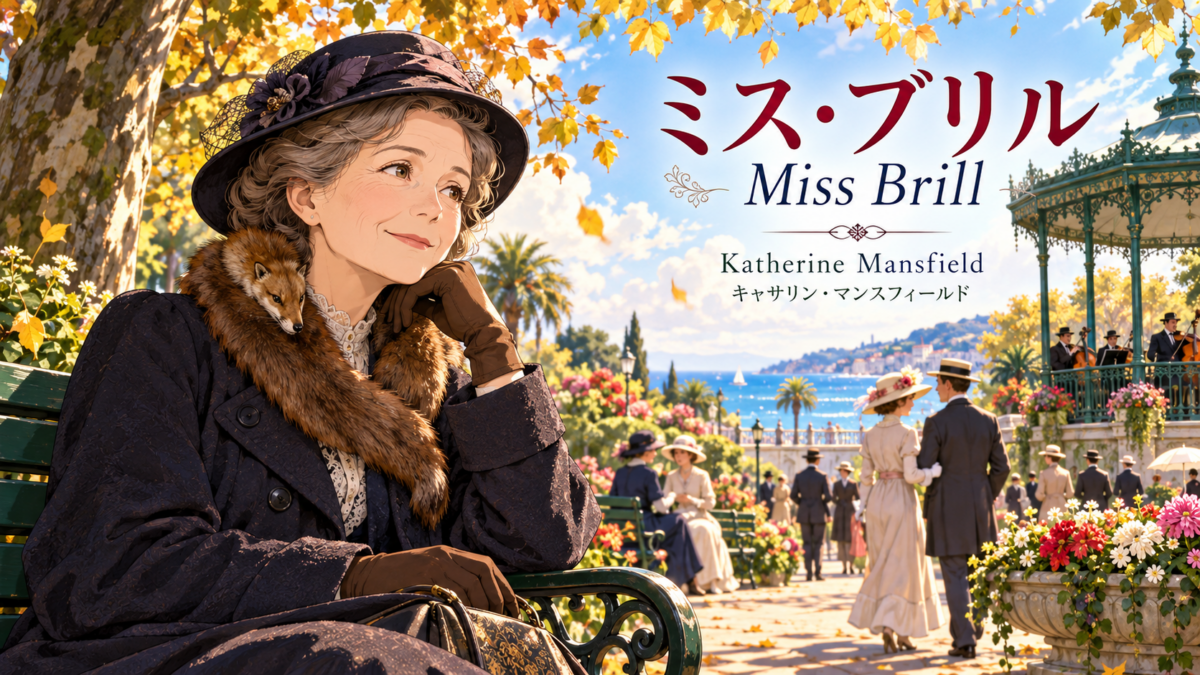
Miss Brill put up her hand and touched her fur. Dear little thing! It was nice to feel it again.
ミス・ブリルは手を上げ、毛皮に触れました。かわいい小さな子! またその感触を味わえるのが、うれしかったのです。
She had taken it out of its box that afternoon, shaken out the moth-powder, given it a good brush, and rubbed the life back into the dim little eyes.
その日の午後、箱から取り出し、防虫粉を振り落とし、丁寧にブラシをかけ、くすんだ小さな目を磨いて生気を取り戻してやったのでした。
“What has been happening to me?” said the sad little eyes. Oh, how sweet it was to see them snap at her again from the red eiderdown!...
「僕に何が起きていたんだろう?」と、悲しげな小さな目が言いました。赤い羽毛掛けの上から、また生き生きとこちらを見るなんて、なんてかわいいのでしょう!……
But the nose, which was of some black composition, wasn’t at all firm. It must have had a knock, somehow.
けれども、何か黒い練り物でできた鼻は、まったくしっかりしていませんでした。どこかで、何かにぶつかったのでしょう。
Never mind—a little dab of black sealing-wax when the time came—when it was absolutely necessary.... Little rogue! Yes, she really felt like that about it.
まあいいわ。時が来たら、黒い封ろうをちょんと付ければいいのだから。本当に必要になったら……。小さないたずらっ子! ええ、毛皮をそう思っていたのです。
Little rogue biting its tail just by her left ear. She could have taken it off and laid it on her lap and stroked it.
左耳のすぐそばで自分の尾をかんでいる、小さないたずらっ子。外して膝に置き、なでてやりたいくらいでした。
She felt a tingling in her hands and arms, but that came from walking, she supposed.
手や腕がぴりぴりしましたが、それは歩いたせいだろうと思いました。
And when she breathed, something light and sad—no, not sad, exactly—something gentle seemed to move in her bosom.
そして息をすると、胸の中で何か軽く悲しいものが――いいえ、正確には悲しさではなく、何か優しいものが――動くような気がしました。
There were a number of people out this afternoon, far more than last Sunday. And the band sounded louder and gayer. That was because the Season had begun.
その午後は、たくさんの人が出ていました。先週の日曜より、ずっと大勢です。楽団の響きも、いっそう大きく陽気でした。行楽の季節が始まったからです。
For although the band played all the year round on Sundays, out of season it was never the same.
楽団は一年中、日曜日に演奏していましたが、季節外れには、決して同じようには聞こえませんでした。
It was like some one playing with only the family to listen; it didn’t care how it played if there weren’t any strangers present.
家族だけを相手に演奏する人のようなもので、よその人がいないと、どんな演奏をするかなど気にしないようでした。
Wasn’t the conductor wearing a new coat, too? She was sure it was new.
指揮者も新しい上着を着ているのではないでしょうか? きっと新しいものだと思いました。
He scraped with his foot and flapped his arms like a rooster about to crow,
指揮者は足をこすり、鳴こうとする雄鶏のように腕をばたばたさせ、
and the bandsmen sitting in the green rotunda blew out their cheeks and glared at the music. Now there came a little “flutey” bit—very pretty!—a little chain of bright drops.
緑の円形音楽堂に座った楽団員たちは、頬を膨らませ、楽譜をにらみつけていました。すると、フルートのような一節が流れました。とてもきれいな、輝くしずくの小さな連なりです。
She was sure it would be repeated. It was; she lifted her head and smiled.
きっと繰り返されると思いました。そのとおりになりました。彼女は顔を上げ、ほほえみました。
Only two people shared her “special” seat: a fine old man in a velvet coat, his hands clasped over a huge carved walking-stick, and a big old woman, sitting upright,
彼女の「特等席」を分け合っているのは、二人だけでした。大きな彫刻入りの杖の上で両手を組んだ、ビロードの上着を着た立派な老紳士と、背筋を伸ばして座る、大柄な老婦人です。
with a roll of knitting on her embroidered apron. They did not speak. This was disappointing, for Miss Brill always looked forward to the conversation.
老婦人は、刺繍のあるエプロンの上に、編み物を丸めて置いていました。二人は話しませんでした。ミス・ブリルはいつも会話を楽しみにしていたので、がっかりしました。
She had become really quite expert, she thought, at listening as though she didn’t listen, at sitting in other people’s lives just for a minute while they talked round her.
聞いていないふりをして聞くこと、周囲の人が話す間、ほんの一分ほどその人たちの人生の中に座ることに、自分はずいぶん熟練してきた、と彼女は思っていました。
She glanced, sideways, at the old couple. Perhaps they would go soon. Last Sunday, too, hadn’t been as interesting as usual.
老夫婦を横目でちらりと見ました。もうすぐ帰るかもしれません。先週の日曜も、いつもほど面白くありませんでした。
An Englishman and his wife, he wearing a dreadful Panama hat and she button boots.
イギリス人の夫婦でした。夫はひどいパナマ帽をかぶり、妻はボタン留めのブーツを履いていました。
And she’d gone on the whole time about how she ought to wear spectacles; she knew she needed them; but that it was no good getting any;
妻は、眼鏡をかけるべきだという話を、ずっと続けていました。必要だとわかっているけれど、買っても無駄だというのです。
they’d be sure to break and they’d never keep on. And he’d been so patient.
きっと壊れるし、顔にもちゃんと収まらないから、と。夫はとても辛抱強く応じていました。
He’d suggested everything—gold rims, the kind that curved round your ears, little pads inside the bridge. No, nothing would please her. “They’ll always be sliding down my nose!”
金の縁、耳の周りに曲がるつる、鼻当ての内側に付ける小さなパッドなど、あらゆるものを勧めました。でも、何も気に入りません。「どうせいつも、鼻からずり落ちるのよ!」
Miss Brill had wanted to shake her.
ミス・ブリルは、その妻を揺さぶってやりたくなりました。
The old people sat on the bench, still as statues. Never mind, there was always the crowd to watch.
年老いた二人は、彫像のように動かず、ベンチに座っていました。まあいいわ。眺める人込みは、いつでもあるのですから。
To and fro, in front of the flower-beds and the band rotunda, the couples and groups paraded, stopped to talk, to greet,
花壇と円形音楽堂の前を、二人連れや集団が行ったり来たりし、歩き回ったり、立ち止まって話したり、挨拶したり、
to buy a handful of flowers from the old beggar who had his tray fixed to the railings.
柵に盆を取り付けた年老いた物乞いから、ひと握りの花を買ったりしていました。
Little children ran among them, swooping and laughing; little boys with big white silk bows under their chins, little girls, little French dolls, dressed up in velvet and lace.
子どもたちは、その間を飛び回り、笑いながら走っていました。顎の下に大きな白い絹の蝶結びを付けた男の子たち。ビロードとレースで着飾った、フランス人形のような女の子たち。
And sometimes a tiny staggerer came suddenly rocking into the open from under the trees, stopped, stared, as suddenly sat down “flop,” until its small high-stepping mother,
ときには、よちよち歩きの小さな子が、木陰から突然ふらふらと広場へ出てきて、立ち止まり、じっと見つめ、また突然、ぺたんと座り込みます。すると、足を高く上げて歩く小柄な母親が、
like a young hen, rushed scolding to its rescue. Other people sat on the benches and green chairs, but they were nearly always the same, Sunday after Sunday,
若い雌鶏のように、叱りながら急いで助けに来るのでした。他の人々もベンチや緑の椅子に座っていましたが、日曜ごとに、ほとんど同じ顔ぶれでした。
and—Miss Brill had often noticed—there was something funny about nearly all of them.
そして、その人たちのほとんどには、どこか妙なところがあると、ミス・ブリルはよく気づいていました。
They were odd, silent, nearly all old, and from the way they stared they looked as though they’d just come from dark little rooms or even—even cupboards!
風変わりで、無口で、ほとんど皆、年寄りでした。その目つきからすると、暗い小部屋から、あるいは――戸棚からさえ、たった今出てきたように見えたのです!
Behind the rotunda the slender trees with yellow leaves down drooping, and through them just a line of sea, and beyond the blue sky with gold-veined clouds.
音楽堂の後ろでは、細い木々から黄色い葉が垂れ下がっていました。その間に、海が一筋だけ見え、その向こうには、金の筋の入った雲が浮かぶ青空がありました。
Tum-tum-tum tiddle-um! tiddle-um! tum tiddley-um tum ta! blew the band.
トン、トン、トン、ティドゥル、アン! ティドゥル、アン! トン、ティドゥリー、アン、トン、タ! 楽団が吹き鳴らしました。
Two young girls in red came by and two young soldiers in blue met them, and they laughed and paired and went off arm-in-arm.
赤い服の若い娘が二人通りかかり、青い軍服の若い兵士二人と出会いました。四人は笑い、二組になって、腕を組んで歩いていきました。
Two peasant women with funny straw hats passed, gravely, leading beautiful smoke-coloured donkeys. A cold, pale nun hurried by.
おかしな麦わら帽子をかぶった農婦が二人、美しい煙色のロバを引き、まじめな顔で通り過ぎました。冷たそうな青白い修道女も、足早に通り過ぎました。
A beautiful woman came along and dropped her bunch of violets, and a little boy ran after to hand them to her,
美しい女性がやってきて、スミレの花束を落としました。小さな男の子が、渡そうとして後を追うと、
and she took them and threw them away as if they’d been poisoned. Dear me! Miss Brill didn’t know whether to admire that or not!
女性は受け取り、まるで毒でも付いているかのように、投げ捨ててしまいました。まあ! ミス・ブリルには、感心してよいものかどうかわかりませんでした。
And now an ermine toque and a gentleman in grey met just in front of her.
そして今度は、白テンの毛皮の帽子をかぶった女性と、灰色の服の紳士が、彼女の目の前で出会いました。
He was tall, stiff, dignified, and she was wearing the ermine toque she’d bought when her hair was yellow.
紳士は背が高く、堅苦しく、威厳がありました。女性は、髪が金色だったころに買った、白テンの帽子をかぶっていました。
Now everything, her hair, her face, even her eyes, was the same colour as the shabby ermine, and her hand, in its cleaned glove, lifted to dab her lips,
今では髪も顔も、目まで、古びた白テンの毛皮と同じ色になっていました。洗った手袋をはめ、唇を軽く押さえようと上げた手は、
was a tiny yellowish paw. Oh, she was so pleased to see him—delighted! She rather thought they were going to meet that afternoon.
小さな黄色っぽい前足のようでした。ああ、紳士に会えて、なんとうれしそうなのでしょう! 大喜びです。その午後は会えるだろうと思っていたようでした。
She described where she’d been—everywhere, here, there, along by the sea. The day was so charming—didn’t he agree? And wouldn’t he, perhaps?...
どこへ行ってきたかを話しました。あちこち、ここへ、そこへ、海辺の道へ。なんてすてきな日でしょう、そう思いません? それで、もしよければ、あなたも……?
But he shook his head, lighted a cigarette, slowly breathed a great deep puff into her face, and even while she was still talking and laughing,
けれども紳士は首を振り、たばこに火をつけ、大きく深く吸った煙を、ゆっくりと彼女の顔へ吐きました。彼女がまだ話し、笑っている間に、
flicked the match away and walked on. The ermine toque was alone; she smiled more brightly than ever.
マッチを弾き捨て、歩き去ってしまいました。白テンの帽子の女性は、一人になりました。それでも、前よりいっそう明るくほほえみました。
But even the band seemed to know what she was feeling and played more softly, played tenderly, and the drum beat, “The Brute! The Brute!” over and over.
ところが、楽団でさえ彼女の気持ちを知っているように、音を弱め、優しく演奏しました。太鼓は「ひどい男! ひどい男!」と、繰り返し打ち鳴らしました。
What would she do? What was going to happen now?
女性はどうするのでしょう? これから何が起こるのでしょう?
But as Miss Brill wondered, the ermine toque turned, raised her hand as though she’d seen some one else, much nicer, just over there, and pattered away.
ミス・ブリルがそう考えていると、白テンの帽子の女性は振り向き、あちらに、もっとずっとすてきな誰かを見つけたかのように手を上げ、小走りに去っていきました。
And the band changed again and played more quickly, more gayly than ever, and the old couple on Miss Brill’s seat got up and marched away,
楽団はまた曲調を変え、前より速く、いっそう陽気に演奏しました。ミス・ブリルの席の老夫婦は、立ち上がり、足取りもそろえて去っていきました。
and such a funny old man with long whiskers hobbled along in time to the music and was nearly knocked over by four girls walking abreast.
長い頬ひげのある、とてもおかしな老人が、音楽に合わせてよろよろ歩いてきて、横一列に歩く四人の娘に、危うく突き倒されそうになりました。
Oh, how fascinating it was! How she enjoyed it! How she loved sitting here, watching it all! It was like a play. It was exactly like a play.
ああ、なんて心を引かれるのでしょう! なんて楽しいのでしょう! ここに座って全部を眺めるのが、なんて好きなのでしょう! まるで芝居です。まったく芝居そのものでした。
Who could believe the sky at the back wasn’t painted?
後ろの空が、描かれたものではないと、誰が信じられるでしょう?
But it wasn’t till a little brown dog trotted on solemn and then slowly trotted off, like a little “theatre” dog, a little dog that had been drugged,
けれども、小さな茶色い犬が、舞台の犬のように、薬を飲まされた小犬のように、まじめな顔で小走りに登場し、ゆっくり退場していくまで、
that Miss Brill discovered what it was that made it so exciting. They were all on the stage. They weren’t only the audience, not only looking on; they were acting.
ミス・ブリルには、何がこれほど胸を躍らせるのかわかりませんでした。皆、舞台の上にいるのです。観客として見ているだけではありません。演じているのです。
Even she had a part and came every Sunday. No doubt somebody would have noticed if she hadn’t been there; she was part of the performance after all.
彼女にさえ役があり、毎週日曜にやってくるのです。来なければ、きっと誰かが気づくはずです。何しろ彼女も、この芝居の一部なのですから。
How strange she’d never thought of it like that before!
今までそんなふうに考えたことがなかったなんて、なんと不思議なのでしょう!
And yet it explained why she made such a point of starting from home at just the same time each week—so as not to be late for the performance—and it
でも、そう考えれば、なぜ毎週、きっちり同じ時刻に家を出ることにこだわるのか、説明がつきました。芝居に遅れないためです。そして、
also explained why she had quite a queer, shy feeling at telling her English pupils how she spent her Sunday afternoons. No wonder! Miss Brill nearly laughed out loud.
英語の生徒たちに日曜の午後の過ごし方を話すと、妙に恥ずかしい気持ちになる理由も、説明がつきました。当然です! ミス・ブリルは、思わず声を上げて笑いそうになりました。
She was on the stage. She thought of the old invalid gentleman to whom she read the newspaper four afternoons a week while he slept in the garden.
自分は舞台の上にいるのです。彼女は、庭で眠る間、週四回、午後に新聞を読んであげる、病弱な老紳士のことを思いました。
She had got quite used to the frail head on the cotton pillow, the hollowed eyes, the open mouth and the high pinched nose.
綿の枕に載せた弱々しい頭、落ちくぼんだ目、開いた口、高くやせた鼻にも、すっかり慣れていました。
If he’d been dead she mightn’t have noticed for weeks; she wouldn’t have minded. But suddenly he knew he was having the paper read to him by an actress!
死んでいたとしても、何週間も気づかなかったかもしれませんし、気にも留めなかったでしょう。でも突然、紳士は、自分に新聞を読んでくれるのが女優だと知るのです!
“An actress!” The old head lifted; two points of light quivered in the old eyes. “An actress—are ye?”
「女優だって!」老いた頭が上がり、老いた目に二つの光が震えます。「あんた、女優なのかね?」
And Miss Brill smoothed the newspaper as though it were the manuscript of her part and said gently; “Yes, I have been an actress for a long time.”
ミス・ブリルは、新聞を自分の役の台本であるかのように整え、優しく言うのです。「ええ、もう長いこと女優をしております」
The band had been having a rest. Now they started again.
楽団は休憩していました。今、また演奏を始めました。
And what they played was warm, sunny, yet there was just a faint chill—a something, what was it?—not sadness—no, not sadness—a something that made you want to sing.
流れてきた音楽は、暖かく、日差しに満ちていました。それでも、かすかな冷たさがありました。何かがあるのです。何でしょう? 悲しさではなく、そう、悲しさではなく、歌いたくなるような何かでした。
The tune lifted, lifted, the light shone; and it seemed to Miss Brill that in another moment all of them, all the whole company, would begin singing.
旋律は高まり、高まり、光が輝きました。もう少しで、全員が、そこにいる皆が、歌い始めるように、ミス・ブリルには思えました。
The young ones, the laughing ones who were moving together, they would begin, and the men’s voices, very resolute and brave, would join them.
一緒に歩き、笑っている若者たちが歌い出し、そこへ、決然として勇敢な男たちの声が加わるのです。
And then she too, she too, and the others on the benches—they would come in with a kind of accompaniment—something low, that scarcely rose or fell, something so beautiful—moving....
そして彼女も、彼女も、ベンチの他の人々も、伴奏のように加わるのでした。ほとんど高くも低くもならない、低い声で。とても美しい、心を動かすような何か……。
And Miss Brill’s eyes filled with tears and she looked smiling at all the other members of the company.
ミス・ブリルの目は涙でいっぱいになり、彼女はほほえみながら、他の仲間たちを見渡しました。
Yes, we understand, we understand, she thought—though what they understood she didn’t know.
ええ、わかります、わかります、と彼女は思いました。もっとも、何がわかるのかは、自分でも知りませんでした。
Just at that moment a boy and girl came and sat down where the old couple had been. They were beautifully dressed; they were in love.
ちょうどそのとき、若い男女がやってきて、老夫婦のいた場所に座りました。二人は美しく着飾り、恋をしていました。
The hero and heroine, of course, just arrived from his father’s yacht. And still soundlessly singing, still with that trembling smile, Miss Brill prepared to listen.
もちろん、父親のヨットから到着したばかりの、主役の男女です。声を出さずに歌い、あの震える笑みを浮かべたまま、ミス・ブリルは話を聞こうとしました。
“No, not now,” said the girl. “Not here, I can’t.”
「だめ、今はだめ」と娘が言いました。「ここじゃ、できないわ」
“But why? Because of that stupid old thing at the end there?” asked the boy. “Why does she come here at all—who wants her?
「でも、どうして? あそこの端にいる、あのばかな婆さんのせい?」と若者が尋ねました。「そもそも、なぜここに来るんだよ。誰がいてほしいと思うんだ?
Why doesn’t she keep her silly old mug at home?”
あの間抜けな老いぼれ顔を、家にしまっておけばいいのに」
“It’s her fu-fur which is so funny,” giggled the girl. “It’s exactly like a fried whiting.”
「あのけ、毛皮が、おかしいのよ」と娘はくすくす笑いました。「揚げたホワイティングみたいじゃない」
“Ah, be off with you!” said the boy in an angry whisper. Then: “Tell me, ma petite chère—”
「ああ、よせよ!」と若者は怒ったようにささやきました。それから、「ねえ、かわいい君――」
“No, not here,” said the girl. “Not yet.”
「だめ、ここではだめ」と娘は言いました。「まだよ」
On her way home she usually bought a slice of honey-cake at the baker’s. It was her Sunday treat. Sometimes there was an almond in her slice, sometimes not.
帰り道、彼女はいつもパン屋で、蜂蜜入りケーキを一切れ買っていました。日曜の楽しみでした。アーモンドが入っているときも、入っていないときもありました。
It made a great difference. If there was an almond it was like carrying home a tiny present—a surprise—something that might very well not have been there.
それは大きな違いでした。アーモンドがあれば、小さな贈り物を家へ持ち帰るようなものです。思いがけないもの、本当なら入っていなくてもおかしくなかったものを。
She hurried on the almond Sundays and struck the match for the kettle in quite a dashing way.
アーモンド入りに当たった日曜には、足早に帰り、湯を沸かすためのマッチも、なかなか勢いよく擦るのでした。
But to-day she passed the baker’s by, climbed the stairs, went into the little dark room—her room like a cupboard—and sat down on the red eiderdown.
けれども今日は、パン屋の前を素通りし、階段を上り、暗い小部屋へ入りました。戸棚のような自分の部屋です。そして、赤い羽毛掛けの上に座りました。
She sat there for a long time. The box that the fur came out of was on the bed. She unclasped the necklet quickly; quickly, without looking, laid it inside.
長い間、そこに座っていました。毛皮を取り出した箱が、ベッドの上にありました。首巻きの留め金をさっと外し、さっと、見ないまま、箱に入れました。
But when she put the lid on she thought she heard something crying.
でも、ふたを閉めたとき、何かが泣いているのを聞いたような気がしました。
出典 (Source):
原文:Project Gutenberg — Miss Brill, Katherine Mansfield
朗読:LibriVox — Miss Brill(Peter Dann版)
英語原文と、新しく作成した日本語訳を掲載しています。