
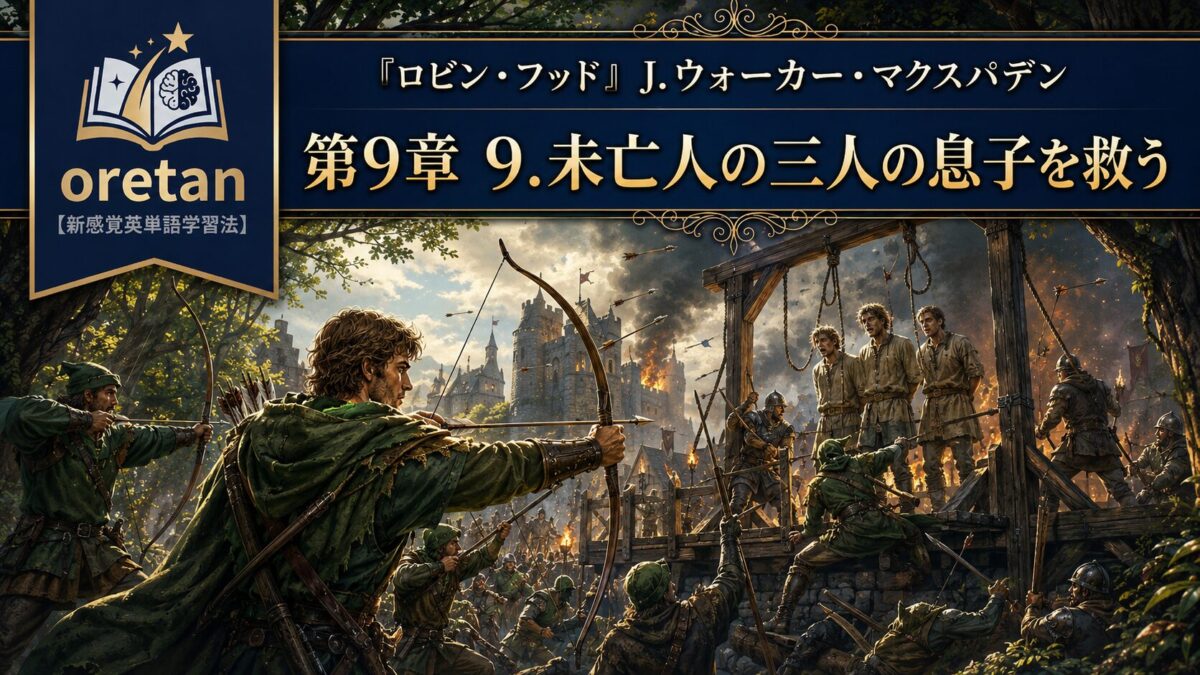
『ロビン・フッド』のカラフル対訳について
カラフル対訳で紹介しているJ. Walker McSpadden『Robin Hood』は、パブリックドメインの作品を出典としています。
このサイトで使われている原文は、著作権の切れた名作などの全文を電子化し、インターネット上で公開している Project Gutenberg(プロジェクト・グーテンベルク)、 および朗読音声を公開している LibriVox(リブリヴォックス/朗読図書館) の作品を出典としています。
『ロビン・フッド』は、中世イングランドのシャーウッドの森を舞台に、弓の名手ロビン・フッドとその仲間たちの活躍を描いた 冒険・英雄伝説です。 義賊、森の仲間、王への忠誠、自由を求める精神などが物語の中心にあり、英語圏で長く親しまれてきた古典的な伝承文学の一つです。 カラフル対訳では、英文を読みやすくするために、重要語句や表現を色分けしながら紹介しています。
原文はProject Gutenberg、音声はLibriVoxで公開されているパブリックドメイン作品を出典としています。 本ページでは、英語学習用に英文・和訳・重要表現の色分けを加えた形で紹介しています。
“`『ロビン・フッド』英文/和訳 CHAPTER IX やもめの三人の息子はいかに救われたか
HOW THE WIDOW’S THREE SONS WERE RESCUED
『Robin Hood』CHAPTER IX を、英語学習用に「英文→和訳」の順で読みやすく整理し、重要語句を自然に多めに色分けしています。上部の操作パネルで、和訳・色分け・ミニ訳・カテゴリ別ハイライトを切り替えられます。
Now Robin Hood is to Nottingham gone, With a link a down and a down, And there he met with the proud Sheriff, Was walking along the town.
さてロビン・フッドはノッティンガムへ行った。リンク・ア・ダウン、ア・ダウン。そこで彼は、町を歩いていた高慢な保安官に出会った。
The wedding-party was a merry one that left Plympton Church, I ween; but not so merry were the ones left behind.
プリンプトン教会を出て行った結婚式の一行は、たしかに陽気な一団だった。しかし、あとに残された者たちは、そう陽気ではなかった。
My lord Bishop of Hereford was stuck up in the organ-loft and left, gownless and fuming.
ヘレフォードの司教閣下は、オルガン席の上に押し込められ、法衣を取られたまま、腹を立てて置き去りにされていた。
The ten liveried archers were variously disposed about the church to keep him company.
制服姿の十人の弓兵たちも、彼の相手をするように、教会のあちこちへそれぞれ押し込められていた。
Two of them were locked in a tiny crypt, three in the belfry, “to ring us a wedding peal,” as Robin said; and the others under quire seats or in the vestry.
そのうち二人は小さな地下納骨堂に閉じ込められ、三人は鐘楼に入れられた。ロビンが言うには「結婚の鐘を鳴らしてもらうため」だった。残りは聖歌隊席の下や祭服室に入れられた。
The bride’s brother at her entreaty was released, but bidden not to return to the church that day or interfere with his sister again on pain of death.
花嫁の兄は、彼女の願いによって解放された。しかし、その日は教会へ戻らず、二度と妹のことに干渉してはならない、さもなくば命はないと命じられた。
While the rusty old knight was forced to climb a high tree, where he sat insecurely perched among the branches, feebly cursing the party as it departed.
一方、さびついたような老騎士は高い木に登らされ、枝の間に危なっかしく腰かけたまま、出発していく一行を弱々しく呪っていた。
It was then approaching sundown, but none of the retainers or villagers dared rescue the imprisoned ones that night, for fear of Robin Hood’s men.
その時はもう日暮れが近づいていたが、家来たちも村人たちも、ロビン・フッドの仲間を恐れて、その夜に閉じ込められた者たちを救い出そうとはしなかった。
So it was not until sunup the next day, that they were released.
そのため、彼らが解放されたのは翌朝、日が昇ってからのことだった。
The Bishop and the old knight, stiff as they were, did not delay longer than for breakfast, but so great was their rage and shame—made straight to Nottingham and levied the Sheriff’s forces.
司教と老騎士は体がこわばっていたが、朝食を取る以上にはぐずぐずしなかった。怒りと恥があまりにも大きかったため、まっすぐノッティンガムへ向かい、保安官の軍勢を集めた。
The Sheriff himself was not anxious to try conclusions again with Robin in the open.
保安官自身は、野外でロビンともう一度決着をつけることには気が進まなかった。
Perhaps he had some slight scruples regarding his oath.
おそらく彼は、自分の誓いについて、多少の良心のとがめを感じていたのだろう。
But the others swore that they would go straight to the King, if he did not help them, so he was fain to consent.
しかし他の者たちは、もし保安官が手を貸さないなら、まっすぐ王のもとへ訴えに行くと誓ったので、彼はしぶしぶ同意せざるを得なかった。
A force of an hundred picked men from the Royal Foresters and swordsmen of the shire was gathered together and marched straightway into the greenwood.
王の森番と州の剣士たちの中から選び抜かれた百人の兵が集められ、ただちに緑の森へ行軍した。
There, as fortune would have it, they surprised some score of outlaws hunting, and instantly gave chase.
そこで、運悪く、彼らは狩りをしていた二十人ほどの無法者たちを不意に見つけ、すぐさま追跡を始めた。
But they could not surround the outlaws, who kept well in the lead, ever and anon dropping behind a log or boulder to speed back a shaft which meant mischief to the pursuers.
しかし彼らは無法者たちを包囲することはできなかった。無法者たちは十分に先を走り、ときどき丸太や大石の陰に身を落としては、追手に災いをもたらす矢を射返した。
One shaft indeed carried off the Sheriff’s hat and caused that worthy man to fall forward upon his horse’s neck from sheer terror.
実際、一本の矢は保安官の帽子を吹き飛ばし、その立派な男を、まったくの恐怖から馬の首へ前のめりに倒れ込ませた。
Five other arrows landed in the fleshy parts of Foresters’ arms.
ほかの五本の矢は、森番たちの腕の肉付きのよい部分に命中した。
But the attacking party was not wholly unsuccessful.
しかし攻撃側がまったく失敗したわけではなかった。
One outlaw in his flight stumbled and fell; when two others instantly stopped and helped to put him on his feet again.
逃げる途中で一人の無法者がつまずいて倒れた。すると、ほかの二人がすぐに立ち止まり、彼を立たせるのを助けた。
They were the widow’s three sons, Stout Will, and Lester, and John.
それは、やもめの三人の息子、たくましいウィル、レスター、そしてジョンだった。
The pause was an unlucky one for them, as a party of Sheriff’s men got above them and cut them off from their fellows.
その立ち止まりは彼らにとって不運だった。保安官の部下の一隊が彼らの上手に回り込み、仲間たちから切り離したのである。
Swordsmen came up in the rear, and they were soon hemmed in on every side.
剣士たちが背後から迫り、彼らはたちまち四方から囲まれてしまった。
But they gave good account of themselves, and before they had been overborne by force of numbers they had killed two and disabled three more.
しかし彼らは見事に戦い、多勢に押しつぶされる前に、二人を討ち取り、さらに三人を戦えなくした。
The infuriated attackers were almost on the point of hewing the stout outlaws to pieces, when the Sheriff cried:
怒り狂った攻撃者たちが、そのたくましい無法者たちを今にも切り刻もうとした時、保安官が叫んだ。
“Hold! Bind the villains! We will follow the law in this and take them to the town jail.”
「待て! 悪党どもを縛れ! この件では法に従い、彼らを町の牢へ連れて行くのだ。」
“But I promise ye the biggest public hanging that has been seen in this shire for many changes of the moon!”
「だが約束しよう。この州で何か月ものあいだ見られなかったほど大きな公開絞首刑を見せてやる!」
So they bound the widow’s three sons and carried them back speedily to Nottingham.
こうして彼らはやもめの三人の息子を縛り、急いでノッティンガムへ連れ戻した。
Now Robin Hood had not chanced to be near the scene of the fight, or with his men; so for a time he heard nothing of the happening.
さて、ロビン・フッドはたまたま戦いの現場の近くにも、仲間たちのそばにもいなかった。そのため、しばらくのあいだ彼はこの出来事を何も知らなかった。
But that evening while returning to the camp he was met by the widow herself, who came weeping along the way.
しかしその晩、野営地へ戻る途中で、彼はやもめ本人に出会った。彼女は道を泣きながらやって来た。
“What news, what news, good woman?” said Robin hastily but courteously; for he liked her well.
「何があったのです、何があったのです、善きご婦人?」とロビンは急ぎながらも礼儀正しく言った。彼は彼女を深く好いていたからである。
“God save ye, Master Robin!” said the dame wildly.
「神よ、あなたをお守りください、ロビン様!」とその老婦人は取り乱して言った。
“God keep ye from the fate that has met my three sons! The Sheriff has laid hands on them and they are condemned to die.”
「神が、私の三人の息子たちに降りかかった運命から、あなたをお守りくださいますように! 保安官があの子たちを捕らえ、死刑を言い渡されたのです。」
“Now, by our Lady! That cuts me to the heart!”
「なんと、聖母にかけて! それは私の胸を切り裂く知らせだ!」
“Stout Will, and Lester, and merry John! The earliest friends I had in the band, and still among the bravest! It must not be!”
「たくましいウィル、レスター、そして陽気なジョン! 私がこの一団で最初に得た友であり、今もなお最も勇敢な者たちだ! そんなことはあってはならない!」
“When is this hanging set?”
「その絞首刑はいつに決まっているのだ?」
“Middle the tinker tells me that it is for tomorrow noon,” replied the dame.
「鋳掛け屋のミドルが、明日の正午だと教えてくれました」と老婦人は答えた。
“By the truth o’ my body,” quoth Robin, “you could not tell me in better time.”
「この身の誠にかけて」とロビンは言った。「これ以上よい時に知らせることはできなかった。」
“The memory of the old days when you freely bade me sup and dine would spur me on, even if three of the bravest lads in all the shire were not imperiled.”
「あなたが昔、私に夕食や食事を気前よく出してくれた日々の記憶だけでも、私は動かされるだろう。たとえ州で最も勇敢な三人の若者が危険にさらされていなかったとしてもだ。」
“Trust to me, good woman!”
「私を信じてください、善きご婦人!」
The old widow threw herself on the ground and embraced his knees.
老いたやもめは地面に身を投げ出し、彼の膝を抱いた。
“’Tis dire danger I am asking ye to face,” she said weeping.
「私があなたに立ち向かってほしいと願っているのは、恐ろしい危険です」と彼女は泣きながら言った。
“And yet I knew your brave true heart would answer me.”
「それでも、あなたの勇敢で誠実な心なら、私に応えてくださると分かっていました。」
“Heaven help ye, good Master Robin, to answer a poor widow’s prayers!”
「天があなたを助けてくださいますように、善きロビン様。哀れなやもめの祈りに応えるために!」
Then Robin Hood sped straightway to the forest-camp, where he heard the details of the skirmish.
それからロビン・フッドはまっすぐ森の野営地へ急ぎ、そこで小競り合いの詳しい事情を聞いた。
His men had been out-numbered five to one, but got off safely, as they thought, until a count of their members had shown the loss of the widow’s three sons.
仲間たちは五対一の数で圧倒されていたが、無事に逃げ切ったと思っていた。ところが人数を数えると、やもめの三人の息子がいないことが分かったのである。
“We must rescue them, my men!” quoth Robin, “even from out the shadow of the rope itself!”
「彼らを救い出さねばならない、我が仲間たちよ!」とロビンは言った。「たとえ絞首縄の影の中からでもだ!」
Whereupon the band set to work to devise ways and means.
そこで一団は、救出の手段と方法を考え始めた。
Robin walked apart a little way with his head leaned thoughtfully upon his breast—for he was sore troubled.
ロビンは少し離れたところを歩き、深く考え込んで頭を胸に垂れていた。彼はひどく悩んでいたのである。
Then whom should he meet but an old begging palmer, one of a devout order which made pilgrimages and wandered from place to place, supported by charity.
すると彼が出会ったのは、老いた物乞いの巡礼者だった。巡礼をしながら場所から場所へさまよい、施しに支えられて暮らす敬虔な一派の者である。
This old fellow walked boldly up to Robin and asked alms of him; since Robin had been wont to aid members of his order.
この老人はロビンのもとへ大胆に歩み寄り、施しを求めた。ロビンは以前から彼らのような者を助ける習慣があったからである。
“What news, what news, thou foolish old man?” said Robin, “what news, I do thee pray?”
「何か知らせはないか、何か知らせはないか、愚かな老人よ?」とロビンは言った。「お願いだ、何か知らせはないか?」
“Three squires in Nottingham town,” quoth the palmer, “are condemned to die.”
「ノッティンガムの町で三人の従士が」と巡礼者は言った。「死刑を宣告されています。」
“Belike that is greater news than the shire has had in some Sundays.”
「おそらくこの州でここ何週ものあいだにあった知らせの中で、最も大きなものでしょう。」
Then Robin’s long-sought idea came to him like a flash.
その時、ロビンが長く探し求めていた考えが、稲妻のようにひらめいた。
“Come, change thine apparel with me, old man,” he said.
「さあ、私と衣服を取り替えよう、老人よ」と彼は言った。
“And I’ll give thee forty shillings in good silver to spend in beer or wine.”
「そうすれば、ビールや葡萄酒に使える良い銀貨で四十シリングをやろう。」
“O, thine apparel is good,” the palmer protested, “and mine is ragged and torn.”
「おお、あなたの衣服は立派です」と巡礼者は抗議した。「私のはぼろぼろで破れています。」
“The holy church teaches that thou should’st ne’er laugh an old man to scorn.”
「聖なる教会は、老人をあざけって笑ってはならないと教えています。」
“I am in simple earnest, I say. Come, change thine apparel with mine.”
「私は本気で言っているのだ。さあ、私の服と取り替えよ。」
“Here are twenty pieces of good broad gold to feast thy brethren right royally.”
「ここに良質の広い金貨二十枚がある。そなたの兄弟たちを王者のようにもてなすがよい。」
So the palmer was persuaded.
こうして巡礼者は説得された。
Robin put on the old man’s hat, which stood full high in the crown.
ロビンは老人の帽子をかぶった。それは頭の部分がたいそう高く立っていた。
He put on his cloak, patched with black and blue and red, like Joseph’s coat of many colors in its old age.
彼は老人の外套を身につけた。それは黒や青や赤の継ぎ当てだらけで、年老いた『色とりどりのヨセフの上着』のようだった。
He put on his breeches, which had been sewed over with so many patterns that the original was scarce discernible; and his tattered hose; and his shoes, cobbled above and below.
彼は老人のズボンをはいた。それはあまりに多くの模様で縫い直されていたため、元の姿がほとんど分からなかった。さらに、ぼろぼろの長靴下と、上も下も修繕された靴を身につけた。
And while as he made the change in dress he made so many whimsical comments also about a man’s pride and the dress that makes a man, that the palmer was like to choke with cackling laughter.
そして着替えをしながら、ロビンは男の誇りや『服が人を作る』ということについて気まぐれな冗談をいくつも言ったので、巡礼者はけたけた笑いすぎて、むせそうになった。
I warrant you, the two were comical sights when they parted company that day.
間違いなく、その日二人が別れた時、その姿はどちらも滑稽な見ものだった。
Nathless, Robin’s own mother would not have known him, had she been living.
それでも、もしロビンの母が生きていたとしても、彼だとは分からなかっただろう。
The next morning the whole town of Nottingham was early astir, and as soon as the gates were open country-folk began to pour in.
翌朝、ノッティンガムの町全体は早くから動き出し、門が開くとすぐに田舎の人々がどっと流れ込み始めた。
For a triple hanging was not held there every day in the week, and the bustle almost equated a Fair day.
三人同時の絞首刑など毎日行われるものではなく、そのにぎわいは市の日にほとんど匹敵していた。
Robin Hood in his palmer’s disguise was one of the first ones to enter the gates.
巡礼者に変装したロビン・フッドは、門に入った最初の者たちの一人だった。
He strolled up and down and around the town as though he had never been there before in all his life.
彼はまるで生まれて一度もそこに来たことがないかのように、町のあちこちをぶらぶら歩き回った。
Presently he came to the market-place, and beheld thereon three gallows erected.
やがて彼は市場へ来て、そこに三つの絞首台が立てられているのを見た。
“Who are these builded for, my son?” asked he of a rough soldier standing by.
「息子よ、これは誰のために建てられたのかね?」と彼は、そばに立つ荒っぽい兵士に尋ねた。
“For three of Robin Hood’s men,” answered the other.
「ロビン・フッドの部下三人のためだ」と相手は答えた。
“And it were Robin himself, ’twould be thrice as high I warrant ye.”
「もしロビン本人だったら、三倍の高さにしていたところだ。間違いない。」
“But Robin is too smart to get within the Sheriff’s clutches again.”
「だがロビンは賢すぎて、もう一度保安官の手に落ちるようなことはしない。」
The palmer crossed himself.
巡礼者は十字を切った。
“They say that he is a bold fellow,” he whined.
「人々は、彼は大胆な男だと言っていますな」と彼は哀れっぽい声で言った。
“Ha!” said the soldier, “he may be bold enough out behind stumps i’ the forest, but the open market-place is another matter.”
「はっ!」と兵士は言った。「森の切り株の陰では十分に大胆かもしれんが、開けた市場は別の話だ。」
“Who is to hang these three poor wretches?” asked the palmer.
「この三人の哀れな者たちを吊るすのは誰ですか?」と巡礼者は尋ねた。
“That hath the Sheriff not decided. But here he comes now to answer his own questions.”
「それは保安官がまだ決めていない。だがちょうど、自分でその問いに答えにやって来たぞ。」
The soldier came to stiff attention as the Sheriff and his body-guard stalked pompously up to inspect the gallows.
保安官と護衛たちが絞首台を調べるために威張った足取りで近づいてくると、兵士はぴしりと直立不動になった。
“O, Heaven save you, worshipful Sheriff!” said the palmer.
「おお、天が尊き保安官様をお守りくださいますように!」と巡礼者は言った。
“Heaven protect you! What will you give a silly old man to-day to be your hangman?”
「天があなたをお守りくださいますように! 今日、この愚かな老人を処刑人にするなら、何をくださいますか?」
“Who are you, fellow?” asked the Sheriff sharply.
「お前は何者だ、男よ?」と保安官は鋭く尋ねた。
“Naught save a poor old palmer.”
「哀れな老巡礼者にすぎません。」
“But I can shrive their souls and hang their bodies most devoutly.”
「しかし、あの者たちの魂に懺悔を授け、その体をたいそう敬虔に吊るすことはできます。」
“Very good,” replied the other.
「よろしい」と相手は答えた。
“The fee to-day is thirteen pence; and I will add thereunto some suits of clothing for that ragged back of yours.”
「今日の報酬は十三ペンスだ。それに加えて、そのぼろぼろの背中のために何着かの服も付けてやろう。」
“God bless ye!” said the palmer.
「神の祝福がありますように!」と巡礼者は言った。
And he went with the soldier to the jail to prepare his three men for execution.
そして彼は兵士とともに牢へ行き、三人を処刑に備えさせることになった。
Just before the stroke of noon the doors of the prison opened and the procession of the condemned came forth.
正午の鐘が鳴る直前、牢の扉が開き、死刑囚の行列が現れた。
Down through the long lines of packed people they walked to the market-place, the palmer in the lead, and the widow’s three sons marching firmly erect between soldiers.
ぎっしり詰まった人々の長い列の間を通って、彼らは市場へ歩いた。巡礼者が先頭に立ち、やもめの三人の息子たちは兵士たちの間で、しっかり背筋を伸ばして歩いていた。
At the gallows foot they halted.
絞首台の足元で、彼らは立ち止まった。
The palmer whispered to them, as though offering last words of consolation.
巡礼者は、最後の慰めの言葉をかけるかのように、彼らにささやいた。
The three men, with arms bound tightly behind their backs, ascended the scaffold, followed by their confessor.
三人は腕を背中できつく縛られたまま足場へ上り、そのあとに告解を聞く者が続いた。
Then Robin stepped to the edge of the scaffold, while the people grew still as death.
それからロビンは足場の端へ進み出た。人々は死のように静まり返った。
They desired to hear the last words uttered to the victims.
彼らは、犠牲者たちへ語られる最後の言葉を聞きたいと思っていたのである。
But Robin’s voice did not quaver forth weakly, as formerly, and his figure had stiffened bolt upright beneath the black robe that covered his rags.
しかしロビンの声は、先ほどのように弱々しく震えて出てくることはなかった。そして彼の姿は、ぼろを覆う黒い法衣の下で、まっすぐ固く伸びていた。
“Hark ye, proud Sheriff!” he cried.
「聞け、高慢な保安官よ!」と彼は叫んだ。
“I was ne’er a hangman in all my life, nor do I now intend to begin that trade.”
「私はこれまでの人生で一度も処刑人だったことはないし、今からその仕事を始めるつもりもない。」
“Accurst be he who first set the fashion of hanging!”
「絞首刑などという流行を最初に始めた者に呪いあれ!」
“I have but three more words to say. Listen to them!”
「私が言うべき言葉は、あと三つだけだ。よく聞け!」
And forth from the robe he drew his horn and blew three loud blasts thereon.
そして彼は法衣の中から角笛を取り出し、それを三度大きく吹き鳴らした。
Then his keen hunting-knife flew forth and in a trice, Stout Will, Lester, and merry John were free men.
すると彼の鋭い狩猟ナイフが素早く抜かれ、たちまち、たくましいウィル、レスター、陽気なジョンは自由の身となった。
They sprang forward and seized the halberds from the nearest soldiers guarding the gallows.
彼らは前へ飛び出し、絞首台を守る最も近くの兵士たちから槍斧を奪い取った。
“Seize them! ’Tis Robin Hood!” screamed the Sheriff.
「捕らえろ! ロビン・フッドだ!」と保安官は叫んだ。
“An hundred pounds if ye hold them, dead or alive!”
「生死を問わず捕らえた者には百ポンドだ!」
“I make it two hundred!” roared the fat Bishop.
「私はそれを二百にする!」と太った司教が怒鳴った。
But their voices were drowned in the uproar that ensued immediately after Robin blew his horn.
しかし彼らの声は、ロビンが角笛を吹いた直後に起こった大騒ぎにかき消された。
He himself had drawn his sword and leaped down the stairs from the scaffold, followed by his three men.
彼自身は剣を抜き、三人の部下を従えて、足場から階段を飛び降りた。
The guard had closed around them in vain effort to disarm them.
衛兵たちは彼らの周りを取り囲み、武器を奪おうとしたが、それはむなしい努力だった。
Then “A rescuer!” shouted Will Stutely’s clear voice on one side of them, and “A rescue!” bellowed Little John’s on the other.
すると、片側からウィル・ストゥートリーの澄んだ声が「救出だ!」と叫び、反対側からリトル・ジョンの声が「救出だ!」と大声で響いた。
Down through the terror-stricken crowd rushed fourscore men in Lincoln green, their force seeming twice that number in the confusion.
恐怖に打たれた群衆の中を、リンカーン緑の服を着た八十人の男たちが駆け抜けて来た。混乱の中では、その勢いはその二倍にも見えた。
With swords drawn they fell upon the guard from every side at once.
彼らは剣を抜き、一斉に四方から衛兵たちへ襲いかかった。
There was a brief clash of hot weapons, then the guard scattered wildly.
熱い武器が短くぶつかり合い、それから衛兵たちは乱れ散った。
Robin Hood’s men formed in a compact mass around their leader and forced their way slowly down the market-place.
ロビン・フッドの仲間たちは、指導者の周りに密集したかたまりを作り、市場をゆっくり押し進んだ。
“Seize them! In the King’s name!” shrieked the Sheriff. “Close the gates!”
「捕らえろ! 王の名において!」と保安官は金切り声をあげた。「門を閉めろ!」
In truth, the peril would have been even greater, had this last order been carried out.
実のところ、この最後の命令が実行されていれば、危険はさらに大きくなっていただろう。
But Will Scarlet and Allan-a-Dale had foreseen that event, and had already overpowered the two warders.
しかしウィル・スカーレットとアラン・ア・デイルはその事態を見越しており、すでに二人の門番を取り押さえていた。
So the gates stood wide open, and toward them the band of outlaws headed.
そのため門は大きく開いたままで、無法者の一団はそこへ向かった。
The soldiers rallied a force of twice their number and tried resolutely to pierce their center.
兵士たちは彼らの二倍の数の部隊を立て直し、断固としてその中央を突き破ろうとした。
But the retreating force turned thrice and sent such volleys of keen arrows from their good yew bows, that they kept a distance between the two forces.
しかし退却する一団は三度振り返り、良質のイチイの弓から鋭い矢の一斉射撃を浴びせたので、二つの勢力の間には距離が保たれた。
And thus the gate was reached, and the long road leading up the hill, and at last the protecting greenwood itself.
こうして彼らは門にたどり着き、丘へ続く長い道へ出て、ついには彼らを守る緑の森そのものへ入った。
The soldiers dared come no farther.
兵士たちはそれ以上進む勇気がなかった。
And the widow’s three sons, I warrant you, supped more heartily that night than ever before in their whole lives.
そして、やもめの三人の息子たちは、間違いなく、その夜、生まれてからこれまででいちばん心から夕食を食べたのである。