
PUBLIC DOMAIN SOURCES
『忠実な友だち』のカラフル対訳について
カラフル対訳で紹介している『忠実な友だち』は、パブリックドメインの作品を出典としています。
このページの英語原文は、Oscar Wildeの The Devoted Friend を公開している Project Gutenberg(プロジェクト・グーテンベルク)を出典としています。掲載範囲は短編集 The Happy Prince and Other Tales の第4話 The Devoted Friend 全文です。朗読は LibriVox(リブリヴォックス/朗読図書館)の作品ページから、Joy Chanによる朗読をお聴きいただけます(短編集 The Happy Prince and Other Tales の第4話)。
英語原文はProject Gutenberg、朗読はLibriVoxの作品ページで確認できます。
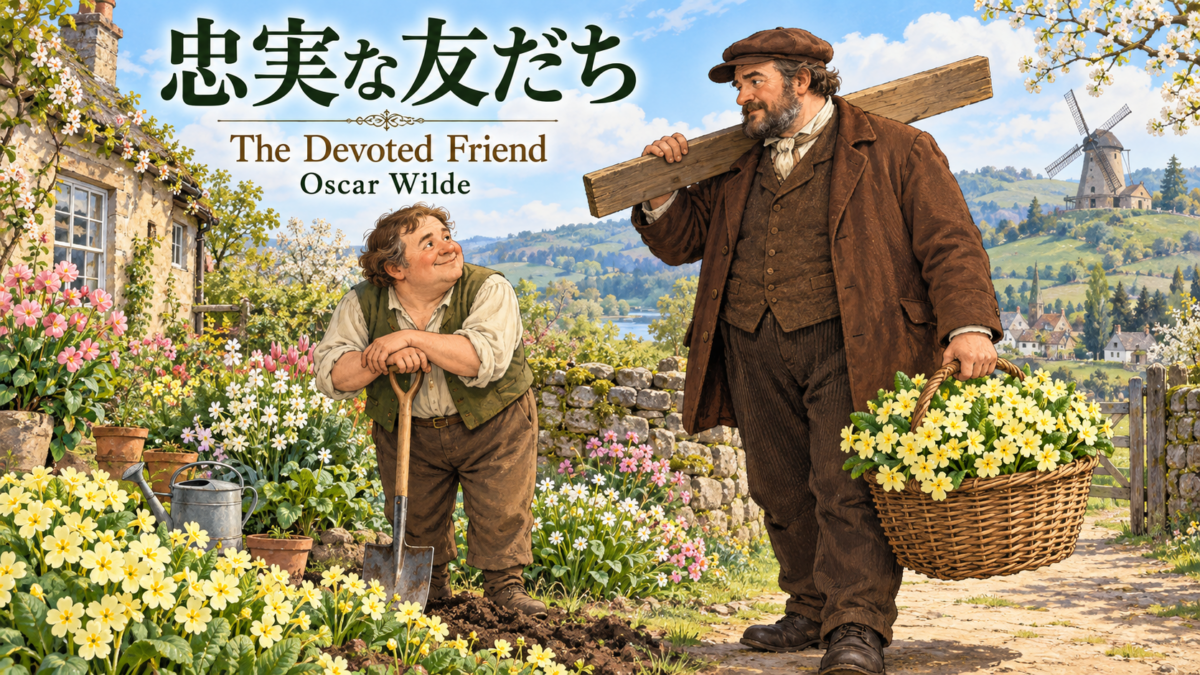
The Devoted Friend
Complete Story / 全編
『忠実な友だち』全編 対訳英語学習リーダーです。
重要語句が8つのカテゴリーに色分けされ、ルビ形式で日本語訳が確認できます。
One morning the old Water-rat put his head out of his hole.
ある朝、年老いたミズネズミが穴から顔を出しました。
He had bright beady eyes and stiff grey whiskers and his tail was like a long bit of black india-rubber.
小さな玉のような目はきらきらし、灰色のひげはぴんと張っていました。しっぽは長い黒いゴムの切れ端のようでした。
The little ducks were swimming about in the pond, looking just like a lot of yellow canaries, and their mother, who was pure white with real red legs,
小さなアヒルたちは、まるで黄色いカナリアの群れのように池を泳いでいました。真っ白な体に鮮やかな赤い脚をしたお母さんは、
was trying to teach them how to stand on their heads in the water.
水の中で逆立ちする方法を教えようとしていました。
“You will never be in the best society unless you can stand on your heads,” she kept saying to them;
「逆立ちができなければ、上流のお仲間には入れませんよ」と、母アヒルは繰り返し言いました。
and every now and then she showed them how it was done. But the little ducks paid no attention to her.
そして、ときどき自分でやってみせました。でも、小さなアヒルたちは少しも気に留めません。
They were so young that they did not know what an advantage it is to be in society at all.
まだ幼く、社交界に入るとどんな得があるのか、まるで知らなかったのです。
“What disobedient children!” cried the old Water-rat; “they really deserve to be drowned.”
「なんて言うことを聞かない子どもたちだ!」と年老いたミズネズミは叫びました。「溺れても仕方がないな」
“Nothing of the kind,” answered the Duck, “every one must make a beginning, and parents cannot be too patient.”
「そんなことはありません」とアヒルは答えました。「誰だって初めは初心者です。親はいくら辛抱強くても、強すぎるということはありません」
“Ah! I know nothing about the feelings of parents,” said the Water-rat; “I am not a family man.
「ああ、親の気持ちなど、私にはさっぱりわからない」とミズネズミは言いました。「私は家庭を持つ男ではないからね。
In fact, I have never been married, and I never intend to be. Love is all very well in its way, but friendship is much higher.
実際、結婚したことは一度もないし、これからもするつもりはない。恋愛は恋愛なりに結構だが、友情のほうがはるかに高尚だ。
Indeed, I know of nothing in the world that is either nobler or rarer than a devoted friendship.”
まったく、献身的な友情ほど気高く、珍しいものは、この世にないと思うね」
“And what, pray, is your idea of the duties of a devoted friend?” asked a Green Linnet, who was sitting in a willow-tree hard by, and had overheard the conversation.
「では、お聞きしますが、献身的な友だちの務めとは何だとお考えですか?」と、近くの柳の木で会話を聞いていた緑のヒワが尋ねました。
“Yes, that is just what I want to know,” said the Duck;
「ええ、それを私もぜひ知りたいです」とアヒルは言いました。
and she swam away to the end of the pond, and stood upon her head, in order to give her children a good example.
そして子どもたちのお手本になろうと、池の端まで泳いでいき、逆立ちをしました。
“What a silly question!” cried the Water-rat. “I should expect my devoted friend to be devoted to me, of course.”
「なんてばかな質問だ!」とミズネズミは叫びました。「献身的な友だちには、当然、私に尽くしてもらいたいね」
“And what would you do in return?” said the little bird, swinging upon a silver spray, and flapping his tiny wings.
「それでは、お返しにあなたは何をするのですか?」と小鳥は言いました。銀色の小枝で揺れながら、小さな翼を羽ばたかせていました。
“I don’t understand you,” answered the Water-rat.
「何を言っているのかわからないね」とミズネズミは答えました。
“Let me tell you a story on the subject,” said the Linnet.
「そのことにまつわるお話をしましょう」とヒワは言いました。
“Is the story about me?” asked the Water-rat. “If so, I will listen to it, for I am extremely fond of fiction.”
「私の話かい?」とミズネズミは尋ねました。「そうなら聞こう。私は小説が大好きだからね」
“It is applicable to you,” answered the Linnet; and he flew down, and alighting upon the bank, he told the story of The Devoted Friend.
「あなたにも当てはまるお話です」とヒワは答えました。そして飛び降りて岸にとまり、『忠実な友だち』の話を始めました。
“Once upon a time,” said the Linnet, “there was an honest little fellow named Hans.”
「昔々」とヒワは言いました。「ハンスという、正直な小柄の男がいました」
“Was he very distinguished?” asked the Water-rat.
「とても有名な人だったのかい?」とミズネズミは尋ねました。
“No,” answered the Linnet, “I don’t think he was distinguished at all, except for his kind heart, and his funny round good-humoured face.
「いいえ」とヒワは答えました。「優しい心と、愛嬌のある丸いにこやかな顔のほかには、特に目立つところはなかったと思います。
He lived in a tiny cottage all by himself, and every day he worked in his garden. In all the country-side there was no garden so lovely as his.
小さな家で一人暮らしをし、毎日庭で働いていました。国じゅう探しても、彼の庭ほど美しい庭はありませんでした。
Sweet-william grew there, and Gilly-flowers, and Shepherds’-purses, and Fair-maids of France. There were damask Roses, and yellow Roses, lilac Crocuses, and gold, purple Violets and white.
そこにはヒゲナデシコ、アラセイトウ、ナズナ、八重咲きの白いキンポウゲが育っていました。ダマスクローズ、黄色いばら、薄紫のクロッカス、金色や紫や白のスミレもありました。
Columbine and Ladysmock, Marjoram and Wild Basil, the Cowslip and the Flower-de-luce, the Daffodil and the Clove-Pink bloomed or blossomed in their proper order as the months went by,
オダマキ、タネツケバナの仲間、マジョラム、野生のバジル、キバナノクリンザクラ、アヤメ、ラッパズイセン、クローブの香りのするナデシコが、月日の移り変わりに合わせて順々に花を咲かせ、
one flower taking another flower’s place, so that there were always beautiful things to look at, and pleasant odours to smell.
ひとつの花が終わると別の花が代わりました。ですから、いつでも目を楽しませる美しいものと、心地よい香りがあったのです。
“Little Hans had a great many friends, but the most devoted friend of all was big Hugh the Miller.
小さなハンスには友だちが大勢いましたが、中でもいちばん献身的な友だちは、大柄の粉屋ヒューでした。
Indeed, so devoted was the rich Miller to little Hans, that he would never go by his garden without leaning over the wall and plucking a large nosegay,
実際、この裕福な粉屋はハンスにたいそう献身的で、庭のそばを通るたび、必ず塀から身を乗り出して大きな花束を摘んだり、
or a handful of sweet herbs, or filling his pockets with plums and cherries if it was the fruit season.
香りのよい草をひとつかみ取ったりしました。実のなる季節には、ポケットをプラムやサクランボでいっぱいにするのでした。
“‘Real friends should have everything in common,’ the Miller used to say, and little Hans nodded and smiled, and felt very proud of having a friend with such noble ideas.
『本当の友だちは、何でも共有すべきだ』と粉屋はよく言いました。ハンスはうなずいて笑い、こんな気高い考えの友だちがいることを、たいそう誇らしく思いました。
“Sometimes, indeed, the neighbours thought it strange that the rich Miller never gave little Hans anything in return,
近所の人たちはときどき、裕福な粉屋がハンスには何ひとつお返しをしないのを、不思議に思いました。
though he had a hundred sacks of flour stored away in his mill, and six milch cows, and a large flock of woolly sheep;
粉屋は製粉所に小麦粉を百袋も蓄え、乳牛を六頭、ふさふさした羊を大群で飼っていたのです。
but Hans never troubled his head about these things, and nothing gave him greater pleasure than to listen to all the wonderful things the Miller used to say about
でもハンスは、そんなことを気にしませんでした。粉屋が語る、本当の友情の無私の心についてのすばらしい話を聞くのが、
the unselfishness of true friendship.
何よりもうれしかったのです。
“So little Hans worked away in his garden. During the spring, the summer, and the autumn he was very happy, but when the winter came,
そうしてハンスは庭仕事に精を出しました。春も夏も秋もとても幸せでしたが、冬が来て、
and he had no fruit or flowers to bring to the market, he suffered a good deal from cold and hunger,
市場へ持っていく果物も花もなくなると、寒さと飢えにひどく苦しみました。
and often had to go to bed without any supper but a few dried pears or some hard nuts.
干した洋ナシをいくつか、あるいは硬い木の実を少し食べただけで、ほかに夕食もなく寝なければならないことがよくありました。
In the winter, also, he was extremely lonely, as the Miller never came to see him then.
冬の間はひどく寂しくもありました。粉屋が少しも訪ねてこなかったからです。
“‘There is no good in my going to see little Hans as long as the snow lasts,’ the Miller used to say to his wife,
『雪のあるうちはハンスを訪ねても仕方がない』と、粉屋はよく妻に言いました。
‘for when people are in trouble they should be left alone, and not be bothered by visitors.
『人は困っているとき、一人にしておいてやるべきで、訪問客が煩わせてはいけない。
That at least is my idea about friendship, and I am sure I am right.
少なくとも、それが私の友情についての考えだ。私は正しいと確信している。
So I shall wait till the spring comes, and then I shall pay him a visit,
だから春が来るまで待って、それから訪ねることにしよう。
and he will be able to give me a large basket of primroses and that will make him so happy.’
そうすれば、ハンスはサクラソウを大きなかごいっぱいに私にくれることができて、それでとても幸せになるだろう』
“‘You are certainly very thoughtful about others,’ answered the Wife, as she sat in her comfortable armchair by the big pinewood fire; ‘very thoughtful indeed.
『あなたは本当に他人への思いやりがあるわね』と妻は答えました。大きく燃える松の薪のそばで、座り心地のよい肘掛け椅子に座っていました。『本当に思いやり深いこと。
It is quite a treat to hear you talk about friendship.
あなたが友情を語るのを聞くのは、格別の楽しみだわ。
I am sure the clergyman himself could not say such beautiful things as you do, though he does live in a three-storied house,
牧師さまでさえ、あなたほどすてきなことはおっしゃれないでしょう。あの方は三階建てのおうちに住んで、
and wear a gold ring on his little finger.’
小指に金の指輪をしていらっしゃるけれど』
“‘But could we not ask little Hans up here?’ said the Miller’s youngest son.
『でも、ハンスをうちへ呼んであげられないの?』と、粉屋のいちばん下の息子が言いました。
‘If poor Hans is in trouble I will give him half my porridge, and show him my white rabbits.’
『かわいそうなハンスが困っているなら、僕のおかゆを半分あげて、白いウサギも見せてあげるよ』
“‘What a silly boy you are!’ cried the Miller; ‘I really don’t know what is the use of sending you to school. You seem not to learn anything.
『なんてばかな子だ!』と粉屋は叫びました。『学校へ行かせて何の役に立つのか、さっぱりわからない。おまえは何ひとつ学んでいないようだな。
Why, if little Hans came up here, and saw our warm fire, and our good supper, and our great cask of red wine, he might get envious,
いいか、ハンスがここへ来て、暖かな火と、おいしい夕食と、大きな赤ワインの樽を見たら、うらやましくなるかもしれない。
and envy is a most terrible thing, and would spoil anybody’s nature. I certainly will not allow Hans’ nature to be spoiled.
ねたみは恐ろしいもので、誰の性格でも台無しにしてしまう。ハンスの性格を悪くするわけには、絶対にいかない。
I am his best friend, and I will always watch over him, and see that he is not led into any temptations.
私はいちばんの友だちなのだから、いつも見守り、どんな誘惑にも迷い込まないようにしてやる。
Besides, if Hans came here, he might ask me to let him have some flour on credit, and that I could not do.
それに、ここへ来たら小麦粉をつけで売ってくれと頼むかもしれないが、そんなことはできない。
Flour is one thing, and friendship is another, and they should not be confused. Why, the words are spelt differently, and mean quite different things. Everybody can see that.’
小麦粉と友情は別のものだ。混同してはいけない。いいか、綴りも違えば意味も全然違う。誰にでもわかることだ』
“‘How well you talk!’ said the Miller’s Wife, pouring herself out a large glass of warm ale; ‘really I feel quite drowsy. It is just like being in church.’
『本当にお話が上手ね』と妻は言い、自分の大きなグラスに温かなエールを注ぎました。『すっかり眠くなってきたわ。教会にいるみたい』
“‘Lots of people act well,’ answered the Miller; ‘but very few people talk well, which shows that talking is much the more difficult thing of the two,
『立派に行動する人は大勢いる』と粉屋は答えました。『だが、立派に話せる人はごくわずかだ。だから話すほうが、ずっと難しく、
and much the finer thing also’; and he looked sternly across the table at his little son, who felt so ashamed of himself that he hung his head down,
ずっと高尚だということだ』。粉屋は、テーブルの向こうの小さな息子を厳しく見ました。息子は恥ずかしくなり、うつむいて、
and grew quite scarlet, and began to cry into his tea. However, he was so young that you must excuse him.”
顔を真っ赤にし、お茶の上に涙を落とし始めました。でも、まだ幼いのですから、どうか許してやってください」
“Is that the end of the story?” asked the Water-rat.
「それでおしまいかい?」とミズネズミは尋ねました。
“Certainly not,” answered the Linnet, “that is the beginning.”
「もちろん、違います」とヒワは答えました。「まだ始まりです」
“Then you are quite behind the age,” said the Water-rat. “Every good story-teller nowadays starts with the end, and then goes on to the beginning, and concludes with the middle.
「では、君はずいぶん時代遅れだね」とミズネズミは言いました。「今どき、上手な語り手はみんな結末から始め、次に始まりへ進み、真ん中で締めくくるのだ。
That is the new method. I heard all about it the other day from a critic who was walking round the pond with a young man.
それが新しい手法だ。この間、池の周りを若い男と歩いていた批評家から、すっかり聞いたよ。
He spoke of the matter at great length, and I am sure he must have been right, for he had blue spectacles and a bald head,
長々とそのことを話していた。きっと正しいに違いない。青い眼鏡をかけて、頭が禿げていたからね。
and whenever the young man made any remark, he always answered ‘Pooh!’ But pray go on with your story. I like the Miller immensely.
若い男が何か言うたび、『ふん!』と答えていたよ。まあ、話を続けてくれ。私はその粉屋が大いに気に入った。
I have all kinds of beautiful sentiments myself, so there is a great sympathy between us.”
私自身、あらゆる美しい心情を持っているから、彼とは大いに通じ合うところがある」
“Well,” said the Linnet, hopping now on one leg and now on the other, “as soon as the winter was over,
「さて」とヒワは言い、片脚からもう片脚へと跳ねました。「冬が終わり、
and the primroses began to open their pale yellow stars, the Miller said to his wife that he would go down and see little Hans.
サクラソウが淡い黄色の星のような花を開き始めると、粉屋はハンスを訪ねに行こうと妻に言いました。
“‘Why, what a good heart you have!’ cried his Wife; ‘you are always thinking of others. And mind you take the big basket with you for the flowers.’
『まあ、なんて優しい心の持ち主なの!』と妻は叫びました。『いつも他人のことを考えているのね。お花を入れる大きなかごを、忘れずに持っていってね』
“So the Miller tied the sails of the windmill together with a strong iron chain, and went down the hill with the basket on his arm.
そこで粉屋は、風車の羽根を丈夫な鉄の鎖で結び合わせ、腕にかごをかけて丘を下りました。
“‘Good morning, little Hans,’ said the Miller.
『おはよう、ハンス』と粉屋は言いました。
“‘Good morning,’ said Hans, leaning on his spade, and smiling from ear to ear.
『おはようございます』とハンスは言い、鋤に寄りかかって、満面の笑みを浮かべました。
“‘And how have you been all the winter?’ said the Miller.
『冬の間はどうしていたんだい?』と粉屋は言いました。
“‘Well, really,’ cried Hans, ‘it is very good of you to ask, very good indeed.
『ああ、本当に』とハンスは声を上げました。『気にかけてくださって、ありがとうございます。本当にうれしいです。
I am afraid I had rather a hard time of it, but now the spring has come, and I am quite happy, and all my flowers are doing well.’
実は、かなりつらい冬でした。でも、もう春が来て、僕はとても幸せですし、花もみんな元気です』
“‘We often talked of you during the winter, Hans,’ said the Miller, ‘and wondered how you were getting on.’
『冬の間も、私たちはよく君の話をしたよ、ハンス』と粉屋は言いました。『どうしているだろうと気にしていたんだ』
“‘That was kind of you,’ said Hans; ‘I was half afraid you had forgotten me.’
『それはご親切に』とハンスは言いました。『忘れられてしまったのではないかと、少し心配していたんです』
“‘Hans, I am surprised at you,’ said the Miller; ‘friendship never forgets. That is the wonderful thing about it, but I am afraid you don’t understand the poetry of life.
『ハンス、君には驚いたな』と粉屋は言いました。『友情は決して忘れない。それこそすばらしいところだ。だが君には、人生の詩情がわからないようだね。
How lovely your primroses are looking, by-the-bye!”
ところで、君のサクラソウはなんて美しいんだろう!』
“‘They are certainly very lovely,’ said Hans, ‘and it is a most lucky thing for me that I have so many.
『ええ、本当にきれいです』とハンスは言いました。『こんなにたくさんあるなんて、僕にはとても幸運です。
I am going to bring them into the market and sell them to the Burgomaster’s daughter, and buy back my wheelbarrow with the money.’
市場へ持っていって町長の娘さんに売り、そのお金で僕の手押し車を買い戻すつもりなんです』
“‘Buy back your wheelbarrow? You don’t mean to say you have sold it? What a very stupid thing to do!’
『手押し車を買い戻すだって? まさか売ってしまったとは言わないだろうね? なんてばかなことをしたんだ!』
“‘Well, the fact is,’ said Hans, ‘that I was obliged to.
『実は』とハンスは言いました。『どうしても、そうするほかなかったんです。
You see the winter was a very bad time for me, and I really had no money at all to buy bread with.
冬はとても苦しかったんですよ。パンを買うお金も、本当にまったくなくて。
So I first sold the silver buttons off my Sunday coat, and then I sold my silver chain, and then I sold my big pipe,
まず日曜用の上着についていた銀のボタンを売り、次に銀の鎖、それから大きなパイプを売って、
and at last I sold my wheelbarrow. But I am going to buy them all back again now.’
最後に手押し車も売ったんです。でも今は、全部買い戻そうと思っています』
“‘Hans,’ said the Miller, ‘I will give you my wheelbarrow.
『ハンス』と粉屋は言いました。『私の手押し車をあげよう。
It is not in very good repair; indeed, one side is gone, and there is something wrong with the wheel-spokes;
あまり状態はよくない。実は片側の板がなくなっていて、車輪のスポークにも不具合がある。
but in spite of that I will give it to you.
それでも、君にあげよう。
I know it is very generous of me, and a great many people would think me extremely foolish for parting with it,
自分でも、ずいぶん気前がよいと思うね。手放すなんて、とても愚かだと思う人も大勢いるだろう。
but I am not like the rest of the world. I think that generosity is the essence of friendship, and, besides, I have got a new wheelbarrow for myself.
だが私は、世間のほかの人とは違う。気前のよさこそ友情の本質だと思うし、それに自分用の新しい手押し車はもう買ったのだ。
Yes, you may set your mind at ease, I will give you my wheelbarrow.’
そう、安心したまえ。私の手押し車を君にあげるよ』
“‘Well, really, that is generous of you,’ said little Hans, and his funny round face glowed all over with pleasure.
『ああ、本当に、なんて気前がいいんでしょう』とハンスは言い、愛嬌のある丸い顔いっぱいに喜びを輝かせました。
‘I can easily put it in repair, as I have a plank of wood in the house.’
『簡単に直せますよ。家に木の板が一枚ありますから』
“‘A plank of wood!’ said the Miller; ‘why, that is just what I want for the roof of my barn.
『木の板だって!』と粉屋は言いました。『それはちょうど、私の納屋の屋根に欲しかったものだ。
There is a very large hole in it, and the corn will all get damp if I don’t stop it up. How lucky you mentioned it!
大きな穴があいていて、ふさがないと穀物が全部湿ってしまう。話してくれて、なんて幸運なんだ!
It is quite remarkable how one good action always breeds another. I have given you my wheelbarrow, and now you are going to give me your plank.
ひとつの善い行いが、必ず別の善い行いを生むとは、実にすばらしい。私は君に手押し車をあげた。今度は君が私に板をくれるのだね。
Of course, the wheelbarrow is worth far more than the plank, but true, friendship never notices things like that.
もちろん、手押し車のほうが板よりずっと価値は高い。だが、本当の友情はそんなことを気にしない。
Pray get it at once, and I will set to work at my barn this very day.’
さあ、すぐに持ってきてくれ。今日のうちに納屋の仕事を始めよう』
“‘Certainly,’ cried little Hans, and he ran into the shed and dragged the plank out.
『もちろんです』とハンスは声を上げ、小屋へ駆け込んで板を引っ張り出しました。
“‘It is not a very big plank,’ said the Miller, looking at it,
『あまり大きな板ではないな』と、粉屋は板を見ながら言いました。
‘and I am afraid that after I have mended my barn-roof there won’t be any left for you to mend the wheelbarrow with;
『納屋の屋根を直したら、君が手押し車を直す分は残らないと思う。
but, of course, that is not my fault. And now, as I have given you my wheelbarrow, I am sure you would like to give me some flowers in return.
だがもちろん、それは私のせいではない。さて、私が手押し車をあげたのだから、君もお返しに花をくれたいはずだね。
Here is the basket, and mind you fill it quite full.’
かごはここにある。しっかりいっぱいに詰めてくれたまえ』
“‘Quite full?’ said little Hans, rather sorrowfully, for it was really a very big basket,
『いっぱいに、ですか?』とハンスは少し悲しそうに言いました。かごは本当に、とても大きかったのです。
and he knew that if he filled it he would have no flowers left for the market and he was very anxious to get his silver buttons back.
いっぱいにすれば市場へ出す花が残らないことがわかっていましたし、銀のボタンをどうしても買い戻したかったのでした。
“‘Well, really,’ answered the Miller, ‘as I have given you my wheelbarrow, I don’t think that it is much to ask you for a few flowers.
『いや、まったく』と粉屋は答えました。『私が手押し車をあげたのだから、花を少しくれと頼むくらい、大したことではないと思うが。
I may be wrong, but I should have thought that friendship, true friendship, was quite free from selfishness of any kind.’
私が間違っているのかもしれない。だが友情、本当の友情には、どんな利己心もまったくないものだと思っていたよ』
“‘My dear friend, my best friend,’ cried little Hans, ‘you are welcome to all the flowers in my garden.
『大切な友だち、いちばんの友だちですもの』とハンスは声を上げました。『庭の花を全部差し上げてもかまいません。
I would much sooner have your good opinion than my silver buttons, any day’; and he ran and plucked all his pretty primroses, and filled the Miller’s basket.
銀のボタンより、あなたによく思っていただけるほうが、いつだってずっと大事です』。そう言って駆け出し、きれいなサクラソウを全部摘んで、粉屋のかごに詰めました。
“‘Good-bye, little Hans,’ said the Miller, as he went up the hill with the plank on his shoulder, and the big basket in his hand.
『さようなら、ハンス』と粉屋は言い、肩に板を載せ、手に大きなかごを持って丘を上っていきました。
“‘Good-bye,’ said little Hans, and he began to dig away quite merrily, he was so pleased about the wheelbarrow.
『さようなら』とハンスは言いました。そして楽しげに、どんどん土を掘り始めました。手押し車のことが、とてもうれしかったのです。
“The next day he was nailing up some honeysuckle against the porch, when he heard the Miller’s voice calling to him from the road.
翌日、ハンスが玄関先の張り出しにスイカズラを留めつけていると、道から粉屋が呼ぶ声が聞こえました。
So he jumped off the ladder, and ran down the garden, and looked over the wall.
そこで梯子から飛び降り、庭を駆けて、塀の向こうをのぞきました。
“There was the Miller with a large sack of flour on his back.
粉屋が、小麦粉の大きな袋を背負って立っていました。
“‘Dear little Hans,’ said the Miller, ‘would you mind carrying this sack of flour for me to market?’
『大切なハンス』と粉屋は言いました。『この小麦粉の袋を、私の代わりに市場へ運んでくれないかね?』
“‘Oh, I am so sorry,’ said Hans, ‘but I am really very busy to-day.
『ああ、申し訳ありません』とハンスは言いました。『でも今日は、本当に忙しいんです。
I have got all my creepers to nail up, and all my flowers to water, and all my grass to roll.’
つる草を全部留めつけて、花にも全部水をやり、芝生にも全部ローラーをかけなくてはならないんです』
“‘Well, really,’ said the Miller, ‘I think that, considering that I am going to give you my wheelbarrow, it is rather unfriendly of you to refuse.’
『いや、まったく』と粉屋は言いました。『私が手押し車をあげることを考えれば、断るなんて、いささか友だち甲斐がないと思うがね』
“‘Oh, don’t say that,’ cried little Hans, ‘I wouldn’t be unfriendly for the whole world’;
『ああ、そんなことは言わないでください』とハンスは叫びました。『どんなことがあっても、友だち甲斐がない人間にはなりたくありません』。
and he ran in for his cap, and trudged off with the big sack on his shoulders.
そして帽子を取りに家へ駆け込み、大きな袋を肩に載せて、とぼとぼ歩き出しました。
“It was a very hot day, and the road was terribly dusty,
とても暑い日で、道にはひどくほこりが舞っていました。
and before Hans had reached the sixth milestone he was so tired that he had to sit down and rest.
六マイルを示す道標に着く前に、ハンスは疲れ切って、腰を下ろして休まなければなりませんでした。
However, he went on bravely, and as last he reached the market.
それでも勇敢に歩き続け、ようやく市場に着きました。
After he had waited there some time, he sold the sack of flour for a very good price, and then he returned home at once,
そこでしばらく待つと、小麦粉の袋をとてもよい値で売ることができました。それから、すぐ家へ帰りました。
for he was afraid that if he stopped too late he might meet some robbers on the way.
遅くまでいると、帰り道で追いはぎに出会うかもしれないと心配したのです。
“‘It has certainly been a hard day,’ said little Hans to himself as he was going to bed, ‘but I am glad I did not refuse the Miller,
『本当に大変な一日だった』と、床に入るとき、ハンスはひとりごとを言いました。『でも、粉屋さんの頼みを断らなくてよかった。
for he is my best friend, and, besides, he is going to give me his wheelbarrow.’
あの人は僕のいちばんの友だちだし、それに、手押し車をくれるんだから』
“Early the next morning the Miller came down to get the money for his sack of flour, but little Hans was so tired that he was still in bed.
翌朝早く、粉屋は小麦粉を売った代金を取りに来ました。でもハンスはとても疲れていて、まだ寝ていました。
“‘Upon my word,’ said the Miller, ‘you are very lazy. Really, considering that I am going to give you my wheelbarrow, I think you might work harder.
『まったく、あきれたな』と粉屋は言いました。『君はずいぶん怠け者だ。私が手押し車をあげることを考えれば、もっと働いてもよさそうなものだ。
Idleness is a great sin, and I certainly don’t like any of my friends to be idle or sluggish. You must not mind my speaking quite plainly to you.
怠けることは大きな罪だ。私の友だちには、怠惰でぐずぐずした者などいてほしくない。はっきり言うのを、悪く思わないでくれたまえ。
Of course I should not dream of doing so if I were not your friend. But what is the good of friendship if one cannot say exactly what one means?
もちろん、友だちでなければ、こんなことは言おうとも思わない。だが、思ったことをそのまま言えないのなら、友情に何の意味がある?
Anybody can say charming things and try to please and to flatter, but a true friend always says unpleasant things, and does not mind giving pain.
耳に心地よいことを言って、喜ばせたり、おだてたりするのは誰でもできる。だが真の友だちは、必ず不愉快なことを言い、相手を傷つけても気にしない。
Indeed, if he is a really true friend he prefers it, for he knows that then he is doing good.’
実際、本当に真の友だちなら、むしろそうしたいと思うものだ。それが相手のためになるとわかっているからね』
“‘I am very sorry,’ said little Hans, rubbing his eyes and pulling off his night-cap,
『本当にすみません』とハンスは言い、目をこすって、寝るときの帽子を脱ぎました。
‘but I was so tired that I thought I would lie in bed for a little time, and listen to the birds singing.
『でも、あまりに疲れていたので、少し横になって、鳥の歌を聞いていようと思ったんです。
Do you know that I always work better after hearing the birds sing?’
僕は鳥の歌を聞くと、いつも仕事がはかどるんですよ。ご存じでしたか?』
“‘Well, I am glad of that,’ said the Miller, clapping little Hans on the back,
『それはよかった』と粉屋は言い、ハンスの背中をぽんとたたきました。
‘for I want you to come up to the mill as soon as you are dressed, and mend my barn-roof for me.’
『着替えたらすぐ製粉所へ来て、私の納屋の屋根を直してもらいたいからね』
“Poor little Hans was very anxious to go and work in his garden, for his flowers had not been watered for two days,
かわいそうなハンスは、庭へ行って働きたくてたまりませんでした。もう二日も、花に水をやっていなかったのです。
but he did not like to refuse the Miller, as he was such a good friend to him.
でも、粉屋はとてもよい友だちなので、その頼みを断りたくはありませんでした。
“‘Do you think it would be unfriendly of me if I said I was busy?’ he inquired in a shy and timid voice.
『忙しいと言ったら、友だち甲斐がないと思われますか?』と、遠慮がちなおずおずとした声で尋ねました。
“‘Well, really,’ answered the Miller, ‘I do not think it is much to ask of you, considering that I am going to give you my wheelbarrow;
『いや、まったく』と粉屋は答えました。『手押し車をあげるのだから、これくらいの頼み事は、大したことではないと思うがね。
but of course if you refuse I will go and do it myself.’
もちろん、君が断るなら、私が自分で行ってやろう』
“‘Oh! on no account,’ cried little Hans and he jumped out of bed, and dressed himself, and went up to the barn.
『ああ、それだけは絶対に!』とハンスは叫び、床から飛び起きて服を着ると、納屋へ向かいました。
“He worked there all day long, till sunset, and at sunset the Miller came to see how he was getting on.
そこで日が沈むまで、一日じゅう働きました。日暮れになると、粉屋が仕事の様子を見に来ました。
“‘Have you mended the hole in the roof yet, little Hans?’ cried the Miller in a cheery voice.
『屋根の穴はもう直ったかね、ハンス?』と、粉屋は明るい声で呼びかけました。
“‘It is quite mended,’ answered little Hans, coming down the ladder.
『すっかり直りました』と、ハンスは梯子を下りながら答えました。
“‘Ah!’ said the Miller, ‘there is no work so delightful as the work one does for others.’
『ああ!』と粉屋は言いました。『人のためにする仕事ほど、楽しい仕事はないね』
“‘It is certainly a great privilege to hear you talk,’ answered little Hans, sitting down, and wiping his forehead, ‘a very great privilege.
『あなたのお話を聞けるなんて、本当にありがたいことです』とハンスは答え、腰を下ろして額を拭きました。『本当にありがたいことです。
But I am afraid I shall never have such beautiful ideas as you have.’
でも、僕にはあなたのような立派な考えは、いつまでたっても持てない気がします』
“‘Oh! they will come to you,’ said the Miller, ‘but you must take more pains.
『いや、そのうち身につくさ』と粉屋は言いました。『だが、もっと努力しなければいけない。
At present you have only the practice of friendship; some day you will have the theory also.’
今の君には、友情の実践しかない。いつか理論も身につくだろう』
“‘Do you really think I shall?’ asked little Hans.
『本当に、そうお思いですか?』とハンスは尋ねました。
“‘I have no doubt of it,’ answered the Miller, ‘but now that you have mended the roof, you had better go home and rest,
『間違いないとも』と粉屋は答えました。『だが、屋根も直ったのだから、もう家へ帰って休むといい。
for I want you to drive my sheep to the mountain to-morrow.’
明日は私の羊を、山へ連れていってもらいたいからね』
“Poor little Hans was afraid to say anything to this, and early the next morning the Miller brought his sheep round to the cottage,
かわいそうなハンスは、怖くて何も言えませんでした。翌朝早く、粉屋が羊を連れて小さな家へやって来ると、
and Hans started off with them to the mountain. It took him the whole day to get there and back;
ハンスは羊たちを連れて山へ出発しました。往復するだけで、一日いっぱいかかりました。
and when he returned he was so tired that he went off to sleep in his chair, and did not wake up till it was broad daylight.
帰ってくると、疲れ切って椅子で眠ってしまい、翌日すっかり明るくなるまで目を覚ましませんでした。
“‘What a delightful time I shall have in my garden,’ he said, and he went to work at once.
『今日は庭で楽しい時間が過ごせるぞ』と言って、すぐに仕事を始めました。
“But somehow he was never able to look after his flowers at all, for his friend the Miller was always coming round and sending him off on long errands,
ところが、どういうわけか、花の世話をまったくできませんでした。友だちの粉屋が絶えず来ては、長い使いに出したり、
or getting him to help at the mill. Little Hans was very much distressed at times, as he was afraid his flowers would think he had forgotten them,
製粉所の手伝いをさせたりしたからです。ハンスは、自分に忘れられたと花たちが思うのではないかと、ひどく心を痛めることがありました。
but he consoled himself by the reflection that the Miller was his best friend.
それでも、粉屋は自分のいちばんの友だちだと思って、自分を慰めました。
‘Besides,’ he used to say, ‘he is going to give me his wheelbarrow, and that is an act of pure generosity.’
『それに』と、よく言いました。『手押し車をくれるんだ。あれは純粋に気前のよい行いだもの』
“So little Hans worked away for the Miller, and the Miller said all kinds of beautiful things about friendship, which Hans took down in a note-book,
そうしてハンスは粉屋のためにせっせと働き、粉屋は友情について、あらゆる美しい言葉を語りました。ハンスはそれを手帳に書き留めて、
and used to read over at night, for he was a very good scholar.
夜になると読み返しました。とても勉強熱心だったのです。
“Now it happened that one evening little Hans was sitting by his fireside when a loud rap came at the door.
さて、ある晩、ハンスが暖炉のそばに座っていると、戸をどんどんとたたく大きな音がしました。
It was a very wild night, and the wind was blowing and roaring round the house so terribly that at first he thought it was merely the storm.
ひどく荒れた夜で、家の周りでは風が恐ろしいほど吹き荒れ、うなっていました。初めは、ただ嵐の音だと思いました。
But a second rap came, and then a third, louder than any of the others.
でも二度目の音がし、続いて三度目には、前よりもっと大きな音がしました。
“‘It is some poor traveller,’ said little Hans to himself, and he ran to the door.
『かわいそうな旅人だろう』とハンスはひとりごとを言い、戸口へ走りました。
“There stood the Miller with a lantern in one hand and a big stick in the other.
そこには、片手にランタン、もう片方の手に大きな杖を持った粉屋が立っていました。
“‘Dear little Hans,’ cried the Miller, ‘I am in great trouble. My little boy has fallen off a ladder and hurt himself, and I am going for the Doctor.
『大切なハンス』と粉屋は叫びました。『大変なことになった。息子が梯子から落ちて、けがをしたのだ。医者を呼びに行くところだが、
But he lives so far away, and it is such a bad night,
医者はとても遠くに住んでいるし、今夜はこんなひどい天気だ。
that it has just occurred to me that it would be much better if you went instead of me.
それで、私の代わりに君が行ったほうが、ずっとよいと思いついたのだよ。
You know I am going to give you my wheelbarrow, and so, it is only fair that you should do something for me in return.’
知ってのとおり、私は君に手押し車をあげるのだから、君がお返しに何かしてくれるのは、当然だろう』
“‘Certainly,’ cried little Hans, ‘I take it quite as a compliment your coming to me, and I will start off at once.
『もちろんです』とハンスは叫びました。『僕のところへ来てくださるなんて、とても光栄です。すぐに出かけます。
But you must lend me your lantern, as the night is so dark that I am afraid I might fall into the ditch.’
でも、ランタンを貸してください。夜があまり暗いので、溝へ落ちるのが心配です』
“‘I am very sorry,’ answered the Miller, ‘but it is my new lantern, and it would be a great loss to me if anything happened to it.’
『申し訳ない』と粉屋は答えました。『だが、それは新しいランタンなのだ。何かあったら、私には大きな損失になる』
“‘Well, never mind, I will do without it,’ cried little Hans, and he took down his great fur coat, and his warm scarlet cap,
『では、かまいません。なくても大丈夫です』とハンスは叫び、大きな毛皮の上着と、暖かな緋色の帽子を取ると、
and tied a muffler round his throat, and started off.
首にマフラーを巻いて出発しました。
“What a dreadful storm it was! The night was so black that little Hans could hardly see, and the wind was so strong that he could scarcely stand.
なんという恐ろしい嵐でしょう! 夜は真っ暗で、ハンスにはほとんど何も見えず、風が強くて、立っていることさえやっとでした。
However, he was very courageous, and after he had been walking about three hours, he arrived at the Doctor’s house, and knocked at the door.
それでも勇気を出し、三時間ほど歩くと医者の家に着き、戸をたたきました。
“‘Who is there?’ cried the Doctor, putting his head out of his bedroom window.
『誰だ?』と医者は叫び、寝室の窓から顔を出しました。
“‘Little Hans, Doctor.’
『ハンスです、先生』
“’What do you want, little Hans?’
『何の用だい、ハンス?』
“‘The Miller’s son has fallen from a ladder, and has hurt himself, and the Miller wants you to come at once.’
『粉屋さんの息子が梯子から落ちて、けがをしたんです。すぐに来てほしいそうです』
“‘All right!’ said the Doctor; and he ordered his horse, and his big boots, and his lantern, and came downstairs, and rode off in the direction of the Miller’s house,
『わかった!』と医者は言いました。そして馬と、大きな長靴と、ランタンを用意させ、階段を下りると、粉屋の家の方へ馬を走らせました。
little Hans trudging behind him.
ハンスは、その後ろをとぼとぼとついていきました。
“But the storm grew worse and worse, and the rain fell in torrents, and little Hans could not see where he was going, or keep up with the horse.
でも嵐はますますひどくなり、雨は滝のように降りました。ハンスは行き先も見えず、馬についていくこともできませんでした。
At last he lost his way, and wandered off on the moor, which was a very dangerous place, as it was full of deep holes,
ついに道に迷い、荒れ野へさまよい込みました。そこには深い穴がたくさんあり、とても危険な場所でした。
and there poor little Hans was drowned. His body was found the next day by some goatherds, floating in a great pool of water,
そこで、かわいそうなハンスは溺れてしまったのです。翌日、ヤギ飼いたちが大きな水たまりに浮かぶ遺体を見つけ、
and was brought back by them to the cottage.
小さな家まで連れ帰ってくれました。
“Everybody went to little Hans’ funeral, as he was so popular, and the Miller was the chief mourner.
ハンスはみんなに好かれていたので、誰もが葬式に参列しました。粉屋は弔いの列の先頭に立ちました。
“‘As I was his best friend,’ said the Miller, ‘it is only fair that I should have the best place’;
『私はいちばんの友だちだったのだから』と粉屋は言いました。『いちばんよい場所にいるのが当然だ』。
so he walked at the head of the procession in a long black cloak, and every now and then he wiped his eyes with a big pocket-handkerchief.
そうして長い黒い外套を着て、行列の先頭を歩き、ときどき大きなハンカチで目を拭きました。
“‘Little Hans is certainly a great loss to every one,’ said the Blacksmith, when the funeral was over, and they were all seated comfortably in the inn,
『ハンスが亡くなったのは、本当にみんなにとって大きな損失だ』と鍛冶屋は言いました。葬式が終わると、みんな宿屋にゆったり腰を下ろし、
drinking spiced wine and eating sweet cakes.
香辛料入りのワインを飲み、甘いお菓子を食べていました。
“‘A great loss to me at any rate,’ answered the Miller;
『少なくとも、私には大きな損失だ』と粉屋は答えました。
‘why, I had as good as given him my wheelbarrow, and now I really don’t know what to do with it.
『だって、手押し車は、もうあげたも同然だったのだ。それなのに今は、あれをどうしたらいいのか、さっぱりわからない。
It is very much in my way at home, and it is in such bad repair that I could not get anything for it if I sold it.
家では邪魔で仕方がないし、傷みがひどいから、売っても何の値もつかない。
I will certainly take care not to give away anything again. One always suffers for being generous.’”
もう二度と、何も人にやらないようにしよう。気前よくすると、いつも損をするものだ』」
“Well?” said the Water-rat, after a long pause.
長い間を置いて、ミズネズミは「それで?」と言いました。
“Well, that is the end,” said the Linnet.
「それで、おしまいです」とヒワは言いました。
“But what became of the Miller?” asked the Water-rat.
「でも、粉屋はどうなったのだ?」とミズネズミは尋ねました。
“Oh! I really don’t know,” replied the Linnet; “and I am sure that I don’t care.”
「ああ、それは知りません」とヒワは答えました。「それに、まったく気になりません」
“It is quite evident then that you have no sympathy in your nature,” said the Water-rat.
「それなら、君の性格には思いやりがないことが、はっきりしたね」とミズネズミは言いました。
“I am afraid you don’t quite see the moral of the story,” remarked the Linnet.
「どうも、このお話の教訓を、よくおわかりでないようですね」とヒワは言いました。
“The what?” screamed the Water-rat.
「何だって?」とミズネズミは金切り声を上げました。
“The moral.”
「教訓です」
“Do you mean to say that the story has a moral?”
「この話には教訓があるというのか?」
“Certainly,” said the Linnet.
「もちろんです」とヒワは言いました。
“Well, really,” said the Water-rat, in a very angry manner, “I think you should have told me that before you began.
「いや、まったく」とミズネズミはひどく怒った様子で言いました。「それは話を始める前に、言うべきだったと思うね。
If you had done so, I certainly would not have listened to you; in fact, I should have said ‘Pooh,’ like the critic.
そうしていたら、絶対に聞かなかった。いや、あの批評家のように、『ふん』と言っただろう。
However, I can say it now”; so he shouted out “Pooh” at the top of his voice, gave a whisk with his tail, and went back into his hole.
まあ、今からでも言えるがね」。そう言って、声を限りに「ふん!」と叫び、しっぽをさっと振ると、穴へ戻っていきました。
“And how do you like the Water-rat?” asked the Duck, who came paddling up some minutes afterwards.
「それで、ミズネズミのことをどう思います?」と、数分後に泳いできたアヒルが尋ねました。
“He has a great many good points, but for my own part I have a mother’s feelings,
「あの方には、よいところがたくさんありますけれど、私には母親としての気持ちがありますから、
and I can never look at a confirmed bachelor without the tears coming into my eyes.”
独身を通すと決めた男の方を見ると、どうしても涙が浮かんでしまいます」
“I am rather afraid that I have annoyed him,” answered the Linnet. “The fact is, that I told him a story with a moral.”
「どうも、あの方を怒らせてしまったようです」とヒワは答えました。「実は、教訓のあるお話をしてしまったのです」
“Ah! that is always a very dangerous thing to do,” said the Duck.
「ああ、それはいつだって、とても危険なことですよ」とアヒルは言いました。
And I quite agree with her.
私も、まったく彼女の言うとおりだと思います。
出典 (Source):
原文:Project Gutenberg — The Devoted Friend, Oscar Wilde
朗読:LibriVox — The Devoted Friend(Joy Chan版)
英語原文と、新しく作成した日本語訳を掲載しています。