
PUBLIC DOMAIN SOURCES
『お話の名人』のカラフル対訳について
カラフル対訳で紹介している『お話の名人』は、パブリックドメインの作品を出典としています。
このページの英語原文は、Sakiの The Story-Teller を公開している Project Gutenberg(プロジェクト・グーテンベルク)を出典としています。掲載範囲は短編集 Beasts and Super-Beasts の「The Story-Teller」全文です。朗読は LibriVox(リブリヴォックス/朗読図書館)の作品ページから、Justin Brettによる朗読をお聴きいただけます(短編集 Beasts and Super-Beasts の第28トラック)。
英語原文はProject Gutenberg、朗読はLibriVoxの作品ページで確認できます。
The Story-Teller
Complete Story / 全編
『お話の名人』全編 対訳英語学習リーダーです。
重要語句が8つのカテゴリーに色分けされ、ルビ形式で日本語訳が確認できます。
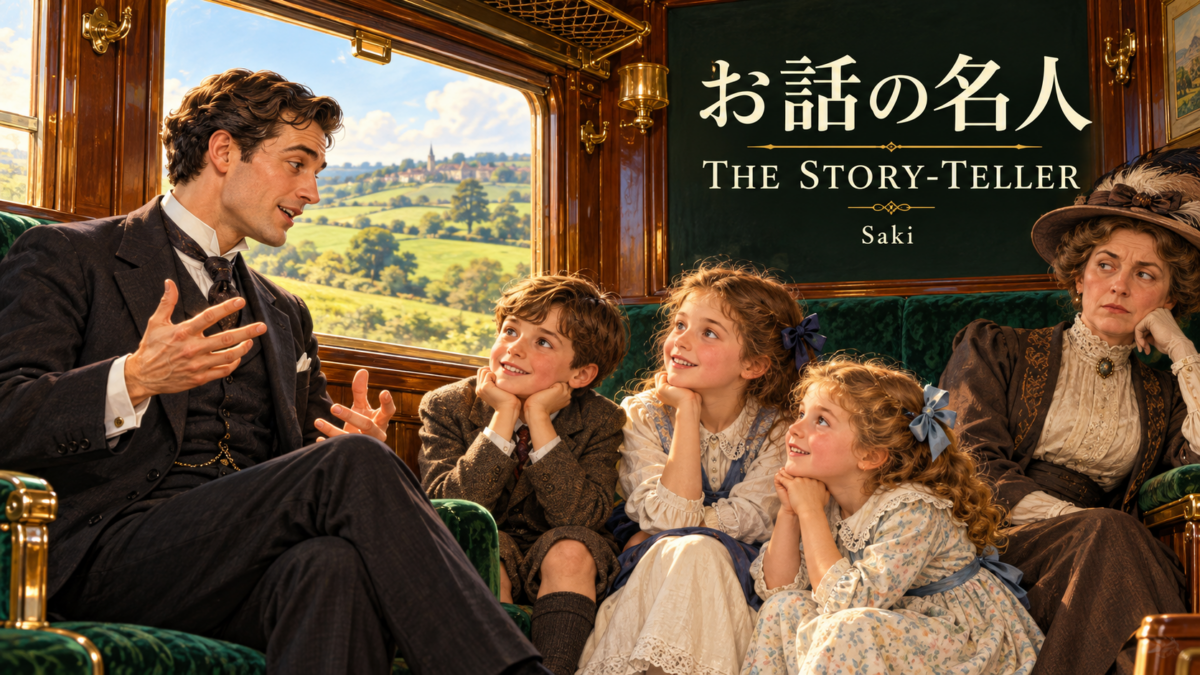
It was a hot afternoon, and the railway carriage was correspondingly sultry, and the next stop was at Templecombe, nearly an hour ahead.
暑い午後でした。列車の車両もそれにふさわしく蒸し暑く、次に停車するテンプルコムまでは、まだ一時間近くありました。
The occupants of the carriage were a small girl, and a smaller girl, and a small boy.
車両の乗客は、小さな女の子と、それより小さな女の子、そして小さな男の子でした。
An aunt belonging to the children occupied one corner seat,
子供たちの叔母が、隅の座席の一つに座っていました。
and the further corner seat on the opposite side was occupied by a bachelor who was a stranger to their party,
向かい側の奥の隅には、一行とは面識のない独身の男が座っていました。
but the small girls and the small boy emphatically occupied the compartment.
けれど、その区画を存分に占領していたのは、小さな女の子たちと、小さな男の子でした。
Both the aunt and the children were conversational in a limited, persistent way, reminding one of the attentions of a housefly that refuses to be discouraged.
叔母も子供たちも、限られた話題をしつこく話し続けていました。追い払ってもめげないイエバエの、まとわりつく様子を思わせました。
Most of the aunt’s remarks seemed to begin with “Don’t,” and nearly all of the children’s remarks began with “Why?” The bachelor said nothing out loud.
叔母の言葉のほとんどは「だめよ」で始まり、子供たちの言葉は、ほぼすべて「どうして?」で始まりました。独身の男は、声を出しては何も言いませんでした。
“Don’t, Cyril, don’t,” exclaimed the aunt, as the small boy began smacking the cushions of the seat, producing a cloud of dust at each blow.
「だめよ、シリル、だめ」と叔母が叫びました。男の子が座席のクッションをたたき始め、一打ちごとにほこりの雲を立てていたのです。
“Come and look out of the window,” she added.
「こちらへ来て、窓の外を見なさい」と彼女は付け加えました。
The child moved reluctantly to the window. “Why are those sheep being driven out of that field?” he asked.
子供はしぶしぶ窓へ移りました。「どうしてあの羊たちは、あの牧草地から追い出されているの?」と尋ねました。
“I expect they are being driven to another field where there is more grass,” said the aunt weakly.
「きっと、もっと草の多い別の牧草地へ連れていかれるのでしょう」と叔母は、力なく言いました。
“But there is lots of grass in that field,” protested the boy; “there’s nothing else but grass there. Aunt, there’s lots of grass in that field.”
「でも、あの牧草地には草がいっぱいあるよ」と男の子は反論しました。「草しかないじゃないか。おばさん、あそこには草がいっぱいあるんだよ」
“Perhaps the grass in the other field is better,” suggested the aunt fatuously.
「別の牧草地の草のほうが、いいのかもしれないわね」と叔母は、浅はかにも言いました。
“Why is it better?” came the swift, inevitable question.
「どうしてそっちのほうがいいの?」という、すばやく避けようのない質問が返ってきました。
“Oh, look at those cows!” exclaimed the aunt. Nearly every field along the line had contained cows or bullocks,
「あら、あの牛たちを見て!」と叔母は叫びました。線路沿いのほとんどの牧草地に、牛や去勢牛がいました。
but she spoke as though she were drawing attention to a rarity.
それなのに彼女は、珍しいものへ注意を向けさせるかのように話しました。
“Why is the grass in the other field better?” persisted Cyril.
「どうして別の牧草地の草のほうがいいの?」とシリルは、しつこく尋ねました。
The frown on the bachelor’s face was deepening to a scowl. He was a hard, unsympathetic man, the aunt decided in her mind.
独身の男の眉間のしわは、ますます険しい顔つきになっていました。叔母は心の中で、冷たく思いやりのない男だと決めつけました。
She was utterly unable to come to any satisfactory decision about the grass in the other field.
別の牧草地の草について、彼女には納得のいく答えをまったく出せませんでした。
The smaller girl created a diversion by beginning to recite “On the Road to Mandalay.”
小さいほうの女の子が、『マンダレーへの道』を暗唱し始め、気をそらしました。
She only knew the first line, but she put her limited knowledge to the fullest possible use.
彼女は最初の一行しか知りませんでしたが、その限られた知識を最大限に活用しました。
She repeated the line over and over again in a dreamy but resolute and very audible voice;
夢見心地ながらも断固として、しかもよく聞こえる声で、その一行を何度も繰り返しました。
it seemed to the bachelor as though some one had had a bet with her that she could not repeat the line aloud two thousand times without stopping.
独身の男には、誰かが彼女と、止まらずにその一行を二千回も声に出して繰り返せるはずがない、と賭けをしたように思えました。
Whoever it was who had made the wager was likely to lose his bet.
誰がその賭けをしたにせよ、負けることになりそうでした。
“Come over here and listen to a story,” said the aunt, when the bachelor had looked twice at her and once at the communication cord.
独身の男が、叔母を二度、それから非常用の連絡ひもを一度見たとき、叔母は言いました。「こちらへ来て、お話を聞きなさい」
The children moved listlessly towards the aunt’s end of the carriage. Evidently her reputation as a story-teller did not rank high in their estimation.
子供たちは、叔母のいる車両の端へ、気のない様子で移りました。どうやら彼女のお話の腕前は、子供たちの間ではあまり高く評価されていないようでした。
In a low, confidential voice, interrupted at frequent intervals by loud, petulant questionings from her listeners,
聞き手たちの、大きな声での不機嫌な質問に、しょっちゅう中断されながら、低い、内緒話のような声で、
she began an unenterprising and deplorably uninteresting story about a little girl who was good, and made friends with every one on account of her goodness,
彼女は、工夫もなく、嘆かわしいほどつまらない話を始めました。よい子の女の子が、その善良さゆえにみんなと友達になり、
and was finally saved from a mad bull by a number of rescuers who admired her moral character.
最後には、その立派な人柄に感心した大勢の救助者に、暴れ牛から助けられるという話でした。
“Wouldn’t they have saved her if she hadn’t been good?” demanded the bigger of the small girls. It was exactly the question that the bachelor had wanted to ask.
「よい子じゃなかったら、助けてくれなかったの?」と、大きいほうの女の子が尋ねました。それは、独身の男がまさに聞きたかった質問でした。
“Well, yes,” admitted the aunt lamely, “but I don’t think they would have run quite so fast to her help if they had not liked her so much.”
「まあ、助けてくれたでしょうね」と叔母は、苦し紛れに認めました。「でも、それほど好かれていなかったら、あんなに速く助けに走ってくれなかったと思うわ」
“It’s the stupidest story I’ve ever heard,” said the bigger of the small girls, with immense conviction.
「今まで聞いた中で、いちばんばかな話ね」と大きいほうの女の子は、確信に満ちて言いました。
“I didn’t listen after the first bit, it was so stupid,” said Cyril.
「最初のところしか聞かなかったよ。あまりにばかばかしいんだもの」とシリルは言いました。
The smaller girl made no actual comment on the story, but she had long ago recommenced a murmured repetition of her favourite line.
小さいほうの女の子は、お話について特に意見を述べませんでしたが、ずっと前から、お気に入りの一行を小声で繰り返し始めていました。
“You don’t seem to be a success as a story-teller,” said the bachelor suddenly from his corner.
「お話をするのは、あまりお上手ではないようですね」と独身の男が、隅の席から突然言いました。
The aunt bristled in instant defence at this unexpected attack.
叔母は、思いがけないこの攻撃に、即座に身構えて反発しました。
“It’s a very difficult thing to tell stories that children can both understand and appreciate,” she said stiffly.
「子供たちに理解できて、しかも楽しめるお話をするのは、とても難しいことです」と彼女は、こわばった口調で言いました。
“I don’t agree with you,” said the bachelor.
「私はそうは思いません」と独身の男は言いました。
“Perhaps you would like to tell them a story,” was the aunt’s retort.
「では、あなたがお話をしてくださったら?」と叔母は言い返しました。
“Tell us a story,” demanded the bigger of the small girls.
「お話をして」と大きいほうの女の子が、せがみました。
“Once upon a time,” began the bachelor, “there was a little girl called Bertha, who was extraordinarily good.”
「昔々」と独身の男は話し始めました。「バーサという小さな女の子がいて、並外れてよい子だったんだ」
The children’s momentarily-aroused interest began at once to flicker; all stories seemed dreadfully alike, no matter who told them.
子供たちの興味は、一瞬呼び起こされましたが、すぐに弱まり始めました。誰が話しても、お話はどれも、ひどく似ているようでした。
“She did all that she was told, she was always truthful, she kept her clothes clean, ate milk puddings as though they were jam tarts, learned her lessons perfectly,
「彼女は言われたことを全部して、いつもうそをつかず、服を清潔にして、ミルクプディングをジャムのタルトのようにおいしそうに食べ、勉強を完璧に覚え、
and was polite in her manners.”
礼儀正しく振る舞ったんだ」
“Was she pretty?” asked the bigger of the small girls.
「かわいかったの?」と大きいほうの女の子が尋ねました。
“Not as pretty as any of you,” said the bachelor, “but she was horribly good.”
「君たちの誰と比べても、それほどかわいくはなかった」と独身の男は言いました。「でも、恐ろしいほどよい子だったんだ」
There was a wave of reaction in favour of the story; the word horrible in connection with goodness was a novelty that commended itself.
お話に好意的な反応が、波のように起こりました。善良さに「恐ろしい」という言葉を結びつけるのは、目新しく、気に入ったのです。
It seemed to introduce a ring of truth that was absent from the aunt’s tales of infant life.
叔母が語る幼い子供の暮らしのお話にはなかった、本当らしい響きが生まれたようでした。
“She was so good,” continued the bachelor, “that she won several medals for goodness, which she always wore, pinned on to her dress.
「とてもよい子だったから」と独身の男は続けました。「よい子のメダルをいくつももらい、いつも服にピンで留めてつけていた。
There was a medal for obedience, another medal for punctuality, and a third for good behaviour. They were large metal medals and they clicked against one another as she walked.
素直さのメダル、時間を守ることのメダル、それから行儀のよさのメダルだ。どれも大きな金属のメダルで、歩くとぶつかり合って、かちかち音を立てた。
No other child in the town where she lived had as many as three medals, so everybody knew that she must be an extra good child.”
住んでいる町では、ほかに三つもメダルを持つ子供はいなかったから、みんな、彼女が特別によい子に違いないと知っていたんだ」
“Horribly good,” quoted Cyril.
「恐ろしいほどよい子」とシリルは、繰り返しました。
“Everybody talked about her goodness, and the Prince of the country got to hear about it,
「みんなが彼女の善良さを話していたので、その国の王子の耳にも入り、
and he said that as she was so very good she might be allowed once a week to walk in his park, which was just outside the town.
王子は、そんなによい子なら、町のすぐ外にある自分の庭園を、週に一度散歩することを許してやろうと言った。
It was a beautiful park, and no children were ever allowed in it, so it was a great honour for Bertha to be allowed to go there.”
美しい庭園で、子供は誰も入れてもらえなかったから、そこへ行くのを許されるのは、バーサにとってたいへんな名誉だったんだ」
“Were there any sheep in the park?” demanded Cyril.
「庭園に羊はいたの?」とシリルが尋ねました。
“No;” said the bachelor, “there were no sheep.”
「いや、羊はいなかった」と独身の男は言いました。
“Why weren’t there any sheep?” came the inevitable question arising out of that answer.
「どうして羊がいなかったの?」という、避けようのない質問が、その答えから生まれました。
The aunt permitted herself a smile, which might almost have been described as a grin.
叔母は笑みを浮かべました。ほとんど、にやにや笑いと言ってよいものでした。
“There were no sheep in the park,” said the bachelor,
「庭園に羊がいなかったのは」と独身の男は言いました。
“because the Prince’s mother had once had a dream that her son would either be killed by a sheep or else by a clock falling on him.
「王子の母親が、息子が羊に殺されるか、落ちてきた時計の下敷きになって死ぬという夢を、かつて見たからなんだ。
For that reason the Prince never kept a sheep in his park or a clock in his palace.”
だから王子は、庭園では羊を飼わず、宮殿には時計を置かなかった」
The aunt suppressed a gasp of admiration.
叔母は、感嘆の声を押し殺しました。
“Was the Prince killed by a sheep or by a clock?” asked Cyril.
「王子は羊に殺されたの? それとも時計に?」とシリルが尋ねました。
“He is still alive, so we can’t tell whether the dream will come true,” said the bachelor unconcernedly;
「まだ生きているから、その夢が本当になるかはわからない」と独身の男は、平然と言いました。
“anyway, there were no sheep in the park, but there were lots of little pigs running all over the place.”
「とにかく庭園には羊はいなかったけれど、小さな豚がたくさん、あちこち走り回っていたんだ」
“What colour were they?”
「何色だったの?」
“Black with white faces, white with black spots, black all over, grey with white patches, and some were white all over.”
「黒くて顔が白いのや、白くて黒い斑点があるの、全身が黒いの、灰色で白い模様があるの、それから全身が白いのもいた」
The story-teller paused to let a full idea of the park’s treasures sink into the children’s imaginations; then he resumed:
語り手は、庭園の宝物を子供たちが十分に想像できるように、ひと呼吸置きました。それから続けました。
“Bertha was rather sorry to find that there were no flowers in the park.
「庭園に花がないとわかって、バーサは少し残念に思った。
She had promised her aunts, with tears in her eyes, that she would not pick any of the kind Prince’s flowers, and she had meant to keep her promise,
親切な王子の花を一つも摘まないと、涙を浮かべて叔母たちに約束し、その約束を守るつもりでいたから、
so of course it made her feel silly to find that there were no flowers to pick.”
摘む花が一つもないとわかって、当然、ばかみたいな気持ちになったんだ」
“Why weren’t there any flowers?”
「どうして花がなかったの?」
“Because the pigs had eaten them all,” said the bachelor promptly.
「豚が全部食べてしまったからだ」と独身の男は、すぐに答えました。
“The gardeners had told the Prince that you couldn’t have pigs and flowers, so he decided to have pigs and no flowers.”
「庭師たちが王子に、豚と花の両方は持てませんと言ったので、王子は、花をなくして豚を飼うことにしたんだ」
There was a murmur of approval at the excellence of the Prince’s decision; so many people would have decided the other way.
王子の決断のすばらしさに、賛同の声がもれました。多くの人は、逆を選んだことでしょう。
“There were lots of other delightful things in the park.
「庭園には、ほかにも楽しいものがたくさんあった。
There were ponds with gold and blue and green fish in them, and trees with beautiful parrots that said clever things at a moment’s notice,
金色や青や緑の魚がいる池や、いつでもすぐに気の利いたことを言う、美しいオウムのいる木々があり、
and humming birds that hummed all the popular tunes of the day.
そのころ流行していた曲を、全部口ずさむハチドリもいた。
Bertha walked up and down and enjoyed herself immensely, and thought to herself:
バーサは、あちこち歩いて大いに楽しみ、心の中でこう考えた。
‘If I were not so extraordinarily good I should not have been allowed to come into this beautiful park and enjoy all that there is to be seen in it,’
『私がこんなに並外れてよい子でなかったら、この美しい庭園に来て、ここで見られるものを全部楽しむことは、許されなかったでしょうね』
and her three medals clinked against one another as she walked and helped to remind her how very good she really was.
歩くたびに三つのメダルがぶつかって鳴り、自分がどれほどよい子なのかを、彼女に思い出させた。
Just then an enormous wolf came prowling into the park to see if it could catch a fat little pig for its supper.”
ちょうどそのとき、大きな狼が、夕食に太った子豚を捕まえられないかと、庭園へ忍び込んできたんだ」
“What colour was it?” asked the children, amid an immediate quickening of interest.
「何色だったの?」と子供たちは尋ねました。たちまち興味が高まっていました。
“Mud-colour all over, with a black tongue and pale grey eyes that gleamed with unspeakable ferocity.
「全身が泥の色で、舌は黒く、薄い灰色の目は、言葉にできないほどの獰猛さを帯びて光っていた。
The first thing that it saw in the park was Bertha; her pinafore was so spotlessly white and clean that it could be seen from a great distance.
庭園で最初に目に入ったのはバーサだった。彼女のエプロンドレスは、しみ一つない白さで清潔だったので、遠くからでも見えたんだ。
Bertha saw the wolf and saw that it was stealing towards her, and she began to wish that she had never been allowed to come into the park.
バーサは狼を見て、それが自分のほうへ忍び寄るのも見た。そして、この庭園に来るのを許されなければよかったと思い始めた。
She ran as hard as she could, and the wolf came after her with huge leaps and bounds.
力の限り走り、狼は大きく跳んではねながら、あとを追ってきた。
She managed to reach a shrubbery of myrtle bushes and she hid herself in one of the thickest of the bushes.
彼女はなんとかギンバイカの茂みにたどり着き、最も密に茂った一本の中へ隠れた。
The wolf came sniffing among the branches, its black tongue lolling out of its mouth and its pale grey eyes glaring with rage.
狼は枝の間を、鼻を鳴らして嗅ぎ回った。黒い舌は口から垂れ下がり、薄い灰色の目は、怒りに燃えていた。
Bertha was terribly frightened, and thought to herself: ‘If I had not been so extraordinarily good I should have been safe in the town at this moment.’
バーサはひどくおびえ、心の中で考えた。『私がこんなに並外れてよい子でなかったら、今ごろ町の中で無事にいたでしょうに』
However, the scent of the myrtle was so strong that the wolf could not sniff out where Bertha was hiding,
けれど、ギンバイカの香りがとても強く、狼はバーサがどこに隠れているのか、嗅ぎつけられなかった。
and the bushes were so thick that he might have hunted about in them for a long time without catching sight of her,
茂みもとても密だったので、長いあいだ探し回っても、彼女の姿を見つけられなかったかもしれない。
so he thought he might as well go off and catch a little pig instead.
そこで狼は、立ち去って、代わりに子豚を捕まえるほうがいいだろうと思った。
Bertha was trembling very much at having the wolf prowling and sniffing so near her,
バーサは、狼がすぐそばを歩き回って嗅ぎ回っているので、ひどく震えていた。
and as she trembled the medal for obedience clinked against the medals for good conduct and punctuality.
震えるたびに、素直さのメダルが、行儀のよさと時間を守ることのメダルにぶつかって鳴った。
The wolf was just moving away when he heard the sound of the medals clinking and stopped to listen; they clinked again in a bush quite near him.
狼が離れかけたとき、メダルの鳴る音を聞いて、立ち止まって耳を澄ませた。すぐ近くの茂みで、また鳴った。
He dashed into the bush, his pale grey eyes gleaming with ferocity and triumph, and dragged Bertha out and devoured her to the last morsel.
狼は茂みへ飛び込み、薄い灰色の目を獰猛さと勝ち誇った喜びで光らせ、バーサを引きずり出して、最後の一口まで食べてしまった。
All that was left of her were her shoes, bits of clothing, and the three medals for goodness.”
残ったのは、靴と、服の切れ端、それから善良さを表す三つのメダルだけだったんだ」
“Were any of the little pigs killed?”
「子豚は、一匹でも殺されたの?」
“No, they all escaped.”
「いや、みんな逃げた」
“The story began badly,” said the smaller of the small girls, “but it had a beautiful ending.”
「始まりはよくなかったけれど、終わりはすてきだったわ」と小さいほうの女の子が言いました。
“It is the most beautiful story that I ever heard,” said the bigger of the small girls, with immense decision.
「今まで聞いた中で、いちばんすてきなお話よ」と大きいほうの女の子は、きっぱり言いました。
“It is the only beautiful story I have ever heard,” said Cyril.
「今まで聞いた中で、すてきだったお話は、これだけだよ」とシリルは言いました。
A dissentient opinion came from the aunt.
叔母から、反対の意見が出ました。
“A most improper story to tell to young children! You have undermined the effect of years of careful teaching.”
「小さな子供に聞かせるには、なんて不適切なお話でしょう! 何年も注意深く教えてきたことを、台無しにしてしまいましたね」
“At any rate,” said the bachelor, collecting his belongings preparatory to leaving the carriage, “I kept them quiet for ten minutes, which was more than you were able to do.”
「ともかく」と独身の男は、車両を降りる準備をして荷物を集めながら言いました。「私は十分間、子供たちを静かにさせました。あなたにはできなかったことですよ」
“Unhappy woman!” he observed to himself as he walked down the platform of Templecombe station;
「気の毒なご婦人だ」と彼は、テンプルコム駅のホームを歩きながら独り言を言いました。
“for the next six months or so those children will assail her in public with demands for an improper story!”
「これから半年ほど、あの子たちは人前で、不適切なお話をしてとせがんで、彼女を困らせるだろうな!」
出典 (Source):
原文:Project Gutenberg — The Story-Teller, Saki
朗読:LibriVox — The Story-Teller(Justin Brett版)
英語原文と、新しく作成した日本語訳を掲載しています。