
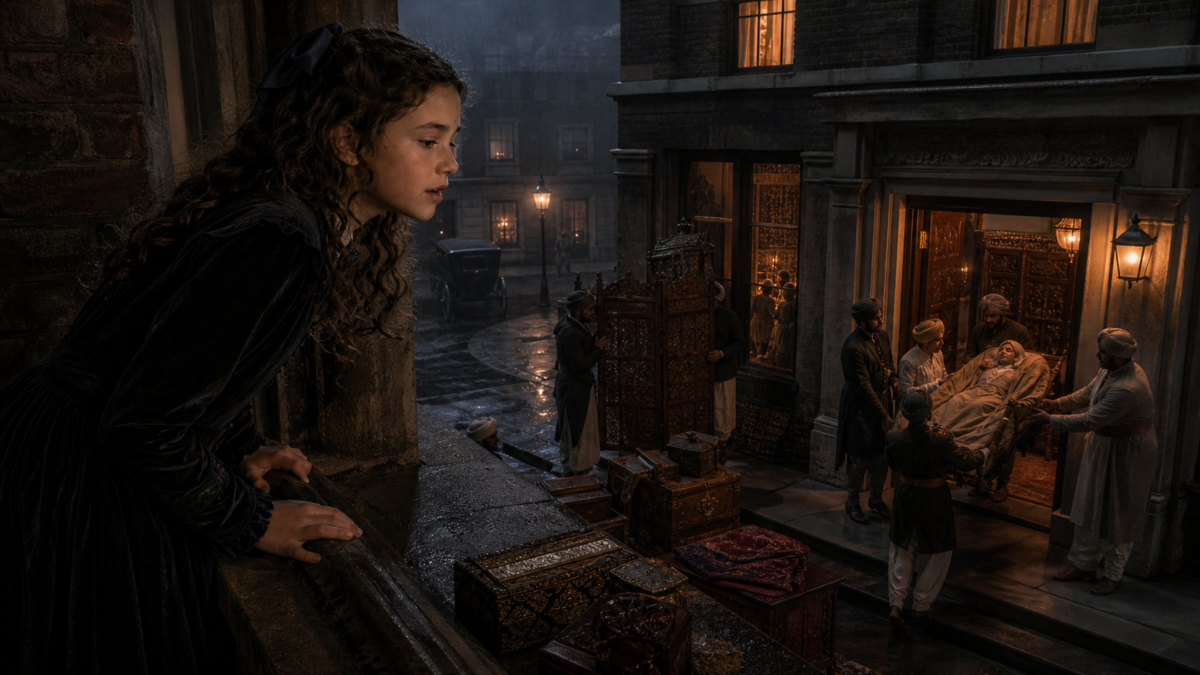
『小公女』第10章を、短い英語のフレーズを交えて朗読します。
英語朗読 Kara Shallenberg(LibriVox)
But it was a perilous thing for Ermengarde and Lottie to make pilgrimages to the attic. They could never be quite sure when Sara would be there,
しかしアーメンガードとロッティが屋根裏へ通うのは危険でした。セーラがいるかどうか、いつも確かとは限らず、
and they could scarcely ever be certain that Miss Amelia would not make a tour of inspection through the bedrooms
生徒たちが眠ったはずの後で、アメリア先生が寝室を見回らないとも、ほとんど確信できなかったからです。
after the pupils were supposed to be asleep. So their visits were rare ones, and Sara lived a strange and lonely life.
そのため訪問はまれで、セーラは奇妙で孤独な暮らしを送っていました。

It was a lonelier life when she was downstairs than when she was in her attic. She had no one to talk to;
階下にいる時の方が、屋根裏にいる時より孤独でした。話し相手は誰もいません。
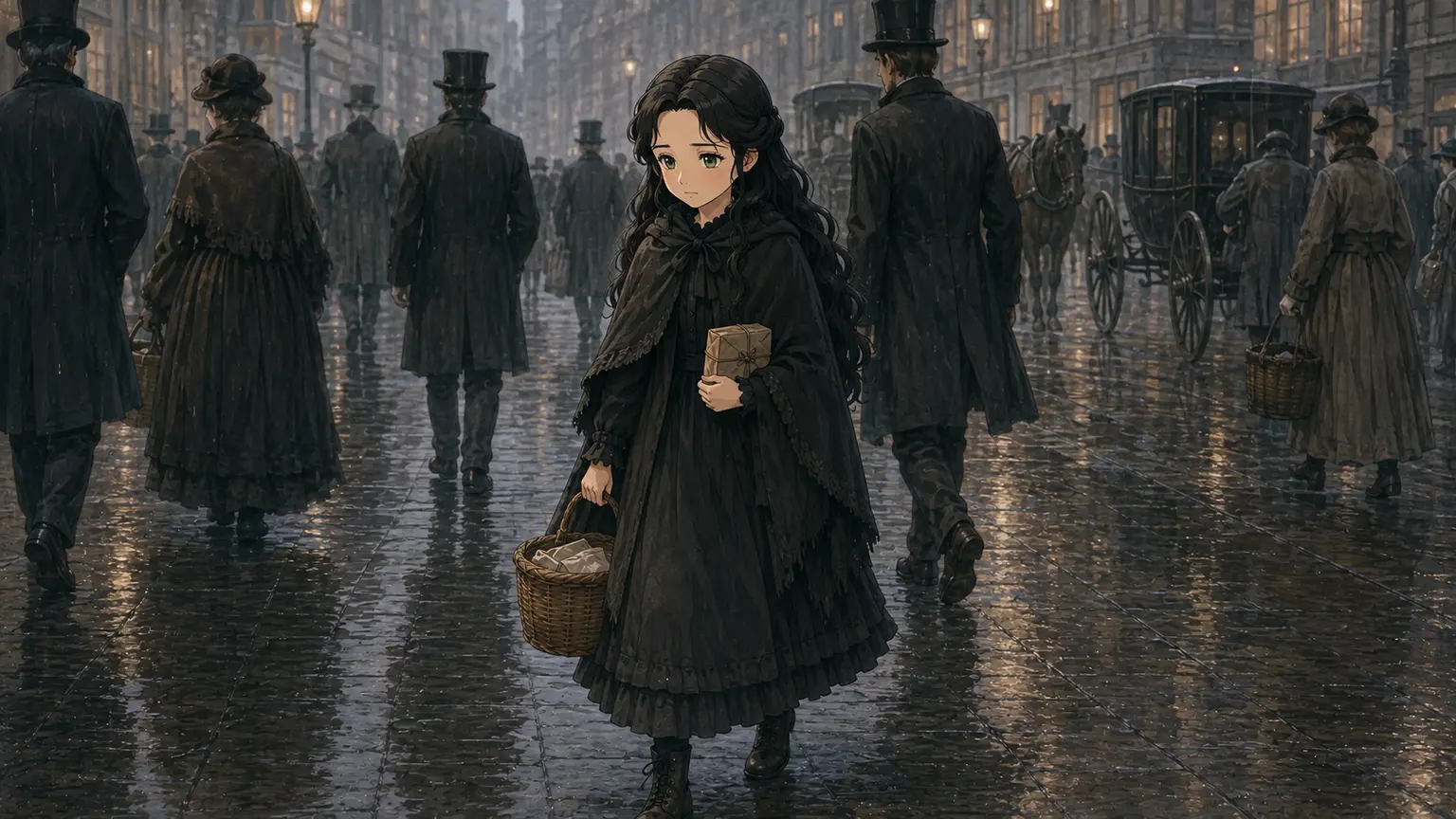
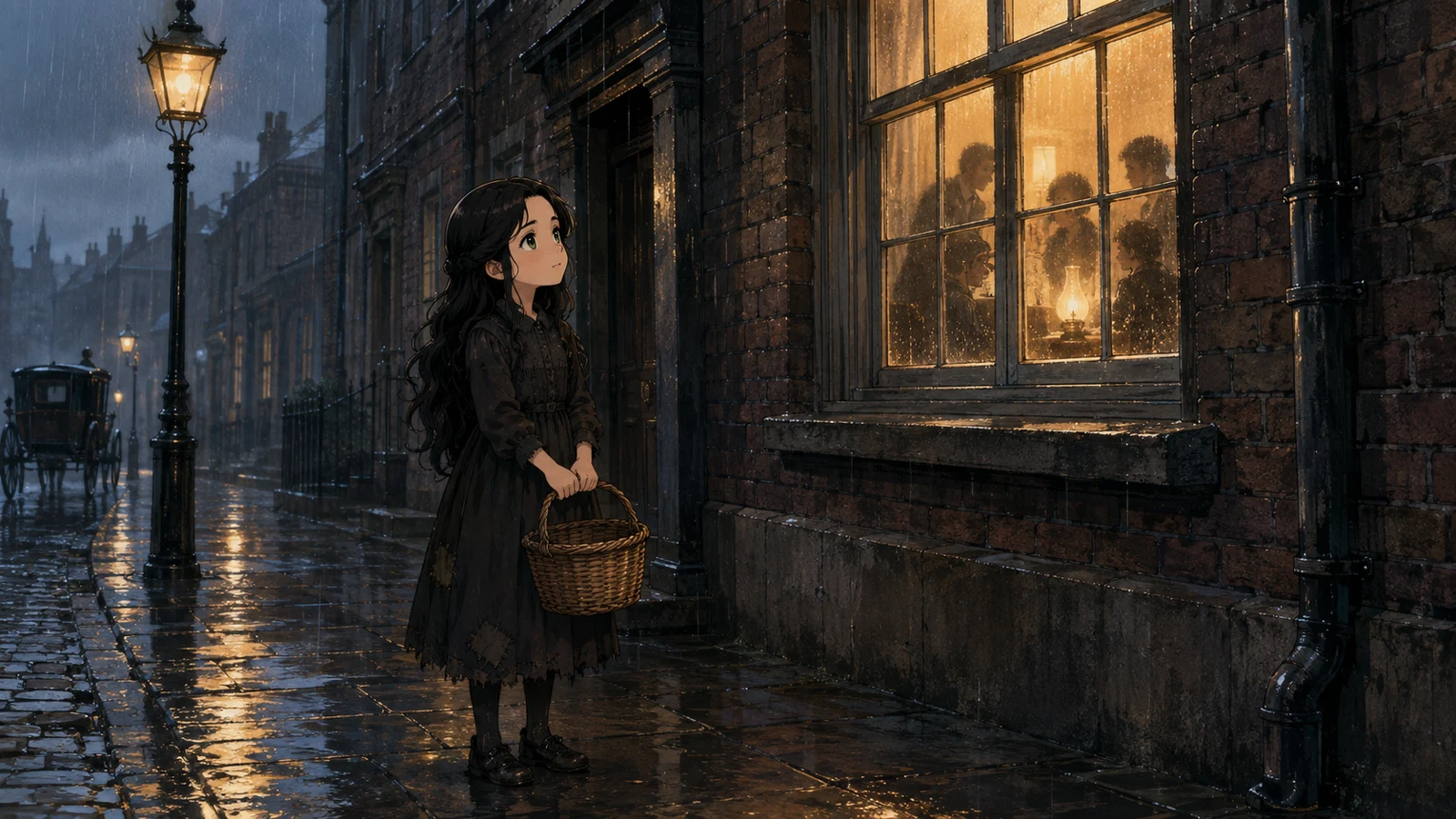
and when she was sent out on errands and walked through the streets, a forlorn little figure carrying a basket
使いに出されて通りを歩く時は、籠や包みを抱えた寂しげな小さな姿でした。

or a parcel, trying to hold her hat on when the wind was blowing, and feeling the water soak through her shoes when it was raining,
風には帽子を押さえ、雨には靴の中まで水が染み込むのを感じながら歩きました。

she felt as if the crowds hurrying past her made her loneliness greater. When she had been the Princess Sara,
急ぎ足で通り過ぎる群衆が、いっそう孤独を深めるようでした。かつて『セーラ姫』だった頃は、

driving through the streets in her brougham, or walking, attended by Mariette, the sight of her bright, eager little face and picturesque coats and hats had often caused people to look after her.
馬車で通りを走ったり、マリエットを連れて歩いたりすると、明るく生き生きした顔と絵のような上着や帽子が人々を振り返らせました。
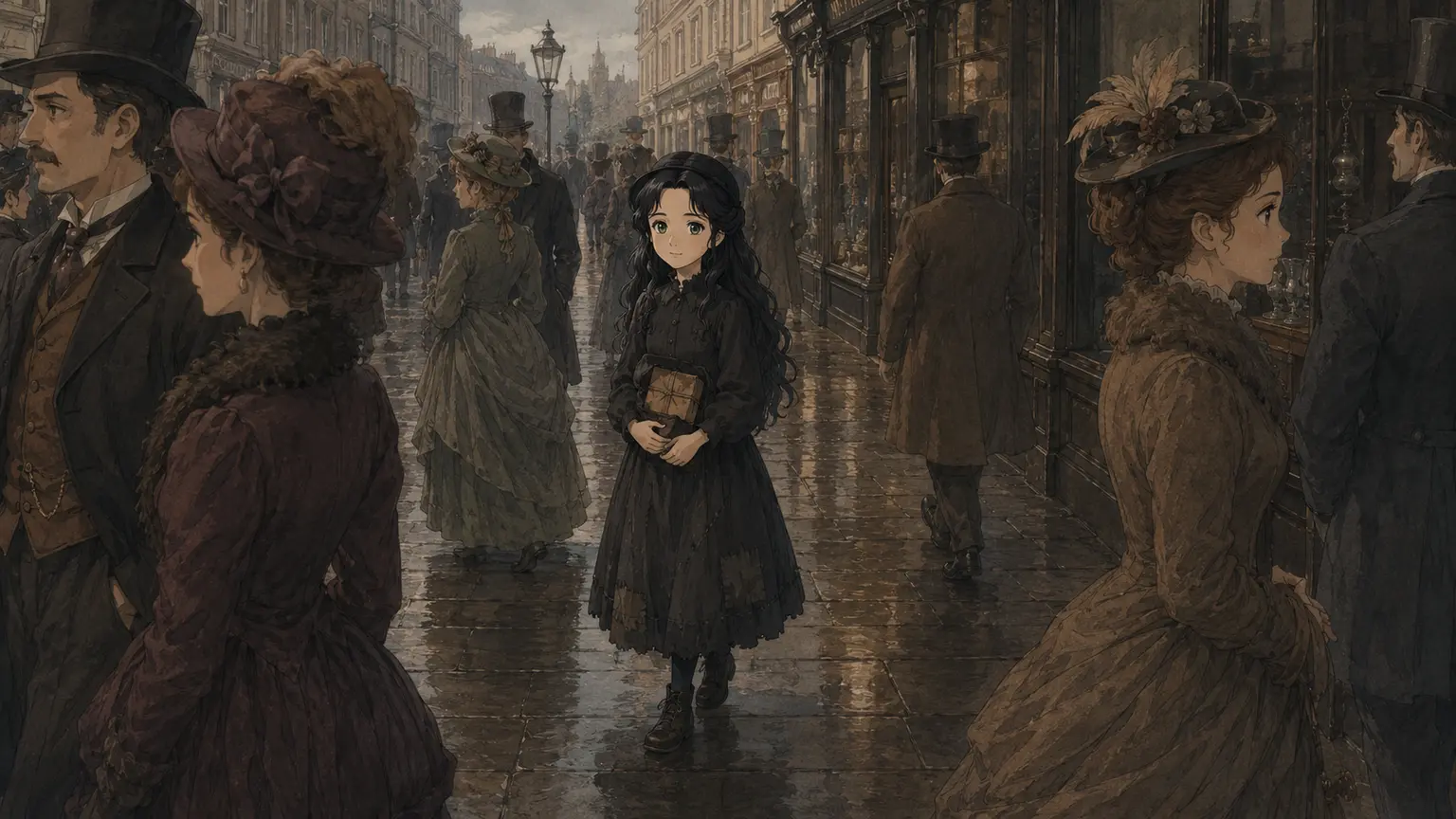
A happy, beautifully cared for little girl naturally attracts attention. Shabby, poorly dressed children are not rare enough
幸福で大切に育てられた美しい少女は、自然と目を引きます。みすぼらしい子供は珍しくも美しくもないので、
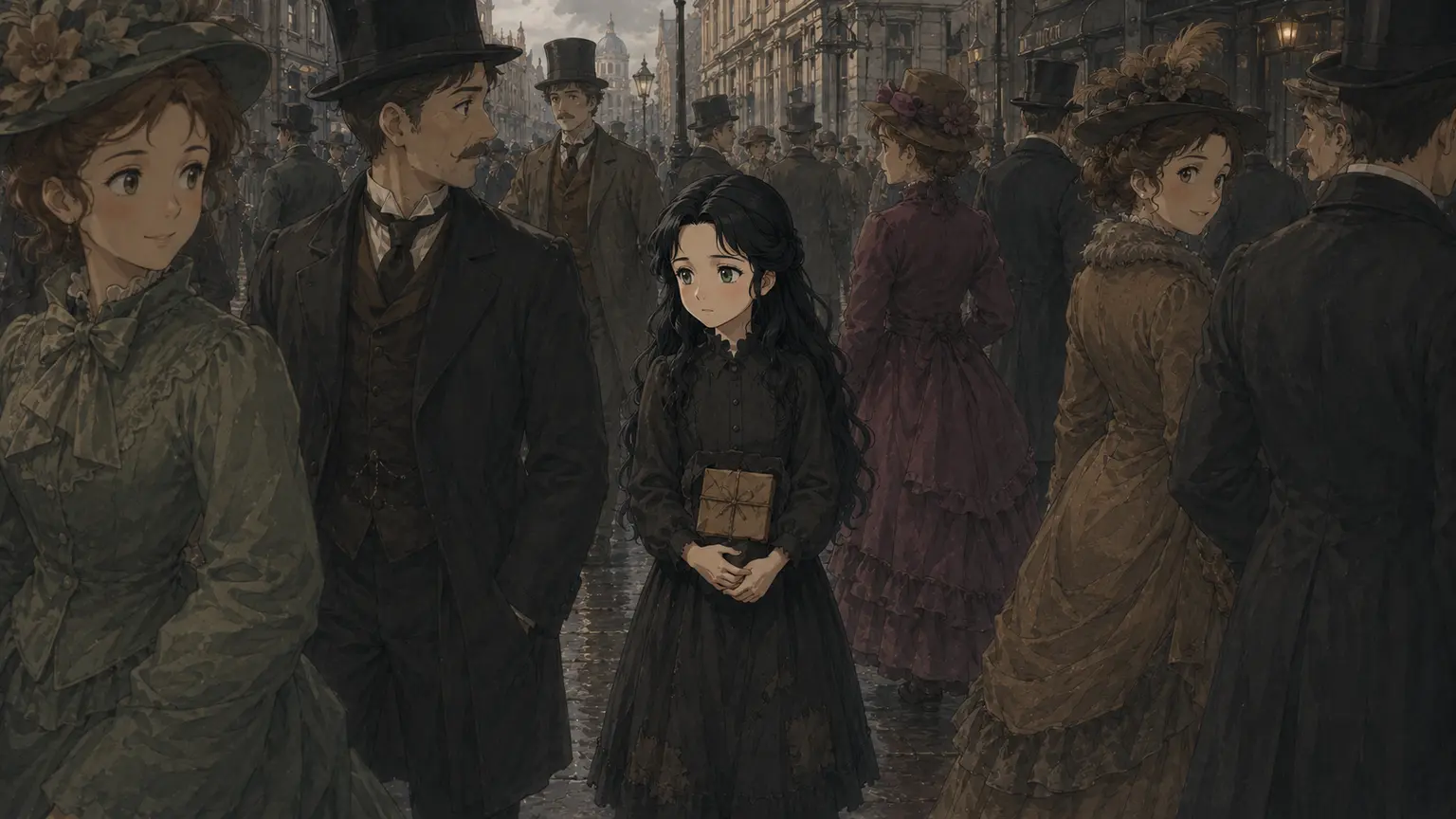
and pretty enough to make people turn around to look at them and smile. No one looked at Sara in these days,
人は振り返って微笑んだりしません。この頃のセーラを見る者は誰もいませんでした。
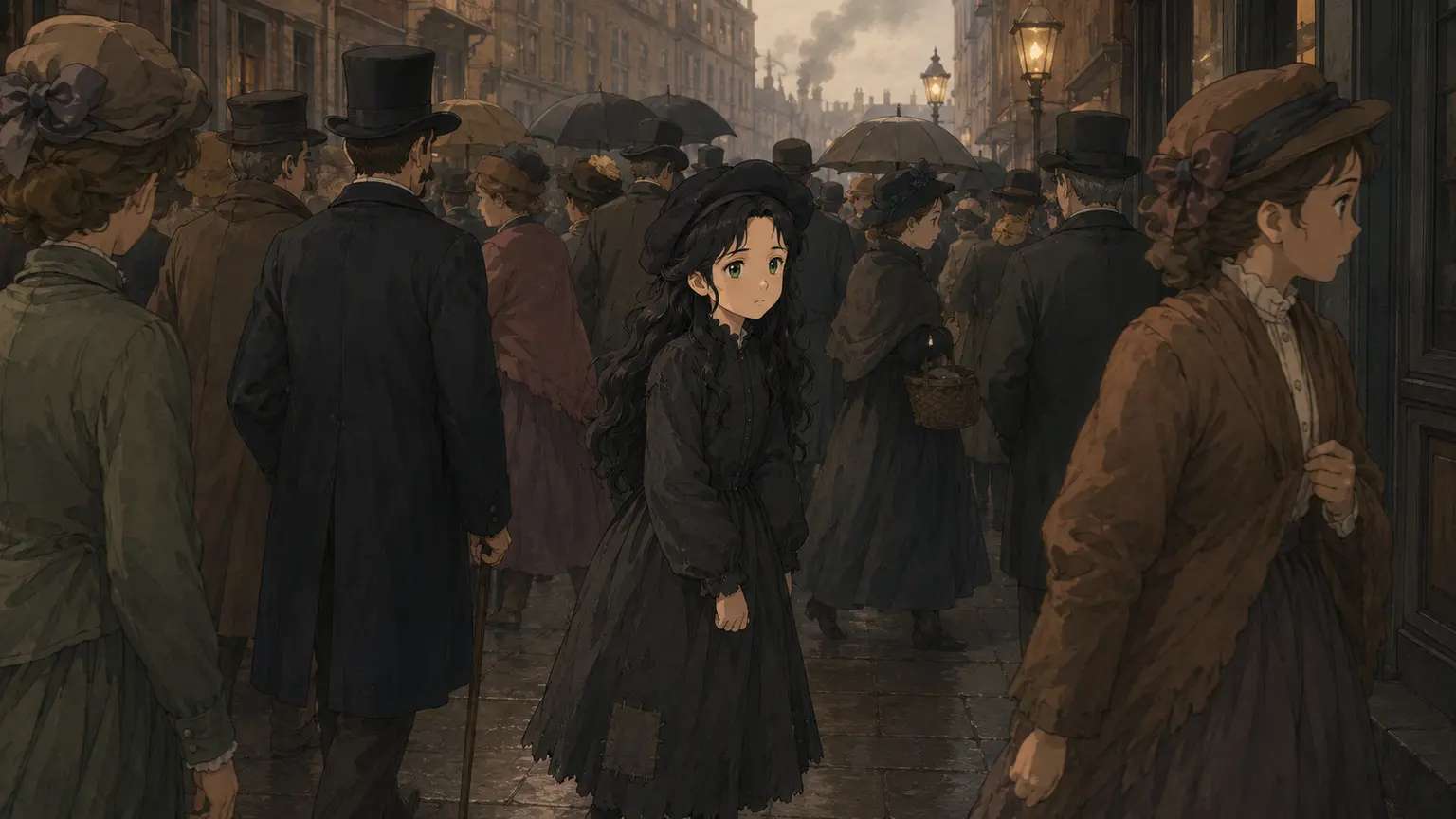
and no one seemed to see her as she hurried along the crowded pavements. She had begun to grow very fast,
混み合う歩道を急いでも、誰にも見えていないようでした。背丈は急に伸び始め、
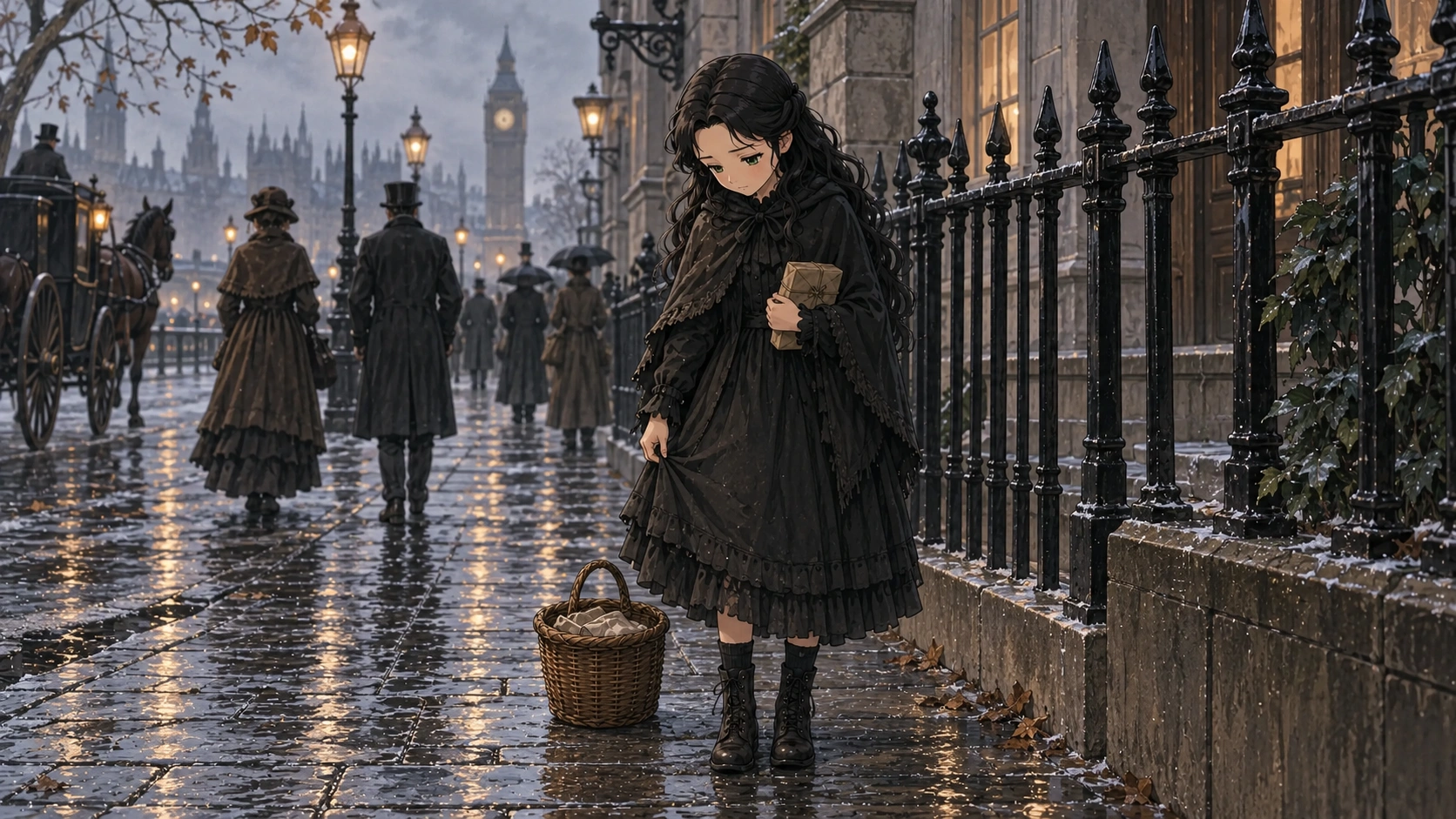
and, as she was dressed only in such clothes as the plainer remnants of her wardrobe would supply,
着ているのは、衣装箪笥に残った地味な服だけでした。
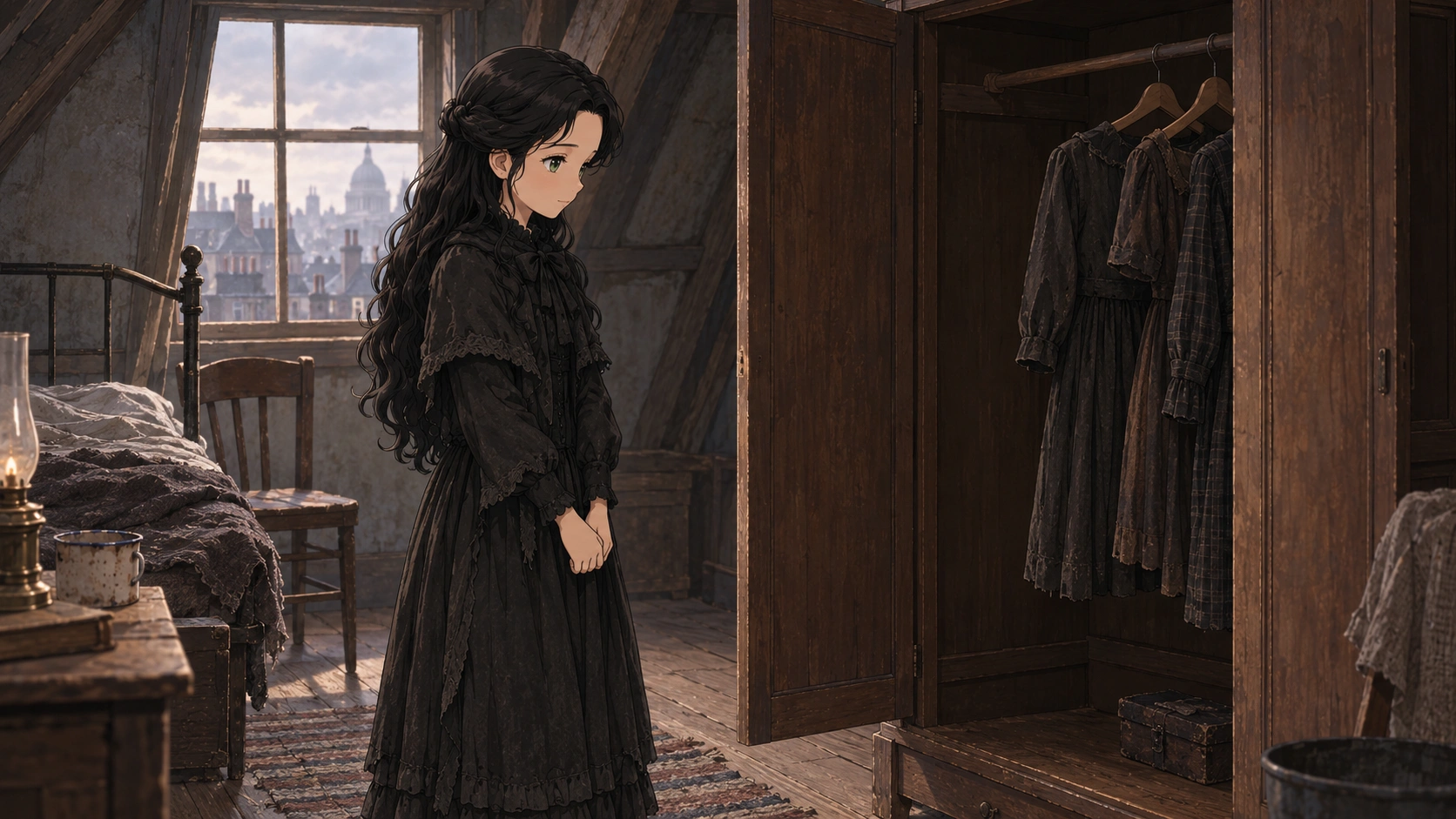
she knew she looked very queer, indeed. All her valuable garments had been disposed of,
自分がひどく奇妙に見えることは分かっていました。価値のある服はすべて処分され、
and such as had been left for her use she was expected to wear so long as she could put them on at all.
残された服は、どうにか着られる限りずっと着続けるよう求められました。
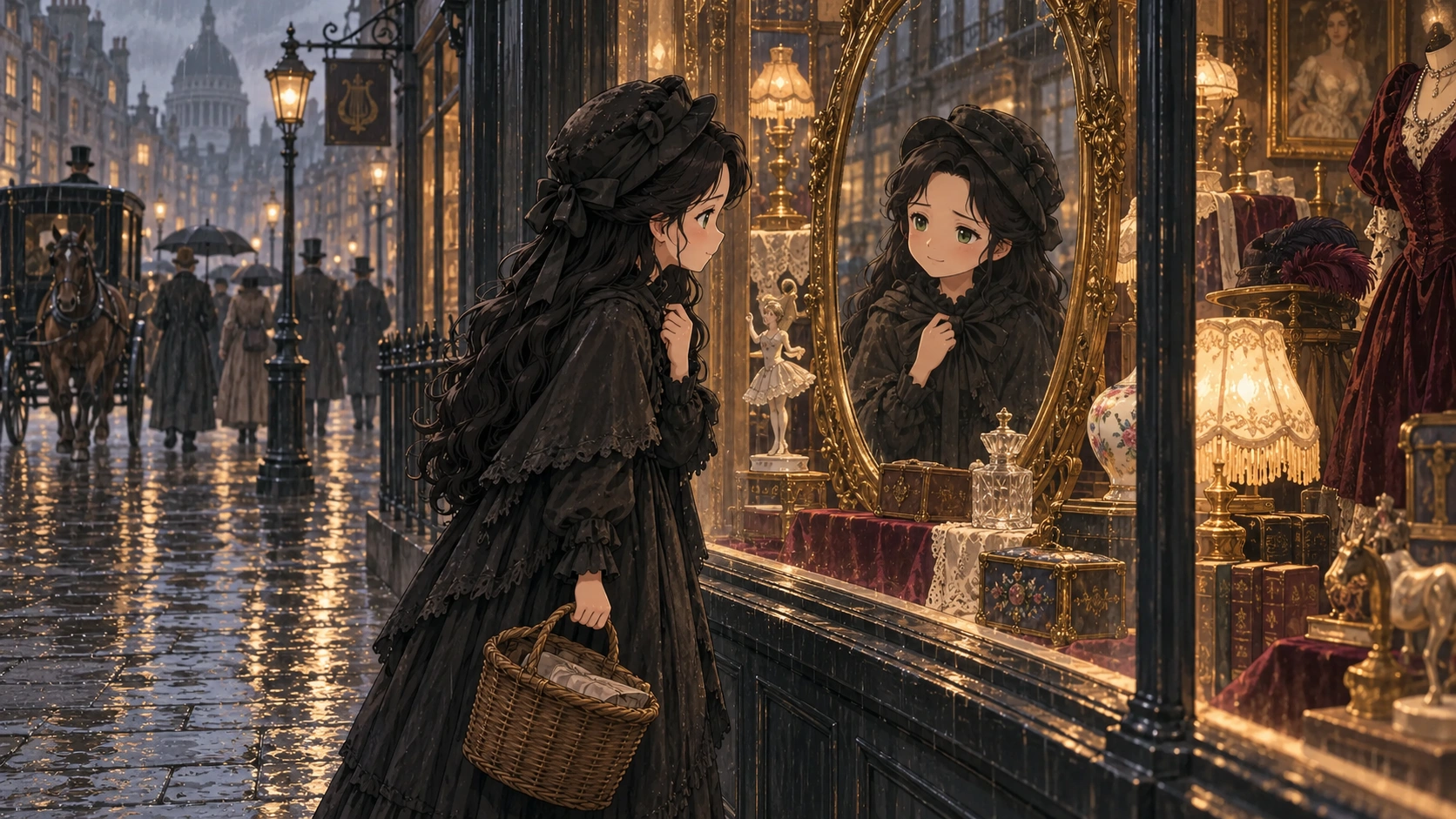
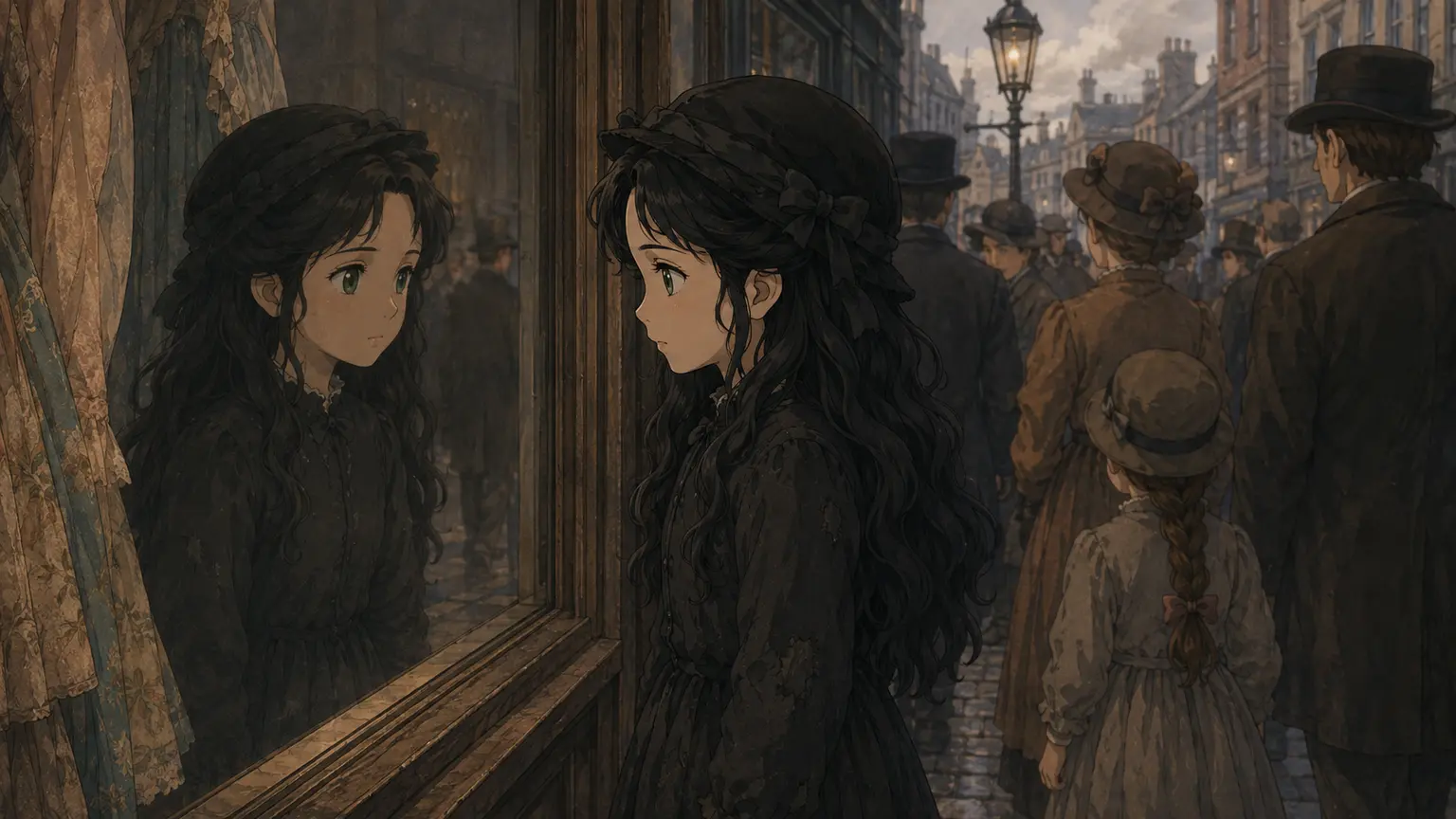
Sometimes, when she passed a shop window with a mirror in it, she almost laughed outright on catching a glimpse of herself,
鏡のある店先を通る時、自分の姿を見て思わず笑い出しそうになることもありました。
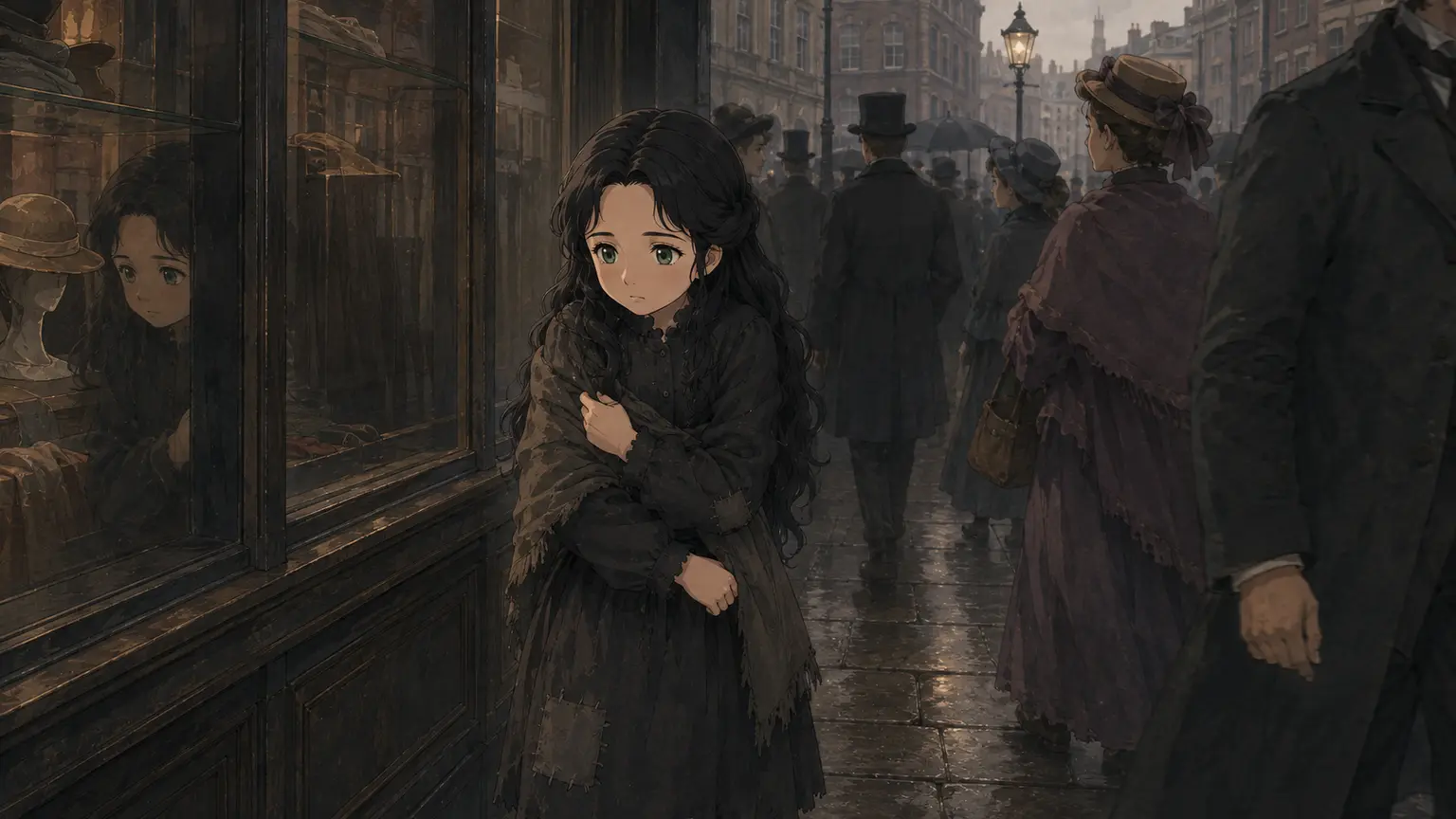
and sometimes her face went red and she bit her lip and turned away. In the evening, when she passed houses whose windows were lighted up,
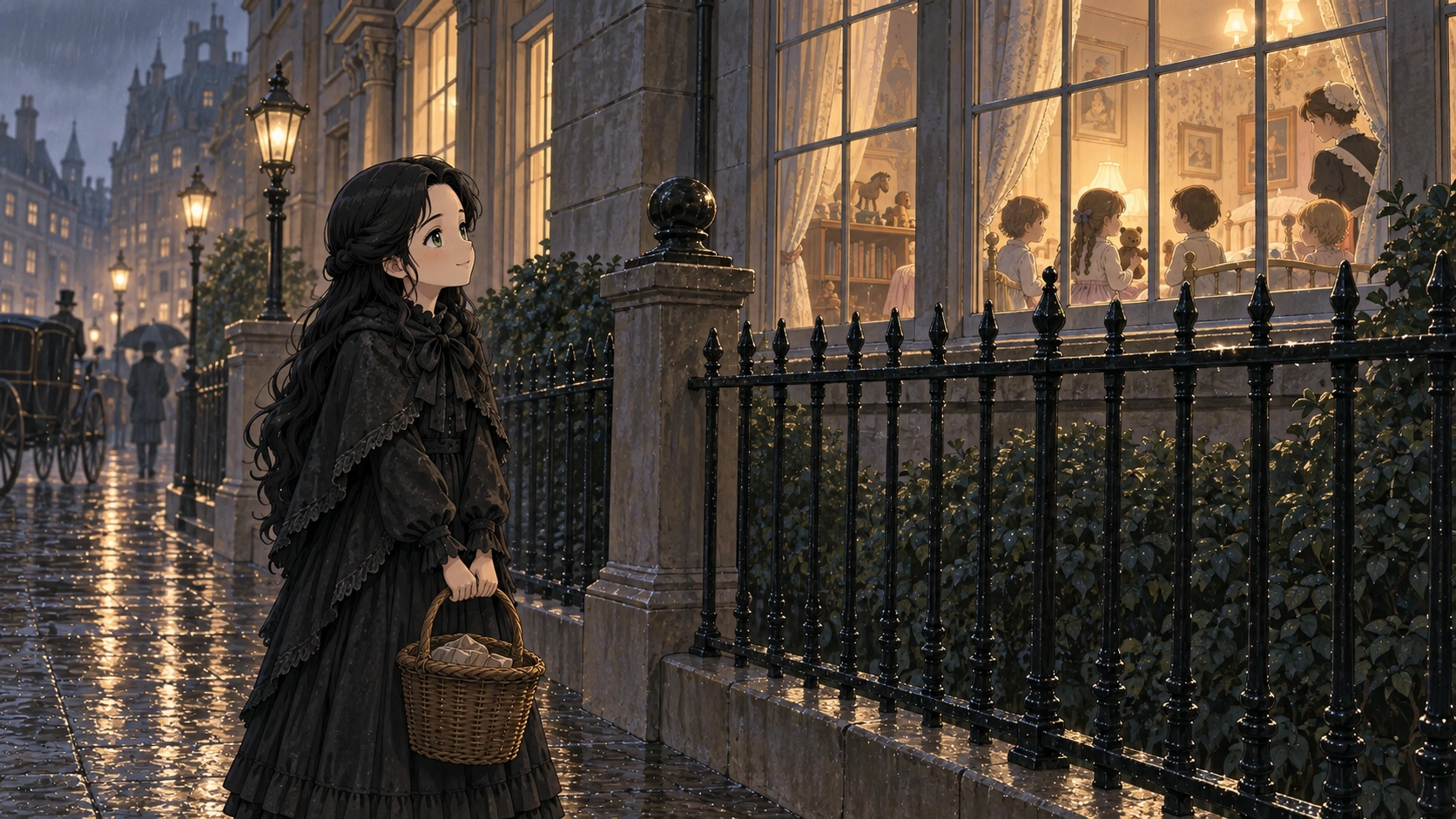
時には顔を赤らめ、唇をかんで目をそらしました。夕方、明かりのついた家々を通る時、
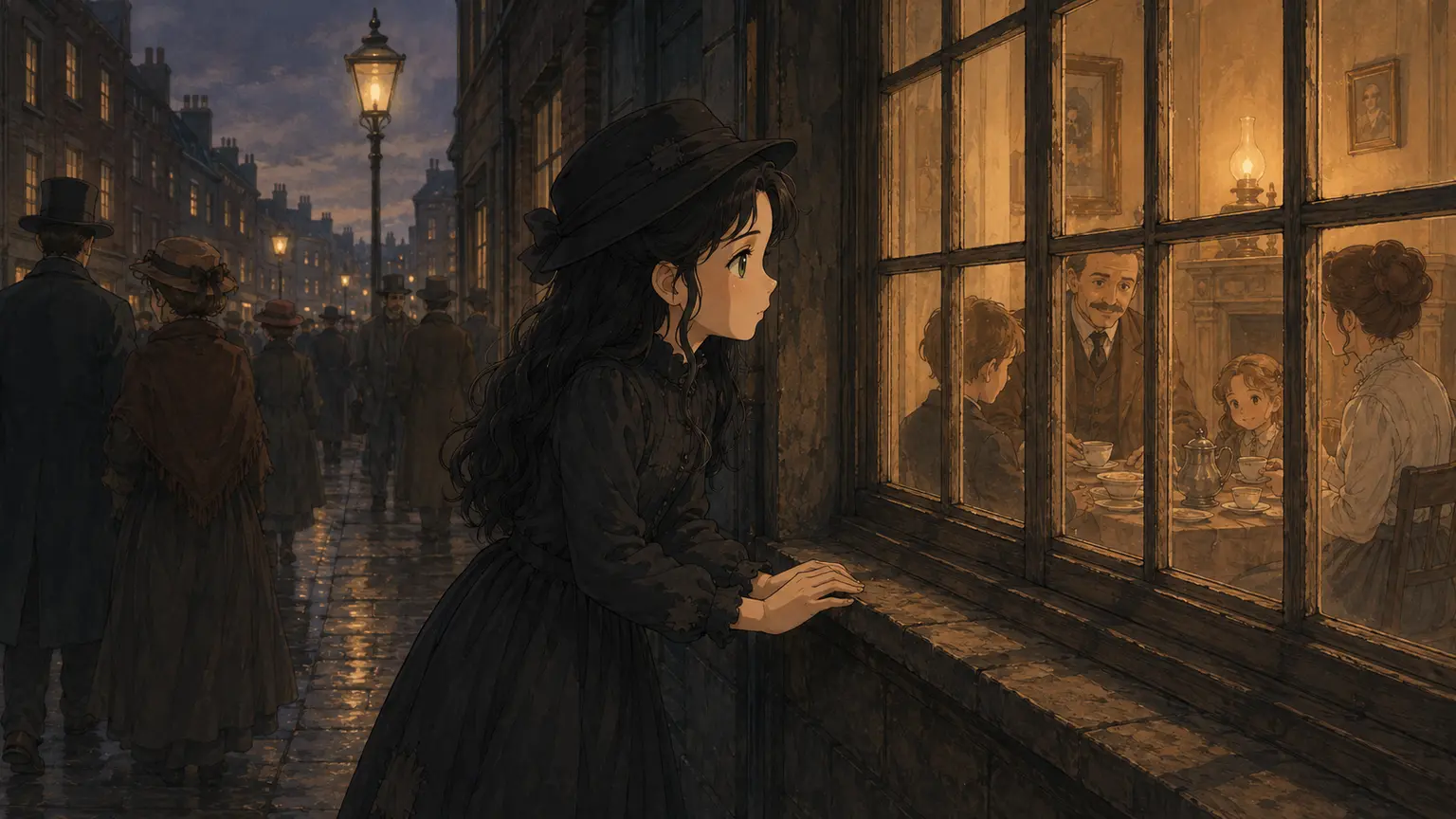
she used to look into the warm rooms and amuse herself by imagining things about the people
暖かな部屋をのぞき、暖炉や食卓の周りにいる人々について想像して楽しみました。
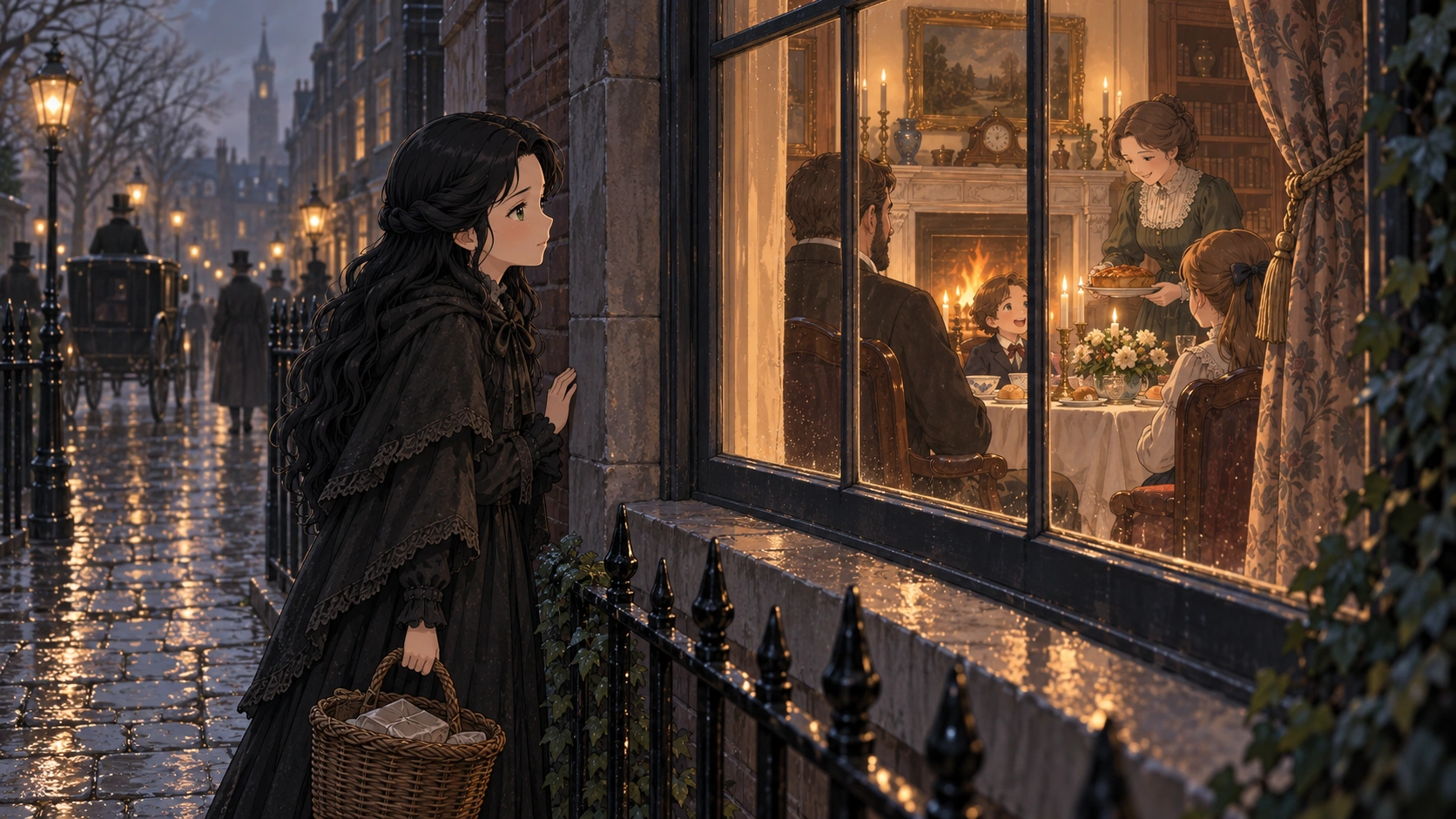
she saw sitting before the fires or about the tables. It always interested her to catch glimpses of rooms before the shutters were closed.
雨戸が閉じられる前に部屋の様子をちらりと見るのが、いつも面白かったのです。

There were several families in the square in which Miss Minchin lived, with which she had become quite familiar in a way of her own.
ミンチン先生の学校がある広場には、セーラが自分なりによく知るようになった家族がいくつかありました。
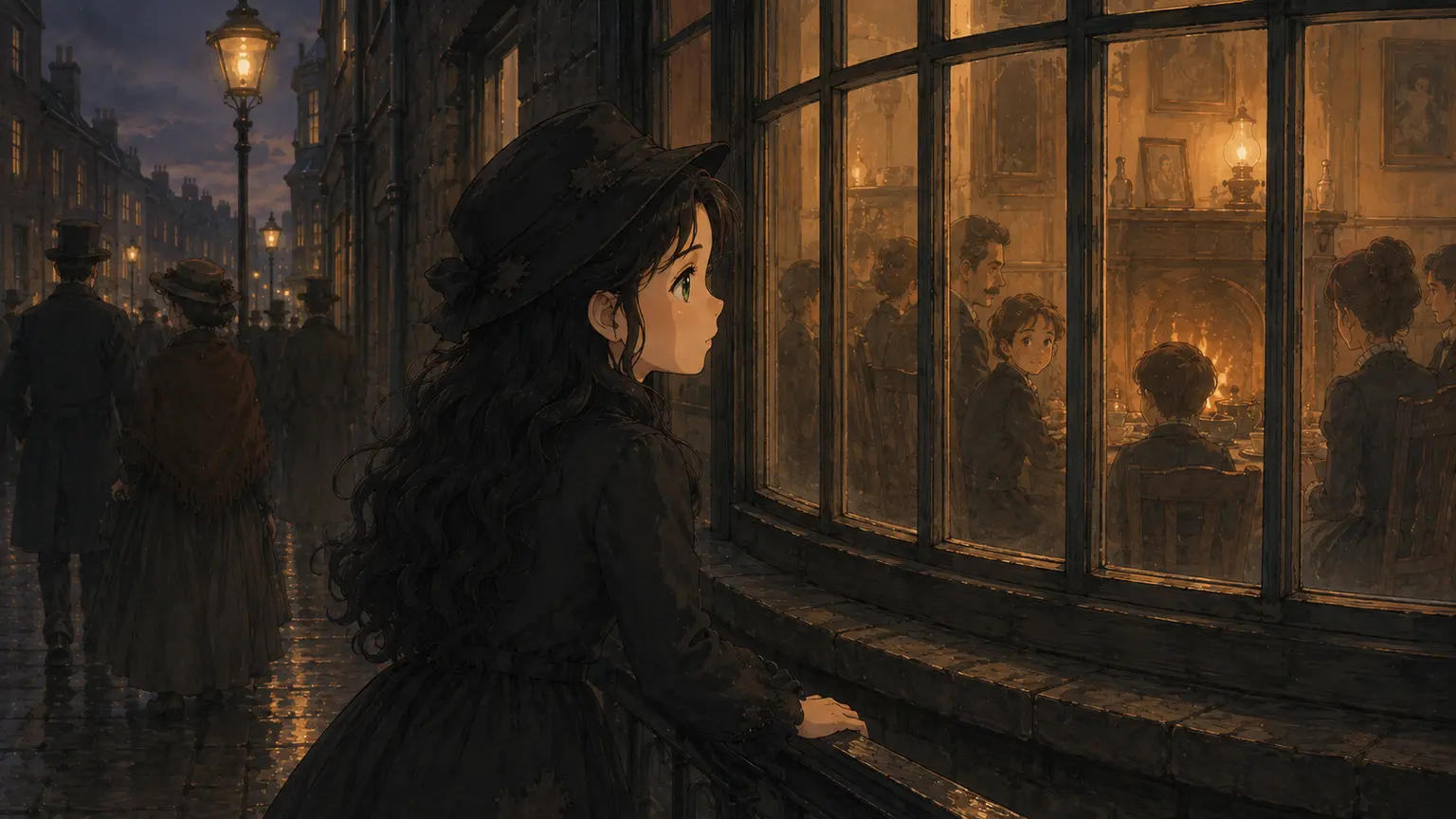
The one she liked best she called the Large Family. She called it the Large Family not because the members of it were big--for, indeed,
一番好きな一家を『大家族』と呼びました。皆が大きいからではなく――実際、
most of them were little--but because there were so many of them. There were eight children in the Large Family, and a stout,
大半は小さな子供でした――人数が多かったからです。子供は八人、そしてふっくら赤ら顔の
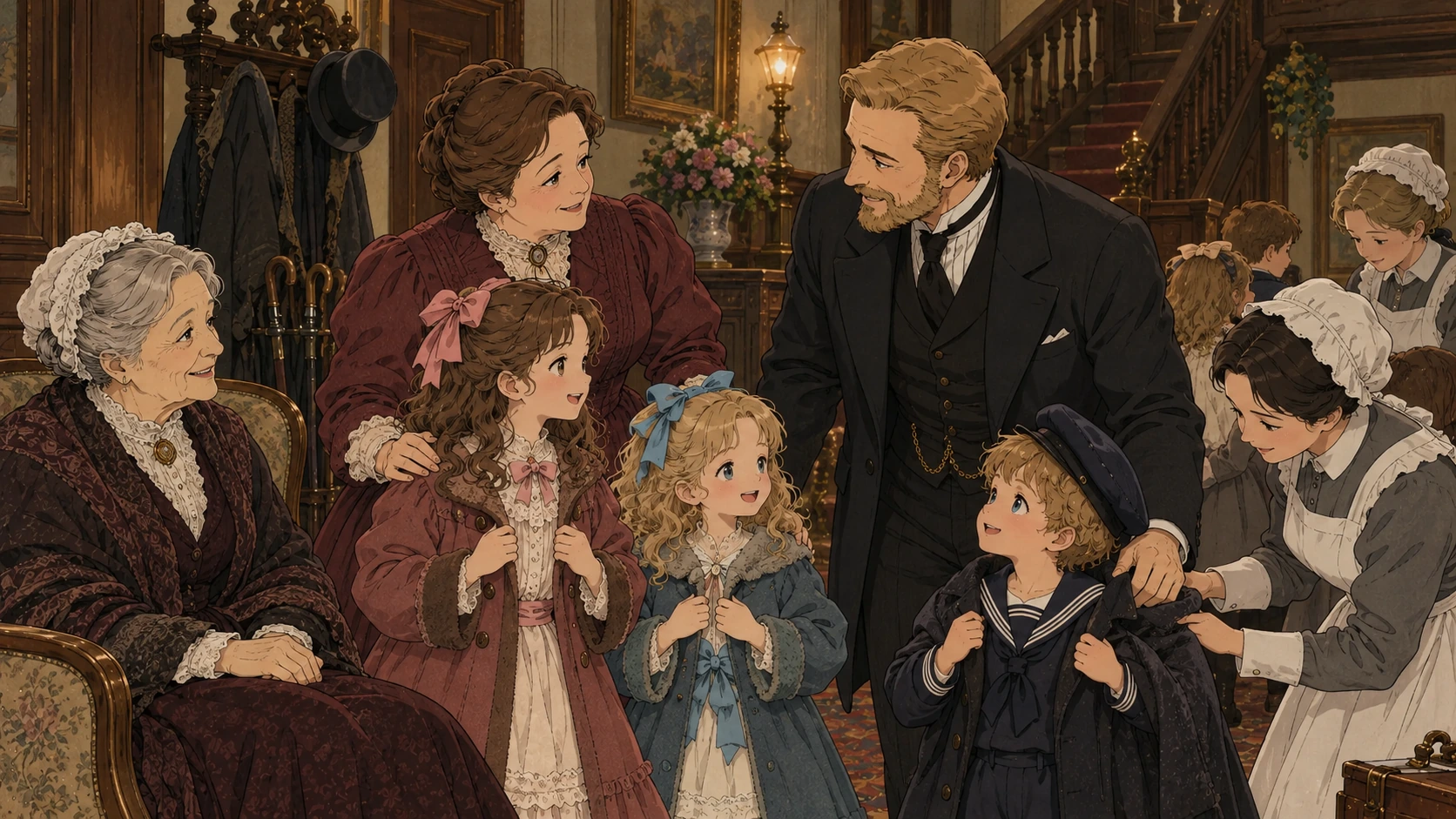
rosy mother, and a stout, rosy father, and a stout, rosy grandmother, and any number of servants. The eight children were always either being taken out to walk
母と父と祖母、それに大勢の召使いがいました。八人の子供たちはいつも、乳母と散歩したり乳母車に乗ったり、
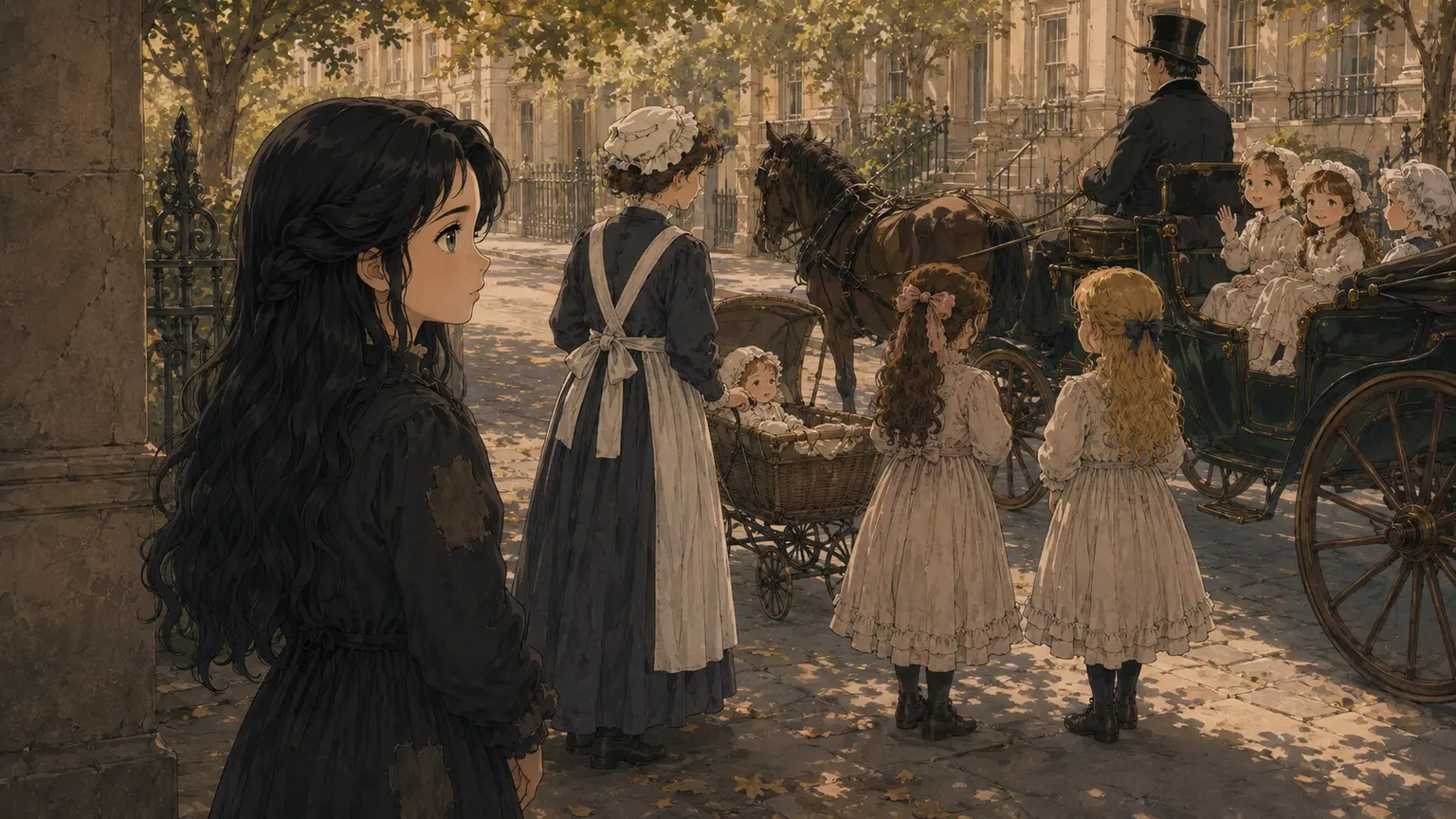
or to ride in perambulators by comfortable nurses, or they were going to drive with their mamma, or they were flying to the door
母親と馬車で出かけたり、夕方には玄関へ駆けて父親を迎え、
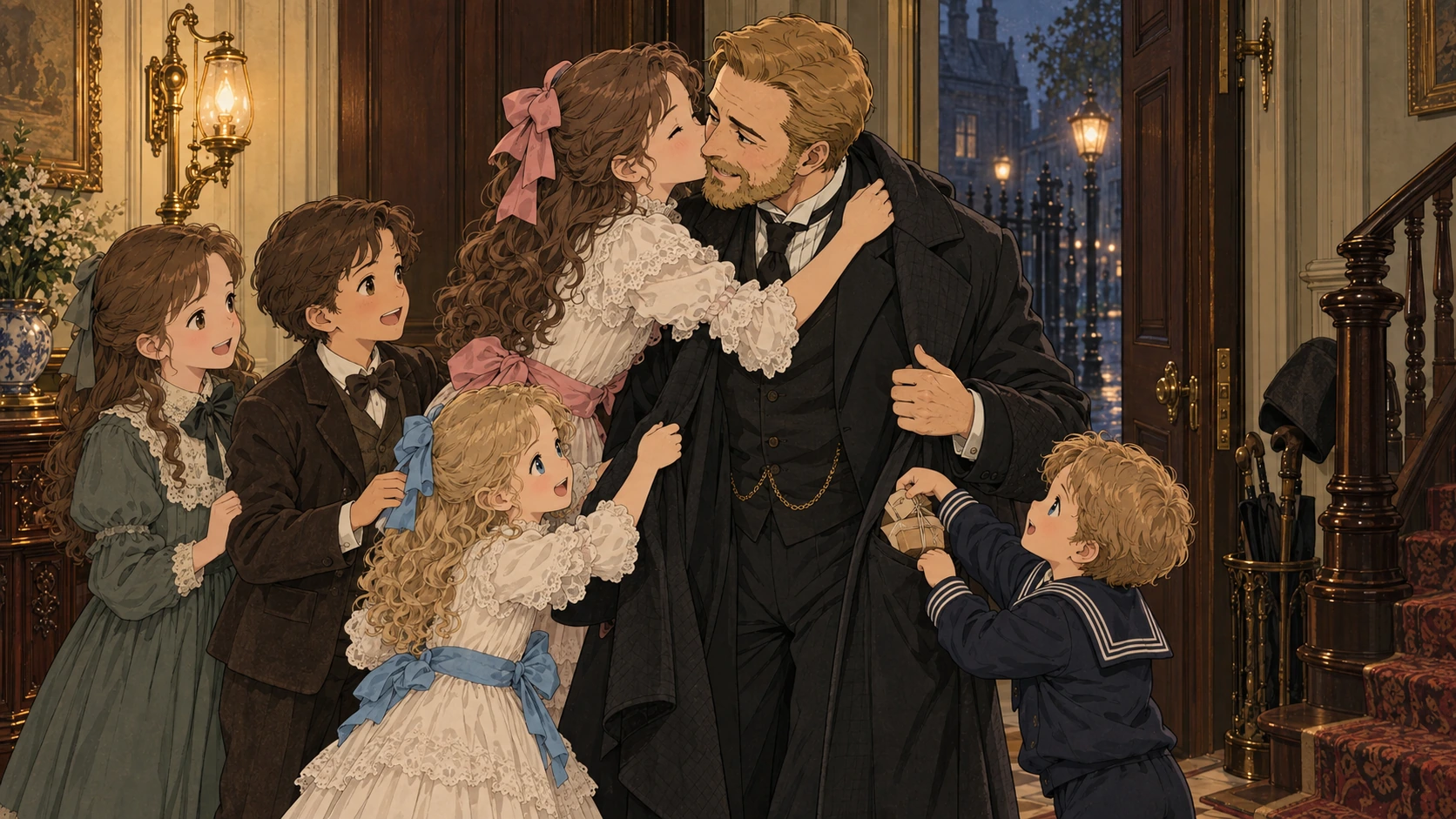
in the evening to meet their papa and kiss him and dance around him and drag off his overcoat and look in the pockets for packages,
キスして周りで踊り、外套を脱がせ、ポケットに包みがないか探したりしました。
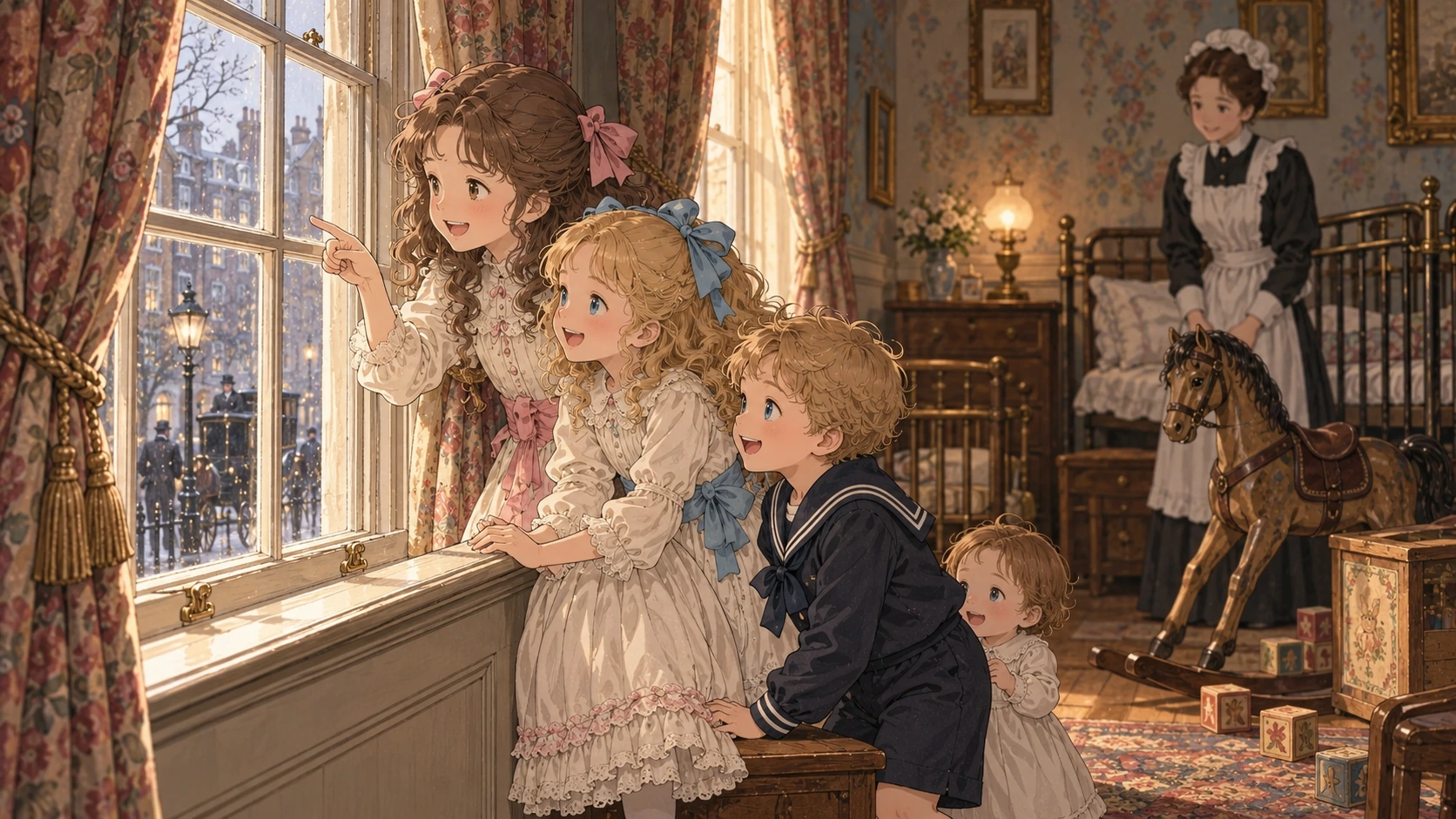
or they were crowding about the nursery windows and looking out and pushing each other and laughing--in fact,
あるいは子供部屋の窓に群がり、外を眺め、押し合って笑いました。つまり、
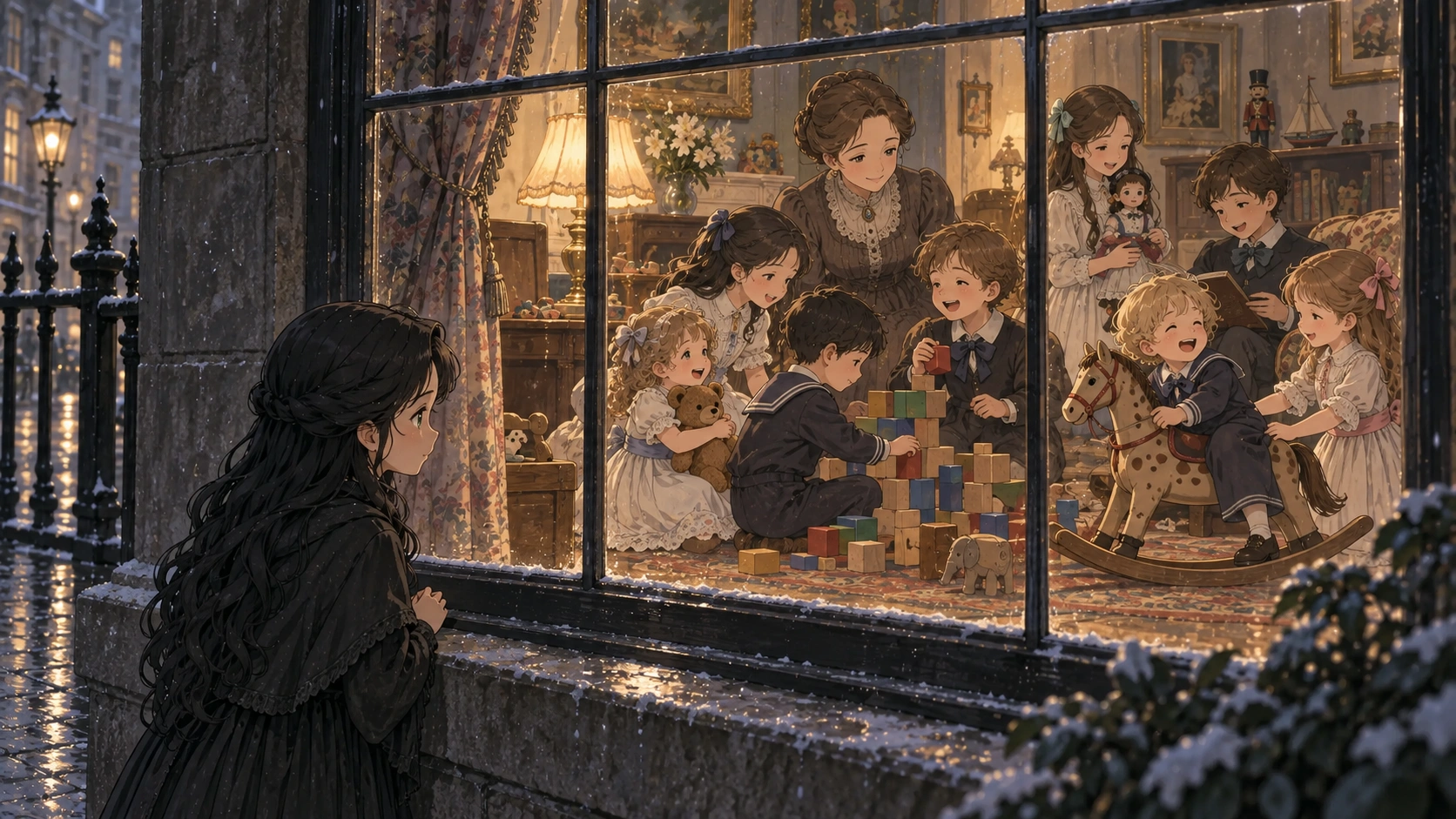
they were always doing something enjoyable and suited to the tastes of a large family. Sara was quite fond of them,
いつも大家族らしい楽しいことをしていたのです。セーラは彼らが大好きで、
and had given them names out of books--quite romantic names. She called them the Montmorencys when she did not call them the Large Family.
本から取った、とてもロマンチックな名前をつけました。『大家族』でない時は『モンモランシー一家』と呼びました。
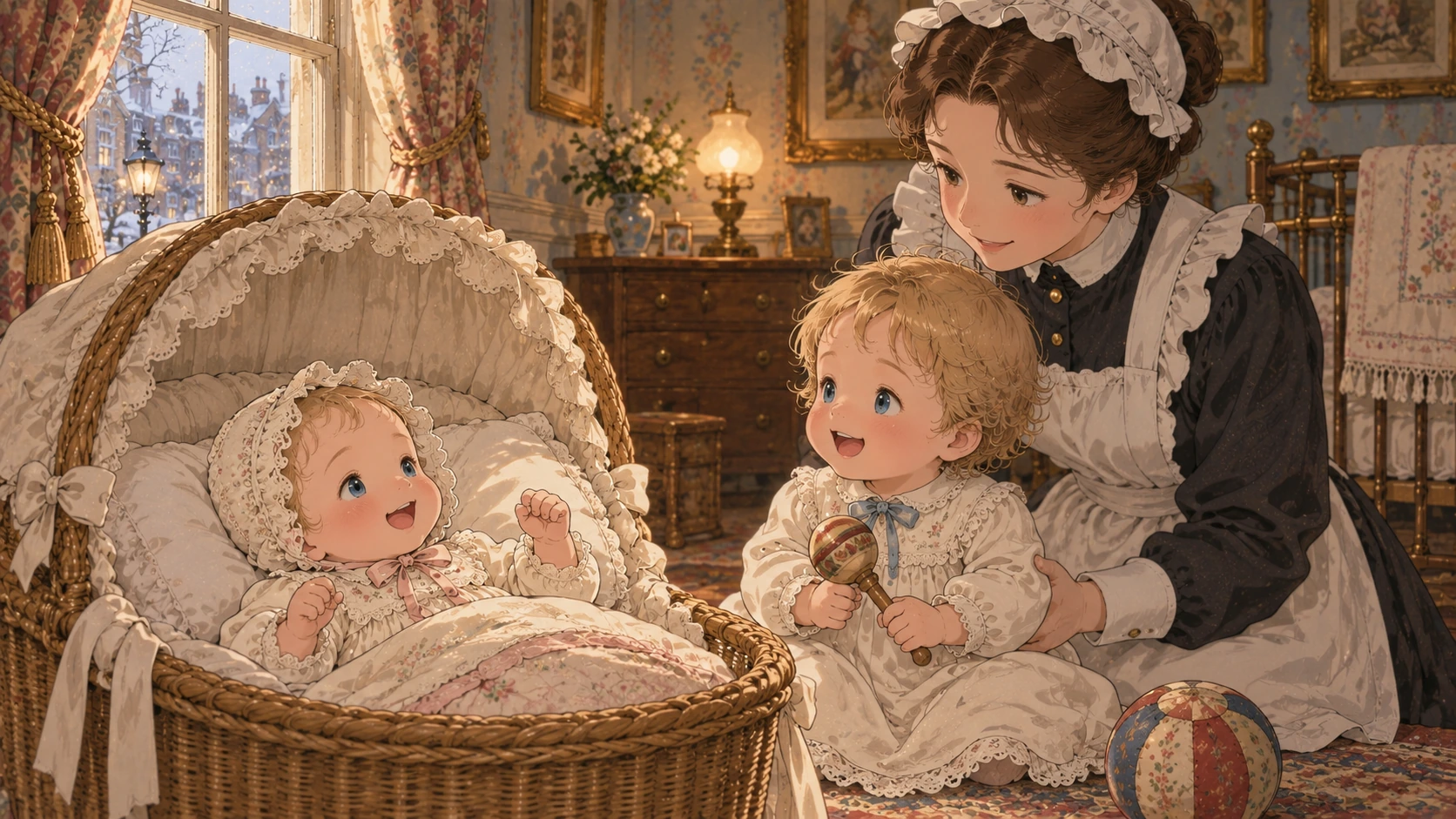
The fat, fair baby with the lace cap was Ethelberta Beauchamp Montmorency; the next baby was Violet Cholmondeley Montmorency;
レース帽の色白で太った赤ん坊はエセルバータ・ボーシャン・モンモランシー、次の赤ん坊はヴァイオレット・チャムリー・モンモランシー。
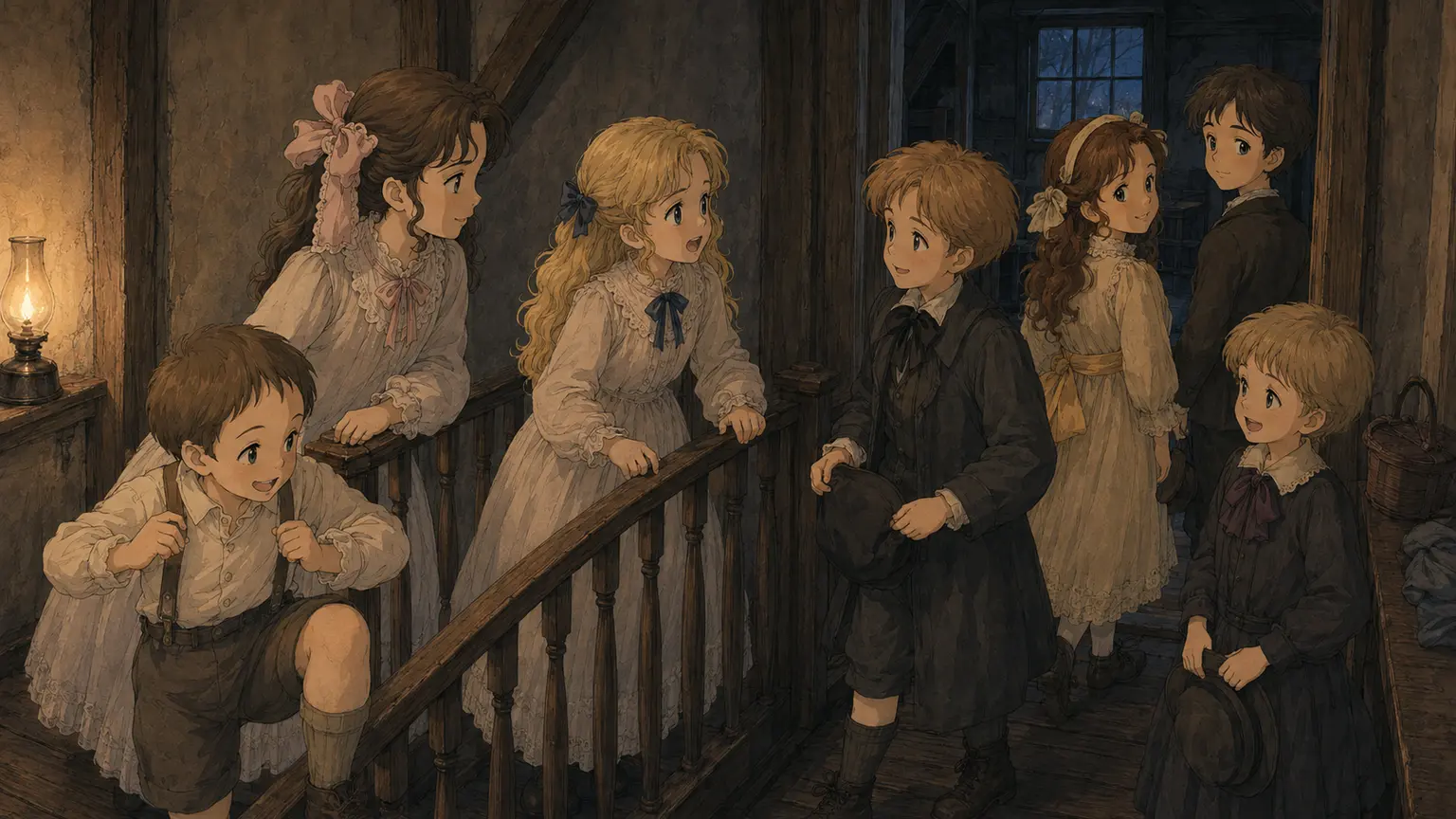
the little boy who could just stagger and who had such round legs was Sydney Cecil Vivian Montmorency;
ようやくよろよろ歩ける丸い脚の男の子はシドニー・セシル・ヴィヴィアン・モンモランシー。
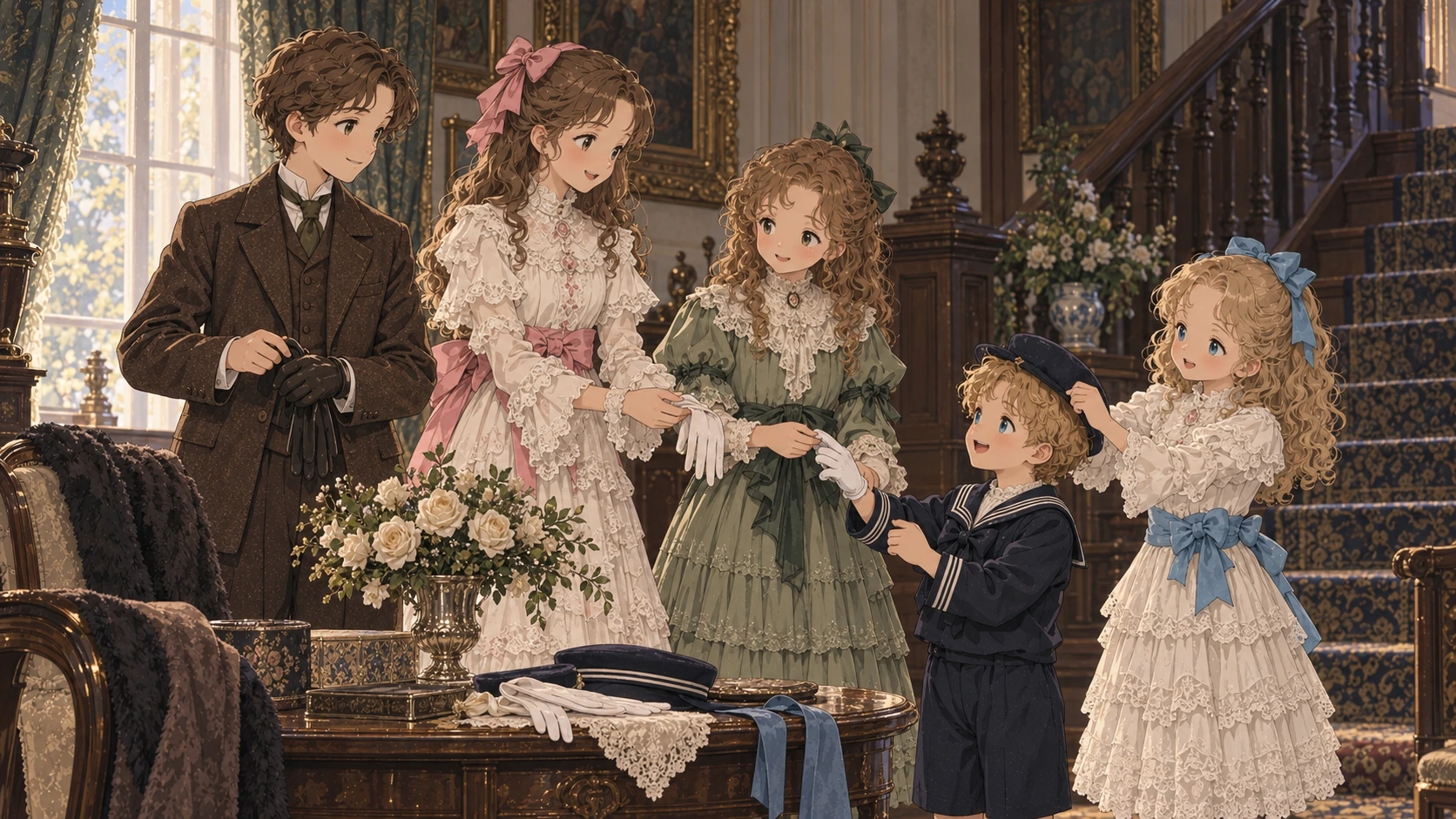
and then came Lilian Evangeline Maud Marion, Rosalind Gladys, Guy Clarence, Veronica Eustacia, and Claude Harold Hector.
続いてリリアン、ロザリンド、ガイ、ヴェロニカ、クロードがいました。
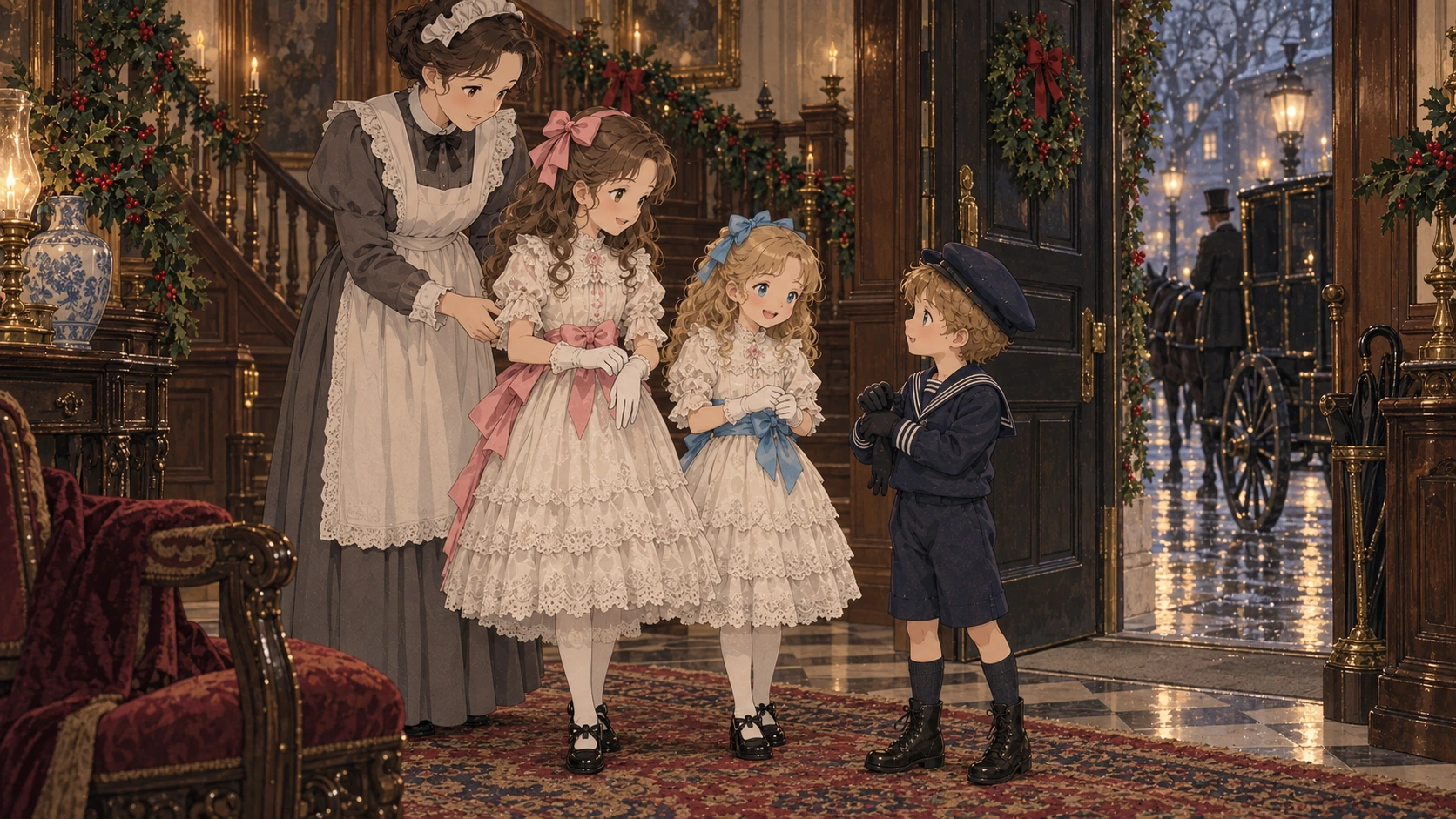
One evening a very funny thing happened--though, perhaps, in one sense it was not a funny thing at all. Several of the Montmorencys were evidently going to a children's party,
ある晩、とてもおかしな出来事が起きました――もっとも、見方によっては少しもおかしくありません。何人かが子供のパーティーへ行くらしく、
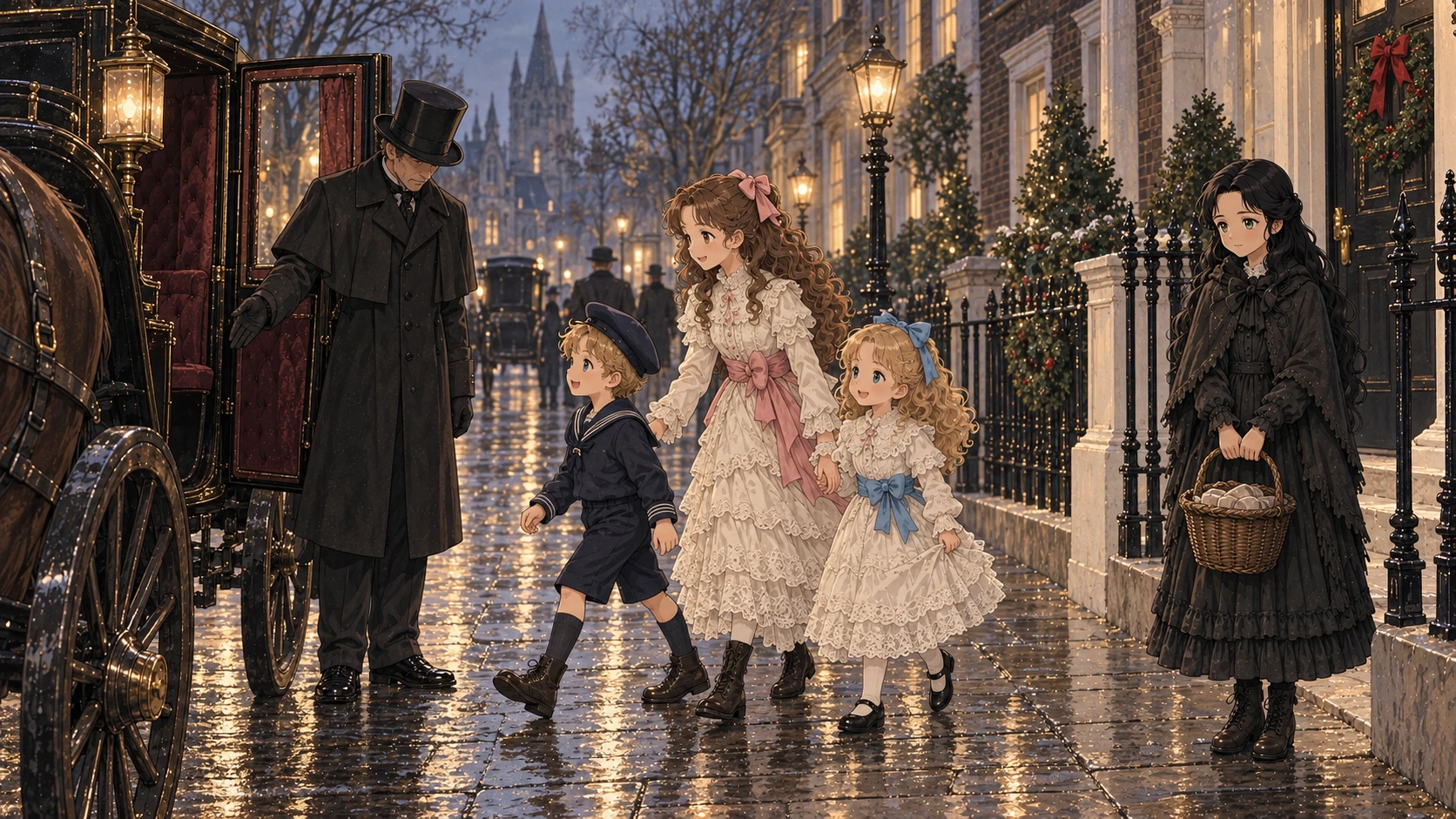
and just as Sara was about to pass the door they were crossing the pavement to get into the carriage
セーラが玄関前を通りかかった時、待っていた馬車へ乗ろうと歩道を渡っていました。
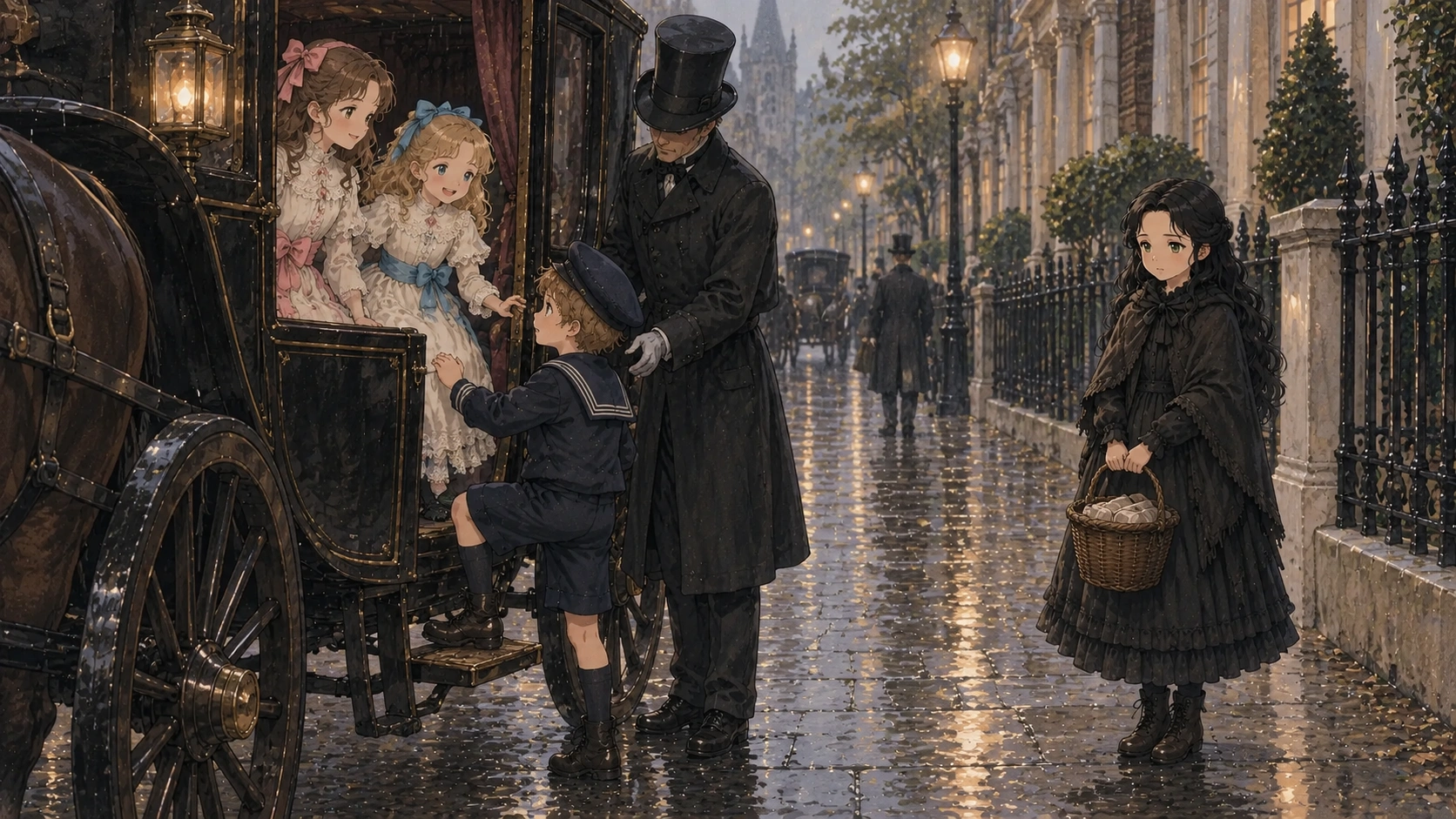
which was waiting for them. Veronica Eustacia and Rosalind Gladys, in white-lace frocks and lovely sashes, had just got in, and Guy Clarence,
白いレースの服と美しい帯のヴェロニカとロザリンドは乗り込み、ガイ・クラレンスが
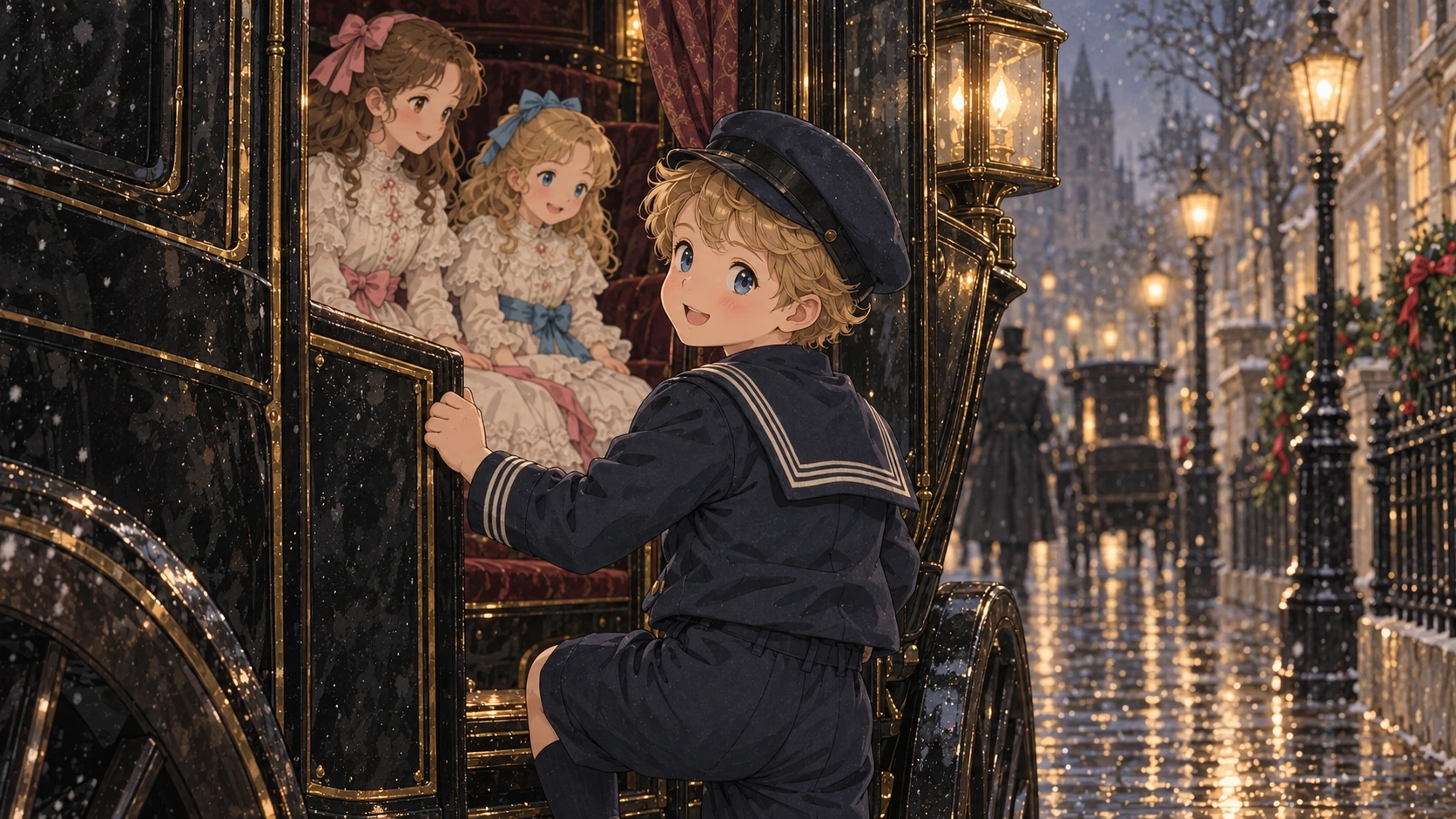
aged five, was following them. He was such a pretty fellow and had such rosy cheeks and blue eyes, and such a darling little round head
後に続きました。五歳の彼は、薔薇色の頬と青い目、巻き毛に覆われた愛らしい丸い頭の美しい子でした。

covered with curls, that Sara forgot her basket and shabby cloak altogether--in fact, forgot everything but that she wanted to look at him for a moment.
セーラは籠も古い外套も何もかも忘れ、ただしばらく彼を見たいと思いました。
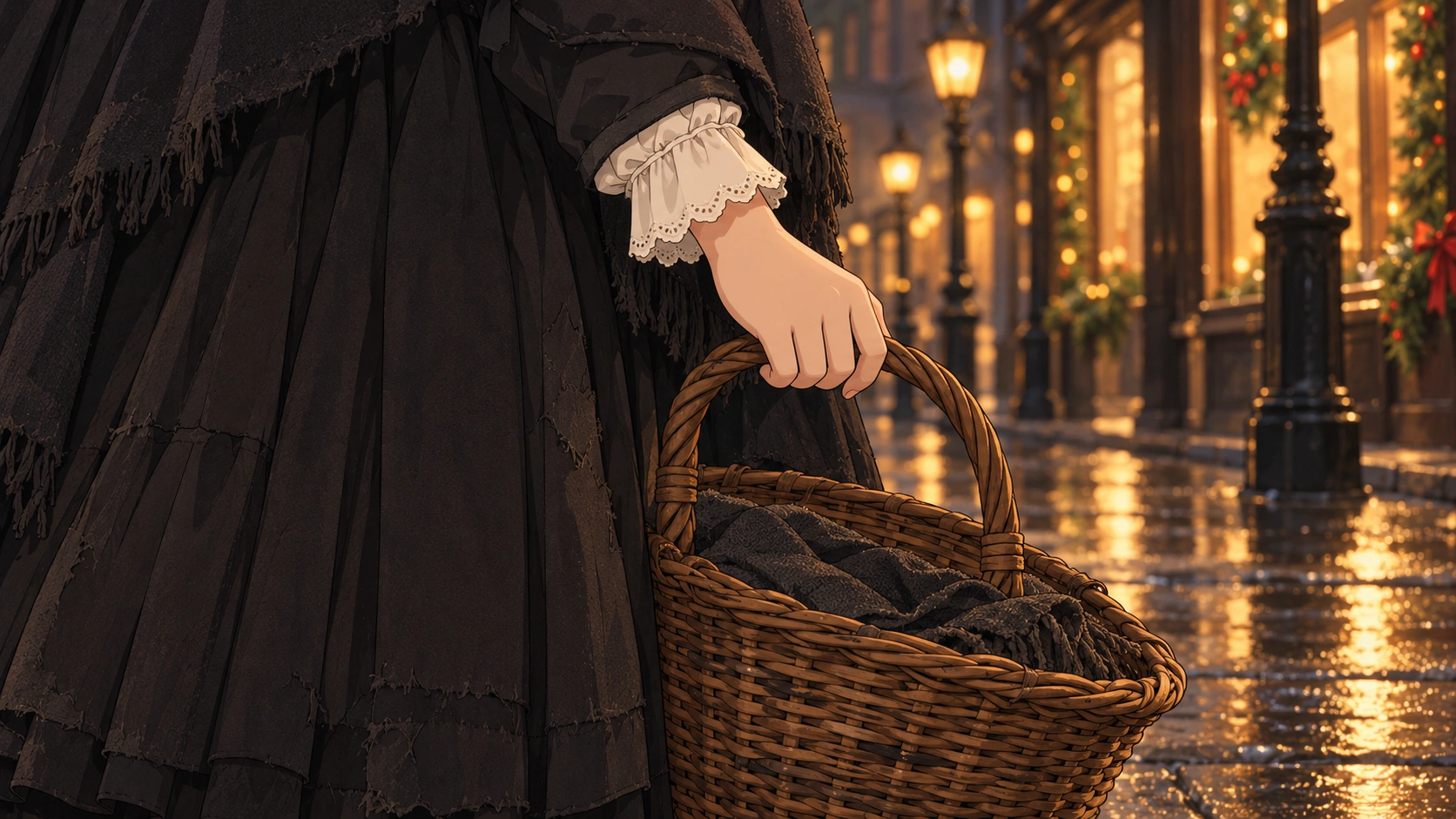
So she paused and looked. It was Christmas time, and the Large Family had been hearing many stories about children who were poor
そこで立ち止まって見つめました。クリスマスの頃で、大家族の子供たちは貧しい子供の話をたくさん聞いていました。
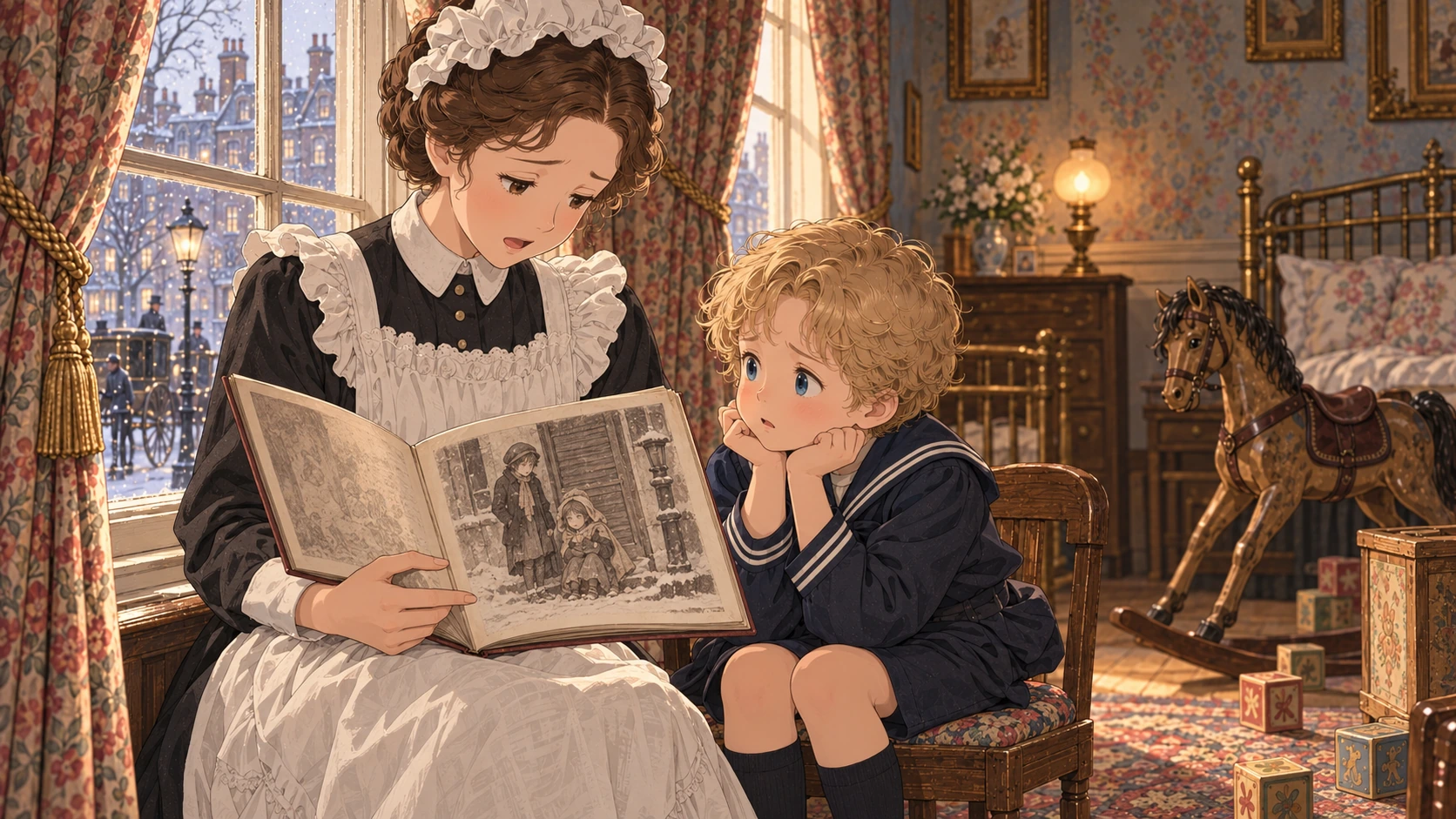
and had no mammas and papas to fill their stockings and take them to the pantomime--children who were, in fact, cold and thinly clad and hungry.
靴下に贈り物を入れ、芝居へ連れて行く父母もなく、寒さに震え、薄着で空腹な子供たちの話です。
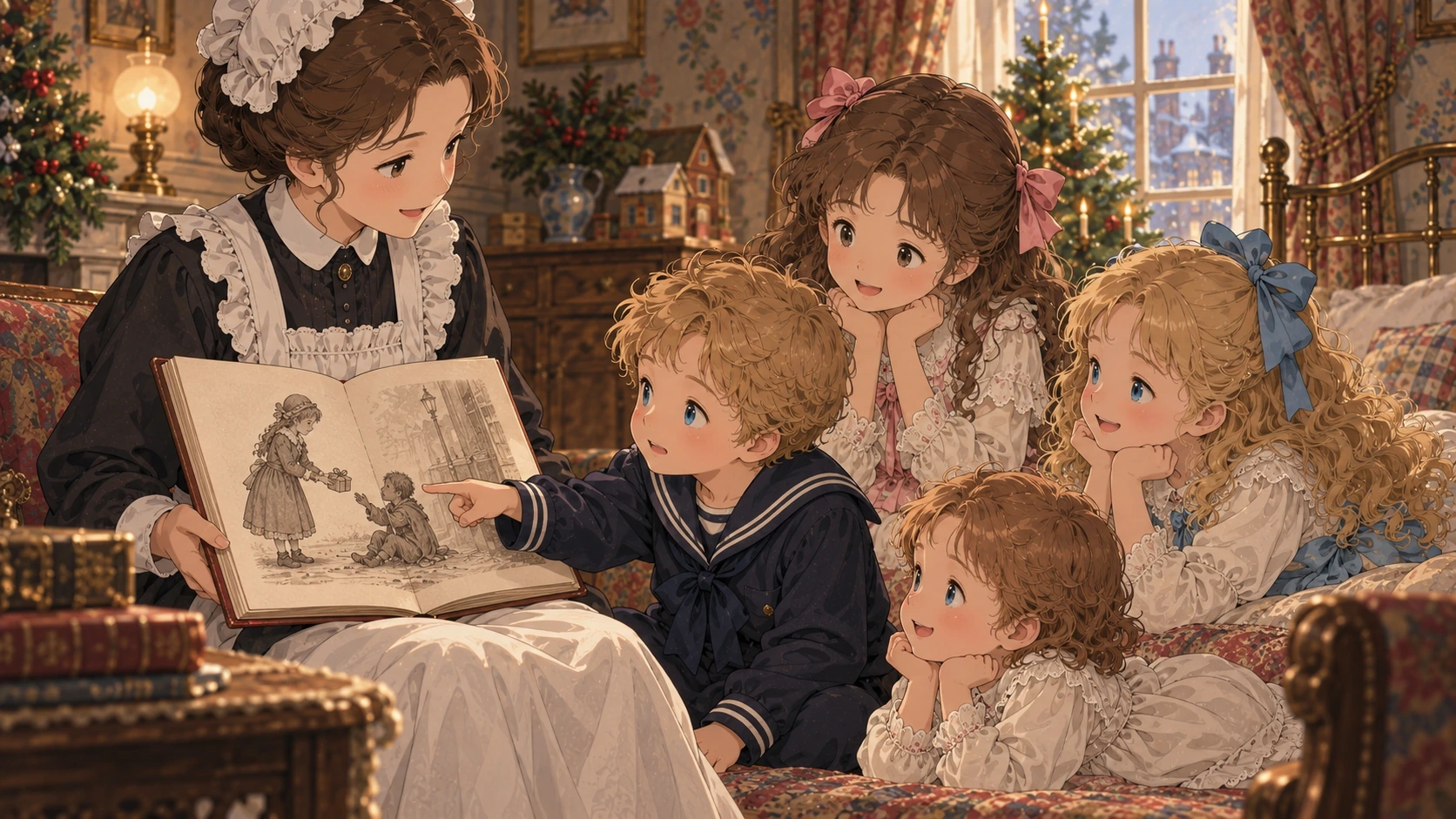
In the stories, kind people--sometimes little boys and girls with tender hearts--invariably saw the poor children and gave them money or rich gifts,
物語では、親切な人――時には優しい心の少年少女――が必ず貧しい子を見つけ、お金や豪華な贈り物を与え、
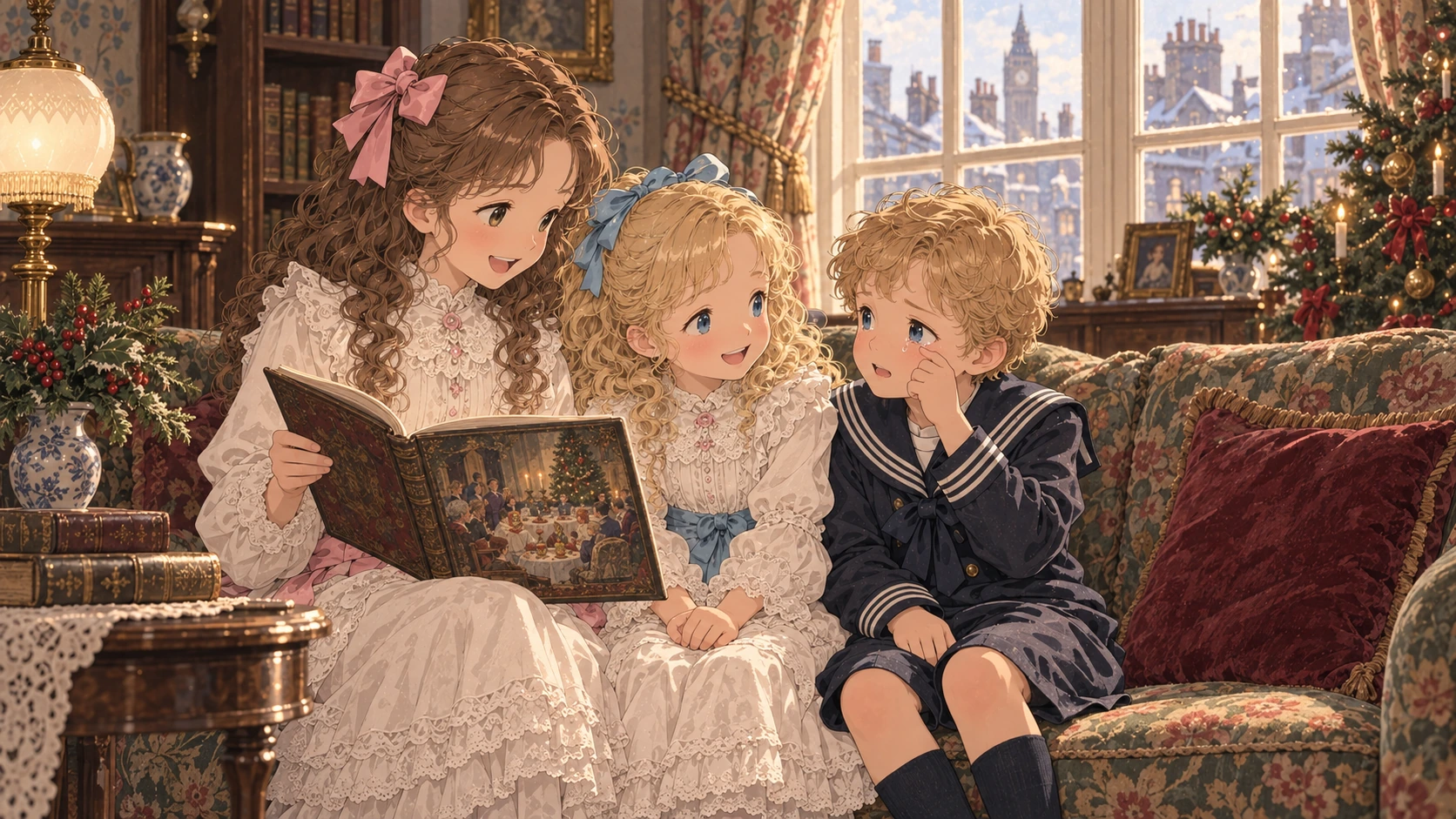
or took them home to beautiful dinners. Guy Clarence had been affected to tears that very afternoon by the reading of such a story,
家へ連れて帰ってごちそうしました。ガイはその日の午後、そんな話を聞いて涙を流し、

and he had burned with a desire to find such a poor child and give her a certain sixpence he possessed, and thus provide for her for life.
貧しい子を見つけ、自分の六ペンスを与えて一生困らないようにしたいと熱望していました。
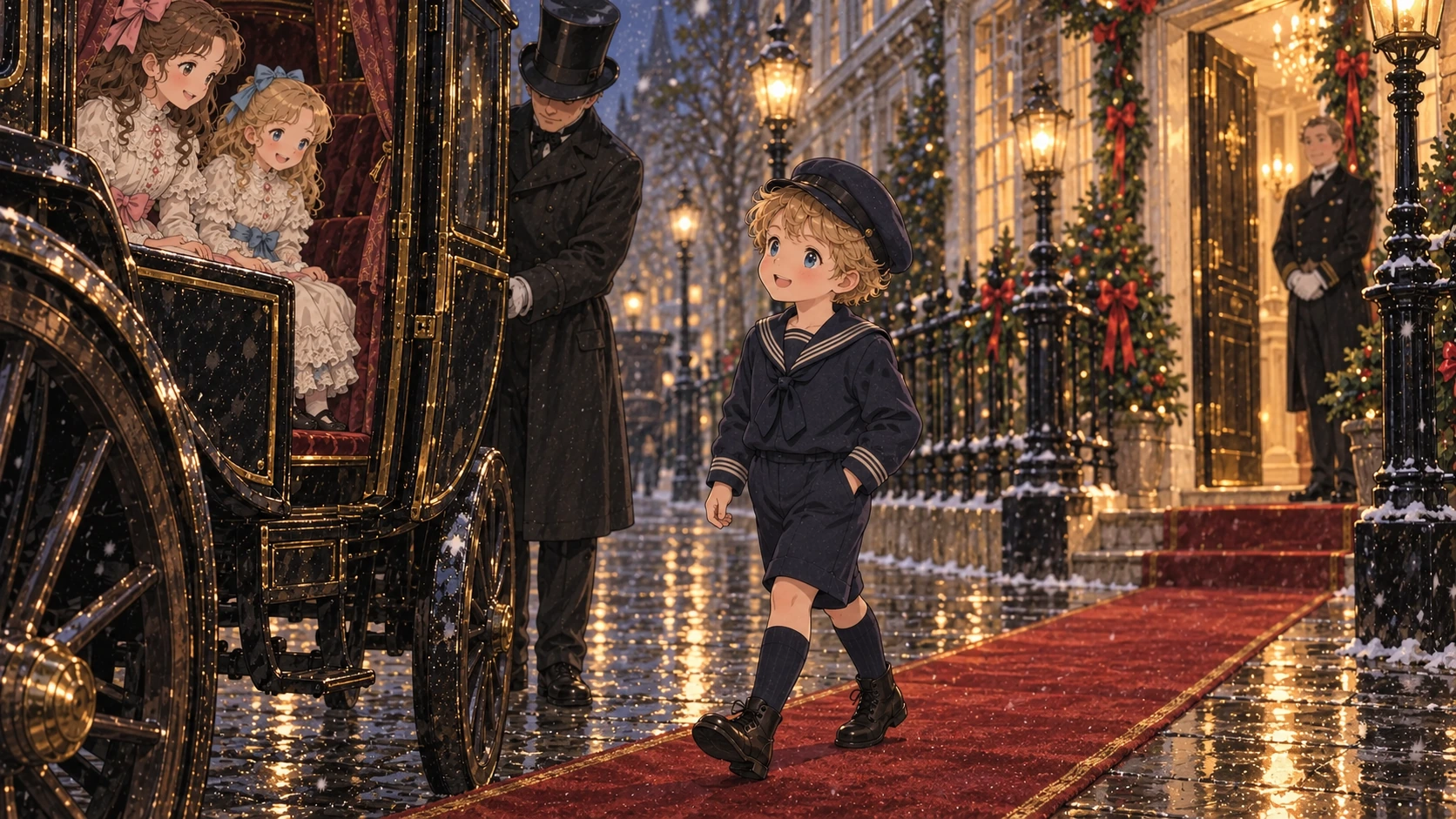
An entire sixpence, he was sure, would mean affluence for evermore. As he crossed the strip of red carpet laid across the pavement from the door to the carriage,
六ペンスもあれば永遠に裕福になれると信じていました。玄関から馬車まで敷かれた赤い絨毯を渡る時、

he had this very sixpence in the pocket of his very short man-o-war trousers;
水兵服の短いズボンのポケットには、まさにその六ペンスが入っていました。
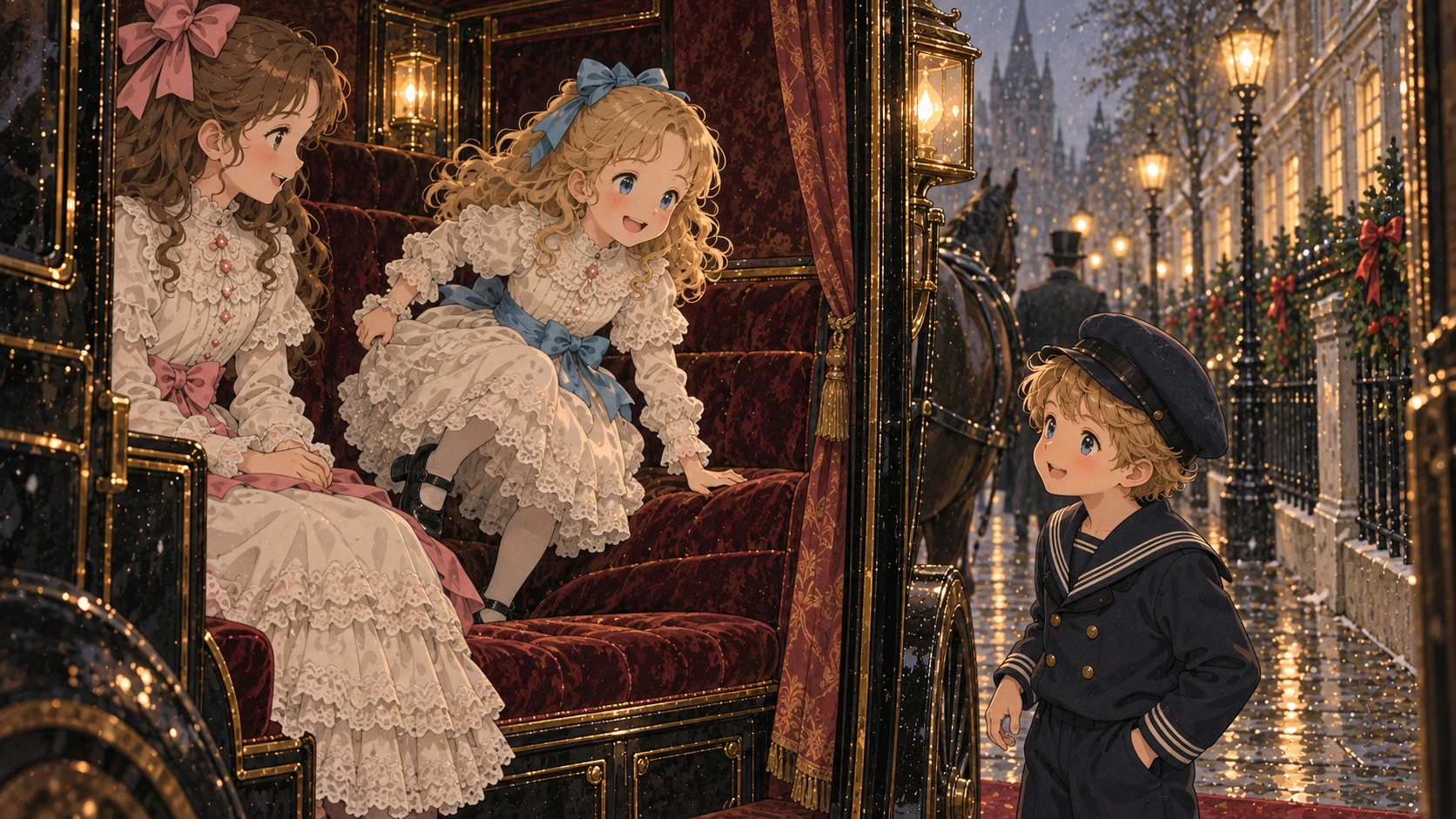
And just as Rosalind Gladys got into the vehicle and jumped on the seat in order to feel the cushions spring under her,
ロザリンドが馬車へ乗り、座席の弾みを試そうと跳び上がったその時、
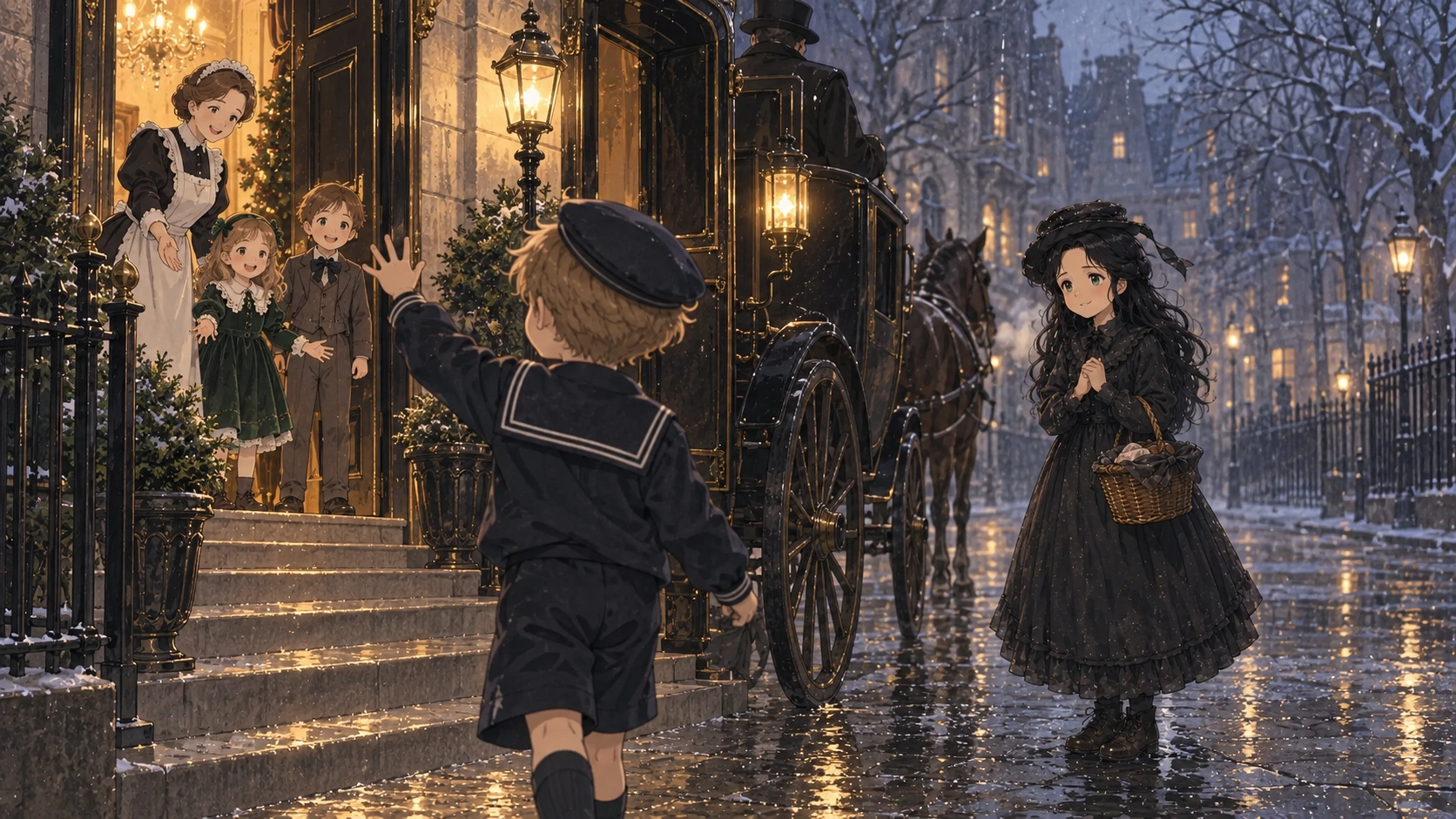
he saw Sara standing on the wet pavement in her shabby frock and hat, with her old basket on her arm, looking at him hungrily.
濡れた歩道に、古い籠を腕に掛け、みすぼらしい服と帽子で、物欲しそうに彼を見るセーラが目に入りました。

He thought that her eyes looked hungry because she had perhaps had nothing to eat for a long time.
その目が空腹そうなのは、長い間何も食べていないからだと思いました。
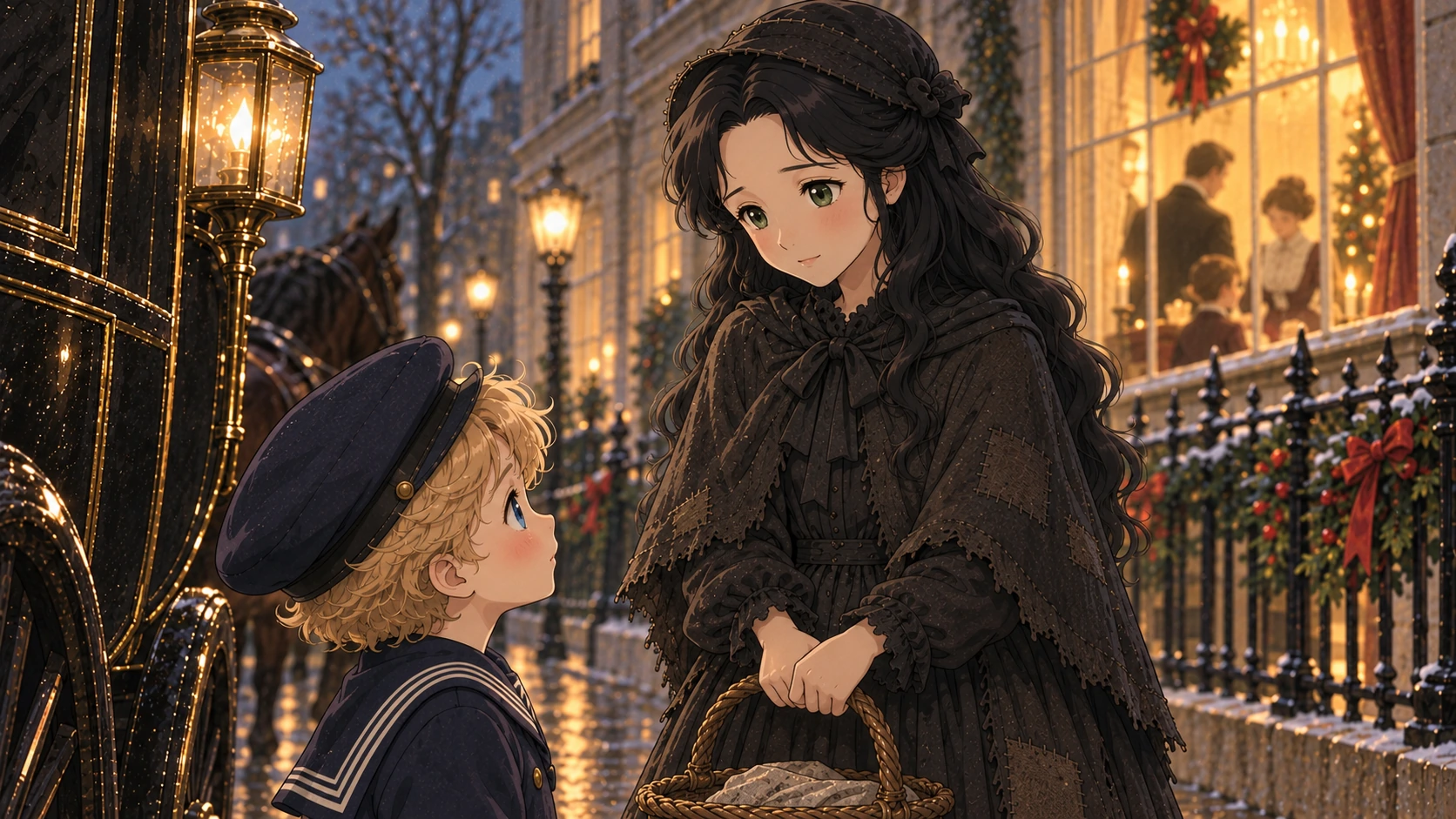
He did not know that they looked so because she was hungry for the warm, merry life his home held and his rosy face spoke of,
本当は、彼の家の暖かく陽気な暮らしと薔薇色の顔に飢えていたからだとは知りませんでした。
and that she had a hungry wish to snatch him in her arms and kiss him.
抱きしめてキスしたいほど切なく願っていたことも知りませんでした。
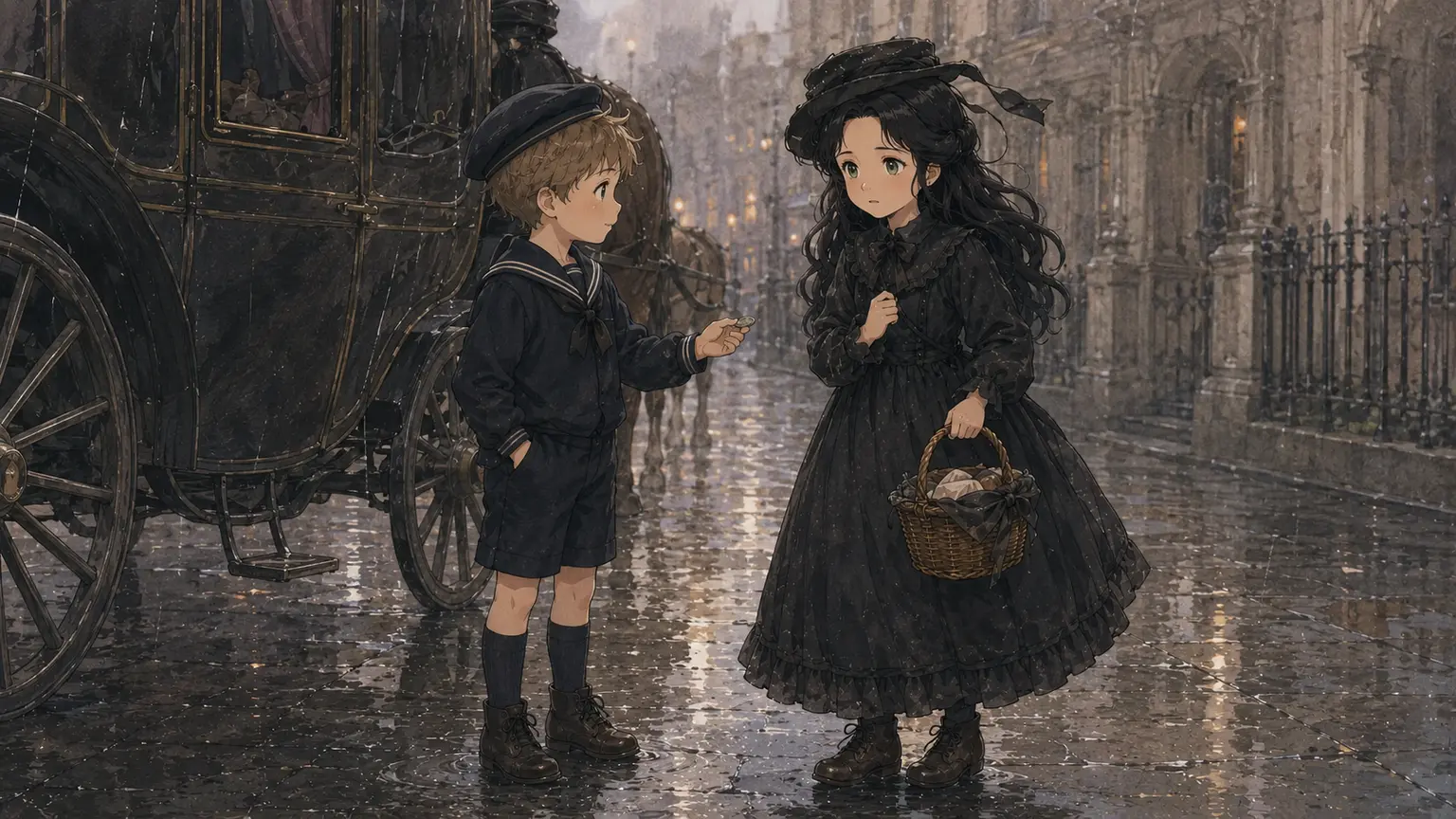
He only knew that she had big eyes and a thin face and thin legs and a common basket and poor clothes. So he put his hand in his pocket
彼に分かったのは、大きな目、細い顔と脚、ありふれた籠、貧しい服だけでした。そこでポケットへ手を入れ、
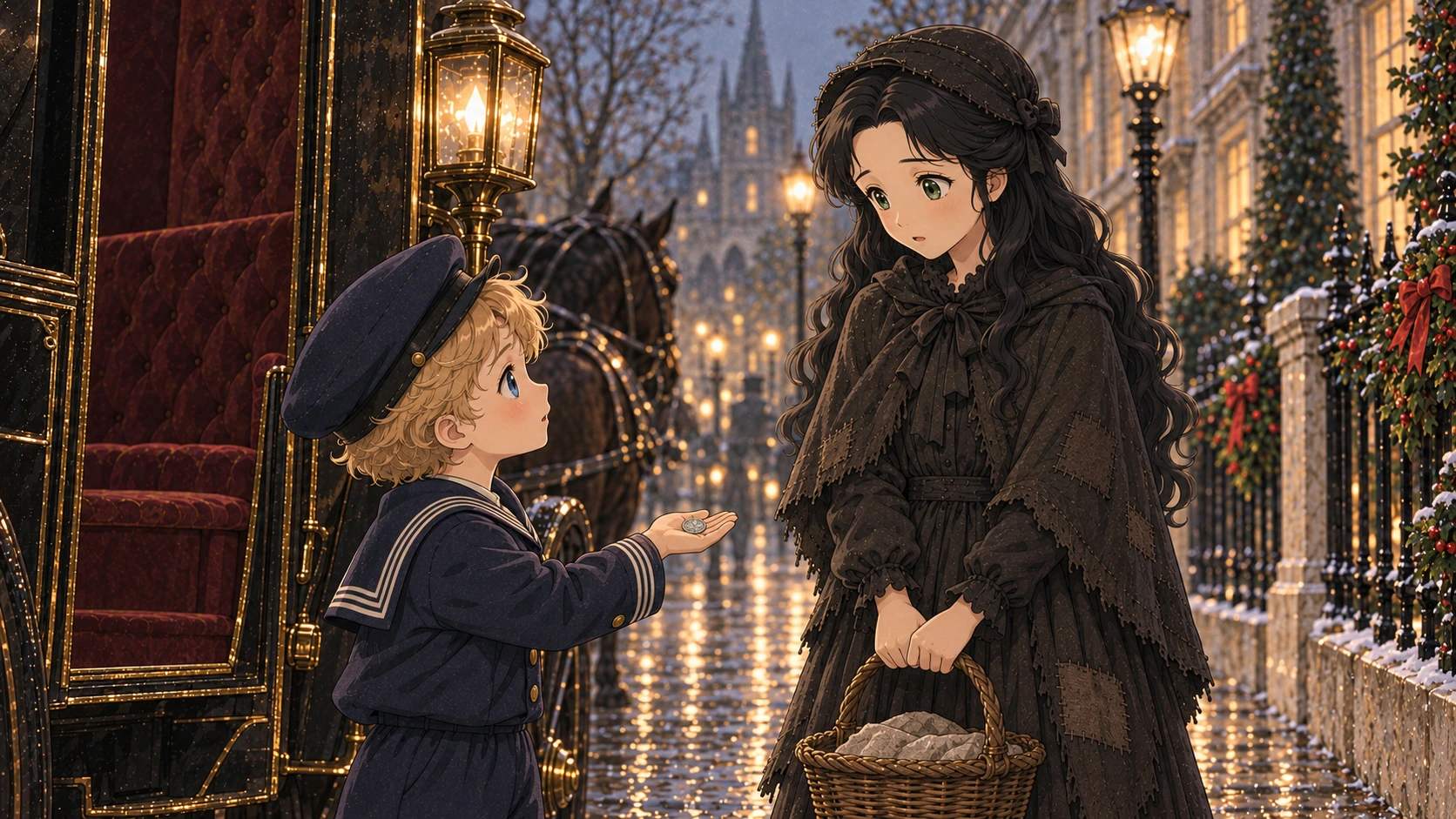
and found his sixpence and walked up to her benignly. "Here, poor little girl," he said. "Here is a sixpence. I will give it to you."
六ペンスを見つけ、慈愛に満ちて近づきました。『ほら、かわいそうな女の子。六ペンスをあげるよ』
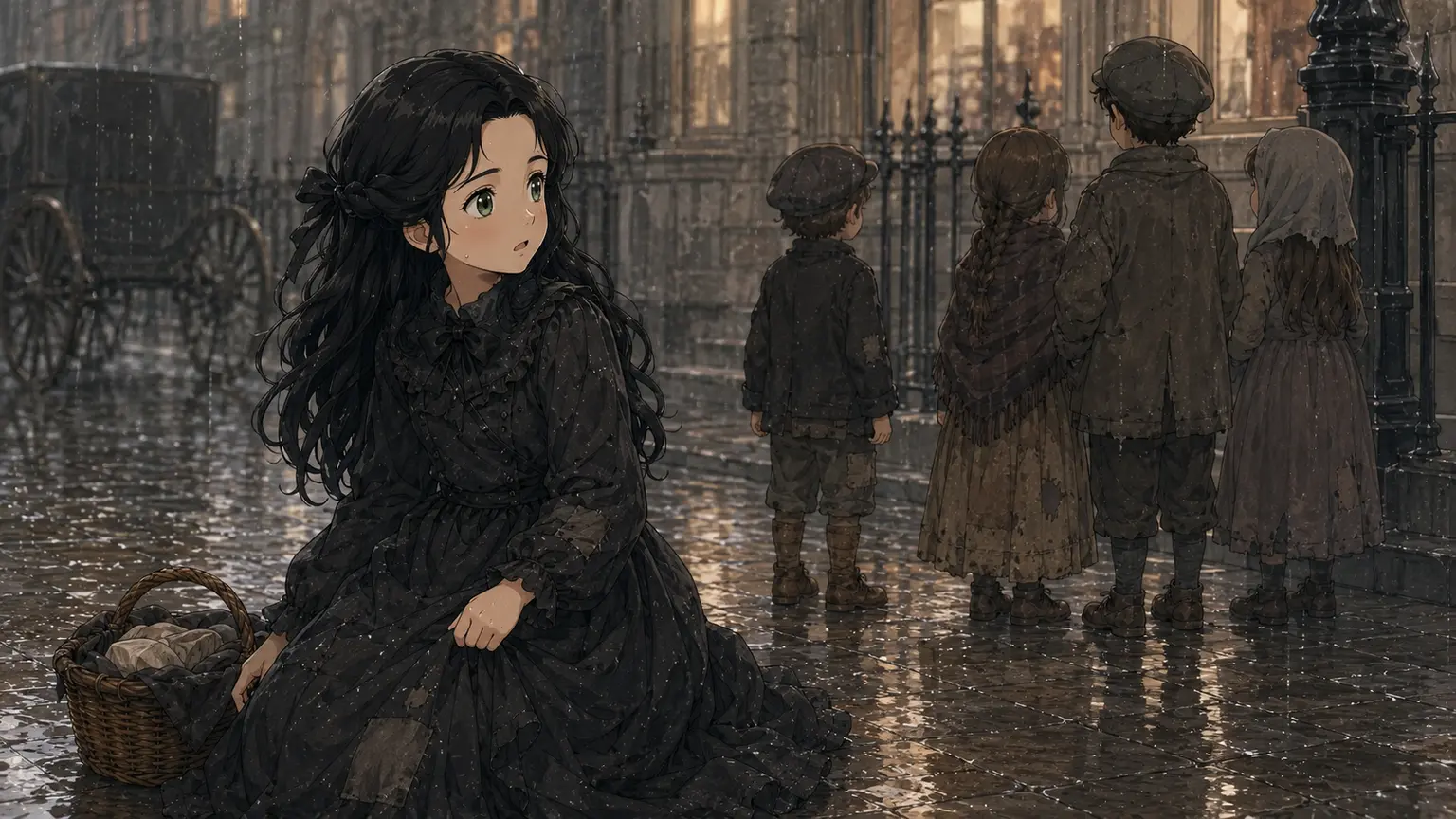
Sara started, and all at once realized that she looked exactly like poor children she had seen, in her better days,
セーラははっとし、裕福だった頃、馬車から降りる自分を歩道で見ていた貧しい子と、今の自分が同じに見えると悟りました。
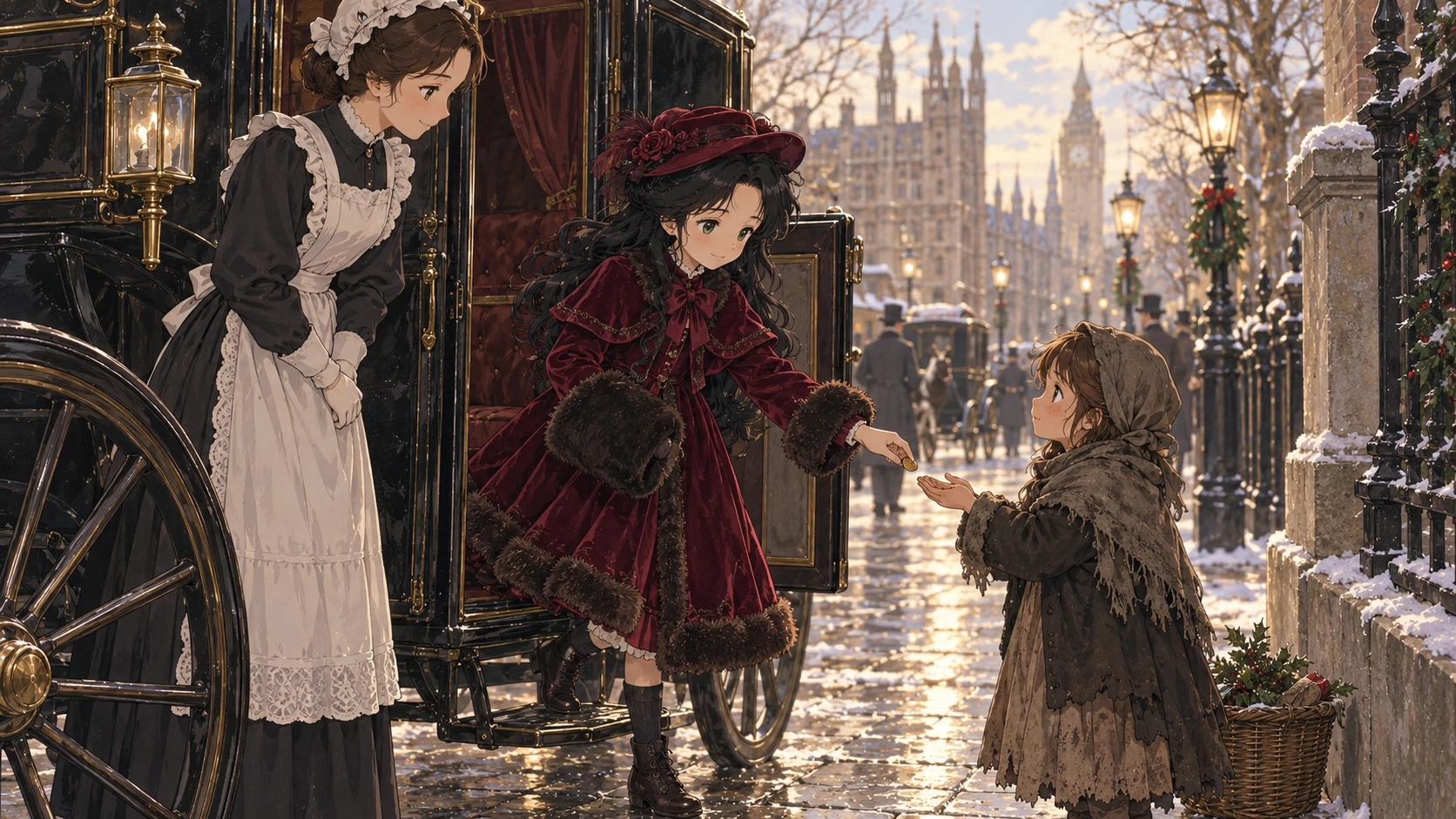
waiting on the pavement to watch her as she got out of her brougham. And she had given them pennies many a time.
彼女もそんな子供たちへ、何度もペニーを与えたことがありました。

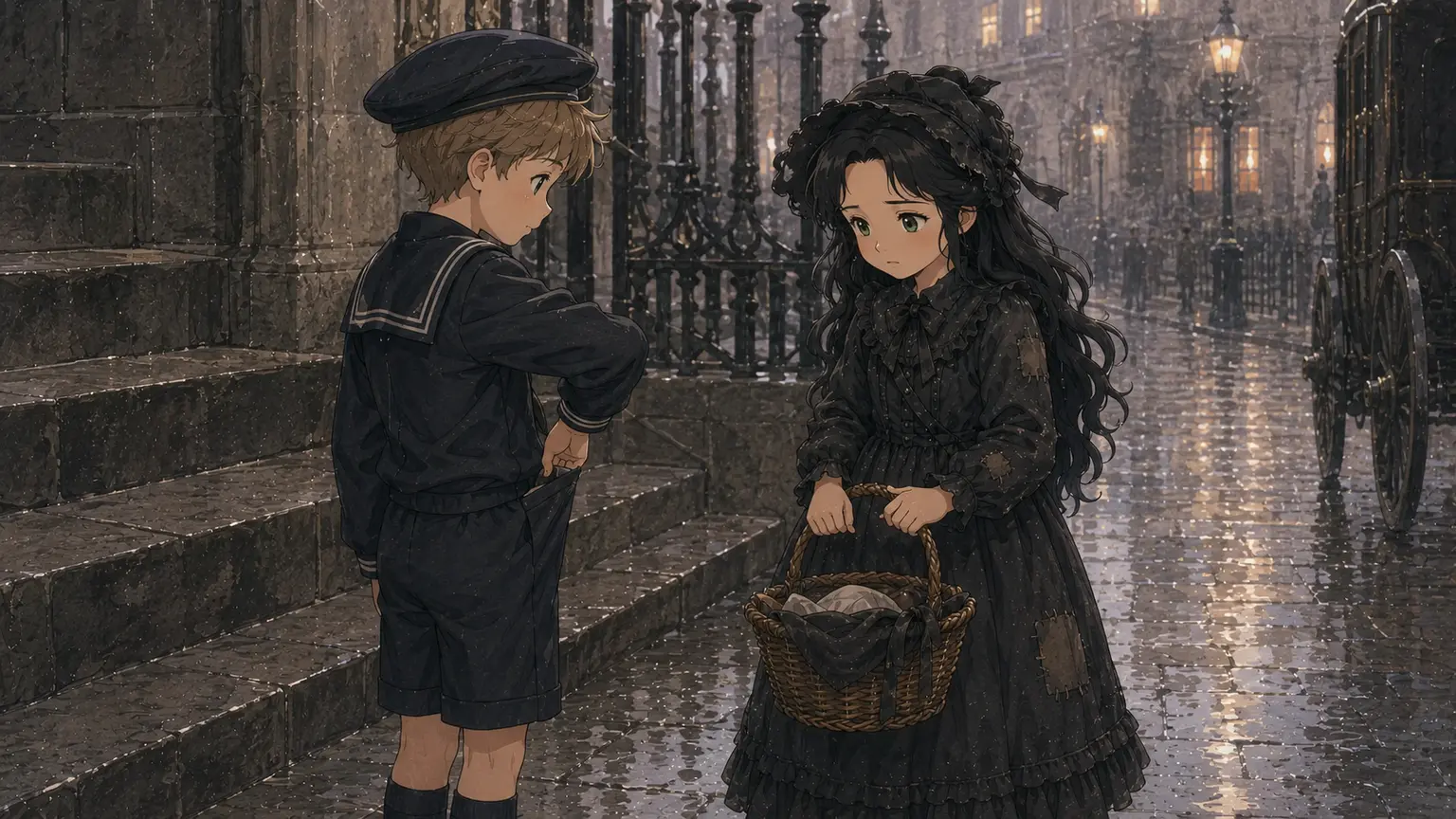
Her face went red and then it went pale, and for a second she felt as if she could not take the dear little sixpence.
顔は赤くなり、次に青ざめました。一瞬、その愛しい六ペンスを受け取れないと思いました。

"Oh, no!" she said. "Oh, no, thank you; I mustn't take it, indeed!" Her voice was so unlike an ordinary street child's voice
『いいえ、ありがとう。でも受け取れないわ、本当に』その声は普通の街の子供とはまるで違い、
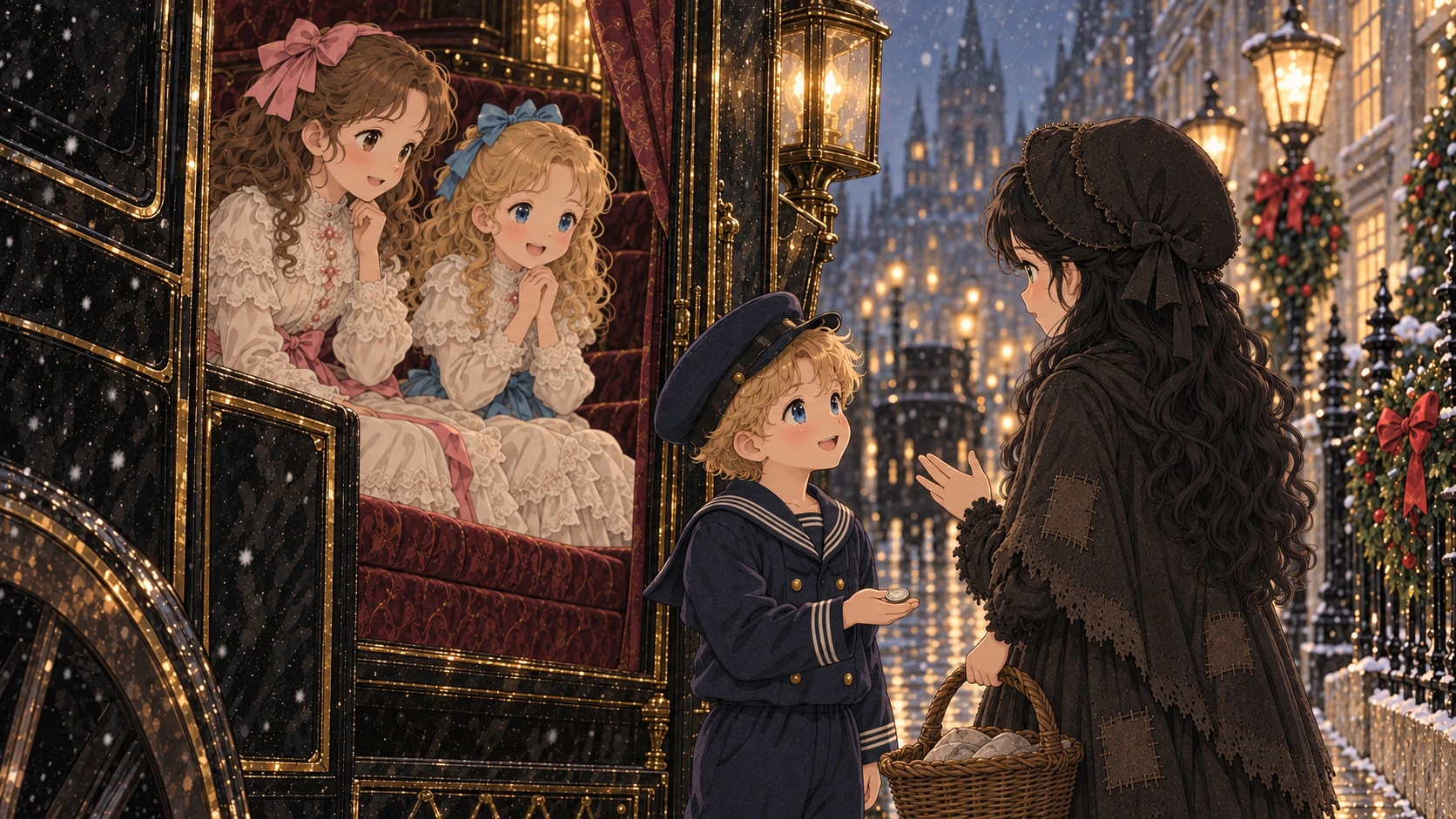
and her manner was so like the manner of a well-bred little person
物腰も育ちのよい少女そのものだったので、
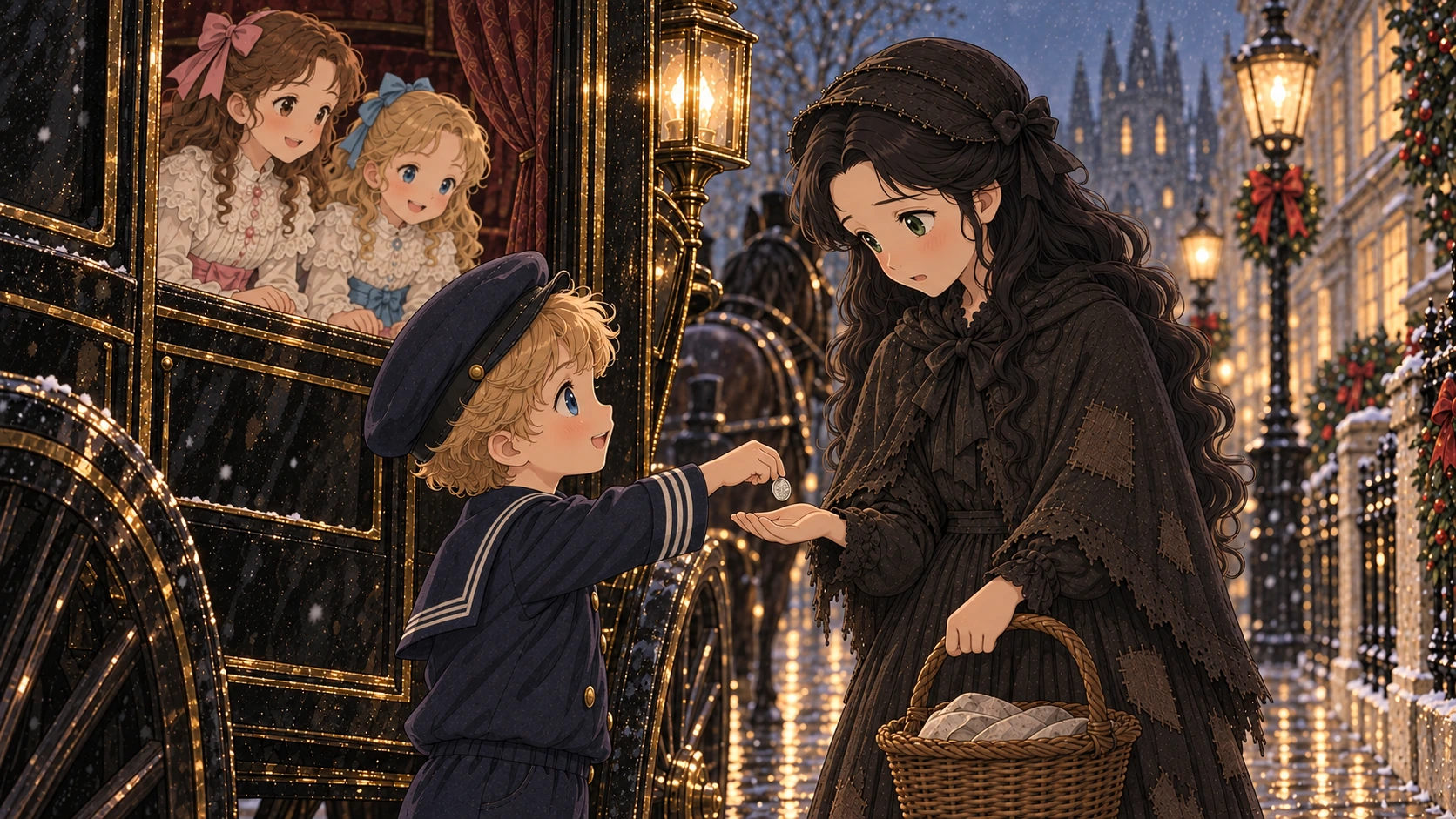
that Veronica Eustacia (whose real name was Janet) and Rosalind Gladys (who was really called Nora) leaned forward to listen. But Guy Clarence was not to be thwarted in his benevolence. He thrust the sixpence into her hand.
本名ジャネットのヴェロニカと、本名ノラのロザリンドは身を乗り出して聞きました。しかしガイの善意はくじけません。六ペンスをセーラの手へ押し込みました。
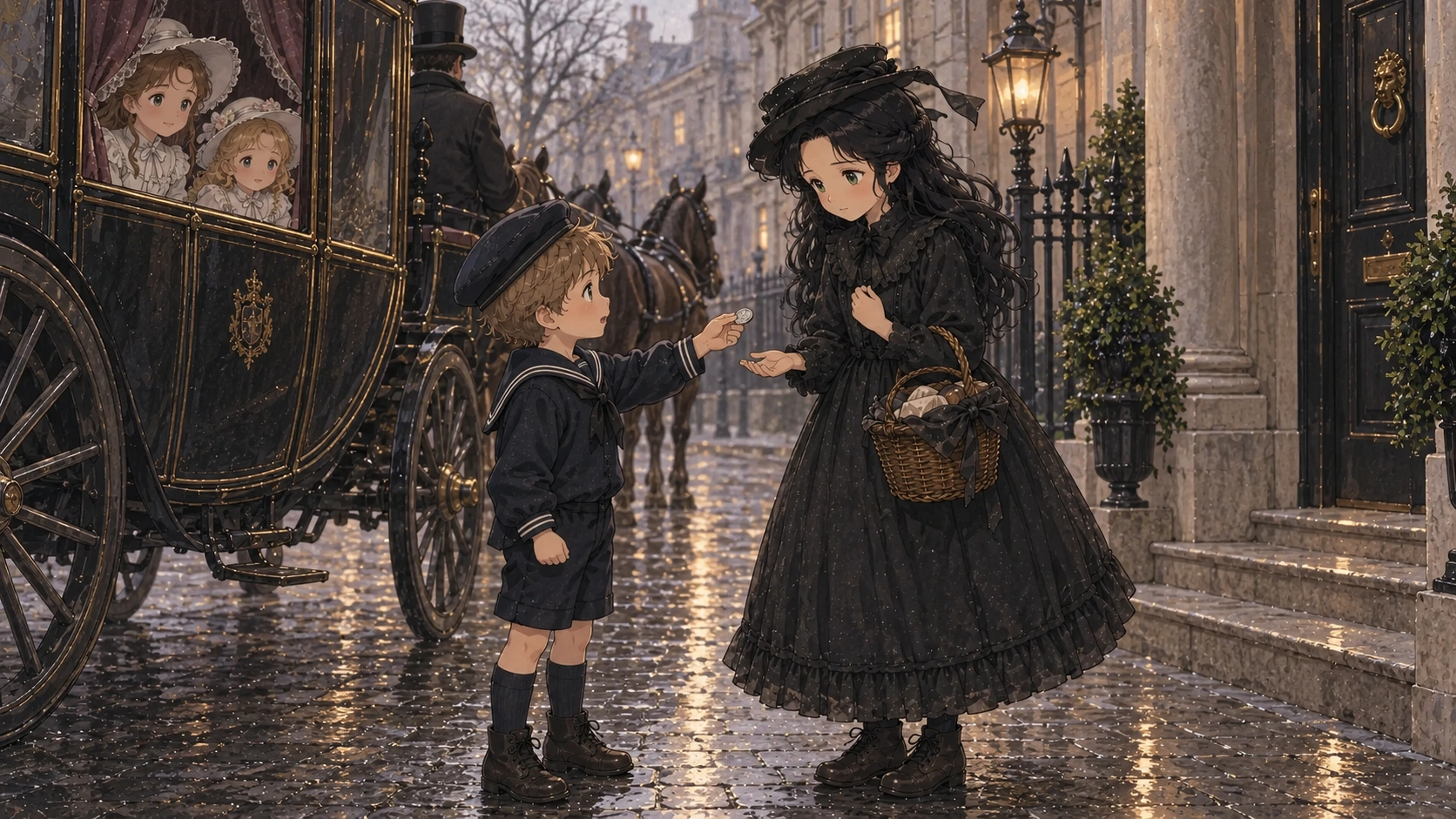
"Yes, you must take it, poor little girl!" he insisted stoutly. "You can buy things to eat with it. It is a whole sixpence!"
『ううん、受け取らなくちゃ、かわいそうな子!食べ物を買えるよ。まるまる六ペンスだよ!』
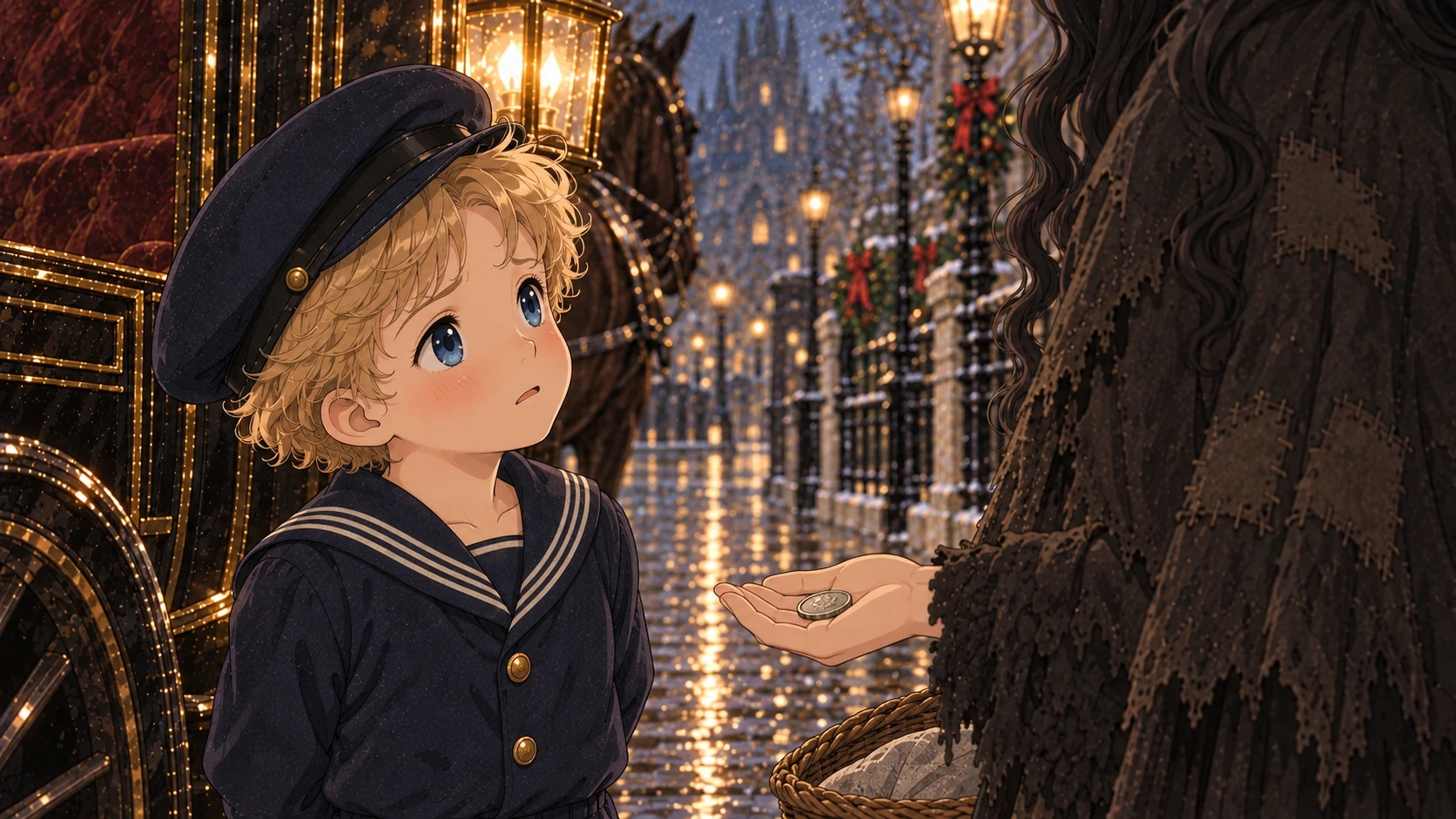
There was something so honest and kind in his face, and he looked so likely to be heartbrokenly disappointed if she did not take it,
その顔はあまりに正直で親切そうで、受け取らなければ悲しくてたまらなくなりそうでした。
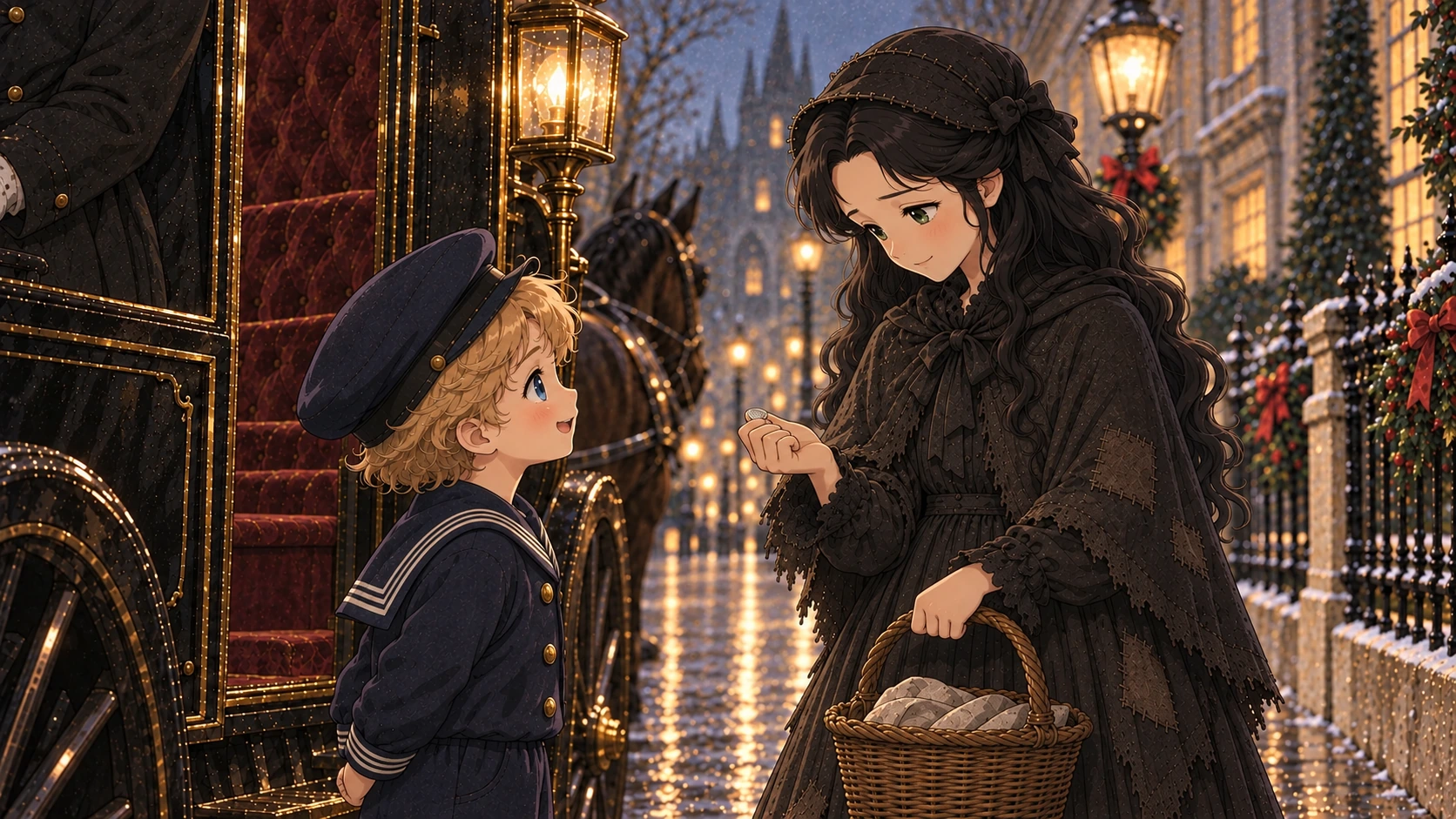
that Sara knew she must not refuse him. To be as proud as that would be a cruel thing. So she actually put her pride in her pocket,
セーラは断ってはいけないと分かりました。それほど誇り高くするのは残酷です。そこで本当に誇りを胸へしまい、
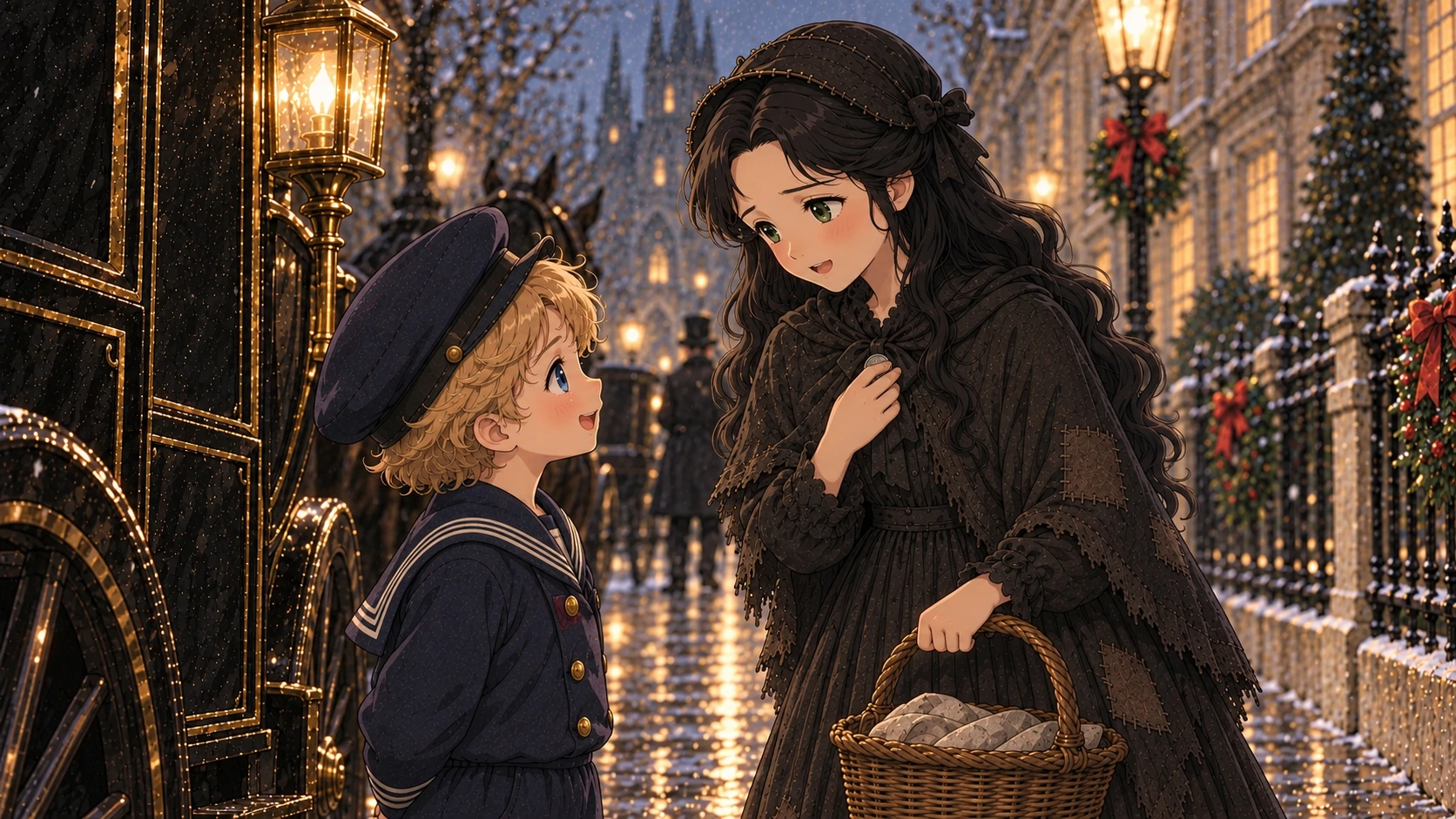
though it must be admitted her cheeks burned. "Thank you," she said. "You are a kind, kind little darling thing."
頬を熱くしながら言いました。『ありがとう。あなたは本当に、本当に優しいかわいい坊やね』

And as he scrambled joyfully into the carriage she went away, trying to smile,
彼が喜んで馬車へよじ登ると、セーラは微笑もうとしながら歩き去りました。
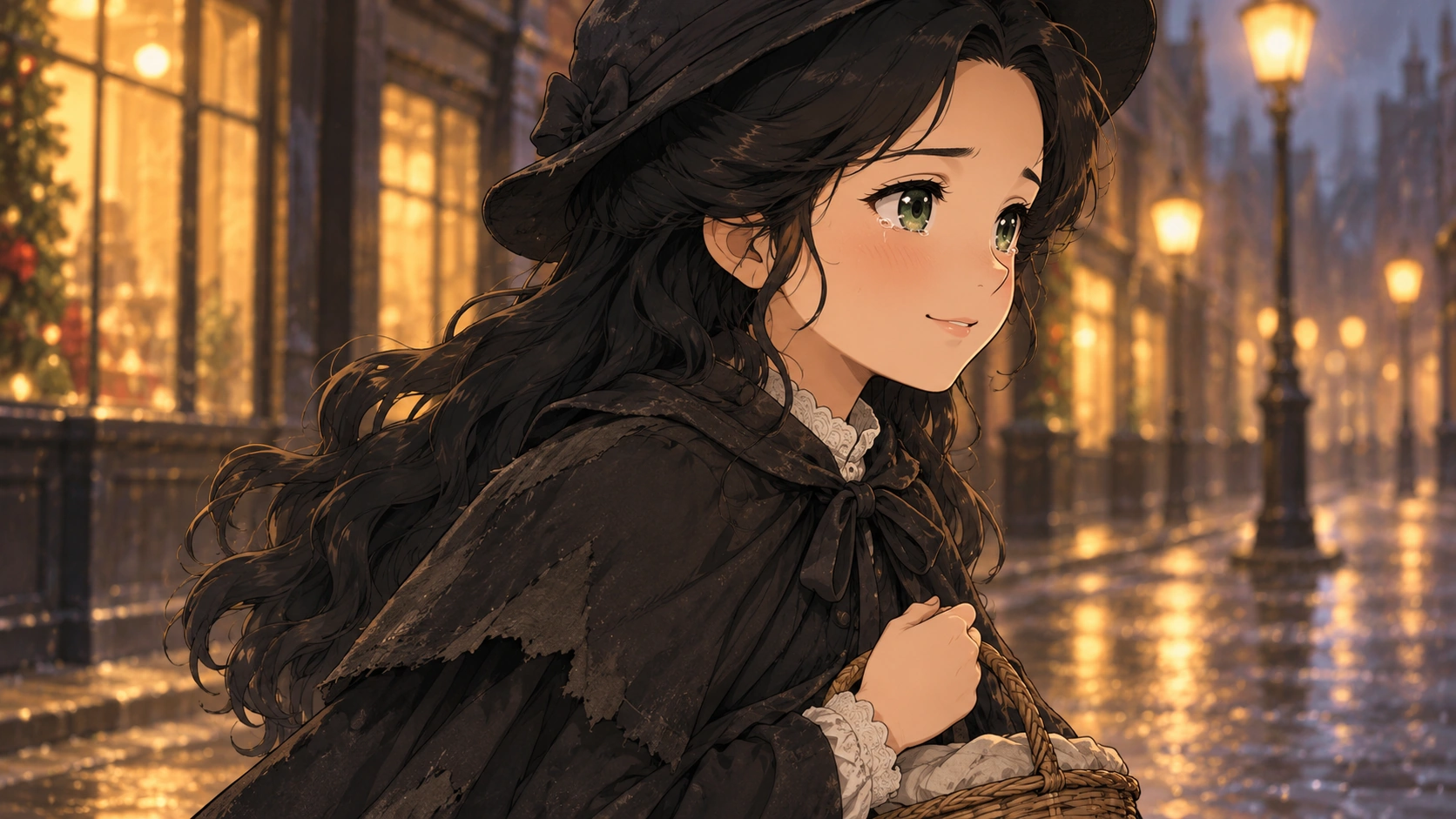
though she caught her breath quickly and her eyes were shining through a mist. She had known that she looked odd and shabby,
けれど息を詰まらせ、目は涙の霧の向こうで輝いていました。奇妙でみすぼらしい姿とは知っていましたが、

but until now she had not known that she might be taken for a beggar. As the Large Family's carriage drove away,
物乞いに間違われるとは、今まで知りませんでした。大家族の馬車が走り去る間、
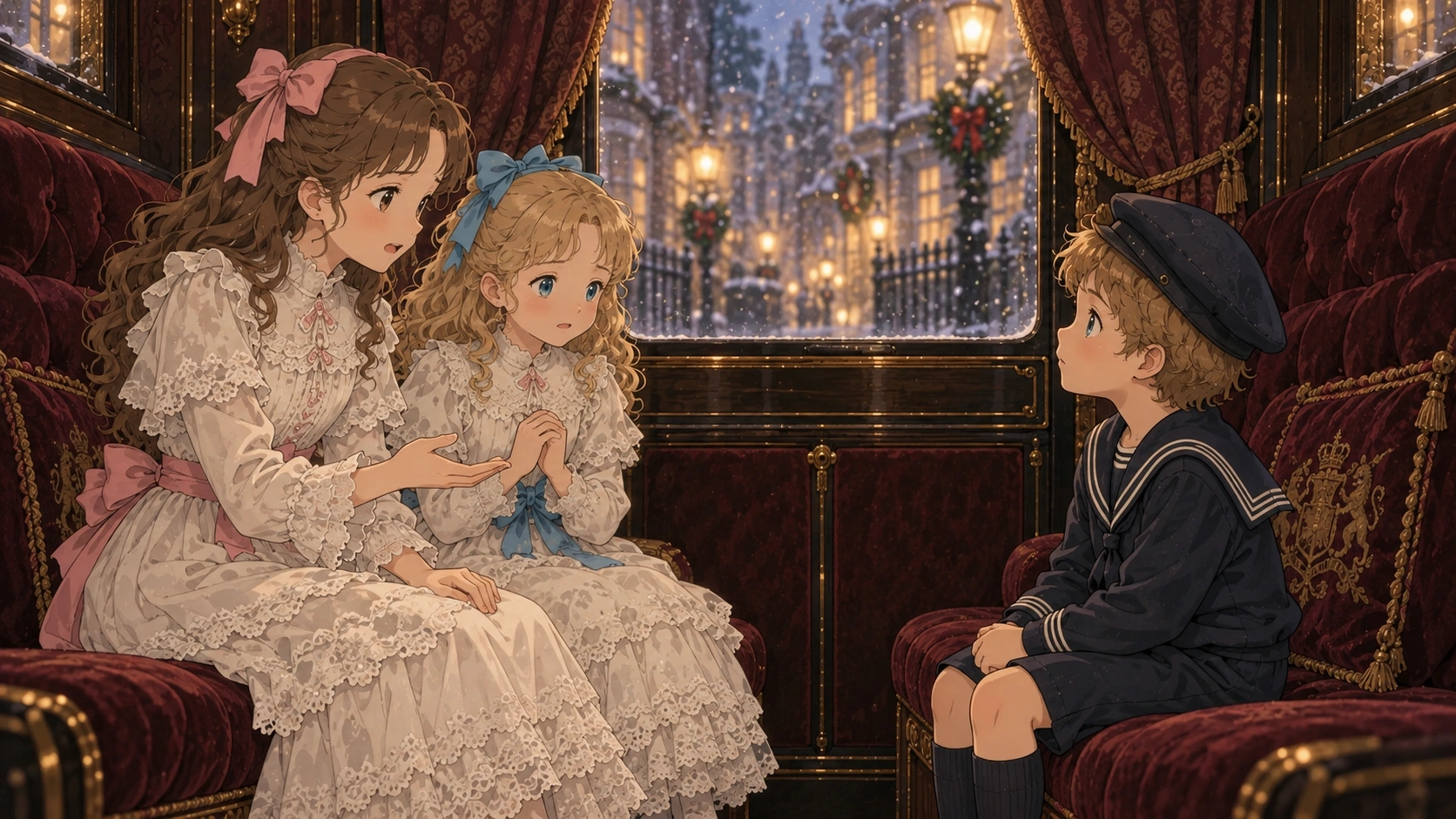
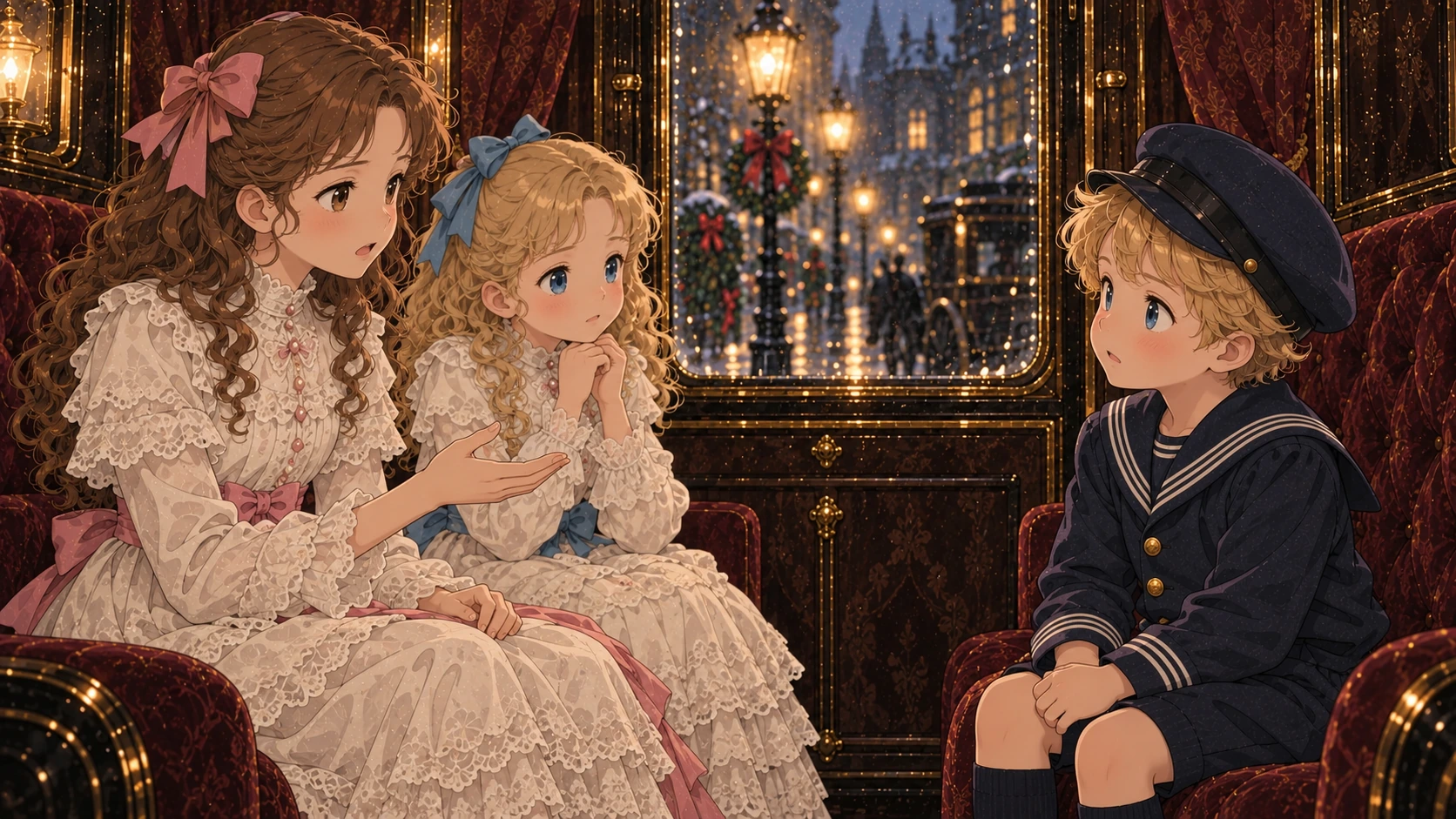
the children inside it were talking with interested excitement. "Oh, Donald," (this was Guy Clarence's name), Janet exclaimed alarmedly, "why did you offer that little girl your sixpence?
子供たちは興奮して話しました。『ドナルド、どうしてあの女の子に六ペンスをあげようとしたの?』とジャネット。
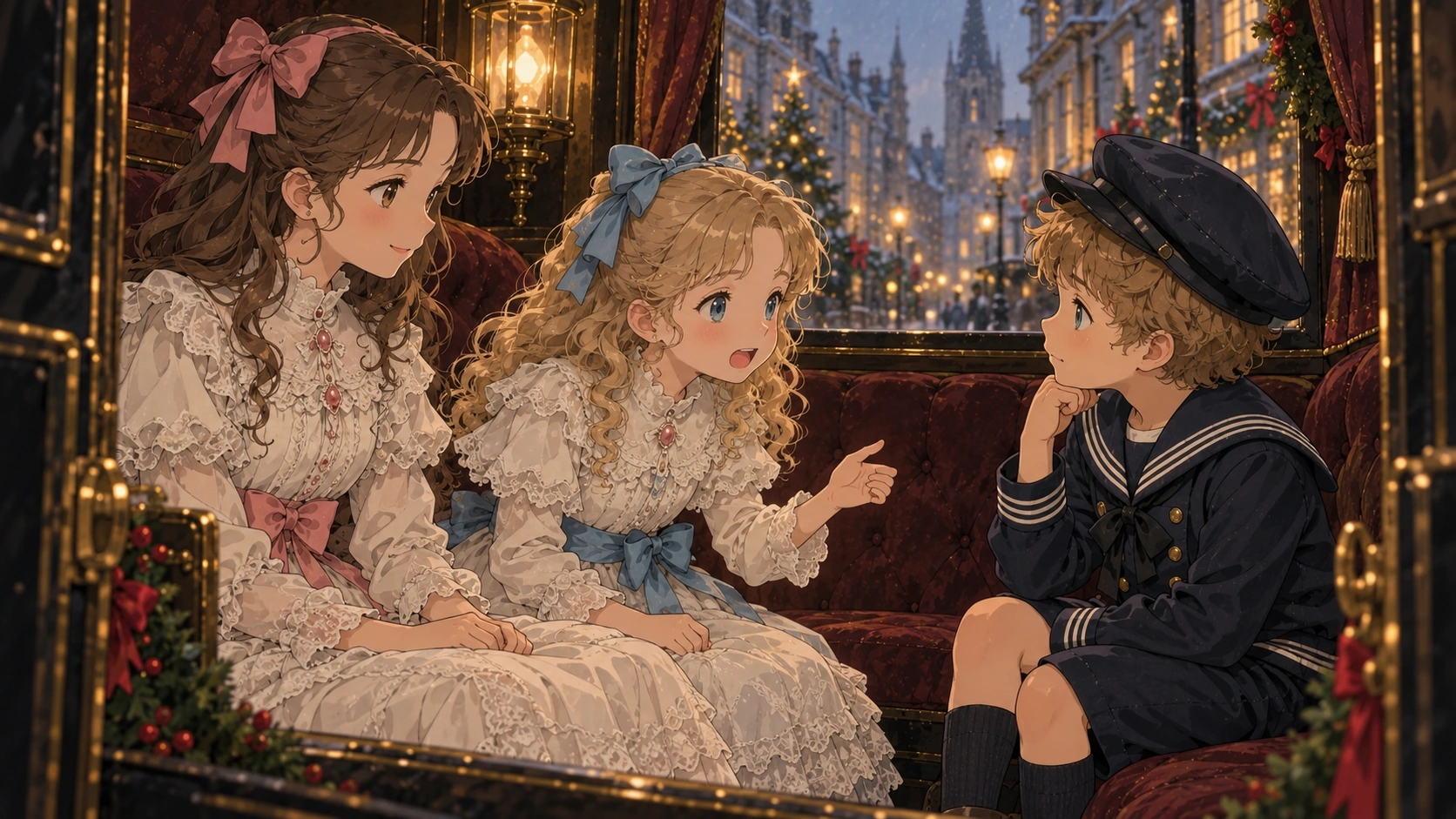
I'm sure she is not a beggar!" "She didn't speak like a beggar!" cried Nora. "And her face didn't really look like a beggar's face!"
『物乞いじゃないと思うわ!』『物乞いみたいな話し方じゃなかった!』とノラ。『顔だって本当は違ったわ!』
"Besides, she didn't beg," said Janet. "I was so afraid she might be angry with you.
『それに、何も恵んでって頼まなかった』とジャネット。『あなたに腹を立てるかと思って怖かったわ。
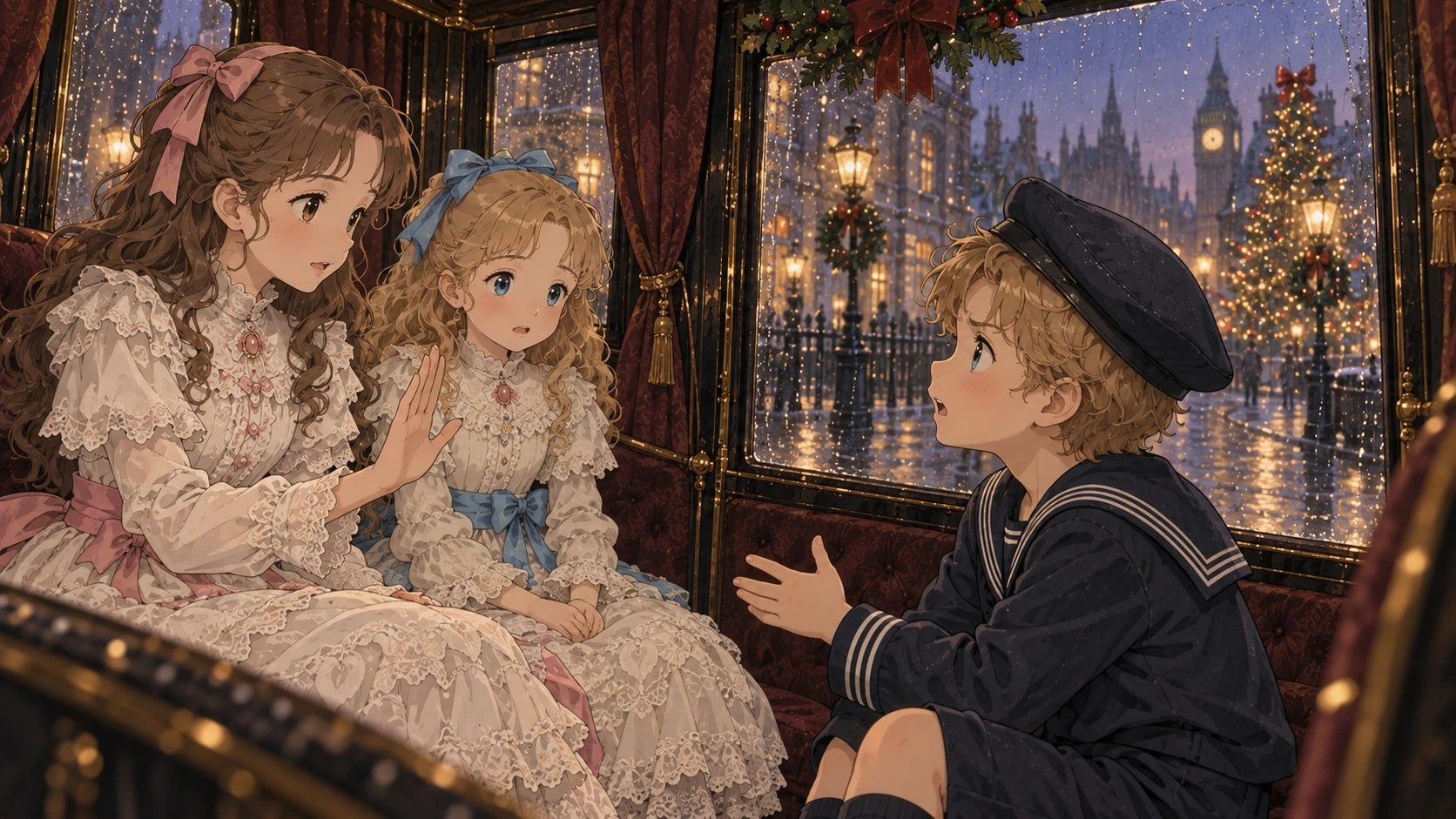
You know, it makes people angry to be taken for beggars when they are not beggars." "She wasn't angry," said Donald, a trifle dismayed, but still firm.
物乞いでない人は、そう思われると怒るものよ』『怒らなかったよ』ドナルドは少し不安ながらも言い張りました。
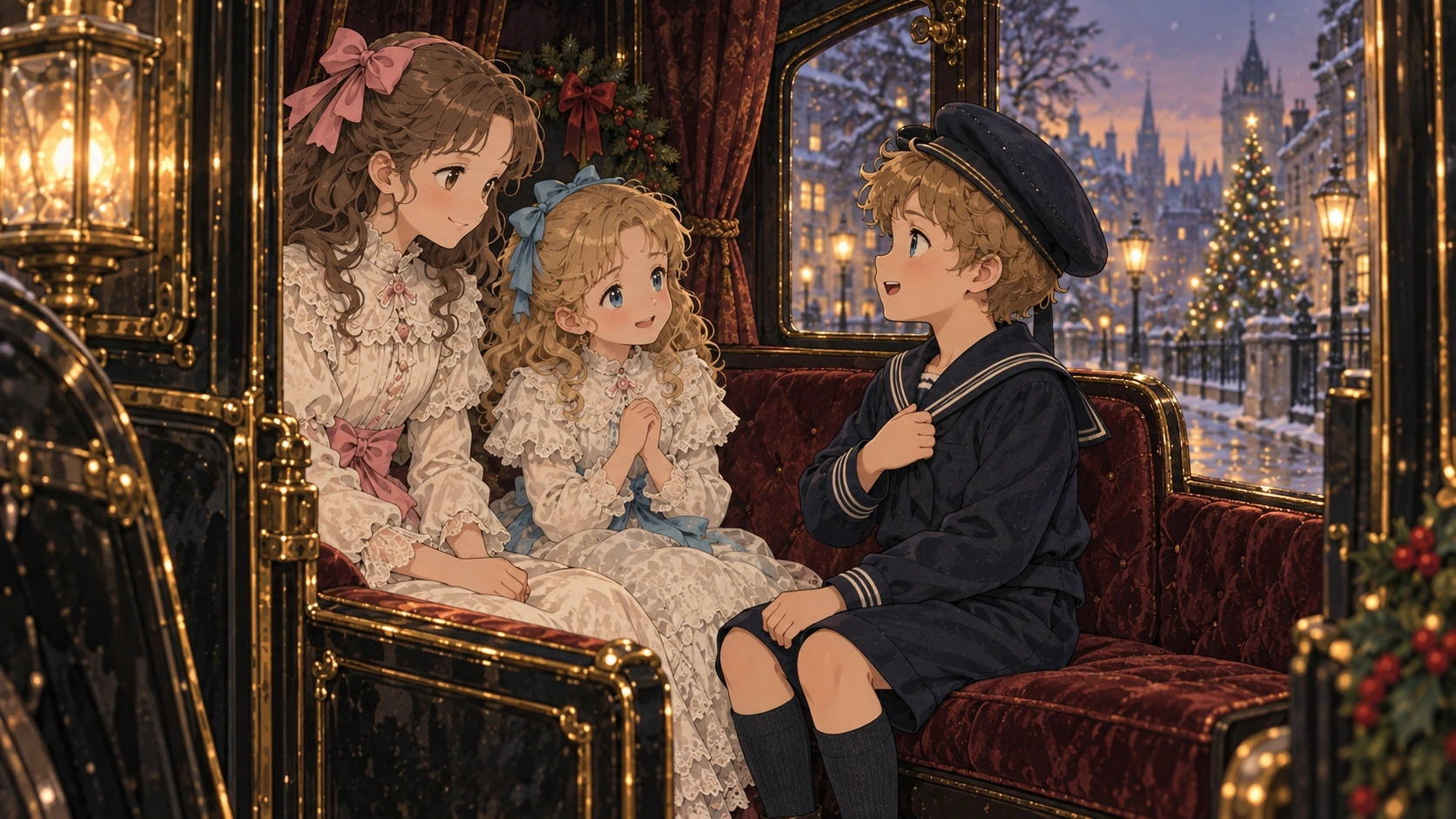
"She laughed a little, and she said I was a kind, kind little darling thing. And I was!"--stoutly. "It was my whole sixpence."
『少し笑って、僕を本当に優しいかわいい坊やだって言った。そして僕はそうだった!六ペンス全部だったんだ』
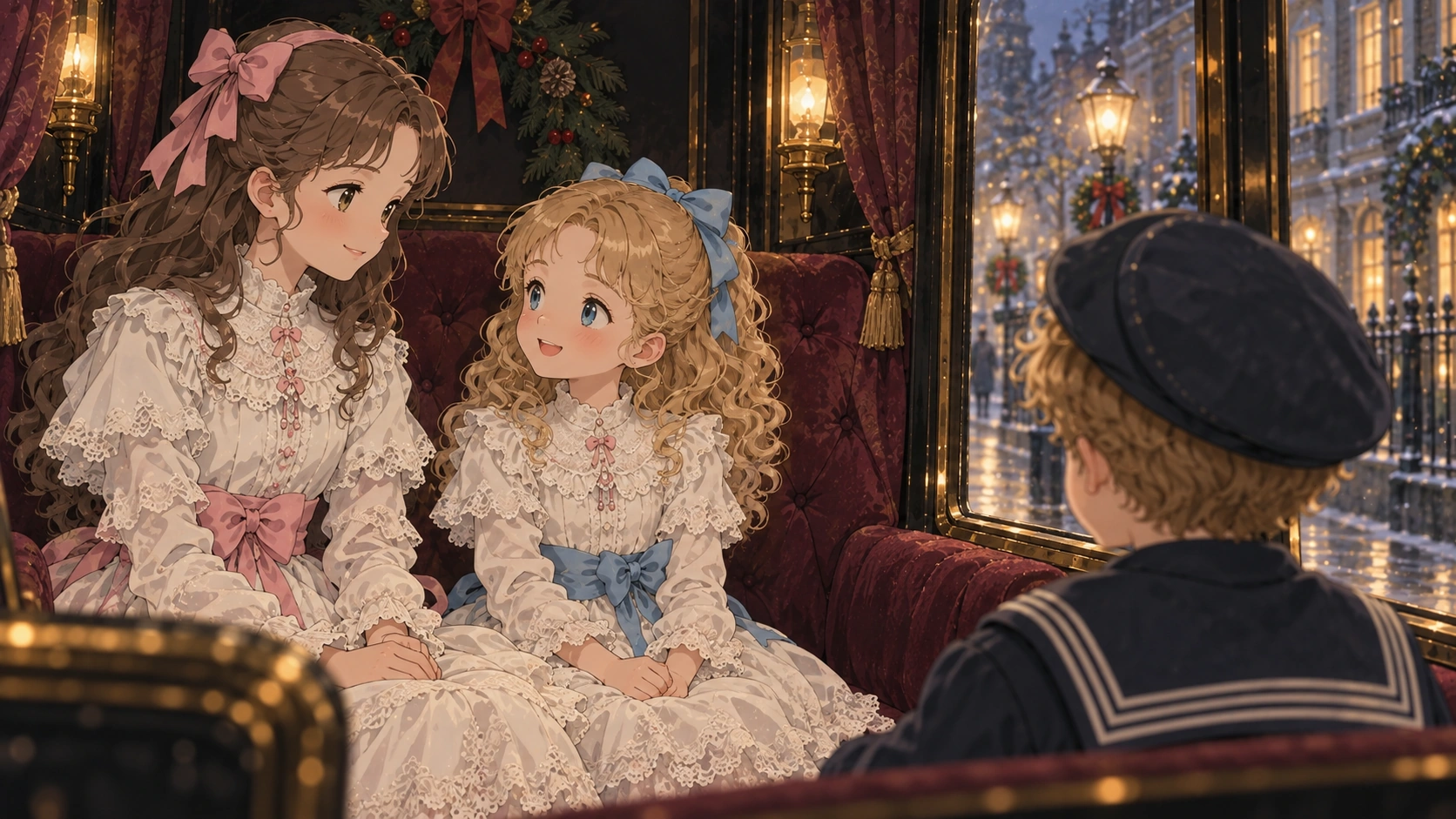
Janet and Nora exchanged glances. "A beggar girl would never have said that," decided Janet. "She would have said, 'Thank yer kindly,
ジャネットとノラは顔を見合わせました。『物乞いの子なら、そんな言い方は絶対しないわ』とジャネット。『きっと「ご親切に、
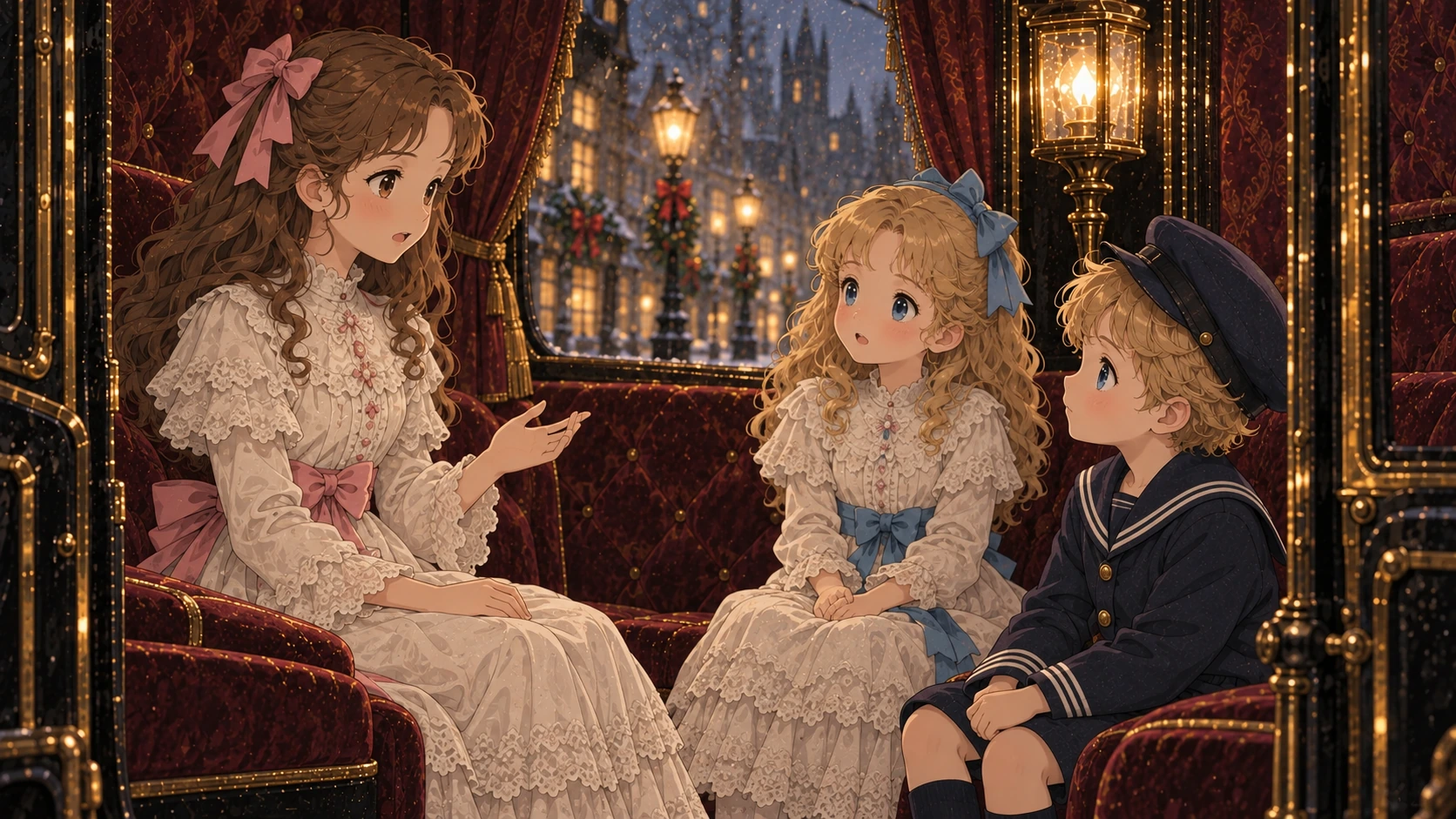
little gentleman--thank yer, sir;' and perhaps she would have bobbed a curtsy." Sara knew nothing about the fact, but from that time
坊ちゃん、ありがとうございます」と言って、お辞儀したでしょうね』セーラは知りませんでしたが、それ以来、
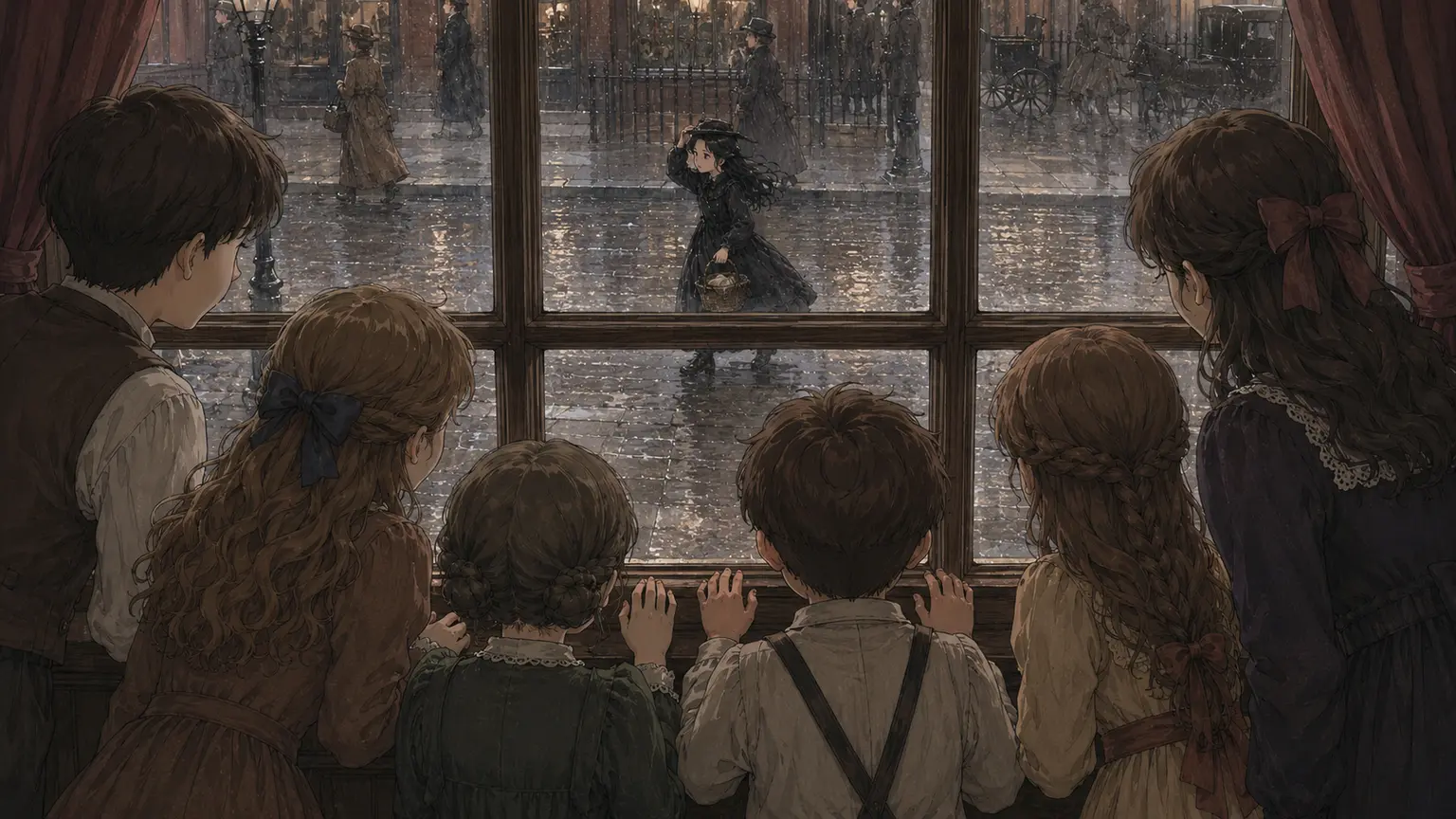
the Large Family was as profoundly interested in her as she was in it. Faces used to appear at the nursery windows when she passed,
大家族はセーラが彼らに興味を持つのと同じほど、深く彼女へ興味を持ちました。通ると子供部屋の窓に顔が現れ、
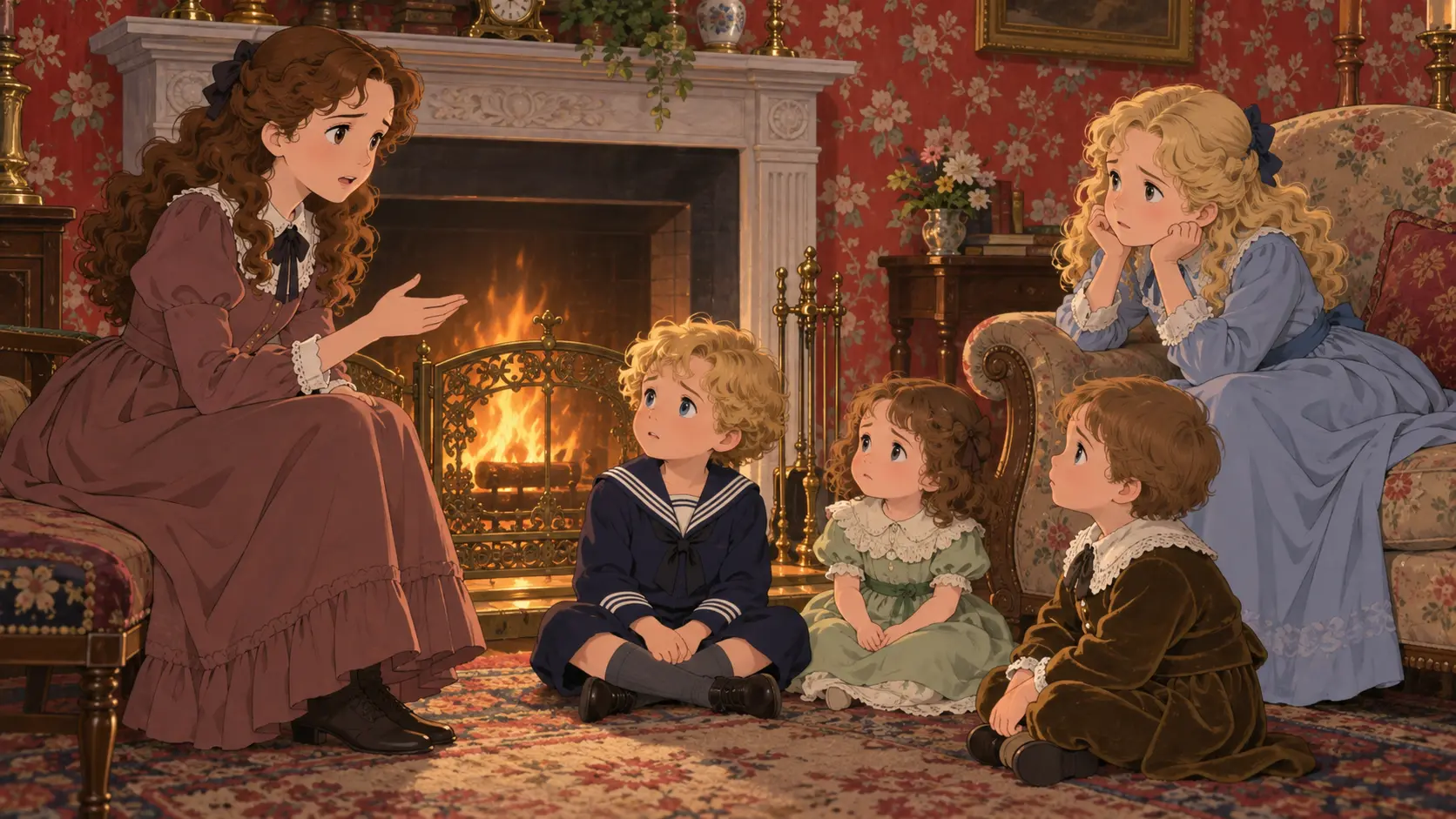
and many discussions concerning her were held round the fire. "She is a kind of servant at the seminary," Janet said.
暖炉の周りでは彼女について何度も話し合われました。『学校の召使いみたい』とジャネット。
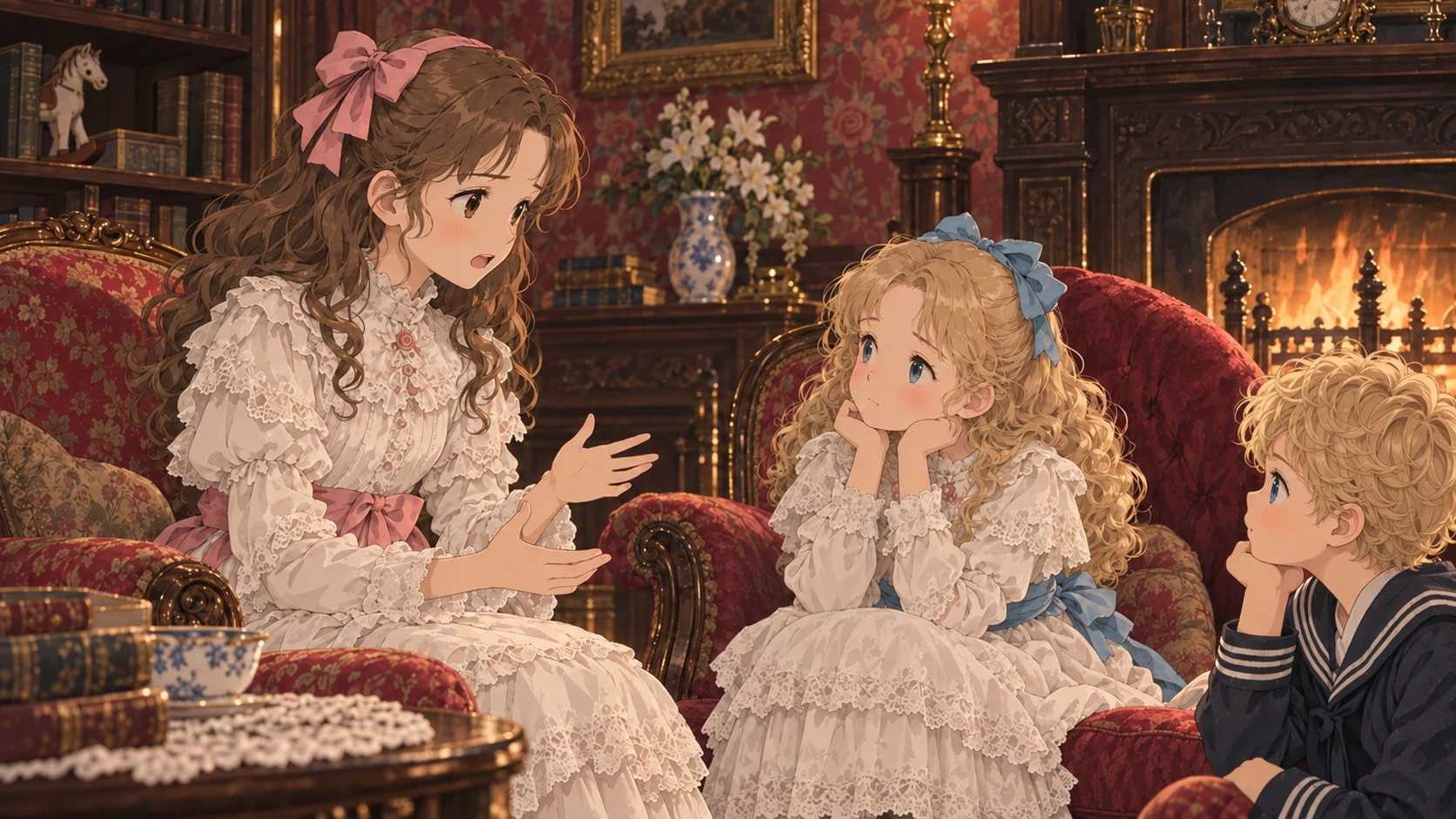
"I don't believe she belongs to anybody. I believe she is an orphan. But she is not a beggar, however shabby she looks."
『誰にも属していないと思う。きっと孤児よ。でもどんなにみすぼらしくても物乞いじゃないわ』
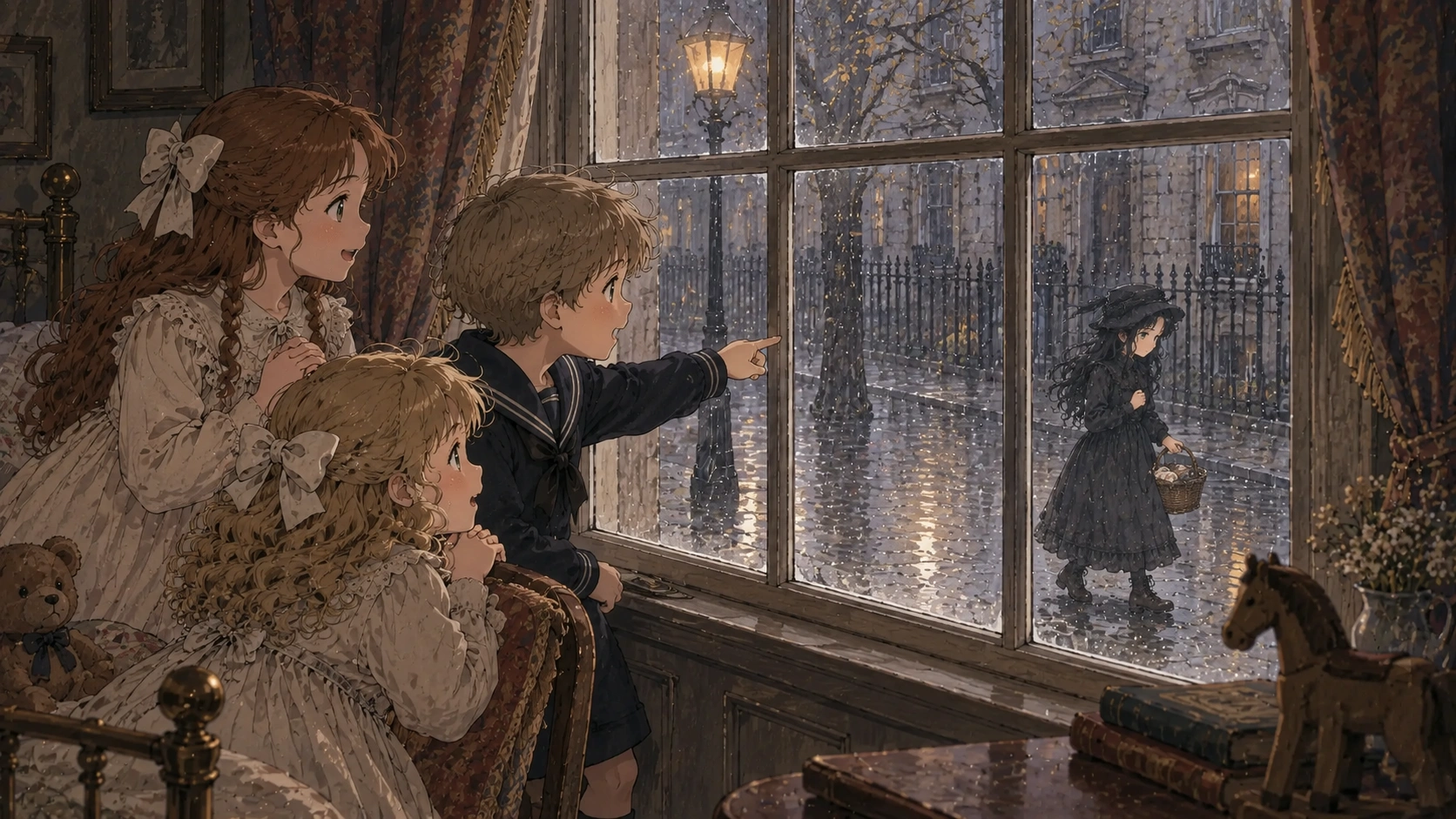
And afterward she was called by all of them, "The-little-girl-who-is-not-a-beggar," which was, of course,
それから皆は彼女を『物乞いではない小さな女の子』と呼びました。もちろん、
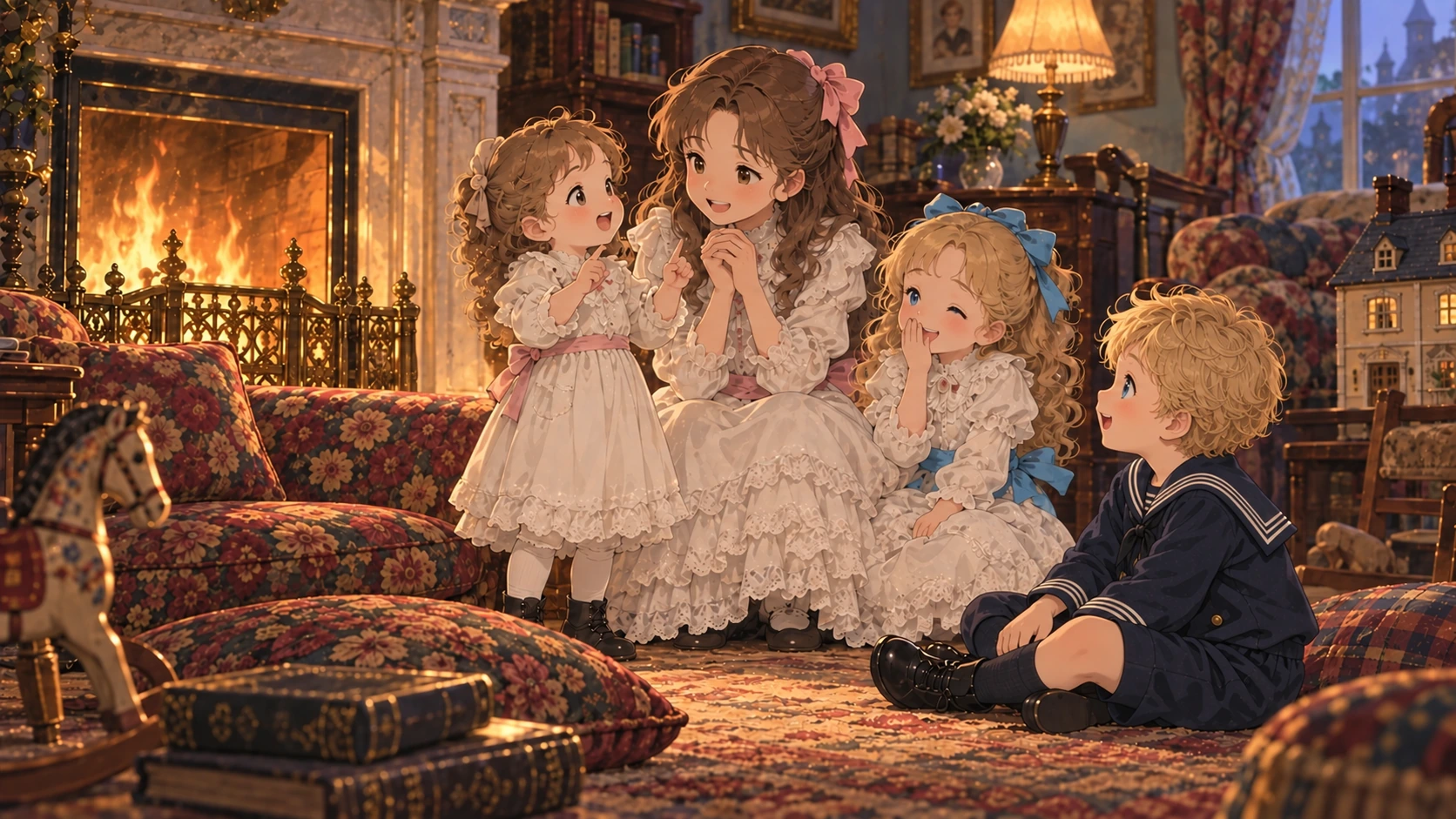
rather a long name, and sounded very funny sometimes when the youngest ones said it in a hurry.
ずいぶん長い名前で、幼い子が急いで言うと、とてもおかしく聞こえました。
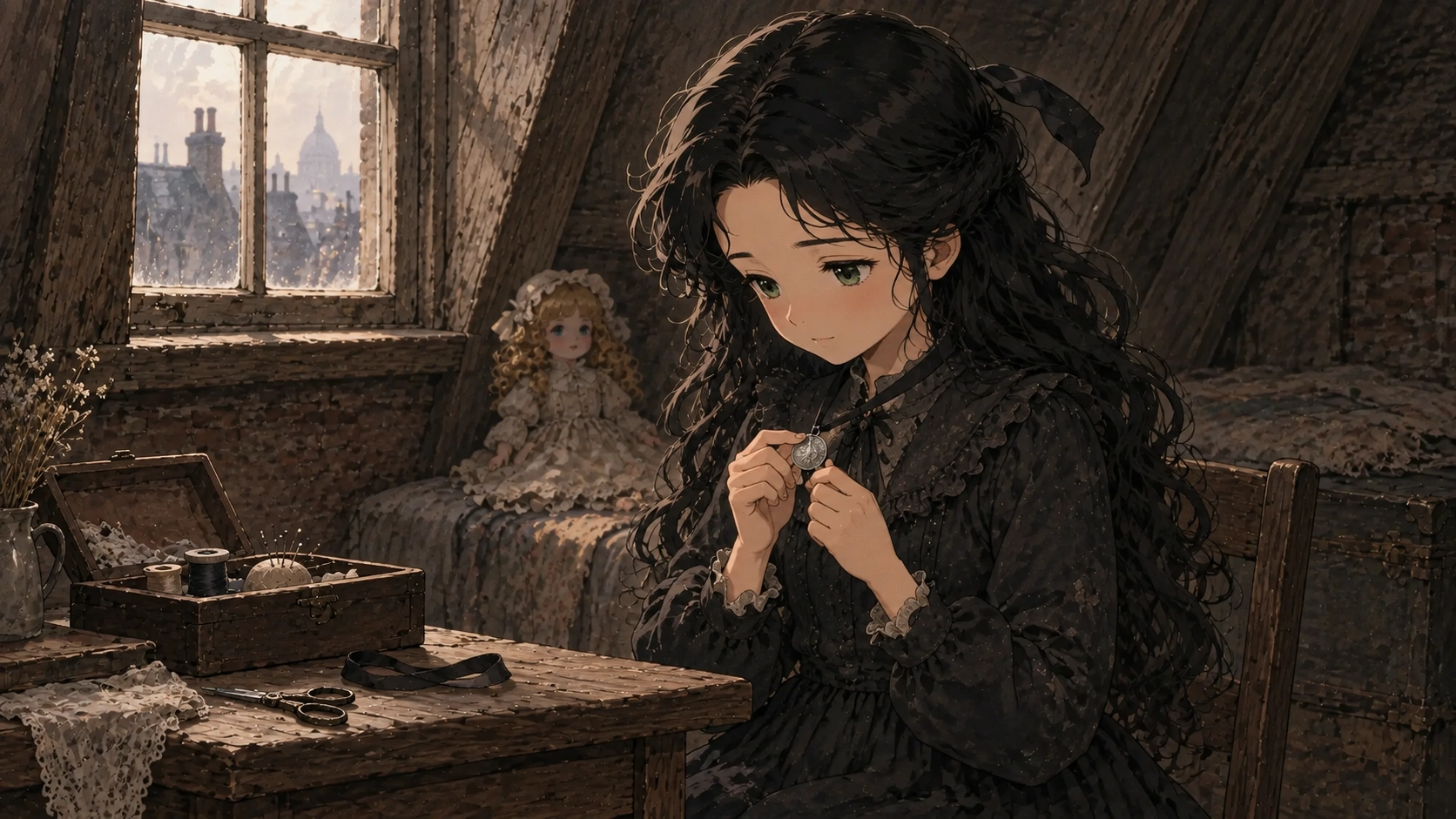
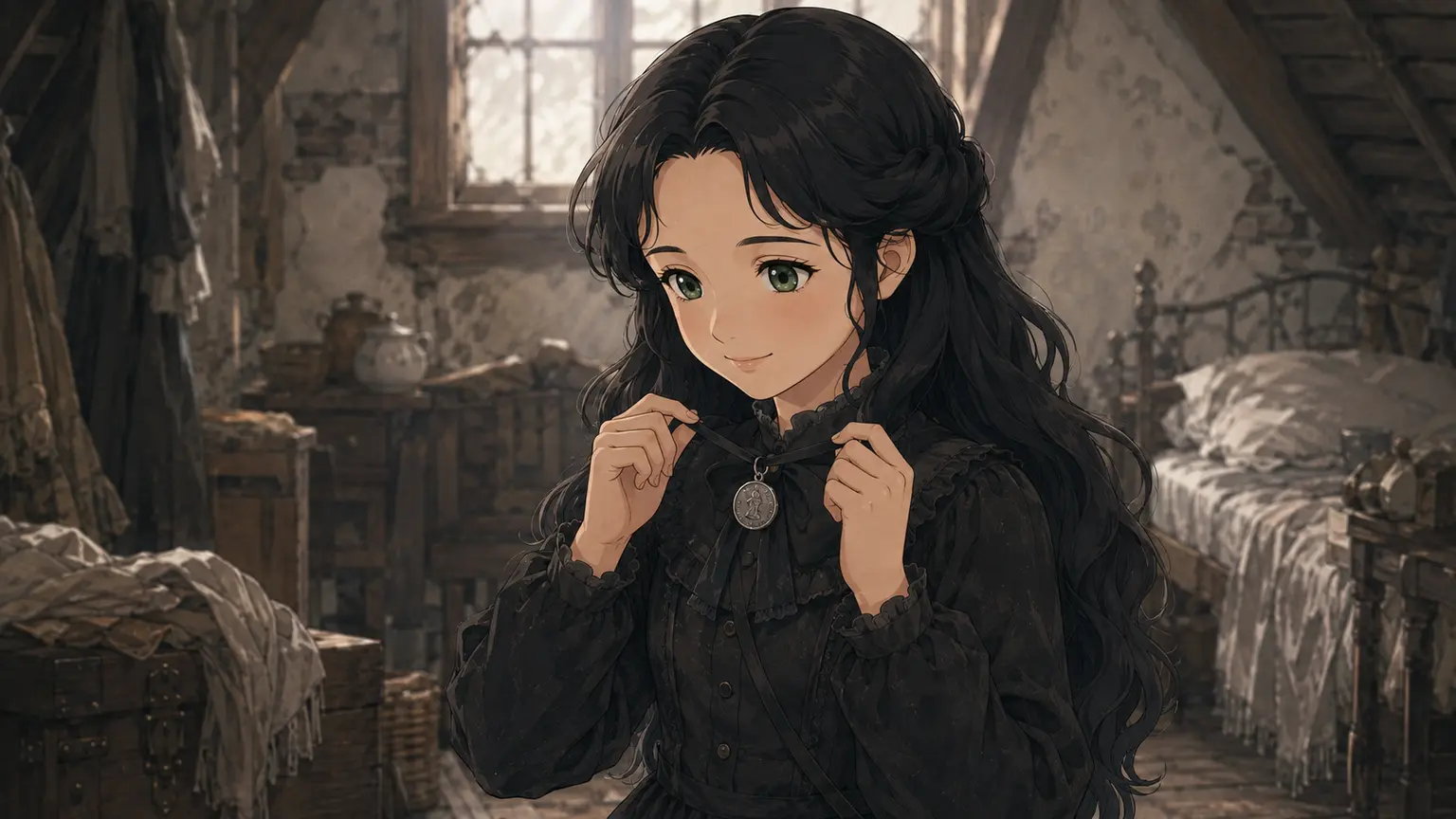
Sara managed to bore a hole in the sixpence and hung it on an old bit of narrow ribbon round her neck.
セーラは六ペンスに穴を開け、古い細いリボンを通して首に掛けました。
Her affection for the Large Family increased--as, indeed, her affection for everything she could love increased. She grew fonder and fonder of Becky,
大家族への愛情は深まりました――愛せるものすべてへの愛情も深まっていました。ベッキーをますます好きになり、
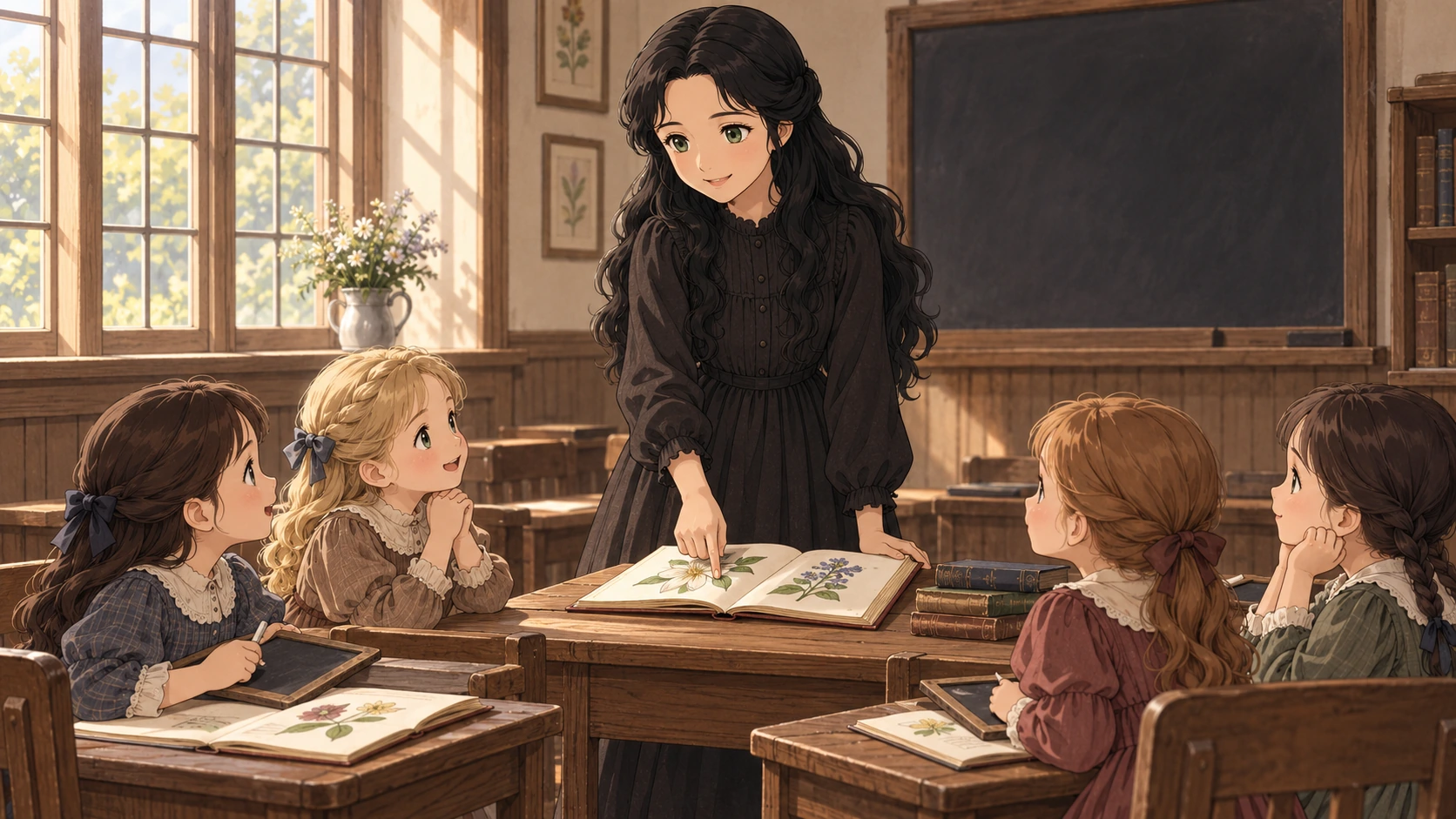
and she used to look forward to the two mornings a week when she went into the schoolroom to give the little ones their French lesson.
週に二度、教室で幼い子たちにフランス語を教える朝を心待ちにしました。
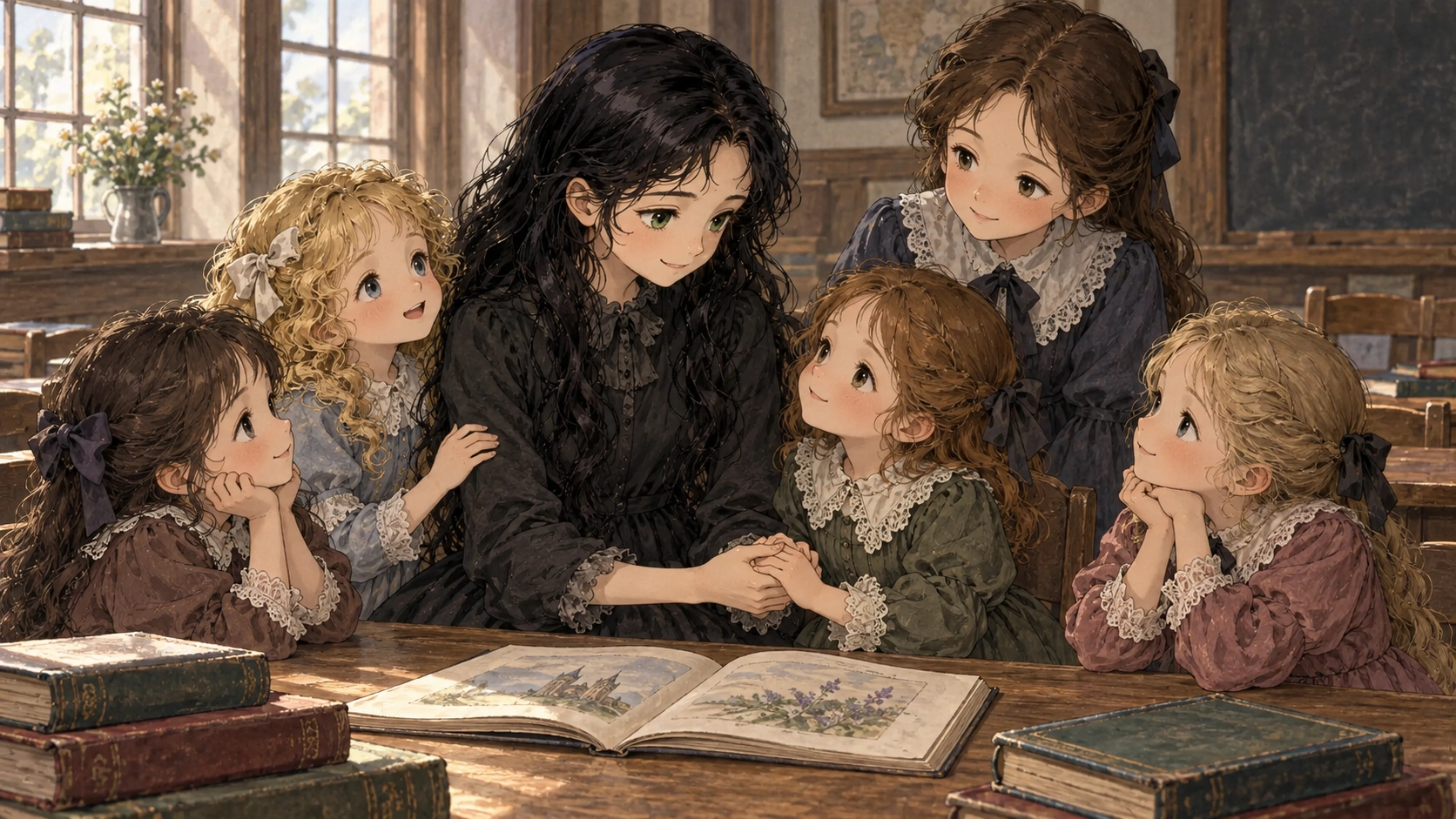
Her small pupils loved her, and strove with each other for the privilege of standing close to her and insinuating their small hands into hers.
小さな生徒たちはセーラを慕い、そばに立って小さな手を握ってもらおうと競いました。
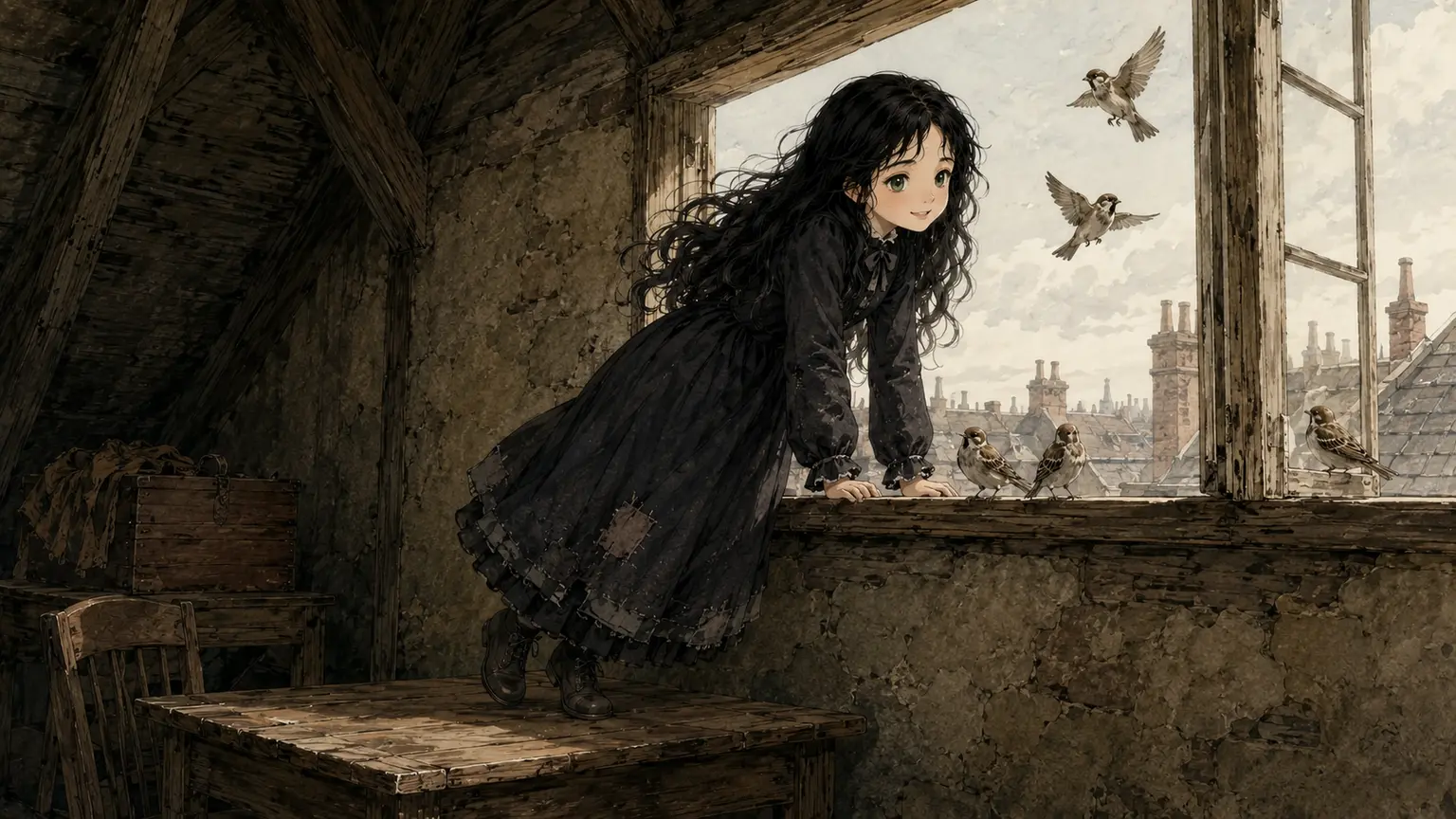
It fed her hungry heart to feel them nestling up to her. She made such friends with the sparrows that when she stood upon the table,
寄り添う温もりが飢えた心を満たしました。スズメたちとも親しくなり、机に立って
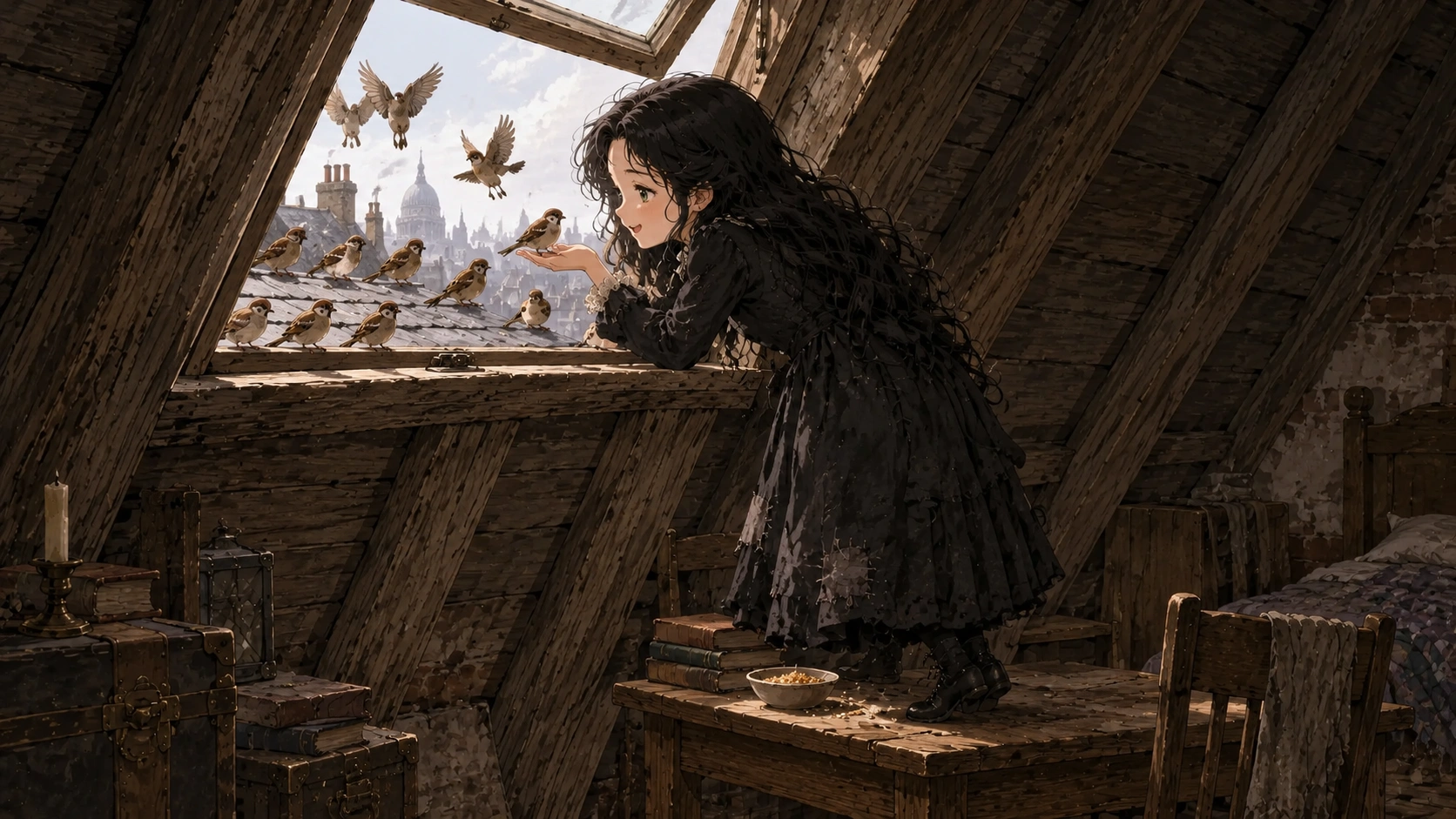
put her head and shoulders out of the attic window, and chirped, she heard almost immediately a flutter of wings and answering twitters,
屋根裏の窓から頭と肩を出してさえずると、すぐに羽ばたきと答える声が聞こえ、
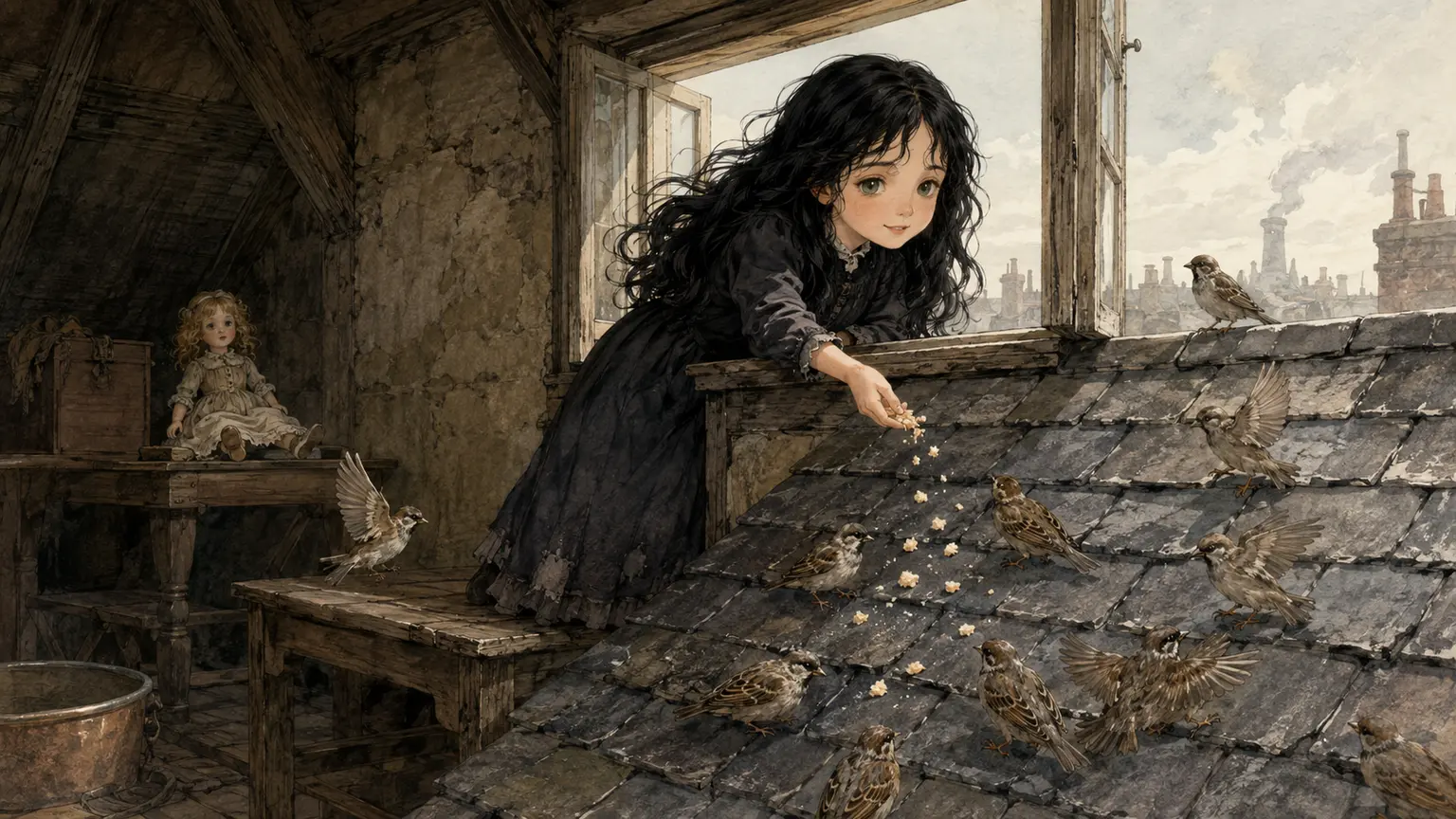
and a little flock of dingy town birds appeared and alighted on the slates to talk to her and make much of the crumbs she scattered.
薄汚れた街の鳥たちが屋根瓦に降り、話しかけ、まいたパンくずを喜びました。
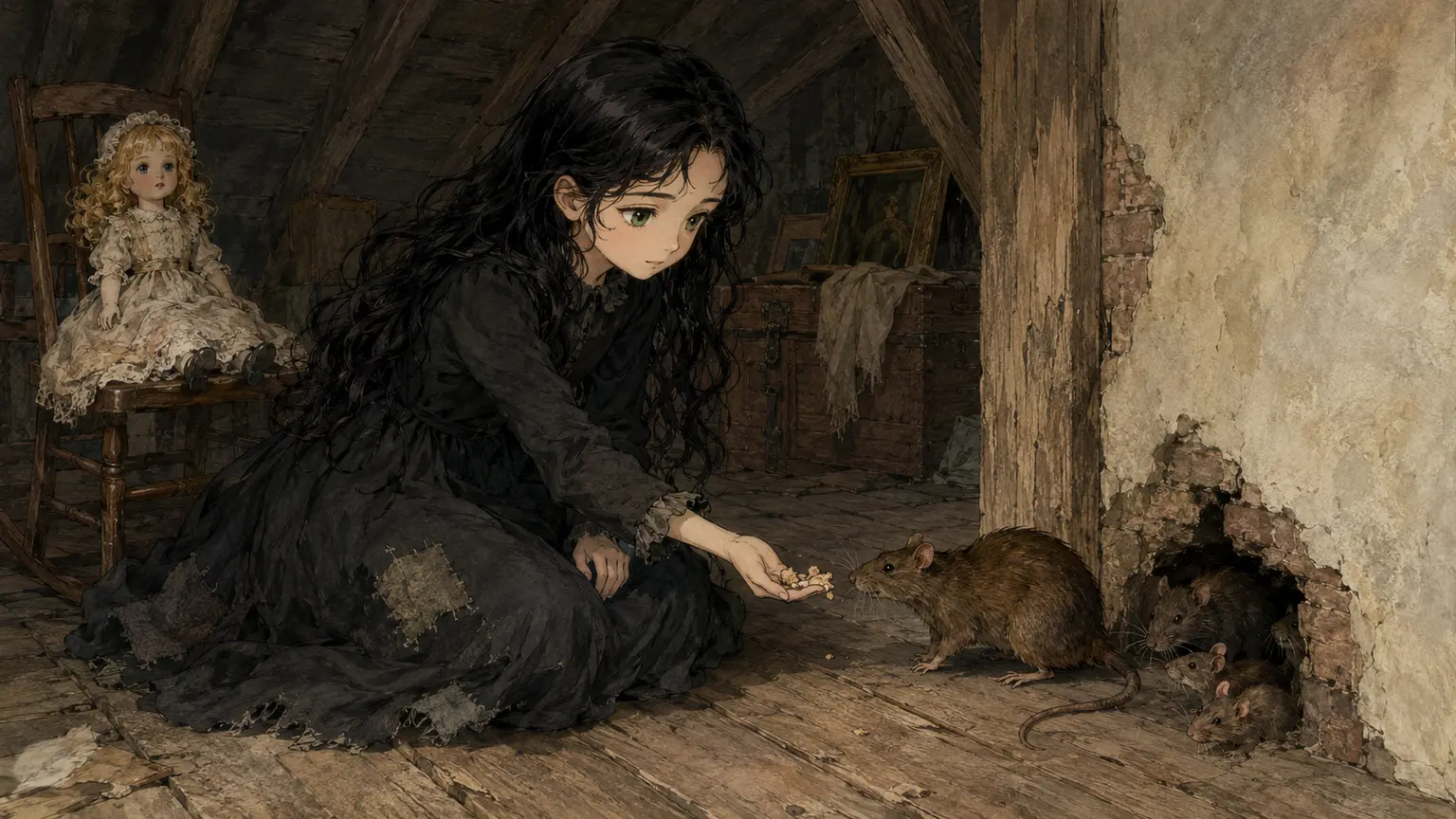
With Melchisedec she had become so intimate that he actually brought Mrs. Melchisedec with him sometimes, and now and then one or two of his children.
メルキセデクとはとても親しくなり、彼は時々、妻や一、二匹の子供まで連れて来ました。
She used to talk to him, and, somehow, he looked quite as if he understood. There had grown in her mind rather a strange feeling about Emily,
話しかけると、どこか本当に理解しているようでした。いつもすべてを見つめて座るエミリーについても、奇妙な思いが育っていました。
who always sat and looked on at everything. It arose in one of her moments of great desolateness.
それは、ひどく寂しいある瞬間に生まれたものでした。
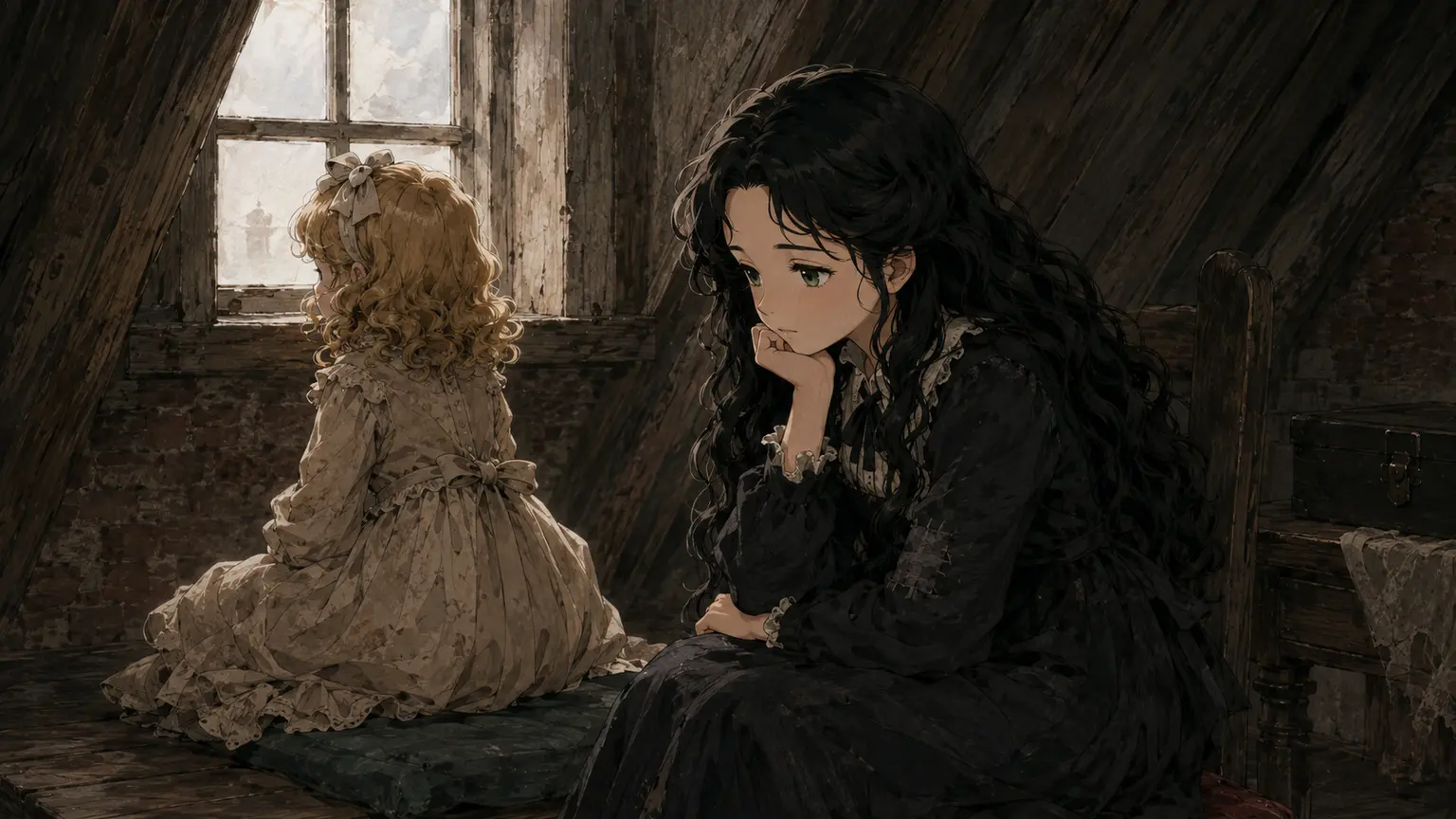
She would have liked to believe or pretend to believe that Emily understood and sympathized with her. She did not like to own to herself
エミリーが自分を理解し、心を寄せてくれると信じるか、信じるふりをしたかったのです。唯一の仲間が
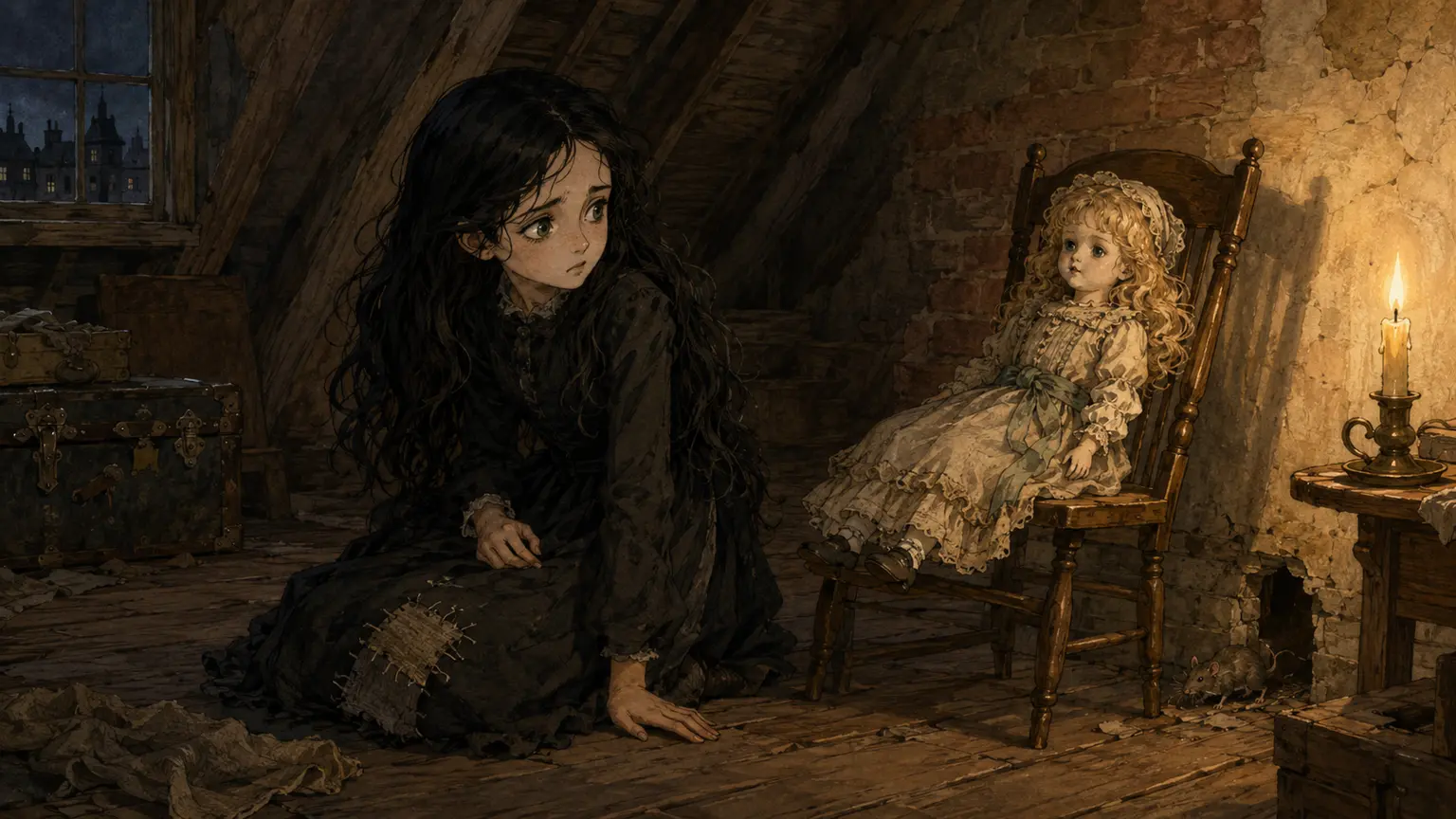
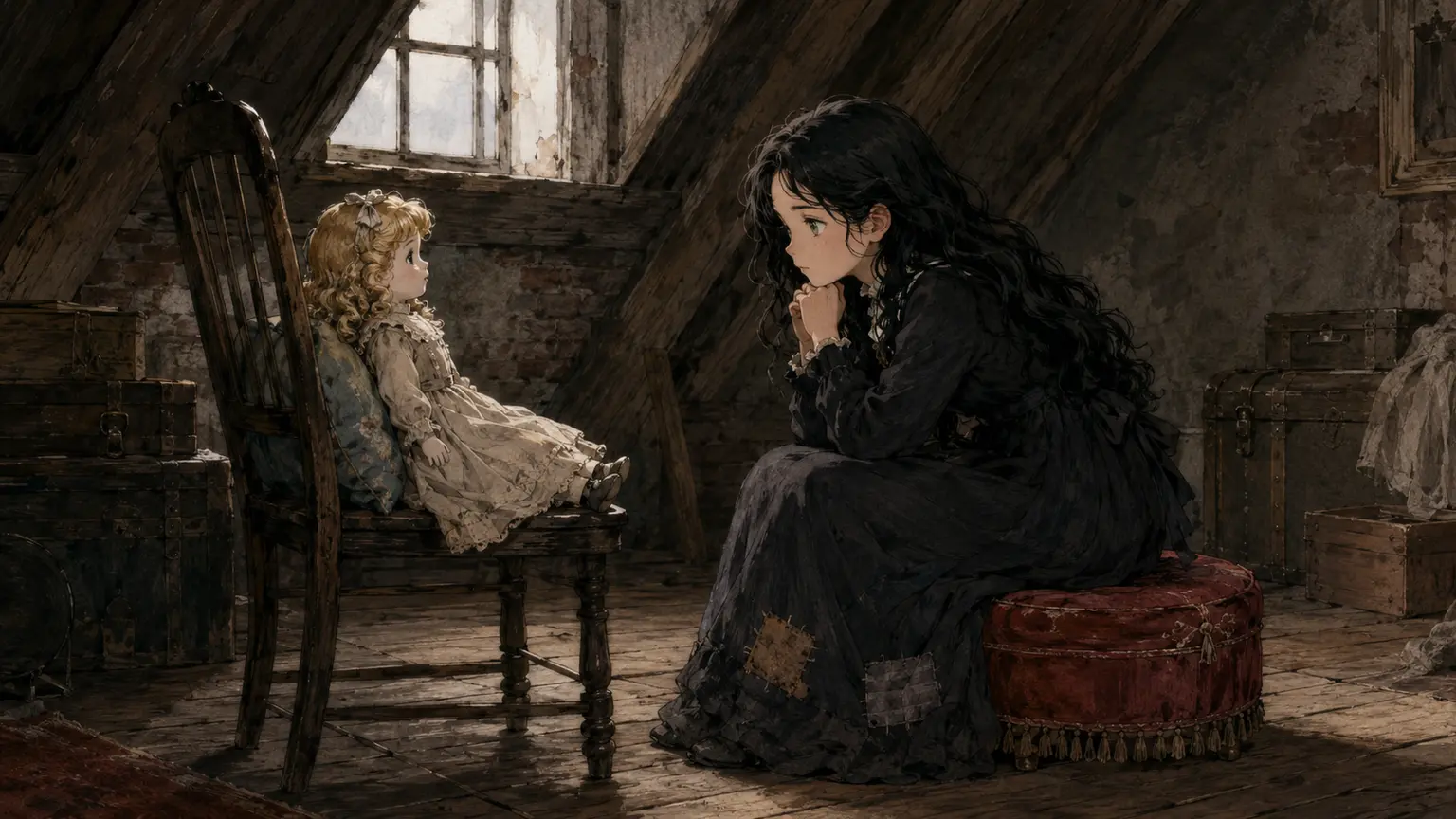
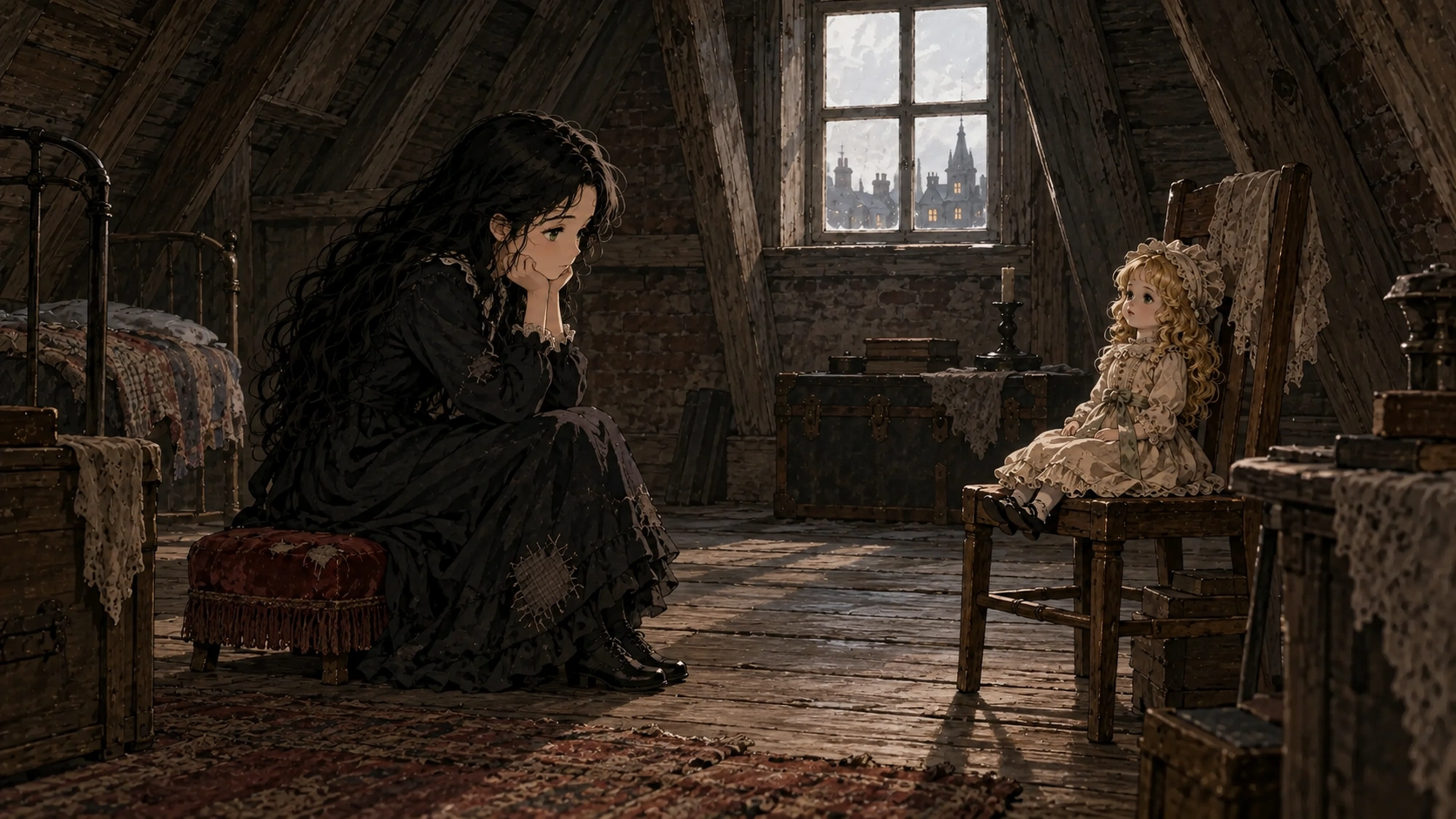
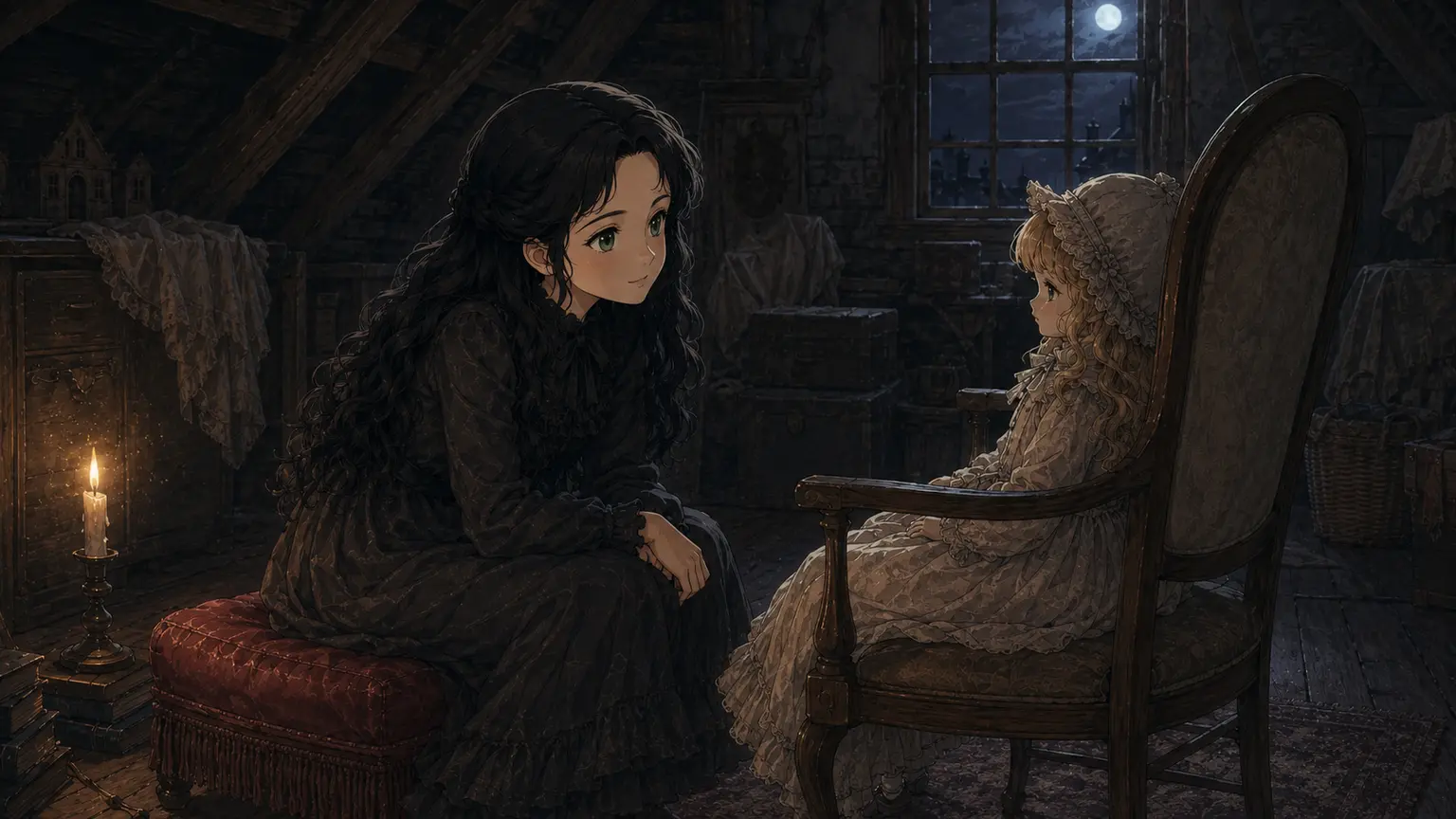
that her only companion could feel and hear nothing. She used to put her in a chair sometimes and sit opposite to her on the old red footstool,
何も感じず聞けないとは認めたくありません。時々、椅子に座らせ、自分は古い赤い足台に向かい合って座り、
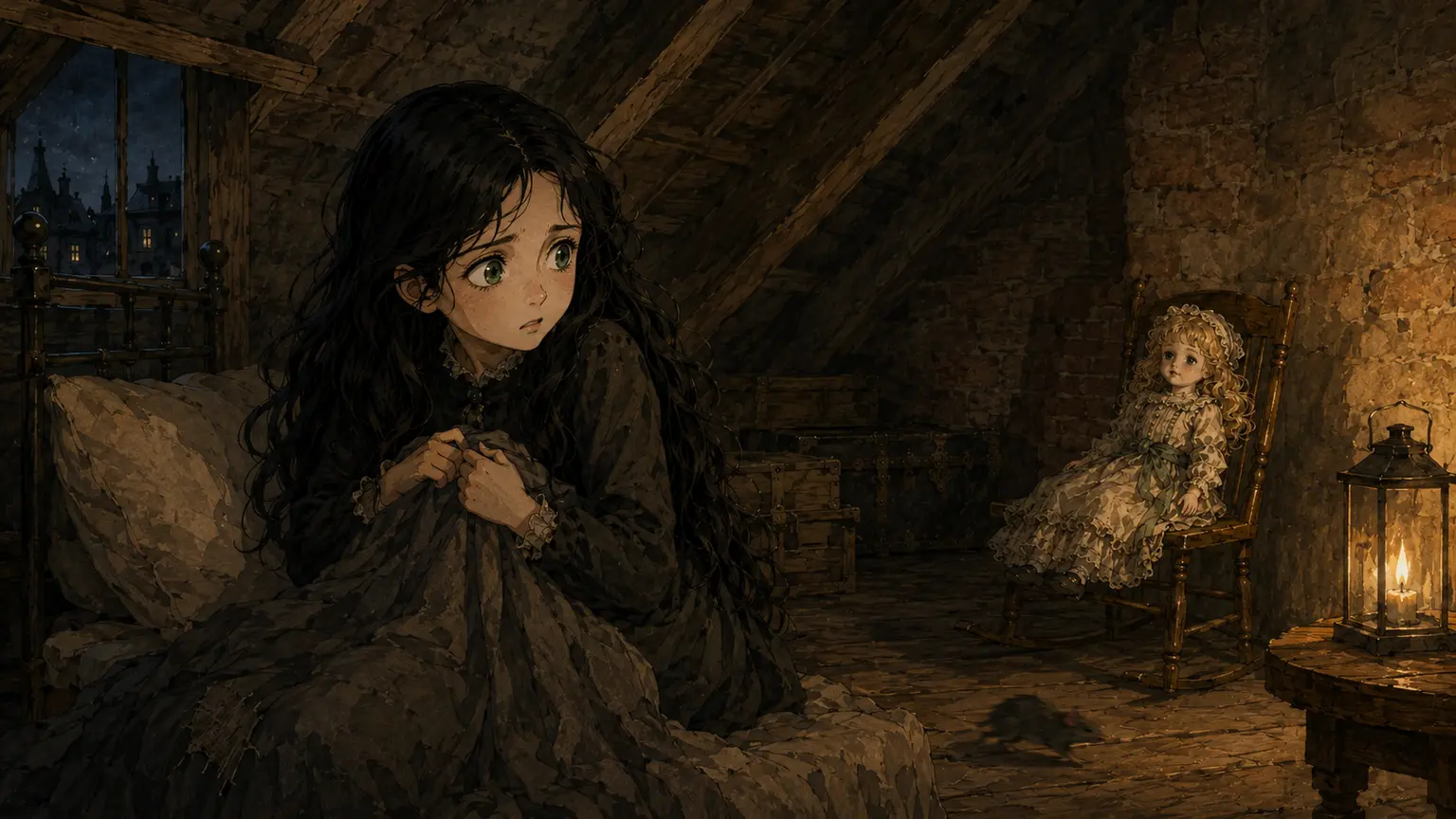
and stare and pretend about her until her own eyes would grow large with something which was almost like fear--particularly at night when everything was so still,
想像しながら見つめ続け、目が恐怖に近いほど大きくなりました――特に静まり返った夜、
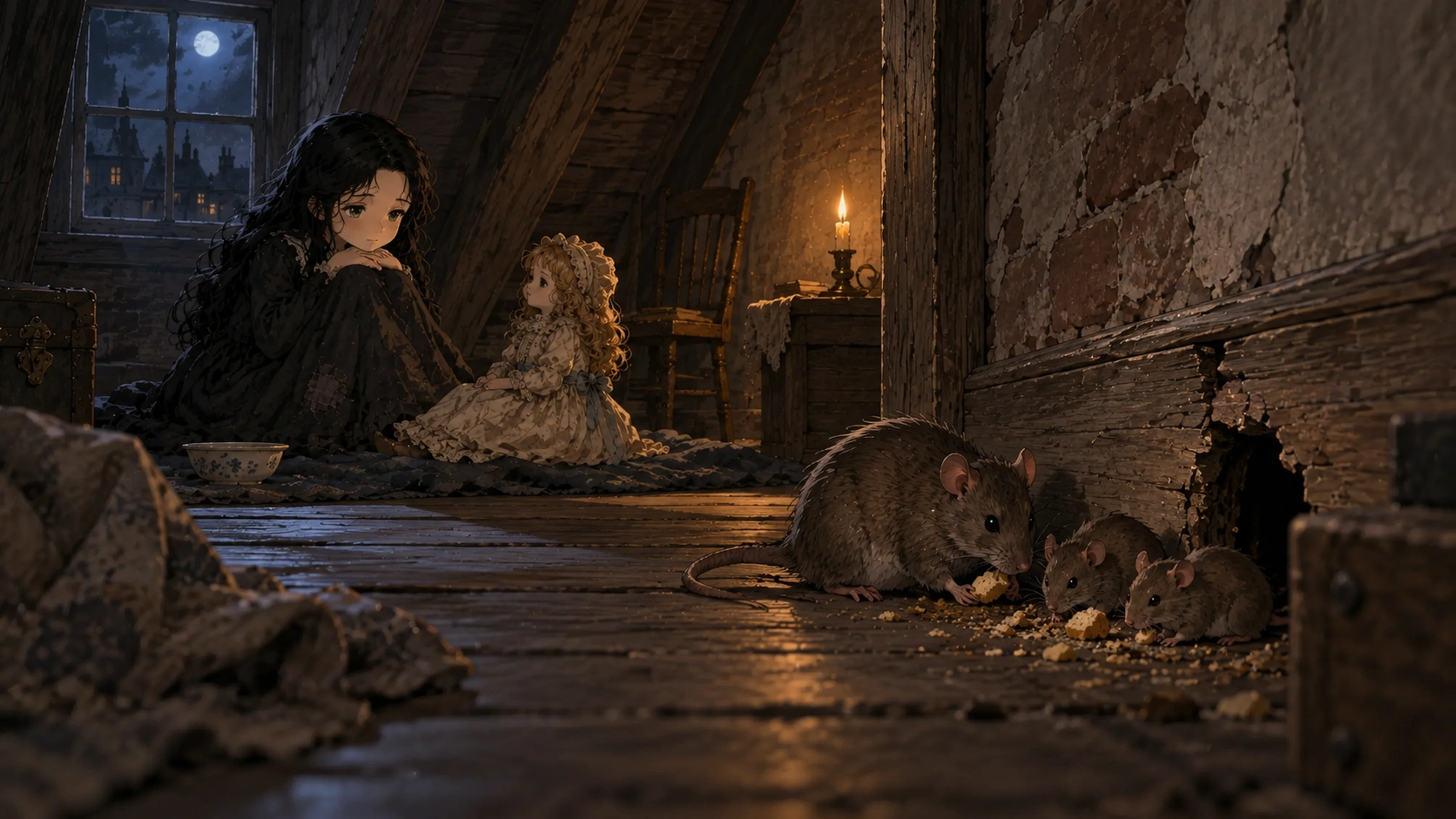
when the only sound in the attic was the occasional sudden scurry and squeak of Melchisedec's family in the wall.
壁の中でメルキセデク一家が走り、鳴く音だけが時折響く時でした。
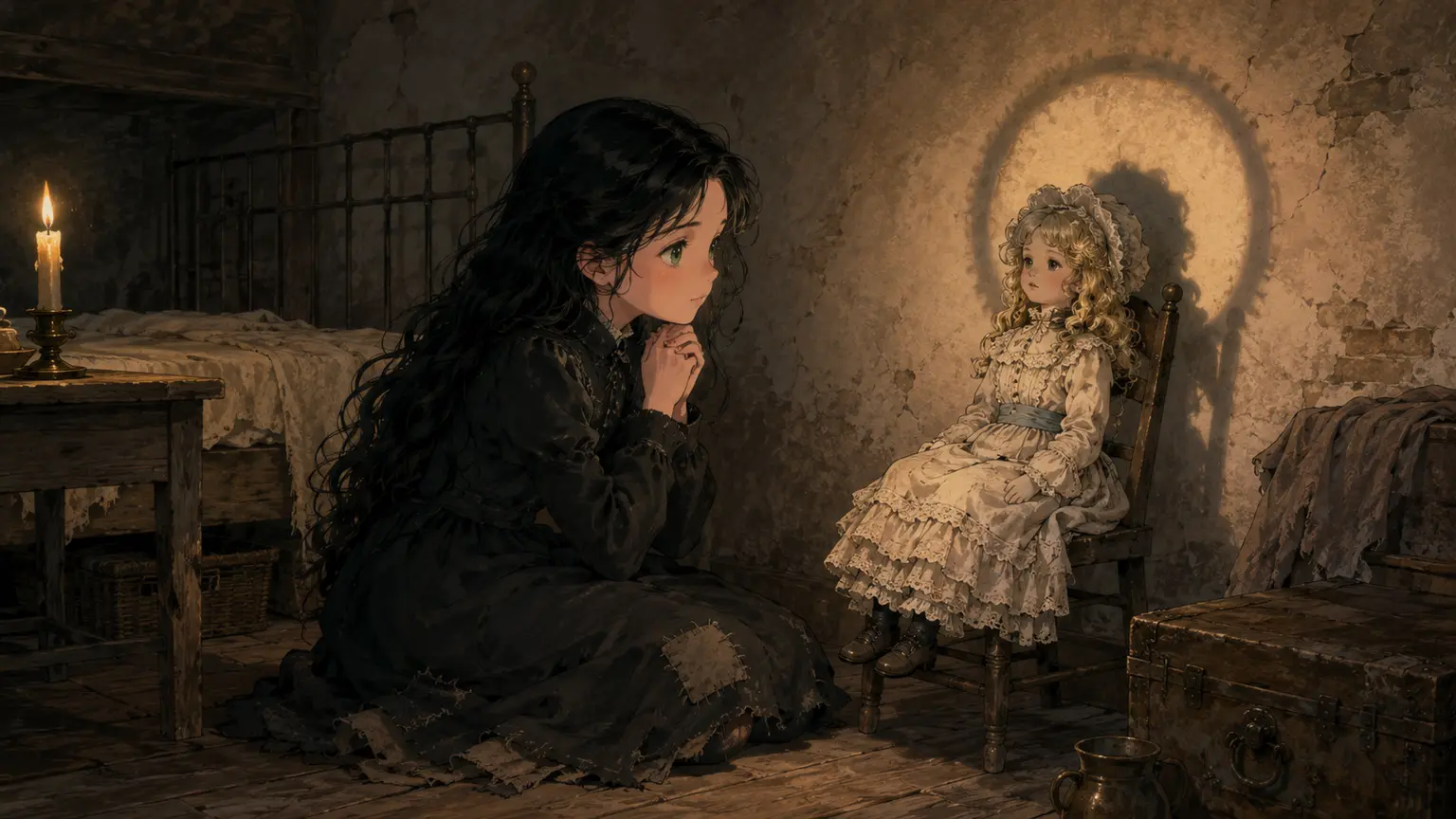
One of her "pretends" was that Emily was a kind of good witch who could protect her. Sometimes, after she had stared at her
想像の一つでは、エミリーは自分を守れる善い魔女でした。想像が極限まで高まるほど見つめた後、
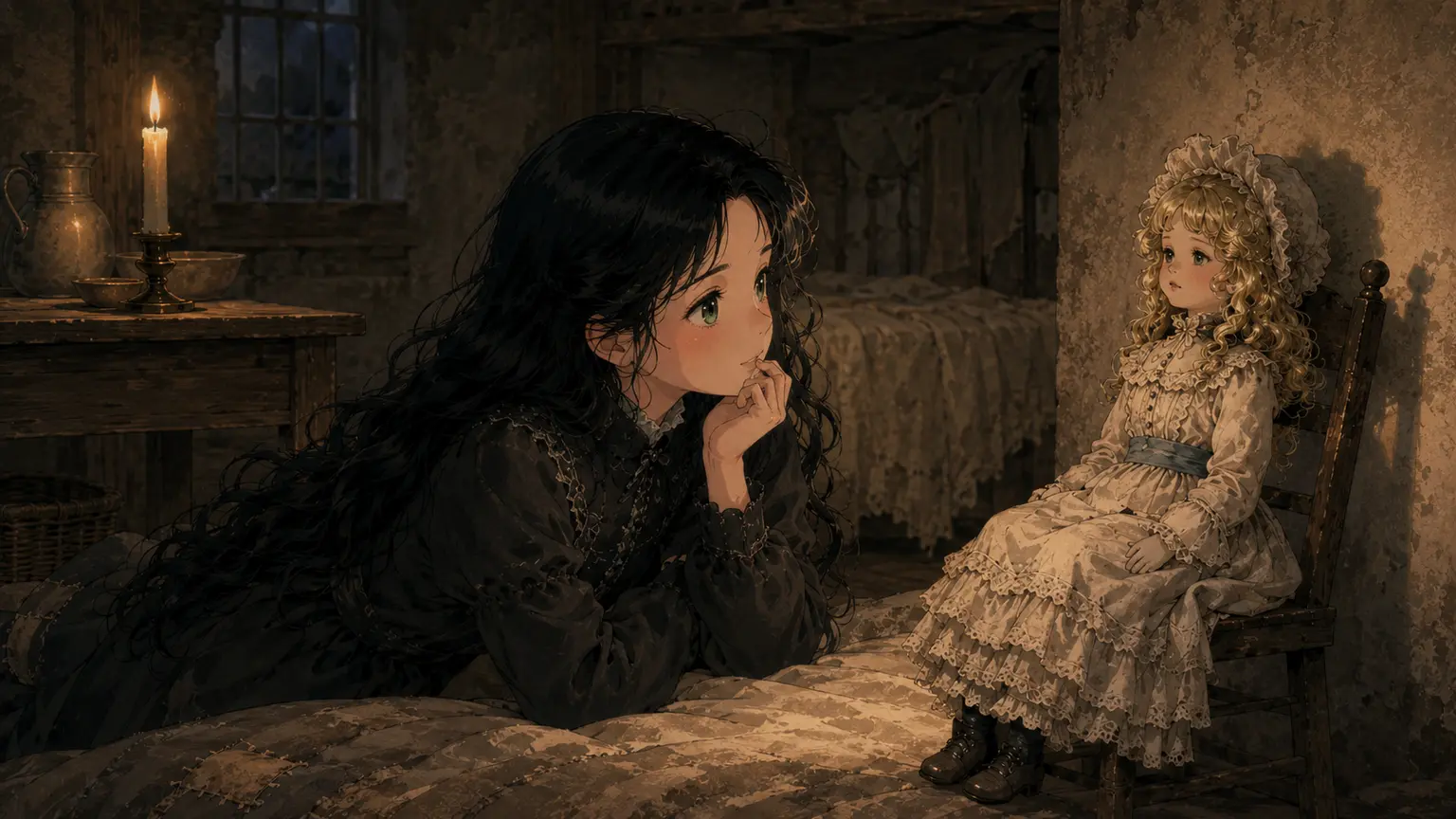
until she was wrought up to the highest pitch of fancifulness, she would ask her questions and find herself ALMOST feeling as if she would presently answer.
問いかけると、今にも答えそうな気さえほとんどしました。
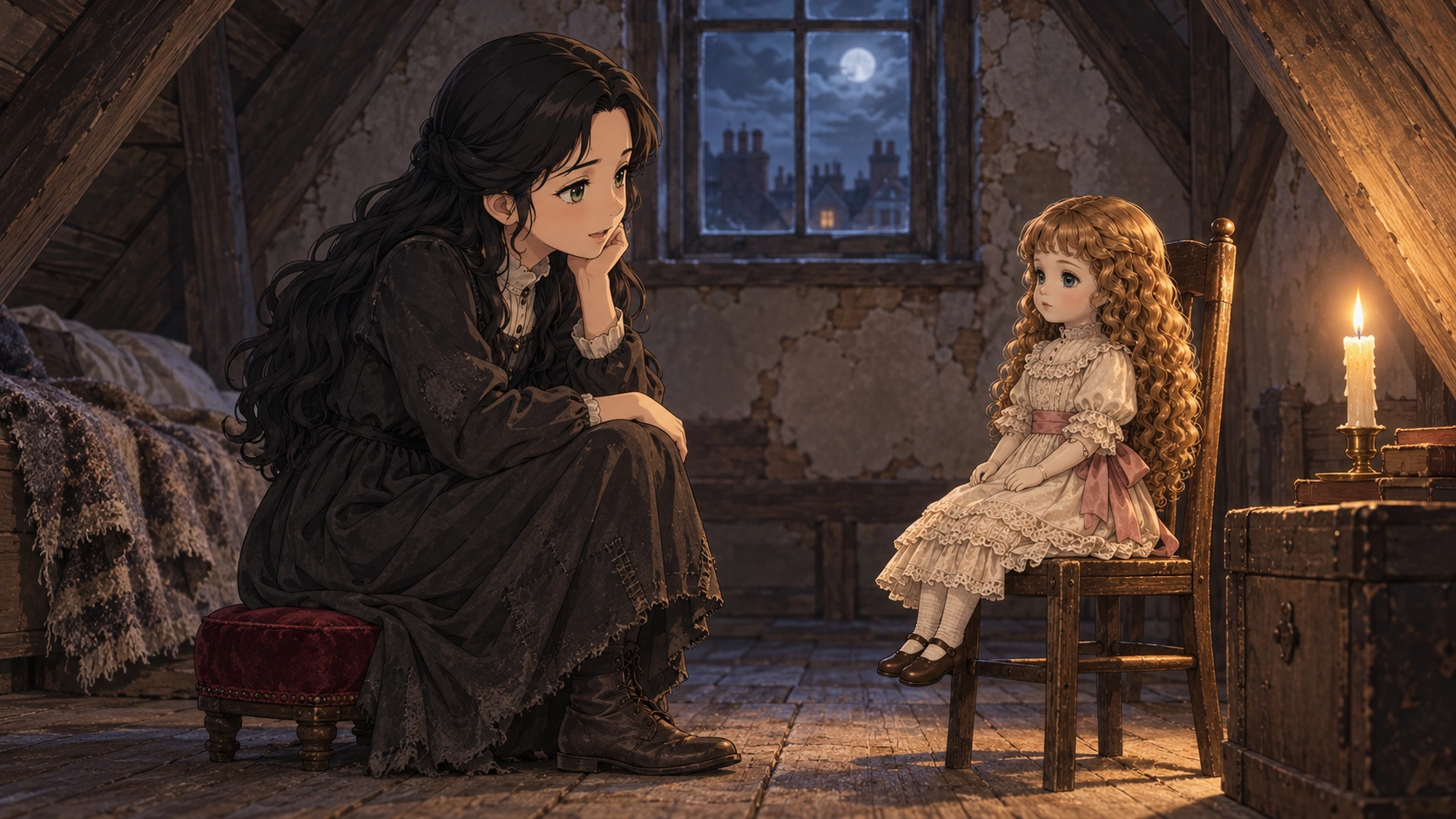
But she never did. "As to answering, though," said Sara, trying to console herself, "I don't answer very often.
けれど一度も答えません。『答えることなら』とセーラは自分を慰めました。『私だってあまり答えないわ。
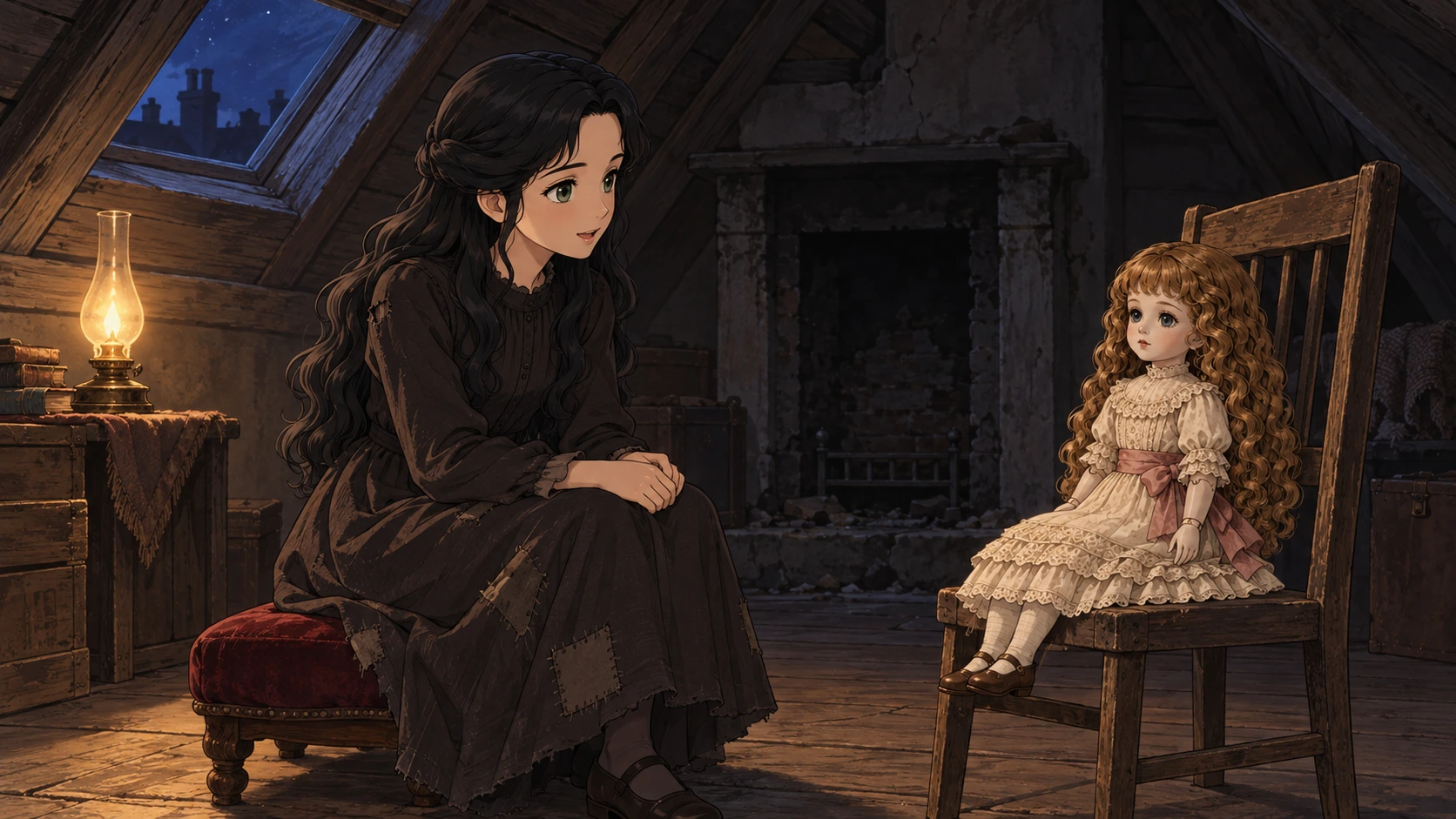
I never answer when I can help it. When people are insulting you, there is nothing so good for them as not to say a word--
できる時は決して言い返さない。侮辱する人には、一言も言わず、

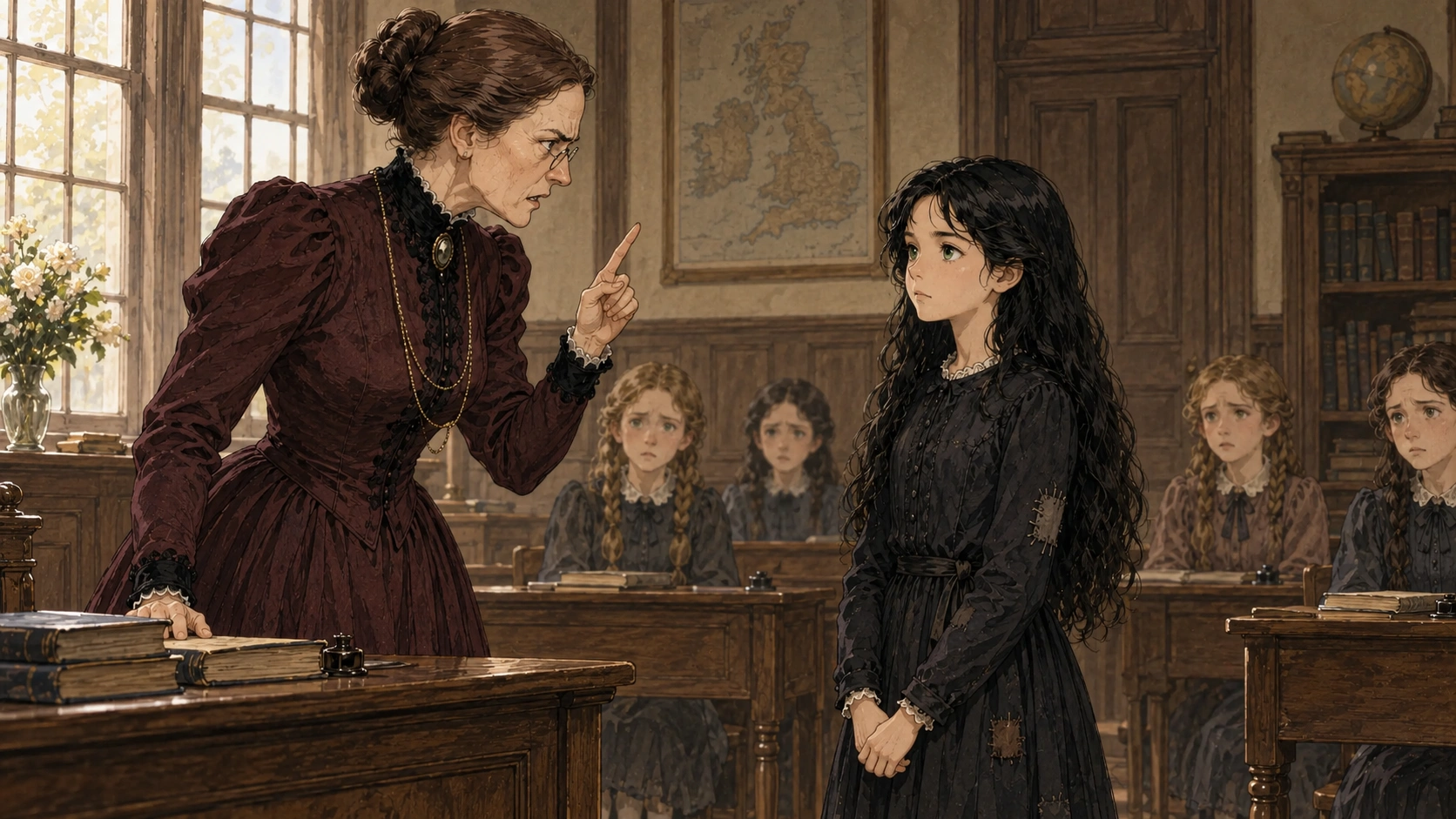
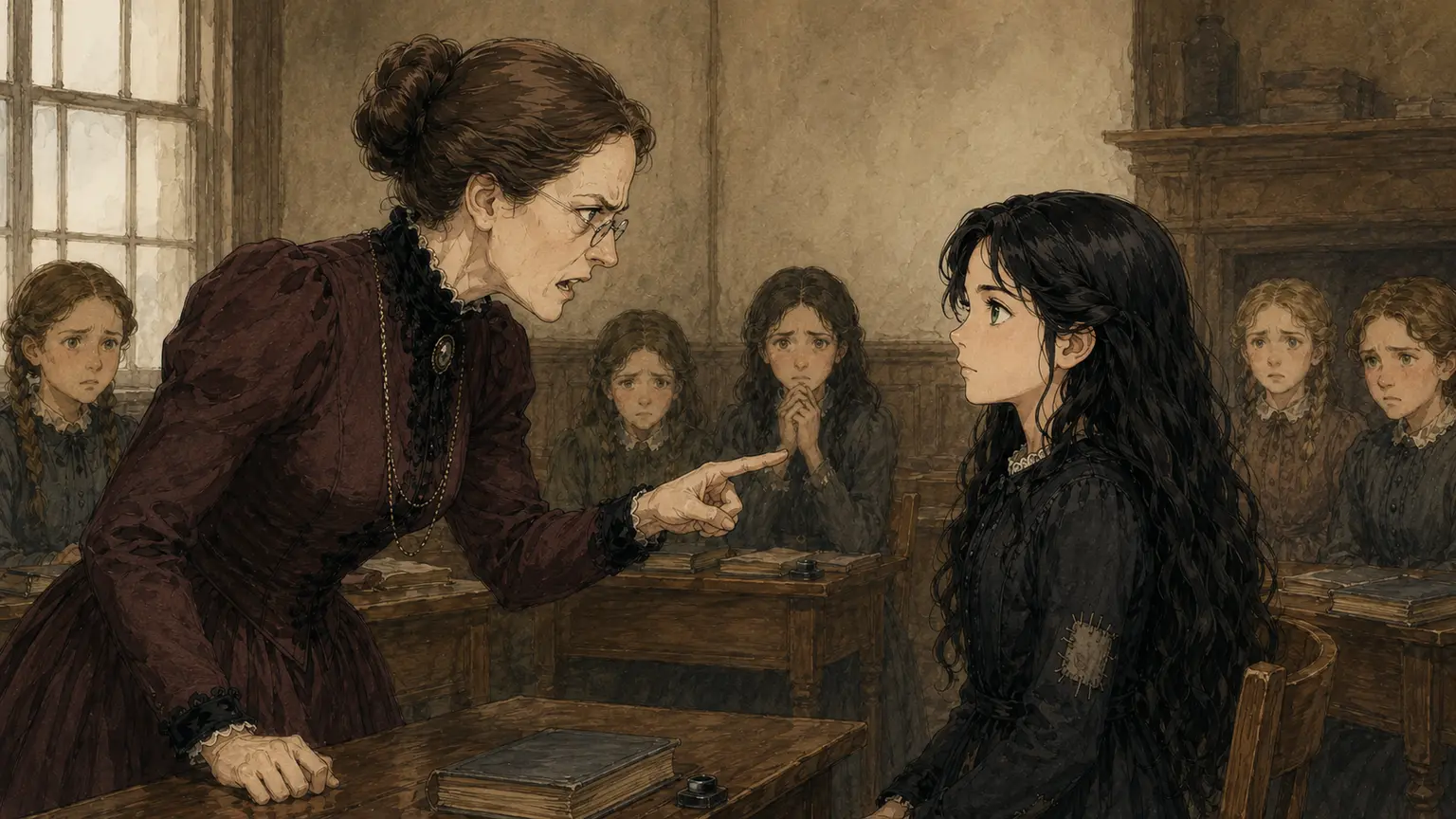
just to look at them and THINK. Miss Minchin turns pale with rage when I do it,
ただ見つめて考えるのが一番。私がそうすると、ミンチン先生は怒りで青ざめ、
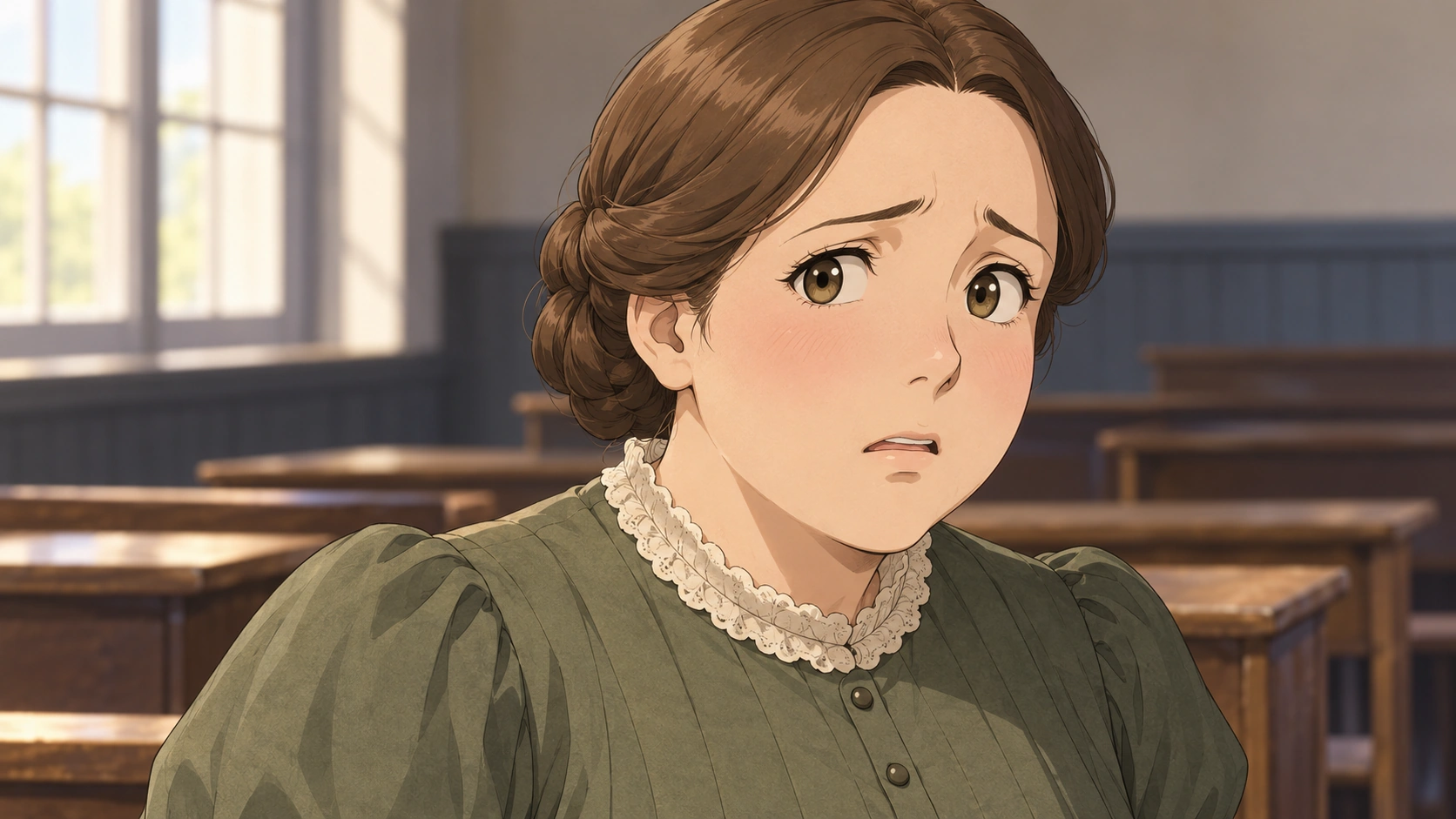
Miss Amelia looks frightened, and so do the girls. When you will not fly into a passion people know you are stronger than they are,
アメリア先生も少女たちも怖がる。かんしゃくを起こさなければ、自分の方が強いと相手に分かるの。
because you are strong enough to hold in your rage, and they are not,
自分は怒りを抑えられるほど強く、相手はそうではないから。
and they say stupid things they wish they hadn't said afterward. There's nothing so strong as rage, except what makes you hold it in--that's stronger.
相手は後で後悔する愚かなことを言う。怒りほど強いものはないけれど、それを抑える力はもっと強い。
It's a good thing not to answer your enemies. I scarcely ever do. Perhaps Emily is more like me than I am like myself.
敵に答えないのはよいこと。私はほとんど言い返さない。エミリーは、私以上に私に似ているのかも。
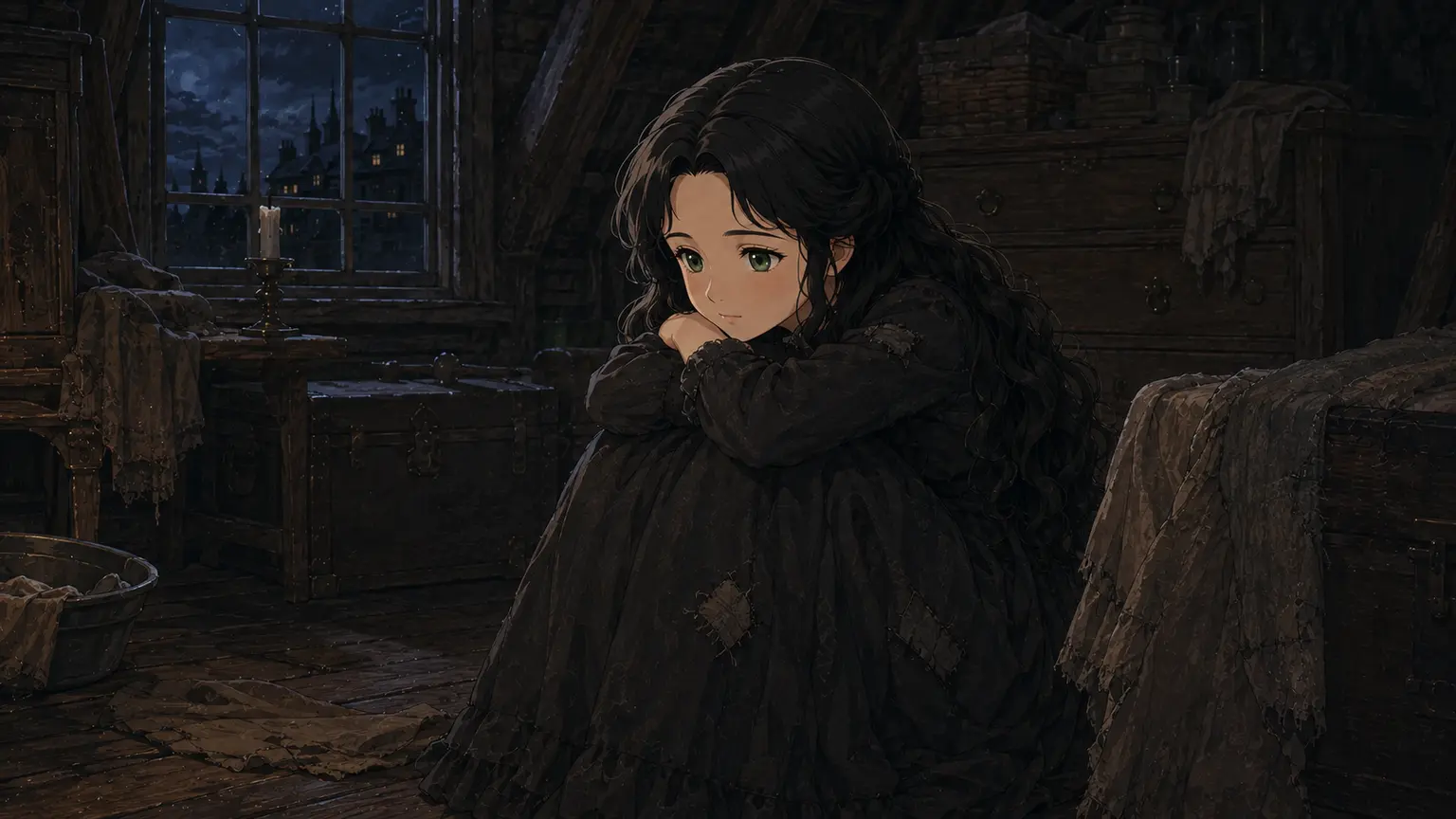
Perhaps she would rather not answer her friends, even. She keeps it all in her heart." But though she tried to satisfy herself with these arguments,
友達にさえ答えたくなくて、全部を心にしまっているのかも』しかし、こう理屈をつけても、
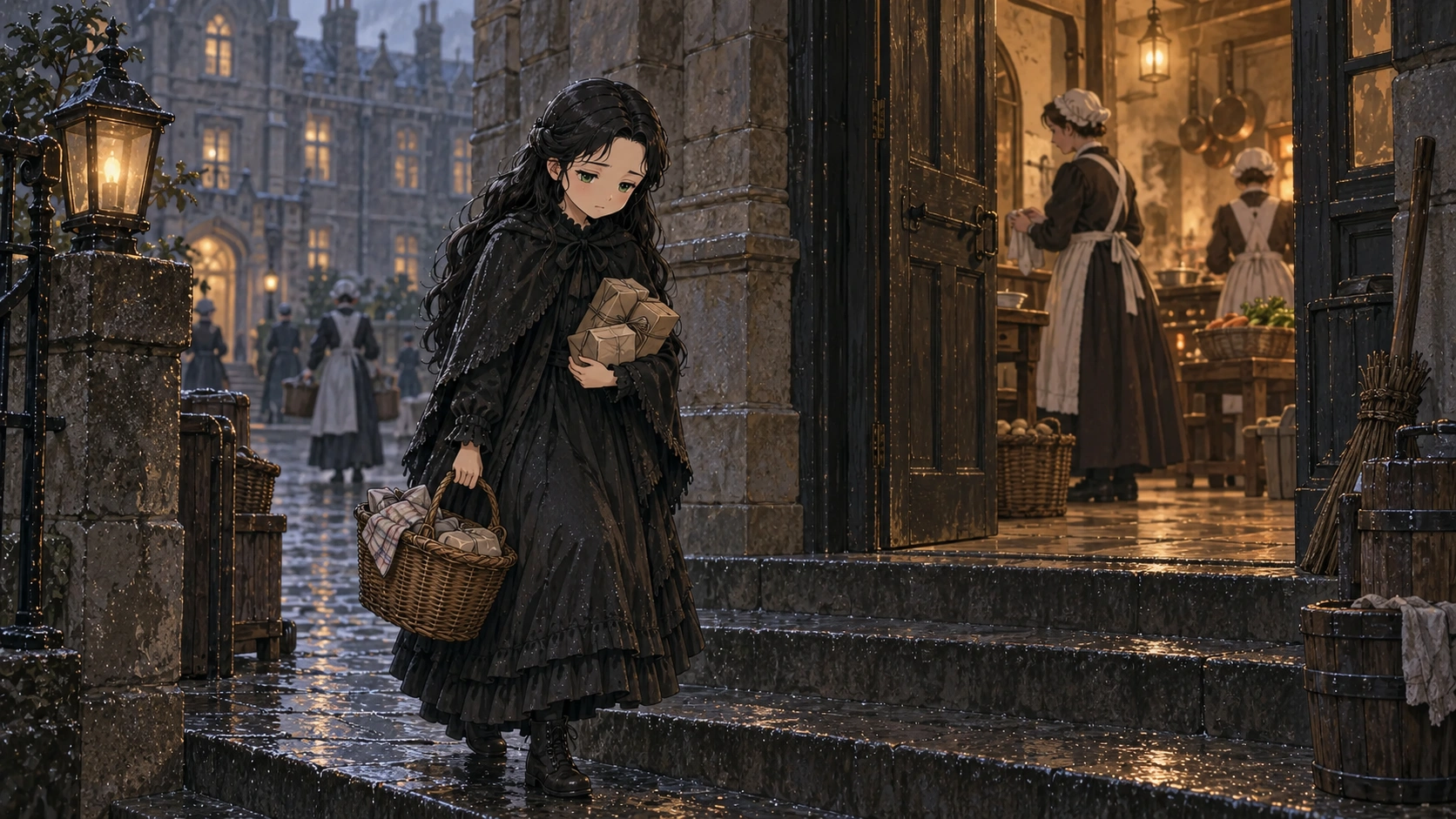
she did not find it easy. When, after a long, hard day, in which she had been sent here and there,
納得するのは簡単ではありませんでした。あちこちへ使いに走らされた長くつらい日の後、
sometimes on long errands through wind and cold and rain, she came in wet and hungry, and was sent out again
風と寒さと雨の中を遠くまで歩き、濡れて空腹で戻っても、また外へ出されました。
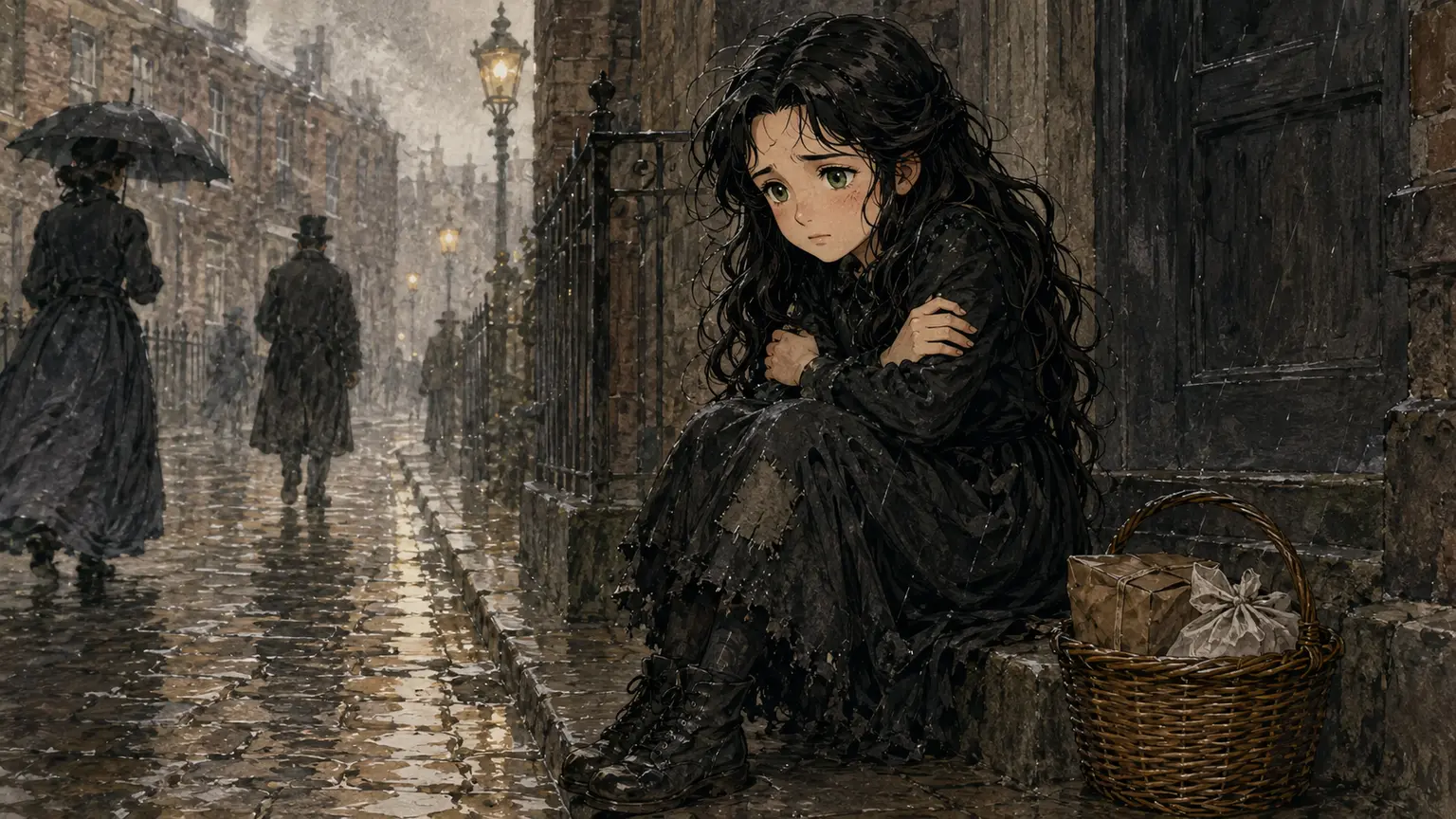
because nobody chose to remember that she was only a child, and that her slim legs might be tired and her small body might be chilled;
誰も、彼女がまだ子供で、細い脚は疲れ、小さな体は冷えることを思い出そうとしなかったからです。
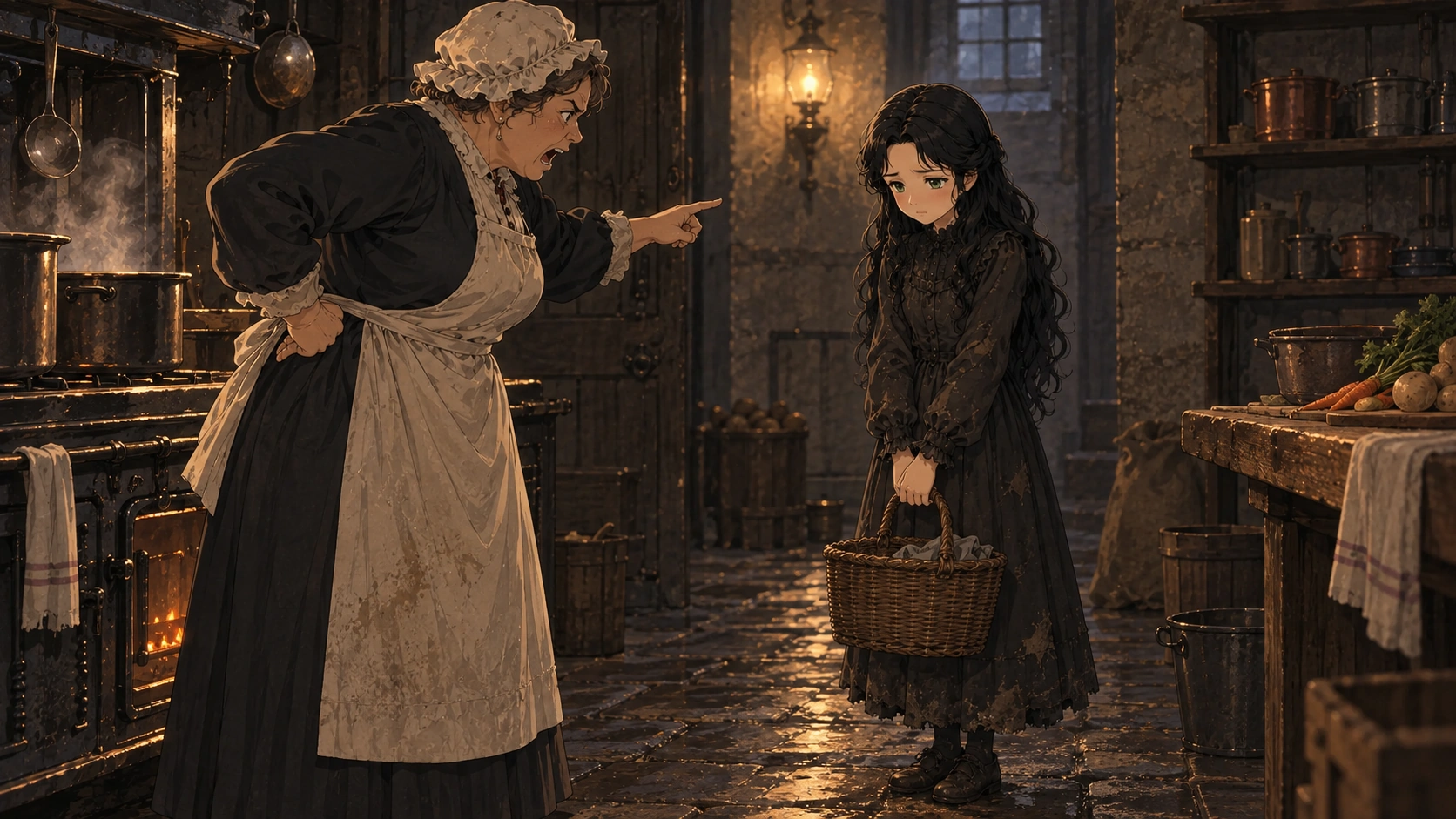
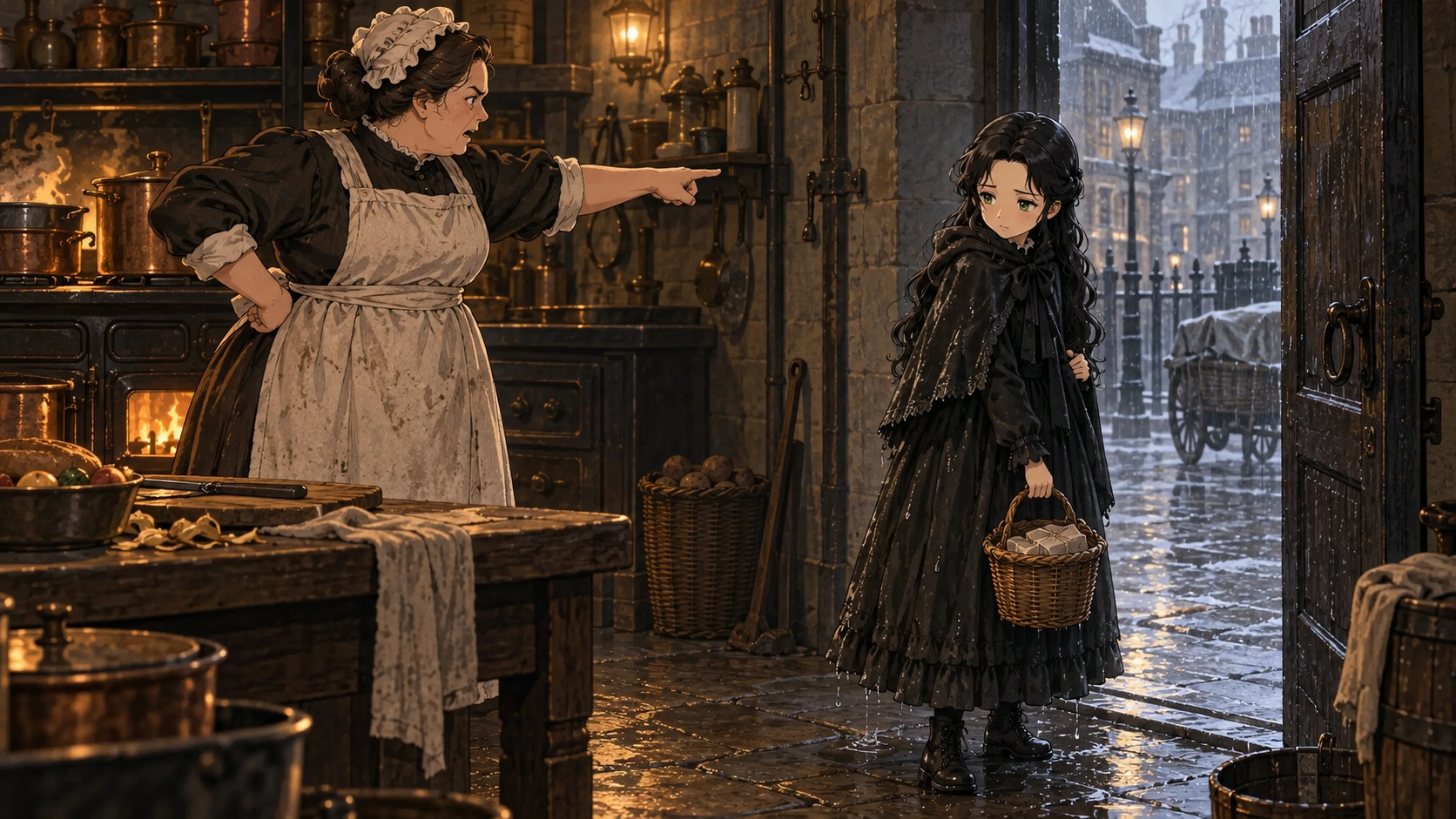
when she had been given only harsh words and cold, slighting looks for thanks; when the cook had been vulgar and insolent;
感謝の代わりに厳しい言葉と冷たく軽蔑する視線だけを受け、料理女は下品で無礼でした。
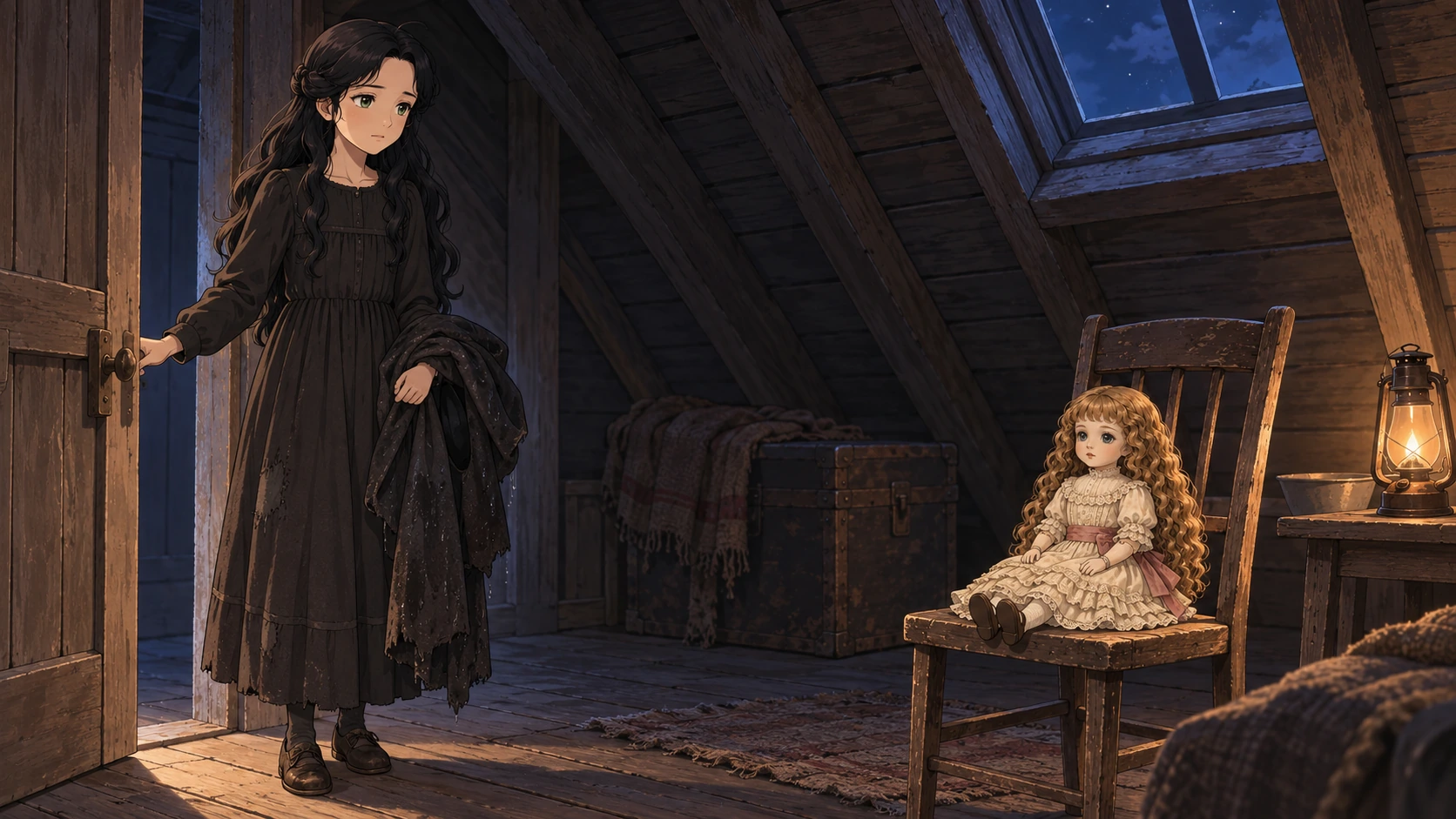
when Miss Minchin had been in her worst mood, and when she had seen the girls sneering among themselves at her shabbiness--
ミンチン先生の機嫌は最悪で、少女たちは彼女のみすぼらしさをひそかに嘲笑しました。
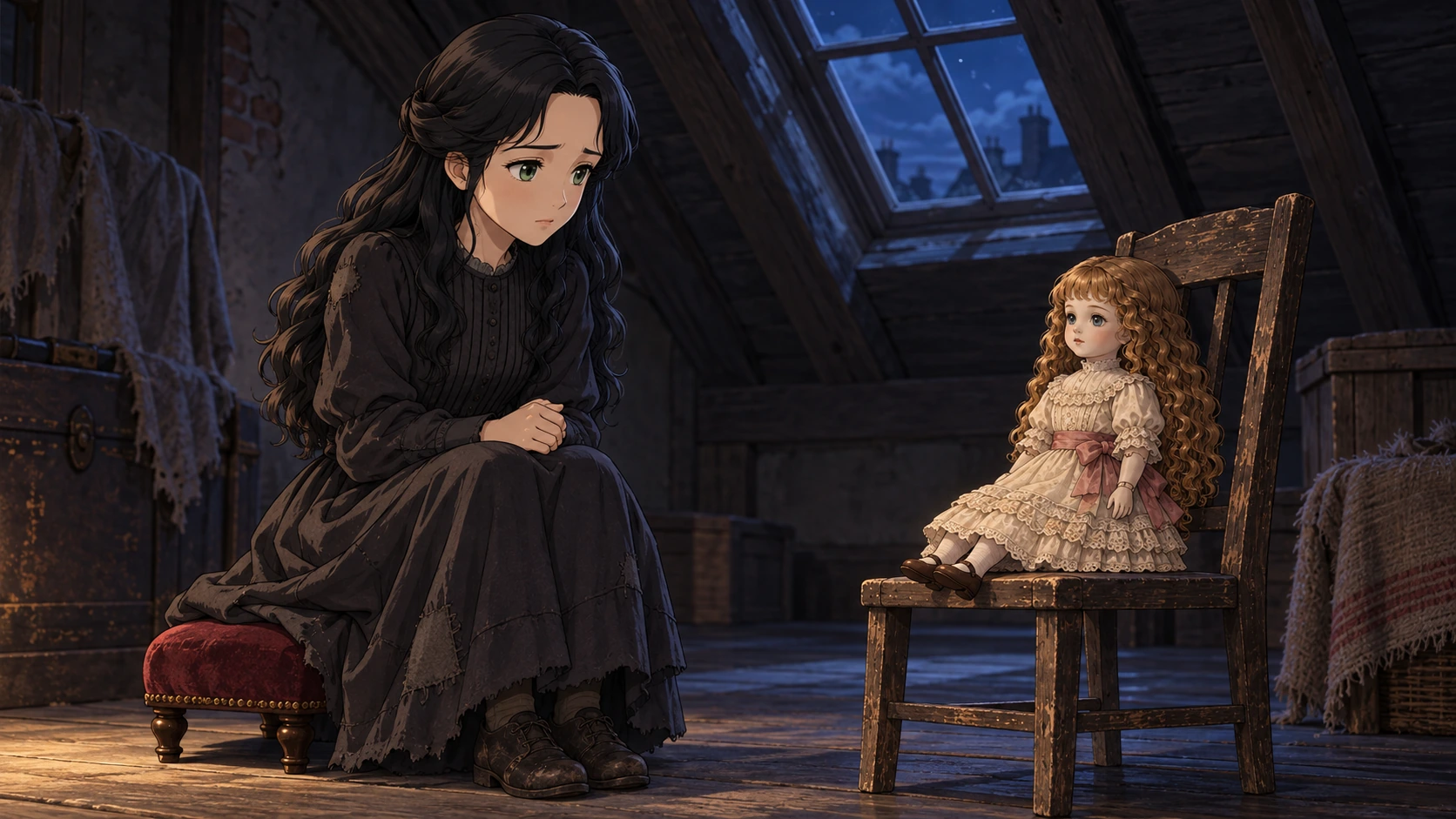
then she was not always able to comfort her sore, proud, desolate heart with fancies when Emily merely sat upright in her old chair and stared.
そんな時、エミリーが古い椅子で直立して見つめるだけでは、傷ついた誇り高い孤独な心を想像で慰めきれないこともありました。
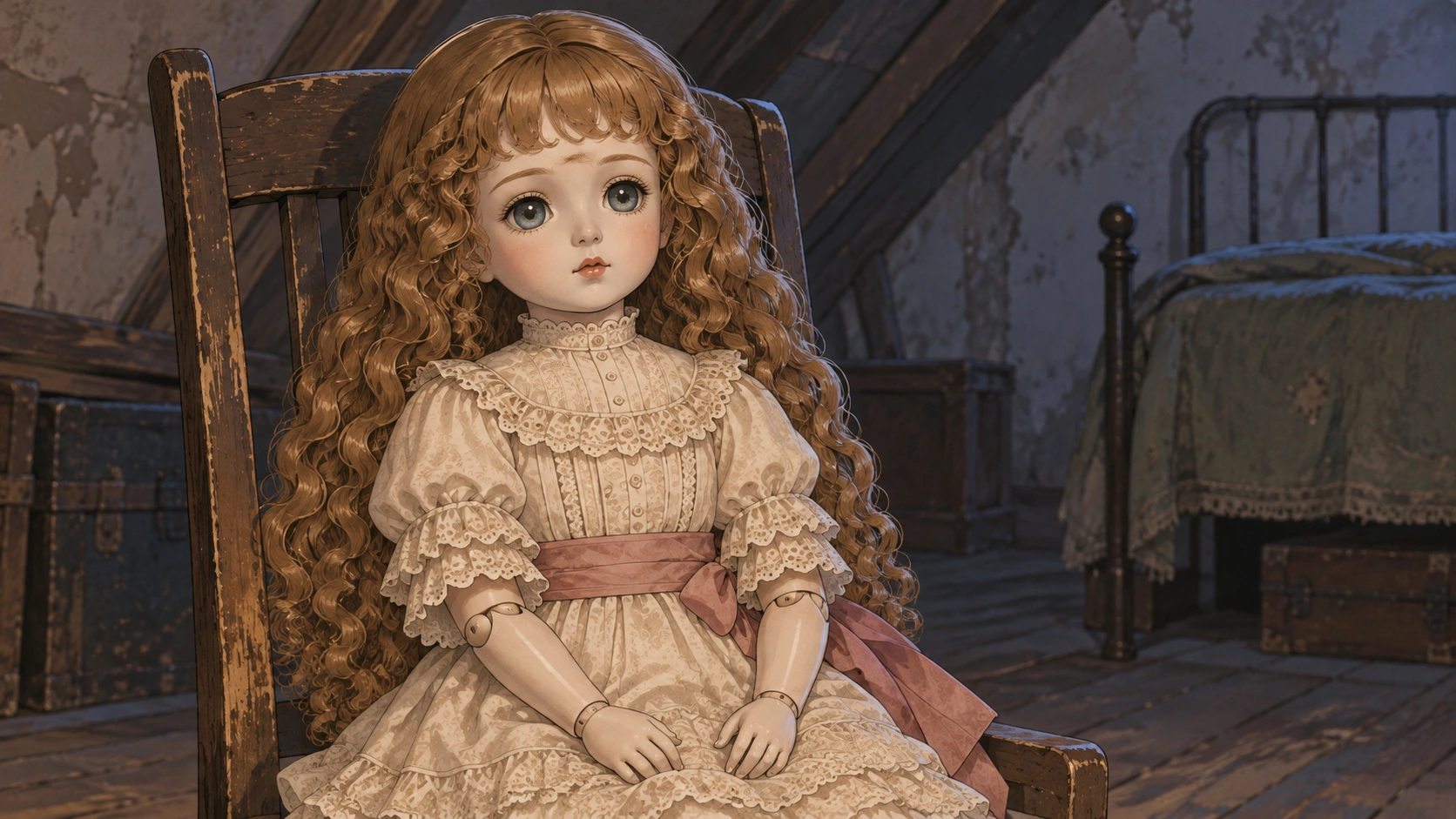
One of these nights, when she came up to the attic cold and hungry, with a tempest raging in her young breast, Emily's stare seemed so vacant,
ある夜、寒さと空腹の中で屋根裏へ戻ると、幼い胸には嵐が荒れ狂い、エミリーの目はあまりに虚ろで、
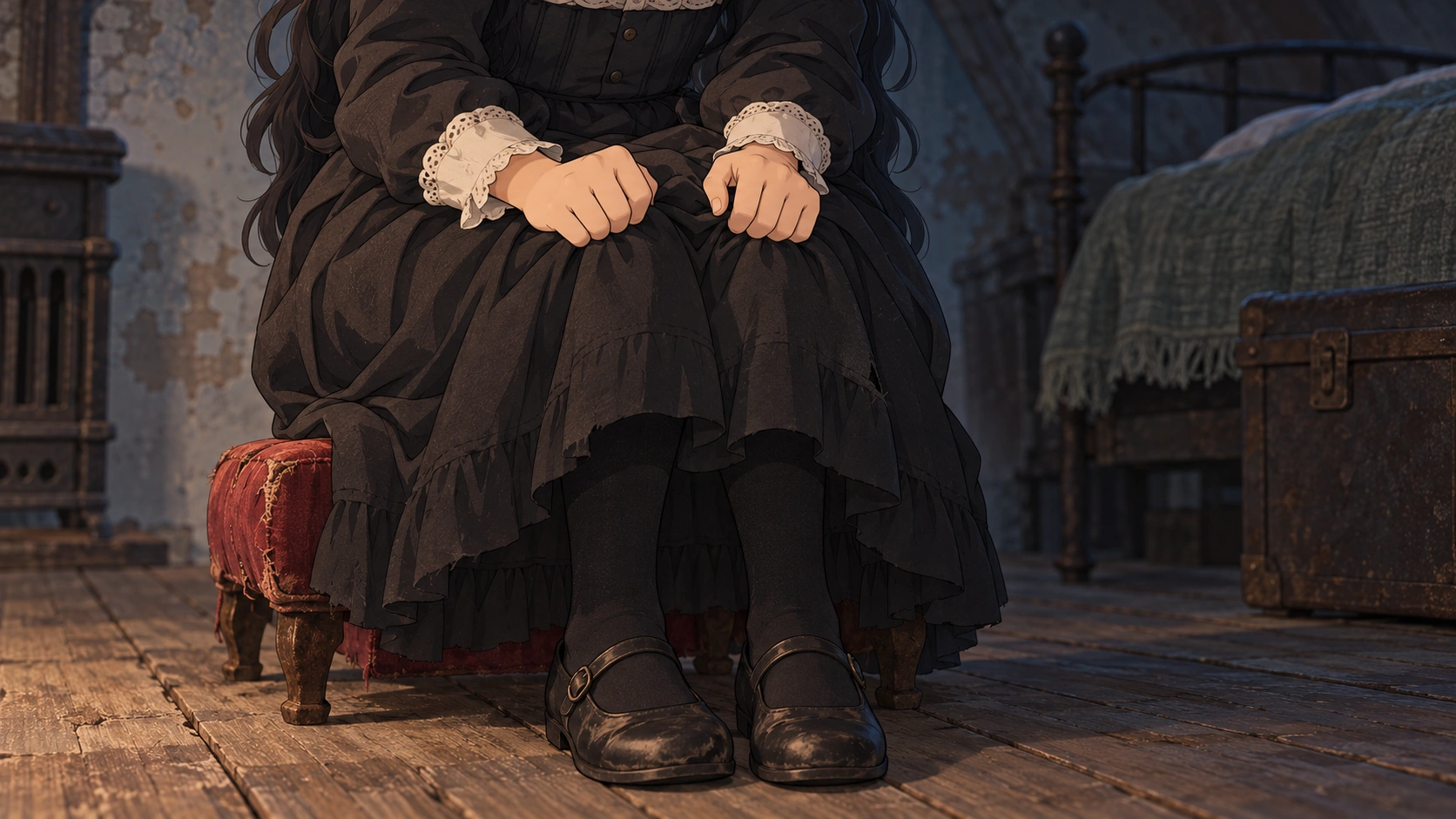
her sawdust legs and arms so inexpressive, that Sara lost all control over herself. There was nobody but Emily--no one in the world.
おがくずの脚と腕は何も語らず、セーラはとうとう自制を失いました。世界にはエミリー以外、誰もいません。

And there she sat. "I shall die presently," she said at first. Emily simply stared. "I can't bear this," said the poor child, trembling.
なのに、ただ座っています。『私、もうすぐ死ぬわ』まず言いました。エミリーは見つめるだけです。『もう耐えられない』と震えました。
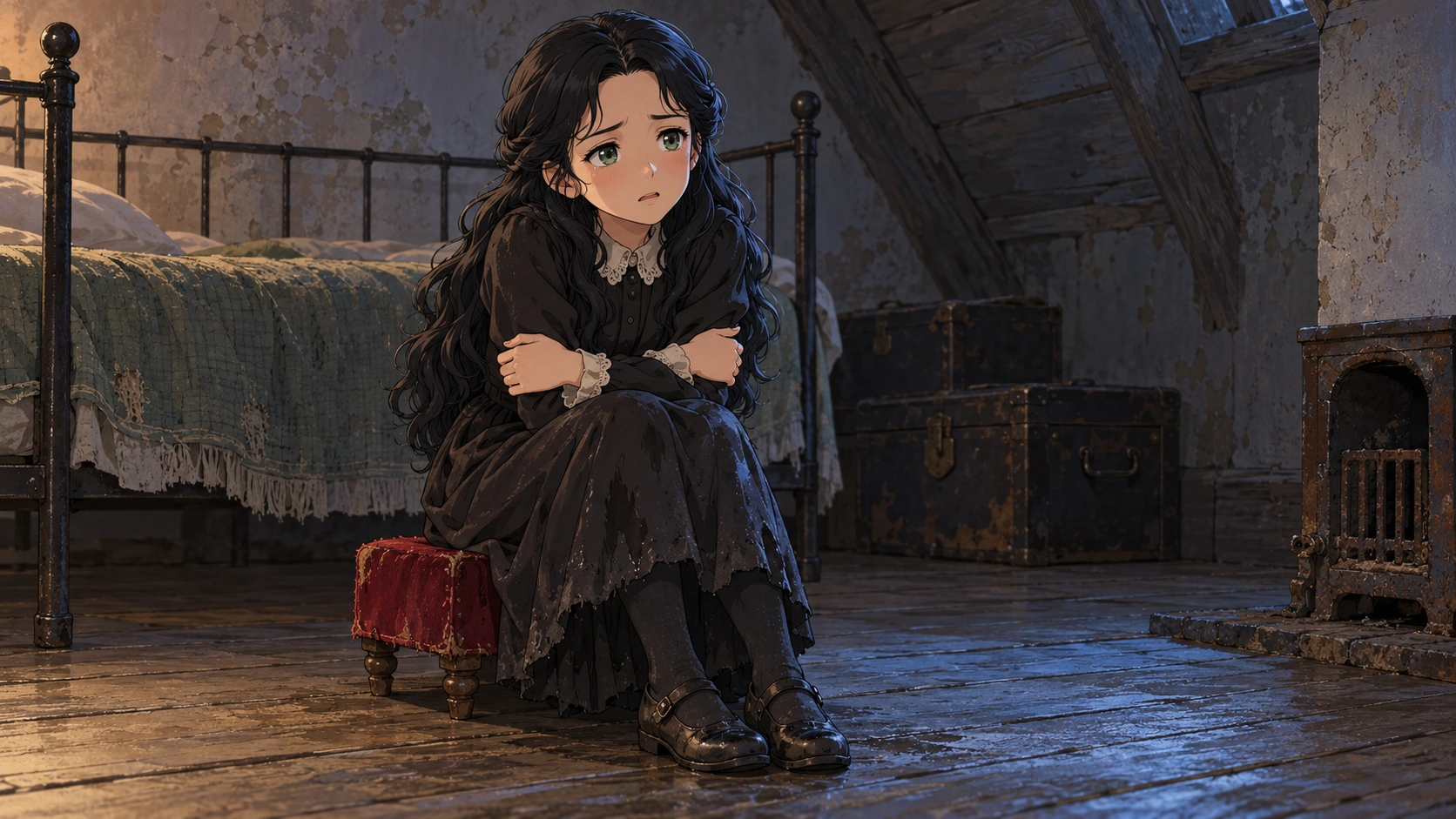
"I know I shall die. I'm cold; I'm wet; I'm starving to death. I've walked a thousand miles today,
『きっと死ぬわ。寒くて、濡れて、飢え死にしそう。今日は千マイルも歩いたのに、
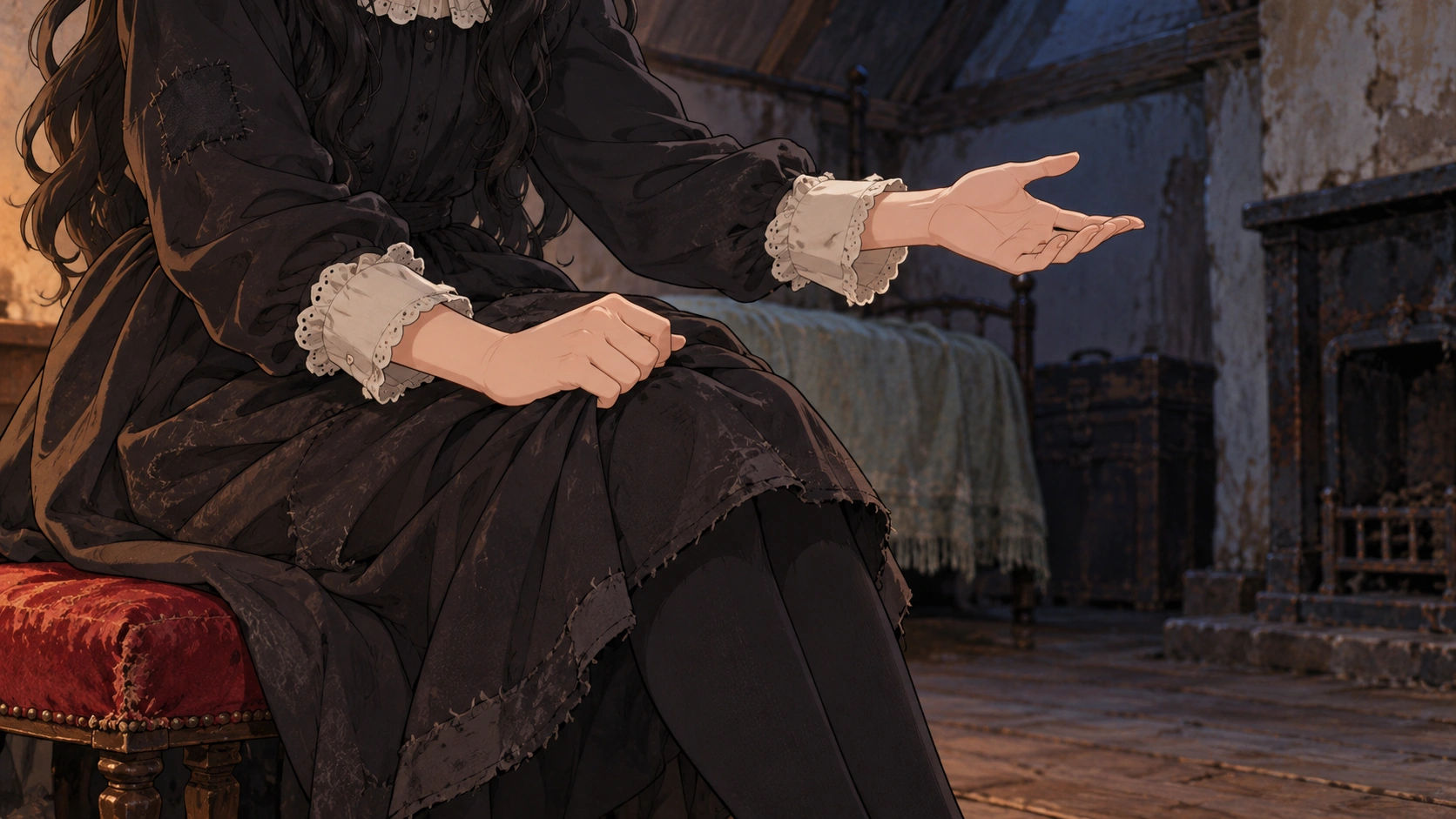
and they have done nothing but scold me from morning until night. And because I could not find that last thing the cook sent me for,
朝から晩まで叱られてばかり。料理女に頼まれた最後の品を見つけられなかったから、
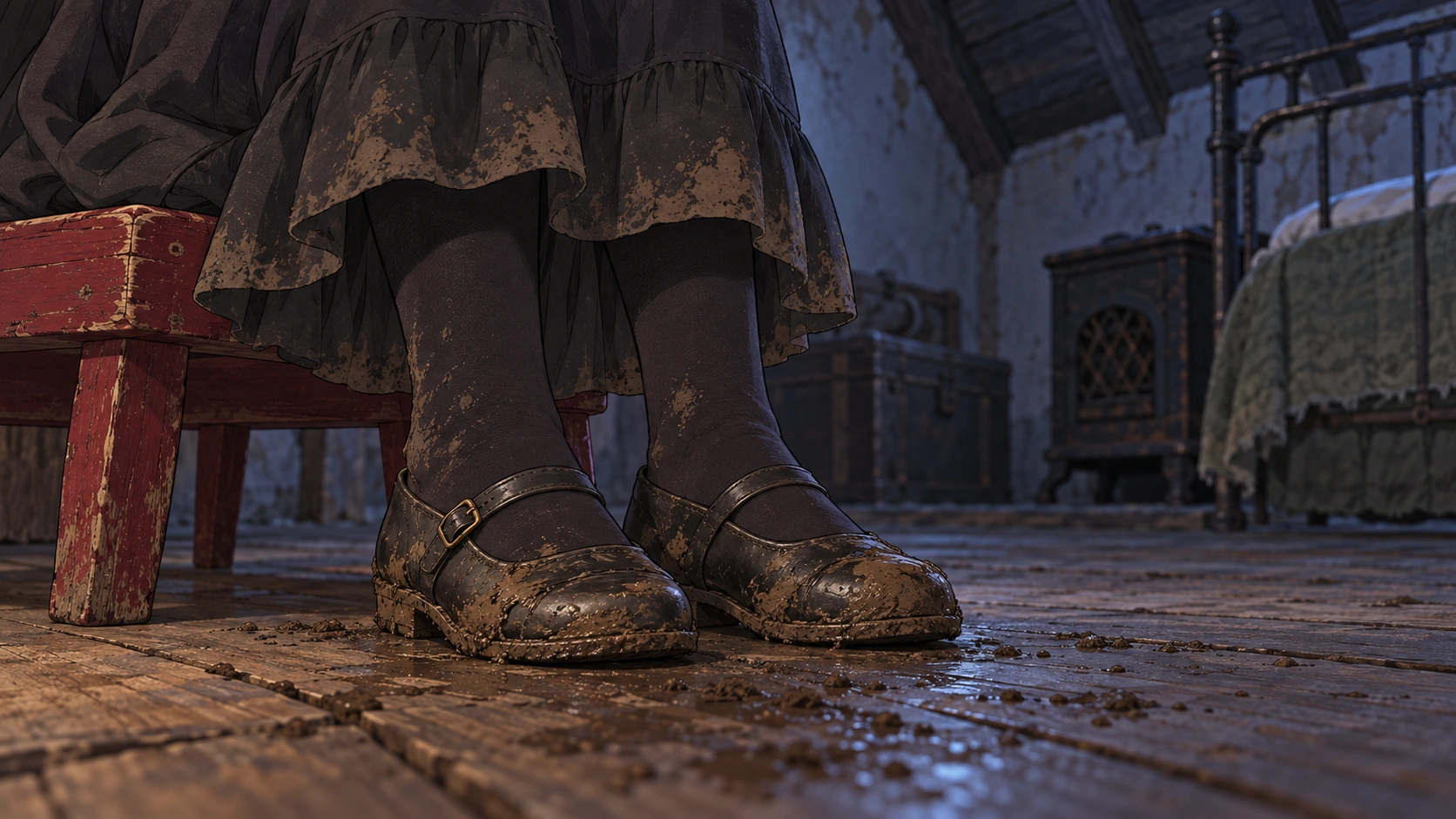
they would not give me any supper. Some men laughed at me because my old shoes made me slip down in the mud. I'm covered with mud now.
夕食もくれなかった。古い靴で泥に滑って転んだら、男の人たちが笑った。今は泥だらけ。
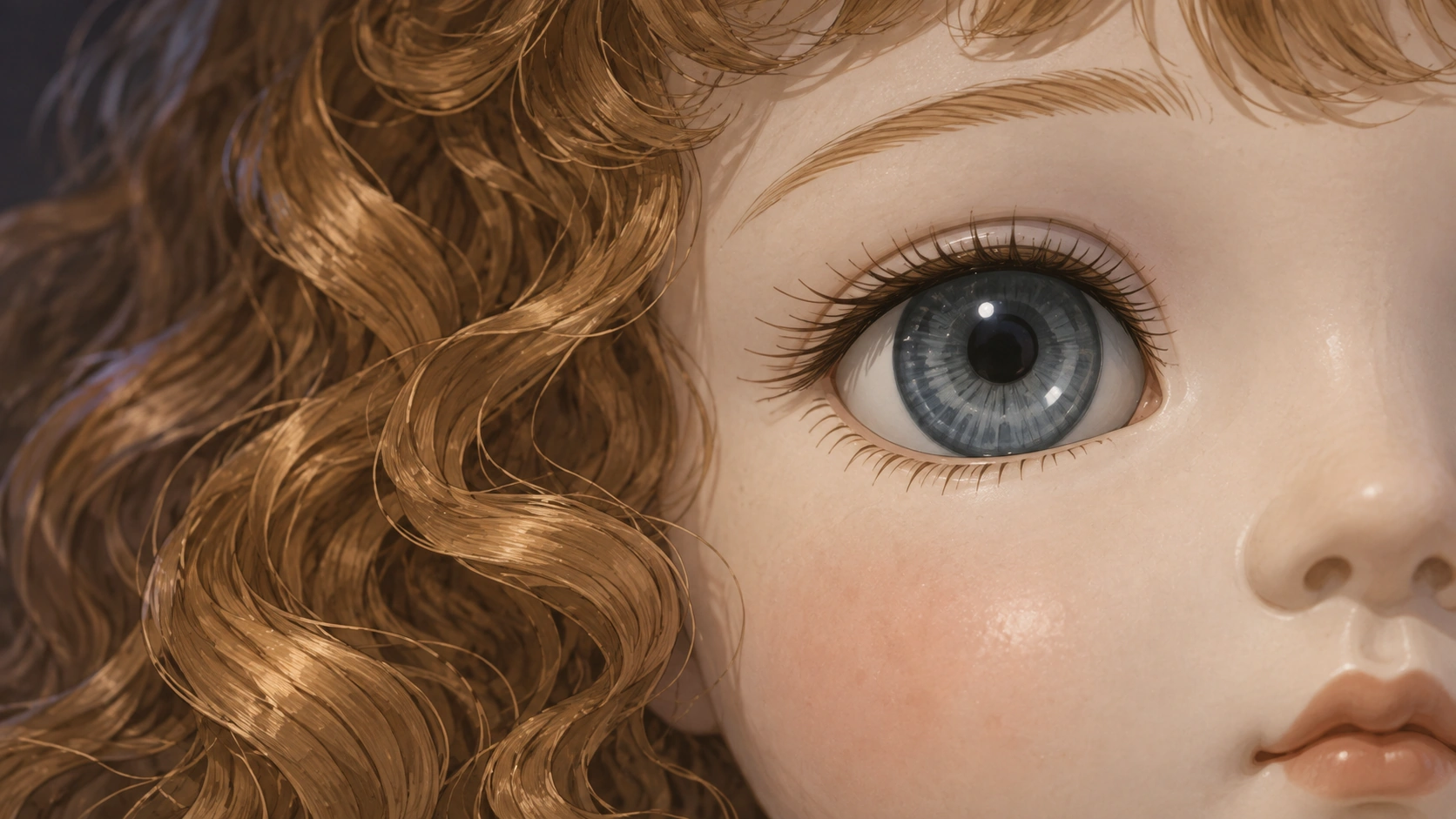
And they laughed. Do you hear?" She looked at the staring glass eyes and complacent face, and suddenly a sort of heartbroken rage seized her.
それでも笑ったのよ。聞いている?』ガラスの目と満足げな顔を見つめると、突然、胸が張り裂けるような怒りに襲われました。
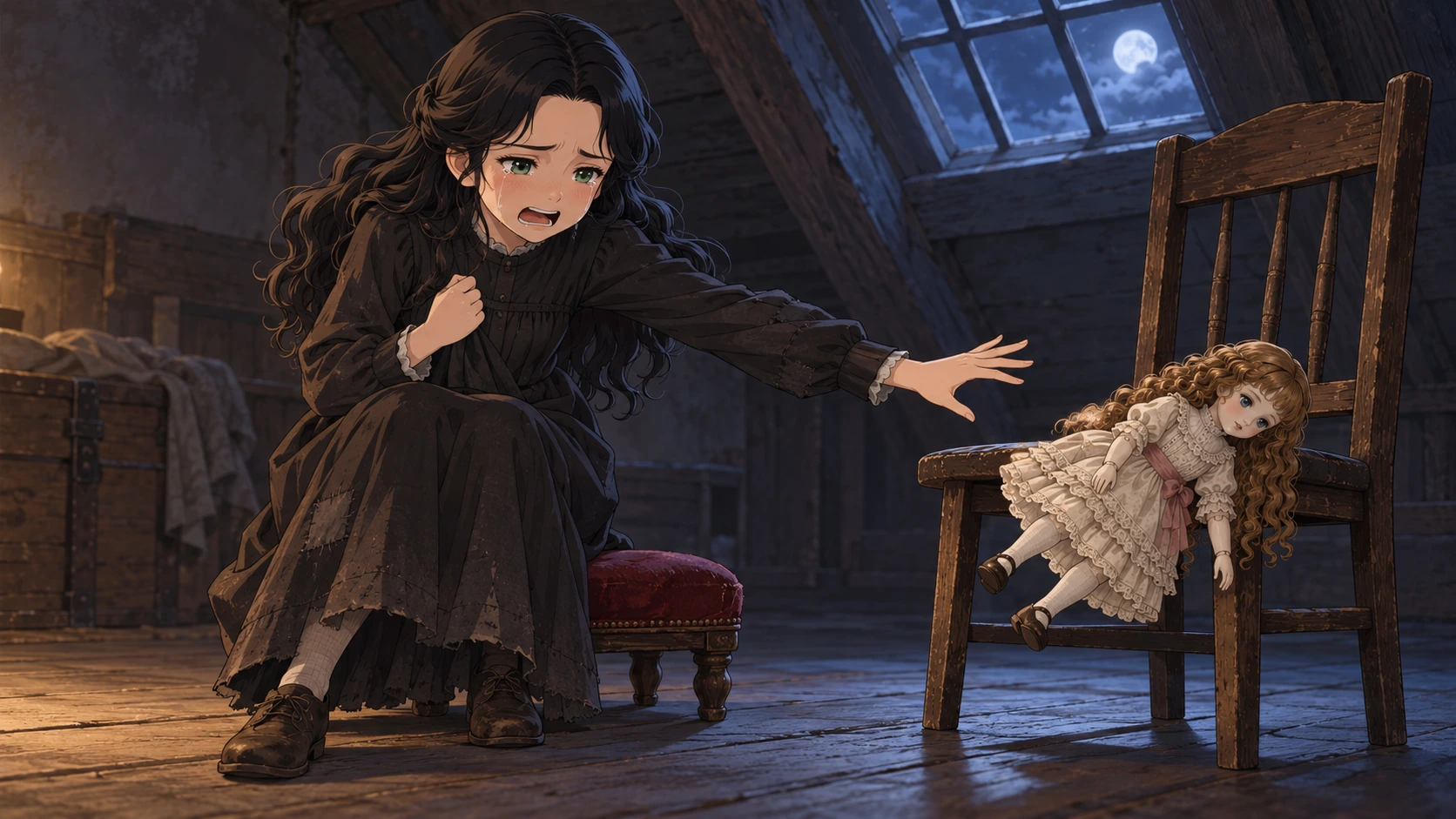
She lifted her little savage hand and knocked Emily off the chair, bursting into a passion of sobbing--Sara who never cried.
小さな激しい手を上げ、エミリーを椅子から叩き落とし、めったに泣かないセーラが激しく泣き出しました。
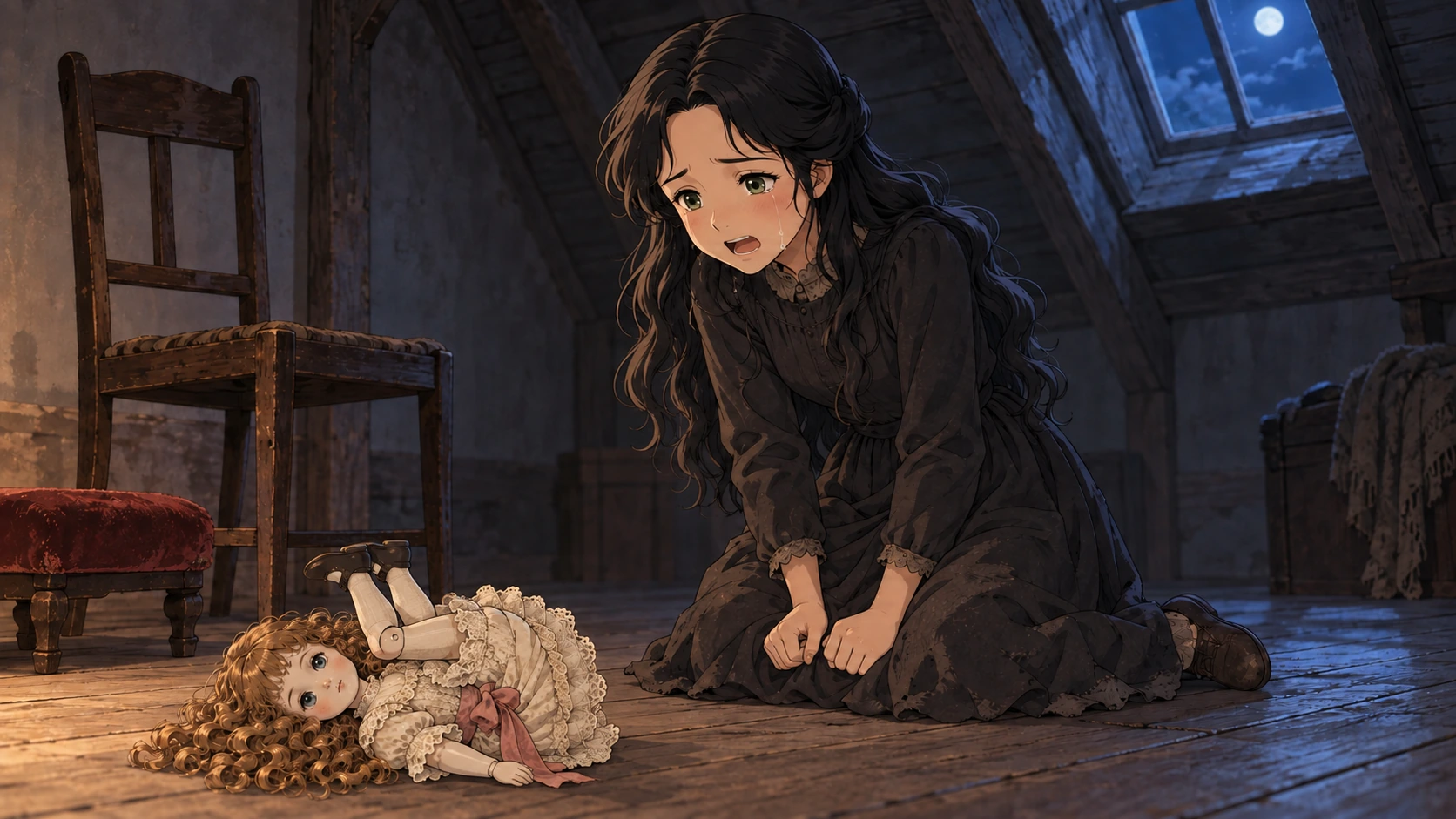
"You are nothing but a DOLL!" she cried. "Nothing but a doll--doll--doll! You care for nothing. You are stuffed with sawdust. You never had a heart.
『あなたはただの人形!人形、人形、人形!何も気にしない。おがくずが詰まっているだけ。心なんて一度もなかった。
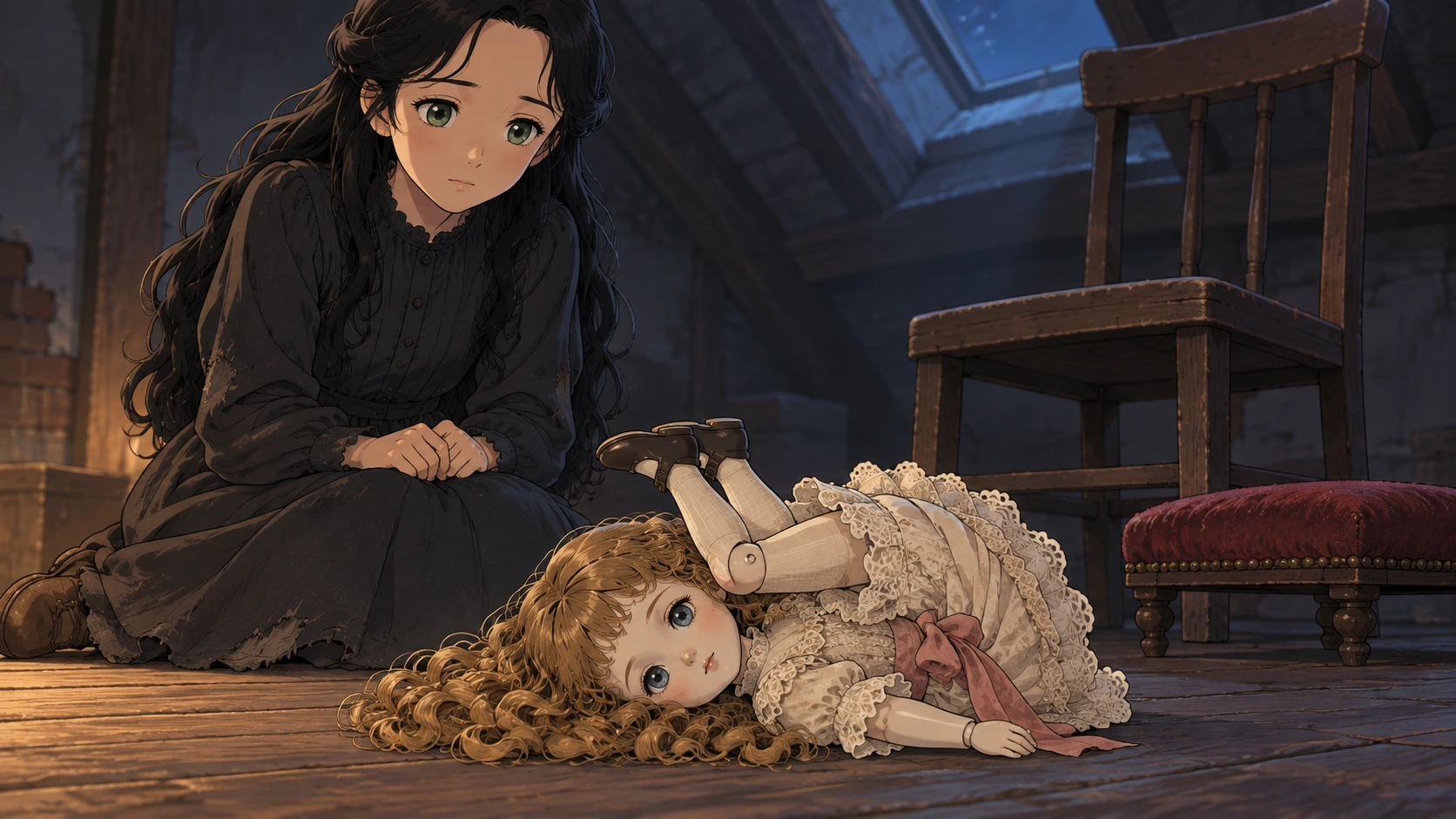
Nothing could ever make you feel. You are a DOLL!" Emily lay on the floor, with her legs ignominiously doubled up over her head,
何があっても感じない。人形なのよ!』エミリーは床で脚を頭の上へ不格好に折り曲げ、
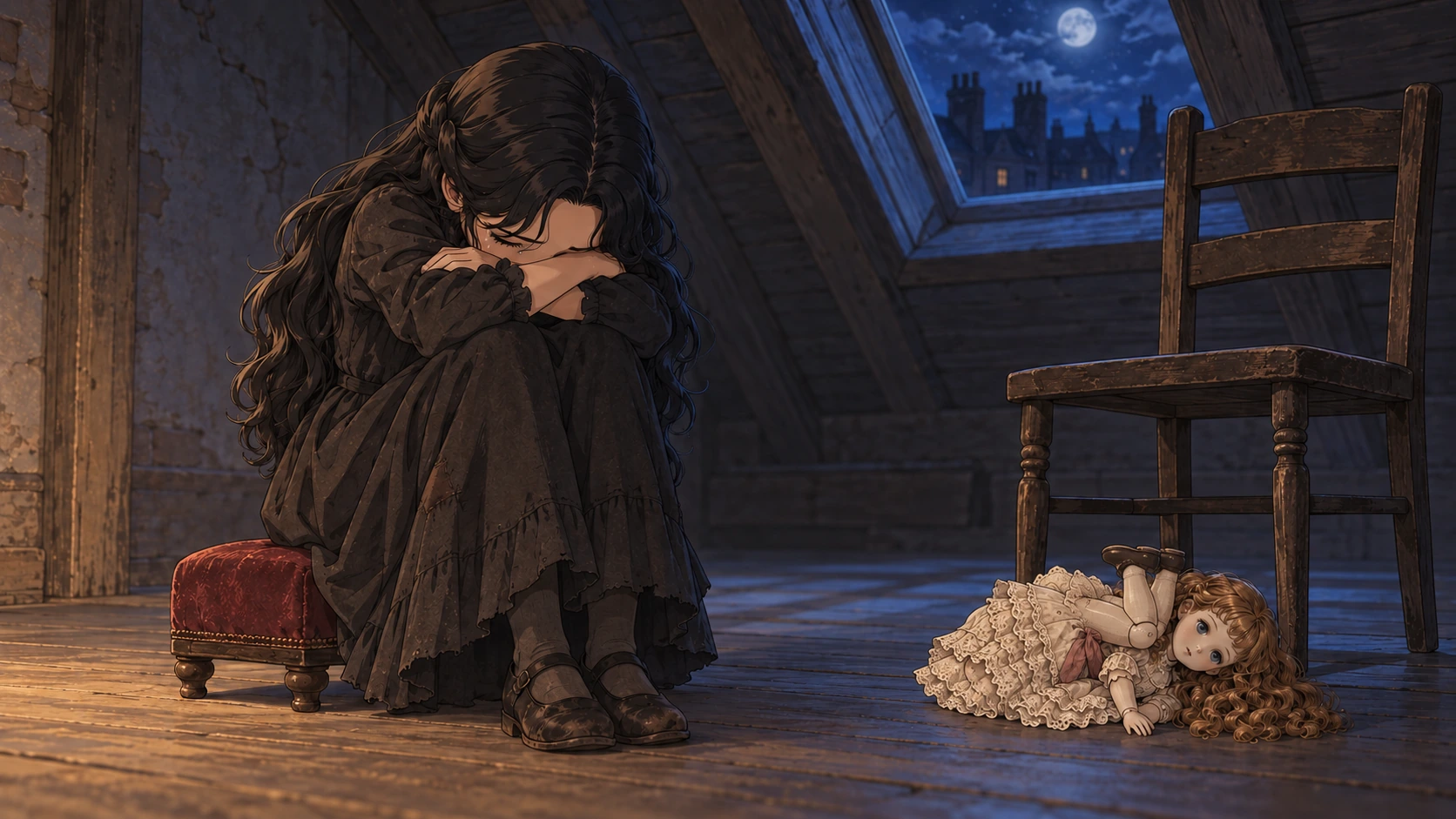
and a new flat place on the end of her nose; but she was calm, even dignified. Sara hid her face in her arms.
鼻の先には新しい平らな箇所ができました。それでも落ち着き、むしろ威厳さえありました。セーラは腕に顔を埋めました。
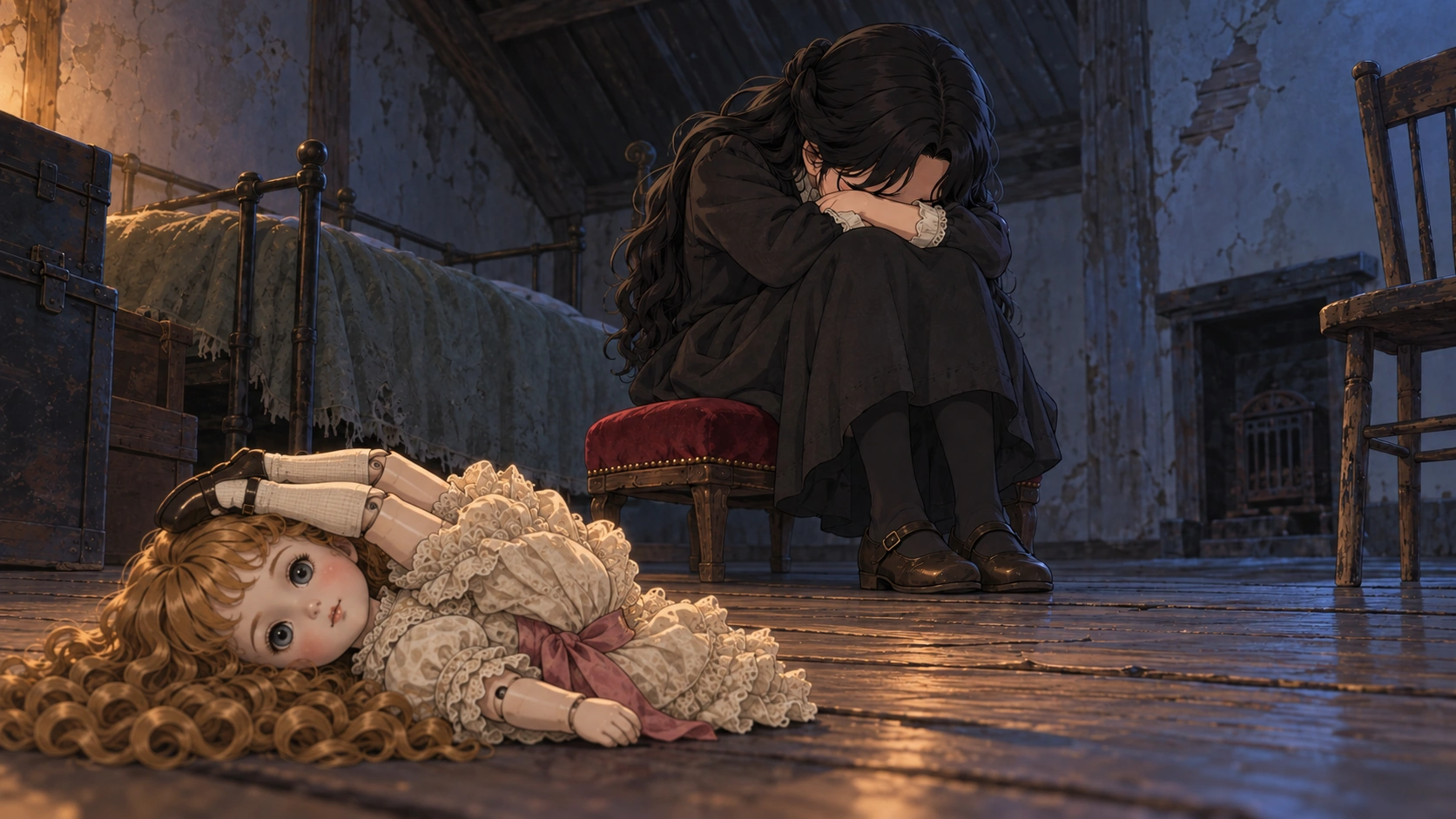
The rats in the wall began to fight and bite each other and squeak and scramble. Melchisedec was chastising some of his family. Sara's sobs gradually quieted themselves.
壁のネズミは争い、噛み合い、鳴いて走り回りました。メルキセデクが家族を懲らしめていました。セーラのすすり泣きは次第に静まりました。
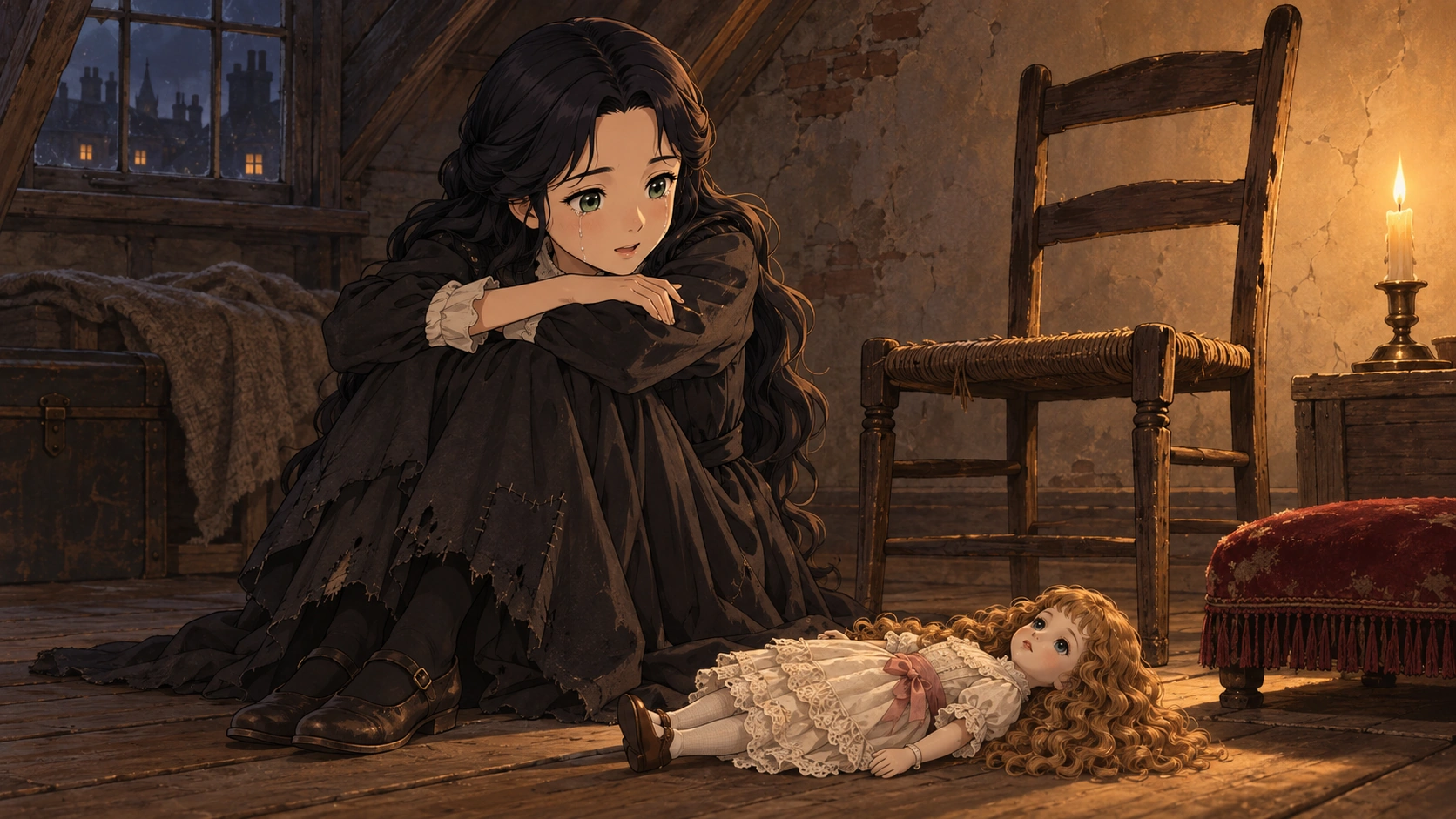
It was so unlike her to break down that she was surprised at herself. After a while she raised her face and looked at Emily,
こんなふうに崩れるのは自分らしくなく、驚きました。しばらくして顔を上げ、エミリーを見ると、
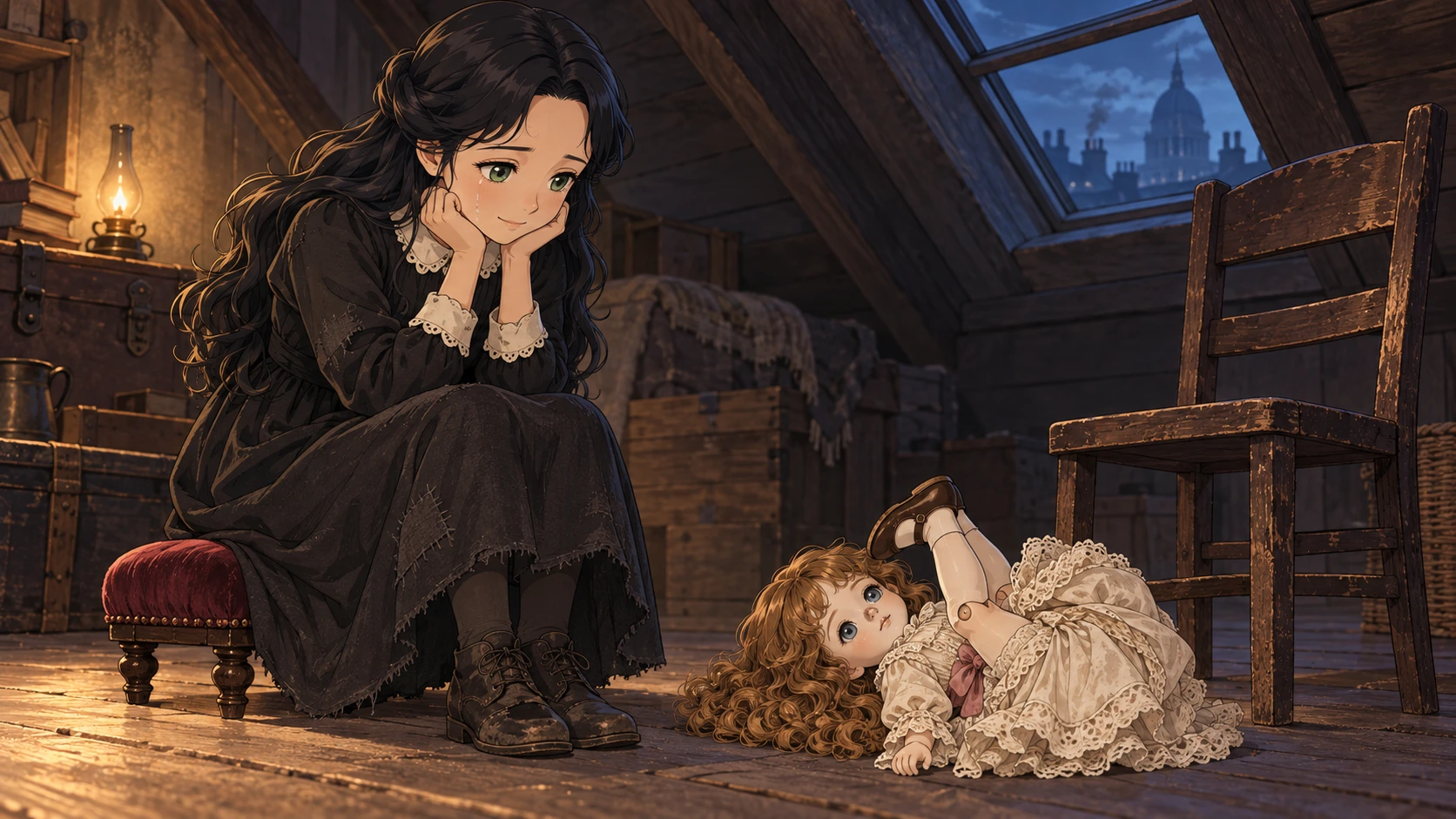
who seemed to be gazing at her round the side of one angle, and, somehow, by this time actually with a kind of glassy-eyed sympathy.
人形は片側の角度から見返し、今ではなぜかガラスの目にも同情があるようでした。
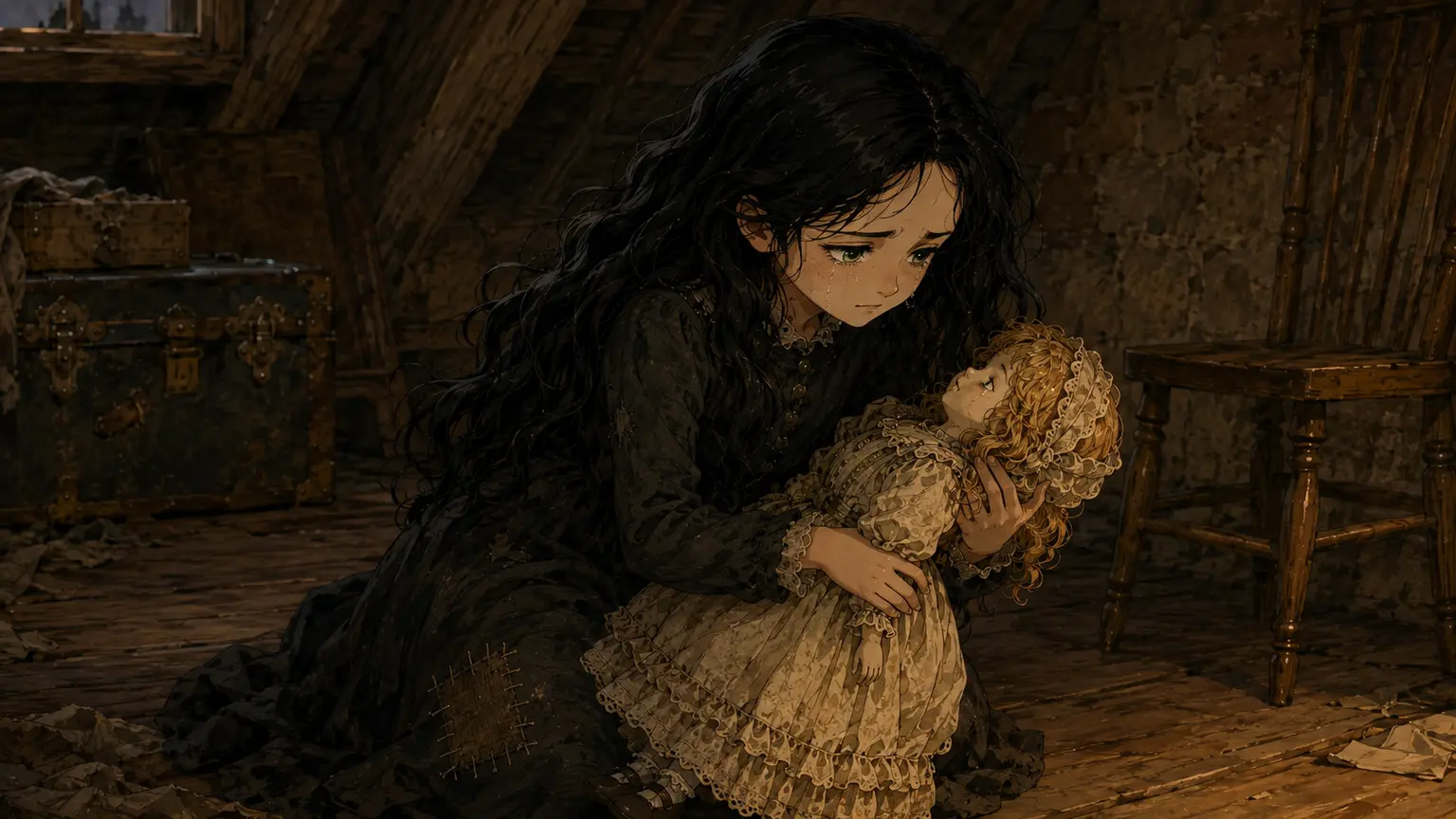
Sara bent and picked her up. Remorse overtook her. She even smiled at herself a very little smile. "You can't help being a doll,"
セーラはかがんで拾い上げました。後悔が押し寄せ、自分へほんの少し微笑みました。『人形なのは仕方ないわね。
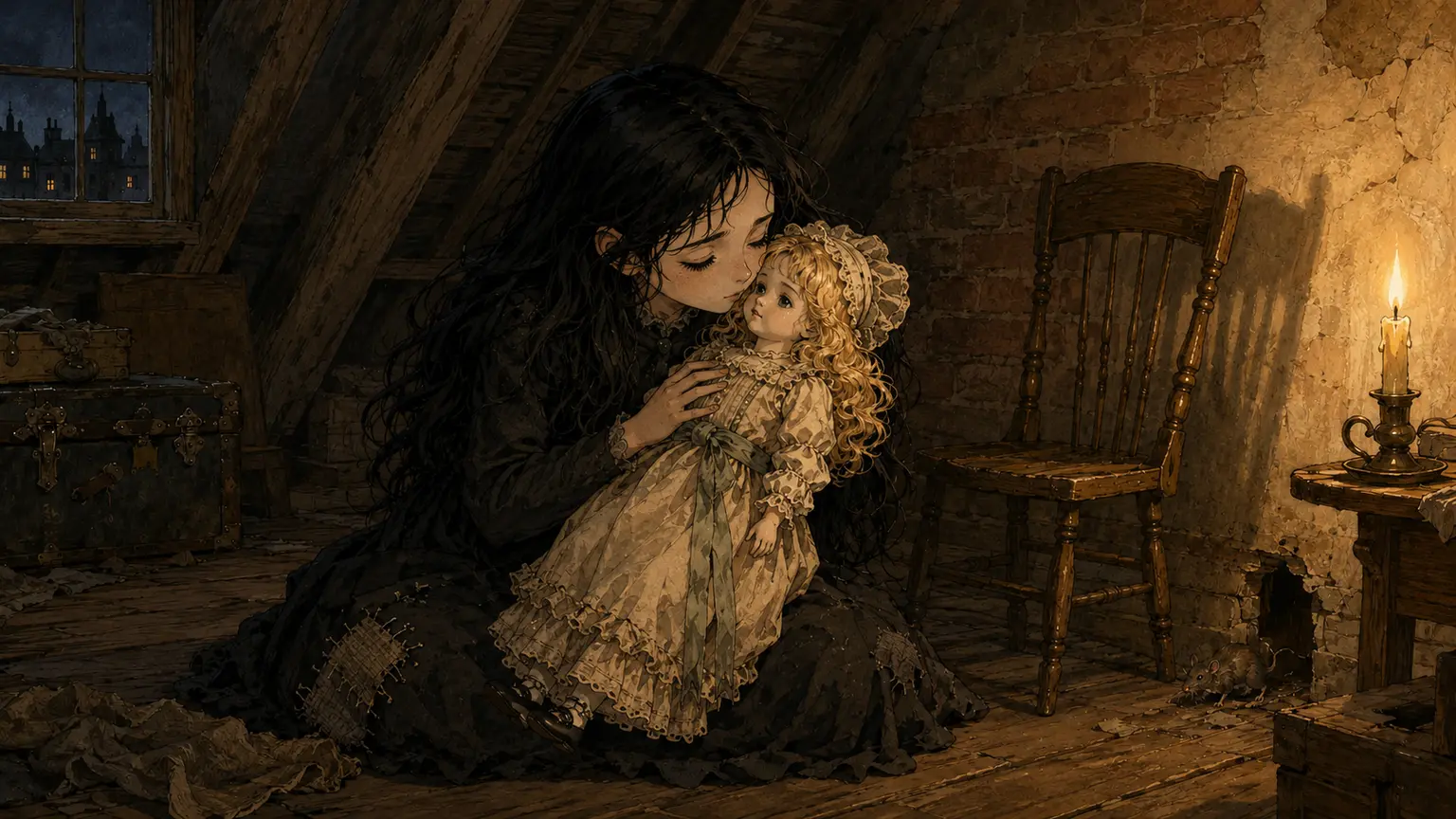
she said with a resigned sigh, "any more than Lavinia and Jessie can help not having any sense.
ラヴィニアやジェシーに分別がないのが仕方ないのと同じよ。
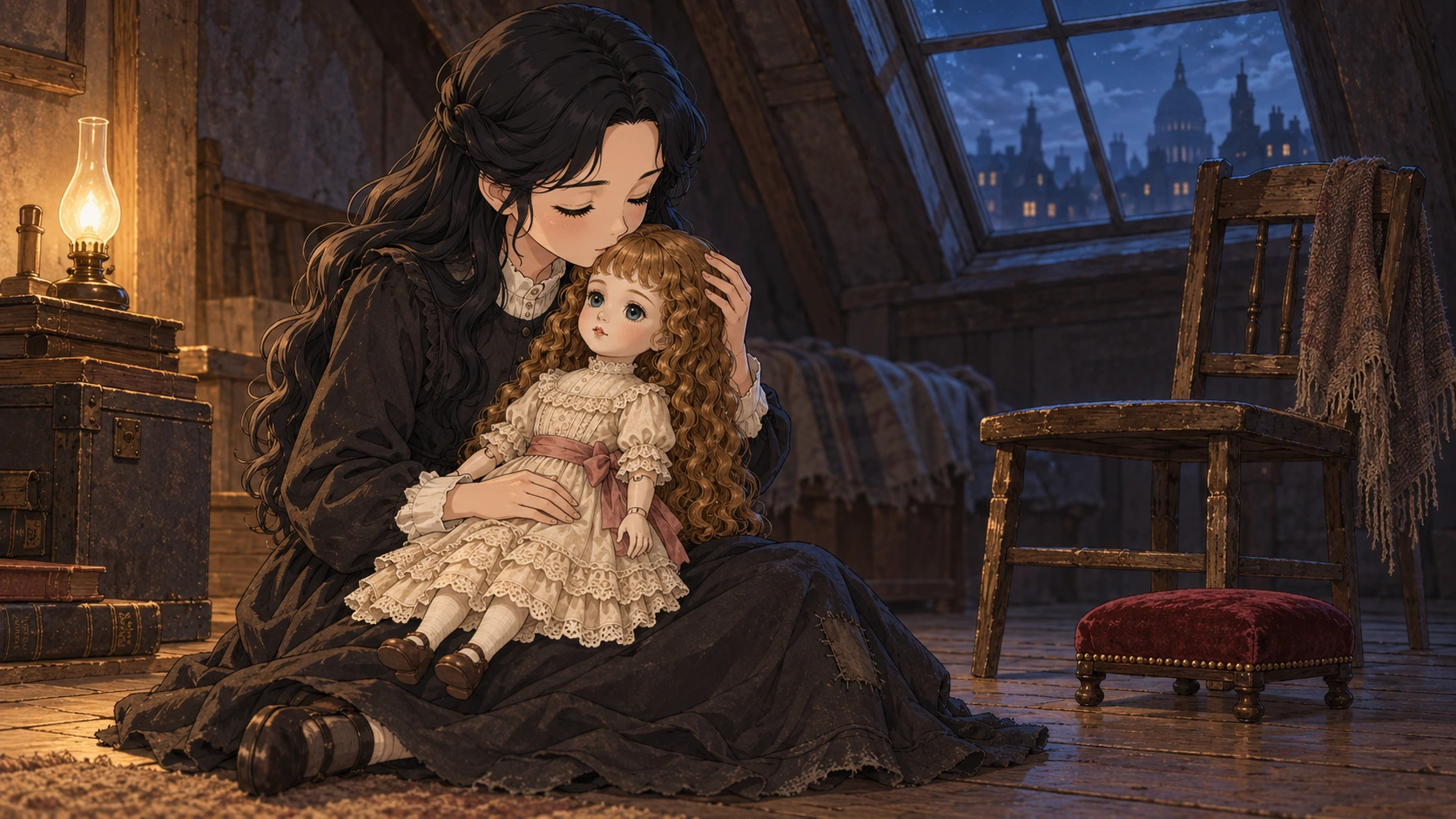
We are not all made alike. Perhaps you do your sawdust best." And she kissed her and shook her clothes straight,
みんな同じには作られていないもの。あなたはおがくずなりに精いっぱいなのかも』人形へキスし、服を整え、
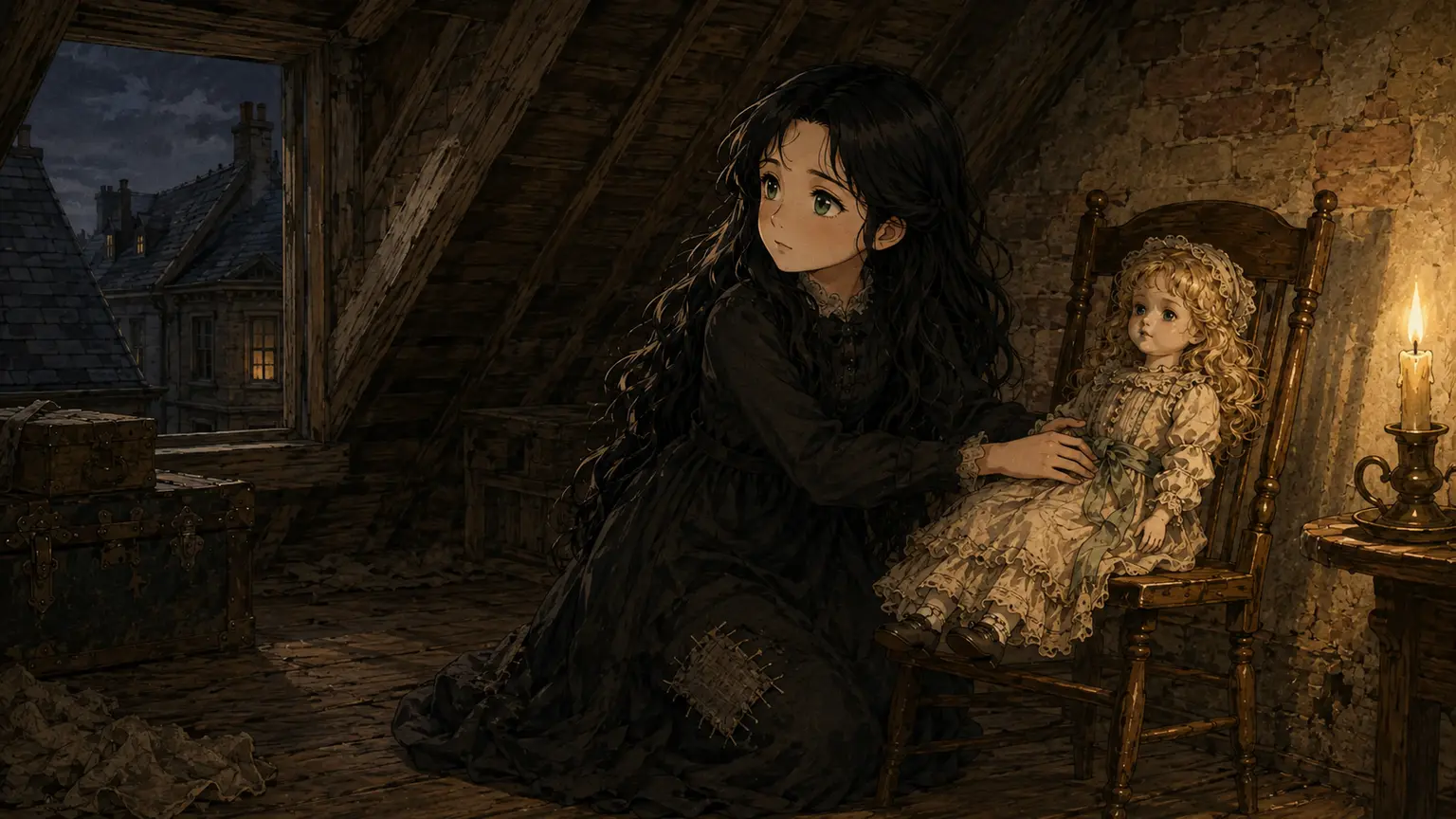
and put her back upon her chair. She had wished very much that some one would take the empty house next door.
椅子へ戻しました。隣の空き家に誰かが越して来てほしいと、ずっと強く願っていました。
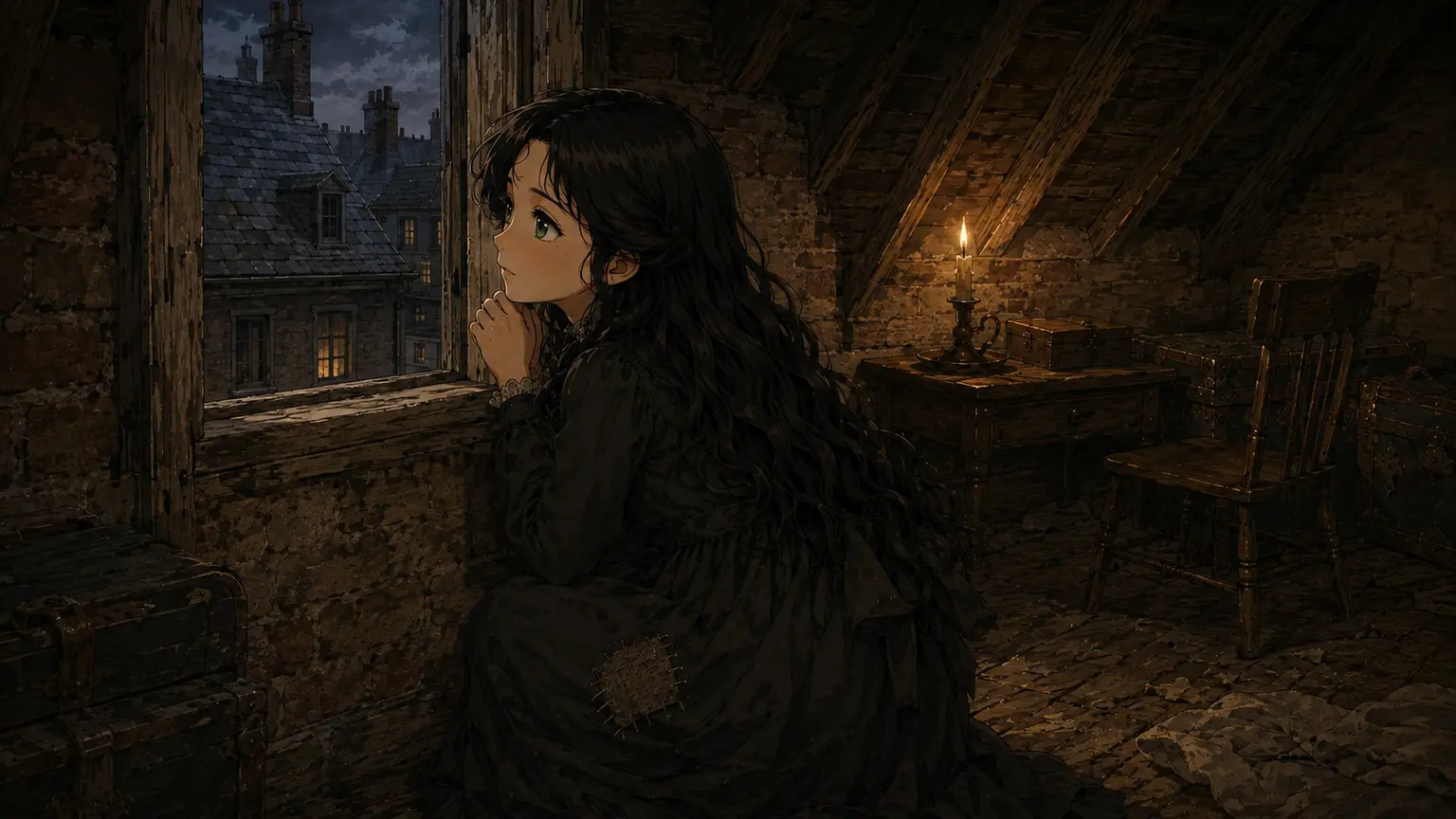
She wished it because of the attic window which was so near hers. It seemed as if it would be so nice to see it propped open someday
自分の窓に近い屋根裏窓があったからです。いつかそこが開き、
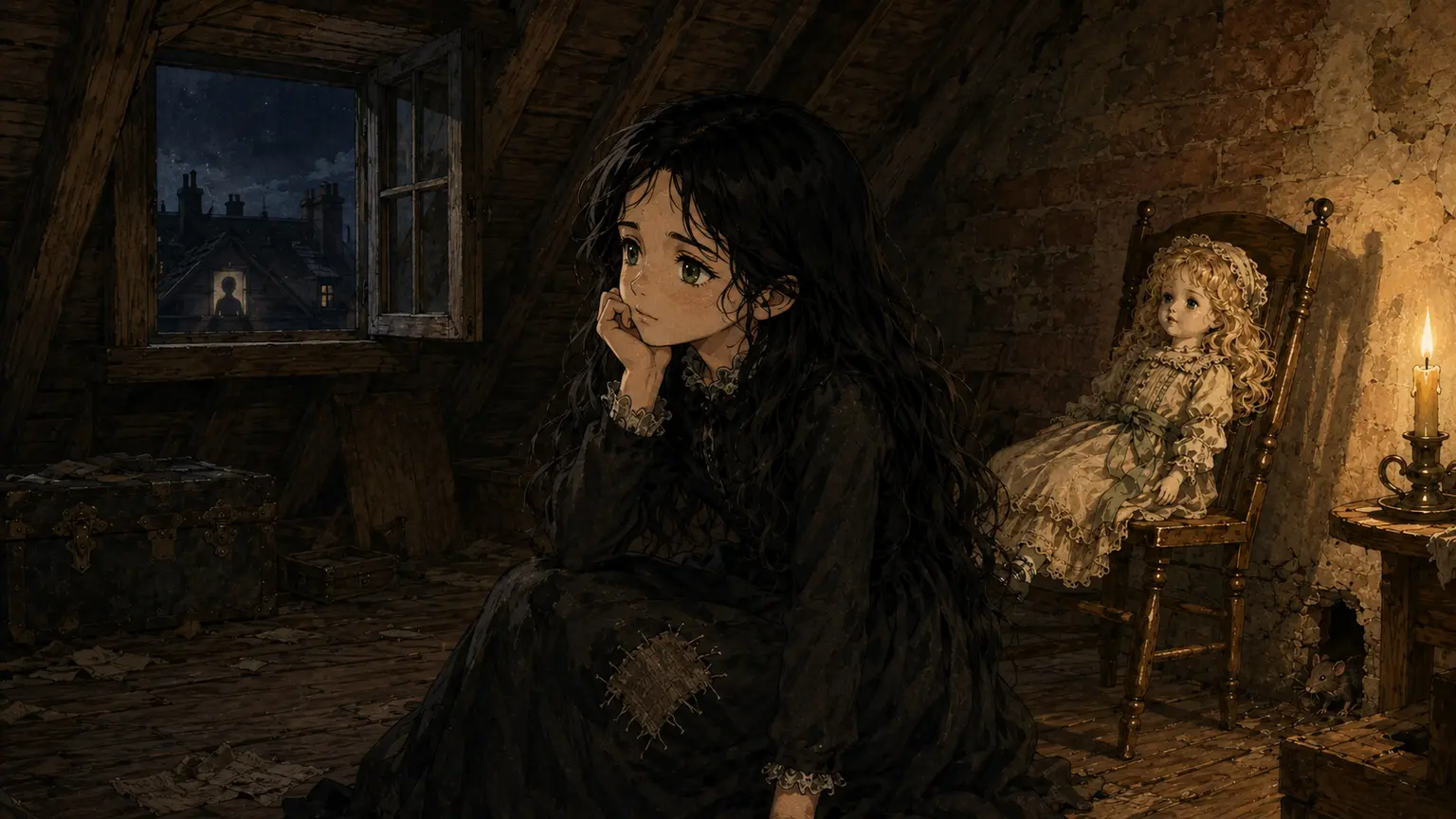
and a head and shoulders rising out of the square aperture.
四角い窓から頭と肩が現れたら素敵だと思いました。
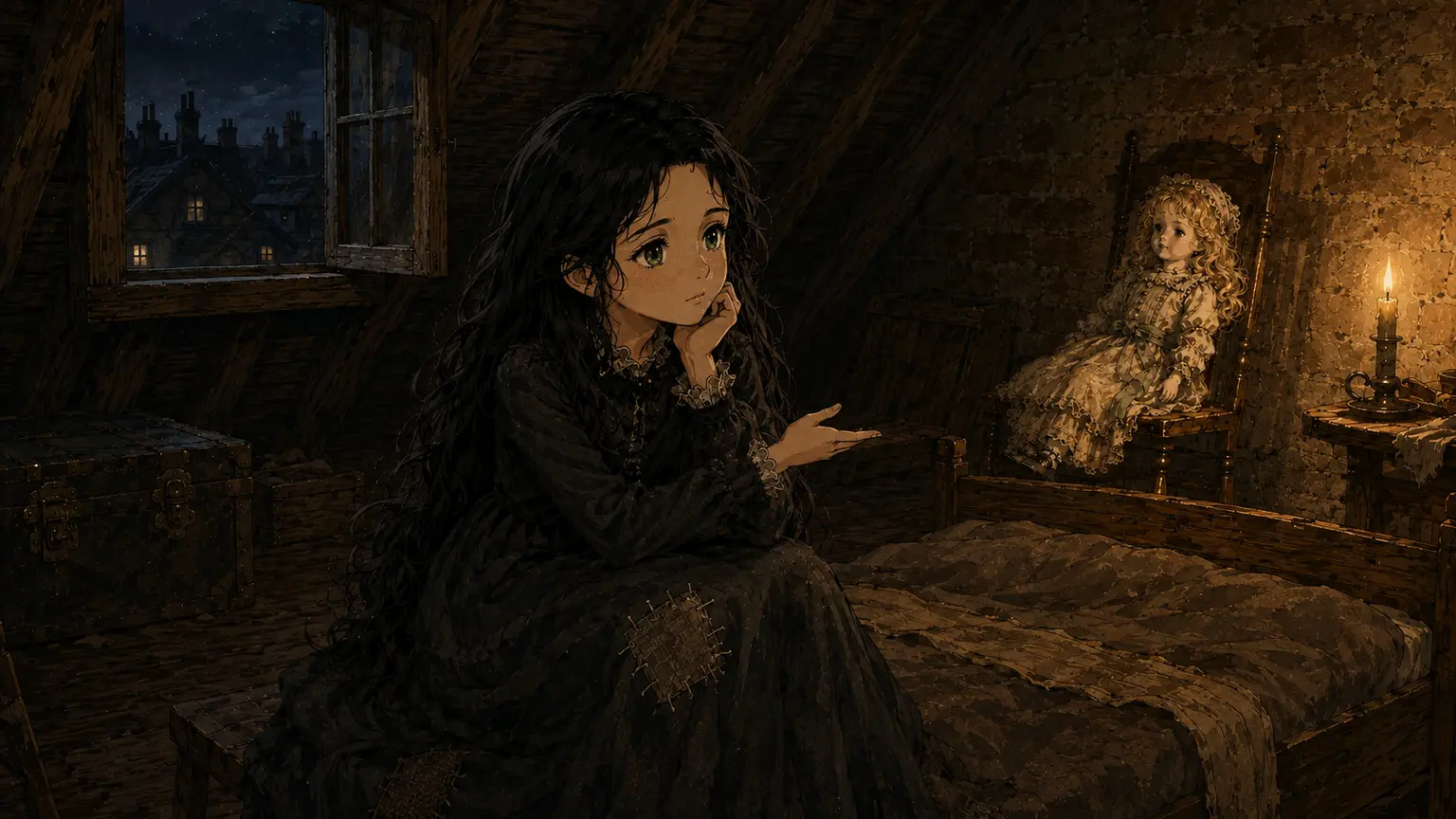
"If it looked a nice head," she thought, "I might begin by saying, ' Good morning,' and all sorts of things might happen. But, of course, it's not really likely that anyone but under servants would sleep there."
『感じのよい顔なら、まず「おはよう」と言って、いろんなことが起きるかも。でも実際、そこで眠るのは下働きの召使いくらいでしょうね』
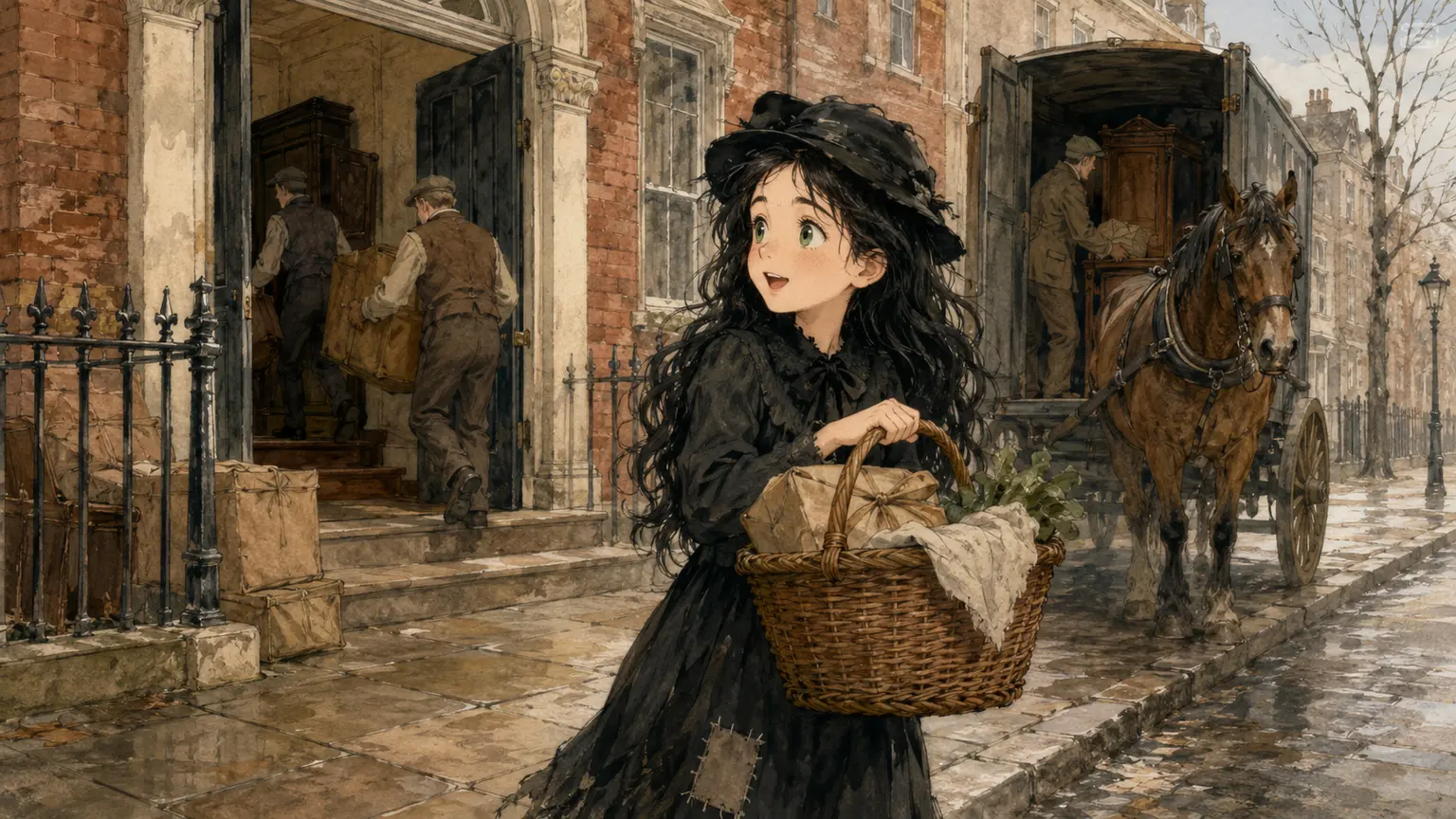
One morning, on turning the corner of the square after a visit to the grocer's, the butcher's, and the baker's,
ある朝、食料品店、肉屋、パン屋を回った後で広場の角を曲がると、
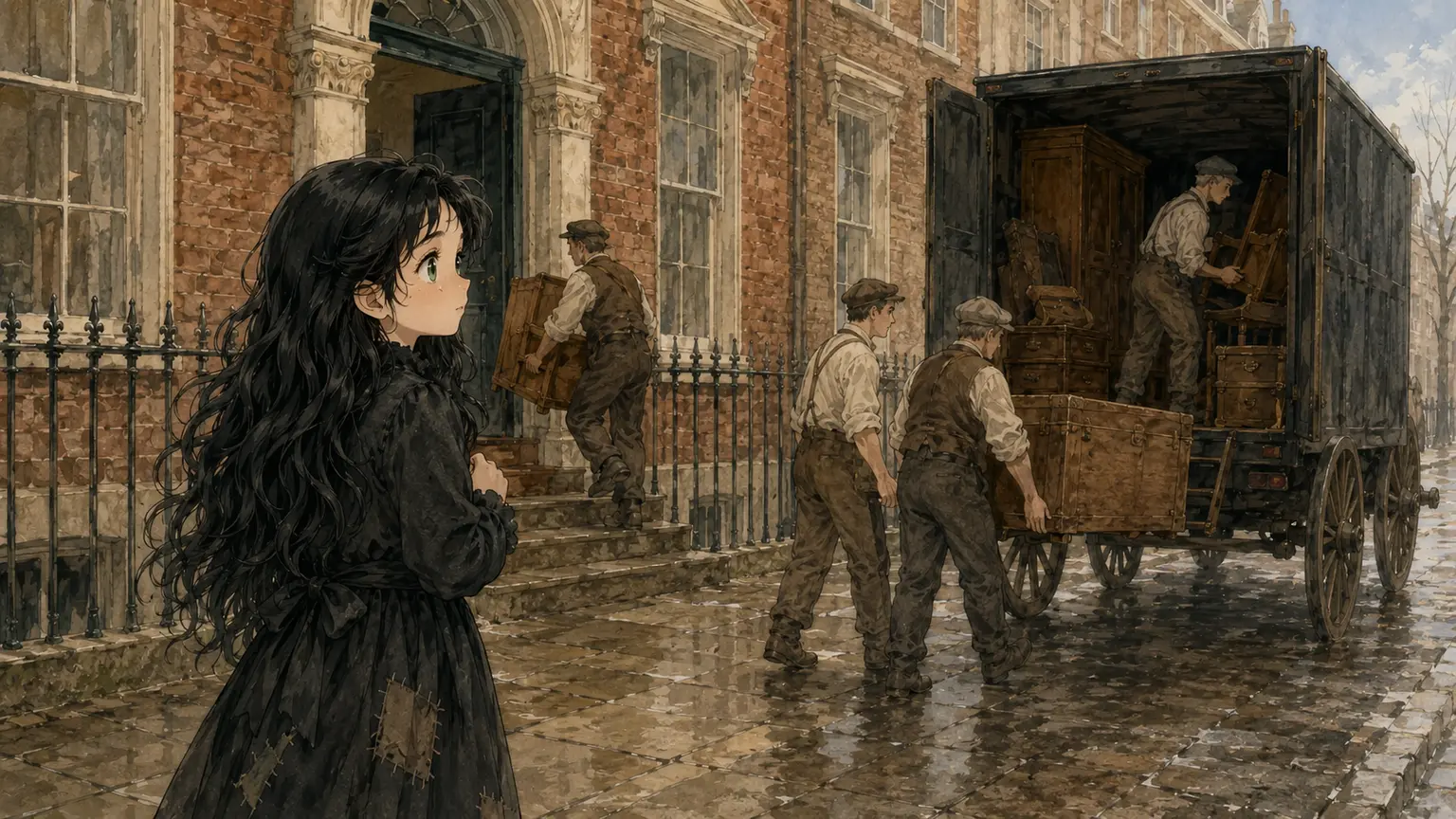
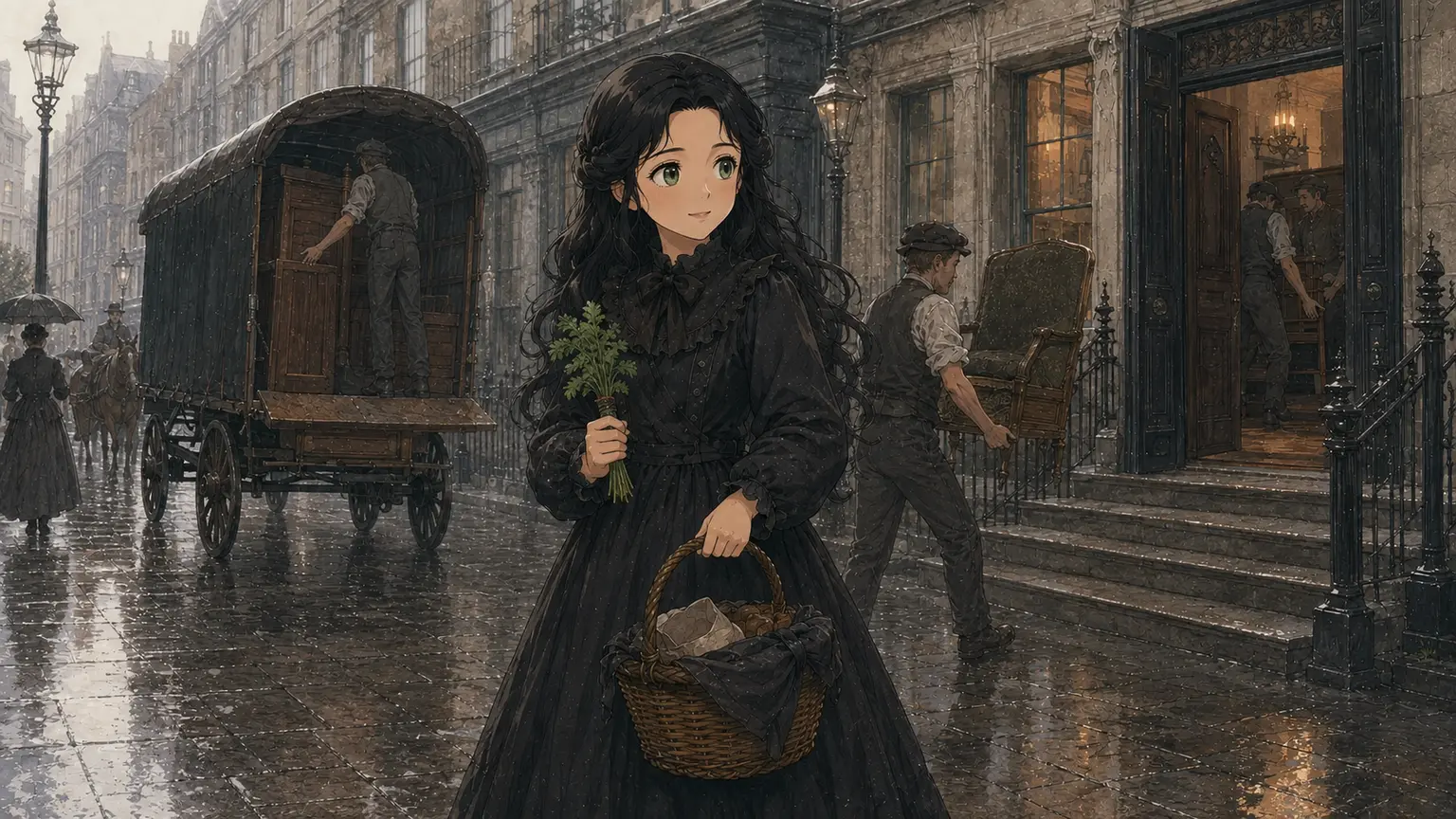
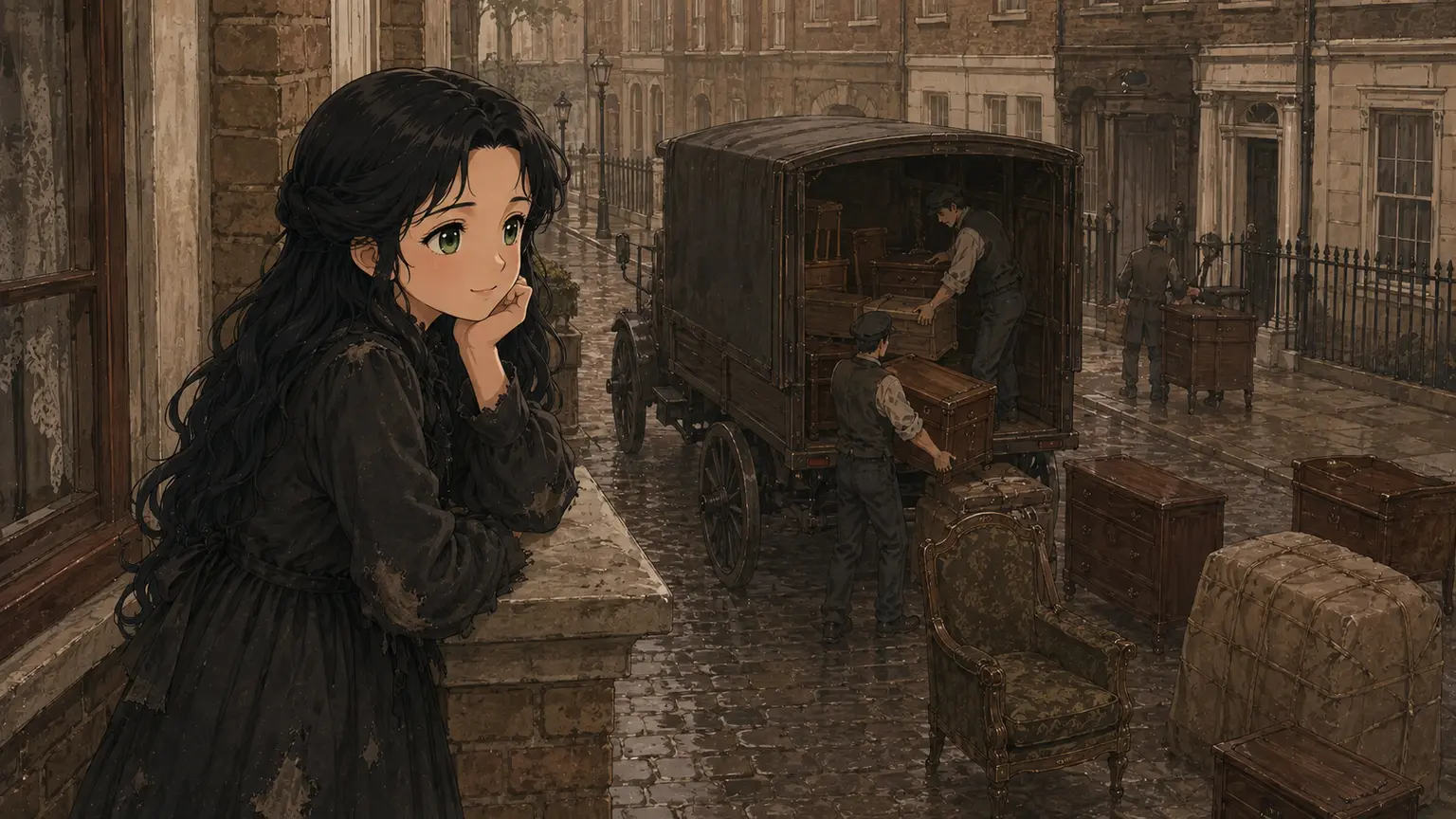
she saw, to her great delight, that during her rather prolonged absence, a van full of furniture had stopped before the next house,
長く留守にした間に、家具を満載した荷馬車が隣家の前へ止まっているのが見え、大喜びしました。
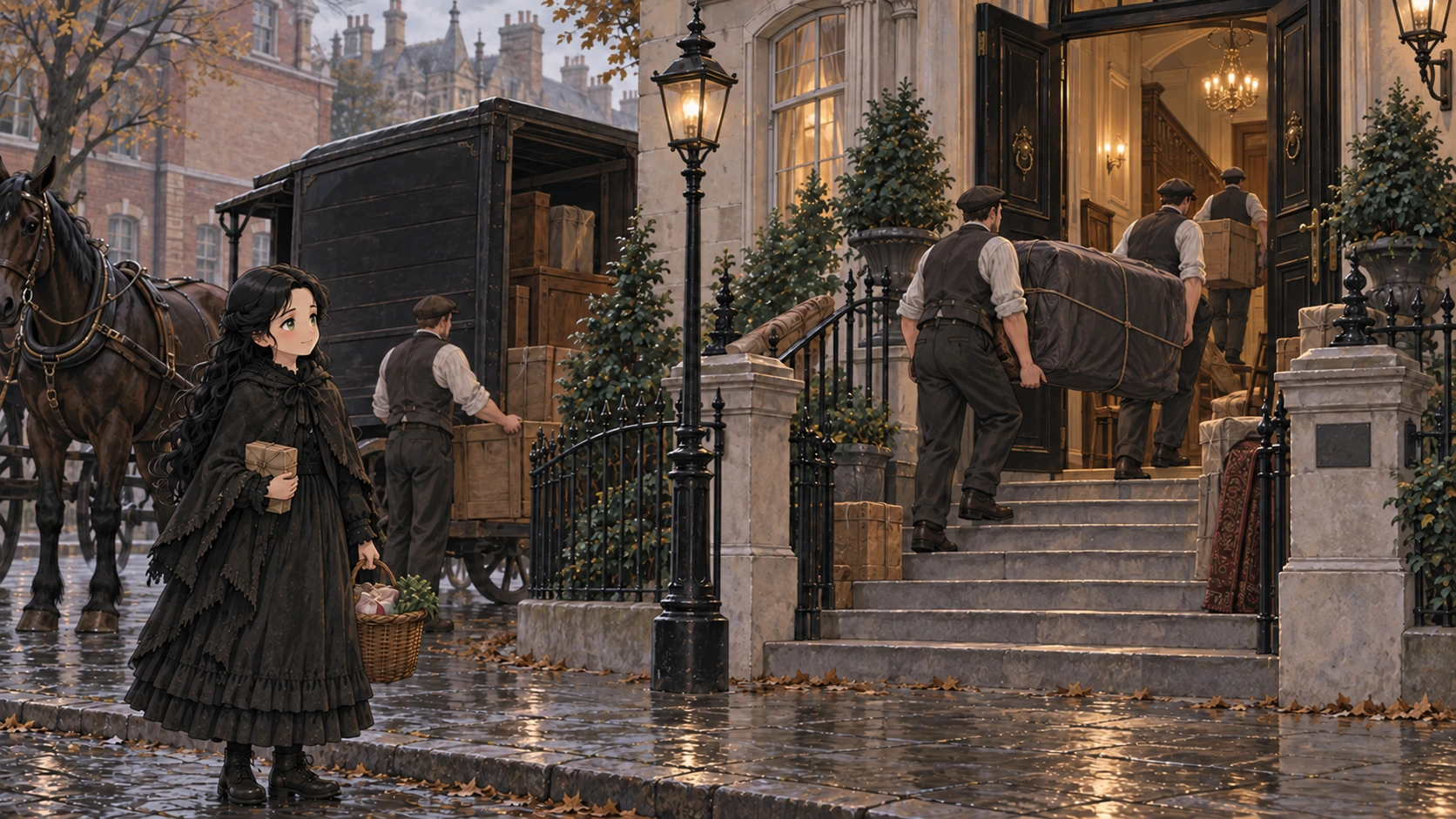
the front doors were thrown open, and men in shirt sleeves were going in and out carrying heavy packages and pieces of furniture.
正面玄関は開け放たれ、シャツ姿の男たちが重い包みや家具を運び込んでいました。
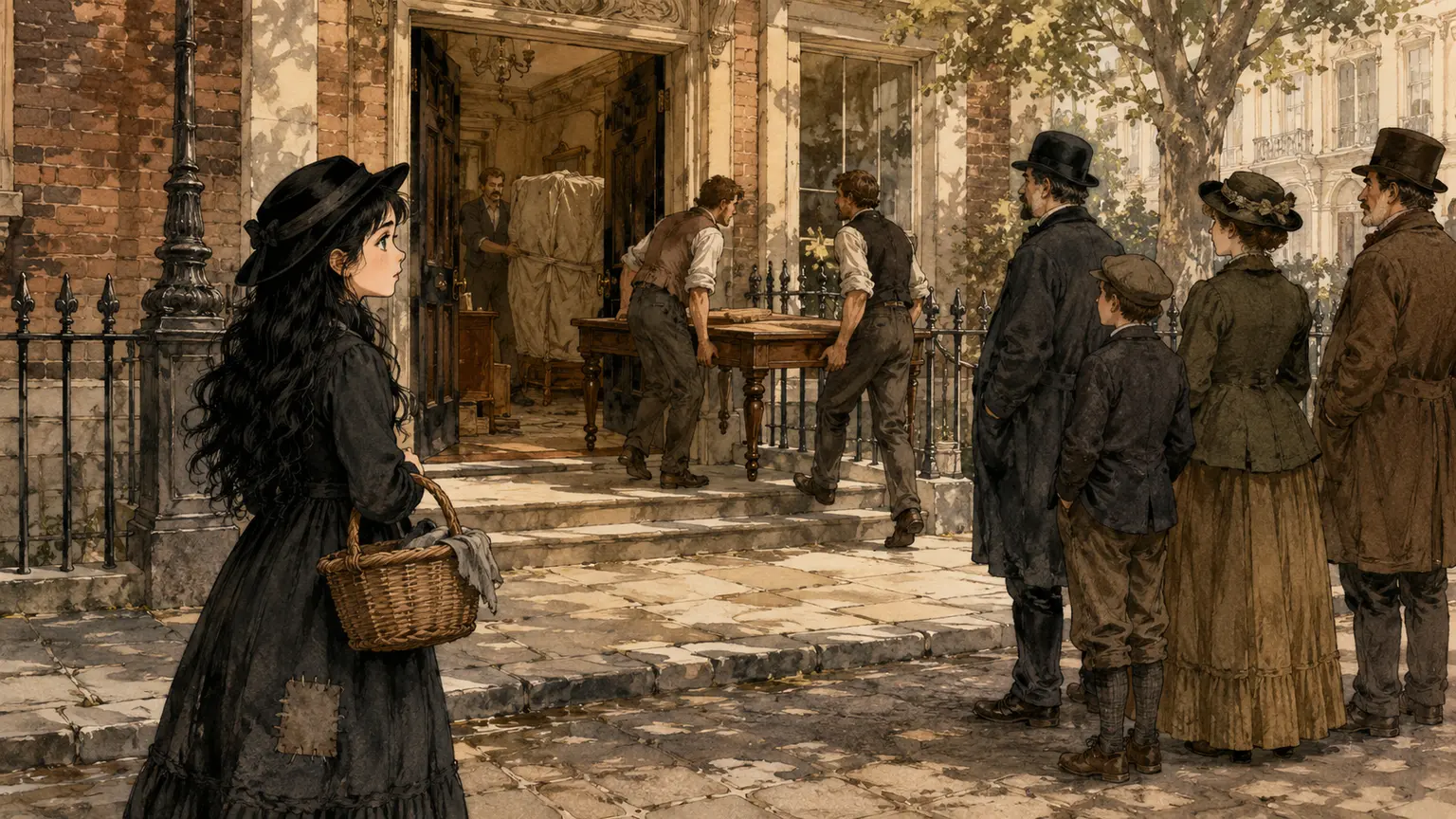
"It's taken!" she said. "It really IS taken! Oh, I do hope a nice head will look out of the attic window!"
『人が入った!本当に入ったのね!屋根裏窓から感じのよい顔が出ますように!』
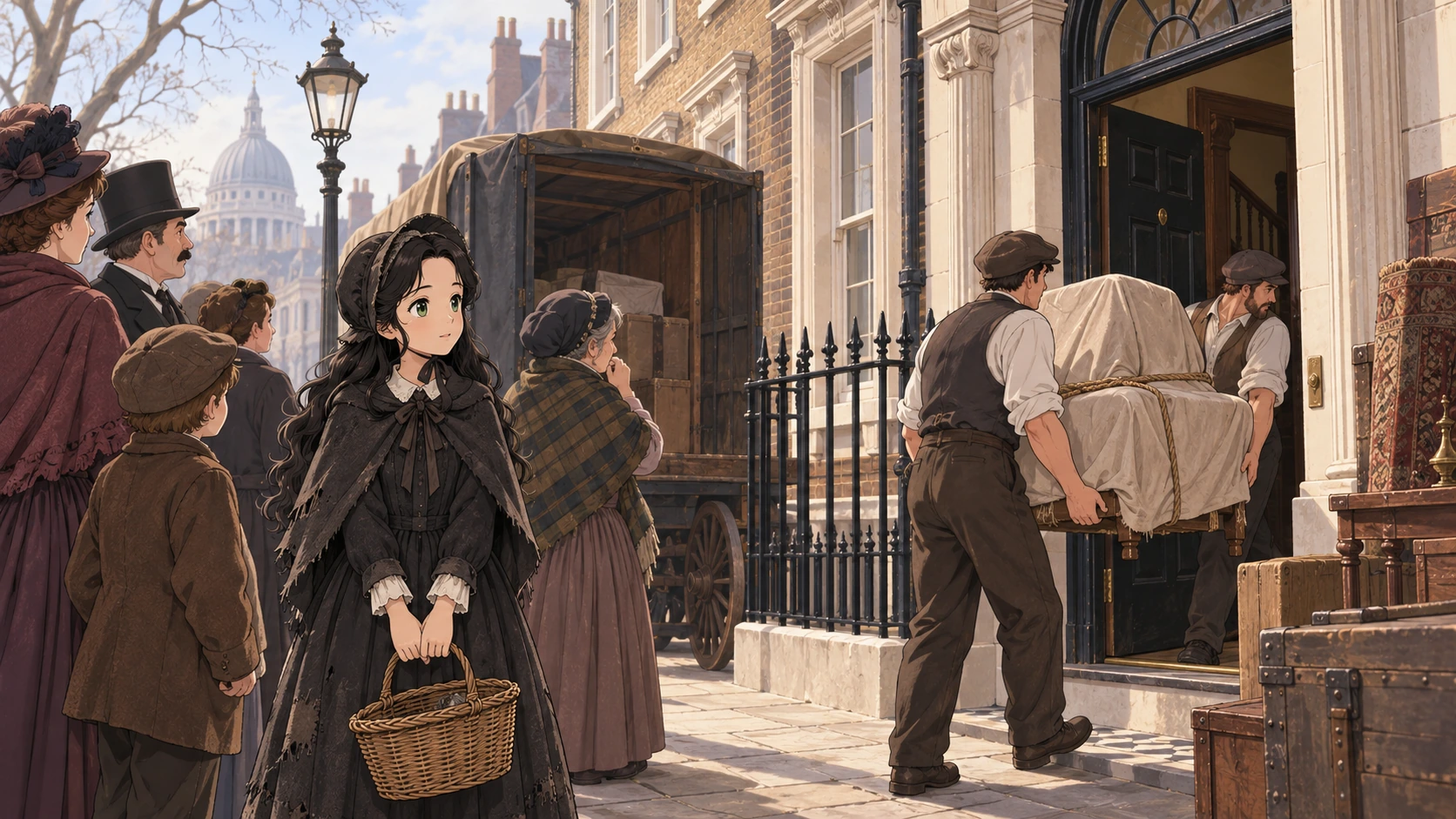
She would almost have liked to join the group of loiterers who had stopped on the pavement to watch the things carried in.
歩道で荷物を眺めていた人だかりへ、加わりたいほどでした。
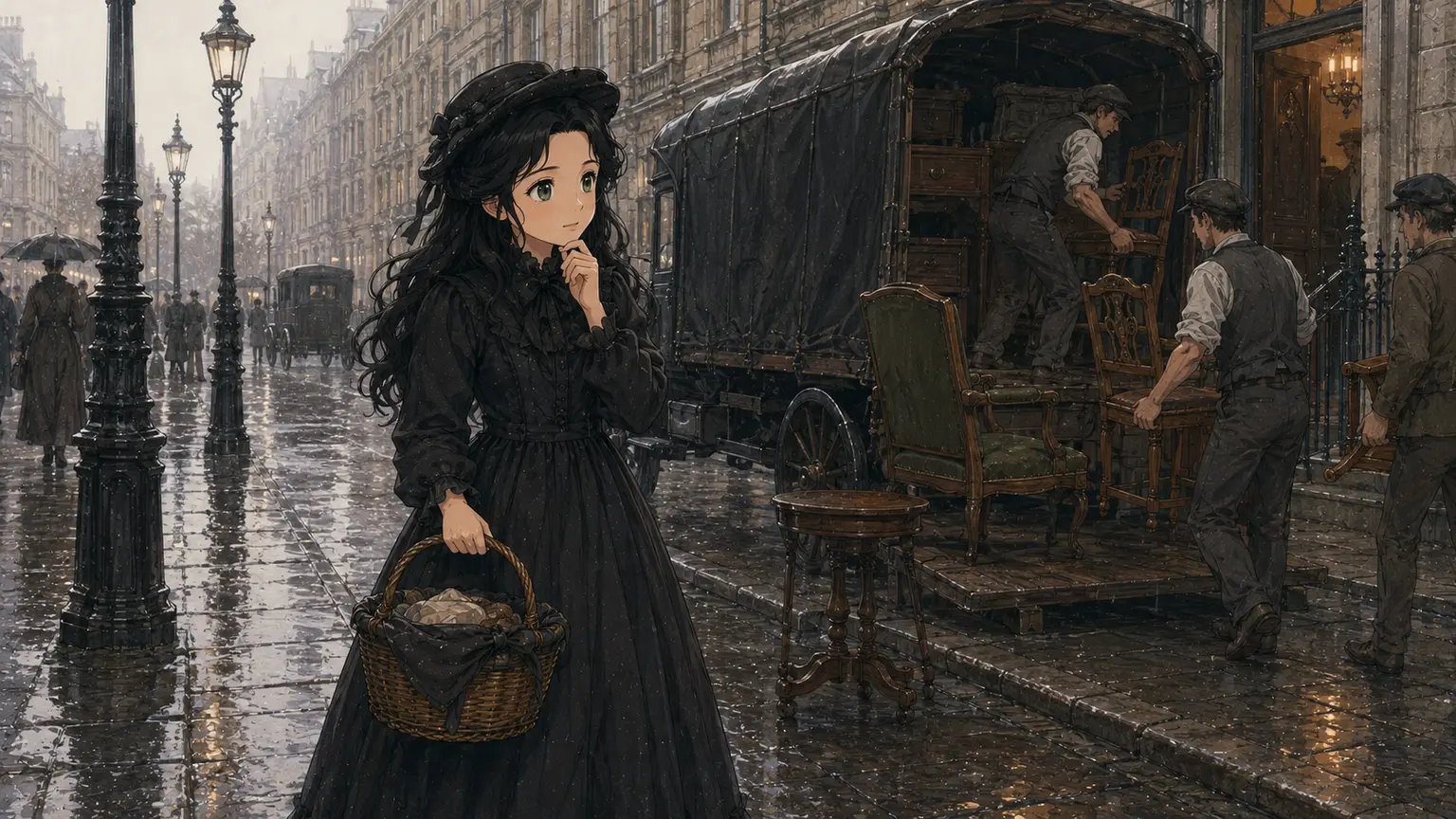
She had an idea that if she could see some of the furniture she could guess something about the people it belonged to.
家具をいくつか見れば、持ち主がどんな人か推測できそうに思えました。
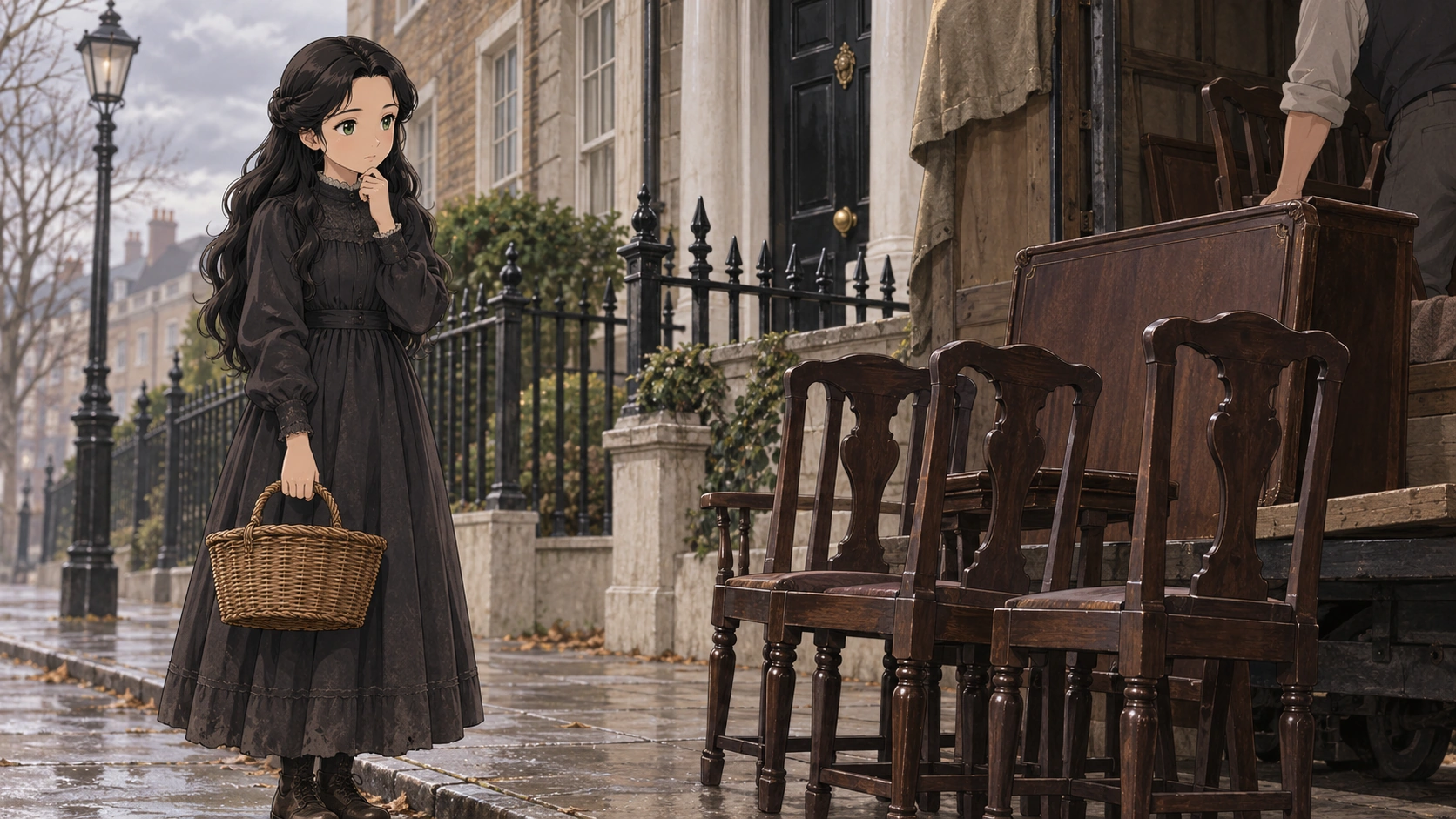
"Miss Minchin's tables and chairs are just like her," she thought; "I remember thinking that the first minute I saw her,
『ミンチン先生の机や椅子は、先生そっくり』と思いました。『幼かった私も、初めて見た瞬間そう思った。
even though I was so little. I told papa afterward, and he laughed and said it was true. I am sure the Large Family have fat, comfortable armchairs and sofas,
後でパパに言うと、笑ってそのとおりだと言った。大家族には、ふっくら快適な肘掛け椅子や長椅子があるはず。
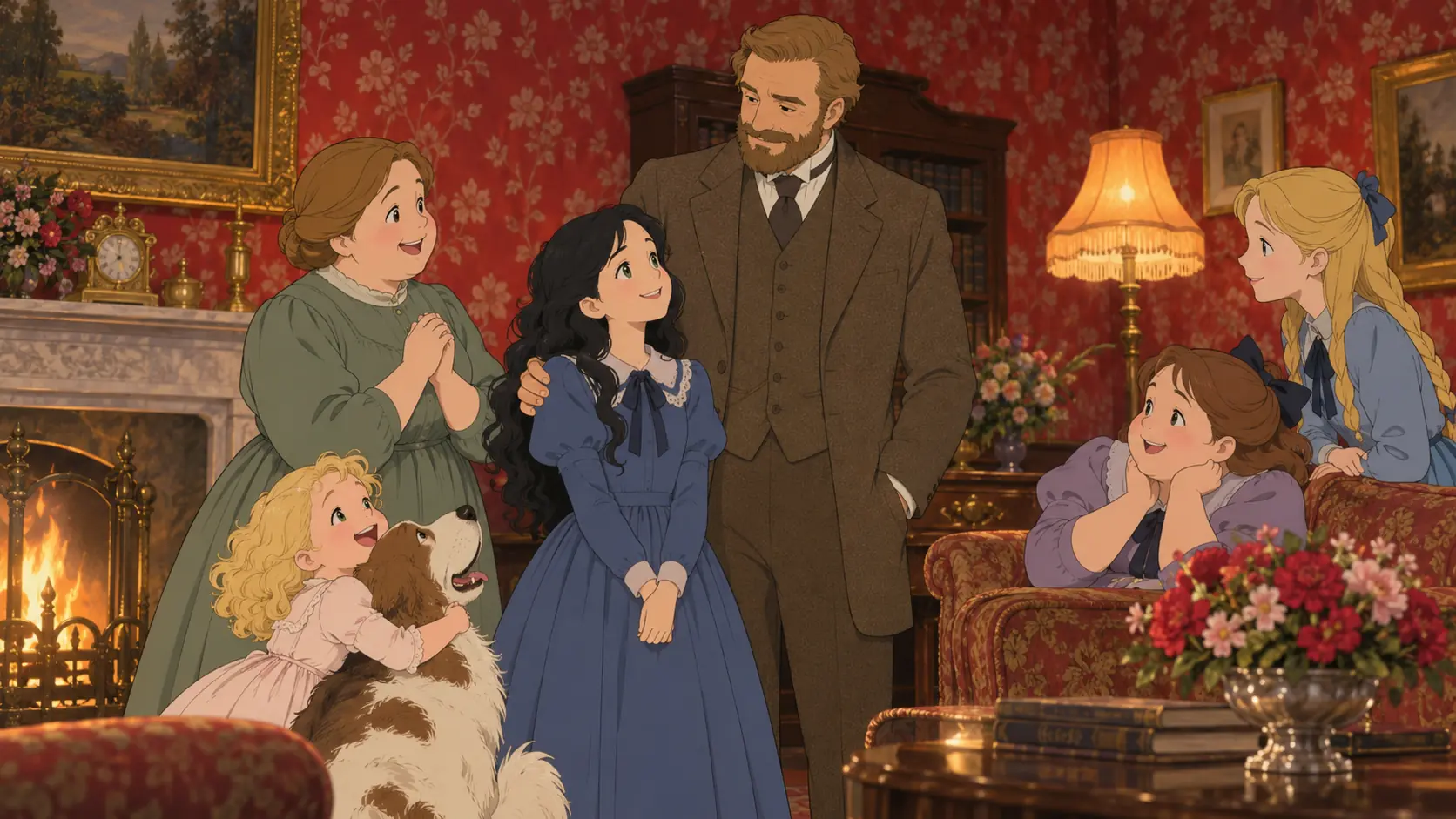
and I can see that their red-flowery wallpaper is exactly like them. It's warm and cheerful and kind-looking and happy."
赤い花模様の壁紙も一家そっくり。暖かく、陽気で、親切そうで、幸せそう』
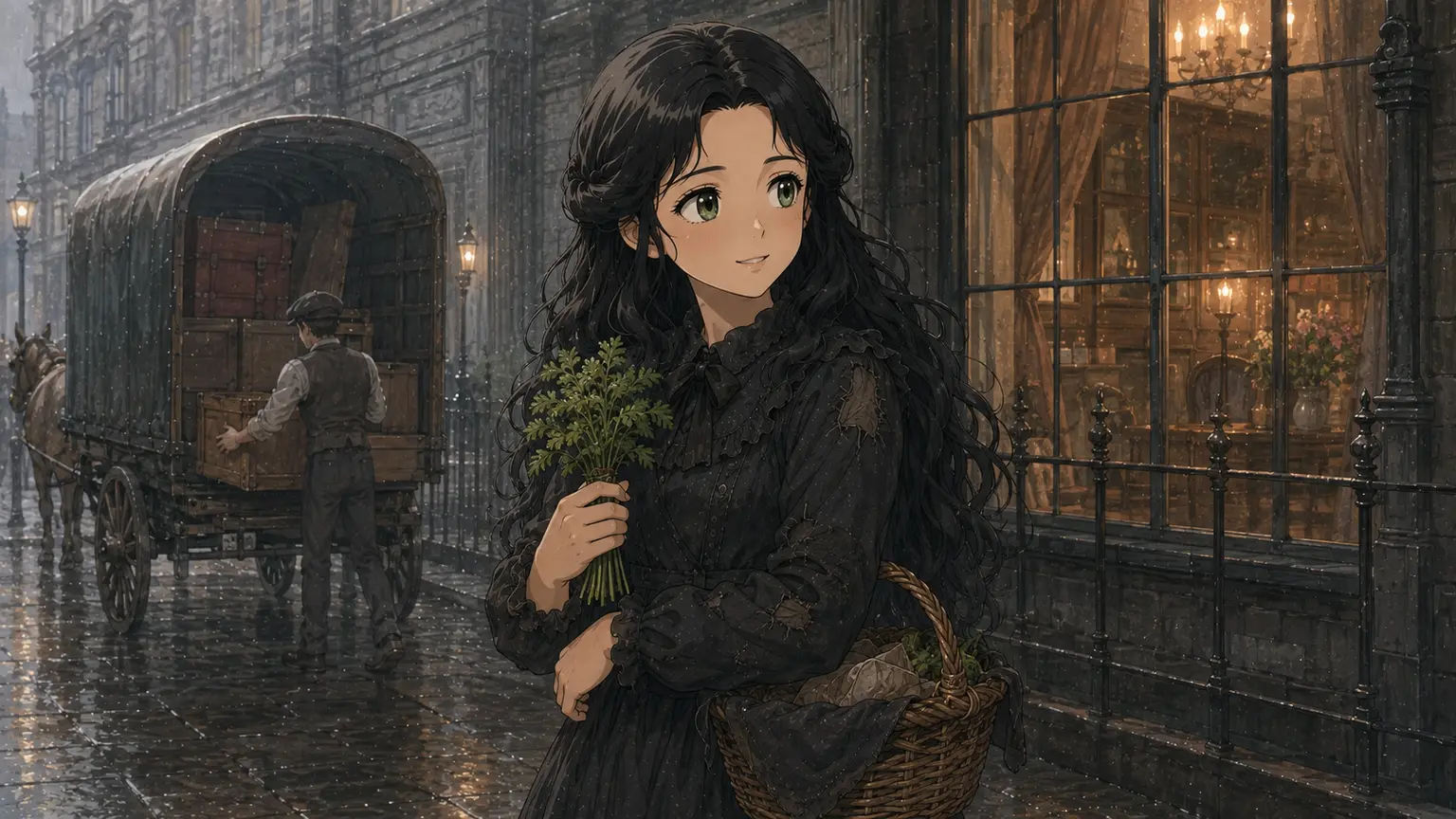
She was sent out for parsley to the greengrocer's later in the day, and when she came up the area steps her heart gave quite a quick beat of recognition.
その日の遅く、八百屋へパセリを買いに出され、地下勝手口の階段を上ると、胸が懐かしさに高鳴りました。
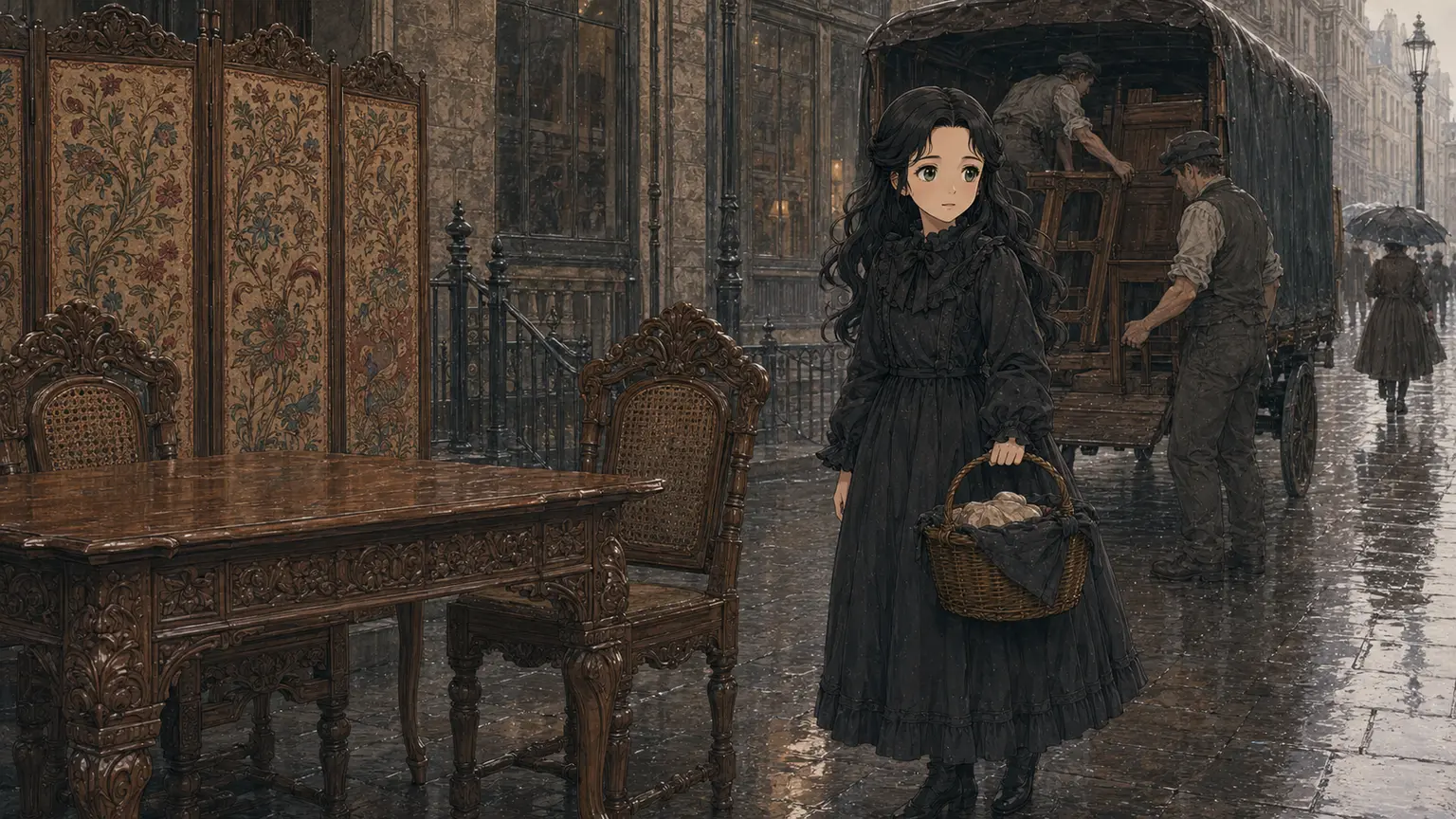
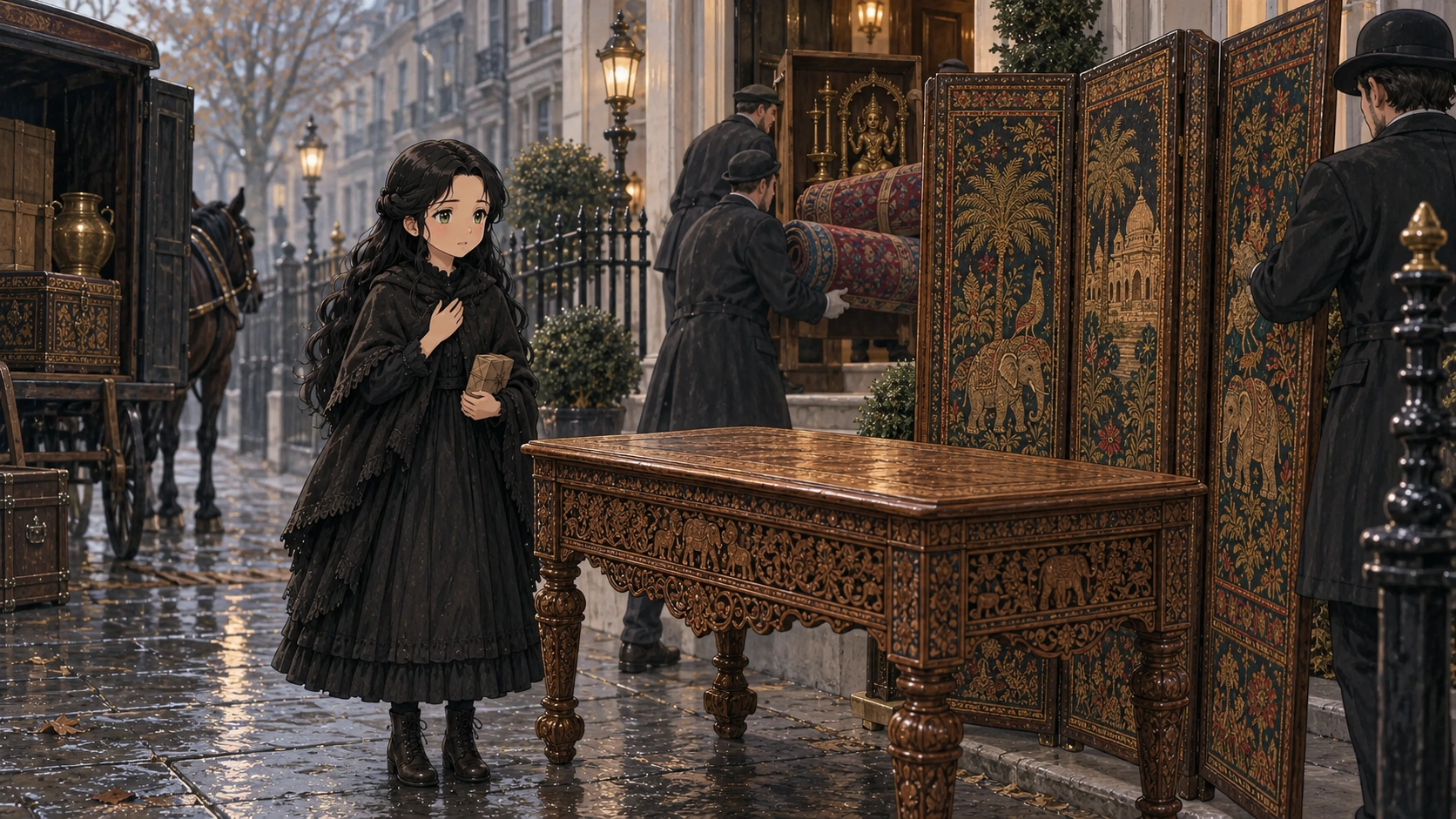
Several pieces of furniture had been set out of the van upon the pavement. There was a beautiful table of elaborately wrought teakwood, and some chairs,
家具がいくつか荷馬車から歩道へ下ろされていました。精巧な彫刻の美しいチーク材の机や椅子、
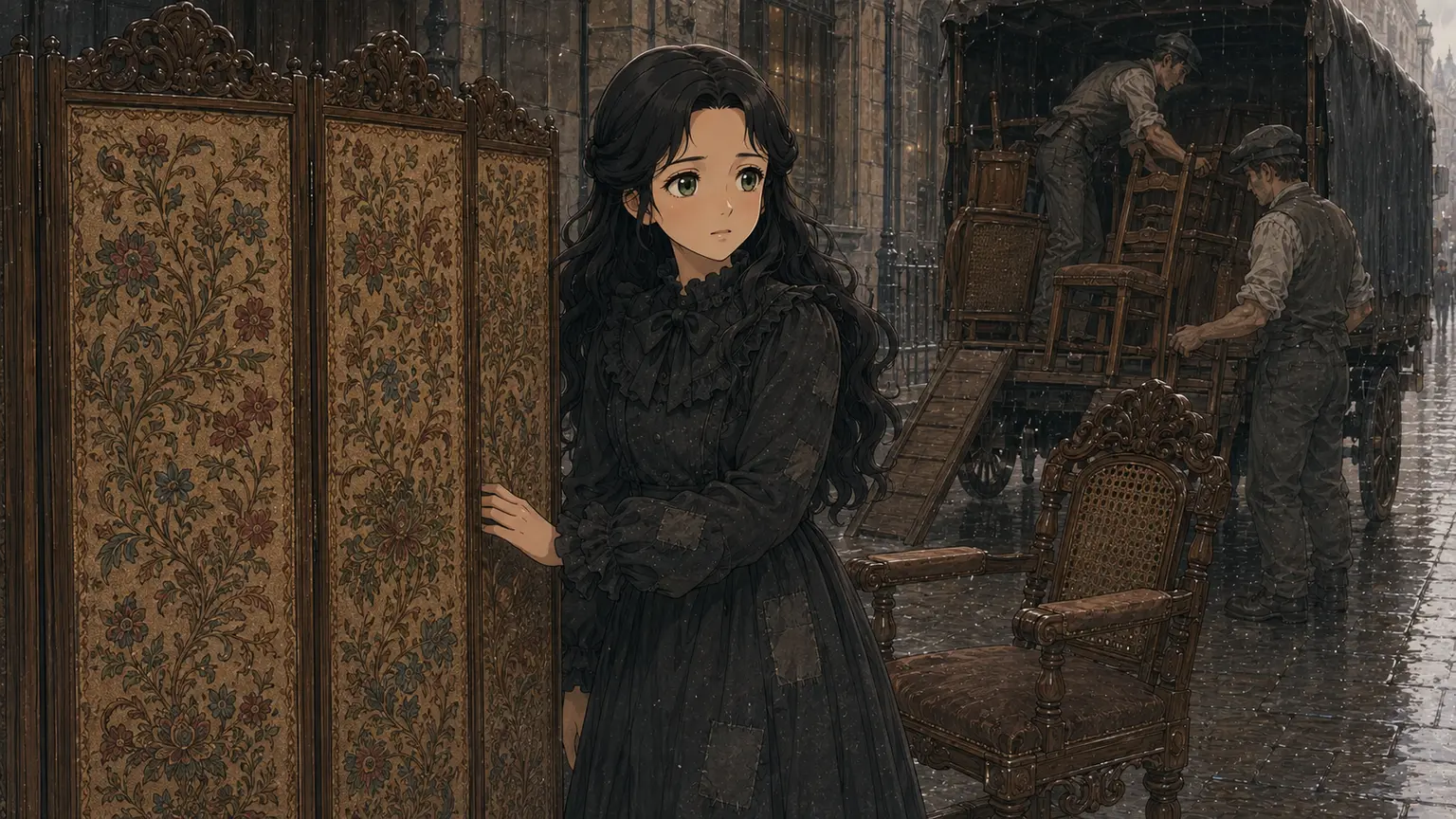
and a screen covered with rich Oriental embroidery. The sight of them gave her a weird, homesick feeling. She had seen things so like them in India.
豪華な東洋刺繍の衝立がありました。それらを見て、不思議な望郷の念に襲われました。インドで似た物を見ていたのです。
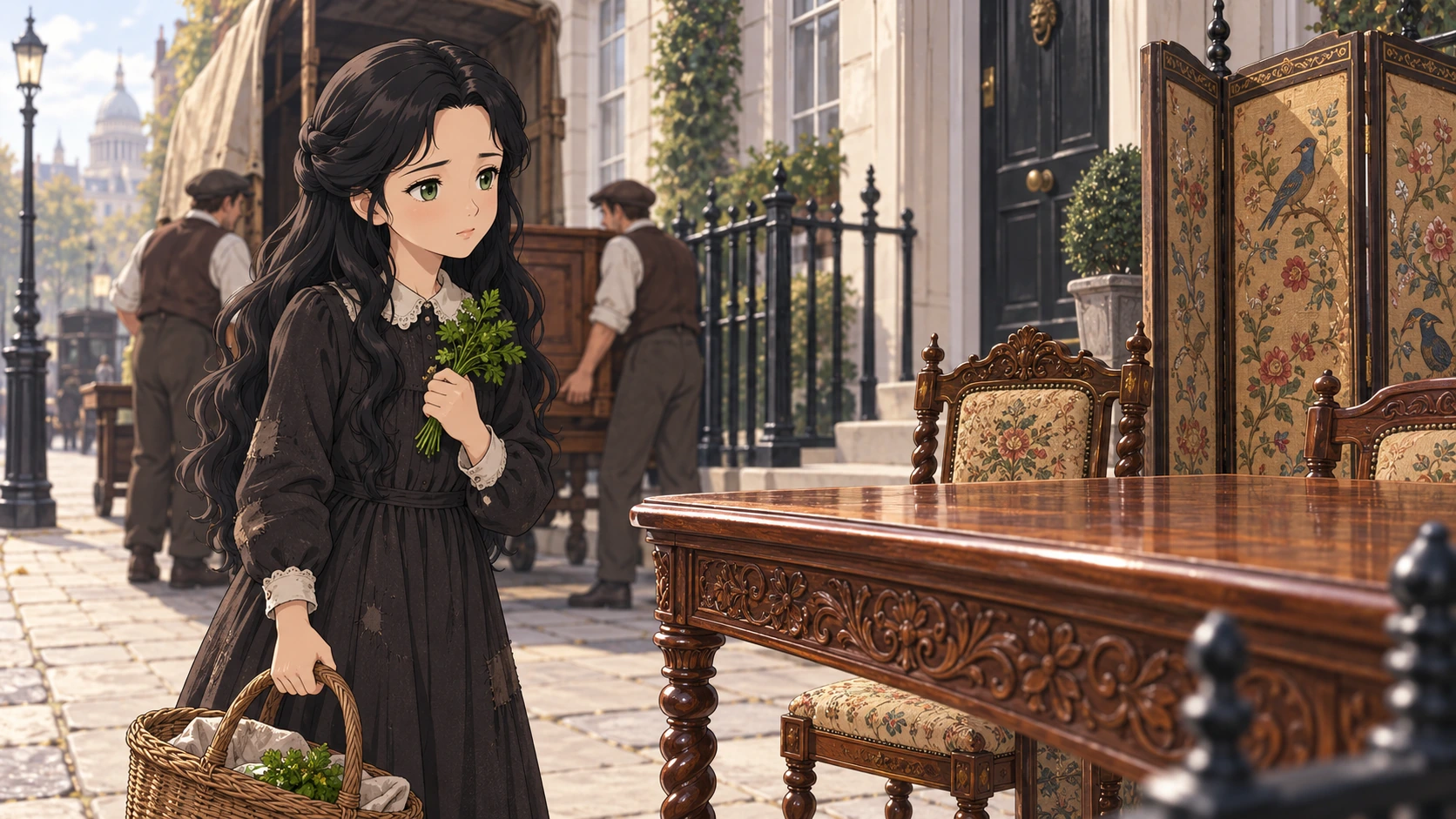
One of the things Miss Minchin had taken from her was a carved teakwood desk her father had sent her. "They are beautiful things," she said;
ミンチン先生に取り上げられた物の一つに、父から贈られた彫刻入りのチーク机がありました。『美しい品ね』
"they look as if they ought to belong to a nice person. All the things look rather grand. I suppose it is a rich family."
『感じのよい人の物みたい。どれも立派だから、きっと裕福な一家だわ』
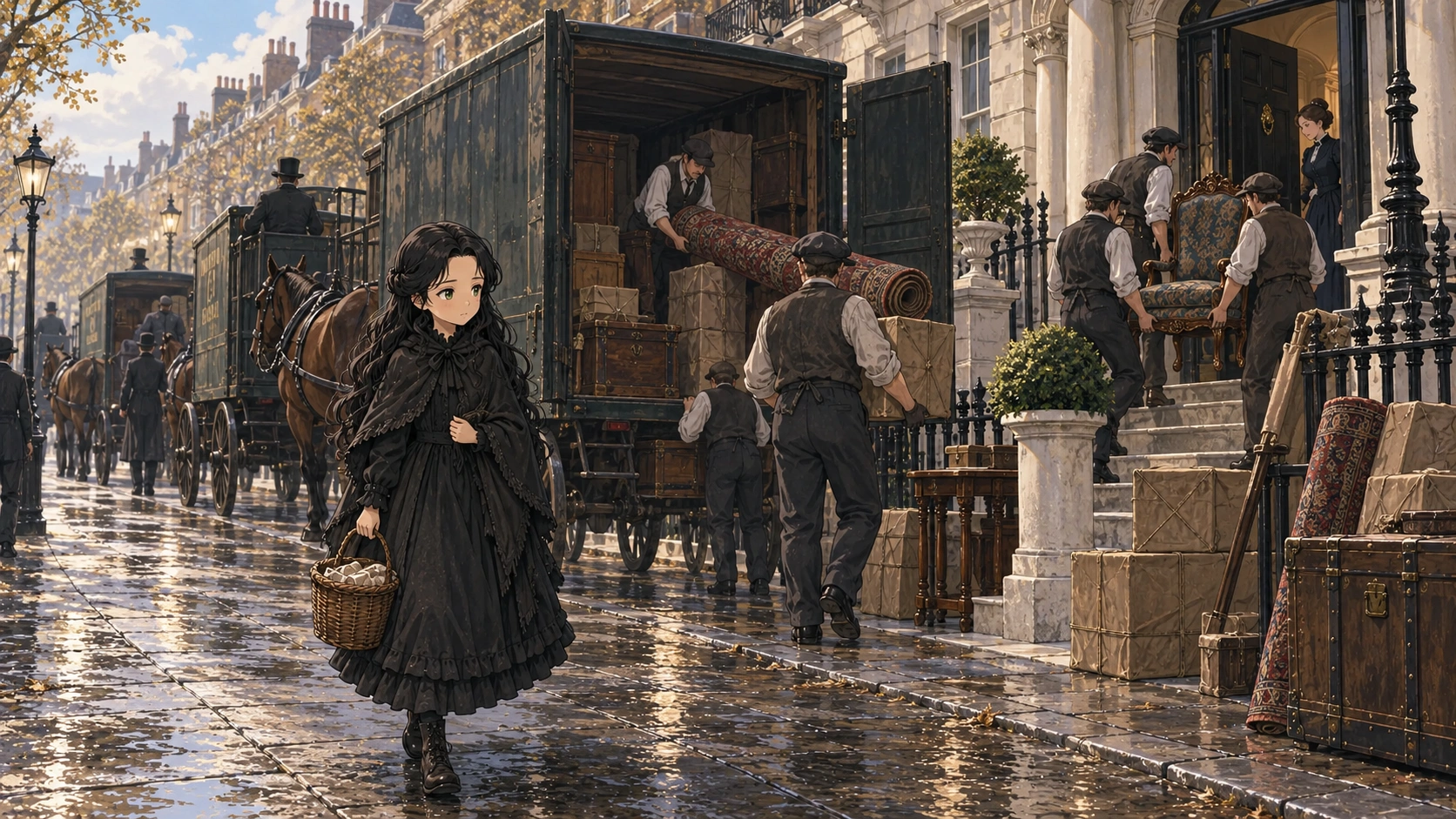
The vans of furniture came and were unloaded and gave place to others all the day. Several times it so happened
家具を積んだ荷馬車は一日中、荷を下ろしては次と入れ替わりました。セーラは何度か、
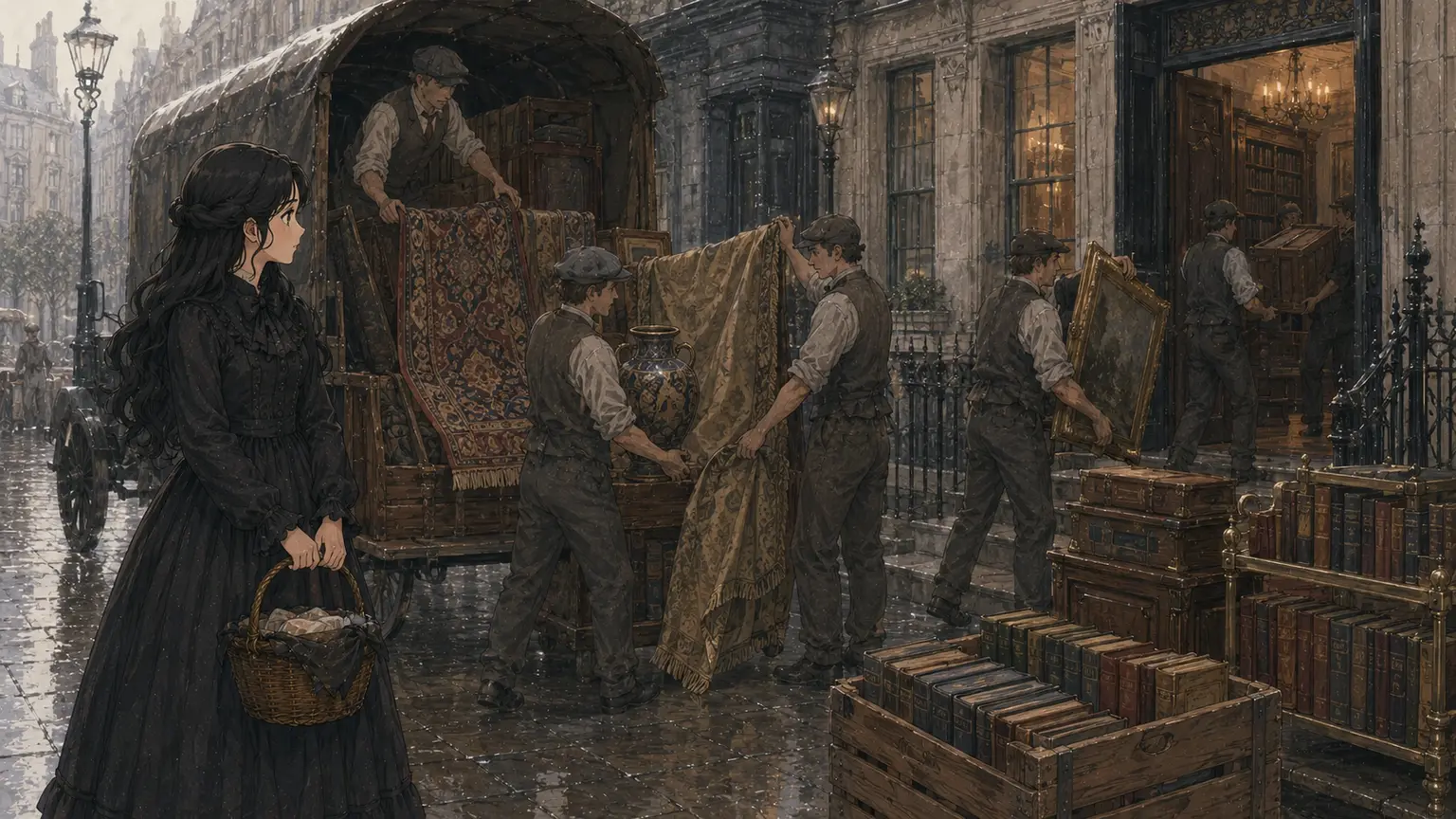
that Sara had an opportunity of seeing things carried in. It became plain that she had been right in guessing that the newcomers were people of large means.
品物が運び込まれるところを見られました。新しい住人が大変裕福だという推測は正しかったのです。
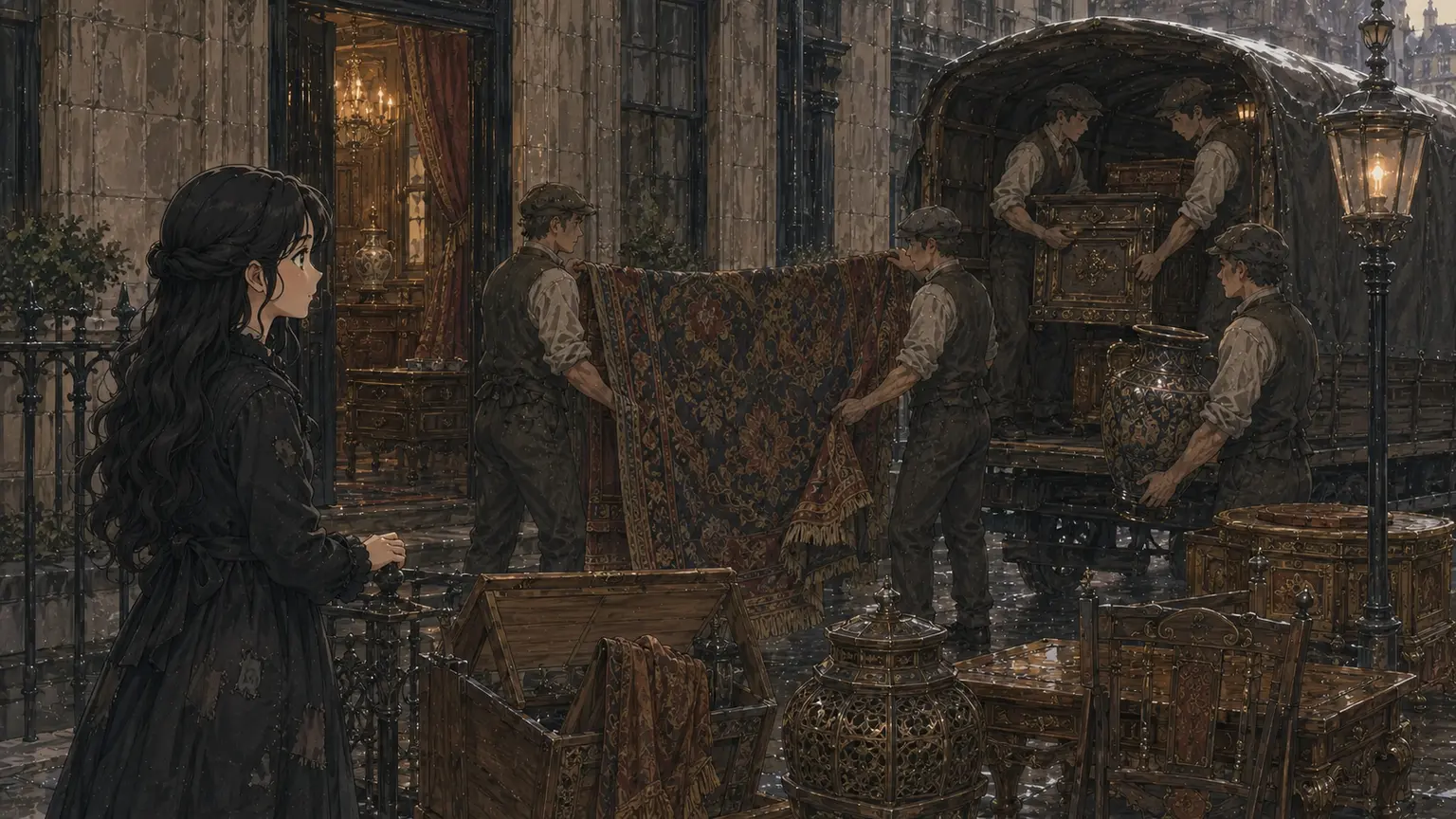
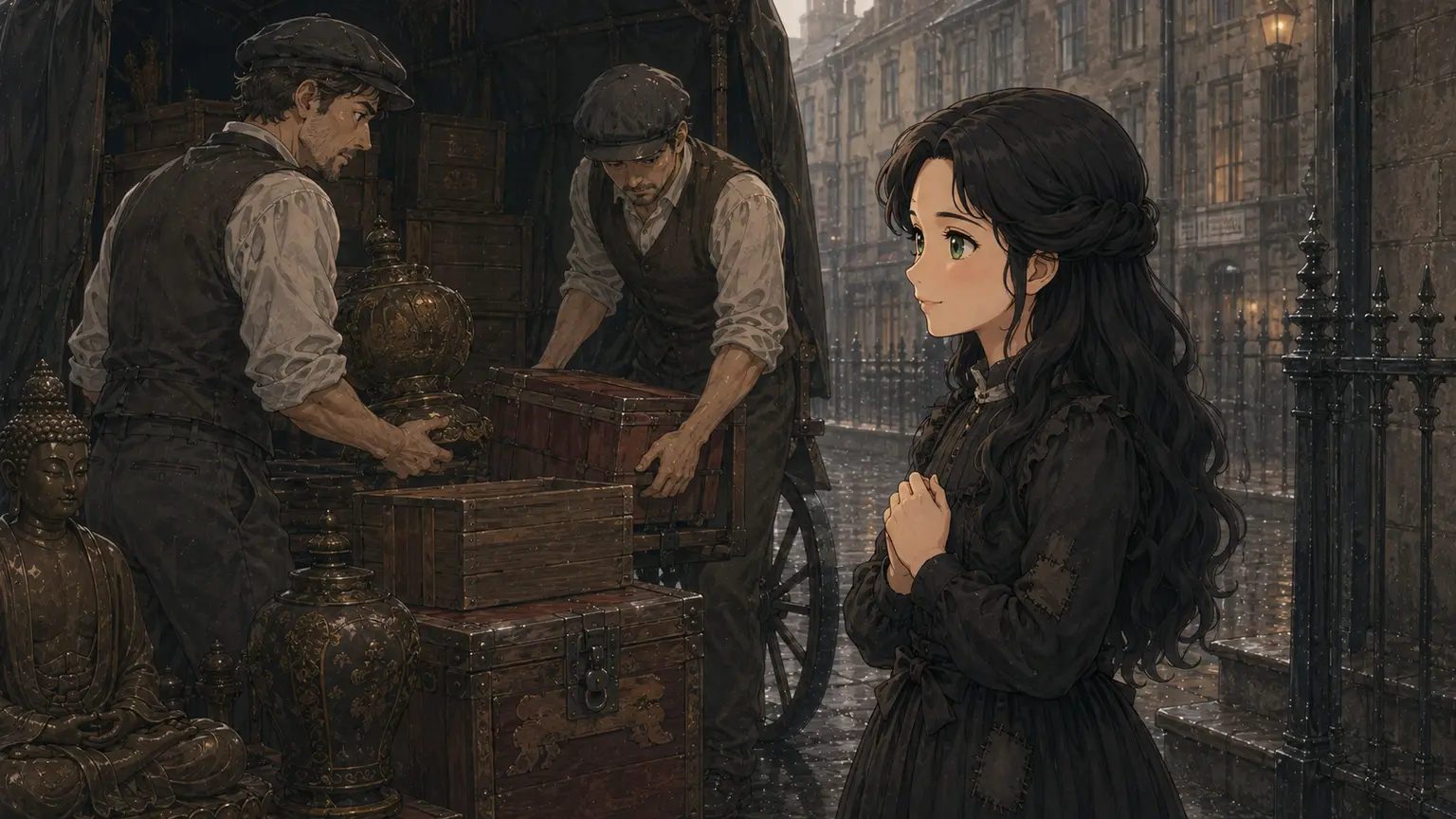
All the furniture was rich and beautiful, and a great deal of it was Oriental. Wonderful rugs and draperies and ornaments were taken from the vans,
家具はどれも豪華で美しく、その多くが東洋の物でした。見事な絨毯、掛け布、装飾品が下ろされ、
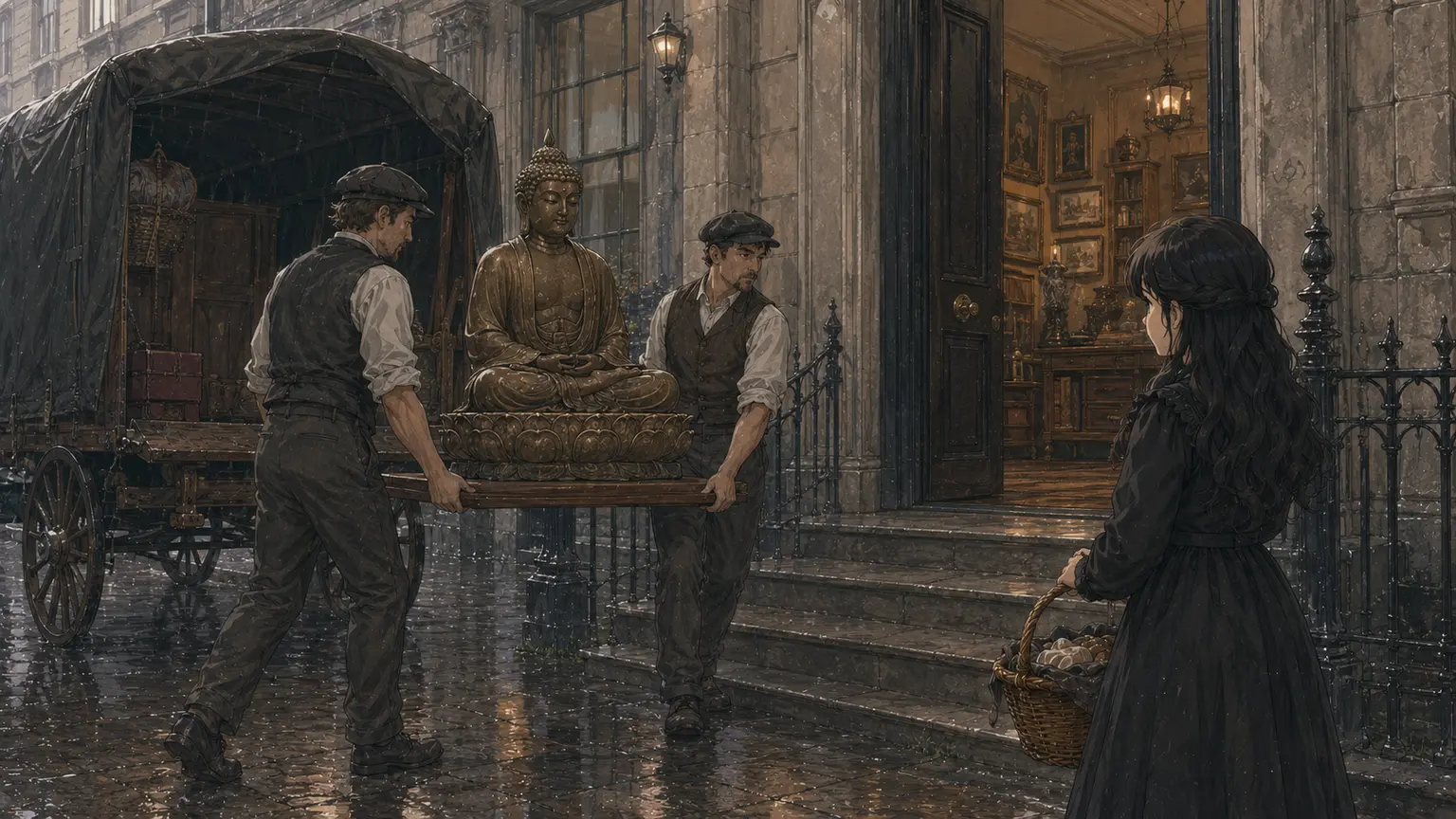
many pictures, and books enough for a library. Among other things there was a superb god Buddha in a splendid shrine.
たくさんの絵と、図書室を満たすほどの本もありました。立派な祠に納められた見事な仏像までありました。
"Someone in the family MUST have been in India," Sara thought. "They have got used to Indian things and like them.
『家族の誰かがきっとインドにいたのね』と思いました。『インドの品に慣れ、好きなのだわ。
I AM glad. I shall feel as if they were friends, even if a head never looks out of the attic window."
うれしい。屋根裏窓から誰も顔を出さなくても、友達のように感じられそう』

When she was taking in the evening's milk for the cook (there was really no odd job
料理女のために夕方の牛乳を運び込んでいた時――実際、命じられない雑用などありませんでした――

she was not called upon to do), she saw something occur which made the situation more interesting than ever.
ある出来事を目にし、事情はいっそう興味深くなりました。

The handsome, rosy man who was the father of the Large Family walked across the square in the most matter-of-fact manner,
大家族の父である、血色のよい立派な男性が、ごく当たり前のように広場を横切り、

and ran up the steps of the next-door house. He ran up them as if he felt quite at home and expected to run up and down them
隣家の階段を駆け上がりました。そこを我が家のように感じ、これから何度も上り下りするつもりの様子でした。

many a time in the future. He stayed inside quite a long time, and several times came out and gave directions to the workmen,
中に長く留まり、何度か出て来て職人たちへ指示しました。
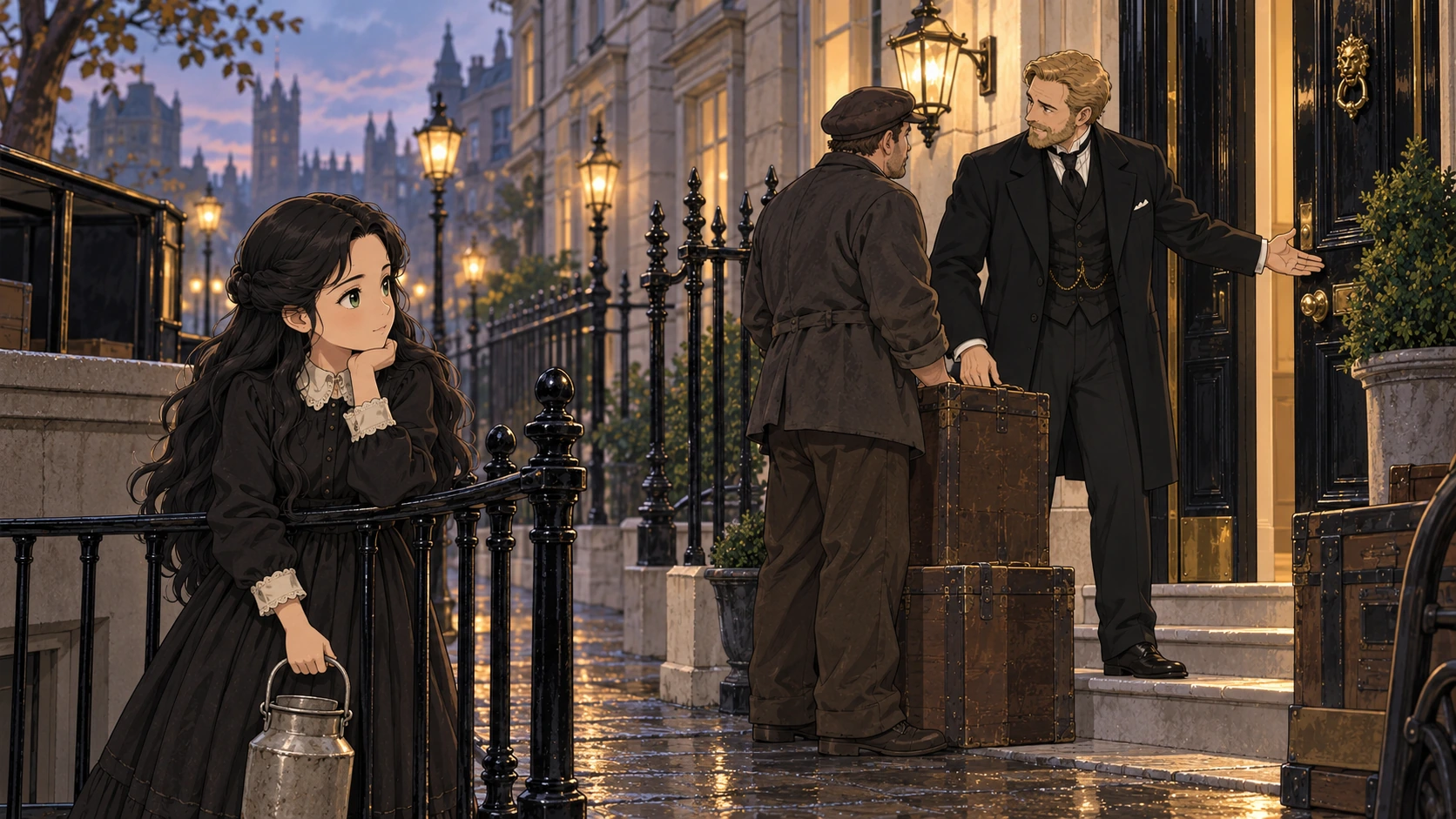
as if he had a right to do so. It was quite certain that he was in some intimate way connected with the newcomers and was acting for them.
当然の権利があるような態度でした。新しい住人と親しく、代理を務めているのは確かでした。

"If the new people have children," Sara speculated, "the Large Family children will be sure to come and play with them,
『新しい人に子供がいれば、大家族の子供たちがきっと遊びに来て、
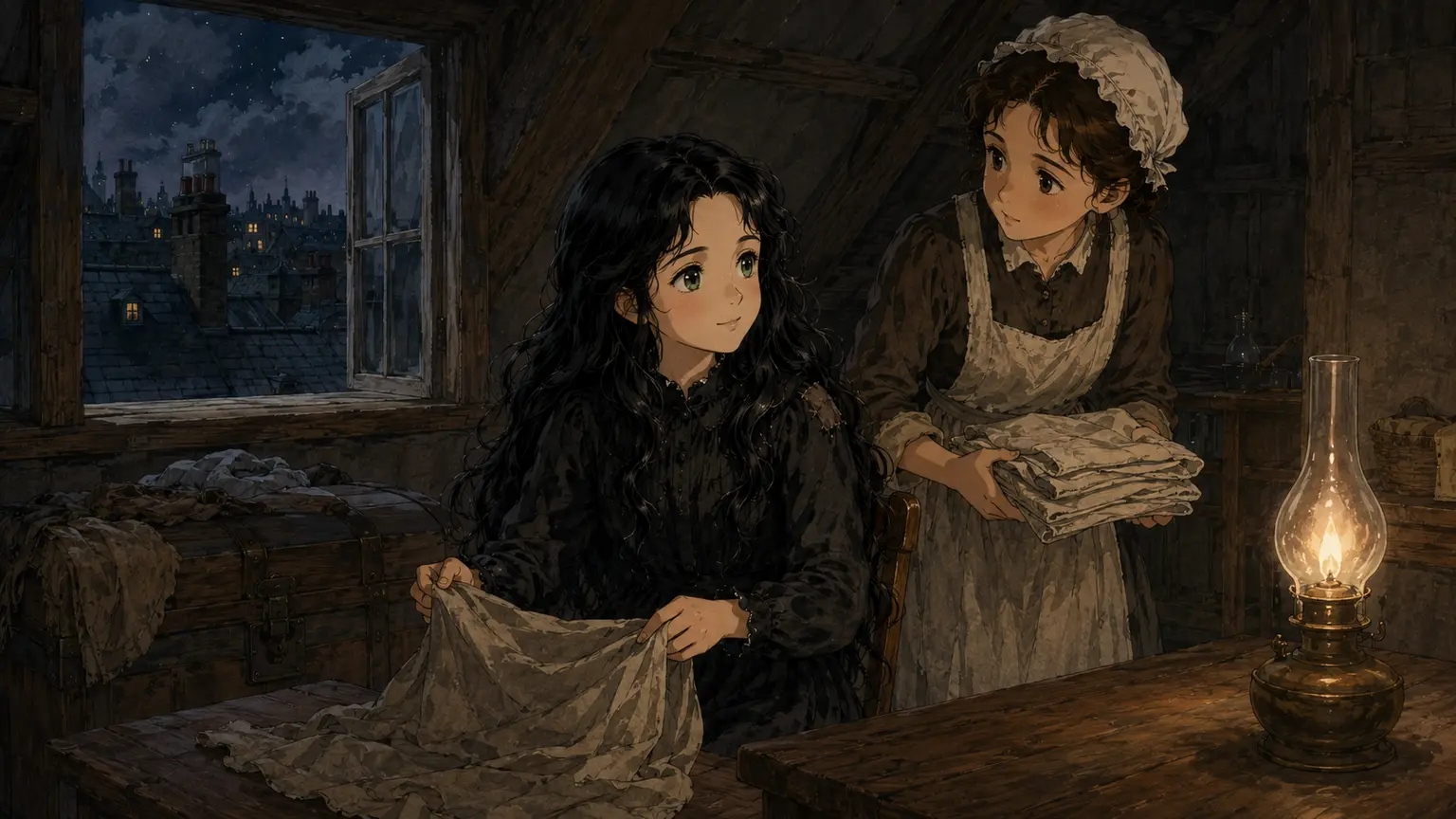
and they MIGHT come up into the attic just for fun." At night, after her work was done,
面白半分に屋根裏まで来るかもしれない』夜、仕事を終えると、
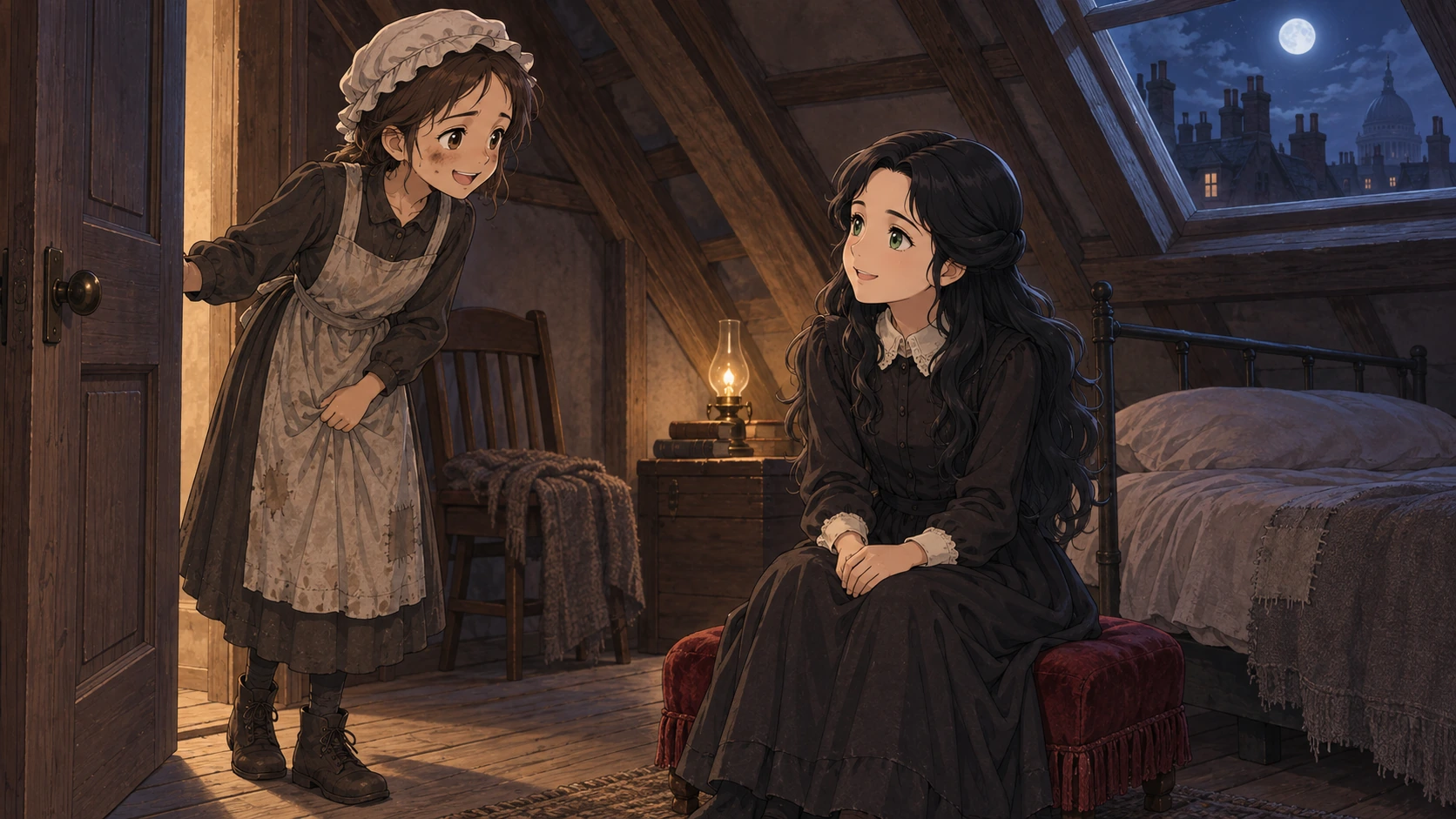
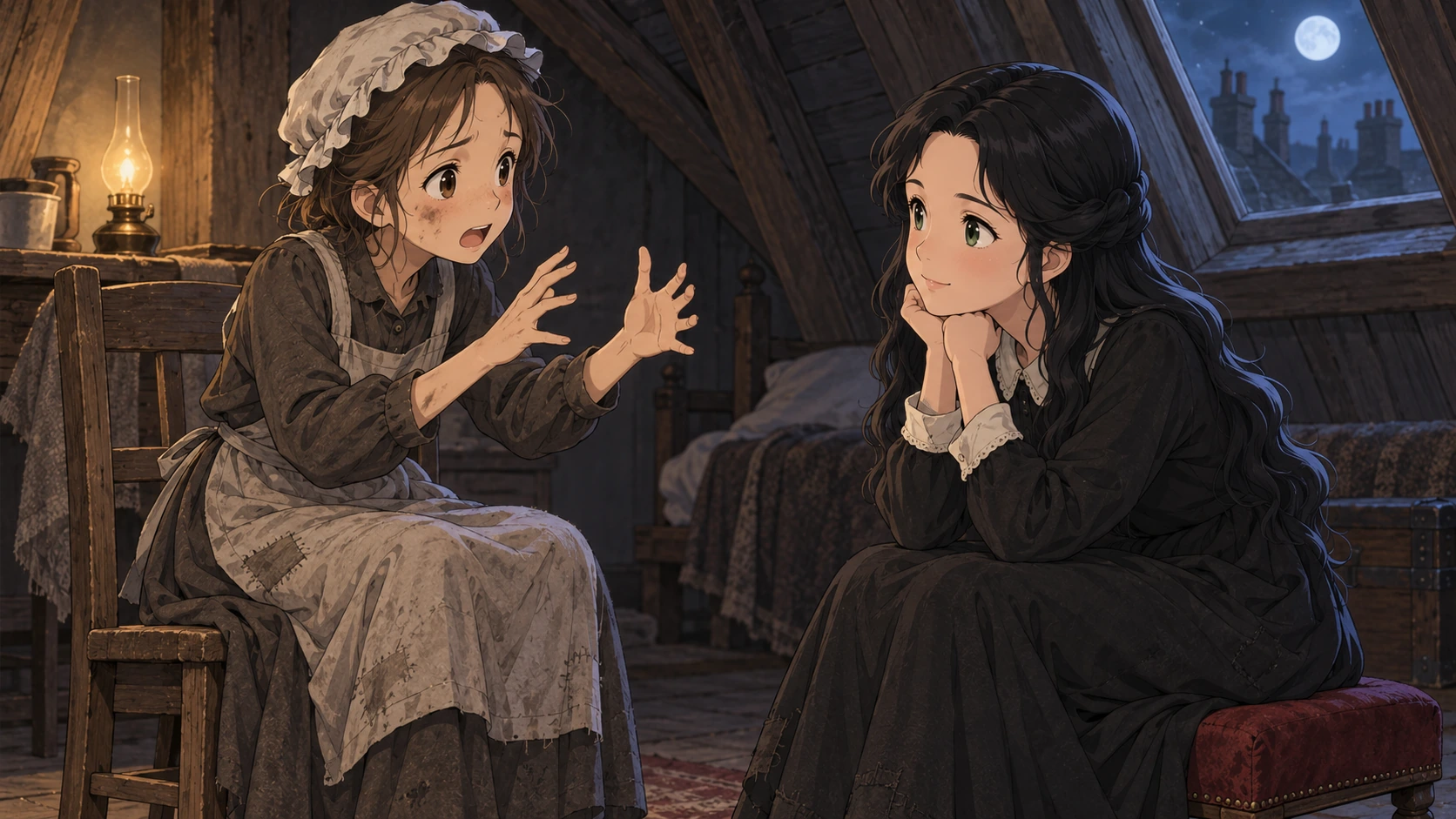
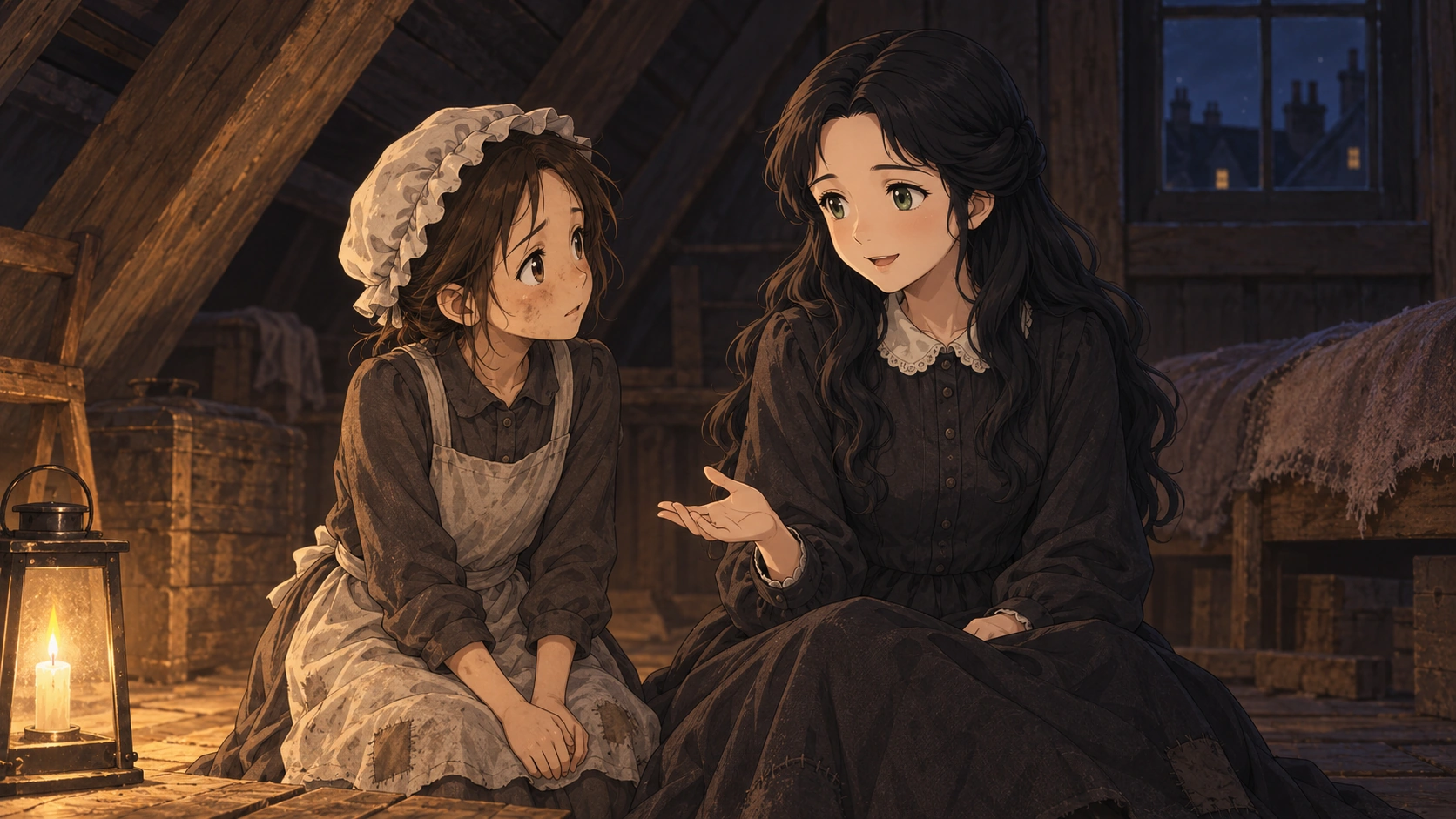
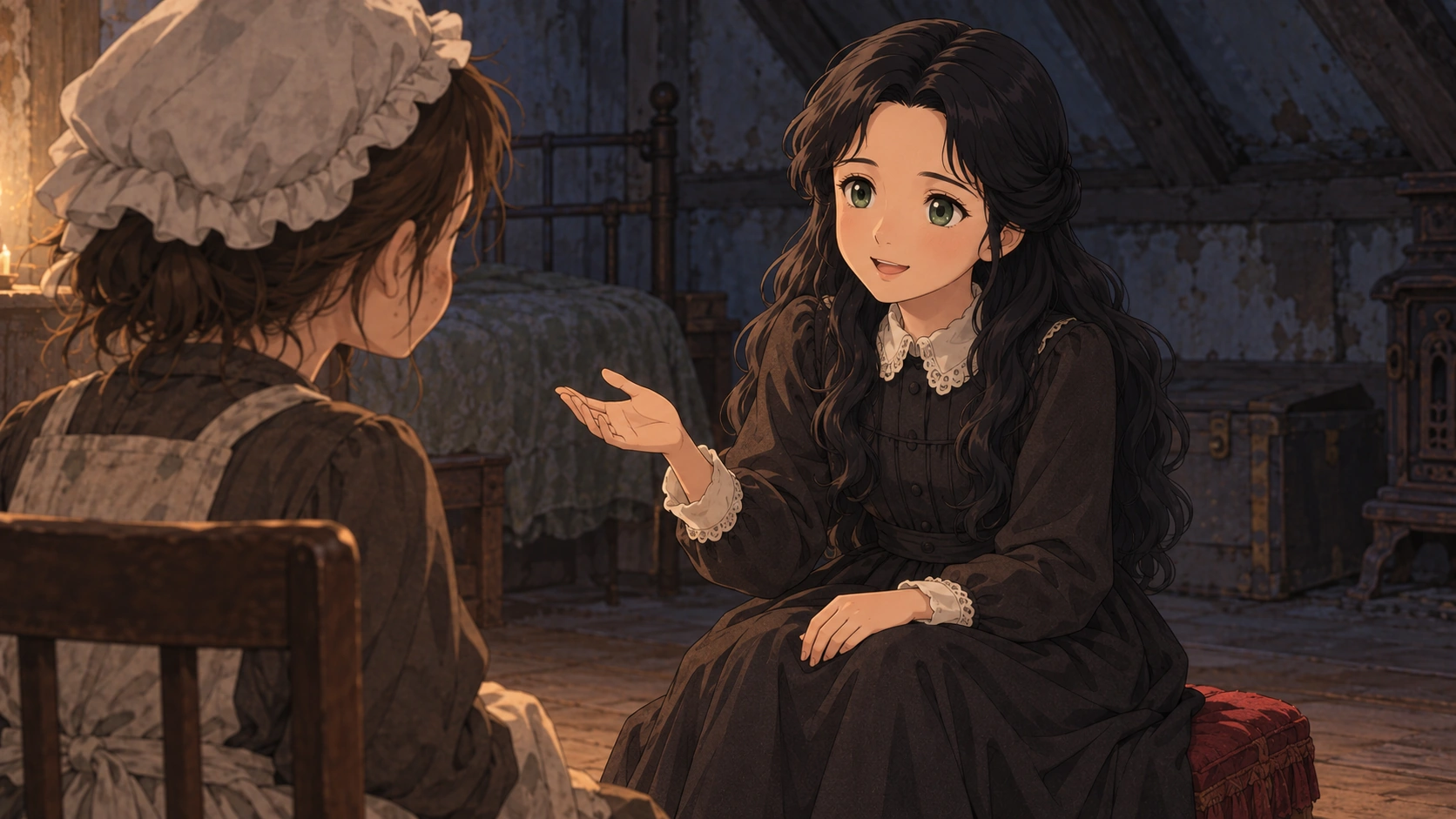
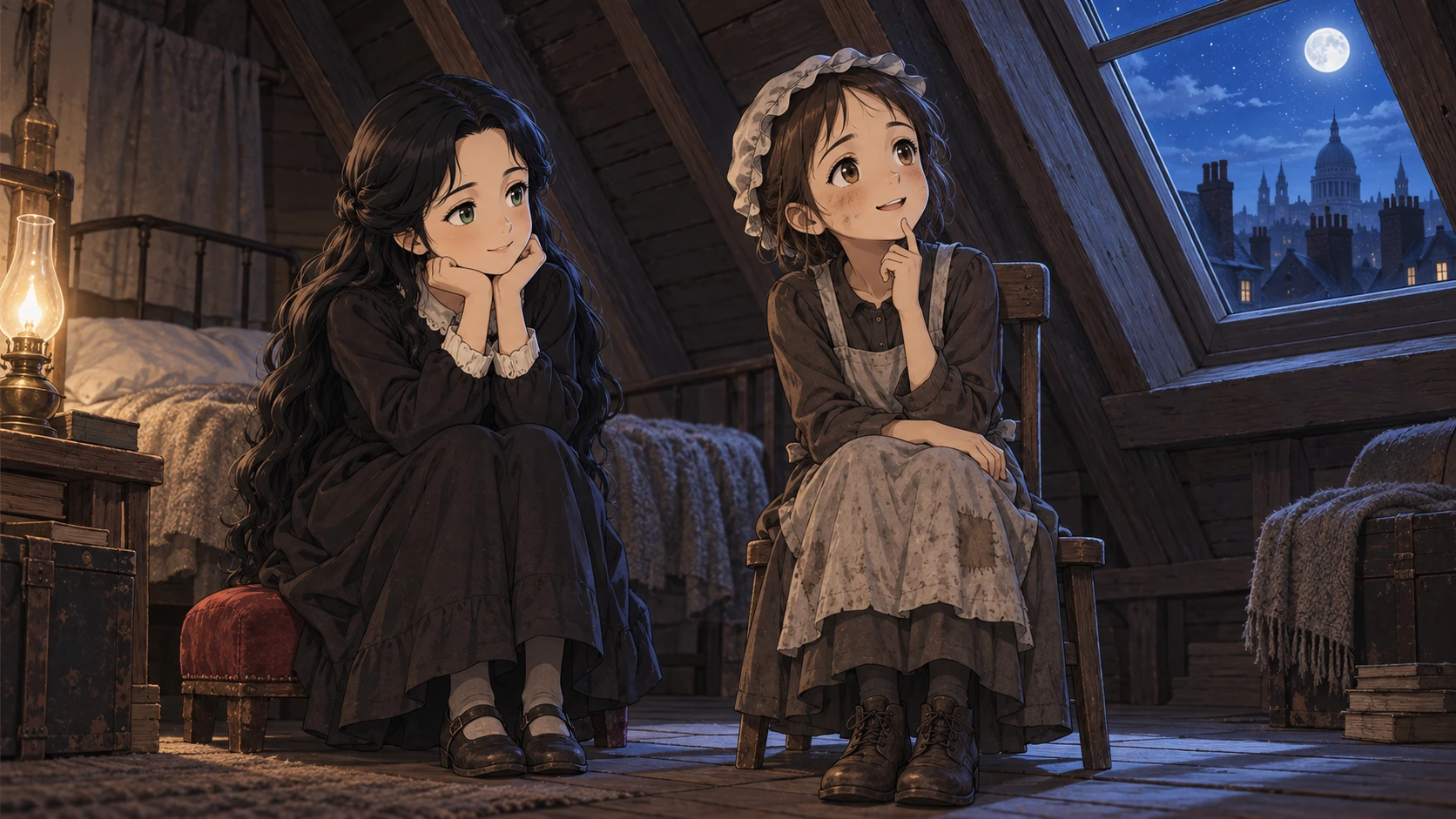
Becky came in to see her fellow prisoner and bring her news. "It's a' Nindian gentleman that's comin' to live next door, miss," she said.
ベッキーが仲間の囚人を訪ね、知らせを持って来ました。『隣に越して来るのはインドの紳士です、お嬢様』
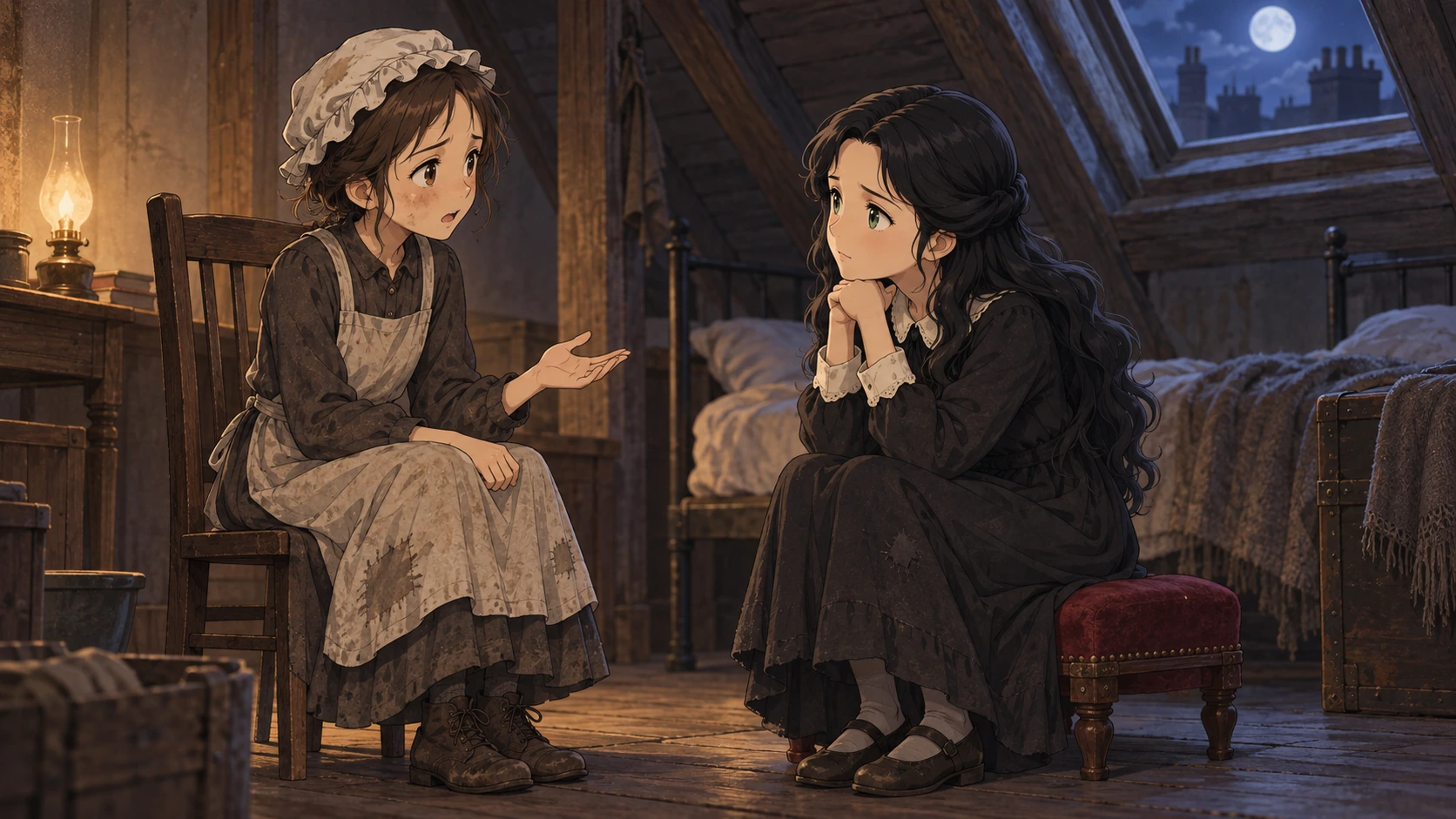
"I don't know whether he's a black gentleman or not, but he's a Nindian one. He's very rich, an' he's ill, an'
『黒い肌の紳士かは知りませんが、インドの紳士です。とても裕福で、病気で、
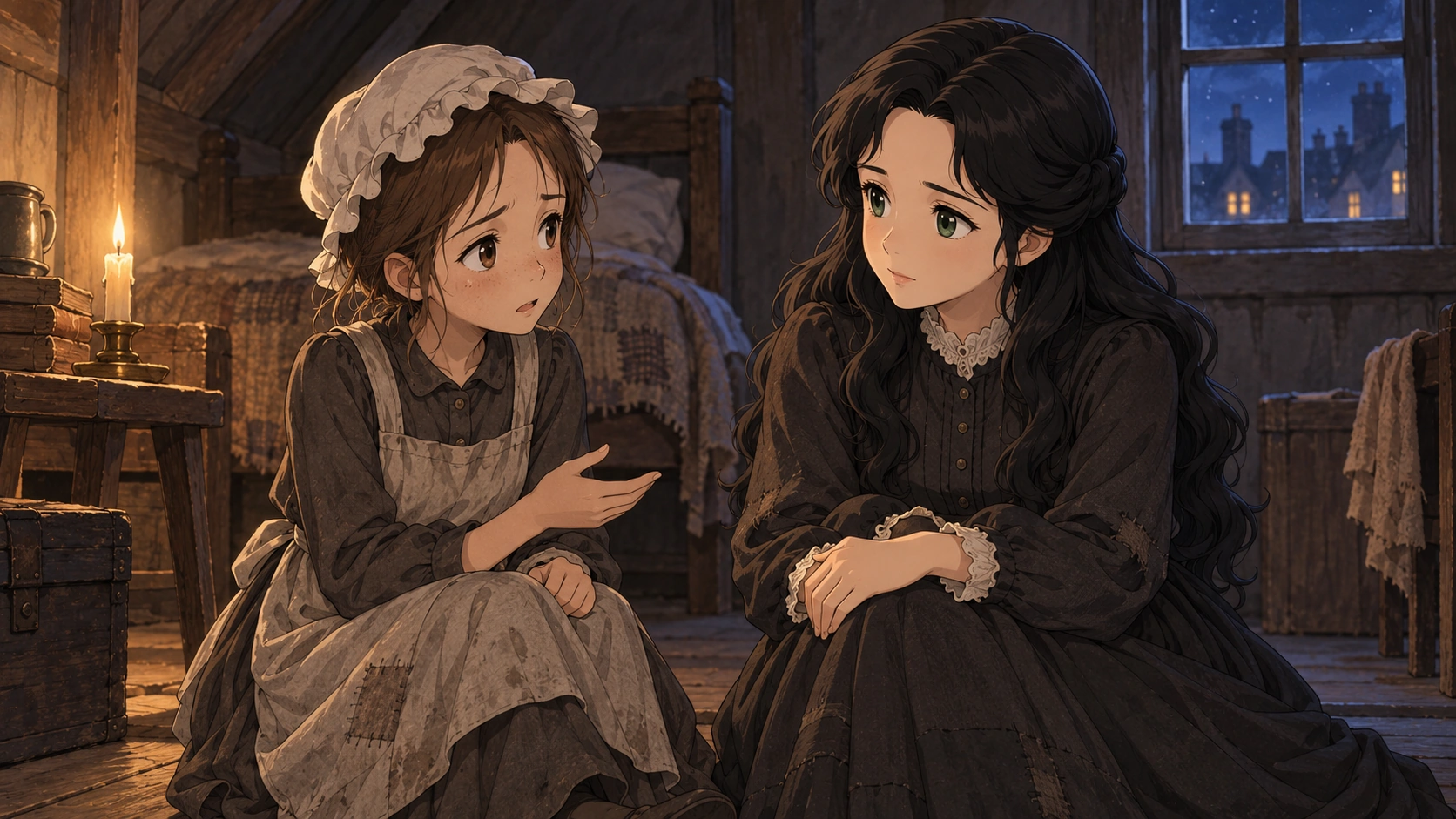
the gentleman of the Large Family is his lawyer. He's had a lot of trouble, an' it's made him ill an' low in his mind.
大家族の旦那様が弁護士です。大変な苦労をして、それで病気になり、心も沈んでいるそうです。
He worships idols, miss. He's an 'eathen an' bows down to wood an' stone. I seen a' idol bein' carried in for him to worship.
偶像を拝むんです、お嬢様。異教徒で木や石にひれ伏すんです。拝む偶像を運び込むのを見ました。
Somebody had oughter send him a trac'. You can get a trac' for a penny." Sara laughed a little. "I don't believe he worships that idol,"
誰かが伝道冊子を送るべきです。一ペニーで買えますよ』セーラは少し笑いました。『あの像を拝むとは思わないわ』
she said; "some people like to keep them to look at because they are interesting. My papa had a beautiful one, and he did not worship it."
『面白いから眺めるために置く人もいるの。パパも美しい像を持っていたけれど、拝んではいなかったわ』

But Becky was rather inclined to prefer to believe that the new neighbor was "an 'eathen."
けれどベッキーは、新しい隣人が『異教徒』だと信じたい気持ちがかなりありました。
It sounded so much more romantic than that he should merely be the ordinary kind of gentleman who went to church with a prayer book.
祈祷書を持って教会へ行く普通の紳士より、ずっとロマンチックに聞こえたからです。
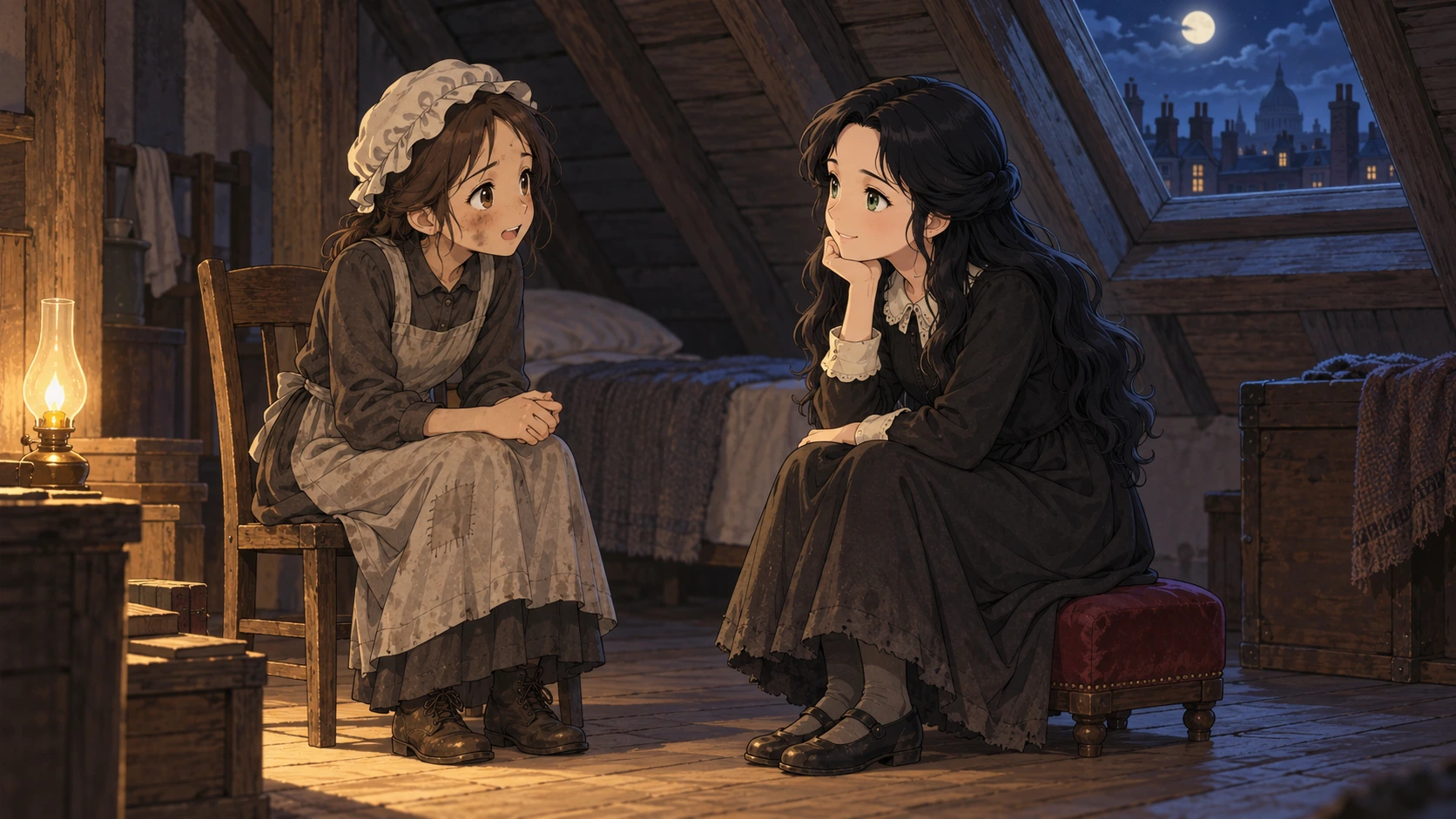
She sat and talked long that night of what he would be like, of what his wife would be like if he had one,
その夜は長く、彼がどんな人か、妻がいるならどんな人か、
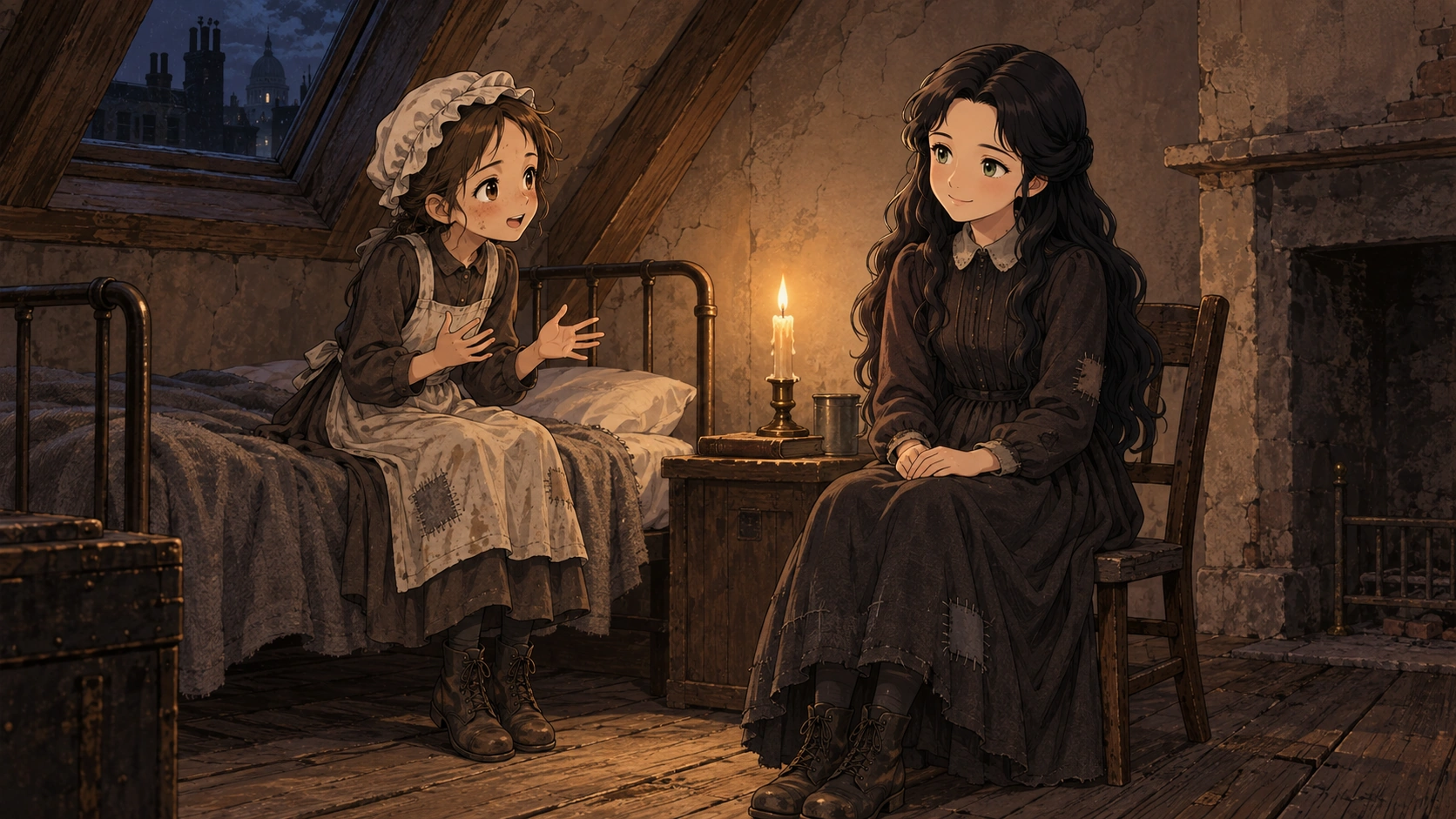
and of what his children would be like if they had children. Sara saw that privately she could not help hoping very much that they would all be black,
子供がいるならどんな子かを話しました。セーラには、ベッキーが内心、皆が黒い肌で、
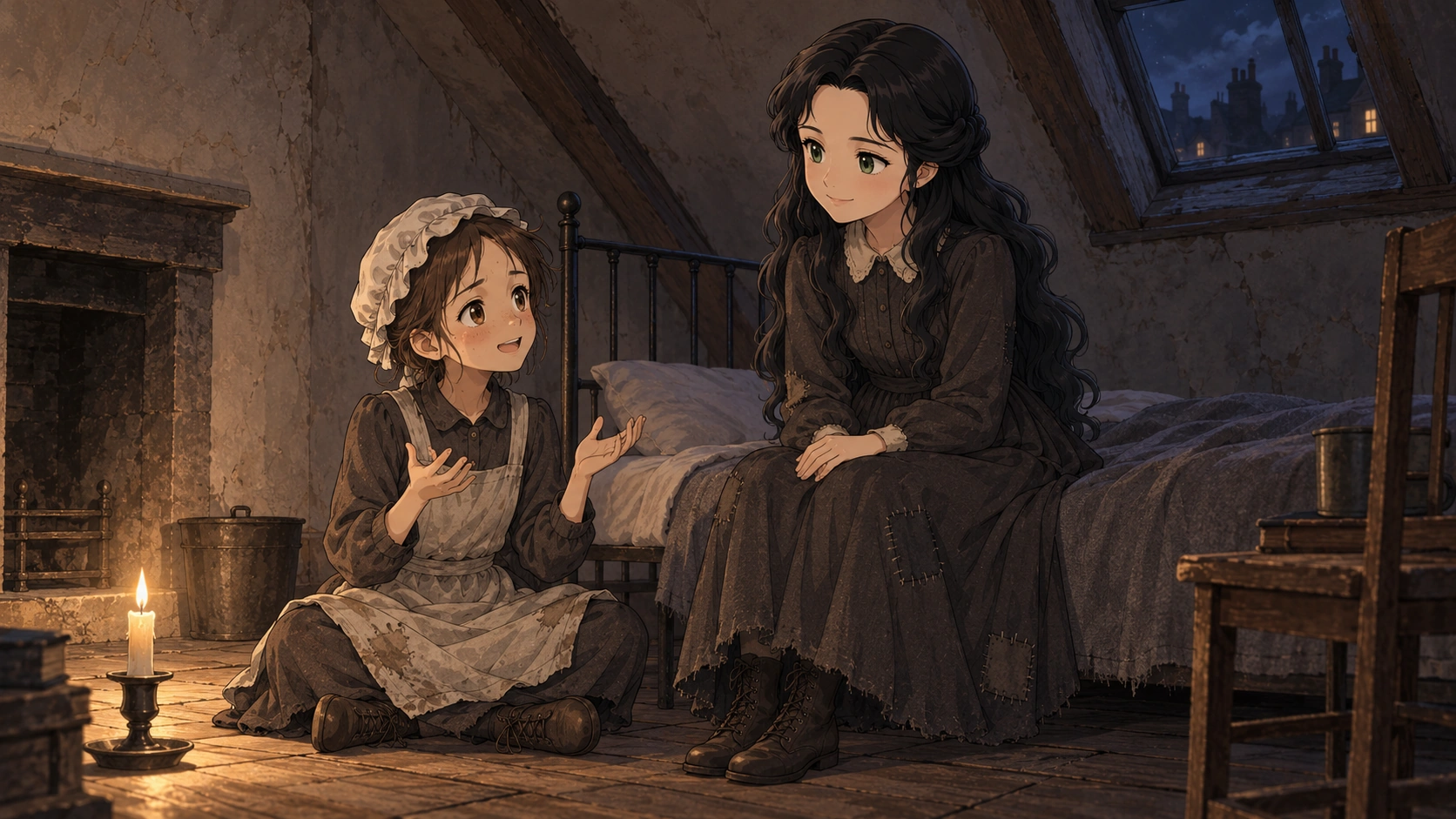
and would wear turbans, and, above all, that--like their parent--they would all be "'eathens." "I never lived next door to no 'eathens, miss,"
ターバンを巻き、何より父親と同じ『異教徒』であってほしいと強く願っているのが分かりました。『異教徒の隣に住んだことはありません』
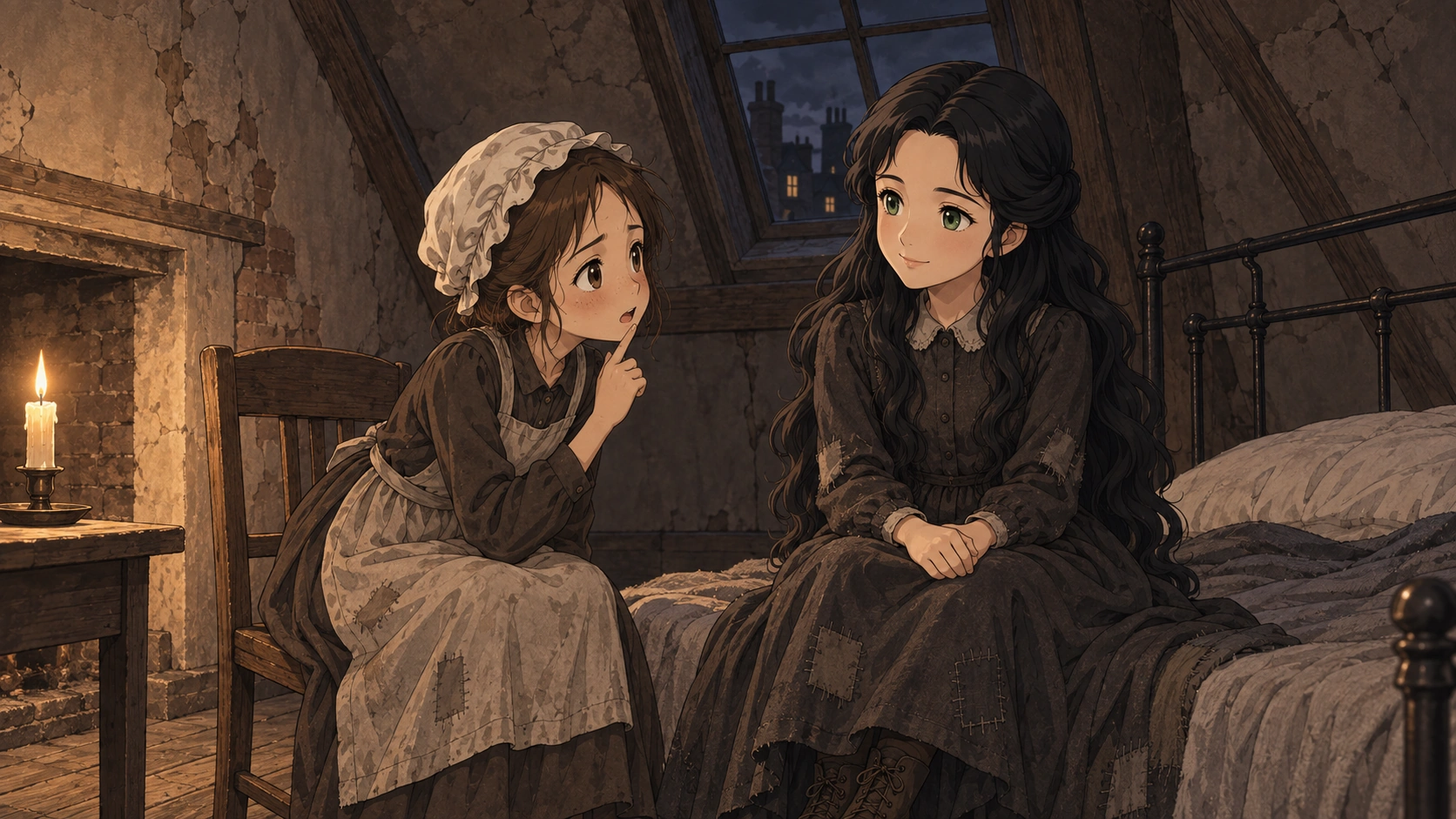
she said; "I should like to see what sort o' ways they'd have." It was several weeks before her curiosity was satisfied,
『どんな暮らしをするか見てみたいです』好奇心が満たされるまでには数週間かかりました。

and then it was revealed that the new occupant had neither wife nor children. He was a solitary man with no family at all,
やがて新しい住人には妻も子供もいないと分かりました。家族のない孤独な男性で、
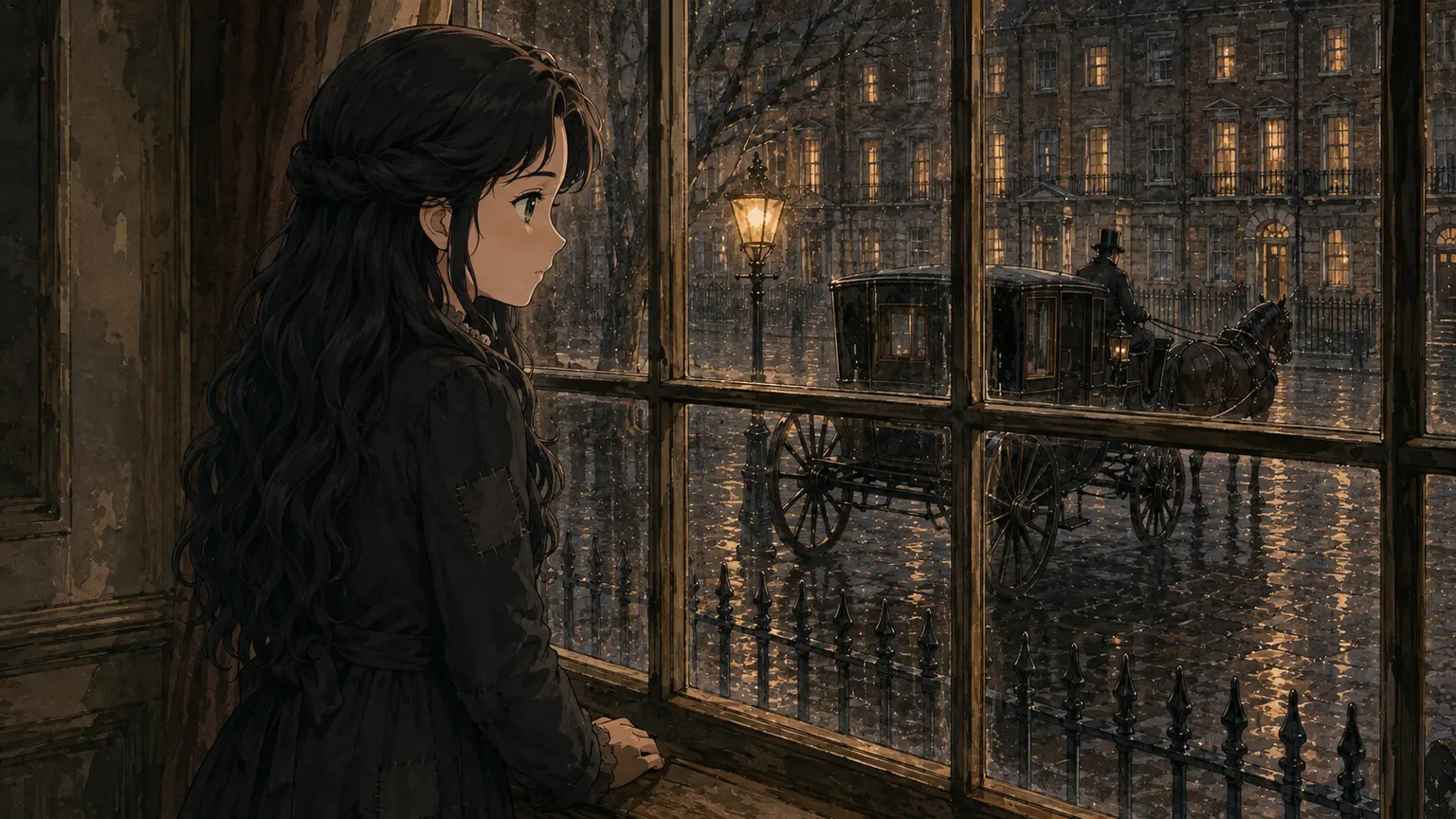
and it was evident that he was shattered in health and unhappy in mind. A carriage drove up one day and stopped before the house.
健康をひどく損ない、心も不幸であることは明らかでした。ある日、馬車が家の前へ止まりました。

When the footman dismounted from the box and opened the door the gentleman who was the father of the Large Family got out first.
御者台から従僕が降りて扉を開けると、まず大家族の父親が降りました。

After him there descended a nurse in uniform, then came down the steps two men-servants.
続いて制服姿の看護師、それから二人の男性召使いが降りました。

They came to assist their master, who, when he was helped out of the carriage, proved to be a man with a haggard,
彼らは主人を助けるためでした。馬車から支え出された主人は、やつれ、
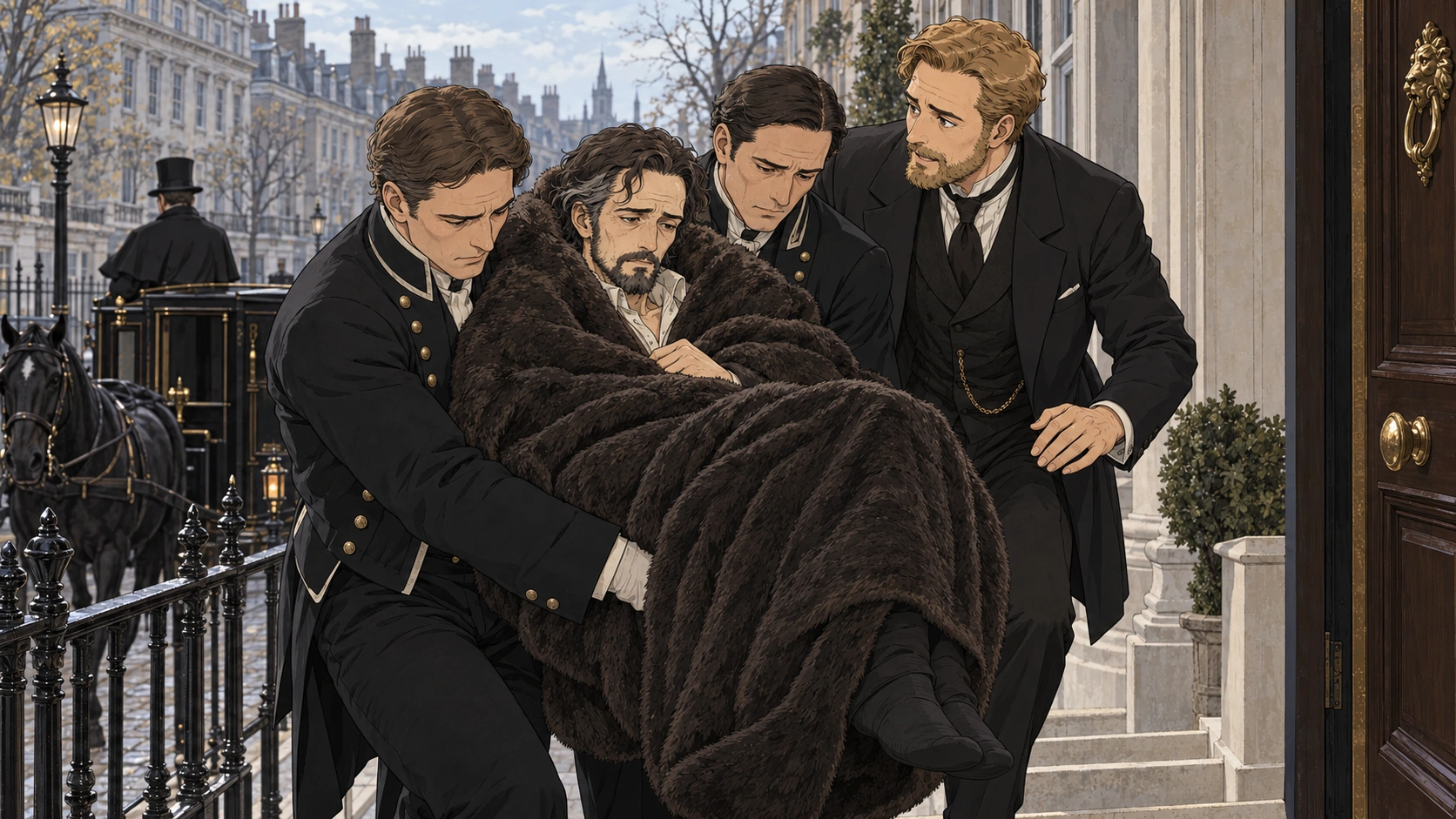
distressed face, and a skeleton body wrapped in furs. He was carried up the steps, and the head of the Large Family went with him, looking very anxious.
苦悩に満ちた顔で、毛皮に包まれた体は骨ばかりでした。階段を運び上げられ、大家族の父親が心配そうに付き添いました。

Shortly afterward a doctor's carriage arrived, and the doctor went in--plainly to take care of him.
間もなく医者の馬車が着き、医者が中へ入りました――明らかに彼を診るためです。
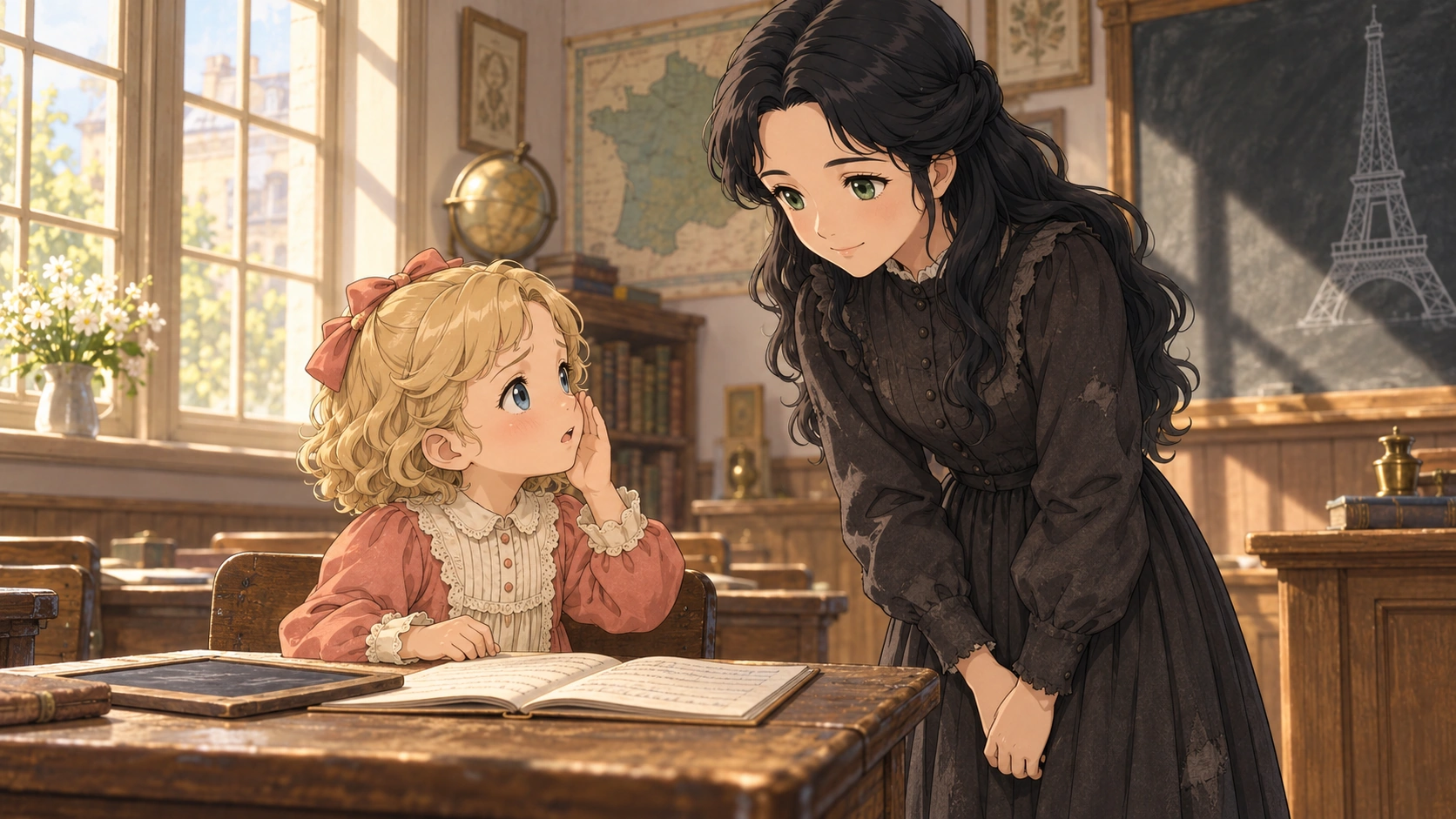
"There is such a yellow gentleman next door, Sara," Lottie whispered at the French class afterward. "Do you think he is a Chinee? The geography says the Chinee men are yellow."
『隣に黄色い紳士がいるの、セーラ』後のフランス語授業で、ロッティが囁きました。『中国人かしら? 地理の本には中国の男の人は黄色いってあるわ』
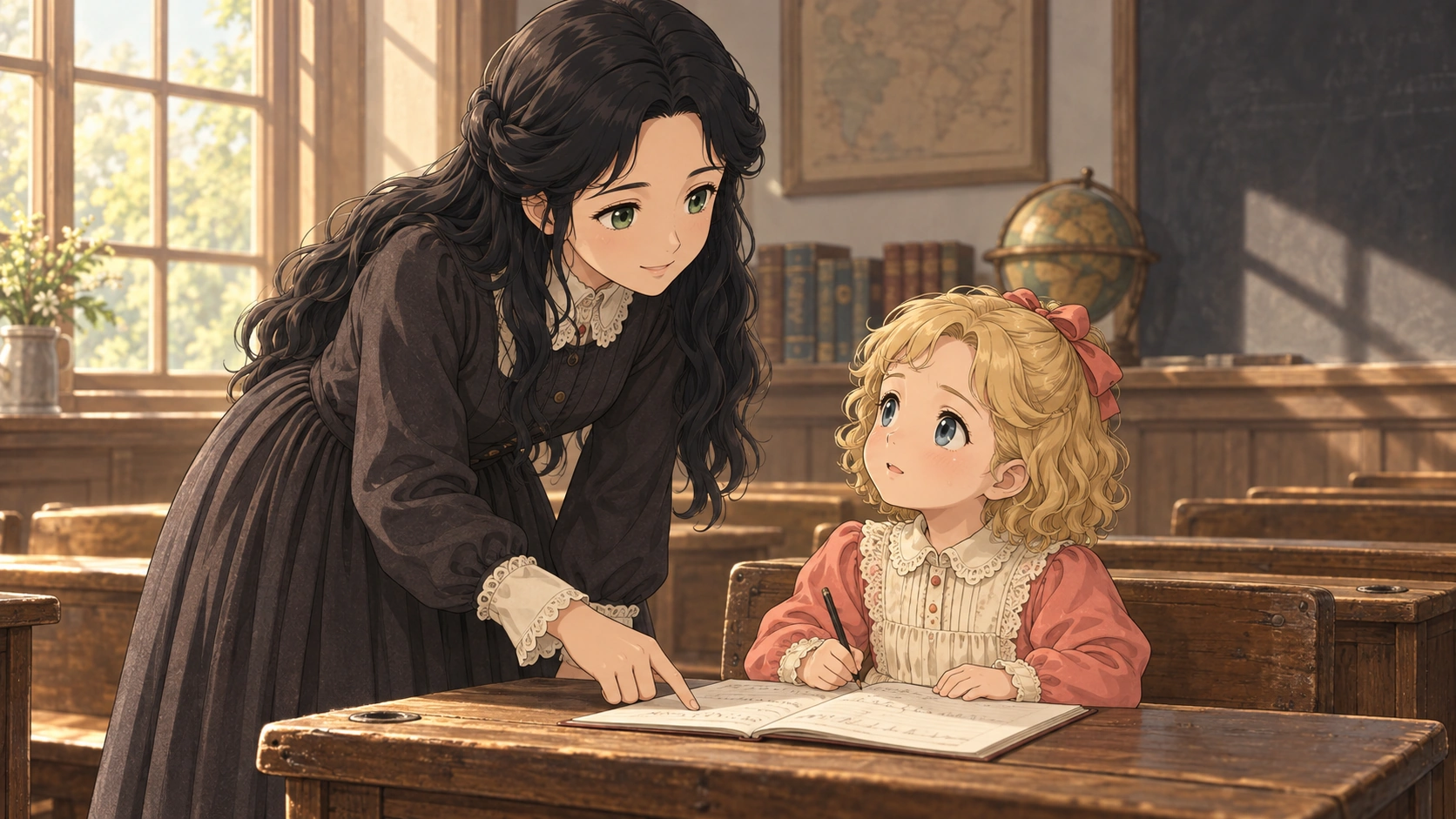
"No, he is not Chinese," Sara whispered back; "he is very ill. Go on with your exercise, Lottie. 'Non, monsieur.
『中国人ではないわ』セーラは囁き返しました。『とても病気なの。練習を続けて、ロッティ。ノン、ムッシュー。
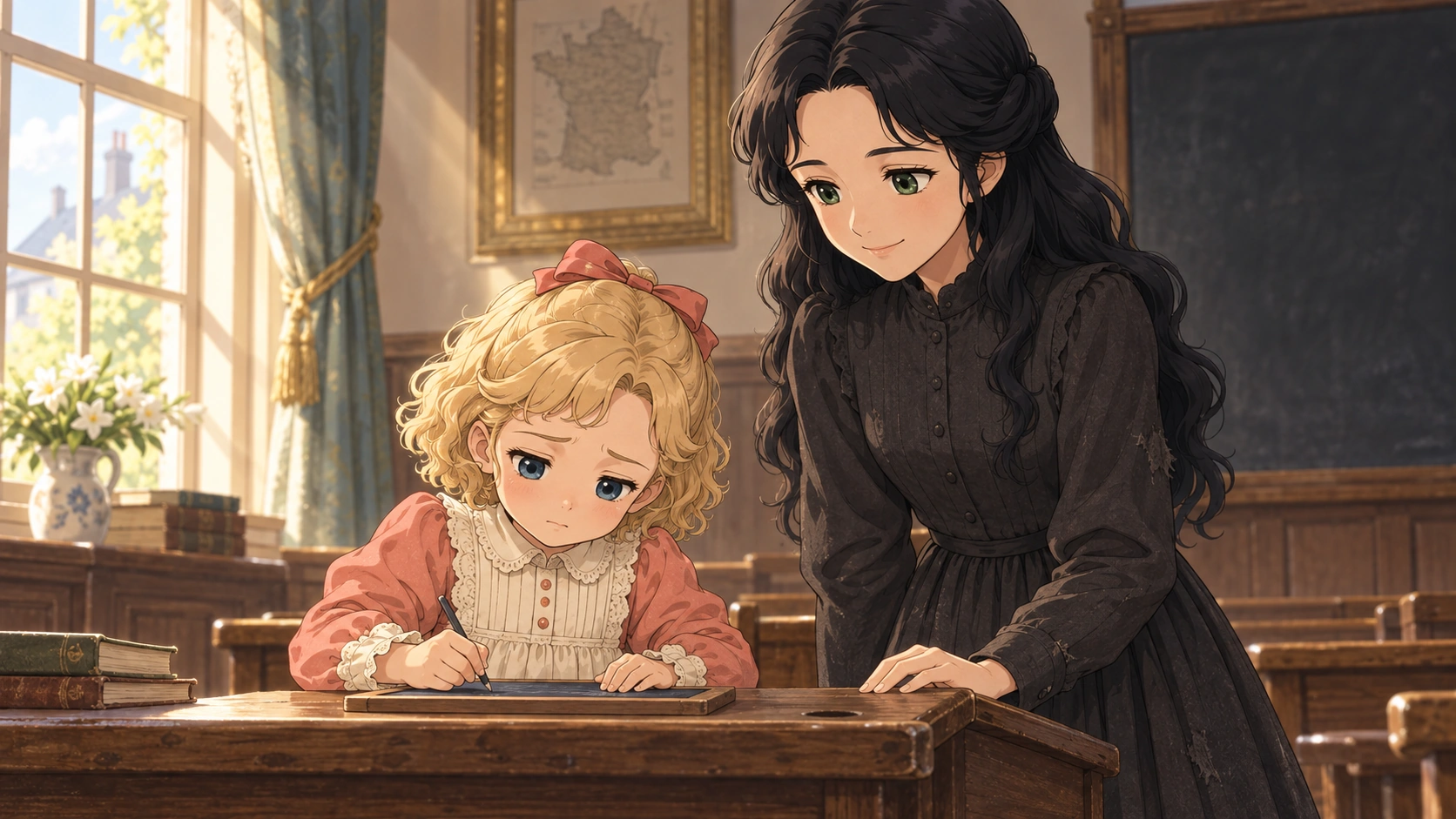
Je n'ai pas le canif de mon oncle.'" That was the beginning of the story of the Indian gentleman.
ジュ・ネ・パ・ル・カニフ・ド・モン・オンクル』こうして、インドの紳士の物語が始まったのです。
CHAPTER X のポイント
第10章では、セーラの屋根裏部屋の隣にある家へ、インドから来た病身の紳士が移り住みます。セーラはその人物や家の様子に強い関心を抱き、遠くから想像をふくらませながら見守ります。
この章の読みどころは、セーラの過去と深く結びつく「インド」という要素が、ふたたび物語に現れるところです。まだ正体ははっきりしませんが、この隣人の登場は、セーラの孤独な屋根裏生活に大きな変化をもたらす伏線になっています。
この章の英語学習ポイントを開く
- Indian gentleman:インドの紳士。セーラの運命に関わる重要人物を示す、この章の中心表現。
- invalid:病人、病弱な人。隣家の紳士の状態を理解するために大切な語。
- neighbor:隣人。屋根裏部屋から見える新しい存在として、物語のつながりを作る語。
- curiosity:好奇心。セーラが隣家の様子に心を引かれていく気持ちを表す語。
- mysterious:謎めいた、不思議な。新しい人物の登場が持つ緊張感と伏線を読む手がかりになる語。
10 The Indian Gentleman
『A Little Princess』第10章「The Indian Gentleman」を、英語多読用に読みやすく整えています。形容詞・副詞・熟語・心理描写・場面描写を中心に、やや多めに色分けしています。
But it was a perilous thing for Ermengarde and Lottie to make pilgrimages to the attic.
しかし、アーメンガードとロッティが屋根裏部屋へ巡礼のように通うのは危険なことだった。
They could never be quite sure when Sara would be there, and they could scarcely ever be certain that Miss Amelia would not make a tour of inspection through the bedrooms after the pupils were supposed to be asleep.
サラがいつそこにいるのか、二人にははっきりわからなかったし、生徒たちが眠っているはずの時間にアメリア先生が寝室を見回らないとも、ほとんど確信できなかった。
So their visits were rare ones, and Sara lived a strange and lonely life.
そのため二人の訪問はまれで、サラは奇妙で孤独な生活を送っていた。
It was a lonelier life when she was downstairs than when she was in her attic.
彼女が屋根裏部屋にいる時より、階下にいる時の方が、その生活はいっそう孤独だった。
She had no one to talk to; and when she was sent out on errands and walked through the streets, a forlorn little figure carrying a basket or a parcel, trying to hold her hat on when the wind was blowing, and feeling the water soak through her shoes when it was raining, she felt as if the crowds hurrying past her made her loneliness greater.
彼女には話す相手がいなかった。使い走りに出され、かごや包みを持ったみじめで寂しい小さな姿で通りを歩き、風が吹けば帽子を押さえ、雨が降れば水が靴にしみ込むのを感じながら歩く時、急いで通り過ぎる群衆が自分の孤独をさらに大きくしているように感じた。
When she had been the Princess Sara, driving through the streets in her brougham, or walking, attended by Mariette, the sight of her bright, eager little face and picturesque coats and hats had often caused people to look after her.
彼女がサラ姫だった頃、馬車で通りを走ったり、マリエットに付き添われて歩いたりしていると、明るく生き生きした小さな顔や絵のように美しいコートや帽子に、人々はよく振り返ったものだった。
A happy, beautifully cared for little girl naturally attracts attention.
幸せで、美しく世話をされている小さな女の子は、自然に人の注意を引くものだ。
Shabby, poorly dressed children are not rare enough and pretty enough to make people turn around to look at them and smile.
みすぼらしく粗末な服を着た子どもたちは、人々が振り返って見たり微笑んだりするほど珍しくも美しくもない。
No one looked at Sara in these days, and no one seemed to see her as she hurried along the crowded pavements.
この頃、誰もサラを見なかった。混み合った歩道を急いで歩く彼女に、誰も気づいていないようだった。
She had begun to grow very fast, and, as she was dressed only in such clothes as the plainer remnants of her wardrobe would supply, she knew she looked very queer, indeed.
彼女は急に背が伸び始めていた。そして衣装の中でもより地味な残り物だけを着せられていたので、自分が本当にとても奇妙に見えることをわかっていた。
All her valuable garments had been disposed of, and such as had been left for her use she was expected to wear so long as she could put them on at all.
彼女の高価な衣服はすべて処分され、彼女のために残されたものは、着られる限り着るよう求められていた。
Sometimes, when she passed a shop window with a mirror in it, she almost laughed outright on catching a glimpse of herself, and sometimes her face went red and she bit her lip and turned away.
時々、鏡のある店の窓を通り過ぎると、自分の姿をちらりと見て、思わず声を出して笑いそうになることもあったし、顔を赤くして唇をかみ、顔を背けることもあった。
In the evening, when she passed houses whose windows were lighted up, she used to look into the warm rooms and amuse herself by imagining things about the people she saw sitting before the fires or about the tables.
夕方、明かりのついた窓のある家の前を通ると、彼女は暖かそうな部屋をのぞき込み、暖炉の前や食卓のそばに座っている人々について想像して楽しむのだった。
It always interested her to catch glimpses of rooms before the shutters were closed.
雨戸が閉められる前に部屋の中をちらりと見ることは、いつも彼女の興味を引いた。
There were several families in the square in which Miss Minchin lived, with which she had become quite familiar in a way of her own.
ミンチン先生の家がある広場にはいくつかの家族が住んでいて、サラは自分なりの方法で、彼らにかなり親しみを持つようになっていた。
The one she liked best she called the Large Family.
彼女が一番好きだった家族を、彼女は「大きな家族」と呼んでいた。
She called it the Large Family not because the members of it were big–for, indeed, most of them were little–but because there were so many of them.
彼女がその家族を「大きな家族」と呼んだのは、家族の一人ひとりが大きかったからではない。実際にはほとんどが小さかった。人数がとても多かったからだった。
There were eight children in the Large Family, and a stout, rosy mother, and a stout, rosy father, and a stout, rosy grandmother, and any number of servants.
その大きな家族には八人の子どもがいて、ふくよかで血色のよい母親、ふくよかで血色のよい父親、ふくよかで血色のよい祖母、そして数えきれないほどの使用人がいた。
The eight children were always either being taken out to walk or to ride in perambulators by comfortable nurses, or they were going to drive with their mamma, or they were flying to the door in the evening to meet their papa and kiss him and dance around him and drag off his overcoat and look in the pockets for packages.
八人の子どもたちは、いつも、優しそうな乳母たちに連れられて散歩に出たり乳母車に乗ったり、母親と馬車で出かけたり、夕方には父親を迎えるために玄関へ飛んで行き、キスをして、周りで踊り、外套を引っぱって脱がせ、ポケットに包みがないか探したりしていた。
Or they were crowding about the nursery windows and looking out and pushing each other and laughing–in fact, they were always doing something enjoyable and suited to the tastes of a large family.
あるいは子ども部屋の窓の周りに群がって外を見たり、互いに押し合ったり笑ったりしていた。つまり彼らはいつも、大きな家族の好みに合った楽しいことをしていたのだった。
Sara was quite fond of them, and had given them names out of books–quite romantic names.
サラは彼らのことがとても好きで、本から取った名前をつけていた。とてもロマンチックな名前だった。
She called them the Montmorencys when she did not call them the Large Family.
彼女は「大きな家族」と呼ばない時には、彼らを「モンモレンシー一家」と呼んだ。
The fat, fair baby with the lace cap was Ethelberta Beauchamp Montmorency; the next baby was Violet Cholmondeley Montmorency; the little boy who could just stagger and who had such round legs was Sydney Cecil Vivian Montmorency.
レースの帽子をかぶったふっくらした色白の赤ん坊はエセルバータ・ビーチャム・モンモレンシー、その次の赤ん坊はヴァイオレット・チョルモンドリー・モンモレンシー、やっとよろよろ歩ける丸い脚の小さな男の子はシドニー・セシル・ヴィヴィアン・モンモレンシーだった。
And then came Lilian Evangeline Maud Marion, Rosalind Gladys, Guy Clarence, Veronica Eustacia, and Claude Harold Hector.
それからリリアン・エヴァンジェリン・モード・マリオン、ロザリンド・グラディス、ガイ・クラレンス、ヴェロニカ・ユースタシア、クロード・ハロルド・ヘクターが続いた。
One evening a very funny thing happened–though, perhaps, in one sense it was not a funny thing at all.
ある晩、とてもおかしなことが起こった。もっとも、ある意味ではまったくおかしいことではなかったのだが。
Several of the Montmorencys were evidently going to a children’s party, and just as Sara was about to pass the door they were crossing the pavement to get into the carriage which was waiting for them.
モンモレンシー家の子どもたちの何人かは、どうやら子どものパーティーへ行くところだった。サラがちょうどその家の前を通り過ぎようとした時、彼らは待っていた馬車に乗るために歩道を渡っていた。
Veronica Eustacia and Rosalind Gladys, in white-lace frocks and lovely sashes, had just got in, and Guy Clarence, aged five, was following them.
白いレースのドレスと美しいサッシュを身につけたヴェロニカ・ユースタシアとロザリンド・グラディスがちょうど乗り込み、五歳のガイ・クラレンスがその後に続いていた。
He was such a pretty fellow and had such rosy cheeks and blue eyes, and such a darling little round head covered with curls, that Sara forgot her basket and shabby cloak altogether.
彼はとてもかわいらしい男の子で、血色のよい頬と青い目を持ち、巻き毛に覆われた愛らしい丸い頭をしていたので、サラは自分のかごやみすぼらしい外套のことをすっかり忘れてしまった。
In fact, forgot everything but that she wanted to look at him for a moment.
実際、彼女は、少しの間その子を見ていたいということ以外、すべてを忘れてしまった。
So she paused and looked.
それで彼女は立ち止まり、見つめた。
It was Christmas time, and the Large Family had been hearing many stories about children who were poor and had no mammas and papas to fill their stockings and take them to the pantomime.
それはクリスマスの時期で、大きな家族の子どもたちは、靴下をいっぱいにしてくれる母親も父親もなく、パントマイムに連れて行ってくれる人もいない貧しい子どもたちの話をたくさん聞いていた。
Children who were, in fact, cold and thinly clad and hungry.
実際、その子どもたちは寒がっていて、薄着で、お腹をすかせていた。
In the stories, kind people–sometimes little boys and girls with tender hearts—invariably saw the poor children and gave them money or rich gifts, or took them home to beautiful dinners.
その物語の中では、親切な人々、時には優しい心を持った小さな男の子や女の子が、必ずその貧しい子どもたちを見つけ、お金や立派な贈り物を与えたり、家に連れて帰ってすばらしい食事をさせたりするのだった。
Guy Clarence had been affected to tears that very afternoon by the reading of such a story.
ガイ・クラレンスはその日の午後、まさにそのような物語を読んでもらって涙を誘われていた。
And he had burned with a desire to find such a poor child and give her a certain sixpence he possessed, and thus provide for her for life.
そして彼は、そのような貧しい子どもを見つけ、自分の持っている六ペンス硬貨を与え、それによってその子の一生を養ってあげたいという強い願いに燃えていた。
An entire sixpence, he was sure, would mean affluence for evermore.
丸ごとの六ペンスがあれば、きっと永遠の豊かさを意味すると彼は確信していた。
As he crossed the strip of red carpet laid across the pavement from the door to the carriage, he had this very sixpence in the pocket of his very short man-o-war trousers.
玄関から馬車まで歩道に敷かれた赤いじゅうたんの細長い道を渡る時、彼のとても短い水兵服風のズボンのポケットには、まさにその六ペンスが入っていた。
And just as Rosalind Gladys got into the vehicle and jumped on the seat in order to feel the cushions spring under her, he saw Sara standing on the wet pavement in her shabby frock and hat, with her old basket on her arm, looking at him hungrily.
そしてロザリンド・グラディスが馬車に乗り込み、クッションが下で弾むのを感じようと座席に飛び乗ったちょうどその時、彼は、みすぼらしいドレスと帽子を身につけ、古いかごを腕にかけて、濡れた歩道に立ち、自分を飢えたように見つめているサラを見た。
He thought that her eyes looked hungry because she had perhaps had nothing to eat for a long time.
彼は、彼女の目が飢えているように見えたのは、たぶん長い間何も食べていないからだと思った。
He did not know that they looked so because she was hungry for the warm, merry life his home held and his rosy face spoke of, and that she had a hungry wish to snatch him in her arms and kiss him.
彼は知らなかった。その目がそう見えたのは、彼の家が持つ暖かく陽気な生活と、彼の血色のよい顔が物語るものに、彼女が飢えていたからだということを。そして彼女が、その子を腕に抱きしめてキスしたいという飢えるような願いを持っていたことを。
He only knew that she had big eyes and a thin face and thin legs and a common basket and poor clothes.
彼がわかっていたのは、彼女が大きな目と細い顔と細い脚を持ち、ありふれたかごと粗末な服を身につけているということだけだった。
So he put his hand in his pocket and found his sixpence and walked up to her benignly.
それで彼はポケットに手を入れて六ペンスを取り出し、親切そうに彼女の方へ歩いていった。
“Here, poor little girl,” he said. “Here is a sixpence. I will give it to you.”
「ほら、かわいそうな小さな女の子」と彼は言った。「六ペンスだよ。君にあげる」
Sara started, and all at once realized that she looked exactly like poor children she had seen, in her better days, waiting on the pavement to watch her as she got out of her brougham.
サラははっとした。そして突然、かつて自分がよい暮らしをしていた頃、馬車から降りる自分を見ようと歩道で待っていた貧しい子どもたちと、今の自分がそっくりに見えるのだと悟った。
And she had given them pennies many a time.
そして彼女は、そうした子どもたちに何度もペニーを与えたことがあった。
Her face went red and then it went pale, and for a second she felt as if she could not take the dear little sixpence.
彼女の顔は赤くなり、それから青ざめた。そして一瞬、そのかわいらしい小さな六ペンスを受け取ることはできないように感じた。
“Oh, no!” she said. “Oh, no, thank you; I mustn’t take it, indeed!”
「ああ、いいえ!」と彼女は言った。「ああ、いいえ、ありがとう。でも本当に受け取ってはいけないの!」
Her voice was so unlike an ordinary street child’s voice and her manner was so like the manner of a well-bred little person that Veronica Eustacia and Rosalind Gladys leaned forward to listen.
彼女の声は普通の路上の子どもの声とはまるで違い、その態度はとても育ちのよい子どものようだったので、ヴェロニカ・ユースタシアとロザリンド・グラディスは身を乗り出して聞いた。
But Guy Clarence was not to be thwarted in his benevolence.
しかしガイ・クラレンスは、自分の善意を思いとどまらせられるつもりはなかった。
He thrust the sixpence into her hand.
彼は六ペンスを彼女の手に押し込んだ。
“Yes, you must take it, poor little girl!” he insisted stoutly. “You can buy things to eat with it. It is a whole sixpence!”
「いいや、受け取らなきゃだめだよ、かわいそうな小さな女の子!」と彼はきっぱりと言い張った。「それで食べ物を買えるんだよ。丸ごとの六ペンスなんだから!」
There was something so honest and kind in his face, and he looked so likely to be heartbrokenly disappointed if she did not take it, that Sara knew she must not refuse him.
彼の顔にはとても正直で親切なものがあり、もし彼女が受け取らなければ、ひどくがっかりして胸を痛めそうに見えたので、サラは彼を拒んではいけないとわかった。
To be as proud as that would be a cruel thing.
そこまで誇り高くふるまうのは、残酷なことだった。
So she actually put her pride in her pocket, though it must be admitted her cheeks burned.
それで彼女は実際に自分の誇りをポケットにしまい込んだ。もっとも、頬が熱く燃えたことは認めなければならない。
“Thank you,” she said. “You are a kind, kind little darling thing.”
「ありがとう」と彼女は言った。「あなたは本当に本当に親切な、かわいい小さな子ね」
And as he scrambled joyfully into the carriage she went away, trying to smile, though she caught her breath quickly and her eyes were shining through a mist.
そして彼がうれしそうに馬車へよじ登ると、彼女は笑おうとしながら歩き去った。だが息を短くのみ、目は涙の霧を通して輝いていた。
She had known that she looked odd and shabby, but until now she had not known that she might be taken for a beggar.
自分が奇妙でみすぼらしく見えることは知っていたが、今まで、自分が物乞いと間違われるかもしれないとは知らなかった。
As the Large Family‘s carriage drove away, the children inside it were talking with interested excitement.
大きな家族の馬車が走り去ると、その中の子どもたちは興味深そうに興奮して話していた。
“Oh, Donald,” Janet exclaimed alarmedly, “why did you offer that little girl your sixpence? I’m sure she is not a beggar!”
「ああ、ドナルド」とジャネットは不安そうに叫んだ。「どうしてあの小さな女の子に六ペンスをあげようとしたの? あの子は絶対に物乞いじゃないわ!」
“She didn’t speak like a beggar!” cried Nora. “And her face didn’t really look like a beggar’s face!”
「物乞いみたいな話し方じゃなかったわ!」とノラが叫んだ。「それに顔も、本当は物乞いの顔みたいじゃなかった!」
“Besides, she didn’t beg,” said Janet.
「それに、あの子は物乞いなんてしていなかったわ」とジャネットは言った。
“I was so afraid she might be angry with you. You know, it makes people angry to be taken for beggars when they are not beggars.”
「あの子があなたに怒るんじゃないかと、とても心配だったの。物乞いじゃない人が物乞いだと思われると、怒るものなのよ」
“She wasn’t angry,” said Donald, a trifle dismayed, but still firm.
「怒っていなかったよ」とドナルドは、少しうろたえながらも、なおもしっかりと言った。
“She laughed a little, and she said I was a kind, kind little darling thing. And I was!”–stoutly. “It was my whole sixpence.”
「少し笑って、僕のことを本当に本当に親切なかわいい小さな子だって言ったんだ。実際そうだったんだ!」――きっぱりと――「僕の丸ごとの六ペンスだったんだから」
Janet and Nora exchanged glances.
ジャネットとノラは顔を見合わせた。
“A beggar girl would never have said that,” decided Janet.
「物乞いの女の子なら、そんなことは絶対に言わないわ」とジャネットは判断した。
“She would have said, ‘Thank yer kindly, little gentleman–thank yer, sir;’ and perhaps she would have bobbed a curtsy.”
「きっと『ご親切にありがとう、小さな紳士さん、ありがとう、旦那さま』って言って、たぶんぴょこんとお辞儀をしたはずよ」
Sara knew nothing about the fact, but from that time the Large Family was as profoundly interested in her as she was in it.
サラはそのことをまったく知らなかったが、その時から、大きな家族はサラに対して、サラが彼らに対して抱いていたのと同じくらい深い興味を持つようになった。
Faces used to appear at the nursery windows when she passed, and many discussions concerning her were held round the fire.
彼女が通ると、子ども部屋の窓に顔が現れるようになり、暖炉の周りでは彼女について多くの話し合いが行われた。
“She is a kind of servant at the seminary,” Janet said.
「あの子は寄宿学校の一種の使用人なのよ」とジャネットは言った。
“I don’t believe she belongs to anybody. I believe she is an orphan. But she is not a beggar, however shabby she looks.”
「あの子は誰のものでもないと思うわ。孤児だと思う。でも、どんなにみすぼらしく見えても、物乞いではないわ」
And afterward she was called by all of them, “The-little-girl-who-is-not-a-beggar,” which was, of course, rather a long name, and sounded very funny sometimes when the youngest ones said it in a hurry.
そしてその後、彼女はみんなから「物乞いではない小さな女の子」と呼ばれるようになった。もちろんそれはかなり長い名前で、いちばん幼い子たちが急いで言うと、時々とてもおかしく聞こえた。
Sara managed to bore a hole in the sixpence and hung it on an old bit of narrow ribbon round her neck.
サラはどうにか六ペンスに穴を開け、古い細いリボンの切れ端につけて首にかけた。
Her affection for the Large Family increased–as, indeed, her affection for everything she could love increased.
大きな家族への彼女の愛情は増していった。実際、彼女が愛せるものすべてへの愛情が増していったのと同じように。
She grew fonder and fonder of Becky, and she used to look forward to the two mornings a week when she went into the schoolroom to give the little ones their French lesson.
彼女はベッキーのことをますます好きになり、週に二回、小さな子どもたちにフランス語を教えるために教室へ行く朝を楽しみにするようになった。
Her small pupils loved her, and strove with each other for the privilege of standing close to her and insinuating their small hands into hers.
小さな生徒たちは彼女を愛し、彼女の近くに立ち、小さな手を彼女の手の中にそっと差し入れる特権を得ようと互いに競い合った。
It fed her hungry heart to feel them nestling up to her.
その子たちが自分に寄り添うのを感じることは、彼女の飢えた心を満たした。
She made such friends with the sparrows that when she stood upon the table, put her head and shoulders out of the attic window, and chirped, she heard almost immediately a flutter of wings and answering twitters.
彼女はスズメたちとすっかり友だちになり、テーブルの上に立って、屋根裏窓から頭と肩を出し、さえずるような声を出すと、ほとんどすぐに羽ばたきと答えるさえずりが聞こえた。
And a little flock of dingy town birds appeared and alighted on the slates to talk to her and make much of the crumbs she scattered.
そして薄汚れた町の小鳥たちの群れが現れ、スレート屋根に舞い降りて、彼女と話し、彼女がまいたパンくずを大切そうについばんだ。
With Melchisedec she had become so intimate that he actually brought Mrs. Melchisedec with him sometimes, and now and then one or two of his children.
メルキセデクとはとても親密になったので、彼は時々メルキセデク夫人を連れてきたり、時には子どもを一匹か二匹連れてきたりするほどだった。
She used to talk to him, and, somehow, he looked quite as if he understood.
彼女はよく彼に話しかけた。そしてどういうわけか、彼はちゃんと理解しているように見えた。
There had grown in her mind rather a strange feeling about Emily, who always sat and looked on at everything.
いつも座ってすべてを見つめているエミリーについて、彼女の心の中には少し奇妙な感情が育っていた。
It arose in one of her moments of great desolateness.
それは、彼女がひどく孤独を感じた瞬間の一つに生まれたものだった。
She would have liked to believe or pretend to believe that Emily understood and sympathized with her.
彼女は、エミリーが自分を理解し、同情してくれていると信じたかったし、そう信じているふりをしたかった。
She did not like to own to herself that her only companion could feel and hear nothing.
彼女は、自分の唯一の仲間が何も感じず、何も聞こえないのだと自分に認めるのがいやだった。
She used to put her in a chair sometimes and sit opposite to her on the old red footstool, and stare and pretend about her until her own eyes would grow large with something which was almost like fear.
彼女は時々エミリーを椅子に置き、自分は古い赤い足台に向かい合って座り、エミリーについてじっと見つめたり想像したりした。そのうち、自分の目が恐怖にも似た何かで大きく見開かれるほどだった。
Particularly at night when everything was so still, when the only sound in the attic was the occasional sudden scurry and squeak of Melchisedec’s family in the wall.
特に夜、すべてがとても静まり返り、屋根裏部屋で聞こえる音といえば、壁の中のメルキセデク一家が時々突然走り回る音とキーキーいう声だけの時には、なおさらだった。
One of her “pretends” was that Emily was a kind of good witch who could protect her.
彼女の「想像」の一つは、エミリーが自分を守ってくれる善い魔女のようなものだというものだった。
Sometimes, after she had stared at her until she was wrought up to the highest pitch of fancifulness, she would ask her questions and find herself ALMOST feeling as if she would presently answer.
時々、彼女はエミリーをじっと見つめ続けて、空想が最高に高ぶった状態になると、質問をして、今にも答えてくれるような気がほとんどしてくるのだった。
But she never did.
しかしエミリーが答えることは決してなかった。
“As to answering, though,” said Sara, trying to console herself, “I don’t answer very often.”
「でも、答えることについて言えば」とサラは自分を慰めようとして言った。「私だってあまり答えないわ」
“I never answer when I can help it.”
「答えずにすむ時は、決して答えないの」
“When people are insulting you, there is nothing so good for them as not to say a word–just to look at them and THINK.”
「人があなたを侮辱している時、その人たちに対して一番よいのは、一言も言わないこと。ただ相手を見て、考えることなの」
“Miss Minchin turns pale with rage when I do it, Miss Amelia looks frightened, and so do the girls.”
「私がそうすると、ミンチン先生は怒りで青ざめるし、アメリア先生は怖がった顔をする。女の子たちもそうよ」
“When you will not fly into a passion people know you are stronger than they are, because you are strong enough to hold in your rage.”
「あなたがかっとならないでいると、人々は、あなたが自分たちより強いとわかるの。怒りを抑えるだけの強さがあるからよ」
“And they are not, and they say stupid things they wish they hadn’t said afterward.”
「でもその人たちにはそれができない。そして後で言わなければよかったと思うような、ばかなことを言ってしまうの」
“There’s nothing so strong as rage, except what makes you hold it in–that’s stronger.”
「怒りほど強いものはないわ。でも、それを抑え込ませるものは別。それはもっと強いの」
“It’s a good thing not to answer your enemies. I scarcely ever do.”
「敵に答えないのはよいことなの。私はほとんどそうしているわ」
“Perhaps Emily is more like me than I am like myself.”
「もしかすると、エミリーは私自身よりも私に似ているのかもしれない」
“Perhaps she would rather not answer her friends, even. She keeps it all in her heart.”
「もしかすると、彼女は友だちにさえ答えたくないのかもしれない。すべてを心の中にしまっているのよ」
But though she tried to satisfy herself with these arguments, she did not find it easy.
しかし、彼女はこうした理屈で自分を納得させようとしたものの、それは簡単ではなかった。
When, after a long, hard day, in which she had been sent here and there, sometimes on long errands through wind and cold and rain, she came in wet and hungry, and was sent out again because nobody chose to remember that she was only a child.
長くつらい一日、あちらこちらへ使いに出され、時には風や寒さや雨の中を遠くまで行かされ、濡れて空腹で戻ってきても、誰も彼女がまだ子どもだということを思い出そうとせず、また外へ出された時。
And that her slim legs might be tired and her small body might be chilled.
そして彼女の細い脚が疲れているかもしれないこと、小さな体が冷え切っているかもしれないことも、誰も考えようとしなかった時。
When she had been given only harsh words and cold, slighting looks for thanks.
感謝の代わりに、きつい言葉と冷たく軽蔑するような視線だけを与えられた時。
When the cook had been vulgar and insolent; when Miss Minchin had been in her worst mood, and when she had seen the girls sneering among themselves at her shabbiness.
料理人が下品で横柄だった時。ミンチン先生が最悪の機嫌だった時。そして少女たちが彼女のみすぼらしさを互いに冷笑しているのを見た時。
Then she was not always able to comfort her sore, proud, desolate heart with fancies when Emily merely sat upright in her old chair and stared.
そんな時、エミリーが古い椅子にまっすぐ座ってただ見つめているだけでは、サラは傷ついた、誇り高い、孤独で荒れた心を空想で慰めることがいつもできるわけではなかった。
One of these nights, when she came up to the attic cold and hungry, with a tempest raging in her young breast, Emily’s stare seemed so vacant, her sawdust legs and arms so inexpressive, that Sara lost all control over herself.
そんな夜の一つ、寒く空腹のまま屋根裏部屋へ上がってきた時、幼い胸の中には嵐が荒れ狂っていた。エミリーの視線はあまりにも空っぽで、おがくずの詰まった脚と腕はあまりにも無表情だったので、サラは完全に自制を失った。
There was nobody but Emily–no one in the world.
そこにはエミリー以外誰もいなかった。この世に誰一人いないかのようだった。
And there she sat.
そしてエミリーはそこに座っていた。
“I shall die presently,” she said at first.
「私はもうすぐ死ぬわ」と彼女は最初に言った。
Emily simply stared.
エミリーはただ見つめていた。
“I can’t bear this,” said the poor child, trembling.
「もう耐えられない」と、かわいそうな子どもは震えながら言った。
“I know I shall die. I’m cold; I’m wet; I’m starving to death.”
「私は死んでしまうと思う。寒いし、濡れているし、飢え死にしそうなの」
“I’ve walked a thousand miles today, and they have done nothing but scold me from morning until night.”
「今日は千マイルも歩いたみたい。それなのに、みんな朝から晩まで私を叱ることしかしなかった」
“And because I could not find that last thing the cook sent me for, they would not give me any supper.”
「それに料理人が私に買いに行かせた最後のものを見つけられなかったから、夕食を少しもくれなかったの」
“Some men laughed at me because my old shoes made me slip down in the mud. I’m covered with mud now. And they laughed. Do you hear?”
「古い靴のせいで泥の中で滑って転んだら、男の人たちが私を笑ったの。私は今、泥だらけよ。それでも彼らは笑ったの。聞いている?」
She looked at the staring glass eyes and complacent face, and suddenly a sort of heartbroken rage seized her.
彼女はじっと見つめるガラスの目と満足げな顔を見た。すると突然、胸が張り裂けるような怒りが彼女を捕らえた。
She lifted her little savage hand and knocked Emily off the chair, bursting into a passion of sobbing–Sara who never cried.
彼女は小さな荒々しい手を上げてエミリーを椅子から叩き落とし、激しく泣き出した。決して泣かないサラが。
“You are nothing but a DOLL!” she cried. “Nothing but a doll–doll–doll!”
「あなたはただの人形よ!」と彼女は叫んだ。「ただの人形、人形、人形なの!」
“You care for nothing. You are stuffed with sawdust. You never had a heart.”
「あなたは何も気にしない。あなたにはおがくずが詰まっているだけ。心なんて持ったことがないのよ」
“Nothing could ever make you feel. You are a DOLL!”
「何があってもあなたは感じない。あなたは人形なの!」
Emily lay on the floor, with her legs ignominiously doubled up over her head, and a new flat place on the end of her nose; but she was calm, even dignified.
エミリーは床に横たわり、脚はみじめにも頭の上に折れ曲がり、鼻の先には新しく平らになったところができていた。しかし彼女は落ち着いていて、威厳さえあった。
Sara hid her face in her arms.
サラは顔を腕の中に隠した。
The rats in the wall began to fight and bite each other and squeak and scramble.
壁の中のネズミたちは、けんかをし、噛み合い、キーキー鳴き、ばたばた動き始めた。
Melchisedec was chastising some of his family.
メルキセデクは家族の誰かをこらしめていた。
Sara’s sobs gradually quieted themselves.
サラのすすり泣きは次第に静まっていった。
It was so unlike her to break down that she was surprised at herself.
取り乱すなど彼女らしくなかったので、彼女は自分自身に驚いた。
After a while she raised her face and looked at Emily, who seemed to be gazing at her round the side of one angle, and, somehow, by this time actually with a kind of glassy-eyed sympathy.
しばらくして彼女は顔を上げ、エミリーを見た。エミリーは体の角度の一方の側から彼女を見つめているようで、どういうわけかその時には、実際にガラスの目の同情のようなものを浮かべているように見えた。
Sara bent and picked her up.
サラは身をかがめてエミリーを拾い上げた。
Remorse overtook her.
後悔が彼女を襲った。
She even smiled at herself a very little smile.
彼女は自分自身に向かって、ほんの少し微笑みさえした。
“You can’t help being a doll,” she said with a resigned sigh, “any more than Lavinia and Jessie can help not having any sense.”
「あなたが人形であることは、どうしようもないのね」と彼女はあきらめたため息をついて言った。「ラヴィニアとジェシーが分別を持てないのと同じように」
“We are not all made alike. Perhaps you do your sawdust best.”
「私たちはみんな同じように作られているわけではないもの。あなたはたぶん、おがくずなりに最善を尽くしているのね」
And she kissed her and shook her clothes straight, and put her back upon her chair.
そして彼女はエミリーにキスをし、服をまっすぐに整え、椅子に戻した。
She had wished very much that some one would take the empty house next door.
彼女は、隣の空き家に誰かが入ってくれればいいのにと強く願っていた。
She wished it because of the attic window which was so near hers.
そう願ったのは、自分の窓のすぐ近くにある屋根裏窓のためだった。
It seemed as if it would be so nice to see it propped open someday and a head and shoulders rising out of the square aperture.
いつかその窓が支えられて開けられ、四角い開口部から頭と肩が現れるのを見られたら、とてもすてきだろうと思えた。
“If it looked a nice head,” she thought, “I might begin by saying, ‘Good morning,’ and all sorts of things might happen.”
「もしそれが感じのよい頭だったら」と彼女は思った。「私は『おはよう』と言うところから始めるかもしれない。そうすれば、いろいろなことが起こるかもしれない」
“But, of course, it’s not really likely that anyone but under servants would sleep there.”
「でももちろん、下働きの使用人以外の誰かがそこに寝るなんて、本当はありそうにないけれど」
One morning, on turning the corner of the square after a visit to the grocer’s, the butcher’s, and the baker’s, she saw, to her great delight, that during her rather prolonged absence, a van full of furniture had stopped before the next house.
ある朝、食料品店、肉屋、パン屋に行った帰りに広場の角を曲がると、かなり長い間留守にしていた間に、家具を満載した荷馬車が隣の家の前に止まっているのが見え、彼女は大喜びした。
The front doors were thrown open, and men in shirt sleeves were going in and out carrying heavy packages and pieces of furniture.
正面の扉は大きく開け放たれ、シャツ姿の男たちが重い包みや家具を運びながら出入りしていた。
“It’s taken!” she said. “It really IS taken! Oh, I do hope a nice head will look out of the attic window!”
「借りられたんだわ!」と彼女は言った。「本当に借りられたんだわ! ああ、屋根裏窓から感じのよい頭がのぞいてくれたらいいのに!」
She would almost have liked to join the group of loiterers who had stopped on the pavement to watch the things carried in.
彼女は、物が運び込まれるのを見るために歩道に立ち止まっていた見物人たちの一団に、ほとんど加わりたいくらいだった。
She had an idea that if she could see some of the furniture she could guess something about the people it belonged to.
家具をいくつか見ることができれば、それを所有する人々について何か推測できる気がしていた。
“Miss Minchin’s tables and chairs are just like her,” she thought.
「ミンチン先生のテーブルや椅子は、まさに先生そのものみたい」と彼女は思った。
“I remember thinking that the first minute I saw her, even though I was so little.”
「私はまだとても小さかったのに、初めて先生を見た瞬間にそう思ったことを覚えているわ」
“I told papa afterward, and he laughed and said it was true.”
「あとでパパにそう言ったら、パパは笑って、本当にそうだと言った」
“I am sure the Large Family have fat, comfortable armchairs and sofas, and I can see that their red-flowery wallpaper is exactly like them.”
「大きな家族には、ふっくらした座り心地のよい肘掛け椅子やソファがきっとあるわ。それに赤い花柄の壁紙が、彼らにぴったりなのもわかる」
“It’s warm and cheerful and kind-looking and happy.”
「それは暖かくて、陽気で、親切そうで、幸せそうなの」
She was sent out for parsley to the greengrocer’s later in the day, and when she came up the area steps her heart gave quite a quick beat of recognition.
その日の後で、彼女は八百屋へパセリを買いに行かされた。そして地下の階段を上ってくると、見覚えのあるものに気づいて、心臓がかなり早く鼓動した。
Several pieces of furniture had been set out of the van upon the pavement.
家具がいくつか荷馬車から歩道へ出されていた。
There was a beautiful table of elaborately wrought teakwood, and some chairs, and a screen covered with rich Oriental embroidery.
そこには精巧に作られたチーク材の美しいテーブル、何脚かの椅子、そして豊かな東洋風の刺繍で覆われた屏風があった。
The sight of them gave her a weird, homesick feeling.
それらを見て、彼女は奇妙なほど故郷を恋しく思う気持ちになった。
She had seen things so like them in India.
彼女はインドでそれらによく似たものを見たことがあった。
One of the things Miss Minchin had taken from her was a carved teakwood desk her father had sent her.
ミンチン先生が彼女から取り上げたものの一つに、父が送ってくれた彫刻入りのチーク材の机があった。
“They are beautiful things,” she said; “they look as if they ought to belong to a nice person.”
「美しいものだわ」と彼女は言った。「感じのよい人の持ち物であるべきものに見える」
“All the things look rather grand. I suppose it is a rich family.”
「どれもかなり立派に見える。きっと裕福な家族なのね」
The vans of furniture came and were unloaded and gave place to others all the day.
家具を積んだ荷馬車は一日中やって来ては荷を下ろし、また別の荷馬車に場所を譲った。
Several times it so happened that Sara had an opportunity of seeing things carried in.
何度か、サラは物が運び込まれるのを見る機会に恵まれた。
It became plain that she had been right in guessing that the newcomers were people of large means.
新しく来る人々は大きな資産を持つ人たちだという彼女の推測が正しかったことは明らかになった。
All the furniture was rich and beautiful, and a great deal of it was Oriental.
家具はどれも高価で美しく、その多くは東洋風だった。
Wonderful rugs and draperies and ornaments were taken from the vans, many pictures, and books enough for a library.
すばらしい敷物、掛け布、装飾品、多くの絵、そして図書室を作れるほどの本が荷馬車から運び出された。
Among other things there was a superb god Buddha in a splendid shrine.
その中には、立派な厨子に入った見事な仏像もあった。
“Someone in the family MUST have been in India,” Sara thought.
「家族の誰かがきっとインドにいたに違いない」とサラは思った。
“They have got used to Indian things and like them. I AM glad.”
「インドのものに慣れていて、それが好きなのだわ。私は本当にうれしい」
“I shall feel as if they were friends, even if a head never looks out of the attic window.”
「たとえ屋根裏窓から頭がのぞくことがなくても、彼らが友だちであるように感じられるわ」
When she was taking in the evening’s milk for the cook, she saw something occur which made the situation more interesting than ever.
夕方、料理人のためにミルクを運んでいる時、彼女は状況をこれまで以上に面白くする出来事を見た。
There was really no odd job she was not called upon to do.
実際、彼女が頼まれない雑用などなかった。
The handsome, rosy man who was the father of the Large Family walked across the square in the most matter-of-fact manner, and ran up the steps of the next-door house.
大きな家族の父親である、血色のよい立派な男性が、まったく当たり前のように広場を横切り、隣の家の階段を駆け上がった。
He ran up them as if he felt quite at home and expected to run up and down them many a time in the future.
彼はまるでそこをすっかり自分の家のように感じ、これから何度もその階段を上り下りするつもりでいるかのように駆け上がった。
He stayed inside quite a long time, and several times came out and gave directions to the workmen, as if he had a right to do so.
彼はかなり長い間中にいて、何度か外へ出てきては、当然その権利があるかのように作業員たちへ指示を出した。
It was quite certain that he was in some intimate way connected with the newcomers and was acting for them.
彼が新しく来る人々と何か親しい関係で結びついていて、その人たちのために動いていることは、まったく確かだった。
“If the new people have children,” Sara speculated, “the Large Family children will be sure to come and play with them, and they MIGHT come up into the attic just for fun.”
「もし新しい人たちに子どもがいたら」とサラは想像した。「大きな家族の子どもたちはきっと遊びに来るわ。そして面白がって屋根裏まで上がってくるかもしれない」
At night, after her work was done, Becky came in to see her fellow prisoner and bring her news.
夜、仕事が終わると、ベッキーは仲間の囚人に会い、知らせを持ってくるためにやって来た。
“It’s a’ Nindian gentleman that’s comin’ to live next door, miss,” she said.
「隣に住みに来るのは、インドの紳士なんです、お嬢さま」と彼女は言った。
“I don’t know whether he’s a black gentleman or not, but he’s a Nindian one.”
「黒い紳士かどうかは知りませんけど、インドの方なんです」
“He’s very rich, an’ he’s ill, an’ the gentleman of the Large Family is his lawyer.”
「とてもお金持ちで、病気で、大きな家族の紳士がその方の弁護士なんです」
“He’s had a lot of trouble, an’ it’s made him ill an’ low in his mind.”
「いろいろ大変なことがあって、そのせいで病気になって、気持ちも沈んでいるそうです」
“He worships idols, miss. He’s an ‘eathen an’ bows down to wood an’ stone.”
「その人は偶像を拝むんです、お嬢さま。異教徒で、木や石に頭を下げるんです」
“I seen a’ idol bein’ carried in for him to worship. Somebody had oughter send him a trac’. You can get a trac’ for a penny.”
「拝むための偶像が運び込まれるのを見ました。誰かがあの人に小冊子を送るべきです。小冊子なら一ペニーで買えますから」
Sara laughed a little.
サラは少し笑った。
“I don’t believe he worships that idol,” she said; “some people like to keep them to look at because they are interesting.”
「その人があの像を拝んでいるとは思わないわ」と彼女は言った。「面白いから見て楽しむために持っている人もいるのよ」
“My papa had a beautiful one, and he did not worship it.”
「私のパパも美しいものを持っていたけれど、それを拝んではいなかったわ」
But Becky was rather inclined to prefer to believe that the new neighbor was “an ‘eathen.”
しかしベッキーは、新しい隣人が「異教徒」だと信じる方を、むしろ好みたがっていた。
It sounded so much more romantic than that he should merely be the ordinary kind of gentleman who went to church with a prayer book.
その方が、祈祷書を持って教会へ行く普通の紳士にすぎないというより、ずっとロマンチックに聞こえたからだった。
She sat and talked long that night of what he would be like, of what his wife would be like if he had one, and of what his children would be like if they had children.
その夜、彼女は長い間座って、その人がどんな人なのか、もし妻がいるならどんな妻なのか、もし子どもがいるならどんな子どもたちなのかについて話した。
Sara saw that privately she could not help hoping very much that they would all be black, and would wear turbans, and, above all, that–like their parent–they would all be “‘eathens.”
サラには、ベッキーが内心では、その人たちがみな黒い肌で、ターバンを巻いていて、何よりも、その親と同じように全員「異教徒」であることを強く望まずにはいられないのだとわかった。
“I never lived next door to no ‘eathens, miss,” she said; “I should like to see what sort o’ ways they’d have.”
「あたし、異教徒の隣に住んだことなんてありません、お嬢さま」と彼女は言った。「どんな暮らし方をするのか見てみたいです」
It was several weeks before her curiosity was satisfied, and then it was revealed that the new occupant had neither wife nor children.
彼女の好奇心が満たされるまでには数週間かかった。そしてその時、新しい住人には妻も子どももいないことが明らかになった。
He was a solitary man with no family at all, and it was evident that he was shattered in health and unhappy in mind.
彼は家族をまったく持たない孤独な男で、健康を打ち砕かれ、心も不幸であることは明らかだった。
A carriage drove up one day and stopped before the house.
ある日、馬車がやって来て、その家の前に止まった。
When the footman dismounted from the box and opened the door the gentleman who was the father of the Large Family got out first.
従僕が御者台から降りて扉を開けると、まず大きな家族の父親である紳士が降りた。
After him there descended a nurse in uniform, then came down the steps two men-servants.
その後に制服姿の看護婦が降り、続いて二人の男性使用人が階段を下りてきた。
They came to assist their master, who, when he was helped out of the carriage, proved to be a man with a haggard, distressed face, and a skeleton body wrapped in furs.
彼らは主人を助けるために来たのだった。馬車から助け出されたその人は、やつれて苦しげな顔をし、毛皮に包まれた骸骨のような体をした男だった。
He was carried up the steps, and the head of the Large Family went with him, looking very anxious.
彼は階段を運び上げられ、大きな家族の主人がとても心配そうな顔で付き添った。
Shortly afterward a doctor’s carriage arrived, and the doctor went in–plainly to take care of him.
その少し後、医師の馬車が到着し、医師が中へ入っていった。明らかに彼の世話をするためだった。
“There is such a yellow gentleman next door, Sara,” Lottie whispered at the French class afterward.
「隣にとても黄色い紳士がいるの、サラ」と、その後フランス語の授業でロッティがささやいた。
“Do you think he is a Chinee? The geography says the Chinee men are yellow.”
「あの人は中国人だと思う? 地理の本には、中国人の男の人は黄色いって書いてあるわ」
“No, he is not Chinese,” Sara whispered back; “he is very ill.”
「いいえ、中国人ではないわ」とサラはささやき返した。「あの人はとても病気なの」
“Go on with your exercise, Lottie. ‘Non, monsieur. Je n’ai pas le canif de mon oncle.'”
「練習を続けて、ロッティ。『いいえ、先生。私は叔父の小刀を持っていません』」
That was the beginning of the story of the Indian gentleman.
それが、インドの紳士の物語の始まりだった。