
CHAPTER XLII:選挙 のポイント
第42章では、選挙の日の騒がしさの中で、ジェリーとブラック・ビューティーが仕事に出ます。人々の熱気、酒、口論、急ぎの客たちによって街は落ち着きを失い、馬にとっても御者にとっても負担の大きい一日になります。
読みどころは、人間社会の興奮や対立が、働く馬たちにも直接の負担としてのしかかる点です。政治的な行事そのものよりも、その周囲で起こる無理な使い方や乱暴な態度が描かれ、ジェリーの誠実さと社会の騒々しさが対照的に浮かび上がります。
この章の英語学習ポイントを開く
- election:選挙。この章の背景となる出来事で、街の騒がしさを生む中心語です。
- crowd:群衆、人混み。ロンドンの通りの混乱や危険を表す重要語です。
- excitement:興奮、熱狂。人々の高ぶりが馬や御者に負担をかける状況を示します。
- drunken:酔った。酒に酔った人々の乱暴さや判断力の低下を表す語です。
- patient:辛抱強い、我慢強い。騒がしい状況でも落ち着いて働く馬やジェリーの態度を理解する語です。
『黒馬物語』Chapter XLII: The Election
『黒馬物語』第42章を、英単語の意味が直感的に入るように色分けしながら、英文と日本語訳をセットで読める形式に整えています。
表示設定
カテゴリ別ハイライト
As we came into the yard one afternoon Polly came out.
ある午後、私たちが中庭へ入ってくると、ポリーが出てきました。
“Jerry! I’ve had Mr. B—- here asking about your vote, and he wants to hire your cab for the election; he will call for an answer.”
「ジェリー! Bさんがここへ来て、あなたの投票について聞いていったわ。それに選挙のためにあなたの辻馬車を雇いたいそうよ。返事を聞きにまた来るって」
“Well, Polly, you may say that my cab will be otherwise engaged.”
「そうか、ポリー。それなら、私の辻馬車は別件で使われていると言っておいてくれ」
“I should not like to have it pasted over with their great bills.”
「彼らの大きな貼り紙を、私の辻馬車いっぱいに貼られるのは嫌だからね」
“And as to making Jack and Captain race about to the public-houses to bring up half-drunken voters, why, I think ‘twould be an insult to the horses.”
「それに、ジャックやキャプテンを居酒屋へ走り回らせ、半分酔った有権者を連れてこさせるなんて、馬に対する侮辱だと思うよ」
“No, I shan’t do it.”
「いや、私はそれをしない」
“I suppose you’ll vote for the gentleman? He said he was of your politics.”
「その紳士には投票するのでしょう? 彼はあなたと同じ政治的立場だと言っていたわ」
“So he is in some things, but I shall not vote for him, Polly; you know what his trade is?”
「いくつかの点ではそうだ。でも私は彼には投票しないよ、ポリー。彼の商売が何か知っているだろう?」
“Yes.”
「ええ」
“Well, a man who gets rich by that trade may be all very well in some ways, but he is blind as to what workingmen want.”
「その商売で金持ちになる人間は、ある面では立派かもしれない。しかし、働く人々が何を求めているのかについては見えていないんだ」
“I could not in my conscience send him up to make the laws.”
「私の良心に照らして、その人を法律を作る場へ送り出すことはできない」
“I dare say they’ll be angry, but every man must do what he thinks to be the best for his country.”
「おそらく彼らは腹を立てるだろう。でも、誰もが自分の国にとって最善だと思うことをしなければならない」
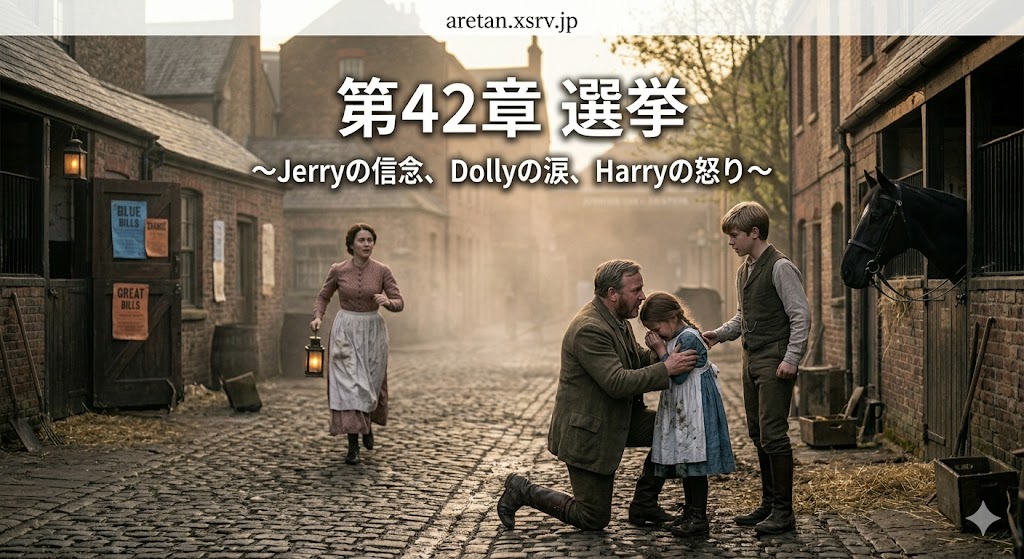
On the morning before the election, Jerry was putting me into the shafts, when Dolly came into the yard sobbing and crying.
選挙前日の朝、ジェリーが私をながえにつないでいると、ドリーがすすり泣きながら中庭へ入ってきました。
With her little blue frock and white pinafore spattered all over with mud.
彼女の小さな青い服と白い前掛けは、泥で一面汚れていました。
“Why, Dolly, what is the matter?”
「おや、ドリー、どうしたんだ?」
“Those naughty boys,” she sobbed, “have thrown the dirt all over me, and called me a little raga—raga—”
「あの悪い男の子たちが」と彼女はすすり泣きながら言いました。「私に泥をいっぱい投げて、小さなラガ……ラガ……って呼んだの」
“They called her a little ‘blue’ ragamuffin, father,” said Harry, who ran in looking very angry.
「父さん、あいつらはドリーを小さな『青の』ぼろっ子と呼んだんだ」と、とても怒った様子で走ってきたハリーが言いました。
“But I have given it to them; they won’t insult my sister again.”
「でも僕がこらしめてやった。あいつらはもう二度と妹を侮辱しないよ」
“I have given them a thrashing they will remember; a set of cowardly, rascally ‘orange’ blackguards.”
「忘れられないくらい、ひどくやっつけてやった。卑怯で、ならず者の『オレンジ派』の悪党どもだ」
Jerry kissed the child and said, “Run in to mother, my pet, and tell her I think you had better stay at home to-day and help her.”
ジェリーはその子にキスをして言いました。「お母さんのところへ行きなさい、かわいい子。今日は家にいて、お母さんを手伝ったほうがよいと伝えなさい」
Then turning gravely to Harry:
それから彼は、厳粛にハリーのほうを向きました。
“My boy, I hope you will always defend your sister, and give anybody who insults her a good thrashing—that is as it should be.”
「息子よ、私はお前がいつも妹を守り、妹を侮辱する者にはしっかりとこらしめを与えてほしいと思っている。それは当然のことだ」
“But mind, I won’t have any election blackguarding on my premises.”
「だが、いいか。この家の敷地内で、選挙がらみの下品な騒ぎは許さない」
“There are as many ‘blue’ blackguards as there are ‘orange’, and as many white as there are purple, or any other color.”
「『青』の悪党も『オレンジ』の悪党と同じくらいいるし、白にも紫にも、ほかのどんな色にも同じくらいいる」
“And I won’t have any of my family mixed up with it.”
「そして私は、自分の家族の誰にもそんなものに巻き込まれてほしくない」
“Even women and children are ready to quarrel for the sake of a color, and not one in ten of them knows what it is about.”
「女や子どもでさえ、色のために争う準備ができている。そして十人に一人も、それが何についてのことなのか知らないのだ」
“Why, father, I thought blue was for Liberty.”
「でも父さん、青は自由のためだと思っていたよ」
“My boy, Liberty does not come from colors, they only show party.”
「息子よ、自由は色から来るものではない。色はただ党派を示すだけだ」
“And all the liberty you can get out of them is, liberty to get drunk at other people’s expense.”
「そこから得られる自由といえば、他人の金で酔っぱらう自由だけだ」
“Liberty to ride to the poll in a dirty old cab.”
「汚い古い辻馬車に乗って投票所へ行く自由」
“Liberty to abuse any one that does not wear your color.”
「自分の色を身につけていない人を罵る自由」
“And to shout yourself hoarse at what you only half-understand—that’s your liberty!”
「そして、半分しか理解していないことについて、声がかれるまで叫ぶ自由だ。それがお前の言う自由だ!」
“Oh, father, you are laughing.”
「ああ、父さん、からかっているんでしょう」
“No, Harry, I am serious, and I am ashamed to see how men go on who ought to know better.”
「いや、ハリー、私は真剣だ。もっと分別があるべき男たちがあんなふうに振る舞うのを見ると、私は恥ずかしくなる」
“An election is a very serious thing; at least it ought to be.”
「選挙はとても重大なものだ。少なくとも、そうあるべきだ」
“And every man ought to vote according to his conscience, and let his neighbor do the same.”
「そしてすべての人は自分の良心に従って投票し、隣人にも同じようにさせるべきなのだ」