
CHAPTER X:果樹園でのおしゃべり のポイント
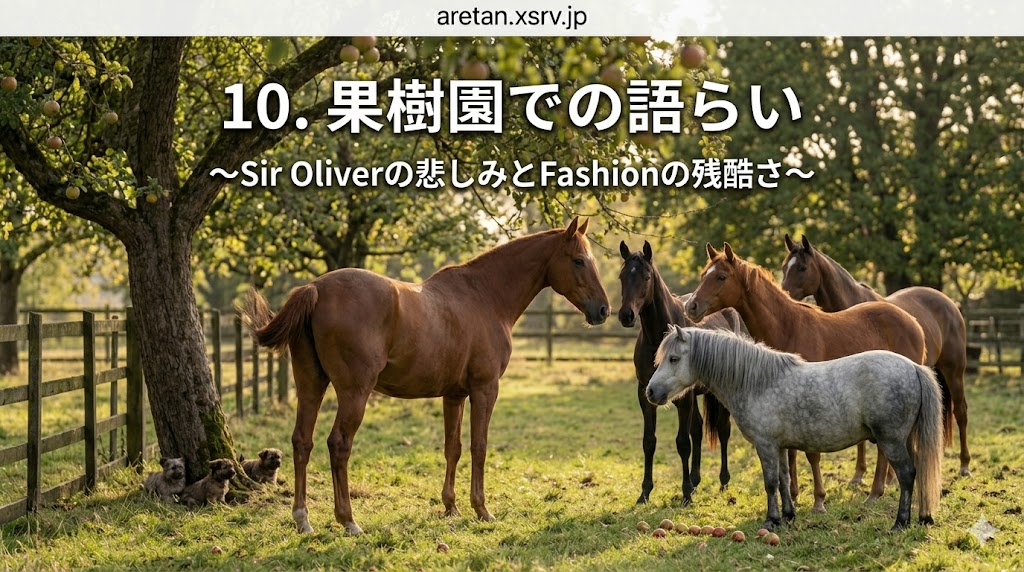
第10章では、ブラック・ビューティー、ジンジャー、メリーレッグスたちが果樹園で休みながら、それぞれの経験や考えを語り合います。穏やかな場面の中で、馬たちの性格や、人間に対する感じ方がよりはっきり見えてきます。
読みどころは、馬たちの会話を通して「よい扱い」と「悪い扱い」の差が自然に浮かび上がる点です。静かな章ですが、ジンジャーの傷ついた記憶やメリーレッグスの明るさが対照的に描かれ、動物にもそれぞれの過去と感情があることを読者に意識させます。
この章の英語学習ポイントを開く
- orchard:果樹園。この章の会話が行われる穏やかな場所を表す重要語です。
- conversation:会話。馬たちが互いの経験や考えを語り合う章の中心表現です。
- experience:経験。ジンジャーたちの過去が性格に影響していることを理解する鍵になります。
- companion:仲間。ブラック・ビューティーが同じ厩舎の馬たちと関係を深める場面で大切です。
- kindness:親切、思いやり。馬たちの幸福が人間の接し方に左右されるというテーマにつながります。
カラフル対訳で紹介している作品について
カラフル対訳で紹介している作品は、すべてパブリックドメインの作品です。
このサイトで使われている作品は、著作権の切れた名作などの全文を電子化し、インターネット上で公開している Project Gutenberg(プロジェクト・グーテンベルク)、 および朗読音声を公開している LibriVox(リブリヴォックス/朗読図書館) の作品を出典としています。
原文はProject Gutenberg、音声はLibriVoxで公開されているパブリックドメイン作品を出典としています。
『黒馬物語』Chapter X: A Talk in the Orchard
『黒馬物語』第10章を、英単語の意味が直感的に入るように色分けしながら、英文と日本語訳をセットで読める形式に整えています。
ボタンで和訳・色分け・日本語ミニ訳を切り替えられます。カテゴリを選ぶと、学習したい種類の表現だけを目立たせられます。
Ginger and I were not of the regular tall carriage horse breed, we had more of the racing blood in us.
ジンジャーと私は、普通の背の高い馬車馬の血統ではなく、どちらかというと競走馬の血を多く引いていました。
We stood about fifteen and a half hands high; we were therefore just as good for riding as we were for driving.
私たちの体高は約十五ハンド半でした。そのため、馬車を引くのと同じくらい、乗馬にも向いていました。
And our master used to say that he disliked either horse or man that could do but one thing.
そして主人は、馬であれ人であれ、一つのことしかできないものは好きではない、とよく言っていました。
And as he did not want to show off in London parks, he preferred a more active and useful kind of horse.
また主人は、ロンドンの公園で見せびらかすことを望んでいなかったので、より活発で役に立つ種類の馬を好んでいました。
As for us, our greatest pleasure was when we were saddled for a riding party.
私たちにとって最大の楽しみは、乗馬の一行のために鞍をつけられる時でした。
The master on Ginger, the mistress on me, and the young ladies on Sir Oliver and Merrylegs.
主人はジンジャーに、奥さまは私に、若いお嬢さまたちはサー・オリヴァーとメリーレッグスに乗りました。
It was so cheerful to be trotting and cantering all together that it always put us in high spirits.
みんな一緒に速歩したり駆け足したりするのはとても楽しく、いつも私たちは上機嫌になりました。
I had the best of it, for I always carried the mistress; her weight was little, her voice was sweet, and her hand was so light on the rein.
私がいちばん恵まれていました。私はいつも奥さまを乗せたからです。奥さまは軽く、声は優しく、手綱を持つ手もとても軽やかでした。
That I was guided almost without feeling it.
そのため、私はほとんどそれを感じないほど自然に導かれました。
Oh! if people knew what a comfort to horses a light hand is, and how it keeps a good mouth and a good temper.
ああ、人々が、軽い手綱さばきが馬にとってどれほど心地よいものか、そしてそれがよい口の状態とよい気性をどれほど保つものか知っていたなら。
They surely would not chuck, and drag, and pull at the rein as they often do.
きっと彼らは、よくするように手綱を急に引いたり、引きずるように引いたり、強く引いたりはしないでしょう。
Our mouths are so tender that where they have not been spoiled or hardened with bad or ignorant treatment, they feel the slightest movement of the driver’s hand.
私たちの口はとても繊細です。悪い扱いや無知な扱いでだめにされたり硬くされたりしていなければ、御者の手のほんのわずかな動きも感じ取ることができます。
And we know in an instant what is required of us.
そして、私たちは一瞬で何を求められているのかを理解します。
My mouth has never been spoiled, and I believe that was why the mistress preferred me to Ginger, although her paces were certainly quite as good.
私の口は一度もだめにされたことがありませんでした。だからこそ、ジンジャーの歩様も確かに同じくらい良かったにもかかわらず、奥さまは私をジンジャーより好んだのだと思います。
She used often to envy me, and said it was all the fault of breaking in, and the gag bit in London, that her mouth was not so perfect as mine.
ジンジャーはよく私をうらやみ、自分の口が私ほど完全でないのは、調教とロンドンでのギャグビットのせいだと言っていました。
And then old Sir Oliver would say, “There, there! don’t vex yourself; you have the greatest honor.”
すると年老いたサー・オリヴァーはよく言いました。「まあまあ、気に病むことはない。君には最大の名誉があるのだから」
“A mare that can carry a tall man of our master’s weight, with all your spring and sprightly action, does not need to hold her head down because she does not carry the lady.”
「主人のような背の高い男性を、君の弾む力と生き生きした動きで乗せられる雌馬は、奥さまを乗せないからといって、うつむく必要などない」
“We horses must take things as they come, and always be contented and willing so long as we are kindly used.”
「私たち馬は、物事をあるがままに受け入れ、親切に扱われているかぎり、いつも満足し、進んで働くべきなのだ」
I had often wondered how it was that Sir Oliver had such a very short tail.
私は、サー・オリヴァーの尾がなぜあれほど短いのか、よく不思議に思っていました。
It really was only six or seven inches long, with a tassel of hair hanging from it.
それは本当に六、七インチほどしかなく、先に房のような毛が垂れているだけでした。
And on one of our holidays in the orchard I ventured to ask him by what accident it was that he had lost his tail.
そして果樹園での休日のある日、私は思い切って、どんな事故で尾を失ったのかと彼に尋ねました。
“Accident!” he snorted with a fierce look, “it was no accident!”
「事故だって!」彼は激しい表情で鼻を鳴らしました。「あれは事故などではない!」
“It was a cruel, shameful, cold-blooded act!”
「あれは残酷で、恥ずべき、冷酷な行為だった!」
“When I was young I was taken to a place where these cruel things were done.”
「私が若かったころ、私はそうした残酷なことが行われる場所へ連れて行かれた」
“I was tied up, and made fast so that I could not stir.”
「私は縛られ、動けないように固定された」
“And then they came and cut off my long and beautiful tail, through the flesh and through the bone, and took it away.”
「それから彼らはやって来て、私の長く美しい尾を、肉を通し、骨を通して切り落とし、持ち去ったのだ」
“How dreadful!” I exclaimed.
「なんて恐ろしい!」と私は叫びました。
“Dreadful, ah! it was dreadful; but it was not only the pain, though that was terrible and lasted a long time.”
「恐ろしいとも! 確かに恐ろしかった。だが、それは痛みだけの問題ではなかった。もちろんその痛みもひどく、長く続いたが」
“It was not only the indignity of having my best ornament taken from me, though that was bad.”
「私のいちばん美しい飾りを奪われる屈辱だけでもなかった。もちろんそれもひどかった」
“But it was this, how could I ever brush the flies off my sides and my hind legs any more?”
「だが問題はこれだ。私はもう、どうやって脇腹や後ろ脚のハエを払いのければよいのか」
“You who have tails just whisk the flies off without thinking about it.”
「尾のある君たちは、何も考えずにハエをさっと払いのけることができる」
“And you can’t tell what a torment it is to have them settle upon you and sting and sting.”
「しかし、ハエが体に止まり、何度も何度も刺すことが、どれほどの苦痛か、君たちにはわからない」
“And have nothing in the world to lash them off with.”
「しかも、それを払い飛ばすものがこの世に何もないのだ」
“I tell you it is a lifelong wrong, and a lifelong loss.”
「言っておくが、それは一生続く不正であり、一生続く損失なのだ」
“But thank heaven, they don’t do it now.”
「だがありがたいことに、今ではもうそれは行われていない」
“What did they do it for then?” said Ginger.
「では、何のためにそんなことをしたのですか」とジンジャーが言いました。
“For fashion!” said the old horse with a stamp of his foot.
「流行のためだ!」と老馬は足を踏み鳴らして言いました。
“For fashion! if you know what that means.”
「流行のためだ! 君たちにその意味がわかるならな」
“There was not a well-bred young horse in my time that had not his tail docked in that shameful way.”
「私の時代には、良血の若馬で、あの恥ずべき方法で尾を切られなかった馬はいなかった」
“Just as if the good God that made us did not know what we wanted and what looked best.”
「まるで、私たちをお作りになった善き神が、私たちに何が必要で、何がいちばんよく見えるかをご存じないかのように」
“I suppose it is fashion that makes them strap our heads up with those horrid bits that I was tortured with in London,” said Ginger.
「ロンドンで私を苦しめた、あの恐ろしいはみで頭を縛り上げるのも、きっと流行のせいなのでしょうね」とジンジャーが言いました。
“Of course it is,” said he; “to my mind, fashion is one of the wickedest things in the world.”
「もちろんそうだ」と彼は言いました。「私に言わせれば、流行というものはこの世で最も邪悪なものの一つだ」
“Now look, for instance, at the way they serve dogs, cutting off their tails to make them look plucky.”
「たとえば、犬をどう扱うか見てみなさい。勇ましく見せるために尾を切り落とす」
“And shearing up their pretty little ears to a point to make them both look sharp, forsooth.”
「さらに、鋭く見せるためだとか言って、かわいらしい小さな耳を先のとがった形に切り整えるのだ」
“I had a dear friend once, a brown terrier; ‘Skye’ they called her.”
「私はかつて、大切な友だちを持っていた。茶色のテリア犬で、『スカイ』と呼ばれていた」
“She was so fond of me that she never would sleep out of my stall.”
「彼女は私のことがとても好きで、決して私の馬房の外では眠ろうとしなかった」
“She made her bed under the manger, and there she had a litter of five as pretty little puppies as need be.”
「彼女は飼い葉桶の下に寝床を作り、そこで五匹のとてもかわいらしい子犬を産んだ」
“None were drowned, for they were a valuable kind, and how pleased she was with them!”
「その子犬たちは価値のある種類だったので、一匹も溺れさせられなかった。彼女はどれほど喜んでいたことか!」
“And when they got their eyes open and crawled about, it was a real pretty sight.”
「そして子犬たちが目を開け、這い回るようになると、それは本当にかわいらしい光景だった」
“But one day the man came and took them all away; I thought he might be afraid I should tread upon them.”
「ところがある日、男が来て子犬たちをみな連れ去った。私は、私が子犬たちを踏んでしまうのを心配したのかと思った」
“But it was not so; in the evening poor Skye brought them back again, one by one in her mouth.”
「しかしそうではなかった。夕方、かわいそうなスカイは、子犬たちを一匹ずつ口にくわえて連れ戻した」
“Not the happy little things that they were, but bleeding and crying pitifully.”
「しかし、彼らはもう幸せな小さな子犬ではなく、血を流し、哀れに泣いていた」
“They had all had a piece of their tails cut off, and the soft flap of their pretty little ears was cut quite off.”
「子犬たちはみな尾の一部を切り落とされ、かわいらしい小さな耳の柔らかい垂れた部分も完全に切り取られていた」
“How their mother licked them, and how troubled she was, poor thing!”
「母親がどれほど子犬たちをなめ、どれほど心を痛めていたことか。かわいそうに!」
“I never forgot it.”
「私はそれを決して忘れなかった」
“They healed in time, and they forgot the pain.”
「やがて彼らの傷は治り、彼らは痛みを忘れた」
“But the nice soft flap, that of course was intended to protect the delicate part of their ears from dust and injury, was gone forever.”
「しかし、耳の繊細な部分をほこりやけがから守るためにあったはずの柔らかい垂れた部分は、永遠に失われてしまった」
“Why don’t they cut their own children’s ears into points to make them look sharp?”
「なぜ人間は、自分たちの子どもの耳を鋭く見せるために先のとがった形に切らないのだろうか」
“Why don’t they cut the end off their noses to make them look plucky?”
「勇ましく見せるために、自分たちの鼻の先を切り落とさないのはなぜだろうか」
“One would be just as sensible as the other.”
「どちらも同じくらい理にかなっているはずだ」
“What right have they to torment and disfigure God’s creatures?”
「神の創造物を苦しめ、醜く傷つける権利が、彼らにいったい何があるのか」
Sir Oliver, though he was so gentle, was a fiery old fellow.
サー・オリヴァーはとても穏やかでしたが、激しい気性を持つ老馬でもありました。
And what he said was all so new to me, and so dreadful, that I found a bitter feeling toward men rise up in my mind that I never had before.
そして彼の話は私にとってすべてあまりに新しく、あまりに恐ろしかったので、私はこれまで抱いたことのない、人間に対する苦い感情が心に湧き上がるのを感じました。
Of course Ginger was very much excited; she flung up her head with flashing eyes and distended nostrils.
もちろんジンジャーはひどく興奮しました。彼女は光る目と膨らんだ鼻孔で頭を振り上げました。
Declaring that men were both brutes and blockheads.
そして、人間は獣のようであり、愚か者でもあると言い放ちました。
“Who talks about blockheads?” said Merrylegs, who just came up from the old apple-tree, where he had been rubbing himself against the low branch.
「誰が愚か者の話をしているの?」とメリーレッグスが言いました。彼はちょうど、古いリンゴの木の低い枝に体をこすりつけていたところからやって来たのです。
“Who talks about blockheads? I believe that is a bad word.”
「誰が愚か者の話をしているの? それは悪い言葉だと思うな」
“Bad words were made for bad things,” said Ginger, and she told him what Sir Oliver had said.
「悪い言葉は悪いもののためにあるのよ」とジンジャーは言い、サー・オリヴァーが話したことを彼に伝えました。
“It is all true,” said Merrylegs sadly.
「それはすべて本当だよ」とメリーレッグスは悲しそうに言いました。
“And I’ve seen that about the dogs over and over again where I lived first.”
「僕が最初に住んでいたところでも、犬についてはそういうことを何度も見たことがある」
“But we won’t talk about it here.”
「でも、ここではその話はやめよう」
“You know that master, and John and James are always good to us.”
「主人も、ジョンも、ジェームズも、いつも僕たちに良くしてくれているのを知っているでしょう」
“And talking against men in such a place as this doesn’t seem fair or grateful.”
「だから、こんな場所で人間の悪口を言うのは、公平でも感謝のあることでもないように思うんだ」
“And you know there are good masters and good grooms beside ours, though of course ours are the best.”
「それに、私たちの主人や馬丁以外にも、良い主人や良い馬丁がいることは知っているでしょう。もちろん、私たちのところが一番だけれど」
This wise speech of good little Merrylegs, which we knew was quite true, cooled us all down.
この善良な小さなメリーレッグスの賢い言葉は、私たちもまったくその通りだとわかっていたので、私たち全員を落ち着かせました。
Especially Sir Oliver, who was dearly fond of his master.
特に、自分の主人を心から愛していたサー・オリヴァーを落ち着かせました。
And to turn the subject I said, “Can any one tell me the use of blinkers?”
そこで話題を変えるために、私は言いました。「誰か、遮眼革の役目を教えてくれませんか」
“No!” said Sir Oliver shortly, “because they are no use.”
「ない!」とサー・オリヴァーは短く言いました。「なぜなら、遮眼革は何の役にも立たないからだ」
“They are supposed,” said Justice, the roan cob, in his calm way, “to prevent horses from shying and starting.”
「それは」と葦毛混じりの小型馬ジャスティスが落ち着いた調子で言いました。「馬が驚いて横に飛んだり、飛び上がったりするのを防ぐためとされている」
“And getting so frightened as to cause accidents.”
「そして、事故を起こすほど怯えるのを防ぐためだと言われている」
“Then what is the reason they do not put them on riding horses; especially on ladies’ horses?” said I.
「それなら、なぜ乗用馬、とくに女性用の馬には遮眼革をつけないのですか」と私は言いました。
“There is no reason at all,” said he quietly, “except the fashion.”
「理由はまったくない」と彼は静かに言いました。「流行以外にはね」
“They say that a horse would be so frightened to see the wheels of his own cart or carriage coming behind him that he would be sure to run away.”
「人間は、馬が自分の荷車や馬車の車輪が後ろから来るのを見たら、とても驚いて必ず逃げ出すだろうと言う」
“Although of course when he is ridden he sees them all about him if the streets are crowded.”
「けれどもちろん、馬が乗られている時には、通りが混んでいれば周囲に車輪がいくらでも見えるのだが」
“I admit they do sometimes come too close to be pleasant, but we don’t run away; we are used to it, and understand it.”
「確かに、時には不快なほど近づいてくることはある。でも私たちは逃げ出さない。それに慣れているし、理解しているからだ」
“And if we never had blinkers put on we should never want them.”
「そして、もし最初から遮眼革をつけられなければ、私たちはそれを欲しがることなど決してないだろう」
“We should see what was there, and know what was what, and be much less frightened than by only seeing bits of things that we can’t understand.”
「そこに何があるかを見て、何が何であるかを知ることができる。理解できないものの一部だけを見るよりも、はるかに怖がらずに済むだろう」
“Of course there may be some nervous horses who have been hurt or frightened when they were young, who may be the better for them.”
「もちろん、若いころに傷つけられたり怖がらされたりした神経質な馬の中には、遮眼革があったほうがよいものもいるかもしれない」
“But as I never was nervous, I can’t judge.”
「しかし私は神経質だったことがないので、判断はできない」
“I consider,” said Sir Oliver, “that blinkers are dangerous things in the night.”
「私は」とサー・オリヴァーが言いました。「遮眼革は夜には危険なものだと思う」
“We horses can see much better in the dark than men can, and many an accident would never have happened if horses might have had the full use of their eyes.”
「私たち馬は、人間よりも暗闇でずっとよく見える。もし馬が目を十分に使えていたなら、多くの事故は起こらなかっただろう」
“Some years ago, I remember, there was a hearse with two horses returning one dark night.”
「数年前のことを覚えている。ある暗い夜、二頭立ての霊柩馬車が戻っていた」
“And just by Farmer Sparrow’s house, where the pond is close to the road, the wheels went too near the edge.”
「そしてスパロウ農場主の家のそば、池が道のすぐ近くにある場所で、車輪が端に近づきすぎた」
“And the hearse was overturned into the water; both the horses were drowned, and the driver hardly escaped.”
「そして霊柩馬車は水の中へ横転した。二頭の馬はどちらも溺れ死に、御者はかろうじて逃げた」
“Of course after this accident a stout white rail was put up that might be easily seen.”
「もちろん、その事故の後には、見えやすい丈夫な白い柵が立てられた」
“But if those horses had not been partly blinded, they would of themselves have kept further from the edge, and no accident would have happened.”
「しかし、あの馬たちが部分的に視界を奪われていなければ、自分たちで端からもっと離れて進み、事故は起こらなかっただろう」
“When our master’s carriage was overturned, before you came here, it was said that if the lamp on the left side had not gone out, John would have seen the great hole that the road-makers had left.”
「君がここへ来る前、主人の馬車が横転したときには、左側のランプが消えていなければ、ジョンは道路工事人が残した大きな穴を見ただろうと言われた」
“And so he might, but if old Colin had not had blinkers on he would have seen it, lamp or no lamp.”
「確かにそうかもしれない。しかし老コリンが遮眼革をつけていなければ、ランプがあろうとなかろうと、その穴を見ただろう」
“For he was far too knowing an old horse to run into danger.”
「彼は危険に突っ込むには、あまりにも賢い老馬だったからだ」
“As it was, he was very much hurt, the carriage was broken, and how John escaped nobody knew.”
「実際には、彼はひどく傷つき、馬車は壊れ、ジョンがどうやって助かったのか誰にもわからなかった」
“I should say,” said Ginger, curling her nostril, “that these men, who are so wise, had better give orders that in the future all foals should be born with their eyes set just in the middle of their foreheads.”
「私に言わせれば」とジンジャーは鼻孔を曲げて言いました。「そんなに賢い人間たちは、これからすべての子馬が額の真ん中に目を持って生まれるよう命じたほうがよいでしょうね」
“Instead of on the side; they always think they can improve upon nature and mend what God has made.”
「横ではなく真ん中にね。彼らはいつも、自然を改良し、神が作ったものを直せると思っているのです」
Things were getting rather sore again, when Merrylegs held up his knowing little face and said, “I’ll tell you a secret.”
話がまた少し険悪になりかけたとき、メリーレッグスが物知り顔を上げて言いました。「秘密を教えてあげるよ」
“I believe John does not approve of blinkers; I heard him talking with master about it one day.”
「ジョンは遮眼革に賛成していないと思うんだ。ある日、彼が主人とそのことについて話しているのを聞いたんだ」
“The master said that ‘if horses had been used to them, it might be dangerous in some cases to leave them off’.”
「主人は、『馬が遮眼革に慣れてしまっているなら、場合によっては外すのが危険なこともある』と言っていた」
“And John said he thought it would be a good thing if all colts were broken in without blinkers, as was the case in some foreign countries.”
「そしてジョンは、いくつかの外国のように、すべての若馬が遮眼革なしで調教されるなら、それはよいことだと思うと言っていた」
“So let us cheer up, and have a run to the other end of the orchard.”
「だから元気を出して、果樹園の向こう端まで走ろうよ」
“I believe the wind has blown down some apples, and we might just as well eat them as the slugs.”
「風でリンゴがいくつか落ちていると思うんだ。ナメクジに食べられるくらいなら、僕たちが食べてもいいだろう」
Merrylegs could not be resisted, so we broke off our long conversation.
メリーレッグスには逆らえませんでした。そこで私たちは長い会話を切り上げました。
And got up our spirits by munching some very sweet apples which lay scattered on the grass.
そして草の上に散らばっていたとても甘いリンゴをむしゃむしゃ食べて、元気を取り戻しました。