
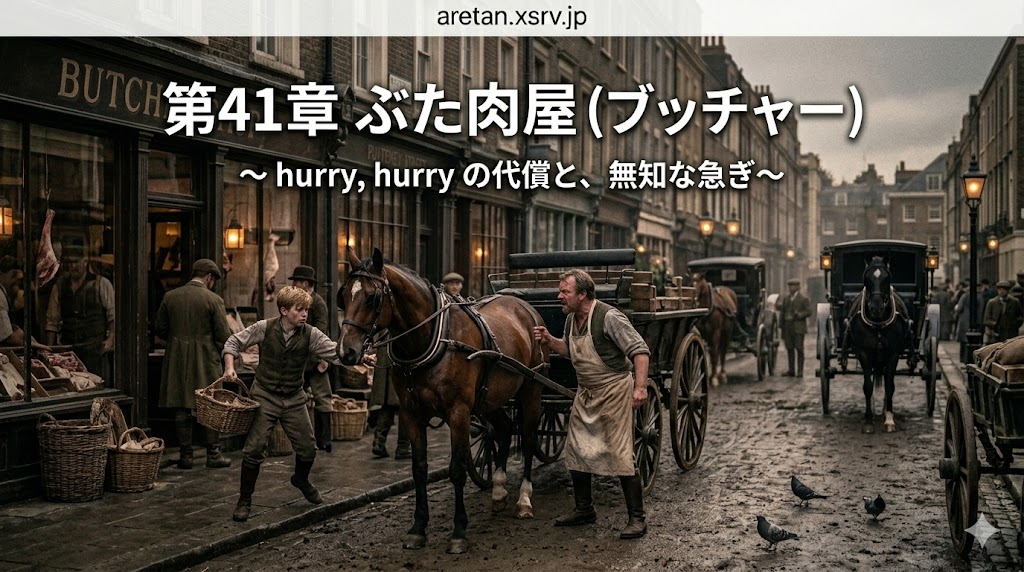
CHAPTER XLI:肉屋 のポイント
第41章では、ブラック・ビューティーがロンドンで働く中、乱暴に馬を走らせる肉屋の馬車に出会います。急ぎの仕事や商売の都合を理由に、馬が無理に追い立てられる様子が描かれ、街の中で働く馬たちの危険な現実が浮かび上がります。
読みどころは、速さや効率を求める人間の都合が、馬の体にどれほどの負担をかけるかという点です。ジェリーのように馬を思いやる働き方との対比によって、同じ仕事の世界でも、人間の考え方ひとつで馬の苦しみが大きく変わることが示されます。
この章の英語学習ポイントを開く
- butcher:肉屋。この章で登場する人物・職業を表し、乱暴な馬車の使い方と結びつきます。
- cart:荷馬車。商品を運ぶために馬が引かされる乗り物として重要です。
- drive hard:激しく走らせる、酷使する。馬に無理をさせる行動を表す重要表現です。
- load:荷物、積み荷。馬の負担の大きさを考えるうえで大切な語です。
- mercy:慈悲、情け。働く馬にも必要な思いやりを考えさせる語です。
『黒馬物語』Chapter XLI: The Butcher
『黒馬物語』第41章を、英単語の意味が直感的に入るように色分けしながら、英文と日本語訳をセットで読める形式に整えています。
表示設定
カテゴリ別ハイライト
I saw a great deal of trouble among the horses in London, and much of it might have been prevented by a little common sense.
私はロンドンの馬たちの間に、多くの苦労を見ました。そしてその多くは、少しの常識があれば防げたはずでした。
We horses do not mind hard work if we are treated reasonably.
私たち馬は、道理にかなった扱いを受けているなら、きつい仕事を嫌がるわけではありません。
And I am sure there are many driven by quite poor men who have a happier life than I had when I used to go in the Countess of W—-‘s carriage.
そして、かなり貧しい人たちに使われている馬の中にも、私がW伯爵夫人の馬車を引いていたころより幸せな暮らしをしている馬がたくさんいると、私は確信しています。
With my silver-mounted harness and high feeding.
そのころの私は、銀飾りの馬具をつけ、高級な餌を与えられていました。
It often went to my heart to see how the little ponies were used.
小さなポニーたちがどのように使われているかを見ると、私はしばしば胸が痛みました。
Straining along with heavy loads or staggering under heavy blows from some low, cruel boy.
重い荷物を必死に引っぱったり、品のない残酷な少年からの激しい打撃に、よろめいたりしていたからです。
Once I saw a little gray pony with a thick mane and a pretty head, and so much like Merrylegs that if I had not been in harness I should have neighed to him.
一度、厚いたてがみとかわいらしい頭を持つ小さな灰色のポニーを見ました。そのポニーはメリーレッグスにとてもよく似ていて、もし私が馬具につながれていなければ、彼にいなないていたでしょう。
He was doing his best to pull a heavy cart.
彼は重い荷車を引こうと、精いっぱい努力していました。
While a strong rough boy was cutting him under the belly with his whip and chucking cruelly at his little mouth.
その一方で、強く粗暴な少年が、むちで彼の腹の下を切るように打ち、小さな口を残酷に乱暴に引っぱっていました。
Could it be Merrylegs?
あれはメリーレッグスだったのでしょうか。
It was just like him.
まさに彼そっくりでした。
But then Mr. Blomefield was never to sell him, and I think he would not do it.
しかしブロームフィールド氏は彼を決して売らないことになっていましたし、私は彼がそんなことをするとは思いません。
But this might have been quite as good a little fellow, and had as happy a place when he was young.
しかしそのポニーも、彼と同じくらい良い小さな仲間で、若いころには同じくらい幸せな場所にいたのかもしれません。
I often noticed the great speed at which butchers’ horses were made to go.
私は、肉屋の馬たちが非常な速さで走らされていることによく気づいていました。
Though I did not know why it was so till one day when we had to wait some time in St. John’s Wood.
しかし、ある日セント・ジョンズ・ウッドでしばらく待たなければならなかった時まで、なぜそうなのかは知りませんでした。
There was a butcher’s shop next door.
隣には肉屋がありました。
And as we were standing a butcher’s cart came dashing up at a great pace.
私たちが立っていると、肉屋の荷車がものすごい速さで勢いよく走ってきました。
The horse was hot and much exhausted.
その馬は体が熱くなっており、ひどく疲れ切っていました。
He hung his head down, while his heaving sides and trembling legs showed how hard he had been driven.
彼は頭を垂れており、激しく上下する脇腹と震える脚が、どれほど激しく走らされたかを示していました。
The lad jumped out of the cart and was getting the basket when the master came out of the shop much displeased.
少年が荷車から飛び降り、かごを取ろうとしていると、主人が店からとても不機嫌そうに出てきました。
After looking at the horse he turned angrily to the lad.
馬を見た後、彼は怒って少年のほうを向きました。
“How many times shall I tell you not to drive in this way?”
「こんな運転をするなと、何度言えばわかるんだ?」
“You ruined the last horse and broke his wind, and you are going to ruin this in the same way.”
「お前は前の馬をだめにし、呼吸を壊した。そしてこの馬も同じようにだめにしようとしている」
“If you were not my own son I would dismiss you on the spot.”
「お前が私の息子でなかったら、その場で解雇しているところだ」
“It is a disgrace to have a horse brought to the shop in a condition like that.”
「あんな状態で馬を店に連れてくるなど恥だ」
“You are liable to be taken up by the police for such driving.”
「そんな運転をすれば、警察に捕まる可能性がある」
“And if you are you need not look to me for bail, for I have spoken to you till I’m tired.”
「もしそうなっても、私に保釈金を期待するな。私はもう疲れるほどお前に言ってきたのだから」
“You must look out for yourself.”
「自分のことは自分で何とかしなければならない」
During this speech the boy had stood by, sullen and dogged.
この説教の間、少年はむっつりと頑固な様子でそばに立っていました。
But when his father ceased he broke out angrily.
しかし父親が話し終えると、彼は怒って言い返しました。
It wasn’t his fault, and he wouldn’t take the blame.
それは自分のせいではなく、自分は責任を取るつもりはない、というのです。
He was only going by orders all the time.
彼はただ、ずっと命令通りにしていただけでした。
“You always say, ‘Now be quick; now look sharp!’”
「あなたはいつも、『さあ早くしろ、さあ急げ!』と言うじゃないか」
“And when I go to the houses one wants a leg of mutton for an early dinner and I must be back with it in a quarter of an hour.”
「それで家々に行くと、ある家では早めの夕食に羊の脚肉が欲しいと言われ、それを十五分で持って戻らなければならない」
“Another cook has forgotten to order the beef; I must go and fetch it and be back in no time, or the mistress will scold.”
「別の料理人は牛肉を注文し忘れていて、私はそれを取りに行き、すぐに戻らなければならない。そうしないと奥様が叱る」
“And the housekeeper says they have company coming unexpectedly and must have some chops sent up directly.”
「それから家政婦は、急に客が来ることになったから、すぐにチョップ肉を届けなければならないと言う」
“And the lady at No. 4, in the Crescent, never orders her dinner till the meat comes in for lunch.”
「それにクレセント四番地の奥様は、昼食用の肉が来るまで、夕食の注文をしない」
“And it’s nothing but hurry, hurry, all the time.”
「だからいつも、急げ、急げ、そればかりなんだ」
“If the gentry would think of what they want, and order their meat the day before, there need not be this blow up!”
「もし上流の客たちが自分たちの欲しいものを考えて、前日に肉を注文してくれれば、こんな大騒ぎにはならないんだ!」
“I wish to goodness they would,” said the butcher.
「本当にそうしてくれればいいのに」と肉屋は言いました。
“’Twould save me a wonderful deal of harass, and I could suit my customers much better if I knew beforehand.”
「そうしてくれれば、私の悩みは驚くほど減るし、前もってわかっていれば、もっと客の都合に合わせることができるのだが」
“But there! what’s the use of talking—who ever thinks of a butcher’s convenience or a butcher’s horse!”
「だが、まあ! 話しても何になる。肉屋の都合や肉屋の馬のことなど、誰が考えるというのだ!」
“Now, then, take him in and look to him well.”
「さあ、それでは、その馬を中へ連れて行って、よく世話をしなさい」
“Mind, he does not go out again to-day.”
「いいか、今日はもうその馬を外に出してはいけない」
“And if anything else is wanted you must carry it yourself in the basket.”
「もしほかに何か必要なら、お前が自分でかごに入れて運びなさい」
With that he went in, and the horse was led away.
そう言って彼は中へ入り、馬は連れて行かれました。
But all boys are not cruel.
しかし、すべての少年が残酷なわけではありません。
I have seen some as fond of their pony or donkey as if it had been a favorite dog.
私は、自分のポニーやロバを、まるでお気に入りの犬のように大好きな少年たちも見たことがあります。
And the little creatures have worked away as cheerfully and willingly for their young drivers as I work for Jerry.
そしてその小さな生き物たちは、私がジェリーのために働くのと同じように、若い御者たちのために陽気に、進んで働いていました。
It may be hard work sometimes, but a friend’s hand and voice make it easy.
時にはきつい仕事かもしれません。しかし友だちの手と声があれば、それは楽になるのです。
There was a young coster-boy who came up our street with greens and potatoes.
私たちの通りには、青物やジャガイモを売りに来る若い露店商の少年がいました。
He had an old pony, not very handsome, but the cheerfullest and pluckiest little thing I ever saw.
彼は年老いたポニーを持っていました。そのポニーはあまり見栄えはよくありませんでしたが、私が見た中で一番陽気で、一番勇敢な小さな生き物でした。
And to see how fond those two were of each other was a treat.
そして、その二人がどれほど互いを大切に思っているかを見るのは、楽しみでした。
The pony followed his master like a dog.
そのポニーは犬のように主人について行きました。
And when he got into his cart would trot off without a whip or a word.
そして少年が荷車に乗ると、むちも言葉もなしに速歩で出発しました。
And rattle down the street as merrily as if he had come out of the queen’s stables.
そして、まるで女王の馬小屋から出てきたかのように陽気に、通りをガラガラと進んでいきました。
Jerry liked the boy, and called him “Prince Charlie”.
ジェリーはその少年を気に入っており、彼を「チャーリー王子」と呼んでいました。
For he said he would make a king of drivers some day.
なぜならジェリーは、その少年はいずれ御者の王になるだろうと言っていたからです。
There was an old man, too, who used to come up our street with a little coal cart.
また、私たちの通りには、小さな石炭荷車を引いてやって来る老人もいました。
He wore a coal-heaver’s hat, and looked rough and black.
彼は石炭運びの帽子をかぶり、荒っぽく、真っ黒に見えました。
He and his old horse used to plod together along the street, like two good partners who understood each other.
彼と年老いた馬は、互いを理解している二人の良い相棒のように、通りを一緒にとぼとぼ進んでいました。
The horse would stop of his own accord at the doors where they took coal of him.
その馬は、石炭を買ってくれる家の戸口で、自分から止まりました。
He used to keep one ear bent toward his master.
彼はいつも片方の耳を主人のほうへ向けていました。
The old man’s cry could be heard up the street long before he came near.
その老人の呼び声は、彼が近づくずっと前から通りの先で聞こえました。
I never knew what he said, but the children called him “Old Ba-a-ar Hoo”, for it sounded like that.
彼が何と言っているのか私は知りませんでしたが、子どもたちは彼を「オールド・バー・フー」と呼んでいました。そう聞こえたからです。
Polly took her coal of him, and was very friendly.
ポリーは彼から石炭を買っており、とても親しげにしていました。
And Jerry said it was a comfort to think how happy an old horse might be in a poor place.
そしてジェリーは、貧しい場所でも年老いた馬がどれほど幸せでいられるかを考えると、慰めになると言いました。