
『ロビン・フッド』のカラフル対訳について
カラフル対訳で紹介しているJ. Walker McSpadden『Robin Hood』は、パブリックドメインの作品を出典としています。
このサイトで使われている原文は、著作権の切れた名作などの全文を電子化し、インターネット上で公開している Project Gutenberg(プロジェクト・グーテンベルク)、 および朗読音声を公開している LibriVox(リブリヴォックス/朗読図書館) の作品を出典としています。
『ロビン・フッド』は、中世イングランドのシャーウッドの森を舞台に、弓の名手ロビン・フッドとその仲間たちの活躍を描いた 冒険・英雄伝説です。 義賊、森の仲間、王への忠誠、自由を求める精神などが物語の中心にあり、英語圏で長く親しまれてきた古典的な伝承文学の一つです。 カラフル対訳では、英文を読みやすくするために、重要語句や表現を色分けしながら紹介しています。
原文はProject Gutenberg、音声はLibriVoxで公開されているパブリックドメイン作品を出典としています。 本ページでは、英語学習用に英文・和訳・重要表現の色分けを加えた形で紹介しています。
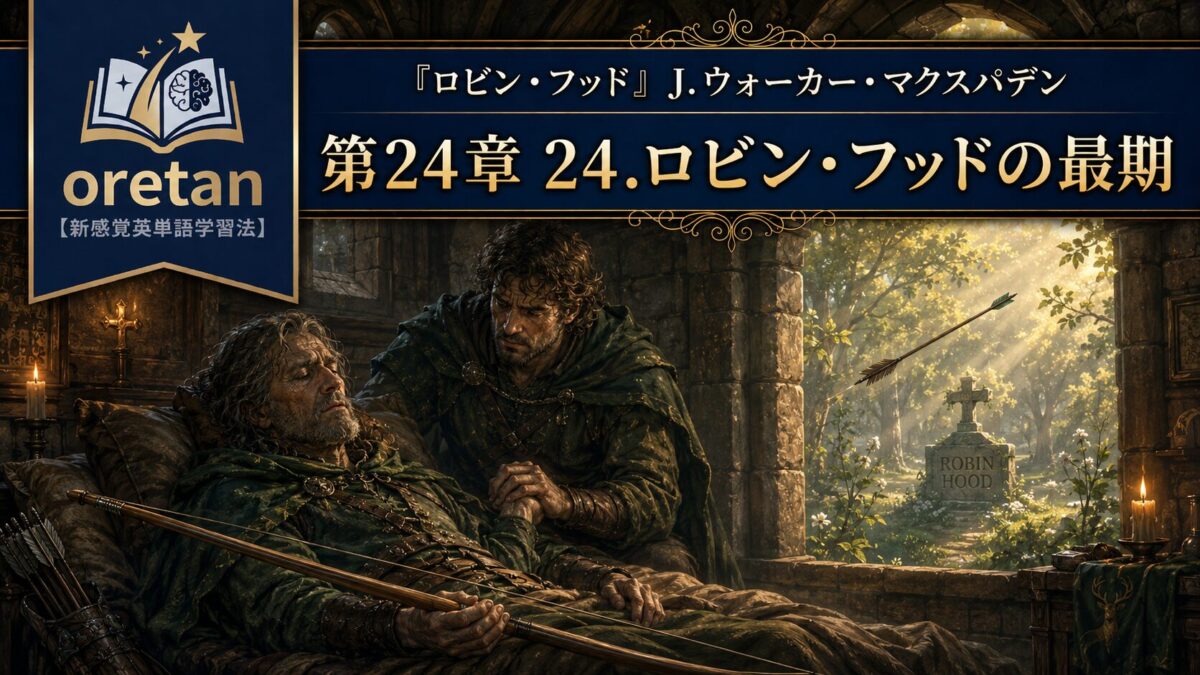
“`『ロビン・フッド』英文/和訳 CHAPTER XXIV ロビン・フッドの死
『Robin Hood』CHAPTER XXIV を、英語学習用に「英文→和訳」の順で読みやすく整理し、重要語句を多めに色分けしています。最終章のため、物語の余韻を残しつつ、重要表現・心理描写・場面描写を中心に色分けしています。
“Give me my bent bow in my hand,
And a broad arrow I’ll let flee;
And where this arrow is taken up,
There shall my grave digg’d be.”
「私の手に曲がった弓を持たせてくれ。幅広の矢を一本放とう。その矢が拾われる場所、そこに私の墓を掘ってほしい」
By good rights, this story should have ended with the wedding of Robin Hood and Maid Marian.
本来なら、この物語はロビン・フッドとメイド・マリアンの結婚で終わるべきだった。
For many pleasant tales end with a wedding and the words, “they lived happy ever after.”
なぜなら、多くの楽しい物語は結婚で終わり、「二人は末永く幸せに暮らしました」という言葉で締めくくられるからである。
But this tale follows the old songs, and so we must go one step further and learn how Robin, after many more years, came at last to seek his grave.
しかしこの物語は古い歌に従っている。だから私たちはもう一歩先へ進み、ロビンがその後何年も生きたのち、ついにどのように自分の墓を求めることになったかを知らねばならない。
Robin Hood and his men, now the Royal Archers, went with King Richard through England, settling disputes among the Norman barons.
ロビン・フッドとその仲間たちは、今や王室弓兵となり、リチャード王とともにイングランドを巡り、ノルマン貴族たちの争いを収めていった。
Then the King went with great pomp and rejoicing to London, and Robin, the new Earl of Huntingdon, brought his Countess there.
それから王は大きな華やかさと喜びの中でロンドンへ向かい、新しいハンティンドン伯であるロビンも、伯爵夫人をそこへ連れて行った。
There Marian became one of the finest ladies of the Court.
そこでマリアンは、宮廷で最も立派な貴婦人の一人となった。
The Royal Archers were then divided into two bands.
王室弓兵たちは、その後二つの隊に分けられた。
One half stayed in London, while the other half returned to Sherwood and Barnesdale to guard the King’s preserves.
半分はロンドンに残り、もう半分はシャーウッドとバーンズデールへ戻り、王の保護林を守ることになった。
Several months passed, and Robin began to chafe under the restraint of city life.
数か月が過ぎ、ロビンは都会生活の束縛にいら立ち始めた。
He longed for the fresh pure air of the greenwood and the rollicking society of his yeomen.
彼は緑の森の新鮮で澄んだ空気と、ヨーマンたちとの陽気な交わりを恋しく思った。
One day, seeing some lads at archery practice upon a green, he could not help but lament.
ある日、芝地で少年たちが弓の練習をしているのを見て、彼は嘆かずにはいられなかった。
“Woe is me! I fear my hand is losing its old-time cunning at the bow-string.”
「ああ、悲しいことだ! 私の手は、弓弦における昔の巧みさを失いつつあるのではないか」
At last he became so distraught that he asked leave to travel in foreign lands.
ついに彼は心が乱れ、異国を旅する許可を求めた。
This was granted, and he took Maid Marian with him through many strange countries.
その許可は与えられ、彼はメイド・マリアンを連れて、多くの見知らぬ国々を旅した。
But in an Eastern land a great grief came upon him.
しかし東方の地で、大きな悲しみが彼を襲った。
Marian sickened of a plague and died.
マリアンは疫病にかかって亡くなった。
They had been married only five years, and Robin felt as though all the light had gone out of his life.
二人が結婚してからまだ五年しかたっておらず、ロビンは自分の人生からすべての光が消えてしまったように感じた。
He wandered about the world for a few months longer, trying to forget his grief.
彼は悲しみを忘れようとして、その後数か月、世界をさまよった。
Then he came back to the court at London and sought some commission in active service.
それから彼はロンドンの宮廷へ戻り、何か実戦勤務の任務を求めた。
But King Richard was again away upon adventures, and Prince John, acting as Regent, had never been fond of Robin.
しかしリチャード王は再び冒険に出ており、摂政として振る舞っていたジョン王子は、もともとロビンを好んでいなかった。
He received Robin with a sarcastic smile.
彼は皮肉な笑みを浮かべてロビンを迎えた。
“Go forth into the greenwood,” said he coldly, “and kill some more of the King’s deer.”
「緑の森へ出て行って、王の鹿をもう少し殺してくるがよい」と彼は冷たく言った。
“Perhaps then the King will make you Prime Minister when he returns.”
「そうすれば、王が戻った時、きっとお前を首相にでもしてくれるだろう」
The taunt fired Robin’s blood.
その嘲りの言葉が、ロビンの血に火をつけた。
Since Marian’s death, he had been in a morose mood.
マリアンの死以来、彼は陰気な気分の中にいた。
He answered Prince John hotly, and the Prince ordered his guards to seize him and cast him into the Tower.
彼はジョン王子に激しく言い返し、王子は護衛たちに彼を捕らえて塔へ投げ込むよう命じた。
After lying there for a few weeks, Robin was released by faithful Stutely and the remaining Royal Archers.
数週間そこに閉じ込められた後、ロビンは忠実なステュートリーと残っていた王室弓兵たちによって解放された。
Together they fled the city and made their way to the greenwood.
彼らは一緒に都を逃れ、緑の森へ向かった。
There Robin blew the old familiar call which all had known and loved so well.
そこでロビンは、皆がよく知り、深く愛していた懐かしい合図の音を吹いた。
Up came running the rest of the band, those who had been Royal Foresters.
王室森林官となっていた残りの仲間たちが、走ってやって来た。
When they saw their old master, they embraced his knees, kissed his hands, and nearly cried for joy.
彼らは昔の頭領を見ると、その膝にすがり、手に口づけし、喜びのあまり泣き出しそうになった。
One and all, they forswore fealty to Prince John.
彼らは一人残らず、ジョン王子への忠誠を捨てた。
They lived quietly with Robin in the greenwood, doing harm to none, and waited for King Richard to come again.
彼らは誰にも害をなさず、緑の森でロビンと静かに暮らし、リチャード王が再び戻るのを待った。
But King Richard did not come again.
しかしリチャード王は、二度と戻ってこなかった。
News reached them that he had met his death in a foreign land, and that John now reigned as King.
王が異国で死を迎え、今やジョンが王として君臨しているという知らせが彼らのもとへ届いた。
The proof soon followed, when the big, familiar form of Little John came striding through the glade.
その証拠はまもなくやって来た。大きく見慣れたリトル・ジョンの姿が、空き地を大股で歩いてきたのである。
“Art come to arrest us?” called Robin, as he ran forward and embraced his old comrade.
「われらを捕らえに来たのか」とロビンは呼びかけ、駆け寄って昔の仲間を抱きしめた。
“Nay,” answered Little John. “I come not as Sheriff of Nottingham, thanks be.”
「いや」とリトル・ジョンは答えた。「ありがたいことに、ノッティンガムの保安官として来たのではない」
“The new King has deposed me, and greatly to my liking.”
「新しい王が私を解任してくれたのだ。それは私にとって大いに好ましいことだった」
“For I have long desired to join you again here in the greenwood.”
「なぜなら、私は長い間、ここ緑の森で再びあなたと一緒になりたいと望んでいたからだ」
Then the whole band was right glad, and toasted Little John royally.
すると一団全体がたいへん喜び、リトル・ジョンに王侯のような乾杯を捧げた。
Soon after this, the new King waged fierce war upon the outlaws.
その後まもなく、新しい王は無法者たちに対して激しい戦いを仕掛けた。
He sent so many scouting parties into Sherwood and Barnesdale that Robin and his men left those woods for a time.
彼はシャーウッドとバーンズデールへ多くの斥候隊を送り込んだため、ロビンと仲間たちは一時その森を離れた。
They went into Derbyshire, near Haddon Hall.
彼らはハドン・ホールの近く、ダービーシャーへ向かった。
There, a curious pile of stone was later shown as the ruins of Robin’s Castle.
そこでは後に、不思議な石の山が「ロビンの城」の廃墟として示されることになった。
It was said that the bold outlaw had defied his enemies there for a year or more.
大胆な無法者は、そこで一年以上にわたり敵に抵抗したと言われた。
At any rate, King John later found so many troubles of his own that he ceased troubling the outlaws.
いずれにせよ、ジョン王は後に自分自身の問題をあまりにも多く抱えることになり、無法者たちを苦しめることをやめた。
But in one of the last sorties, Robin was wounded.
しかし最後の出撃の一つで、ロビンは負傷した。
The cut did not seem serious, and it healed over the top, but it left a lurking fever.
その切り傷は深刻には見えず、表面はふさがったが、内側には潜む熱病を残した。
Day by day his strength ebbed away, until he was in sore distress.
日ごとに彼の力は衰えていき、ついにはひどい苦しみに陥った。
One day, while riding near Kirklees Abbey, he was seized by such a violent rush of blood to the head that he reeled and almost fell from his saddle.
ある日、カークリーズ修道院の近くを馬で進んでいた時、彼は頭に血が激しく上るような発作に襲われ、よろめいて鞍から落ちそうになった。
He dismounted weakly and knocked at the Abbey gate.
彼は弱々しく馬を下り、修道院の門を叩いた。
A woman shrouded in black peered forth.
黒衣に包まれた女が、中からのぞいた。
“Who are you that knock here? We allow no man within these walls,” she said.
「ここを叩くあなたは誰ですか。この壁の内側に男を入れることは許されていません」と彼女は言った。
“Open, for the love of Heaven!” he begged. “I am Robin Hood, ill of a fever and in sore straits.”
「天の愛にかけて開けてくれ!」と彼は頼んだ。「私はロビン・フッドだ。熱に苦しみ、ひどく困っている」
At the name of Robin Hood, the woman started back.
ロビン・フッドの名を聞くと、女ははっと後ろへ退いた。
Then, as though bethinking herself, she unbarred the door and admitted him.
それから何かを思いついたかのように、彼女は扉のかんぬきを外し、彼を中へ入れた。
She helped his fainting frame up a stairway into a front room.
彼女は気を失いかけた彼の体を助け、階段を上って前の部屋へ連れて行った。
There she loosened his collar and bathed his face until he revived.
そこで彼女は彼の襟をゆるめ、顔を拭き、彼が意識を取り戻すまで介抱した。
Then she spoke hurriedly in a low voice.
それから彼女は低い声で急いで話した。
“Your fever will sink if you are bled. See, I have a lancet and will open your veins while you lie quiet.”
「瀉血すれば熱は下がります。ほら、私は小刀を持っています。あなたが静かに横になっている間に、血管を開きましょう」
So she bled him, and Robin fell into a stupor that lasted nearly all day.
こうして彼女は彼から血を抜き、ロビンはほとんど一日中続く昏睡に落ちた。
When he awoke, he was weak and exhausted from loss of blood.
目を覚ました時、彼は血を失ったために弱り、ひどく衰弱していた。
There is a dispute about the abbess who bled him.
彼に瀉血をしたこの尼僧院長については、言い伝えが分かれている。
Some say she did it in all kindness of heart.
ある者は、彼女がまったくの親切心からそうしたのだと言う。
Others say she was none other than the former Sheriff’s daughter, and that she found her revenge at last in this cruel deed.
また別の者は、彼女はほかでもない昔の保安官の娘であり、この残酷な行為によってついに復讐を果たしたのだと言う。
Be that as it may, Robin’s eyes swam from very weakness when he awoke.
いずれにせよ、目覚めた時、ロビンの目はあまりの弱さでかすんでいた。
He called wearily for help, but there was no response.
彼は疲れきった声で助けを呼んだが、返事はなかった。
He looked longingly through the window at the green of the forest.
彼は窓の外に見える森の緑を、恋しそうに見つめた。
But he was too weak to leap down to the ground.
しかし彼は弱りすぎていて、地面へ飛び降りることはできなかった。
Then he bethought him of his horn,
Which hung down at his knee;
He set his horn unto his mouth,
And blew out weak blasts three.
そこで彼は、膝のそばに下がっていた角笛のことを思い出した。彼は角笛を口に当て、弱々しい音を三度吹いた。
Little John was nearby in the forest, or the blasts would never have been heard.
リトル・ジョンは近くの森にいた。そうでなければ、その音は決して聞こえなかっただろう。
At the sound he sprang to his feet.
その音を聞くと、彼は跳ね起きた。
“Woe! woe!” he cried. “I fear my master is near dead, he blows so wearily!”
「ああ、ああ!」と彼は叫んだ。「頭領は死にかけているに違いない。あんなにも弱々しく吹いている!」
He made haste and ran to the Abbey door, knocking loudly for admittance.
彼は急いで修道院の扉へ走り、入れてくれと大きく叩いた。
Getting no reply, he burst in the door with frenzied blows of his mighty fist.
返事がなかったため、彼は巨大な拳で狂ったように打ちつけ、扉を叩き破った。
Soon he came running up to the room where Robin lay, white and faint.
まもなく彼は、青ざめて気を失いそうなロビンが横たわる部屋へ駆け上がってきた。
“Alas, dear master!” cried Little John in great distress.
「ああ、愛する頭領!」とリトル・ジョンは深い苦しみの中で叫んだ。
“I fear you have met with treachery. If so, grant me one last boon, I pray.”
「あなたは裏切りに遭ったのだと思います。もしそうなら、どうか最後に一つ願いを聞いてください」
“What is it?” asked Robin.
「それは何だ」とロビンは尋ねた。
“Let me burn Kirklees-Hall with fire, and all its nunnery.”
「カークリーズ館と尼僧院すべてを、火で焼かせてください」
“Nay, good comrade,” answered Robin gently. “I cannot grant such a boon.”
「いや、善き仲間よ」とロビンはやさしく答えた。「そのような願いは許せない」
“The dear Christ bade us forgive all our enemies.”
「尊いキリストは、すべての敵を許せと命じられた」
“Moreover, you know I never hurt woman in all my life, nor man when in woman’s company.”
「それに、私は生涯、女を傷つけたことはない。女と一緒にいる男を傷つけたこともない。それはお前も知っているだろう」
He closed his eyes and fell back, so that Little John thought him dying.
ロビンは目を閉じて倒れ込み、リトル・ジョンは彼が死にかけていると思った。
Great tears fell from the giant’s eyes and wet his master’s hand.
巨人のような男の目から大粒の涙が落ち、頭領の手を濡らした。
Robin slowly rallied and seized his comrade’s outstretched arm.
ロビンはゆっくりと持ち直し、仲間が差し出した腕をつかんだ。
“Lift me up, good Little John,” he said brokenly.
「起こしてくれ、善きリトル・ジョンよ」と彼は途切れ途切れに言った。
“I want to smell the air from the good greenwood once again.”
「良き緑の森の空気を、もう一度かぎたいのだ」
“Give me my good yew bow, and fix a broad arrow upon the string.”
「私のよきイチイの弓を渡してくれ。そして弦に幅広の矢をつがえてくれ」
“Out yonder, among the oaks, where this arrow shall fall, let them dig my grave.”
「あそこ、樫の木々の間、この矢が落ちる場所に、私の墓を掘らせてくれ」
With one last mighty effort, he sped his shaft out of the open window.
最後の力強い努力で、彼は開いた窓から矢を放った。
It flew straight and true, as in the days of old, until it struck the largest oak and dropped in the shadow of the trees.
その矢は昔の日々のようにまっすぐ正確に飛び、最も大きな樫の木に当たり、木々の陰へ落ちた。
Then Robin fell back upon the sobbing breast of his devoted friend.
それからロビンは、すすり泣く献身的な友の胸に倒れ込んだ。
“’Tis the last,” he murmured.
「これが最後だ」と彼はつぶやいた。
“Tell the brave hearts to lay me there with the green sod under my head and feet.”
「勇敢な仲間たちに伝えてくれ。頭と足の下に緑の芝土を置いて、私をそこへ葬ってほしいと」
“And let them lay my bent bow at my side, for it has made sweet music in mine ears.”
「そして、曲がった弓を私のそばに置いてほしい。それは私の耳に甘い音楽を奏でてくれたのだから」
He rested a moment, and Little John scarcely knew whether he was still alive.
彼はしばらく休み、リトル・ジョンには彼がまだ生きているのかどうか、ほとんど分からなかった。
Suddenly Robin’s eye brightened, and he seemed to think himself back once more with the band in the open forest glade.
突然、ロビンの目が明るくなり、彼はもう一度、開けた森の空き地で仲間たちと一緒にいると思っているようだった。
He struggled to rise.
彼は立ち上がろうともがいた。
“Ha! ’tis a fine stag, Will! And Allan, thou never didst thrum the harp more sweetly.”
「ああ! 見事な牡鹿だ、ウィル! そしてアラン、お前の竪琴は今までで一番甘く鳴っている」
“How the light blazes! And Marian!—’tis my Marian—come at last!”
「なんと光が燃え輝いているのだ! そしてマリアン!――私のマリアンだ――ついに来てくれた!」
So died the body of Robin Hood.
こうしてロビン・フッドの肉体は死を迎えた。
But his spirit lives on through the centuries in the deathless ballads sung of him, and in the hearts of men who love freedom and chivalry.
しかし彼の魂は、彼について歌われる不朽のバラッドの中に、そして自由と騎士道を愛する人々の心の中に、何世紀にもわたって生き続けている。
They buried him where his last arrow had fallen, and they set a stone to mark the spot.
彼らは、彼の最後の矢が落ちた場所に彼を葬り、その場所を示す石を立てた。
“Here underneath his little stone
Lies Robert, Earl of Huntingdon;
Never archer as he so good,
And people called him Robin Hood.”
「この小さな石の下に、ハンティンドン伯ロバート眠る。彼ほど優れた弓兵はなく、人々は彼をロビン・フッドと呼んだ」
“Such outlaws as he and his men
Will England never see again.”
「彼とその仲間たちのような無法者を、イングランドは二度と見ることはないだろう」