
PUBLIC DOMAIN SOURCES
『カナリア』のカラフル対訳について
カラフル対訳で紹介している『カナリア』は、パブリックドメインの作品を出典としています。
このページの英語原文は、Katherine Mansfieldの The Canary を公開している Project Gutenberg(プロジェクト・グーテンベルク)を出典としています。掲載範囲は作品集 The Doves’ Nest and Other Stories の「The Canary」全文です。朗読は LibriVox(リブリヴォックス/朗読図書館)の作品ページから、Rob Marlandによる朗読をお聴きいただけます(作品集 The Doves’ Nest and Other Stories の第6トラック)。
英語原文はProject Gutenberg、朗読はLibriVoxの作品ページで確認できます。
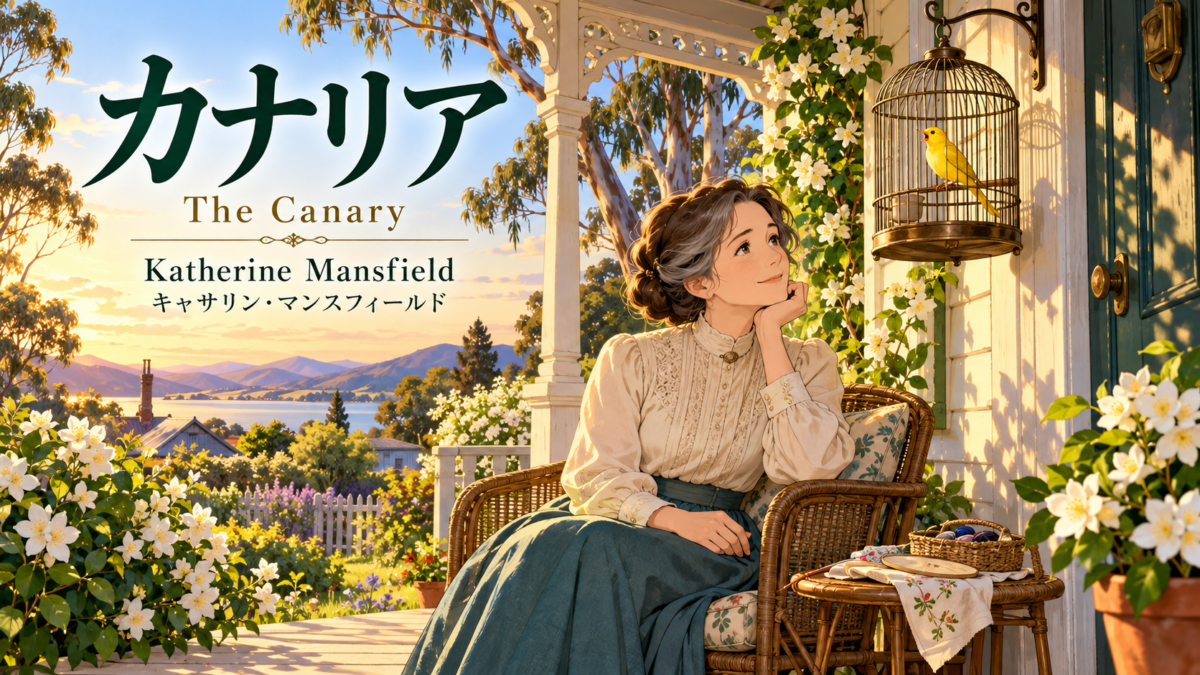
The Canary
Complete Story / 全編
『カナリア』全編 対訳英語学習リーダーです。
重要語句が8つのカテゴリーに色分けされ、ルビ形式で日本語訳が確認できます。
... You see that big nail to the right of the front door?
……玄関の右にある、あの大きな釘が見えますか。
I can scarcely look at it even now and yet I could not bear to take it out.
今でも、ほとんど見ることができません。それでも、抜いてしまうのは耐えられないのです。
I should like to think it was there always even after my time. I sometimes hear the next people saying, “There must have been a cage hanging from there.”
私がいなくなった後も、ずっとあそこに残っていてほしいと思います。次に住む人が「あそこには鳥籠が掛かっていたに違いない」と言う声を、時々思い浮かべます。
And it comforts me; I feel he is not quite forgotten.
そうすると慰められます。あの子がすっかり忘れられたわけではないと感じるのです。
... You cannot imagine how wonderfully he sang. It was not like the singing of other canaries. And that isn’t just my fancy.
……あの子がどんなに素晴らしく歌ったか、想像もつかないでしょう。ほかのカナリアの歌とは違いました。私の思い込みではありません。
Often, from the window, I used to see people stop at the gate to listen,
窓からよく見かけたものです。人々が門のところで立ち止まり、歌に耳を傾けていました。
or they would lean over the fence by the mock-orange for quite a long time—carried away.
あるいは、バイカウツギのそばの柵に身を乗り出し、長いこと聴き入っていたのです。
I suppose it sounds absurd to you—it wouldn’t if you had heard him—but it really seemed to me that he sang whole songs with a beginning
ばかげた話に聞こえるでしょうね。あの子の歌を聴いていれば、そうは思わないでしょうが。本当に、歌の初めから
and an end to them.
終わりまで、ひとまとまりの歌を歌っているように感じられたのです。
For instance, when I’d finished the house in the afternoon, and changed my blouse and brought my sewing on to the veranda here, he used to hop, hop,
たとえば、午後の家事を終え、ブラウスを着替えて、このベランダへ針仕事を持ってくると、あの子はぴょん、ぴょん、
hop from one perch to another, tap against the bars as if to attract my attention, sip a little water just as a professional singer might,
ぴょんと止まり木から止まり木へ跳び移り、私の注意を引くように籠の棒をたたきました。本職の歌手のように少し水を飲み、
and then break into a song so exquisite that I had to put my needle down to listen to him. I can’t describe it; I wish I could.
それから、とても美しい歌を歌い始めました。私は針を置いて聴かずにはいられませんでした。うまく説明できません。できればよいのですが。
But it was always the same, every afternoon, and I felt that I understood every note of it.
でも、毎日午後になると、いつも同じでした。私は、その歌の一音一音が分かるように感じたのです。
... I loved him. How I loved him! Perhaps it does not matter so very much what it is one loves in this world. But love something one must.
……愛していました。どれほど愛していたことか。この世で何を愛するかは、それほど大切ではないのかもしれません。でも、何かを愛さずにはいられないのです。
Of course there was always my little house and the garden, but for some reason they were never enough. Flowers respond wonderfully, but they don’t sympathize.
もちろん、いつも小さな家と庭がありました。でも、なぜかそれだけでは足りませんでした。花は見事に応えてくれますが、心に寄り添ってはくれません。
Then I loved the evening star. Does that sound foolish?
それから、宵の明星を愛しました。おかしな話に聞こえますか。
I used to go into the backyard, after sunset, and wait for it until it shone above the dark gum tree. I used to whisper “There you are, my darling.”
日が沈むと裏庭に出て、暗いユーカリの木の上に星が輝くのを待ちました。「いたのね、いとしいあなた」と、ささやいたものです。
And just in that first moment it seemed to be shining for me alone. It seemed to understand this ...
その最初の瞬間だけは、私一人のために輝いているようでした。星は、この……
something which is like longing, and yet it is not longing. Or regret—it is more like regret. And yet regret for what? I have much to be thankful for.
何かを分かってくれるようでした。憧れに似ていて、憧れではないもの。後悔でしょうか。その方が近い気もします。でも、何への後悔でしょう。感謝すべきことはたくさんあるのです。
... But after he came into my life I forgot the evening star; I did not need it any more. But it was strange.
……でも、あの子が私の暮らしに来てからは、宵の明星を忘れました。もう必要なかったのです。それでも、不思議でした。
When the Chinaman who came to the door with birds to sell held him up in his tiny cage, and instead of fluttering, fluttering, like the poor little goldfinches,
鳥を売りに来た中国人の男の人が、小さな籠に入ったあの子を持ち上げました。ほかのかわいそうなゴシキヒワたちのように羽をばたつかせず、
he gave a faint, small chirp, I found myself saying, just as I had said to the star over the gum tree, “There you are, my darling.”
あの子は、かすかな小さい声で鳴きました。私は、ユーカリの上の星に言ったのと同じ言葉を、思わず口にしていました。「いたのね、いとしいあなた」
From that moment he was mine.
その瞬間から、あの子は私のものになりました。
... It surprises me even now to remember how he and I shared each other’s lives.
……あの子と私がどんなに互いの暮らしを分かち合っていたか、思い出すと今でも驚きます。
The moment I came down in the morning and took the cloth off his cage he greeted me with a drowsy little note. I knew it meant “Missus! Missus!”
朝、階下に下りて鳥籠の布を取ると、眠そうな小さな声で迎えてくれました。「奥さん! 奥さん!」と言っているのだと分かりました。
Then I hung him on the nail outside while I got my three young men their breakfasts,
それから、外の釘に籠を掛け、下宿している三人の若者の朝食を用意しました。
and I never brought him in until we had the house to ourselves again. Then, when the washing-up was done, it was quite a little entertainment.
家がまた私たち二人だけになるまで、中へは入れませんでした。食器洗いが終わると、ちょっとしたお楽しみが始まりました。
I spread a newspaper over a corner of the table and when I put the cage on it he used to beat with his wings despairingly,
テーブルの隅に新聞を広げ、その上に鳥籠を置くと、あの子は絶望したように翼をばたつかせたものです。
as if he didn’t know what was coming. “You’re a regular little actor,” I used to scold him.
まるで、これから何が起こるか知らないように。「あなたは、まったく小さな役者さんね」と、叱ったものです。
I scraped the tray, dusted it with fresh sand, filled his seed and water tins, tucked a piece of chickweed and half a chili between the bars.
受け皿をこすってきれいにし、新しい砂を振り、餌と水の容器を満たしました。棒の間には、ハコベを少しと唐辛子の半分を挟みました。
And I am perfectly certain he understood and appreciated every item of this little performance. You see by nature he was exquisitely neat.
あの子は、この小さな儀式の一つ一つを理解し、喜んでくれていたと確信しています。生まれつき、たいそうきれい好きだったのです。
There was never a speck on his perch. And you’d only to see him enjoy his bath to realize he had a real small passion for cleanliness.
止まり木に、汚れひとつありませんでした。水浴びを楽しむ姿を見れば、あの小さな体に、清潔さへの並々ならぬ情熱があると分かりました。
His bath was put in last. And the moment it was in he positively leapt into it.
水浴び用の容器は最後に入れました。入った途端、あの子は勢いよく飛び込みました。
First he fluttered one wing, then the other, then he ducked his head and dabbled his breast feathers.
まず片方の翼をばたつかせ、次にもう片方。それから頭を水に沈め、胸の羽をぬらしました。
Drops of water were scattered all over the kitchen, but still he would not get out. I used to say to him, “Now that’s quite enough. You’re only showing off.”
台所じゅうに水滴が飛び散っても、まだ出ようとしません。「さあ、もう十分よ。ただ見せびらかしているだけでしょう」と言ったものです。
And at last out he hopped and, standing on one leg, he began to peck himself dry.
ようやくぴょんと外へ出ると、片脚で立ち、くちばしで羽をつついて乾かし始めました。
Finally he gave a shake, a flick, a twitter and he lifted his throat—Oh, I can hardly bear to recall it. I was always cleaning the knives at the time.
最後に体をぶるっと振り、ぴくりと動き、さえずって、喉を持ち上げました。ああ、思い出すのさえつらいのです。その時、私はいつもナイフを磨いていました。
And it almost seemed to me the knives sang too, as I rubbed them bright on the board.
板の上でぴかぴかになるまでこすると、ナイフまで歌っているように思えたものです。
... Company, you see—that was what he was. Perfect company. If you have lived alone you will realize how precious that is.
……一緒にいてくれる相手、そう、あの子は私の仲間でした。申し分のない仲間。一人で暮らしたことがあれば、それがどれほど大切か分かるでしょう。
Of course there were my three young men who came in to supper every evening, and sometimes stayed in the dining-room afterwards reading the paper.
もちろん、三人の若者が毎晩夕食に帰ってきました。その後、食堂に残って新聞を読むこともありました。
But I could not expect them to be interested in the little things that made my day. Why should they be? I was nothing to them.
でも、私の一日を彩るささやかなことに、興味を持ってもらえるはずはありません。持つ理由があるでしょうか。私は彼らにとって、何でもないのです。
In fact, I overheard them one evening talking about me on the stairs as “the Scarecrow.” No matter. It doesn’t matter. Not in the least. I quite understand.
実際、ある晩、階段で私を「かかし」と呼んでいるのを耳にしました。構いません。気にはしません。少しも。よく分かります。
They are young. Why should I mind? But I remember feeling so especially thankful that I was not quite alone that evening. I told him, after they had gone out.
彼らは若いのです。なぜ私が気にする必要があるでしょう。でも、その晩、一人きりではないことに、とりわけ感謝したのを覚えています。彼らが出掛けた後、あの子に話しました。
I said “Do you know what they call Missus?” And he put his head on one side and looked at me
「奥さんが何と呼ばれているか、知ってる?」と言いました。あの子は首をかしげ、私を見つめました。
with his little bright eye until I could not help laughing. It seemed to amuse him.
小さな輝く目で見つめられるうちに、私は笑わずにはいられませんでした。あの子も面白がっているようでした。
... Have you kept birds? If you haven’t all this must sound, perhaps, exaggerated. People have the idea that birds are heartless, cold little creatures, not like dogs or cats.
……鳥を飼ったことはありますか。なければ、どれも大げさに聞こえるかもしれません。人は、鳥を犬や猫とは違い、心のない冷たい生き物だと考えています。
My washerwoman used to say on Mondays when she wondered why I didn’t keep “a nice fox terrier,” “There’s no comfort, Miss, in a canary.” Untrue. Dreadfully untrue.
洗濯をしてくれる女性は月曜日になると、「かわいいフォックステリア」を飼わないのを不思議がり、「お嬢さん、カナリアでは慰めになりませんよ」と言いました。違います。まるで違います。
I remember one night. I had had a very awful dream—dreams can be dreadfully cruel—even after I had woken up I could not get over it.
ある晩のことを覚えています。ひどく恐ろしい夢を見ました。夢は恐ろしく残酷なものです。目が覚めても、その怖さから抜け出せませんでした。
So I put on my dressing-gown and went down to the kitchen for a glass of water. It was a winter night and raining hard.
そこでガウンを羽織り、水を一杯飲もうと台所へ下りました。冬の夜で、激しく雨が降っていました。
I suppose I was still half asleep, but through the kitchen window, that hadn’t a blind, it seemed to me the dark was staring in, spying.
まだ半分眠っていたのでしょう。目隠しのない台所の窓から、闇がこちらをじっと見つめ、うかがっているように感じたのです。
And suddenly I felt it was unbearable that I had no one to whom I could say “I’ve had such a dreadful dream,” or—or “Hide me from the dark.”
突然、耐えられなくなりました。「恐ろしい夢を見たの」、あるいは、あるいは「闇から私を隠して」と言える相手が誰もいないことに。
I even covered my face for a minute. And then there came a little “Sweet! Sweet!”
一分ほど、顔を覆ってさえいました。その時、小さな「スウィート! スウィート!」という鳴き声が聞こえました。
His cage was on the table, and the cloth had slipped so that a chink of light shone through. “Sweet! Sweet!”
鳥籠はテーブルの上にあり、布がずれて、隙間から光が差していました。「スウィート! スウィート!」
said the darling little fellow again, softly, as much as to say, “I’m here, Missus! I’m here!” That was so beautifully comforting that I nearly cried.
いとしい小さなあの子が、また優しく鳴きました。まるで「ここにいるよ、奥さん! ここにいるよ!」と言うように。その慰めがあまりに優しくて、泣きそうになりました。
... And now he’s gone. I shall never have another bird, another pet of any kind. How could I?
……そして今、あの子はいません。もう二度と、鳥も、どんなペットも飼いません。どうして飼えるでしょう。
When I found him, lying on his back, with his eye dim and his claws wrung, when I realised that never again should I hear my darling sing,
仰向けになり、目の光を失い、足の指を縮めたあの子を見つけた時、いとしい歌を二度と聴けないのだと分かった時、
something seemed to die in me. My heart felt hollow, as if it was his cage. I shall get over it. Of course. I must.
私の中でも何かが死んだようでした。心は、あの子の鳥籠のように空っぽに感じられました。立ち直ります。もちろん。そうしなければ。
One can get over anything in time. And people always say I have a cheerful disposition. They are quite right. I thank my God I have.
時がたてば、どんなことからでも立ち直れるものです。人はいつも、私を明るい性格だと言います。その通りです。そんな性格を授かったことを、神様に感謝しています。
... All the same, without being morbid, and giving way to—to memories and so on, I must confess that there does seem to me something sad in life.
……それでも、くよくよしたり、思い出などに、そう、浸ったりするわけではありませんが、人生には何か悲しいものがあると感じることは、認めなければなりません。
It is hard to say what it is. I don’t mean the sorrow that we all know, like illness and poverty and death. No, it is something different.
それが何か、言い表すのは難しいのです。病気や貧しさや死のような、誰もが知る悲しみのことではありません。いいえ、何か別のものです。
It is there, deep down, deep down, part of one, like one’s breathing.
それは深く、深いところにあります。呼吸のように、自分自身の一部として。
However hard I work and tire myself I have only to stop to know it is there, waiting. I often wonder if everybody feels the same. One can never know.
どんなに懸命に働いて疲れ果てても、立ち止まるだけで、それが待っていると分かります。皆も同じように感じるのか、よく考えます。決して分からないことですが。
But isn’t it extraordinary that under his sweet, joyful little singing it was just this sadness—ah, what is it?—that I heard?
でも、あの子の優しい、喜びに満ちた小さな歌の奥に、まさにこの悲しみを――ああ、何なのでしょう――聴いていたのは、不思議ではありませんか。
出典 (Source):
原文:Project Gutenberg — The Canary, Katherine Mansfield
朗読:LibriVox — The Canary(Rob Marland版)
英語原文と、新しく作成した日本語訳を掲載しています。