
CHAPTER XXXIX:セフトン のポイント
第39章では、ロンドンの辻馬車御者セフトンの姿を通して、貧しい御者たちの厳しい生活が描かれます。馬も人間も休む余裕がなく、日々の稼ぎに追われる中で、疲労や病気が少しずつ積み重なっていきます。
読みどころは、動物への酷使が単に個人の冷酷さだけでなく、貧困や労働環境の問題とも結びついている点です。ジェリーの誠実な働き方との対比によって、馬にも人間にも過酷な社会の仕組みが見えてくる重い章です。
この章の英語学習ポイントを開く
- cabman:辻馬車の御者。セフトンの仕事と、ロンドンの厳しい労働環境を理解する基本語です。
- poverty:貧困。人間の生活苦が馬の酷使にもつながる、この章の重要な背景です。
- overwork:働かせすぎる、酷使する。馬にも御者にも重くのしかかる問題を表します。
- tired:疲れた。休む余裕のない馬と人間の状態を示す大切な語です。
- sympathy:同情、思いやり。セフトンの苦境を通して、単純な善悪ではなく社会全体を見る視点につながります。
『黒馬物語』Chapter XXXIX: Seedy Sam
『黒馬物語』第39章を、英単語の意味が直感的に入るように色分けしながら、英文と日本語訳をセットで読める形式に整えています。
表示設定
カテゴリ別ハイライト
I should say that for a cab-horse I was very well off indeed.
辻馬車馬としては、私は本当にとても恵まれていたと言うべきでしょう。
My driver was my owner, and it was his interest to treat me well and not overwork me.
私の御者は私の持ち主でもあり、私をよく扱い、働かせすぎないことが彼自身の利益でもありました。
Even had he not been so good a man as he was.
たとえ彼が実際ほど善良な人でなかったとしても、そうだったでしょう。
But there were a great many horses which belonged to the large cab-owners, who let them out to their drivers for so much money a day.
しかし、大きな辻馬車所有者に属する馬たちもたくさんいました。そうした所有者は、一日いくらという形で馬を御者たちに貸し出していました。
As the horses did not belong to these men the only thing they thought of was how to get their money out of them.
馬がその御者たちの持ち物ではなかったため、彼らが考える唯一のことは、どうやって馬から金を稼ぎ出すかでした。
First, to pay the master, and then to provide for their own living.
まず主人に支払うため、そしてその後で自分自身の生活費を得るためです。
And a dreadful time some of these horses had of it.
そして、そうした馬たちの中には、ひどい日々を過ごしているものもいました。
Of course, I understood but little, but it was often talked over on the stand.
もちろん私にはよくわからないことも多かったのですが、そのことは待機場でよく話し合われていました。
And the governor, who was a kind-hearted man and fond of horses, would sometimes speak up if one came in very much jaded or ill-used.
そして親方は、心の優しい、馬好きの人だったので、ひどく疲れ切ったり虐待されたりした馬が来ると、時々声を上げました。
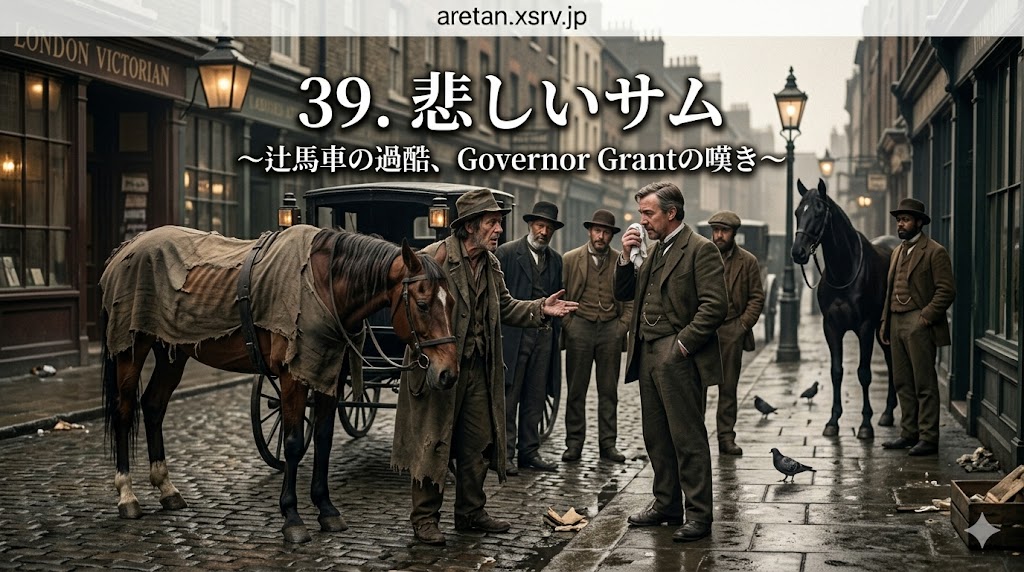
One day a shabby, miserable-looking driver, who went by the name of “Seedy Sam”, brought in his horse looking dreadfully beat.
ある日、「みすぼらしいサム」という名で通っていた、みすぼらしく惨めそうな御者が、ひどく疲れ切った様子の馬を連れてきました。
And the governor said:
すると親方が言いました。
“You and your horse look more fit for the police station than for this rank.”
「お前とお前の馬は、この待機場より警察署にいるほうがふさわしく見えるぞ」
The man flung his tattered rug over the horse.
その男は、ぼろぼろの毛布を馬に投げかけました。
Turned full round upon the Governor and said in a voice that sounded almost desperate:
そして親方のほうへ真正面から向き直り、ほとんど絶望的に聞こえる声で言いました。
“If the police have any business with the matter it ought to be with the masters who charge us so much, or with the fares that are fixed so low.”
「もし警察がこの件に関わるべきだというなら、それは俺たちに高い金を請求する主人たちか、あまりに低く決められた運賃に対してであるべきだ」
“If a man has to pay eighteen shillings a day for the use of a cab and two horses, as many of us have to do in the season…”
「もし男が、辻馬車と二頭の馬を使うために一日十八シリング払わなければならないなら――繁忙期には俺たちの多くがそうなんだが――」
“And must make that up before we earn a penny for ourselves I say ‘tis more than hard work.”
「自分たちのために一ペニー稼ぐ前に、その金を作らなければならないなら、それは重労働以上のものだと言いたい」
“Nine shillings a day to get out of each horse before you begin to get your own living.”
「自分の生活費を稼ぎ始める前に、それぞれの馬から一日九シリングを稼ぎ出さなければならないんだ」
“You know that’s true, and if the horses don’t work we must starve.”
「それが本当だと知っているだろう。馬が働かなければ、俺たちは飢えるしかない」
“And I and my children have known what that is before now.”
「俺も子どもたちも、これまでに飢えるということがどういうことか知っている」
“I’ve six of ‘em, and only one earns anything.”
「子どもは六人いて、稼ぎがあるのは一人だけだ」
“I am on the stand fourteen or sixteen hours a day, and I haven’t had a Sunday these ten or twelve weeks.”
「俺は一日に十四時間か十六時間も待機場にいて、この十週か十二週、日曜日を一度も持っていない」
“You know Skinner never gives a day if he can help it, and if I don’t work hard, tell me who does!”
「スキナーはできる限り休みをくれないことを知っているだろう。俺が一生懸命働いていないというなら、誰が働いているというんだ!」
“I want a warm coat and a mackintosh, but with so many to feed how can a man get it?”
「俺は暖かい上着と防水外套が欲しい。だが、こんなに食べさせる者が多いのに、どうやって手に入れろというんだ?」
“I had to pledge my clock a week ago to pay Skinner, and I shall never see it again.”
「一週間前、スキナーに払うために時計を質入れしなければならなかった。そしてその時計を二度と見ることはないだろう」
Some of the other drivers stood round nodding their heads and saying he was right.
ほかの御者たちの何人かは周りに立ち、うなずきながら彼は正しいと言いました。
The man went on:
その男は話を続けました。
“You that have your own horses and cabs, or drive for good masters, have a chance of getting on and a chance of doing right; I haven’t.”
「自分の馬と辻馬車を持っている者や、良い主人のために運転している者には、うまくやっていく機会も、正しいことをする機会もある。だが俺にはない」
“We can’t charge more than sixpence a mile after the first, within the four-mile radius.”
「四マイル圏内では、最初の一マイルの後は、一マイル六ペンス以上請求できない」
“This very morning I had to go a clear six miles and only took three shillings.”
「まさに今朝、俺はきっちり六マイル行かなければならなかったのに、受け取ったのは三シリングだけだった」
“I could not get a return fare, and had to come all the way back.”
「帰り客は得られず、ずっと戻ってこなければならなかった」
“There’s twelve miles for the horse and three shillings for me.”
「馬にとっては十二マイルで、俺には三シリングだ」
“After that I had a three-mile fare, and there were bags and boxes enough to have brought in a good many twopences if they had been put outside.”
「その後、三マイルの客を乗せた。もし外に載せていれば、かなりの二ペンス料金が入ったはずの袋や箱がたくさんあった」
“But you know how people do; all that could be piled up inside on the front seat were put in and three heavy boxes went on the top.”
「しかし人々がどうするかは知っているだろう。前の座席の内側に積めるものはすべて中に入れられ、重い箱三つだけが上に載せられた」
“That was sixpence, and the fare one and sixpence; then I got a return for a shilling.”
「それで荷物代は六ペンス、運賃は一シリング六ペンス。それから帰り客を一シリングで得た」
“Now that makes eighteen miles for the horse and six shillings for me.”
「つまり、馬には十八マイル、俺には六シリングということになる」
“There’s three shillings still for that horse to earn and nine shillings for the afternoon horse before I touch a penny.”
「俺が一ペニーでも手にする前に、その馬にはまだ三シリング、午後の馬には九シリングを稼がせなければならない」
“Of course, it is not always so bad as that, but you know it often is.”
「もちろん、いつもそこまでひどいわけではない。だが、しばしばそうだと知っているだろう」
“And I say ‘tis a mockery to tell a man that he must not overwork his horse.”
「だから、馬を働かせすぎてはいけないと男に言うのは、まやかしだと言うんだ」
“For when a beast is downright tired there’s nothing but the whip that will keep his legs a-going.”
「獣がすっかり疲れ切った時、その脚を動かし続けるものは、むち以外にないからだ」
“You can’t help yourself—you must put your wife and children before the horse.”
「どうしようもないんだ。馬よりも妻と子どもを優先しなければならない」
“The masters must look to that, we can’t.”
「主人たちがそれを考えなければならない。俺たちにはできない」
“I don’t ill-use my horse for the sake of it; none of you can say I do.”
「俺は好きで馬を虐待しているわけではない。お前たちの誰も、俺がそうしているとは言えないはずだ」
“There’s wrong lays somewhere—never a day’s rest, never a quiet hour with the wife and children.”
「どこかに間違いがあるんだ。一日の休みもなく、妻や子どもたちと静かに過ごす一時間もない」
“I often feel like an old man, though I’m only forty-five.”
「俺はまだ四十五歳なのに、しばしば老人のように感じる」
“You know how quick some of the gentry are to suspect us of cheating and overcharging.”
「一部の上流の客たちが、俺たちをごまかしや過大請求だとすぐ疑うことを知っているだろう」
“Why, they stand with their purses in their hands counting it over to a penny and looking at us as if we were pickpockets.”
「彼らは財布を手に持って立ち、一ペニー単位で数え、まるで俺たちがすりであるかのようにこちらを見るんだ」
“I wish some of ‘em had got to sit on my box sixteen hours a day and get a living out of it and eighteen shillings beside, and that in all weathers.”
「彼らの何人かが、俺の御者台に一日十六時間座り、そこから生活費と十八シリングを、しかもどんな天気でも稼がなければならなくなればいいのにと思う」
“They would not be so uncommon particular never to give us a sixpence over or to cram all the luggage inside.”
「そうすれば、余分に六ペンスもくれず、荷物を全部内側に詰め込むことに、あれほどやたら細かくはならないだろう」
“Of course, some of ‘em tip us pretty handsome now and then, or else we could not live.”
「もちろん、中には時々かなり気前よくチップをくれる人もいる。そうでなければ俺たちは暮らしていけない」
“But you can’t depend upon that.”
「だが、それに頼ることはできない」
The men who stood round much approved this speech.
周りに立っていた男たちは、この話に大いに賛成しました。
And one of them said, “It is desperate hard, and if a man sometimes does what is wrong it is no wonder.”
そしてそのうちの一人が言いました。「それはひどくつらいことだ。だから男が時々間違ったことをしても、不思議ではない」
“And if he gets a dram too much who’s to blow him up?”
「そして彼が一杯余計に飲んだとして、誰がそれを叱責できるというんだ?」
Jerry had taken no part in this conversation, but I never saw his face look so sad before.
ジェリーはこの会話に加わっていませんでしたが、私は彼の顔がこれほど悲しそうに見えたことを見たことがありませんでした。
The governor had stood with both his hands in his pockets.
親方は両手をポケットに入れて立っていました。
Now he took his handkerchief out of his hat and wiped his forehead.
今や彼は帽子の中からハンカチを取り出し、額を拭きました。
“You’ve beaten me, Sam,” he said, “for it’s all true.”
「お前には言い負かされたよ、サム」と彼は言いました。「全部本当だからな」
“And I won’t cast it up to you any more about the police.”
「もう警察のことを持ち出してお前を責めることはしない」
“It was the look in that horse’s eye that came over me.”
「あの馬の目つきが、私の胸に迫ったんだ」
“It is hard lines for man and it is hard lines for beast.”
「それは人間にとってつらい境遇であり、獣にとってもつらい境遇だ」
“And who’s to mend it I don’t know.”
「そして誰がそれを直せるのか、私にはわからない」
“But anyway you might tell the poor beast that you were sorry to take it out of him in that way.”
「だが、いずれにせよ、あのかわいそうな獣に、そんなふうに力をしぼり取ってすまないと伝えてやってもいいだろう」
“Sometimes a kind word is all we can give ‘em, poor brutes.”
「時には優しい言葉だけが、私たちがあのかわいそうな動物たちに与えられるすべてなのだ」
“And ‘tis wonderful what they do understand.”
「そして彼らがどれほど理解するかは、驚くべきことだ」
A few mornings after this talk a new man came on the stand with Sam’s cab.
この話の数日後の朝、サムの辻馬車に乗って、新しい男が待機場にやって来ました。
“Halloo!” said one, “what’s up with Seedy Sam?”
「おや!」と一人が言いました。「みすぼらしいサムはどうしたんだ?」
“He’s ill in bed,” said the man.
「病気で寝込んでいます」とその男は言いました。
“He was taken last night in the yard, and could scarcely crawl home.”
「昨夜、中庭で倒れて、ほとんど這うようにしか家に帰れなかったのです」
“His wife sent a boy this morning to say his father was in a high fever and could not get out, so I’m here instead.”
「今朝、彼の妻が少年をよこして、父親は高熱で出られないと言ってきました。それで私が代わりに来ています」
The next morning the same man came again.
翌朝、同じ男がまたやって来ました。
“How is Sam?” inquired the governor.
「サムはどうだ」と親方が尋ねました。
“He’s gone,” said the man.
「彼は逝きました」とその男は言いました。
“What, gone? You don’t mean to say he’s dead?”
「何、逝った? 死んだと言うのか?」
“Just snuffed out,” said the other.
「ふっと消えるように亡くなりました」と相手は言いました。
“He died at four o’clock this morning.”
「今朝四時に亡くなりました」
“All yesterday he was raving—raving about Skinner, and having no Sundays.”
「昨日は一日中うわごとを言っていました。スキナーのことや、日曜日がないことについてです」
“’I never had a Sunday’s rest,’ these were his last words.”
「『俺には一度も日曜の休みがなかった』。それが彼の最後の言葉でした」
No one spoke for a while.
しばらくのあいだ、誰も口を開きませんでした。
And then the governor said, “I’ll tell you what, mates, this is a warning for us.”
それから親方が言いました。「いいか、仲間たち。これは私たちへの警告だ」