
カラフル対訳で紹介している作品について
カラフル対訳で紹介している作品は、すべてパブリックドメインの作品です。
このサイトで使われている作品は、著作権の切れた名作などの全文を電子化し、インターネット上で公開している Project Gutenberg(プロジェクト・グーテンベルク)、 および朗読音声を公開している LibriVox(リブリヴォックス/朗読図書館) の作品を出典としています。
原文はProject Gutenberg、音声はLibriVoxで公開されているパブリックドメイン作品を出典としています。
PART FOUR
THE FIRST CHAPTER
SHELLFISH LANGUAGES AGAIN
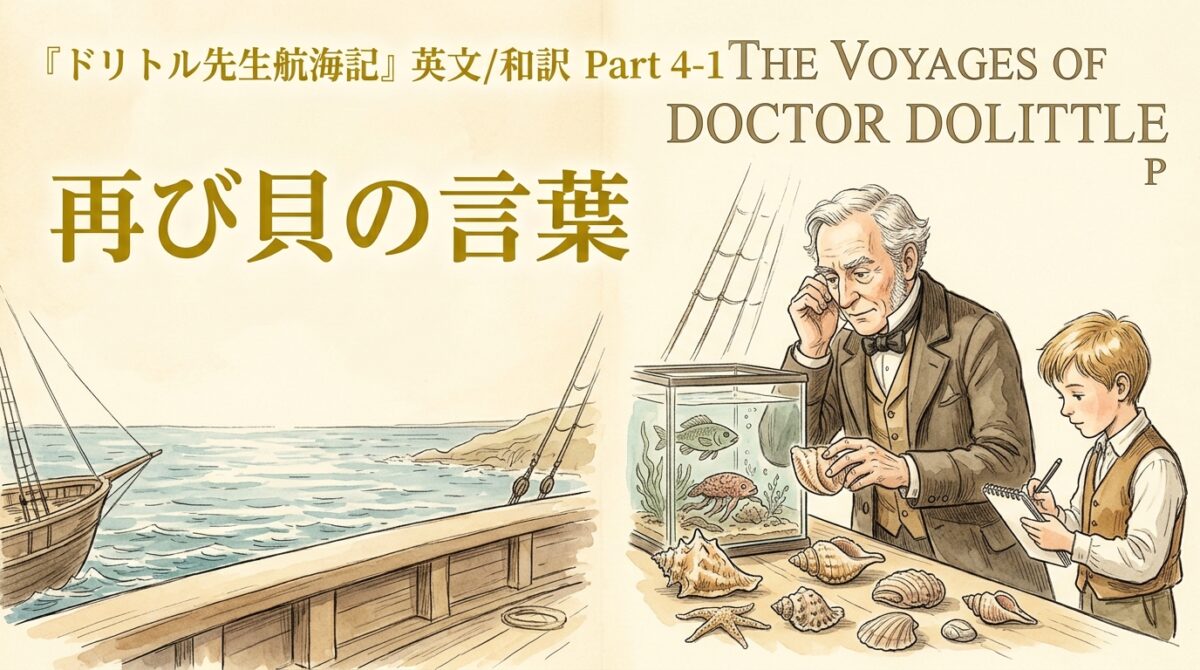
第四部の始まりとなる章です。カーリュー号は三週間にわたり、穏やかな海と力強い風に助けられて航海を続けます。トミーは海の景色、船の信号、氷山、船の日誌、先生の研究ノートに強い関心を抱きます。やがて一行は大量のガルフウィードの中に入り、そこから先生の「貝類の言葉」研究が再び動き出します。そして、英語を話し、英語の曲を口笛で吹く不思議な魚シルバー・フィジットが見つかります。航海・海・観察・研究・発見に関する重要表現を多めに色分けしています。
表示設定
MIRANDA, the Purple Bird-of-Paradise had prophesied rightly when she had foretold a good spell of weather.
紫の極楽鳥ミランダは、よい天気が続くと予言していたが、その予言は正しかった。
For three weeks the good ship Curlew plowed her way through smiling seas before a steady powerful wind.
三週間、立派な船カーリュー号は、安定した力強い風を受けながら、穏やかな海を切り進んでいった。
I suppose most real sailors would have found this part of the voyage dull.
おそらく、本物の船乗りの多くなら、この航海の部分を退屈だと思っただろう。
But not I.
しかし私は違った。
As we got further South and further West the face of the sea seemed different every day.
私たちがさらに南へ、さらに西へ進むにつれて、海の表情は毎日違って見えた。
And all the little things of a voyage which an old hand would have hardly bothered to notice were matters of great interest for my eager eyes.
熟練者ならほとんど気にも留めないような航海中の小さなことすべてが、私の熱心な目には大きな興味の対象だった。
We did not pass many ships.
私たちは多くの船とすれ違ったわけではなかった。
When we did see one, the Doctor would get out his telescope and we would all take a look at it.
船を見かけると、先生は望遠鏡を取り出し、私たちはみなその船をのぞいた。
Sometimes he would signal to it, asking for news, by hauling up little colored flags upon the mast.
ときには先生は、ニュースを尋ねるために、マストに小さな色旗を掲げて、その船に信号を送った。
And the ship would signal back to us in the same way.
するとその船も、同じ方法で私たちに信号を返してきた。
The meaning of all the signals was printed in a book which the Doctor kept in the cabin.
すべての信号の意味は、先生が船室に置いていた本に印刷されていた。
He told me it was the language of the sea and that all ships could understand it whether they be English, Dutch, or French.
先生はそれが海の言葉であり、船がイギリス船であろうと、オランダ船であろうと、フランス船であろうと、すべての船が理解できるものだと教えてくれた。
Our greatest happening during those first weeks was passing an iceberg.
最初の数週間で最も大きな出来事は、氷山のそばを通り過ぎたことだった。
When the sun shone on it, it burst into a hundred colors, sparkling like a jeweled palace in a fairy-story.
太陽がそれを照らすと、氷山は百もの色に輝き、おとぎ話に出てくる宝石の宮殿のようにきらめいた。
Through the telescope we saw a mother polar bear with a cub sitting on it, watching us.
望遠鏡を通して見ると、母ホッキョクグマが子グマと一緒にその上に座り、私たちを見ていた。
The Doctor recognized her as one of the bears who had spoken to him when he was discovering the North Pole.
先生は彼女を、自分が北極を発見していたときに話しかけてきたクマの一頭だと見分けた。
So he sailed the ship up close and offered to take her and her baby on to the Curlew if she wished it.
そこで先生は船を近くまで進め、彼女が望むなら、母グマと赤ちゃんをカーリュー号に乗せてあげると申し出た。
But she only shook her head, thanking him.
しかし彼女は先生に礼を言いながら、首を振っただけだった。
She said it would be far too hot for the cub on the deck of our ship, with no ice to keep his feet cool.
氷がなくて足を冷やせない私たちの船の甲板では、子グマにはあまりにも暑すぎるだろうと彼女は言った。
It had been indeed a very hot day.
実際、その日はとても暑い日だった。
But the nearness of that great mountain of ice made us all turn up our coat-collars and shiver with the cold.
しかし、その巨大な氷の山が近くにあるため、私たちはみな上着の襟を立て、寒さに震えた。
During those quiet peaceful days I improved my reading and writing a great deal with the Doctor’s help.
その静かで平和な日々の間に、私は先生の助けで読み書きが大いに上達した。
I got on so well that he let me keep the ship’s log.
私はとても順調に進歩したので、先生は私に船の航海日誌をつけさせてくれた。
This is a big book kept on every ship, a kind of diary, in which the number of miles run, the direction of your course and everything else that happens is written down.
それはすべての船に置かれている大きな本で、一種の日記であり、進んだマイル数、進路の方向、そして起こったあらゆることを書き留めるものだった。
The Doctor too, in what spare time he had, was nearly always writing—in his note-books.
先生もまた、空き時間があると、ほとんどいつも自分のノートに何かを書いていた。
I used to peep into these sometimes, now that I could read, but I found it hard work to make out the Doctor’s handwriting.
読み書きができるようになったので、ときどきそれらをのぞいてみたが、先生の筆跡を読み取るのは難しい作業だった。
Many of these note-books seemed to be about sea things.
それらのノートの多くは、海のものについて書かれているようだった。
There were six thick ones filled full with notes and sketches of different seaweeds.
さまざまな海藻についてのメモやスケッチでいっぱいの分厚いノートが六冊あった。
And there were others on sea birds; others on sea worms; others on seashells.
ほかにも、海鳥についてのもの、海の虫についてのもの、貝殻についてのものがあった。
They were all some day to be re-written, printed and bound like regular books.
それらはいつの日かすべて書き直され、印刷され、普通の本のように製本されることになっていた。
One afternoon we saw, floating around us, great quantities of stuff that looked like dead grass.
ある午後、私たちの周りに、枯れ草のように見えるものが大量に浮かんでいるのが見えた。
The Doctor told me this was gulf-weed.
先生は、それはガルフウィードだと教えてくれた。
A little further on it became so thick that it covered all the water as far as the eye could reach.
少し先へ進むと、それは非常に濃くなり、見渡す限りの水面をすべて覆っていた。
It made the Curlew look as though she were moving across a meadow instead of sailing the Atlantic.
そのためカーリュー号は、大西洋を航海しているというより、草原の上を進んでいるように見えた。
Crawling about upon this weed, many crabs were to be seen.
この海藻の上では、多くのカニが這い回っているのが見えた。
And the sight of them reminded the Doctor of his dream of learning the shellfish language.
そしてそれらを見たことで、先生は貝類の言葉を学ぶという自分の夢を思い出した。
He fished several of these crabs up with a net and put them in his listening-tank to see if he could understand them.
先生はそのカニを何匹か網ですくい上げ、理解できるかどうか試すために、聞き取り水槽へ入れた。
Among the crabs he also caught a strange-looking, chubby, little fish which he told me was called a Silver Fidgit.
カニに混じって、先生は奇妙な姿をした丸ぽちゃの小さな魚も捕まえた。それはシルバー・フィジットと呼ばれる魚だと先生は教えてくれた。
After he had listened to the crabs for a while with no success, he put the fidgit into the tank and began to listen to that.
しばらくカニの声を聞いても成果がなかったあと、先生はフィジットを水槽に入れ、それを聞き始めた。
I had to leave him at this moment to go and attend to some duties on the deck.
そのとき私は、甲板でいくつかの仕事をしに行かなければならなかった。
But presently I heard him below shouting for me to come down again.
しかしやがて、下から先生が私にもう一度降りてくるよう叫んでいるのが聞こえた。
“Stubbins,” he cried as soon as he saw me—“a most extraordinary thing—Quite unbelievable.”
「スタビンズ」と先生は私を見るなり叫んだ。「ものすごく並外れたことだ。まったく信じられない」
“I’m not sure whether I’m dreaming—Can’t believe my own senses. I—I—I—”
「自分が夢を見ているのかどうかもわからない。自分の感覚が信じられない。私は――私は――私は――」
「彼は英語を話すんだ!」
“Why, Doctor,” I said, “what is it?—What’s the matter?”
「どうしたんですか、先生」と私は言った。「何があったんです? どうしたんですか?」
“The fidgit,” he whispered, pointing with a trembling finger to the listening-tank in which the little round fish was still swimming quietly.
「フィジットだ」と先生はささやき、震える指で聞き取り水槽を指さした。その中では、小さく丸い魚がまだ静かに泳いでいた。
“He talks English! And—and—and he whistles tunes—English tunes!”
「彼は英語を話すんだ! それに、それに、それに、彼は曲を口笛で吹くんだ。英語の曲を!」
“Talks English!” I cried—“Whistles!—Why, it’s impossible.”
「英語を話す!」と私は叫んだ。「口笛を吹く! そんなの不可能です」
“It’s a fact,” said the Doctor, white in the face with excitement.
「それは事実だ」と先生は、興奮で顔を青白くしながら言った。
“It’s only a few words, scattered, with no particular sense to them—all mixed up with his own language which I can’t make out yet.”
「ほんの数語で、ばらばらで、特に意味があるわけではない。まだ私にはわからない彼自身の言葉と全部混ざっているんだ」
“But they’re English words, unless there’s something very wrong with my hearing.”
「だが、私の耳がよほどおかしくなっていないかぎり、それらは英語の単語だ」
“And the tune he whistles, it’s as plain as anything—always the same tune.”
「そして彼が口笛で吹く曲は、何よりもはっきりしている。いつも同じ曲なんだ」
“Now you listen and tell me what you make of it.”
「さあ、君が聞いて、それをどう受け取るか私に教えてくれ」
“Tell me everything you hear. Don’t miss a word.”
「聞こえることをすべて教えてくれ。一語も聞き逃してはいけない」
I went to the glass tank upon the table while the Doctor grabbed a note-book and a pencil.
先生がノートと鉛筆をつかむ間、私は机の上のガラス水槽へ行った。
Undoing my collar, I stood upon the empty packing-case he had been using for a stand and put my right ear down under the water.
襟をゆるめ、先生が台として使っていた空の荷造り箱の上に立ち、右耳を水の中へ沈めた。
For some moments I detected nothing at all—except, with my dry ear, the heavy breathing of the Doctor.
しばらくの間、私は何も感知できなかった。ただし、濡れていない方の耳では、先生の荒い息づかいが聞こえた。
He waited, all stiff and anxious, for me to say something.
先生は、私が何か言うのを、全身をこわばらせ、不安そうに待っていた。
At last from within the water, sounding like a child singing miles and miles away, I heard an unbelievably thin, small voice.
ついに水の中から、何マイルも何マイルも離れたところで子どもが歌っているような、信じられないほど細く小さな声が聞こえた。
“Ah!” I said.
「あっ!」と私は言った。
“What is it?” asked the Doctor in a hoarse, trembly whisper.
「どうした?」と先生は、かすれた震えるささやき声で尋ねた。
“What does he say?”
「彼は何と言っている?」
“I can’t quite make it out,” I said.
「はっきりとは聞き取れません」と私は言った。
“It’s mostly in some strange fish language—Oh, but wait a minute!”
「ほとんどは何か奇妙な魚の言葉です。あ、でもちょっと待ってください!」
“Yes, now I get it—‘No smoking’…. ‘My, here’s a queer one!’ ‘Popcorn and picture postcards here’…. ‘This way out’…. ‘Don’t spit’.”
「はい、今わかりました。『禁煙』……『おや、変なのがいるぞ!』 『ポップコーンと絵はがきはこちら』……『出口はこちら』……『つばを吐くな』」
“What funny things to say, Doctor!—Oh, but wait!—Now he’s whistling the tune.”
「なんておかしなことを言うんでしょう、先生! あ、でも待ってください。今、曲を口笛で吹いています」
“What tune is it?” gasped the Doctor.
「何の曲だ?」と先生は息をのんで尋ねた。
“John Peel.”
「ジョン・ピールです」
“Ah hah,” cried the Doctor, “that’s what I made it out to be.”
「やはり!」と先生は叫んだ。「私にもそう聞こえたんだ」
And he wrote furiously in his note-book.
そして先生は、ノートに猛烈な勢いで書き込んだ。
I went on listening.
私は聞き続けた。
“This is most extraordinary,” the Doctor kept muttering to himself as his pencil went wiggling over the page.
「これは実に並外れている」と、先生は鉛筆を紙の上でくねくね動かしながら、何度もつぶやいていた。
“Most extraordinary—but frightfully thrilling. I wonder where he—”
「実に並外れている。だが、ものすごく胸躍る。彼はいったいどこで――」
“Here’s some more,” I cried—“some more English…. ‘The big tank needs cleaning’…. That’s all.”
「また何かあります」と私は叫んだ。「また英語です……『大きな水槽は掃除が必要だ』……それだけです」
“Now he’s talking fish-talk again.”
「今はまた魚の言葉を話しています」
“The big tank!” the Doctor murmured, frowning in a puzzled kind of way.
「大きな水槽!」と先生は、困惑したように眉をひそめながらつぶやいた。
“I wonder where on earth he learned—”
「いったいどこで彼はそんなことを覚えたのだろう――」
Then he bounded up out of his chair.
すると先生は椅子から跳び上がった。
“I have it,” he yelled, “this fish has escaped from an aquarium.”
「わかったぞ」と先生は叫んだ。「この魚は水族館から逃げ出したのだ」
“Why, of course! Look at the kind of things he has learned: ‘Picture postcards’—they always sell them in aquariums.”
「そうだ、もちろんだ! 彼が覚えているものを見てごらん。『絵はがき』――水族館ではいつもそれを売っている」
“‘Don’t spit’; ‘No smoking’; ‘This way out’—the things the attendants say.”
「『つばを吐くな』『禁煙』『出口はこちら』――係員たちが言うことだ」
“And then, ‘My, here’s a queer one!’ That’s the kind of thing that people exclaim when they look into the tanks.”
「そして『おや、変なのがいるぞ!』 それは人々が水槽をのぞき込んだときに叫ぶような言葉だ」
“It all fits.”
「すべてがぴったり合う」
“There’s no doubt about it, Stubbins: we have here a fish who has escaped from captivity.”
「疑いはない、スタビンズ。ここにいるのは、捕らわれの身から逃げ出した魚だ」
“And it’s quite possible—not certain, by any means, but quite possible—that I may now, through him, be able to establish communication with the shellfish.”
「そして、確実ではまったくないが、十分に可能性はある。今や彼を通じて、私は貝類との意思疎通を確立できるかもしれない」
“This is a great piece of luck.”
「これは大きな幸運だ」