
カラフル対訳で紹介している作品について
カラフル対訳で紹介している作品は、すべてパブリックドメインの作品です。
このサイトで使われている作品は、著作権の切れた名作などの全文を電子化し、インターネット上で公開している Project Gutenberg(プロジェクト・グーテンベルク)、 および朗読音声を公開している LibriVox(リブリヴォックス/朗読図書館) の作品を出典としています。
原文はProject Gutenberg、音声はLibriVoxで公開されているパブリックドメイン作品を出典としています。
PART FIVE
THE SECOND CHAPTER
“THE MEN OF THE MOVING LAND”
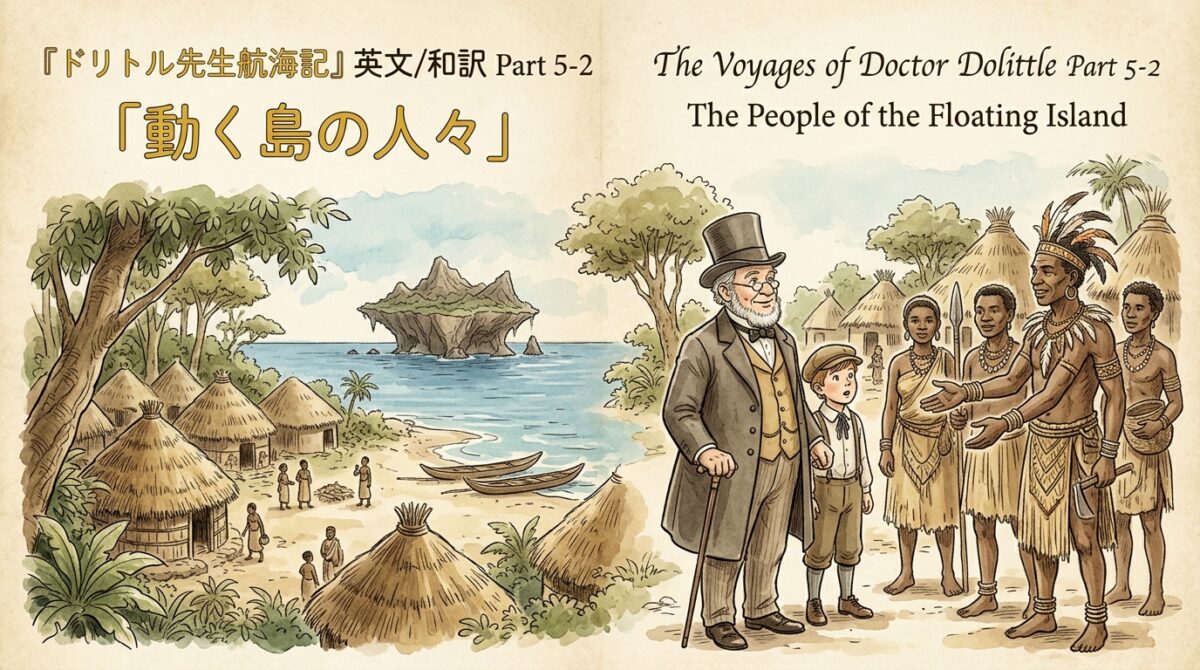
ロング・アローたちの救出後、島の先住民たちの態度は一変し、ドリトル先生たちは村へ招かれます。ところが、島は南へ流され続けており、寒さによって部族長が亡くなるという深刻な事態が明らかになります。村では盛大な歓迎と祝宴が用意されますが、そこで先生たちは、この島の人々が火を知らない「火のない民族」だと気づきます。歓迎・部族・村・寒さ・文化の違いに関する重要表現を多めに色分けしています。
表示設定
カテゴリ別ハイライト
FROM that time on the Indians’ treatment of us was very different.
その時から、インディアンたちの私たちに対する扱いは、まったく違ったものになった。
We were invited to their village for a feast to celebrate the recovery of the lost families.
私たちは、行方不明だった家族たちの帰還を祝う祝宴のために、彼らの村へ招かれた。
And after we had made a litter from saplings to carry the sick woman in, we all started off down the mountain.
そして病気の女性を運ぶために若木で担架を作ったあと、私たちはみな山を下り始めた。
On the way the Indians told Long Arrow something which appeared to be sad news, for on hearing it, his face grew very grave.
途中でインディアンたちがロング・アローに何かを伝えた。それは悲しい知らせのようだった。というのも、それを聞くと彼の顔がとても深刻になったからだ。
The Doctor asked him what was wrong.
先生は彼に、何があったのか尋ねた。
And Long Arrow said he had just been informed that the chief of the tribe, an old man of eighty, had died early that morning.
するとロング・アローは、部族長である八十歳の老人が、その朝早く亡くなったと知らされたばかりだと言った。
“That,” Polynesia whispered in my ear, “must have been what they went back to the village for, when the messenger fetched them from the beach.—Remember?”
「それだよ」とポリネシアが私の耳にささやいた。「使者が浜辺から彼らを呼びに来たとき、彼らが村へ戻った理由はそれに違いない。覚えているかい?」
“What did he die of?” asked the Doctor.
「何で亡くなったのですか」と先生は尋ねた。
“He died of cold,” said Long Arrow.
「寒さで亡くなりました」とロング・アローは言った。
Indeed, now that the sun was setting, we were all shivering ourselves.
実際、太陽が沈みかけていた今、私たち自身もみな震えていた。
“This is a serious thing,” said the Doctor to me.
「これは重大なことだ」と先生は私に言った。
“The island is still in the grip of that wretched current flowing southward.”
「島はまだ、南へ流れるあのいやな海流に捕らえられている」
“We will have to look into this to-morrow.”
「明日、このことを調査しなければならない」
“If nothing can be done about it, the Indians had better take to canoes and leave the island.”
「もしどうすることもできないなら、インディアンたちはカヌーに乗って島を離れたほうがよい」
“The chance of being wrecked will be better than getting frozen to death in the ice-floes of the Antarctic.”
「南極の流氷の中で凍死するよりは、難破する危険を冒すほうがましだ」
Presently we came over a saddle in the hills, and looking downward on the far side of the island, we saw the village.
やがて私たちは丘の鞍部を越え、島の反対側を見下ろすと、村が見えた。
A large cluster of grass huts and gaily colored totem-poles close by the edge of the sea.
海辺のすぐ近くに、草ぶき小屋の大きな集まりと、鮮やかに彩られたトーテムポールが立っていた。
“How artistic!” said the Doctor—“Delightfully situated.”
「なんて芸術的なんだ!」と先生は言った。「実に魅力的な場所にある」
“What is the name of the village?”
「この村の名前は何ですか」
“Popsipetel,” said Long Arrow.
「ポプシペテルです」とロング・アローは言った。
“That is the name also of the tribe.”
「それは部族の名前でもあります」
“The word signifies in Indian tongue, The Men of The Moving Land.”
「その言葉は、インディアンの言葉で『動く大地の人々』を意味します」
“There are two tribes of Indians on the island: the Popsipetels at this end and the Bag-jagderags at the other.”
「この島には二つのインディアン部族がいます。こちら側にポプシペテル族、もう一方の端にバグ・ジャグデラグ族です」
“Which is the larger of the two peoples?”
「二つの民族のうち、どちらが大きいのですか」
“The Bag-jagderags, by far.”
「バグ・ジャグデラグ族のほうが、はるかに大きいです」
“Their city covers two square leagues.”
「彼らの町は二平方リーグにも広がっています」
“But,” added Long Arrow, a slight frown darkening his handsome face, “for me, I would rather have one Popsipetel than a hundred Bag-jagderags.”
「しかし」とロング・アローは、立派な顔にかすかなしかめ面を浮かべて言い添えた。「私にとっては、百人のバグ・ジャグデラグ族より、一人のポプシペテル族のほうがよいのです」
The news of the rescue we had made had evidently gone ahead of us.
私たちが行った救出の知らせは、明らかに私たちより先に伝わっていた。
For as we drew nearer to the village we saw crowds of Indians streaming out to greet the friends and relatives whom they had never thought to see again.
というのも、私たちが村に近づくにつれ、もう二度と会えないと思っていた友人や親族たちを迎えるために、大勢のインディアンが流れ出てくるのが見えたからだ。
These good people, when they too were told how the rescue had been the work of the strange white visitor to their shores, all gathered round the Doctor, shook him by the hands, patted him and hugged him.
この善良な人々も、その救出が彼らの岸に現れた奇妙な白人の客人の働きだったと知らされると、みな先生の周りに集まり、手を握り、体を軽くたたき、抱きしめた。
Then they lifted him up upon their strong shoulders and carried him down the hill into the village.
それから彼らは先生を強い肩の上へ持ち上げ、丘を下って村の中へ運んでいった。
There the welcome we received was even more wonderful.
そこで私たちが受けた歓迎は、さらにすばらしいものだった。
In spite of the cold air of the coming night, the villagers, who had all been shivering within their houses, threw open their doors and came out in hundreds.
迫り来る夜の冷たい空気にもかかわらず、家の中で震えていた村人たちは、扉を開け放ち、何百人も外へ出てきた。
I had no idea that the little village could hold so many.
その小さな村に、こんなにも多くの人がいるとは思いもしなかった。
They thronged about us, smiling and nodding and waving their hands.
彼らは私たちの周りに群がり、微笑み、うなずき、手を振った。
And as the details of what we had done were recited by Long Arrow they kept shouting strange singing noises, which we supposed were words of gratitude or praise.
そして私たちが何をしたのか、その詳細がロング・アローによって語られると、彼らは奇妙な歌うような声を上げ続けた。それは感謝か称賛の言葉なのだろうと、私たちは思った。
We were next escorted to a brand-new grass house, clean and sweet-smelling within, and informed that it was ours.
次に私たちは、真新しい草ぶきの家へ案内された。中は清潔でよい香りがしており、それが私たちの家だと知らされた。
Six strong Indian boys were told off to be our servants.
六人のたくましいインディアンの少年が、私たちの召使いとして割り当てられた。
On our way through the village we noticed a house, larger than the rest, standing at the end of the main street.
村を通り抜ける途中で、私たちはほかよりも大きな家が大通りの端に立っているのに気づいた。
Long Arrow pointed to it and told us it was the Chief’s house, but that it was now empty.
ロング・アローはそれを指さし、それは首長の家だが、今は空になっていると私たちに言った。
No new chief having yet been elected to take the place of the old one who had died.
亡くなった前の首長の代わりを務める新しい首長が、まだ選ばれていなかったからだ。
Inside our new home a feast of fish and fruit had been prepared.
私たちの新しい家の中には、魚と果物の祝宴が準備されていた。
Most of the more important men of the tribe were already seating themselves at the long dining-table when we got there.
私たちがそこへ着いたとき、部族の主だった人々のほとんどは、すでに長い食卓についていた。
Long Arrow invited us to sit down and eat.
ロング・アローは、私たちに座って食べるよう勧めた。
This we were glad enough to do, as we were all hungry.
私たちは皆空腹だったので、それには大いに喜んで従った。
But we were both surprised and disappointed when we found that the fish had not been cooked.
しかし魚が料理されていないとわかったとき、私たちは驚くと同時にがっかりした。
The Indians did not seem to think this extraordinary in the least, but went ahead gobbling the fish with much relish the way it was, raw.
インディアンたちは、それを少しも異常だとは思っていないようだった。そして魚をそのまま、生のまま、とてもおいしそうにむさぼり食べ始めた。
With many apologies, the Doctor explained to Long Arrow that if they had no objection we would prefer our fish cooked.
先生は何度も謝りながら、もし差し支えなければ、私たちは魚を料理して食べたいのだとロング・アローに説明した。
Imagine our astonishment when we found that the great Long Arrow, so learned in the natural sciences, did not know what the word cooked meant!
自然科学にあれほど博識な偉大なロング・アローが、「料理された」という言葉の意味を知らないとわかったときの私たちの仰天を想像してほしい。
Polynesia, who was sitting on the bench between John Dolittle and myself, pulled the Doctor by the sleeve.
ジョン・ドリトルと私の間の長椅子に座っていたポリネシアが、先生の袖を引っぱった。
“I’ll tell you what’s wrong, Doctor,” she whispered as he leant down to listen to her: “these people have no fires!”
先生が彼女の話を聞こうと身をかがめると、ポリネシアはささやいた。「何がおかしいのか教えてあげるよ、先生。この人たちは火を持っていないんだ!」
“They don’t know how to make a fire.”
「彼らは火の起こし方を知らないんだ」
“Look outside: It’s almost dark, and there isn’t a light showing in the whole village.”
「外を見てごらん。もうほとんど暗いのに、村全体に明かりが一つも見えない」
“This is a fireless people.”
「これは火を持たない民族なんだ」