
『ロビン・フッド』のカラフル対訳について
カラフル対訳で紹介しているJ. Walker McSpadden『Robin Hood』は、パブリックドメインの作品を出典としています。
このサイトで使われている原文は、著作権の切れた名作などの全文を電子化し、インターネット上で公開している Project Gutenberg(プロジェクト・グーテンベルク)、 および朗読音声を公開している LibriVox(リブリヴォックス/朗読図書館) の作品を出典としています。
『ロビン・フッド』は、中世イングランドのシャーウッドの森を舞台に、弓の名手ロビン・フッドとその仲間たちの活躍を描いた 冒険・英雄伝説です。 義賊、森の仲間、王への忠誠、自由を求める精神などが物語の中心にあり、英語圏で長く親しまれてきた古典的な伝承文学の一つです。 カラフル対訳では、英文を読みやすくするために、重要語句や表現を色分けしながら紹介しています。
原文はProject Gutenberg、音声はLibriVoxで公開されているパブリックドメイン作品を出典としています。 本ページでは、英語学習用に英文・和訳・重要表現の色分けを加えた形で紹介しています。
“`『ロビン・フッド』英文/和訳 CHAPTER III ロビン・フッドはいかにして肉屋になり、保安官の奉公に入ったか
HOW ROBIN HOOD TURNED BUTCHER, AND ENTERED THE SHERIFF’S SERVICE
『Robin Hood』CHAPTER III を、英語学習用に「英文→和訳」の順で読みやすく整理し、重要語句を自然に多めに色分けしています。上部の操作パネルで、和訳・色分け・ミニ訳・カテゴリ別ハイライトを切り替えられます。
The butcher he answered jolly Robin, “No matter where I do dwell, For a butcher am I, and to Nottingham Am I going, my flesh to sell.”
肉屋は陽気なロビンに答えた。「私がどこに住んでいるかなど問題ではありません。私は肉屋で、肉を売りにノッティンガムへ行くところです。」
The next morning the weather had turned ill, and Robin Hood’s band stayed close to their dry and friendly cave.
翌朝、天気は悪くなり、ロビン・フッドの一団は乾いて居心地のよい洞窟の近くにとどまっていた。
The third day brought a diversion in the shape of a trap by a roving party of the Sheriff’s men.
三日目には、保安官の部下たちの巡回隊が仕掛けた罠という形で、ひと騒動が起こった。
A fine stag had been struck down by one of Will Stutely’s fellows.
立派な雄鹿が、ウィル・スタトリーの仲間の一人によって射倒されていた。
He and others had stepped forth from the covert to seize it, when twenty bowmen from Nottingham appeared at the end of the glade.
彼とほかの者たちが、それを取りに茂みから踏み出したとき、ノッティンガムから来た二十人の弓兵が空き地の端に現れた。
Down dropped Will’s men on all fours, barely in time to hear a shower of arrows whistle above their heads.
ウィルの仲間たちは四つんばいに伏せ、かろうじて間に合った。頭上では矢の雨がヒュッと音を立てて飛び過ぎていった。
Then from behind the friendly trees they sent back such a welcome that the Sheriff’s men deemed it prudent not to tarry in their steps.
それから彼らは味方のような木々の陰から激しく応戦したため、保安官の部下たちはそこにとどまらない方が賢明だと考えた。
Two of them, in sooth, bore back unpleasant wounds in their shoulders, from the encounter.
実際、そのうち二人は、その遭遇で肩に不愉快な傷を負って町へ戻った。
When they returned to town the Sheriff waxed red with rage.
彼らが町へ戻ると、保安官は怒りで顔を赤くした。
“What,” he gasped, “do my men fear to fight this Robin Hood, face to face?”
「何だと」と彼は息を詰まらせて言った。「私の部下たちは、このロビン・フッドと正面から戦うのを恐れるのか?」
“Would that I could get him within my reach, once. We should see then; we should see!”
「一度でよい、あの男を私の手の届くところへ連れてこられたなら。その時に見てやろう。見てやろうではないか!」
What it was the Sheriff would see, he did not state.
保安官が何を見るつもりだったのか、それは彼自身もはっきりとは言わなかった。
But he was to have his wish granted in short space, and you and I will see how he profited by it.
しかしその願いはまもなく叶えられることになり、彼がそこからどんな利益を得たのか、あなたと私は見ることになる。
The fourth day and the one following this friendly bout, Little John was missing.
この愉快な小競り合いの翌日、つまり四日目になると、リトル・ジョンの姿が見えなくなっていた。
One of his men said that he saw him talking with a beggar, but did not know whither they had gone.
仲間の一人は、彼が乞食と話しているのを見たと言ったが、二人がどこへ行ったのかは知らなかった。
Two more days passed. Robin grew uneasy.
さらに二日が過ぎた。ロビンは不安になってきた。
He did not doubt the faith of Little John, but he was fearful lest a roving band of Foresters had captured him.
彼はリトル・ジョンの忠誠を疑ってはいなかったが、巡回する森番の一団に捕まったのではないかと心配していた。
At last Robin could not remain quiet.
ついにロビンは、じっとしていられなくなった。
Up sprang he, with bow and arrows, and a short sword at his side.
彼は弓矢を持ち、短剣を腰に帯びて、ぱっと立ち上がった。
“I must away to Nottingham town, my men,” he cried.
「仲間たちよ、私はノッティンガムの町へ行かねばならない」と彼は叫んだ。
“The goodly Sheriff has long desired to see me; and mayhap he can tell me tidings of the best quarter-staff in the shire”—meaning Little John.
「立派な保安官殿は、長いこと私に会いたがっている。それに、おそらくこの州で一番の六尺棒の消息も教えてくれるだろう」――つまりリトル・ジョンのことを言っていた。
Others of the band besought him to let them go with him, but he would not.
仲間の者たちは、一緒に行かせてほしいと彼に頼んだが、彼は聞き入れなかった。
“Nay,” he said smilingly, “the Sheriff and I are too good friends to put doubt upon our meeting.”
「いや」と彼は笑って言った。「保安官と私は、会見に疑いを差しはさむには、あまりにも仲がよすぎるからな。」
“But tarry ye in the edge of the wood opposite the west gate of the town, and ye may be of service ere to-morrow night.”
「だが、お前たちは町の西門の向かいにある森の端で待っていろ。明日の夜までには役に立つことがあるかもしれない。」
So saying he strode forward to the road leading to Nottingham, and stood as before looking up and down to see if the way was clear.
そう言うと彼は、ノッティンガムへ続く道へ大股で進み、以前と同じように、道が安全かどうか左右を見渡して立った。
Back at a bend in the road he heard a rumbling and a lumbering.
道の曲がり角の向こうから、ゴロゴロ、ガタガタという音が聞こえてきた。
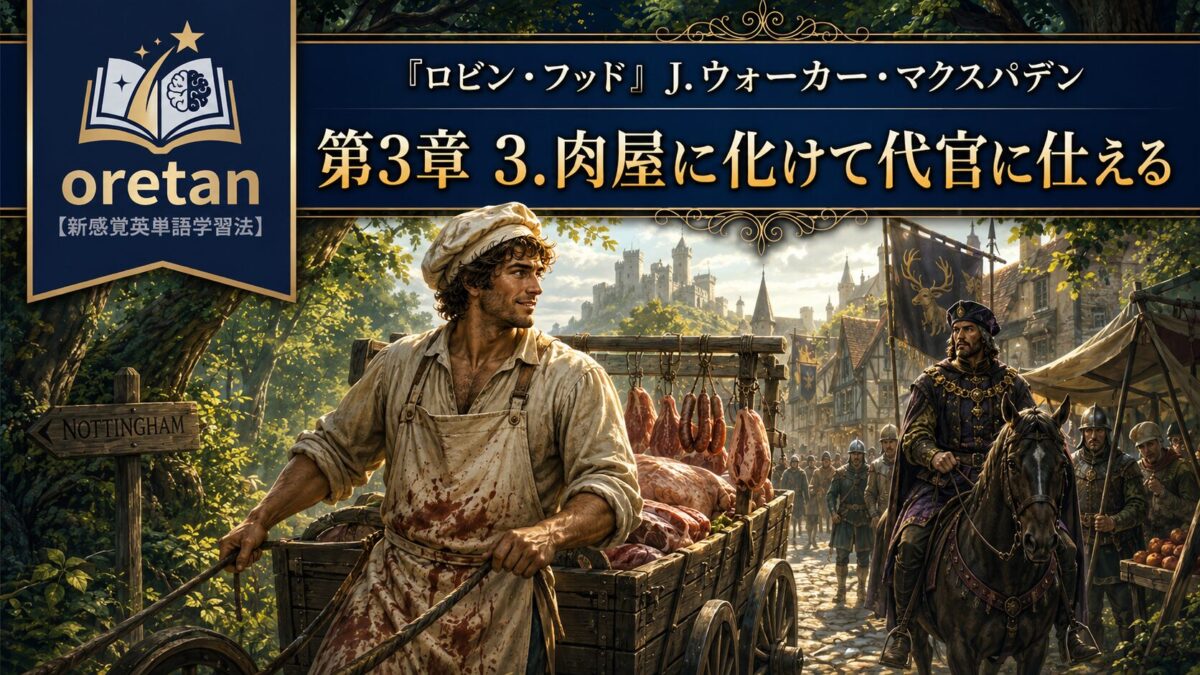
Up drove a stout butcher, whistling gaily, and driving a mare that sped slowly enough because of the weight of meat with which the cart was loaded.
そこへ、がっしりした肉屋が馬車を走らせてきた。彼は陽気に口笛を吹き、肉を満載した荷車の重みでゆっくり進む雌馬を操っていた。
“A good morrow to you, friend,” hailed Robin.
「おはよう、友よ」とロビンは声をかけた。
“Whence come you and where go you with your load of meat?”
「その肉の荷を積んで、どこから来て、どこへ行くのだ?」
“A good morrow to you,” returned the butcher, civilly enough.
「おはようございます」と肉屋は十分に礼儀正しく答えた。
“No matter where I dwell. I am but a simple butcher, and to Nottingham am I going, my flesh to sell.”
「私がどこに住んでいるかは問題ではありません。私はただの肉屋で、肉を売りにノッティンガムへ行くところです。」
“‘Tis Fair week, and my beef and mutton should fetch a fair penny,” and he laughed loudly at his jest.
「今は市の週ですから、牛肉と羊肉はなかなかよい値で売れるはずです」と言って、彼は自分の冗談に大声で笑った。
“But whence come you?”
「ところで、あなたはどこから来なさったのです?」
“A yeoman am I, from Lockesley town. Men call me Robin Hood.”
「私はロックスリーの町から来た郷士だ。人々は私をロビン・フッドと呼ぶ。」
“The saints forefend that you should treat me ill!” said the butcher in terror.
「聖人方が、あなたが私にひどいことをなさらないよう守ってくださいますように!」と肉屋は恐怖にかられて言った。
“Oft have I heard of you, and how you lighten the purses of the fat priests and knights.”
「あなたのことはよく聞いております。太った司祭や騎士たちの財布を軽くしてやる方だと。」
“But I am naught but a poor butcher, selling this load of meat, perchance, for enough to pay my quarter’s rent.”
「ですが私はただの貧しい肉屋です。この肉を売って、どうにか四半期分の家賃を払えるかもしれないだけなのです。」
“Rest you, my friend, rest you,” quoth Robin.
「安心しろ、友よ、安心しろ」とロビンは言った。
“Not so much as a silver penny would I take from you, for I love an honest Saxon face and a fair name with my neighbors.”
「お前からは銀貨一枚たりとも取るつもりはない。私は正直なサクソンの顔と、隣人の間でのよい評判が好きだからな。」
“But I would strike a bargain with you.”
「だが、お前とひとつ取引をしたい。」
Here he took from his girdle a well-filled purse.
ここで彼は帯から、たっぷり金の入った財布を取り出した。
“I would fain be a butcher, this day, and sell meat at Nottingham town.”
「私は今日一日、肉屋になって、ノッティンガムの町で肉を売ってみたいのだ。」
“Could you sell me your meat, your cart, your mare, and your good-will, without loss, for five marks?”
「お前の肉と荷車と雌馬、そして商売上の好意を、損のない形で五マルクで私に売ってくれないか?」
“Heaven bless ye, good Robin,” cried the butcher right joyfully, “that can I!”
「天があなたを祝福しますように、善きロビン!」と肉屋は大いに喜んで叫んだ。「もちろんできますとも!」
And he leaped down forthwith from the cart, and handed Robin the reins in exchange for the purse.
そして彼はすぐに荷車から飛び降り、財布と引き換えに、ロビンへ手綱を渡した。
“One moment more,” laughed Robin, “we must e’en change garments for the nonce.”
「もう一つだけ」とロビンは笑った。「しばらくの間、服も取り替えねばならない。」
“Take mine and scurry home quickly lest the King’s Foresters try to put a hole through this Lincoln green.”
「私の服を着て、急いで家へ帰るがいい。王の森番たちが、このリンカーン緑の服に穴を開けようとするかもしれないからな。」
So saying he donned the butcher’s blouse and apron.
そう言うと彼は、肉屋の上着と前掛けを身につけた。
Climbing into the cart, he drove merrily down the road to the town.
そして荷車に乗り込み、町へ向かって陽気に道を下っていった。
When he came to Nottingham he greeted the scowling gate-keeper blithely and proceeded to the market-place.
ノッティンガムに着くと、彼は不機嫌そうな門番に快活に挨拶し、市場へ進んでいった。
Boldly he led his shuffling horse to the place where the butchers had their stalls.
彼は大胆にも、とぼとぼ歩く馬を、肉屋たちが店を出している場所へ引いていった。
He had no notion of the price to ask for his meat, but put on a foolish and simple air as he called aloud his wares.
彼は肉にいくらの値をつければよいのか見当もつかなかったが、愚かで素朴なふりをして、大声で商品を売り込んだ。
“Hark ye, lasses and dames, hark ye, Good meat come buy, come buy, Three pen’orths go for one penny, And a kiss is good, say I!”
「聞けよ、娘さんたち、ご婦人方、聞けよ。よい肉を買いにおいで、買いにおいで。三ペンス分が一ペニーだ。おまけに口づけも悪くない、と私は言うぞ!」
Now when the folk found what a simple butcher he was, they crowded around his cart.
さて、人々は彼がなんとも素朴な肉屋だと分かると、荷車の周りに群がった。
For he really did sell three times as much for one penny as was sold by the other butchers.
というのも、彼は本当に、ほかの肉屋が一ペニーで売る量の三倍もの肉を売っていたからである。
And one or two serving-lasses with twinkling eyes liked his comely face so well that they willingly gave boot of a kiss.
そして目をきらめかせた女中たちの一人二人は、彼の整った顔をたいそう気に入り、おまけとして喜んで口づけを与えた。
But the other butchers were wroth when they found how he was taking their trade.
しかし、ほかの肉屋たちは、彼が自分たちの商売を奪っているのを見て腹を立てた。
And they accordingly put their heads together.
そこで彼らは、頭を寄せ合って相談した。
One said, “He is a prodigal and has sold his father’s land, and this is his first venture in trading.”
一人は言った。「あいつは放蕩者で、父親の土地を売り払ったのだ。これは商売の初めての試みなのだろう。」
Another said, “He is a thief who has murdered a butcher, and stolen his horse and meat.”
別の者は言った。「あいつは肉屋を殺して、馬と肉を盗んだ泥棒だ。」
Robin heard these sayings, but only laughed merrily and sang his song the louder.
ロビンはそうした言葉を耳にしたが、ただ陽気に笑い、ますます大きな声で歌を歌った。
His good-humor made the people laugh also and crowd round his cart closely.
彼の機嫌のよさにつられて人々も笑い、さらに荷車の周りへぎっしり集まった。
They shouted uproariously when some buxom lass submitted to be kissed.
ふくよかな娘が口づけを受け入れると、彼らは大騒ぎで叫んだ。
Then the butchers saw that they must meet craft with craft.
そこで肉屋たちは、策略には策略で対抗しなければならないと悟った。
They said to him, “Come, brother butcher, if you would sell meat with us, you must e’en join our guild and stand by the rules of our trade.”
彼らはロビンに言った。「さあ、肉屋の兄弟よ。私たちと一緒に肉を売りたいなら、組合に入り、この商売の規則を守らねばならない。」
“We dine at the Sheriff’s mansion to-day,” said another, “and you must take one of our party.”
「今日は保安官の屋敷で食事をする」と別の者が言った。「お前も私たちの一行に加わらねばならない。」
“Accurst of his heart,” said jolly Robin, “That a butcher will deny. I’ll go with you, my brethren true, And as fast as I can hie.”
陽気なロビンは言った。「それを断る肉屋など、心に呪いあれ。真の兄弟たちよ、私はあなた方と行こう。できるだけ急いで参ろう。」
Whereupon, having sold all his meat, he left his horse and cart in charge of a friendly hostler.
そこで、肉をすべて売り切ると、彼は馬と荷車を親切な馬丁に預けた。
Then he prepared to follow his mates to the Mansion House.
それから彼は、仲間たちについて保安官の屋敷へ行く準備をした。
It was the Sheriff’s custom to dine various guilds of the trade, from time to time, on Fair days.
市の日には、保安官がさまざまな職人組合を時折食事に招くのが習慣だった。
For he got a pretty profit out of the fees they paid him for the right to trade in the market-place.
市場で商売する権利のために彼らが支払う料金から、保安官はかなりの利益を得ていたからである。
The Sheriff was already come with great pomp into the banqueting room, when Robin Hood and three or four butchers entered.
ロビン・フッドと三、四人の肉屋が入ってきたとき、保安官はすでに大げさな威儀をまとって宴会場に来ていた。
He greeted them all with great condescension.
彼は彼ら全員に、ひどく恩着せがましい態度で挨拶した。
Presently the whole of a large company was seated at a table groaning beneath the good cheer of the feast.
やがて大勢の一行全員が、宴のごちそうで重そうにきしむ食卓についた。
Now the Sheriff bade Robin sit by his right hand, at the head of the board.
さて保安官は、ロビンを自分の右手側、食卓の上座に座らせた。
For one or two butchers had whispered to the official, “That fellow is a right mad blade, who yet made us much sport to-day.”
というのも、一人二人の肉屋が役人にささやいていたからである。「あの男は本当に向こう見ずなやつですが、今日は大いに私たちを楽しませてくれました。」
“He sold more meat for one penny than we could sell for three; and he gave extra weight to whatsoever lass would buss him.”
「私たちが三ペニーで売るより多い肉を一ペニーで売りました。それに、口づけしてくれる娘には誰にでも、おまけの重さをつけてやったのです。」
And others said, “He is some prodigal who knows not the value of goods, and may be plucked by a shrewd man right closely.”
また別の者たちは言った。「あれは品物の価値を知らない放蕩者でしょう。抜け目のない者なら、すっかりむしり取れます。」
The Sheriff was willing to pluck a prodigal with the next man.
保安官は、他の誰にも劣らず、放蕩者からむしり取る気があった。
He was moreover glad to have a guest who promised to enliven the feast.
そのうえ、宴を盛り上げてくれそうな客がいることを喜んでいた。
So, as I have told you, he placed Robin by his side.
だから、すでに述べたように、彼はロビンを自分のそばに座らせた。
He made much of him and laughed boisterously at his jests.
彼はロビンを大いにもてなし、その冗談に騒々しく笑った。
Though sooth to say, the laugh were come by easily, for Robin had never been in merrier mood.
もっとも本当のところ、笑いを取るのは簡単だった。ロビンはこれまでになく陽気な気分だったからである。
His quips and jests soon put the whole table at a roar.
彼の気の利いた言葉と冗談は、すぐに食卓全体を大笑いさせた。
Then my lord Bishop of Hereford came in, last of all, to say a ponderous grace and take his seat on the other side of the Sheriff.
それから最後に、ヘレフォードの司教閣下が入ってきて、重々しい食前の祈りを述べ、保安官の反対側に席を取った。
The prelate’s fat body showed up in goodly contrast to the other’s lean bones.
その高位聖職者の太った体は、保安官の痩せた骨ばった体と見事な対照をなしていた。
After grace was said, and while the servants clattered in with the meat platters, Robin stood up and said:
祈りが終わり、召使いたちが肉皿をガチャガチャ運び込んでいる間に、ロビンは立ち上がって言った。
“An amen say I to my lord Bishop’s thanks!”
「司教閣下の感謝の祈りに、私もアーメンと申しましょう!」
“How, now, my fine fellows, be merry and drink deep.”
「さあ、立派な皆さん、陽気に楽しみ、たっぷり飲みましょう。」
“For the shot I’ll pay ere I go my way, though it cost me five pounds and more.”
「帰る前に勘定は私が払いましょう。たとえ五ポンド以上かかろうとも。」
“So my lords and gentlemen all, spare not the wine, but fall to lustily.”
「ですから、諸侯の方々も紳士の皆さんも、酒を惜しまず、遠慮なくしっかり召し上がれ。」
“Hear! hear!” shouted the butchers.
「その通り! その通り!」と肉屋たちは叫んだ。
“Now are you a right jolly soul,” quoth the Sheriff, “but this feast is mine own.”
「まったく陽気な魂の持ち主だ」と保安官は言った。「だが、この宴は私のものだ。」
“Howbeit you must have many a head of horned beasts, and many an acre of broad land, to spend from your purse so freely.”
「とはいえ、そんなに気前よく財布から金を出せるとは、角のある家畜をたくさん、広い土地を何エーカーも持っているに違いないな。」
“Aye, that have I,” returned Robin, his eyes all a twinkle.
「ええ、持っておりますとも」とロビンは答えた。その目はきらきら輝いていた。
“Five hundred horned beasts have I and my brothers, and none of them have we been able to sell.”
「私と兄弟たちは、五百頭もの角のある家畜を持っておりますが、そのどれ一頭として売ることができておりません。」
“That is why I have turned butcher.”
「だから私は肉屋になったのです。」
“But I know not the trade, and would gladly sell the whole herd, an I could find a buyer.”
「しかし私は商売を知りません。買い手が見つかるなら、群れをまるごと喜んで売りたいのです。」
At this, the Sheriff’s greed began to rise.
これを聞いて、保安官の欲がむくむくと湧き上がり始めた。
Since this fool would be plucked, thought he, why should not he do the plucking?
この愚か者がむしり取られるのなら、なぜ自分がむしり取る側になってはいけないのか、と彼は考えた。
“Five hundred beasts, say you?” he queried sharply.
「五百頭の家畜と言ったか?」と彼は鋭く尋ねた。
“Five hundred and ten fat beasts by actual count, that I would sell for a just figure.”
「正確に数えれば五百十頭の肥えた家畜でございます。正当な値なら売りたいと思っております。」
“Aye, to him who will pay me in right money, would I sell them for twenty pieces of gold.”
「ええ、きちんとした金で払ってくださる方になら、金貨二十枚で売りましょう。」
“Is that too much to ask, lording?”
「それは求めすぎでしょうか、旦那様?」
Was there ever such an idiot butcher? thought the Sheriff.
これほど愚かな肉屋がかつていただろうか、と保安官は考えた。
He so far forgot his dignity as to nudge the Bishop in his fat ribs.
彼はあまりにも品位を忘れ、司教の太った脇腹を肘でつつくほどだった。
“Nay, good fellow,” quoth he chuckling, “I am always ready to help any in my shire.”
「いやいや、善き者よ」と彼はくすくす笑いながら言った。「私はいつでも、この州の者を助ける用意がある。」
“An you cannot find a buyer for your herd at this just figure, I will e’en buy them myself.”
「その正当な値で群れの買い手が見つからないなら、私が自ら買ってやろう。」
At this generosity Robin was quite overcome.
この気前のよさに、ロビンはすっかり感激したふりをした。
He fell to praising the Sheriff to the skies, and telling him that he should not have cause to forget the kindness.
彼は保安官を天まで持ち上げるように褒めたたえ、その親切を忘れさせるようなことはしないと言った。
“Tut, tut,” said the Sheriff, “‘tis naught but a trade.”
「いやいや」と保安官は言った。「これはただの取引にすぎない。」
“Drive in your herd tomorrow to the market-place and you shall have money down.”
「明日、その群れを市場へ連れて来い。そうすればその場で金を払ってやる。」
“Nay, excellence,” said Robin, “that can I not easily do, for they are grazing in scattered fashion.”
「いえ、閣下」とロビンは言った。「それは簡単にはできません。彼らは散らばって草を食んでおりますので。」
“But they are over near Gamewell, not more than a mile therefrom at most.”
「しかし、彼らはゲームウェルの近くにおります。そこからせいぜい一マイルほどです。」
“Will you not come and choose your own beasts tomorrow?”
「明日、おいでになって、ご自分で家畜をお選びになりませんか?」
“Aye, that I will,” said the Sheriff, his cupidity casting his caution to the winds.
「うむ、そうしよう」と保安官は言った。彼の貪欲さは用心深さを吹き飛ばしていた。
“Tarry with me over night, and I will go with you in the morning.”
「今夜は私のところに泊まれ。朝になったら一緒に行こう。」
This was a poser for Robin, since he liked not the idea of staying over night at the Sheriff’s house.
これはロビンを困らせた。彼は保安官の屋敷に一晩泊まるという考えが気に入らなかったからである。
He had hoped to appoint a meeting-place for the other, but now saw that this might excite doubt.
彼は相手に待ち合わせ場所を指定するつもりだったが、今ではそれが疑いを招くかもしれないと分かった。
He looked around at the company.
彼は一同を見回した。
By this time, you must know, the feast had progressed far, and the butchers were deep in their cups.
この時までには、知っての通り、宴はかなり進んでおり、肉屋たちはすっかり酒に酔っていた。
The Sheriff and Robin had talked in a low voice, and my lord Bishop was almost asleep.
保安官とロビンは低い声で話しており、司教閣下はほとんど眠りかけていた。
“Agreed,” said Robin presently.
「承知しました」とロビンはやがて言った。
The words were no sooner out of his mouth than the door opened and a serving-man entered bearing a tray of mulled wine.
その言葉が彼の口から出るやいなや、扉が開き、召使いが香料入りの温かいワインの盆を持って入ってきた。
At sight of the fellow’s face, Robin gave an involuntary start of surprise which was instantly checked.
その男の顔を見た瞬間、ロビンは思わず驚いて身を震わせたが、すぐにそれを抑えた。
The other also saw him, stood still a moment, and as if forgetting something turned about and left the hall.
相手もまた彼を見て、一瞬立ち止まり、何かを忘れたかのように向きを変えて広間を出ていった。
It was Little John.
それはリトル・ジョンだった。
A dozen questions flashed across Robin’s mind, and he could find answer for none of them.
十を超える疑問がロビンの心をよぎったが、どれにも答えを見つけることができなかった。
What was Little John doing in the Sheriff’s house?
リトル・ジョンは保安官の屋敷で何をしているのか。
Why had he not told the band?
なぜ彼は一団に知らせなかったのか。
Was he true to them? Would he betray him?
彼は彼らに誠実なのか。ロビンを裏切るのか。
But these questions of distrust were dismissed from Robin’s open mind as soon as they had entered.
しかし、こうした不信の疑問は、ロビンの開かれた心に入るやいなや追い払われた。
He knew that Little John was faithful and true.
彼はリトル・ジョンが忠実で誠実だと知っていた。
He recovered his spirits and began again upon a vein of foolish banter.
彼は気を取り直し、また愚かな冗談を続け始めた。
This was for the amusement of the Sheriff and his guests, all being now merry with wine.
それは保安官と客たちを楽しませるためであり、彼らは皆、今や酒で陽気になっていた。
“A song!” one of them shouted, and the cry was taken up round the table.
「歌だ!」と一人が叫び、その声は食卓をぐるりと巡って広がった。
Robin mounted his chair and trolled forth:
ロビンは椅子の上に立ち、朗々と歌い出した。
“A lass and a butcher of Nottingham Agreed ‘twixt them for to wed. Says he, ‘I’ll give ye the meat, fair dame, And ye will give me the bread.’”
「ノッティンガムの娘と肉屋が、結婚しようと約束した。男は言った、『肉は私が差し上げよう、美しい奥方よ。あなたは私にパンをくだされ』」
Then they joined in the chorus amid a pounding of cups upon the board.
すると彼らは、食卓に杯を打ち鳴らしながら、合唱に加わった。
“With a hey and a ho And a hey nonny no, A butcher of Nottingham!”
「ヘイとホー、そしてヘイ・ノニー・ノー、ノッティンガムの肉屋だ!」
While the song was at its height, Little John reappeared, with other servants, and refilled the cups.
歌が最高潮に達したとき、リトル・ジョンはほかの召使いたちとともに再び現れ、杯を満たした。
He came up to Robin and, as if asking him if he would have more wine, said softly, “Meet me in the pantry to-night.”
彼はロビンのそばへ来て、もっとワインがいるか尋ねるふりをしながら、そっと言った。「今夜、食料庫で会ってください。」
Robin nodded, and sang loudly.
ロビンはうなずき、大声で歌った。
The day was already far spent, and presently the company broke up with many hiccupy bows of the Sheriff and little notice of the drowsy Bishop.
日はすでにかなり暮れており、やがて一行は、保安官のしゃっくり混じりのお辞儀を何度も受け、眠そうな司教にはほとんど注意も払わずに解散した。
When the company was dispersed, the Sheriff bade a servant show Robin to his room.
一同が散ると、保安官は召使いに、ロビンを部屋へ案内するよう命じた。
He promised to see him at breakfast the next day.
彼は翌日の朝食でロビンに会うと約束した。
Robin kept his word and met Little John that night, and the Sheriff next day.
ロビンは約束を守り、その夜リトル・ジョンに会い、翌日には保安官に会った。
But Little John has been doing so much in the meantime that he must be allowed a chapter to himself.
しかしその間、リトル・ジョンはあまりに多くのことをしていたので、彼には一章をまるごと与えなければならない。
So let us turn to another story that was sung of, in the ballads of olden time, and find out how Little John entered the Sheriff’s service.
そこで、昔のバラッドに歌われた別の物語へ目を向け、リトル・ジョンがどのようにして保安官の奉公に入ったのかを見てみよう。