
『白痴』のカラフル対訳について
カラフル対訳で紹介している『白痴』は、パブリックドメインの作品を出典としています。
このサイトで使われている作品は、ロシアの文豪フョードル・ドストエフスキーによる小説 The Idiot を出典としています。 英文は Eva M. Martin による英訳版をもとにしています。 原文は、著作権の切れた名作などの全文を電子化し、インターネット上で公開している Project Gutenberg(プロジェクト・グーテンベルク)、 朗読音声は LibriVox(リブリヴォックス/朗読図書館) の公開音声を出典としています。
原文はProject Gutenberg、音声はLibriVoxで公開されているパブリックドメイン作品を出典としています。
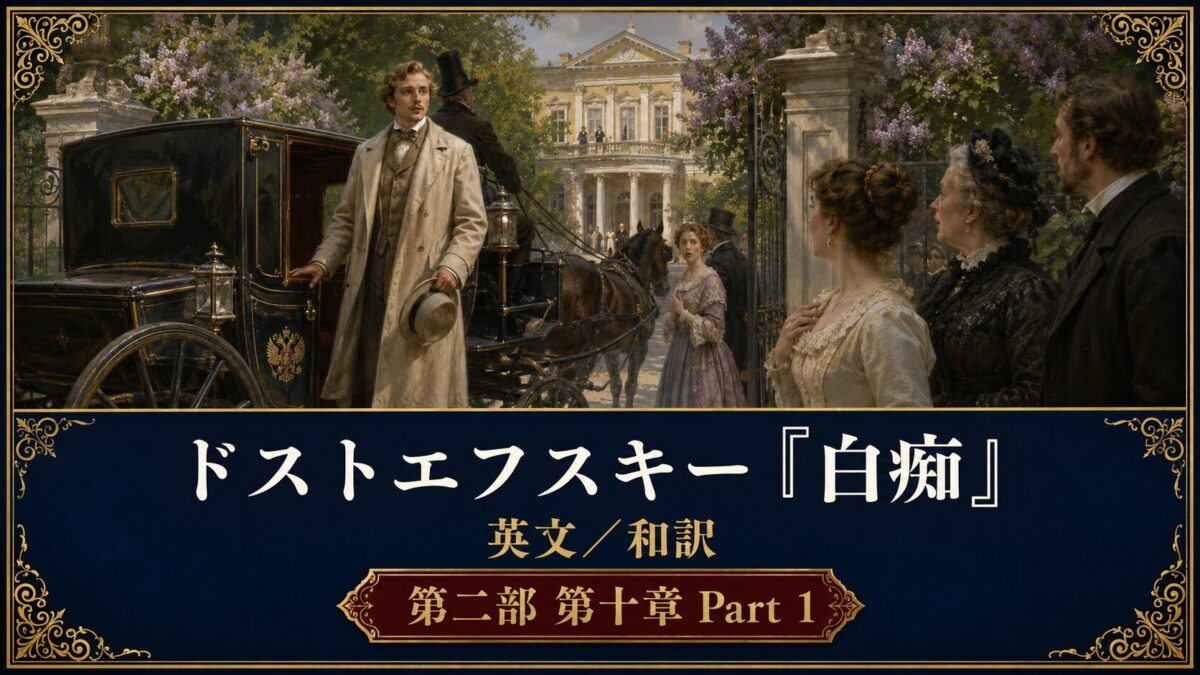
“`『白痴』英文/和訳 PART II CHAPTER X イッポリートの告白とナスターシャの馬車
『The Idiot』PART II CHAPTER X を、英語学習用に「英文→和訳」の順で読みやすく整理し、重要語句を多めに色分けしています。上部の操作パネルで、和訳・色分け・ミニ訳・カテゴリ別ハイライトを切り替えられます。
After moistening his lips with the tea that Vera Lebedeff had brought him, Hippolyte set the cup down and looked around. He seemed confused, almost at a loss.
ヴェーラ・レベージェフが持ってきたお茶で唇を湿らせると、イッポリートはカップを置き、あたりを見回した。彼は混乱し、ほとんど途方に暮れているようだった。
“Look, Lizabetha Prokofievna,” he began with feverish haste. “These china cups are supposed to be very valuable. Lebedeff usually keeps them locked in his cupboard.”
「見てください、リザヴェータ・プロコフィエヴナ」と彼は熱に浮かされたような早口で話し始めた。「この陶器のカップはとても貴重なものだそうです。レベージェフは普段、それを戸棚にしまって鍵をかけています。」
“They were part of his wife’s dowry. Yet tonight he has brought them out, naturally in your honour. He is so pleased…”
「それは彼の妻の持参品の一部でした。それなのに今夜は、それを出してきたのです。もちろん、あなたへの敬意からでしょう。彼はとても喜んでいて……。」
He wanted to add something more, but suddenly could not find the words.
彼はさらに何か付け加えようとしたが、突然言葉が見つからなくなった。
“There, he is embarrassed. I expected it,” whispered Evgenie Pavlovitch in the prince’s ear. “That is a bad sign.”
「ほら、彼は気まずくなっています。予想通りです」とエヴゲーニー・パヴロヴィッチが公爵の耳元でささやいた。「あれは悪い兆候です。」
“Now, out of spite, he will say something outrageous, something even Lizabetha Prokofievna cannot endure.”
「今に彼は、腹いせにとんでもないことを言い出すでしょう。リザヴェータ・プロコフィエヴナでさえ我慢できないようなことを。」
Muishkin looked at him questioningly.
ムイシュキンは問いかけるように彼を見た。
“You do not mind if he does?” Evgenie continued. “Neither do I. In fact, I should almost be glad. It would be a proper punishment for our dear Lizabetha Prokofievna.”
「彼がそうしても、あなたは構わないのでしょう」とエヴゲーニーは続けた。「私も構いません。むしろ喜ぶかもしれません。親愛なるリザヴェータ・プロコフィエヴナへの当然の罰ですから。」
“Never mind, later,” said the prince impatiently. “Yes, I am not feeling well.” He was barely listening, for he had just heard Hippolyte mention his name.
「構いません、あとで」と公爵は苛立って言った。「ええ、私は具合がよくありません。」彼はほとんど聞いていなかった。ちょうどイッポリートが自分の名前を口にしたのを聞いたからだった。
“You do not believe it?” said the invalid with a nervous laugh. “No wonder. But the prince will believe it easily. He will not be surprised at all.”
「信じていないのですか」と病人は神経質に笑った。「無理もありません。でも公爵なら簡単に信じるでしょう。まったく驚きもしないはずです。」
“Do you hear that, prince?” cried Lizabetha Prokofievna, turning toward him.
「聞きましたか、公爵」とリザヴェータ・プロコフィエヴナは彼のほうを向いて叫んだ。
There was laughter around her. Lebedeff stood before her, wildly gesticulating.
彼女の周囲では笑い声が起こっていた。レベージェフは彼女の前に立ち、激しく身振りをしていた。
“He says that your humbug of a landlord revised that gentleman’s article—the article that was read aloud just now, the one that gave you such a fine scolding.”
「彼は、あなたのいかさま地主があの紳士の記事を手直ししたと言っているのです。たった今朗読された、あなたをあれほど見事に叱りつけたあの記事です。」
The prince looked at Lebedeff in astonishment.
公爵は驚いてレベージェフを見つめた。
“Why don’t you say something?” cried Lizabetha Prokofievna, stamping her foot.
「なぜ何も言わないのです」とリザヴェータ・プロコフィエヴナは足を踏み鳴らして叫んだ。
“Well,” murmured the prince, his eyes still fixed on Lebedeff, “I can see now that he did.”
「そうですね」と公爵は、まだレベージェフを見つめたままつぶやいた。「今なら、彼がそうしたのだと分かります。」
“Is it true?” she asked eagerly.
「本当なのですか」と彼女は勢い込んで尋ねた。
“Absolutely, your excellency,” said Lebedeff without the slightest hesitation.
「まったくその通りでございます、閣下」とレベージェフは少しもためらわずに言った。
Mrs. Epanchin almost jumped up in amazement, astonished not only by the confession but by the confidence with which it was made.
エパンチン夫人は驚きのあまり、ほとんど飛び上がった。告白そのものだけでなく、それをあまりに堂々と言ったことにも驚いたのである。
“He seems almost proud of it!” she cried.
「まるでそれを誇っているようではありませんか!」と彼女は叫んだ。
“I am base, base!” muttered Lebedeff, beating his breast and hanging his head.
「私は卑しい、卑しい人間です」とレベージェフは胸を叩き、頭を垂れてつぶやいた。
“What do I care whether you are base or not?” she cried. “He thinks he has only to say, ‘I am base,’ and everything is settled.”
「あなたが卑しいかどうかなど、私の知ったことですか」と彼女は叫んだ。「『私は卑しい』と言えば、それですべて済むと思っているのです。」
“And you, prince—are you not ashamed? I ask again, are you not ashamed to mix with such riff-raff? I will never forgive you!”
「それにあなた、公爵。恥ずかしくないのですか。もう一度聞きます。こんなろくでもない連中と交わって恥ずかしくないのですか。私はあなたを決して許しません!」
“The prince will forgive me!” said Lebedeff with emotional conviction.
「公爵は私を許してくださいます!」とレベージェフは感極まった確信をもって言った。
Then Keller suddenly left his seat and approached Lizabetha Prokofievna.
その時、ケラーが突然席を立ち、リザヴェータ・プロコフィエヴナに近づいた。
“Only out of generosity, madame,” he said in a resonant voice, “and because I did not wish to betray a friend in an awkward position, did I keep silent about the revision.”
「奥さま、私はただ寛大さから」と彼はよく響く声で言った。「そして友人を気まずい立場に追い込みたくなかったために、手直しの件を黙っていたのです。」
“But now, to clear the matter up, I declare that I did ask him for help, and paid him six roubles.”
「しかし今、事をはっきりさせるために申し上げます。私は確かに彼に助けを求め、六ルーブルを支払いました。」
“I did not ask him to correct my style. I wanted facts—facts I did not know, and which he was able to supply.”
「文体を直してもらったのではありません。私は事実が欲しかったのです。自分の知らない、彼なら提供できる事実です。」
“The story of the gaiters, the appetite in the Swiss professor’s house, the substitution of fifty roubles for two hundred and fifty—all those details came from him.”
「脚絆の話、スイスの教授の家での食欲、二百五十ルーブルを五十ルーブルに変えたこと、そうした細部はすべて彼から得たものです。」
“But he did not correct the style.”
「しかし文体は直していません。」
“I must state that I revised only the first part,” cried Lebedeff with feverish impatience, while laughter rose around him.
「私は前半だけを手直ししたのだと申し上げなければなりません」と、周囲で笑い声が起こる中、レベージェフは熱に浮かされたように叫んだ。
“We quarrelled halfway through over one idea, so I never corrected the second half. Therefore I cannot be held responsible for its many grammatical errors.”
「途中で一つの考えをめぐって争いになり、後半は直しませんでした。したがって、そこにある多くの文法上の誤りについては、私に責任はありません。」
“That is all he thinks about!” cried Lizabetha Prokofievna.
「彼が考えているのはそれだけなのです!」とリザヴェータ・プロコフィエヴナは叫んだ。
Evgenie Pavlovitch asked Keller when the article had been revised.
エヴゲーニー・パヴロヴィッチはケラーに、その記事がいつ手直しされたのか尋ねた。
“Yesterday morning,” Keller answered. “We had an interview which all of us promised on our honour to keep secret.”
「昨日の朝です」とケラーは答えた。「私たちは面会し、そのことを名誉にかけて秘密にすると約束しました。」
“The very time when he was cringing before you and making declarations of devotion!” cried Lizabetha Prokofievna.
「まさにその時、彼はあなたの前でへつらい、献身を誓っていたのです!」とリザヴェータ・プロコフィエヴナは叫んだ。
“Mean wretches! I will have nothing to do with your Pushkin, and your daughter shall not set foot in my house!”
「卑劣な連中です! あなたのプーシキンなどいりませんし、あなたの娘も私の家へ一歩も入れません!」
She was about to rise, but then saw Hippolyte laughing and turned sharply upon him.
彼女は立ち上がろうとしたが、イッポリートが笑っているのを見ると、鋭く彼のほうへ向き直った。
“Well, sir, I suppose you wanted to make me look ridiculous?”
「さて、あなたは私を笑いものにしたかったのでしょうね。」
“Heaven forbid,” he answered with a forced smile. “But I am more than ever struck by your eccentricity.”
「とんでもありません」と彼は作り笑いを浮かべて答えた。「ただ、私はあなたの風変わりさに、これまで以上に驚かされているのです。」
“I admit I told you about Lebedeff’s duplicity on purpose. I knew what effect it would have on you—on you alone.”
「私がレベージェフの二枚舌をわざとあなたに話したことは認めます。あなたにどんな効果を与えるか分かっていました。あなたにだけです。」
“The prince will forgive him. He has probably forgiven him already, and is now trying to invent some excuse for him. Is that not true, prince?”
「公爵は彼を許すでしょう。おそらくもう許していて、今は彼のために何か弁解を考えているはずです。そうではありませんか、公爵。」
He gasped as he spoke, and his strange agitation seemed to grow stronger.
彼は話しながら息を切らし、その奇妙な興奮はいよいよ強まっていくようだった。
“Well?” said Mrs. Epanchin angrily, surprised by his tone. “What more?”
「それで?」とエパンチン夫人は、その調子に驚きながら怒ったように言った。「まだ何かあるのですか。」
“I have heard many things of the kind about you,” Hippolyte continued. “They delighted me. I have learned to hold you in the highest esteem.”
「私はあなたについて、そういう話をたくさん聞いてきました」とイッポリートは続けた。「それらは私を喜ばせました。私はあなたを深く尊敬するようになったのです。」
His words sounded almost mocking, yet he was terribly agitated. He glanced around suspiciously, lost the thread of his thoughts, and grew more confused.
彼の言葉には嘲りの響きが混じっているようだったが、彼はひどく興奮していた。彼は疑わしげに周囲を見回し、考えの筋道を失い、ますます混乱していった。
His consumptive face, blazing eyes, and frenzied expression naturally drew everyone’s attention.
肺病に侵された顔、燃えるような目、狂気じみた表情は、当然その場の全員の注意を引いた。
He said he admired that Lizabetha Prokofievna had stayed with such people as himself and his friends, even though they were not of her class.
彼は、リザヴェータ・プロコフィエヴナが、自分や友人たちのような階級の違う者たちと一緒に残ったことを称賛しているのだと言った。
He added that she had even allowed her daughters to hear the scandal, though she might be ashamed of it tomorrow.
さらに彼は、彼女が娘たちにまでこの醜聞を聞かせており、明日にはそれを恥じるかもしれないと付け加えた。
Then he laughed, but a violent fit of coughing seized him and stopped him for two full minutes.
そこで彼は笑った。しかし激しい咳の発作に襲われ、丸二分間ほど話すことができなくなった。
“He has lost his breath now,” said Lizabetha Prokofievna coldly, watching him with curiosity rather than pity.
「今度は息が切れたようですね」とリザヴェータ・プロコフィエヴナは冷たく言った。彼女は哀れみというより好奇心で彼を見ていた。
“Come, my dear boy, enough. Let us end this.”
「さあ、坊や、もう十分です。これで終わりにしましょう。」
Ivan Fedorovitch suddenly interrupted, deeply annoyed.
イワン・フョードロヴィッチが、深くいらだった様子で突然口を挟んだ。
He said his wife was there as Prince Muishkin’s guest, and that it was not for Hippolyte to judge her conduct or comment on what he thought he saw in the general’s face.
彼は、自分の妻はムイシュキン公爵の客としてそこにいるのであり、イッポリートが彼女の行動を裁いたり、将軍の顔にどんな感情が見えるかを口にしたりする立場ではない、と言った。
The general added that his wife had stayed mostly out of amazement, as one might stop in the street to look at some strange curiosity.
将軍はさらに、妻が残ったのは主に驚きからであり、通りで奇妙な見世物に足を止めるようなものだったと付け加えた。
Evgenie Pavlovitch supplied the word “curiosity,” and the general gratefully accepted it.
エヴゲーニー・パヴロヴィッチが「見世物」という言葉を補い、将軍は満足してそれを受け入れた。
He continued that Lizabetha Prokofievna had remained because Hippolyte was ill and because his plea had aroused her pity.
将軍は続けて、リザヴェータ・プロコフィエヴナが残ったのは、イッポリートが病気であり、その訴えが彼女の憐れみを呼び起こしたからだと言った。
Then, red with irritation, he called to his wife that it was time to say good night to the prince.
そして、いらだちで顔を赤くしながら、妻に向かって、公爵におやすみを言う時間だと呼びかけた。
“Thank you for the lesson, general,” said Hippolyte suddenly, with unexpected seriousness.
「ご教訓をありがとうございます、将軍」とイッポリートは突然、思いがけない真面目さで言った。
“Two minutes more, Ivan Fedorovitch,” said Lizabetha Prokofievna to her husband. “He is feverish and delirious. It is impossible to let him go back to Petersburg tonight.”
「あと二分だけです、イワン・フョードロヴィッチ」とリザヴェータ・プロコフィエヴナは夫に言った。「彼は熱に浮かされ、うわごとを言っています。今夜ペテルブルクへ帰すわけにはいきません。」
She asked the prince whether Hippolyte could stay there, and then suddenly turned to Prince S. and asked if he was bored.
彼女は公爵に、イッポリートをそこに泊められるか尋ね、それから急にS公爵のほうへ向いて、退屈していないかと尋ねた。
Then she called Alexandra over, pretended that her hair was coming down, arranged it though nothing was wrong, and kissed her.
それからアレクサンドラを呼び寄せ、髪が乱れていると言って、実際には何も乱れていないのに整え、キスをした。
“I thought you were capable of development,” said Hippolyte, coming out of his abstraction.
「私はあなたには成長の可能性があると思っていました」と、イッポリートは放心状態から戻るように言った。
He said Burdovsky sincerely wished to protect his mother, and yet he himself had become the cause of her disgrace.
彼は、ブルドフスキーは心から母を守ろうとしていたのに、彼自身が母の恥の原因になってしまったのだと言った。
The prince sincerely wished to help Burdovsky and offered money and friendship, yet they stood like sworn enemies.
公爵は心からブルドフスキーを助けようとして、金と友情を申し出た。それなのに二人は、まるで不倶戴天の敵のように立っている。
“You all love beauty and distinction in outward forms,” he cried. “That is all you care about.”
「あなた方は皆、外面的な美と上品さばかりを愛しているのです」と彼は叫んだ。「気にしているのはそれだけです。」
“Perhaps none of you loved your mother as Burdovsky loved his.”
「おそらくあなた方の中に、ブルドフスキーほど母を愛した人は一人もいないでしょう。」
He then turned to the prince and said he knew that Muishkin had secretly sent money to Burdovsky’s mother through Gania.
それから彼は公爵に向き直り、ムイシュキンがガーニャを通じてブルドフスキーの母にひそかに金を送ったことを知っていると言った。
With a hysterical laugh, he predicted that Burdovsky would accuse the prince of indelicacy and lack of respect for his mother.
彼はヒステリックに笑いながら、ブルドフスキーはきっと、公爵が無神経であり、母への敬意を欠いていると非難するだろうと予言した。
Then he gasped and began coughing again.
それから彼は息を詰まらせ、また咳をし始めた。
“Enough!” cried Lizabetha Prokofievna. “You are burning with fever. Now go to bed.”
「もう十分です!」とリザヴェータ・プロコフィエヴナは叫んだ。「あなたは熱で燃えるようです。もう寝なさい。」
But Hippolyte suddenly turned irritably to Evgenie Pavlovitch.
しかしイッポリートは突然、苛立ってエヴゲーニー・パヴロヴィッチのほうを向いた。
“You are laughing, I think. Why do you keep laughing at me?”
「あなたは笑っているようですね。なぜ私を笑い続けるのですか。」
Evgenie said he merely wanted to know whether it was true that Hippolyte believed he could persuade the people from a window in fifteen minutes.
エヴゲーニーは、イッポリートが窓から十五分間民衆に話せば、彼らを説得できると本気で思っているのか知りたいだけだと言った。
“I may have said so,” answered Hippolyte, trying to remember. Then he suddenly became animated. “Yes, I certainly said so. What of it?”
「そう言ったかもしれません」とイッポリートは思い出そうとしながら答えた。それから突然活気づいた。「ええ、確かに言いました。それがどうしたのですか。」
Evgenie replied that he only wanted to understand the matter more fully.
エヴゲーニーは、そのことをもう少し詳しく知りたかっただけだと答えた。
Lizabetha Prokofievna urged him to finish quickly, for the sick boy needed rest.
リザヴェータ・プロコフィエヴナは、病気の少年には休息が必要なのだから、早く終えるよう促した。
Evgenie then summarized what he thought Hippolyte and his friends believed: the triumph of right above everything else, even before discovering what right truly was.
エヴゲーニーはそこで、イッポリートとその仲間たちが信じているらしいことをまとめた。それは、何が本当の正義なのかを知る前に、正義を何よりも優先させるという考えだった。
Hippolyte said he did not understand and asked what else Evgenie had to say.
イッポリートは、意味が分からないと言い、ほかに何が言いたいのかと尋ねた。
Evgenie suggested that such reasoning could lead to the idea that might is right, the right of the clenched fist and of personal desire.
エヴゲーニーは、そのような論理は、力こそ正義であり、握りしめた拳や個人的欲望こそ権利であるという考えに行き着きかねないと示唆した。
He mentioned that the world had often reached that conclusion, even among people who called themselves advanced.
彼は、世界はしばしばその結論に達してきたし、進歩的と称する人々の中にもそうした例があると述べた。
“From the right of might,” he said, “to the right of tigers and crocodiles is only one step.”
「力の権利から」と彼は言った。「虎やワニの権利までは、ほんの一歩です。」
Hippolyte was scarcely listening. He repeated “well?” and “what else?” almost mechanically.
イッポリートはほとんど聞いていなかった。彼は「それで?」「ほかには?」と、ほとんど機械的に繰り返した。
“Nothing else. That is all,” said Evgenie.
「ほかにはありません。それだけです」とエヴゲーニーは言った。
Suddenly Hippolyte smiled and held out his hand, saying that he bore Evgenie no grudge.
突然イッポリートは微笑み、エヴゲーニーに恨みはないと言って手を差し出した。
The gesture surprised Evgenie, but he touched the offered hand with great seriousness.
その身振りにエヴゲーニーは驚いたが、非常に真面目な態度で差し出された手に触れた。
Then Evgenie thanked him too respectfully, and added that liberals often refuse to allow others their own opinions.
それからエヴゲーニーは、あまりにも丁重すぎる調子で礼を言い、自由主義者はしばしば他人に自分の意見を持たせないものだと付け加えた。
General Epanchin remarked that this was quite true, then returned to the terrace steps with an air of boredom.
エパンチン将軍は、それはまったくその通りだと言い、それから退屈そうな様子でテラスの階段へ戻った。
“That will do, sir. You tire me,” said Lizabetha Prokofievna suddenly to Evgenie Pavlovitch.
「もう結構です。あなたにはうんざりします」とリザヴェータ・プロコフィエヴナは突然エヴゲーニー・パヴロヴィッチに言った。
Hippolyte rose suddenly, looking troubled and almost frightened.
イッポリートは突然立ち上がった。困惑し、ほとんどおびえているように見えた。
“It is time for me to go,” he said, glancing around. “I have detained you. I wanted to tell you everything… for the last time… it was a whim.”
「もう行く時間です」と彼はあたりを見回しながら言った。「皆さんを引き止めてしまいました。私はすべてを話したかったのです……最後に……それは気まぐれでした。」
At moments he seemed to recover full possession of himself, but only briefly; then he spoke in broken phrases that had probably haunted him through many sleepless nights.
時おり彼は完全に自分を取り戻すように見えたが、それはほんの短い間だけだった。それから彼は、おそらく眠れぬ夜のあいだ彼につきまとっていた断片的な言葉を口にした。
“Well, good-bye,” he said abruptly. “Do you think it is easy for me to say good-bye to you?”
「では、さようなら」と彼は突然言った。「皆さんにさようならを言うのが、私にとって簡単だと思いますか。」
He smiled angrily, vexed that he could not express what he really meant.
彼は怒ったように笑った。本当に言いたいことを表現できないことに苛立っていたのである。
Then, in a loud voice, he said that he had the honour of inviting Lizabetha Prokofievna and everyone present to his funeral.
それから彼は大きな声で、リザヴェータ・プロコフィエヴナとその場の皆を、自分の葬式へ招待する光栄を持っていると言った。
He burst out laughing again, but it was the laugh of a madman.
彼はまた笑い出した。しかしそれは狂人の笑いだった。
Lizabetha Prokofievna approached anxiously and took his arm. He stared at her, still laughing, then suddenly became serious.
リザヴェータ・プロコフィエヴナは不安そうに近づき、彼の腕を取った。彼はまだ笑いながら彼女を見つめていたが、突然真顔になった。
“Do you know that I came here to see those trees?” he said, pointing toward the park. “That is not ridiculous, is it? Say it is not ridiculous.”
「私がここへ来たのは、あの木々を見るためだったのです」と彼は公園のほうを指して言った。「それは滑稽ではありませんよね。滑稽ではないと言ってください。」
Then he sank into thought. A moment later he raised his head and began looking for Evgenie Pavlovitch, though Evgenie was near him.
それから彼は考え込んだ。しばらくして彼は頭を上げ、エヴゲーニー・パヴロヴィッチを探し始めた。エヴゲーニーはすぐ近くにいたにもかかわらず。
“Ah, you have not gone,” he said when he found him. “You laughed because I spoke of talking to the people from a window for fifteen minutes.”
「ああ、まだいらしたのですね」と彼は彼を見つけると言った。「私が窓から十五分間民衆に話すと言ったので、あなたは笑ったのです。」
“But I am not eighteen, you know. Lying in bed and looking out of that window, I have thought of all kinds of things for so long.”
「しかし私は十八歳ではありません。寝台に横たわり、あの窓の外を見ながら、私は本当に長い間、さまざまなことを考えてきたのです。」
“A dead man has no age. I said that to myself only last week, when I was awake in the night.”
「死人には年齢などありません。先週の夜、目を覚ましていた時、私はそう自分に言っていたのです。」
He said that they feared sincerity most of all, even while they despised people like him.
彼は、彼らは自分のような人間を軽蔑しながらも、何よりも誠実さを恐れているのだと言った。
He tried to say more, then covered his face with his hands and struggled to gather his thoughts.
彼はさらに何か言おうとしたが、両手で顔を覆い、考えをまとめようともがいた。
“I shall never see these people again,” he murmured. “This is the last time I shall see the trees.”
「私はもう二度とこの人たちを見ることはない」と彼はつぶやいた。「あの木々を見るのも、これが最後です。」
“After this I shall see only the red brick wall of Meyer’s house opposite my window.”
「この後に私が見るのは、窓の向こうにあるマイヤー家の赤い煉瓦の壁だけでしょう。」
He said that he had wanted to tell them this: that a dead man might say anything, and society would not be angry.
彼は、これを彼らに伝えたかったのだと言った。死人なら何を言っても、世間は怒らないだろう、と。
Then he looked anxiously around and asked why they were laughing.
それから彼は不安そうに周囲を見回し、なぜ皆が笑っているのかと尋ねた。
“I have so many strange ideas lying there in bed,” he said. “I have become convinced that nature is full of mockery.”
「寝台に横たわっていると、私は本当に多くの奇妙な考えを抱くのです」と彼は言った。「自然は嘲りに満ちていると、私は確信するようになりました。」
Then, with sudden seriousness, he added that he had not corrupted Colia.
それから彼は突然真剣な調子になり、自分はコーリャを堕落させてなどいないと付け加えた。
“Nobody is laughing at you. Calm yourself,” said Lizabetha Prokofievna, now deeply moved.
「誰もあなたを笑っていません。落ち着きなさい」とリザヴェータ・プロコフィエヴナは、今や深く心を動かされて言った。
She promised that he would see another doctor the next day and insisted that Botkin must have been mistaken.
彼女は、翌日別の医師に診てもらうと約束し、ボトキンの診断は間違っていたに違いないと言い張った。
A tear shone on her cheek. Hippolyte saw it, lifted his hand timidly, and touched the tear with his finger, smiling like a child.
彼女の頬に涙が光った。イッポリートはそれを見て、おずおずと手を上げ、その涙に指で触れた。子どものように微笑んでいた。
He said that Colia had always spoken of her enthusiastically, and that he had loved that enthusiasm.
彼は、コーリャがいつも彼女のことを熱心に語っていたと言い、その熱心さが好きだったのだと話した。
He repeated that he had not corrupted Colia, but that he must leave him too—must leave them all.
彼は、自分はコーリャを堕落させてなどいないと繰り返した。しかし彼からも、皆からも去らなければならないのだった。
“I wanted to be a man of action,” he cried. “I had a right to be.”
「私は行動の人になりたかったのです」と彼は叫んだ。「私にはそうなる権利がありました。」
He said he had wanted many things, but now wanted nothing. He had renounced all desires and would leave the search for truth to others.
彼は、自分は多くのことを望んでいたが、今は何も望んでいないと言った。すべての欲望を捨て、真理の探求は他人に任せるのだと。
“Nature is full of mockery,” he said again. “Why does she create the finest beings only to mock them?”
「自然は嘲りに満ちています」と彼はまた言った。「なぜ自然は、最も優れた存在を作りながら、それを嘲るのでしょうか。」
He spoke of the one perfect human being ever shown to mankind, and of the bloodshed that had followed the words spoken in that name.
彼は、人類に示された唯一の完全な人間について、そしてその名のもとに語られた言葉の後に流された血について語った。
“It is better for me to die,” he said. “I too would tell some dreadful lie. Nature would arrange it so.”
「私には死ぬほうがよいのです」と彼は言った。「私もきっと恐ろしい嘘を語るでしょう。自然がそう仕向けるのです。」
He insisted once more that he had corrupted nobody.
彼はもう一度、自分は誰も堕落させていないと主張した。
“I wanted to live for the happiness of all men, to find the truth and spread it.”
「私はすべての人の幸福のために生き、真理を見つけ、それを広めたかったのです。」
He said he had once believed that if he could speak for fifteen minutes, he could convince the whole world.
彼はかつて、十五分間話せば全世界を説得できると信じていたのだと言った。
“And now, for once in my life, I have come into contact with you—and what is the result? Nothing. Only that you despise me.”
「そして今、人生で一度だけ、私はあなた方と接触しました。その結果は何ですか。何もありません。あなた方が私を軽蔑しているだけです。」
“Therefore I must be a fool, useless, and it is time I disappeared.”
「だから私は愚か者で、無用な人間であり、消えるべき時が来たのです。」
He cried that he would leave no memory, no sound, no trace, not a single deed.
彼は、自分は記憶も、声も、痕跡も、ただ一つの行為さえも残さないだろうと叫んだ。
“Do not laugh at the fool. Forget him forever. If I were not consumptive, I would kill myself.”
「愚か者を笑わないでください。彼を永遠に忘れてください。もし私が肺病でなかったら、私は自殺するでしょう。」
He seemed to want to say still more, but fell silent. He sank back in his chair, covered his face, and began to sob like a little child.
彼はさらに多くを語りたそうだったが、黙ってしまった。椅子に沈み込み、顔を覆い、小さな子どものようにすすり泣き始めた。
“What on earth are we to do with him?” cried Lizabetha Prokofievna.
「この人をいったいどうすればよいのでしょう」とリザヴェータ・プロコフィエヴナは叫んだ。
She hurried to him and pressed his head against her breast while he sobbed violently.
彼女は彼のもとへ急ぎ、彼が激しくすすり泣く間、その頭を自分の胸に抱き寄せた。
“Come, come. You must not cry. You are a good child. God will forgive you, because you did not know better.”
「さあ、さあ。泣いてはいけません。あなたはよい子です。神はあなたをお赦しになるでしょう。あなたはよく分かっていなかったのですから。」
Hippolyte raised his head with effort and began to speak of his little brothers and sisters, poor and innocent.
イッポリートは苦労して頭を上げ、貧しく無垢な弟や妹たちのことを話し始めた。
He begged Lizabetha Prokofievna to save them, saying that she was a saint and a child herself.
彼はリザヴェータ・プロコフィエヴナに彼らを救ってほしいと懇願し、彼女は聖女であり、彼女自身も子どものような人だと言った。
“For the love of God, for the love of Christ!” he cried.
「神への愛のために、キリストへの愛のために!」と彼は叫んだ。
Lizabetha Prokofievna turned irritably to her husband and asked what was to be done.
リザヴェータ・プロコフィエヴナは苛立って夫のほうを向き、どうすればよいのかと尋ねた。
The general said that a nurse would be more useful than an excitable person, and that they should find a sober, reliable man for the night.
将軍は、興奮しやすい人間より看護人のほうが役に立つだろうし、夜のためにしらふで信頼できる男を見つけるべきだと言った。
He added that they must consult the prince and let the patient rest at once.
さらに、まず公爵に相談し、患者をすぐ休ませなければならないと付け加えた。
Doktorenko asked crossly whether Hippolyte would go with them or stay there.
ドクトレンコは不機嫌そうに、イッポリートは自分たちと一緒に行くのか、それともそこに泊まるのかと尋ねた。
“You may stay with him if you like,” said Muishkin. “There is plenty of room here.”
「望むなら、あなたが彼と一緒に泊まってもよいです」とムイシュキンは言った。「ここには十分な部屋があります。」
Suddenly Keller hurried to the general and offered to sacrifice himself for his friend by staying as the reliable man for the night.
突然ケラーが将軍のもとへ急ぎ、友人のために自分を犠牲にし、夜の信頼できる男として泊まると申し出た。
He declared that Hippolyte had a great soul, and that when he criticized, he scattered pearls.
彼は、イッポリートは偉大な魂を持っており、批判する時には真珠をまき散らすのだと宣言した。
Ivan Fedorovitch turned away from the boxer with a gesture of despair.
イワン・フョードロヴィッチは絶望したような身振りで、拳闘家から顔を背けた。
The prince said he would be glad if Hippolyte stayed, since it would be difficult for him to return to Petersburg.
公爵は、イッポリートが泊まってくれるならありがたいと言った。ペテルブルクへ戻るのは彼には難しいだろうからである。
Lizabetha Prokofievna then noticed that the prince himself looked half ill and asked whether something was wrong.
リザヴェータ・プロコフィエヴナはその時、公爵自身も半ば病人のように見えることに気づき、具合が悪いのかと尋ねた。
In truth, the prince was almost feverish from illness, painful memories, the Burdovsky affair, and the scene with Hippolyte.
実際、公爵は病気、苦しい記憶、ブルドフスキーの件、そしてイッポリートとの場面のため、ほとんど熱に浮かされていた。
There was also a new fear in his eyes. He watched Hippolyte anxiously, as though expecting something more.
彼の目には新たな恐れも浮かんでいた。彼は何かさらに起こるのではないかと、イッポリートを不安そうに見つめていた。
Suddenly Hippolyte rose again. His face was terribly pale, full of shame and despair.
突然イッポリートがまた立ち上がった。その顔は恐ろしく青白く、恥と絶望に満ちていた。
He looked at everyone with fear and hatred, then lowered his eyes and staggered toward Burdovsky and Doktorenko.
彼は恐怖と憎しみのこもった目で皆を見回し、それから目を伏せてブルドフスキーとドクトレンコのほうへよろめいていった。
He had decided to go with them.
彼は彼らと一緒に行くことを決めたのだった。
“There! That is what I feared,” cried the prince. “It was inevitable.”
「ほら! 私が恐れていたのはこれです」と公爵は叫んだ。「避けられなかったのです。」
Hippolyte turned on him in a fit of maniacal rage.
イッポリートは狂気じみた怒りに駆られて、公爵へ向き直った。
“Ah, that is what you feared! It was inevitable, you say!” he cried in a hoarse, strained voice.
「ああ、それがあなたの恐れていたことなのですか! 避けられなかったと言うのですね!」と彼は、かすれた張りつめた声で叫んだ。
“If I hate anyone here, I hate you all. But you, you with your Jesuitical soul, your sickly sweetness, you beneficent millionaire—I hate you most of all.”
「ここにいる誰かを憎むとすれば、私は皆を憎みます。しかしあなた、イエズス会士のような魂を持ち、病的な甘さを持つ、善行家の百万長者であるあなたを、私は何より憎むのです。」
He said he had seen through the prince and hated him from the day he first heard of him.
彼は、公爵の正体を見抜いており、初めてその話を聞いた日から憎んでいたのだと言った。
“You arranged all this. You drove me into this state. You made a dying man disgrace himself.”
「このすべてを仕組んだのはあなたです。あなたが私をこの状態に追い込んだのです。あなたが死にかけの人間に恥をかかせたのです。」
“You are the cause of my abject cowardice. If I remained alive, I would kill you.”
「私の卑屈な臆病さの原因はあなたです。もし私が生き続けるなら、あなたを殺すでしょう。」
He declared that he wanted none of the prince’s benefits, none from anyone, and cursed them all.
彼は、公爵の恩恵などいらない、誰からの恩恵もいらないと宣言し、皆を呪った。
His breath failed, and he had to stop.
彼は息が続かなくなり、話を止めざるを得なかった。
“He is ashamed of his tears,” whispered Lebedeff to Lizabetha Prokofievna. “It was inevitable. Ah, what a wonderful man the prince is! He read his soul.”
「彼は自分の涙を恥じているのです」とレベージェフがリザヴェータ・プロコフィエヴナにささやいた。「避けられなかったのです。ああ、公爵はなんというすばらしい方でしょう。彼の魂を読み取ったのです。」
But Mrs. Epanchin did not even deign to look at Lebedeff.
しかしエパンチン夫人は、レベージェフを見ることさえしなかった。
She drew herself up haughtily and looked at the young men with scornful curiosity.
彼女は高慢に身を伸ばし、その若者たちを軽蔑まじりの好奇心で眺めた。
When Hippolyte had finished, Ivan Fedorovitch shrugged his shoulders, and his wife looked him up and down angrily.
イッポリートが話し終えると、イワン・フョードロヴィッチは肩をすくめ、妻は怒ったように彼を上から下まで見た。
Then she turned to the prince with cold bitterness.
それから彼女は冷たい苦々しさをもって公爵に向き直った。
“Thank you, prince, for the pleasant evening you have provided for us,” she said.
「ありがとう、公爵。私たちにこの楽しい夕べを用意してくださって」と彼女は言った。
She added that he must be very pleased to have mixed the family up in his extraordinary affairs.
彼女はさらに、自分の異常な事件にこの家族を巻き込むことができて、彼はさぞ満足だろうと付け加えた。
Trembling with anger, she arranged her cloak and waited for the young men to leave.
怒りに震えながら、彼女は外套を整え、若者たちが出ていくのを待った。
The cab that Lebedeff’s son had been sent to fetch arrived at that moment.
レベージェフの息子が呼びに行かされていた馬車が、ちょうどその時到着した。
The general tried to add a few words, but Adelaida quickly approached the prince and held out her hand.
将軍は少し言葉を添えようとしたが、アデライーダがすばやく公爵に近づき、手を差し出した。
The prince smiled absently at her. Then suddenly he felt his ear burn as an angry voice whispered close to him.
公爵はぼんやりと彼女に微笑んだ。その時突然、怒った声が近くでささやき、耳が熱くなるのを感じた。
“If you do not turn those dreadful people out of the house this instant, I shall hate you all my life.”
「今すぐあの恐ろしい人たちを家から追い出さないなら、私は一生あなたを憎みます。」
It was Aglaya. She seemed almost in a frenzy, but she turned away before the prince could look at her.
それはアグラーヤだった。彼女はほとんど狂乱しているようだったが、公爵が彼女を見る前に顔を背けた。
There was no one left to turn out, however; Hippolyte had already been helped into the cab, which drove away.
しかし、追い出すべき人はもう残っていなかった。イッポリートはすでに馬車に乗せられ、馬車は走り去っていた。
Lizabetha Prokofievna asked how long the affair would go on and whether she would soon be free of these odious youths.
リザヴェータ・プロコフィエヴナは、この騒ぎはいつまで続くのか、自分はいつになったらこの憎らしい若者たちから解放されるのかと尋ねた。
Ivan Fedorovitch held out his hand to Muishkin, but before he could shake it, he ran after his wife, who was leaving in violent anger.
イワン・フョードロヴィッチはムイシュキンに手を差し出したが、握手する前に、激怒して去っていく妻の後を追って走っていった。
Adelaida, Prince S., and Alexandra said good-bye with sincere friendliness.
アデライーダ、S公爵、アレクサンドラは、心からの親しさを込めて別れを告げた。
Evgenie Pavlovitch also took leave, and he alone seemed in good spirits.
エヴゲーニー・パヴロヴィッチも別れを告げたが、彼だけは上機嫌に見えた。
“What I expected has happened,” he murmured with a charming smile. “But I am sorry, poor fellow, that you had to suffer for it.”
「私が予想した通りになりました」と彼は魅力的な笑みを浮かべてつぶやいた。「しかし、気の毒に、あなたがそのために苦しまなければならなかったことは残念です。」
Aglaya left without saying good-bye.
アグラーヤは別れの言葉も言わずに去った。
But the evening was not yet over. One more unexpected adventure was waiting for Lizabetha Prokofievna.
しかしその夜はまだ終わっていなかった。リザヴェータ・プロコフィエヴナには、もう一つ思いがけない出来事が待っていた。
She had scarcely descended the terrace steps toward the road beside the park when a smart open carriage, drawn by two beautiful white horses, dashed past.
彼女が公園沿いの道へ向かってテラスの階段を下りたばかりの時、美しい白馬二頭に引かれたしゃれた幌なし馬車が勢いよく通り過ぎた。
After going about ten yards beyond the house, the carriage suddenly stopped.
その馬車は家から十ヤードほど進んだところで、突然止まった。
One of the two ladies inside turned sharply around, as though she had caught sight of someone she especially wanted to see.
中に座っていた二人の女性のうち一人が、特に会いたかった知人を見つけたかのように、鋭く振り返った。
“Evgenie Pavlovitch! Is that you?” cried a clear, sweet voice, which made the prince—and perhaps someone else too—tremble.
「エヴゲーニー・パヴロヴィッチ! あなたですか」と、澄んだ甘い声が叫んだ。その声に、公爵は、おそらくほかの誰かも、震えた。
“I am glad I have found you at last. I sent to town for you twice today. My messengers have been searching everywhere.”
「やっと見つけられてうれしいわ。今日は二度も町へ使いをやったのです。私の使いの者たちは、あちこち探していたのですよ。」
Evgenie Pavlovitch stood on the steps as if struck by lightning.
エヴゲーニー・パヴロヴィッチは、雷に打たれたように階段の上に立ち尽くした。
Mrs. Epanchin also stopped, though not with Evgenie’s petrified expression.
エパンチン夫人も足を止めた。ただし、エヴゲーニーのように石になったような表情ではなかった。
She looked haughtily at the bold woman who had addressed her companion, then turned an astonished gaze on Evgenie himself.
彼女は、自分たちの同行者に声をかけた大胆な女性を高慢に見つめ、それから驚いた目をエヴゲーニー本人に向けた。
“There is news!” the clear voice continued. “You need not worry about Kupferoff’s IOUs. Rogojin has bought them up. I persuaded him to.”
「知らせがあります!」とその澄んだ声は続けた。「クプフェロフの借用証書のことは心配しなくていいのです。ロゴージンが買い取りました。私がそう説得したのです。」
“I dare say we shall settle Biscup too, so everything is all right. Au revoir, tomorrow! Do not worry!”
「ビスクプの件もきっと片づくでしょう。だから大丈夫です。では、また明日。心配しないで!」
The carriage moved on and disappeared.
馬車は動き出し、姿を消した。
“The woman is mad!” cried Evgenie at last, crimson with anger and looking around in confusion.
「あの女は気が狂っている!」とエヴゲーニーはようやく叫んだ。怒りで真っ赤になり、混乱してあたりを見回していた。
“I don’t know what she is talking about. What IOUs? Who is she?”
「彼女が何の話をしているのか、私には分かりません。何の借用証書ですか。あれは誰なのです。」
Mrs. Epanchin continued to watch his face for a few seconds, then marched briskly and haughtily toward her own house.
エパンチン夫人は数秒のあいだ彼の顔を見つめ続け、それからきびきびと、そして高慢に自分の家へ向かって歩き出した。
The others followed her.
ほかの者たちも彼女の後に続いた。
A minute later, Evgenie Pavlovitch reappeared on the terrace in great agitation.
一分後、エヴゲーニー・パヴロヴィッチはひどく動揺した様子でテラスに戻ってきた。
“Prince,” he said, “tell me the truth. Do you know what all this means?”
「公爵」と彼は言った。「本当のことを言ってください。あなたはこの意味を知っているのですか。」
“I know nothing whatever about it,” replied Muishkin, who himself was in a state of nervous excitement.
「私はそれについて何も知りません」とムイシュキンは答えた。彼自身も神経を高ぶらせていた。
“No?”
「知らないのですか。」
“No.”
「知りません。」
“Well, neither do I!” said Evgenie Pavlovitch, suddenly laughing.
「では、私も知りません!」とエヴゲーニー・パヴロヴィッチは突然笑いながら言った。
“I have not the slightest knowledge of any IOUs like those she mentioned, I swear it. What is the matter? Are you fainting?”
「彼女が口にしたような借用証書について、私は少しも知りません。誓ってそうです。どうしました。気を失いそうなのですか。」
“Oh no, no. I am all right, I assure you.”
「いえ、違います。大丈夫です。本当に大丈夫です。」