
PUBLIC DOMAIN SOURCES
『最後の一葉』のカラフル対訳について
カラフル対訳で紹介している『最後の一葉』は、パブリックドメインの作品を出典としています。
このページの英語原文は、O. Henryの The Last Leaf を公開している Project Gutenberg(プロジェクト・グーテンベルク)を出典としています。掲載範囲は短編集 The Trimmed Lamp の「The Last Leaf」全文です。朗読は LibriVox(リブリヴォックス/朗読図書館)の作品ページから、Marian Brownによる朗読をお聴きいただけます(短編集 The Trimmed Lamp の第20トラック)。
英語原文はProject Gutenberg、朗読はLibriVoxの作品ページで確認できます。
The Last Leaf
Complete Story / 全編
『最後の一葉』全編 対訳英語学習リーダーです。
重要語句が8つのカテゴリーに色分けされ、ルビ形式で日本語訳が確認できます。
In a little district west of Washington Square the streets have run crazy and broken themselves into small strips called “places.” These “places” make strange angles and curves.
ワシントン・スクエアの西にある小さな地区では、通りが気まぐれに走り、「プレイス」と呼ばれる短い小道に分かれていました。それらの小道は、奇妙な角や曲がりを作っていました。
One street crosses itself a time or two. An artist once discovered a valuable possibility in this street.
一つの通りが、自分自身と一、二度交差することもありました。ある画家はかつて、この通りに、なかなか都合のよい可能性を見いだしました。
Suppose a collector with a bill for paints, paper and canvas should, in traversing this route, suddenly meet himself coming back, without a cent having been paid on account!
絵の具や紙、画布の請求書を持った集金人がこの道をたどったら、一セントも集金できないまま、戻ってくる自分自身とばったり出会うかもしれないのです!
So, to quaint old Greenwich Village the art people soon came prowling, hunting for north windows and eighteenth-century gables and Dutch attics and low rents.
こうして、古風で趣のあるグリニッジ・ヴィレッジに、芸術家たちがやって来て、北向きの窓や十八世紀の切妻屋根、オランダ風の屋根裏部屋、安い家賃を探し回るようになりました。
Then they imported some pewter mugs and a chafing dish or two from Sixth avenue, and became a “colony.”
やがて六番街から、スズ合金のマグカップや保温用の小鍋を一つ二つ持ち込み、一つの「芸術家村」を作ったのです。
At the top of a squatty, three-story brick Sue and Johnsy had their studio. “Johnsy” was familiar for Joanna. One was from Maine; the other from California.
スーとジョンジーのアトリエは、ずんぐりした三階建てのレンガ造りの建物の最上階にありました。「ジョンジー」はジョアンナの愛称でした。一人はメーン州、もう一人はカリフォルニア州の出身でした。
They had met at the table d’hôte of an Eighth street “Delmonico’s,” and found their tastes in art, chicory salad and bishop sleeves so congenial that the joint studio resulted.
二人は八番街の「デルモニコ」という店の定食の席で出会い、絵やチコリのサラダ、ふくらんだ袖の好みがよく合ったので、共同のアトリエを持つことになりました。
That was in May. In November a cold, unseen stranger, whom the doctors called Pneumonia, stalked about the colony, touching one here and there with his icy fingers.
それは五月のことでした。十一月になると、医師たちが「肺炎」と呼ぶ、冷たく目に見えないよそ者が芸術家村を歩き回り、氷のような指で、あちらこちらの人に触れていきました。
Over on the east side this ravager strode boldly, smiting his victims by scores, but his feet trod slowly through the maze of the narrow and moss-grown “places.”
東側の地区では、この破壊者は大胆に大股で歩き、何十人もの犠牲者を打ち倒していました。けれども、狭く苔むした小道が迷路のように続く地区では、その足取りはゆっくりでした。
Mr. Pneumonia was not what you would call a chivalric old gentleman.
「肺炎氏」は、騎士道精神を備えた老紳士とは、とても呼べるような相手ではありませんでした。
A mite of a little woman with blood thinned by California zephyrs was hardly fair game for the red-fisted, short-breathed old duffer.
カリフォルニアのそよ風に血まで薄められたような、小さくか弱い女性は、赤いこぶしを持ち、息を切らしているあの老いぼれが狙うには、あまりに不公平な獲物でした。
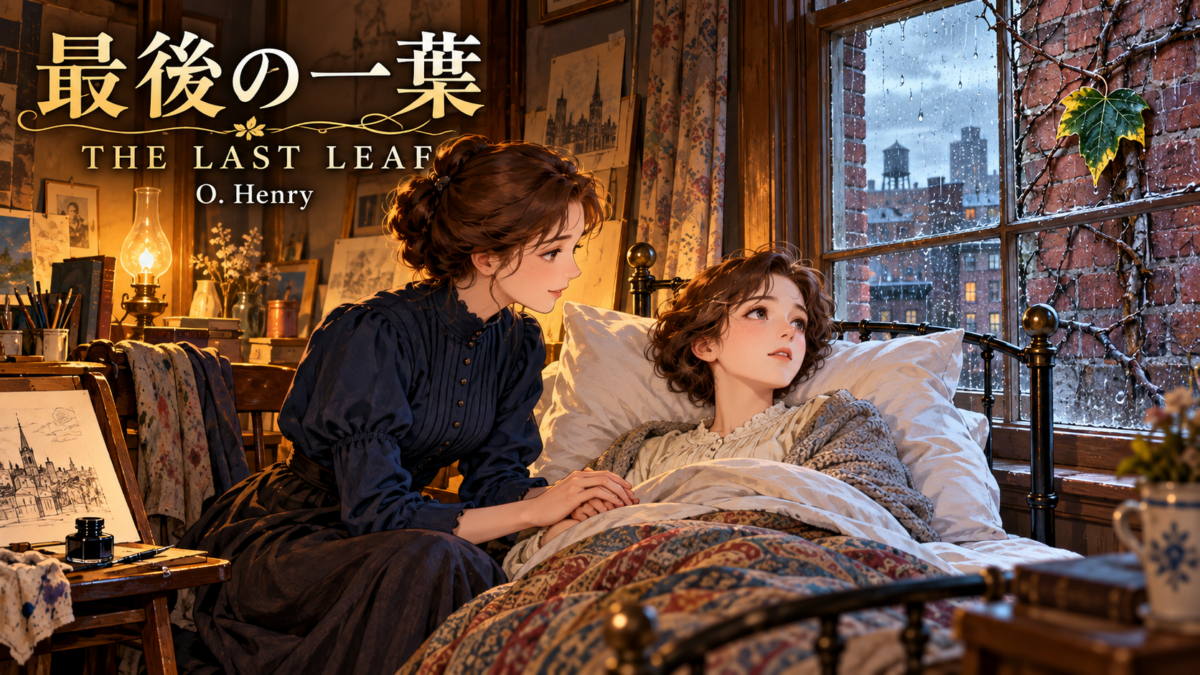
But Johnsy he smote; and she lay, scarcely moving, on her painted iron bedstead, looking through the small Dutch window-panes at the blank side of the next brick house.
それでも肺炎はジョンジーを襲いました。彼女は塗装された鉄のベッドに、ほとんど動かず横たわり、小さなオランダ風の窓ガラス越しに、隣のレンガの建物の何もない壁面を見ていました。
One morning the busy doctor invited Sue into the hallway with a shaggy, gray eyebrow.
ある朝、忙しい医師は、ぼさぼさの灰色の眉を動かして、スーを廊下へ呼び出しました。
“She has one chance in—let us say, ten,” he said, as he shook down the mercury in his clinical thermometer. “And that chance is for her to want to live.
「助かる見込みは、そうだな、十に一つだ」と医師は、診療用の体温計を振って水銀を下げながら言いました。「しかも、その見込みは、本人が生きたいと思うかどうかにかかっている。
This way people have of lining-up on the side of the undertaker makes the entire pharmacopeia look silly.
患者が葬儀屋の側に並ぼうとするような態度では、どんな薬も役に立たなくなる。
Your little lady has made up her mind that she’s not going to get well. Has she anything on her mind?”
君のお友達は、もう治らないと決め込んでしまっている。何か気にかかっていることはあるのかね?」
“She—she wanted to paint the Bay of Naples some day,” said Sue.
「彼女は……いつかナポリ湾を描きたがっていました」とスーは言いました。
“Paint?—bosh! Has she anything on her mind worth thinking about twice—a man, for instance?”
「絵だって? ばかな! もっと真剣に考える値打ちのあることが気になってはいないかね。たとえば、男のこととか?」
“A man?” said Sue, with a jew’s-harp twang in her voice. “Is a man worth—but, no, doctor; there is nothing of the kind.”
「男ですって?」とスーは、口琴の弦をはじいたような声で言いました。「男にそんな値打ちが……いえ、先生、そういうことは何もありません」
“Well, it is the weakness, then,” said the doctor. “I will do all that science, so far as it may filter through my efforts, can accomplish.
「では、衰弱のせいなのだな」と医師は言いました。「私の努力を通じて科学にできる限りのことは、すべてやろう。
But whenever my patient begins to count the carriages in her funeral procession I subtract 50 per cent. from the curative power of medicines.
だが、患者が自分の葬列に並ぶ馬車を数え始めたら、薬の治療効果を五十パーセント差し引かなくてはならない。
If you will get her to ask one question about the new winter styles in cloak sleeves I will promise you a one-in-five chance for her,
冬の新しい外套の袖の流行について、たった一つでも質問する気にさせてくれれば、助かる見込みを五分の一にしてあげられる。
instead of one in ten.”
十分の一ではなくてね」
After the doctor had gone Sue went into the workroom and cried a Japanese napkin to a pulp. Then she swaggered into Johnsy’s room with her drawing board, whistling ragtime.
医師が帰ると、スーは仕事部屋へ行き、日本製の紙ナプキンがぐしゃぐしゃになるほど泣きました。それから画板を持ち、ラグタイムを口笛で吹きながら、元気そうにジョンジーの部屋へ入っていきました。
Johnsy lay, scarcely making a ripple under the bedclothes, with her face toward the window. Sue stopped whistling, thinking she was asleep.
ジョンジーは窓へ顔を向け、寝具をほとんど波立たせることもなく横たわっていました。スーは、彼女が眠っていると思い、口笛をやめました。
She arranged her board and began a pen-and-ink drawing to illustrate a magazine story.
スーは画板を置き、雑誌に載る物語の挿絵を、ペンとインクで描き始めました。
Young artists must pave their way to Art by drawing pictures for magazine stories that young authors write to pave their way to Literature.
若い画家たちは、文学への道を切り開こうとする若い作家たちの雑誌向けの物語に挿絵を描いて、芸術への道を切り開かなければなりません。
As Sue was sketching a pair of elegant horseshow riding trousers and a monocle on the figure of the hero, an Idaho cowboy, she heard a low sound,
スーが、物語の主人公であるアイダホ州のカウボーイに、しゃれた馬術競技用の乗馬ズボンと片眼鏡を描き加えていると、小さな音が聞こえました。
several times repeated. She went quickly to the bedside.
その音は何度も繰り返されました。彼女は急いでベッドのそばへ行きました。
Johnsy’s eyes were open wide. She was looking out the window and counting—counting backward.
ジョンジーは目を大きく開けていました。窓の外を見ながら数を数えていたのです。逆に数を減らしながら。
“Twelve,” she said, and a little later “eleven;” and then “ten,” and “nine;” and then “eight” and “seven,” almost together.
「十二」と言い、少し後に「十一」。それから「十」、「九」、続いて「八」と「七」を、ほとんど立て続けに言いました。
Sue looked solicitously out the window. What was there to count?
スーは心配そうに窓の外を見ました。いったい何を数えるものがあるのでしょう?
There was only a bare, dreary yard to be seen, and the blank side of the brick house twenty feet away.
見えるのは、殺風景でわびしい中庭と、二十フィート先にあるレンガの建物の、何もない壁面だけでした。
An old, old ivy vine, gnarled and decayed at the roots, climbed half way up the brick wall.
とても古いツタが、根元で節くれ立ち、朽ちかけながら、レンガの壁の半ばまで伸びていました。
The cold breath of autumn had stricken its leaves from the vine until its skeleton branches clung, almost bare, to the crumbling bricks.
秋の冷たい息吹が葉をつるから落とし、今では骨のような枝が、ほとんどむき出しのまま、崩れかけたレンガにしがみついていました。
“What is it, dear?” asked Sue.
「何を数えているの、ねえ?」とスーは尋ねました。
“Six,” said Johnsy, in almost a whisper. “They’re falling faster now. Three days ago there were almost a hundred. It made my head ache to count them.
「六」とジョンジーは、ささやくように言いました。「今は、前より速く落ちているの。三日前は百枚近くあったわ。数えると頭が痛くなったくらい。
But now it’s easy. There goes another one. There are only five left now.”
でも、今は簡単。また一枚落ちた。もう五枚しか残っていないわ」
“Five what, dear. Tell your Sudie.”
「五枚って、何が? あなたのスーディに教えて」
“Leaves. On the ivy vine. When the last one falls I must go, too. I’ve known that for three days. Didn’t the doctor tell you?”
「葉っぱ。ツタの葉よ。最後の一枚が落ちたら、私も逝かなければならないの。三日前から分かっていることよ。先生はあなたに言わなかった?」
“Oh, I never heard of such nonsense,” complained Sue, with magnificent scorn. “What have old ivy leaves to do with your getting well?
「まあ、そんなばかな話、聞いたこともないわ」とスーは、きっぱり軽蔑するような口調で言いました。「古いツタの葉と、あなたの病気が治ることに、何の関係があるの?
And you used to love that vine so, you naughty girl. Don’t be a goosey.
それに、前はあのツタが大好きだったじゃない。困った子ね。そんなばかなことを言わないで。
Why, the doctor told me this morning that your chances for getting well real soon were—let’s see exactly what he said—he said the chances were ten to one!
だって、先生は今朝、あなたがすぐによくなる見込みは……正確に何と言ったかしら……治るほうが十対一だと言ったのよ!
Why, that’s almost as good a chance as we have in New York when we ride on the street cars or walk past a new building.
それなら、ニューヨークで路面電車に乗ったり、新しい建物の前を歩いたりするときの、私たちの無事でいられる見込みと、ほとんど同じくらいでしょう。
Try to take some broth now, and let Sudie go back to her drawing, so she can sell the editor man with it,
さあ、少しスープを飲んで。そしてスーディを絵の仕事へ戻らせて。編集者さんにこの絵を買ってもらって、
and buy port wine for her sick child, and pork chops for her greedy self.”
病気の子にはポートワインを、食いしん坊の自分にはポークチョップを買いたいんだから」
“You needn’t get any more wine,” said Johnsy, keeping her eyes fixed out the window. “There goes another. No, I don’t want any broth. That leaves just four.
「ワインはもう買わなくていいわ」とジョンジーは、窓の外に目を据えたまま言いました。「また一枚落ちた。ううん、スープはいらない。これで四枚だけになった。
I want to see the last one fall before it gets dark. Then I’ll go, too.”
暗くなる前に、最後の一枚が落ちるのを見たいの。それから、私も逝くわ」
“Johnsy, dear,” said Sue, bending over her, “will you promise me to keep your eyes closed, and not look out the window until I am done working?
「ジョンジー、お願い」とスーは、彼女の上へかがんで言いました。「私が仕事を終えるまで、目を閉じて、窓の外を見ないと約束してくれる?
I must hand those drawings in by to-morrow. I need the light, or I would draw the shade down.”
明日までに、この挿絵を届けなくちゃならないの。明かりが必要なのよ。そうでなければ、日よけを下ろすんだけど」
“Couldn’t you draw in the other room?” asked Johnsy, coldly.
「別の部屋で描けないの?」とジョンジーは冷たく尋ねました。
“I’d rather be here by you,” said Sue. “Besides I don’t want you to keep looking at those silly ivy leaves.”
「あなたのそばにいたいのよ」とスーは言いました。「それに、あのばかなツタの葉を見続けてほしくないの」
“Tell me as soon as you have finished,” said Johnsy, closing her eyes, and lying white and still as a fallen statue,
「描き終えたら、すぐに教えて」とジョンジーは言い、目を閉じました。倒れた彫像のように、青白く、動かず横たわったまま、
“because I want to see the last one fall. I’m tired of waiting. I’m tired of thinking.
「最後の一枚が落ちるのを見たいから。待つのはもう疲れたわ。考えるのも疲れた。
I want to turn loose my hold on everything, and go sailing down, down, just like one of those poor, tired leaves.”
何もかもから手を放して、あのかわいそうな、疲れ切った葉っぱの一枚のように、下へ、下へと、漂い落ちていきたいの」
“Try to sleep,” said Sue. “I must call Behrman up to be my model for the old hermit miner. I’ll not be gone a minute.
「眠ってみて」とスーは言いました。「ベアマンさんを呼んできて、隠遁した老鉱夫のモデルになってもらわなくちゃ。すぐに戻るわ。
Don’t try to move ’till I come back.”
私が戻るまで、動こうとしないでね」
Old Behrman was a painter who lived on the ground floor beneath them.
老ベアマンは、二人の下の階、一階に住んでいる画家でした。
He was past sixty and had a Michael Angelo’s Moses beard curling down from the head of a satyr along the body of an imp.
六十歳を過ぎていて、ミケランジェロの『モーセ』のような髭を生やしていました。その髭は、サテュロスのような頭から、小鬼のような体に沿って、巻きながら垂れていました。
Behrman was a failure in art. Forty years he had wielded the brush without getting near enough to touch the hem of his Mistress’s robe.
ベアマンは、画家としては成功しませんでした。四十年も筆を振るってきたのに、女主人たる芸術の衣の裾に触れられるほど近づくことさえできなかったのです。
He had been always about to paint a masterpiece, but had never yet begun it.
いつも傑作を描くつもりでいましたが、まだ一度も描き始めてはいませんでした。
For several years he had painted nothing except now and then a daub in the line of commerce or advertising.
ここ数年は、商売や広告のための下手な絵を、ときどき描くほかは、何も描いていませんでした。
He earned a little by serving as a model to those young artists in the colony who could not pay the price of a professional.
芸術家村の若い画家たちで、職業モデルの料金を払えない者のモデルになり、わずかな収入を得ていました。
He drank gin to excess, and still talked of his coming masterpiece.
ジンを飲み過ぎるほど飲み、相変わらず、これから描く自分の傑作を語っていました。
For the rest he was a fierce little old man, who scoffed terribly at softness in any one,
それ以外の点では、気の荒い小柄な老人で、誰であれ気の弱さを見せると、ひどくあざ笑いました。
and who regarded himself as especial mastiff-in-waiting to protect the two young artists in the studio above.
そして、自分は、上のアトリエにいる二人の若い画家を守るために控えている、特別な番犬だと思っていました。
Sue found Behrman smelling strongly of juniper berries in his dimly lighted den below.
スーが下の薄暗いねぐらでベアマンを見つけると、彼はネズの実のにおいを強く漂わせていました。
In one corner was a blank canvas on an easel that had been waiting there for twenty-five years to receive the first line of the masterpiece.
部屋の隅には、イーゼルに載せられた真っ白な画布がありました。傑作の最初の線を描いてもらうのを、二十五年もの間、そこで待ち続けていたのです。
She told him of Johnsy’s fancy, and how she feared she would, indeed, light and fragile as a leaf herself,
スーはジョンジーの思い込みを話し、彼女自身が葉のように軽く、はかない存在なので、
float away when her slight hold upon the world grew weaker.
この世につかまるわずかな力が弱まれば、本当に漂い去ってしまうのではないかと心配していることを伝えました。
Old Behrman, with his red eyes plainly streaming, shouted his contempt and derision for such idiotic imaginings.
老ベアマンは、赤い目からあらわに涙を流しながら、そんなばかげた思い込みを軽蔑し、あざける言葉を大声で叫びました。
“Vass!” he cried. “Is dere people in de world mit der foolishness to die because leafs dey drop off from a confounded vine?
「何だと!」と叫びました。「いまいましいツタから葉が落ちるからといって、死のうとするようなばかな人間が、この世にいるのか?
I haf not heard of such a thing. No, I will not bose as a model for your fool hermit-dunderhead.
そんな話は聞いたこともない。いや、あんたの間抜けな隠者のモデルになんぞならん。
Vy do you allow dot silly pusiness to come in der prain of her? Ach, dot poor lettle Miss Johnsy.”
なぜ、あの娘の頭に、そんなばかな考えが入り込むのを許すんだ? ああ、かわいそうなジョンジーさん」
“She is very ill and weak,” said Sue, “and the fever has left her mind morbid and full of strange fancies.
「ひどく病気で、衰弱しているんです」とスーは言いました。「熱のせいで心まで病的になって、奇妙な考えでいっぱいなんです。
Very well, Mr. Behrman, if you do not care to pose for me, you needn’t. But I think you are a horrid old—old flibbertigibbet.”
分かりました、ベアマンさん。モデルになりたくないなら、ならなくて結構です。でも、あなたはひどい老……おしゃべりな老いぼれだと思います」
“You are just like a woman!” yelled Behrman. “Who said I will not bose? Go on. I come mit you.
「まったく、女というやつは!」とベアマンは怒鳴りました。「モデルにならんと誰が言った? さあ、行こう。あんたと一緒に行く。
For half an hour I haf peen trying to say dot I am ready to bose. Gott!
この三十分、モデルになるつもりだと言おうとしていたんだ。やれやれ!
dis is not any blace in which one so goot as Miss Yohnsy shall lie sick. Some day I vill baint a masterpiece, and ve shall all go away. Gott!
ジョンジーさんのようにいい娘を、こんな場所で病気のまま寝かせておけるものか。いつか傑作を描いて、みんなでここを出ていくんだ。やれやれ!
yes.”
そうとも」
Johnsy was sleeping when they went upstairs. Sue pulled the shade down to the window-sill, and motioned Behrman into the other room.
二人が上の階へ行くと、ジョンジーは眠っていました。スーは日よけを窓台まで下ろし、ベアマンを身ぶりで隣の部屋へ招きました。
In there they peered out the window fearfully at the ivy vine. Then they looked at each other for a moment without speaking.
そこで二人は、恐る恐る窓の外のツタをのぞきました。それから、しばらく何も言わず、互いの顔を見ました。
A persistent, cold rain was falling, mingled with snow. Behrman, in his old blue shirt, took his seat as the hermit-miner on an upturned kettle for a rock.
冷たい雨が雪交じりに、しつこく降り続いていました。ベアマンは古い青いシャツを着て、岩に見立てた逆さの湯沸かしに腰を下ろし、隠者の鉱夫の姿を取りました。
When Sue awoke from an hour’s sleep the next morning she found Johnsy with dull, wide-open eyes staring at the drawn green shade.
翌朝、スーが一時間の眠りから目覚めると、ジョンジーは、どんよりした目を大きく開け、下ろされた緑の日よけをじっと見つめていました。
“Pull it up; I want to see,” she ordered, in a whisper.
「上げて。見たいの」と、ささやく声で命じました。
Wearily Sue obeyed.
スーは疲れ切った様子で言うとおりにしました。
But, lo! after the beating rain and fierce gusts of wind that had endured through the livelong night, there yet stood out against the brick wall one ivy leaf.
ところが、見てください! 一晩中続いた打ちつける雨と激しい突風の後にも、レンガの壁を背に、ツタの葉が一枚、まだくっきりと残っていました。
It was the last on the vine. Still dark green near its stem, but with its serrated edges tinted with the yellow of dissolution and decay,
つるに残った最後の葉でした。茎の近くはまだ濃い緑でしたが、のこぎりの歯のような縁は、衰えと腐敗の黄色に染まり、
it hung bravely from a branch some twenty feet above the ground.
地面から二十フィートほどの高さの枝に、勇敢にぶら下がっていました。
“It is the last one,” said Johnsy. “I thought it would surely fall during the night. I heard the wind.
「最後の一枚ね」とジョンジーは言いました。「夜の間に、きっと落ちると思っていた。風の音が聞こえたもの。
It will fall to-day, and I shall die at the same time.”
今日、落ちるわ。そして私も、同じときに死ぬの」
“Dear, dear!” said Sue, leaning her worn face down to the pillow, “think of me, if you won’t think of yourself. What would I do?”
「ああ、お願い」とスーは、疲れた顔を枕のところへ寄せて言いました。「自分のことを考えたくないなら、私のことを考えて。私はどうすればいいの?」
But Johnsy did not answer. The lonesomest thing in all the world is a soul when it is making ready to go on its mysterious, far journey.
けれどもジョンジーは答えませんでした。この世で最も孤独なものは、不思議な遠い旅へ出る支度をしている魂です。
The fancy seemed to possess her more strongly as one by one the ties that bound her to friendship and to earth were loosed.
友情やこの世に彼女をつないでいた絆が、一つ、また一つとほどけるにつれ、その思い込みは、ますます強く彼女をとらえるようでした。
The day wore away, and even through the twilight they could see the lone ivy leaf clinging to its stem against the wall.
一日が過ぎていき、夕暮れになっても、壁を背にしたたった一枚のツタの葉が、茎にしがみついているのが見えました。
And then, with the coming of the night the north wind was again loosed, while the rain still beat against the windows and pattered down from the low Dutch eaves.
やがて夜が来ると、北風が再び吹き荒れました。雨は相変わらず窓をたたき、低いオランダ風の軒から、ぱらぱらと落ちていました。
When it was light enough Johnsy, the merciless, commanded that the shade be raised.
十分に明るくなると、ジョンジーは容赦なく、日よけを上げるよう命じました。
The ivy leaf was still there.
ツタの葉は、まだそこにありました。
Johnsy lay for a long time looking at it. And then she called to Sue, who was stirring her chicken broth over the gas stove.
ジョンジーは長い間、横たわったまま、その葉を見ていました。それから、ガスこんろの上でチキンスープをかき混ぜているスーに声をかけました。
“I’ve been a bad girl, Sudie,” said Johnsy. “Something has made that last leaf stay there to show me how wicked I was.
「私、悪い子だったわ、スーディ」とジョンジーは言いました。「何かがあの最後の葉をそこに残して、私がどれほど悪かったか教えてくれたのね。
It is a sin to want to die. You may bring me a little broth now, and some milk with a little port in it, and—no;
死にたいと思うのは罪なのね。もう、少しスープを持ってきていいわ。それから、ポートワインを少し入れたミルクも。いえ、その前に、
bring me a hand-mirror first, and then pack some pillows about me, and I will sit up and watch you cook.”
まず手鏡を持ってきて。それから、周りに枕を詰めてちょうだい。起き上がって、あなたが料理するのを見たいわ」
An hour later she said.
一時間後、彼女は言いました。
“Sudie, some day I hope to paint the Bay of Naples.”
「スーディ、いつかナポリ湾を描きたいわ」
The doctor came in the afternoon, and Sue had an excuse to go into the hallway as he left.
午後、医師が来ました。帰るとき、スーは、その機会に廊下へ出ていきました。
“Even chances,” said the doctor, taking Sue’s thin, shaking hand in his. “With good nursing you’ll win. And now I must see another case I have downstairs.
「見込みは五分五分だ」と医師は、スーの細く震える手を取りながら言いました。「看病がよければ勝てる。さて、今度は下の階の別の患者を診なくてはならない。
Behrman, his name is—some kind of an artist, I believe. Pneumonia, too. He is an old, weak man, and the attack is acute.
ベアマンという名前だ。画家か何かだと思う。彼も肺炎だ。老いて体が弱く、症状も急性だ。
There is no hope for him; but he goes to the hospital to-day to be made more comfortable.”
助かる見込みはない。だが、少しでも楽に過ごせるよう、今日、病院へ移ることになっている」
The next day the doctor said to Sue: “She’s out of danger. You’ve won. Nutrition and care now—that’s all.”
翌日、医師はスーに言いました。「彼女は危険を脱した。君の勝ちだ。あとは栄養と看病、それだけだ」
And that afternoon Sue came to the bed where Johnsy lay, contentedly knitting a very blue and very useless woolen shoulder scarf, and put one arm around her,
その日の午後、スーはジョンジーのベッドへ来ました。ジョンジーは満ち足りた様子で、とても青くて、とても役に立ちそうもない毛糸の肩掛けを編んでいました。スーは片腕で彼女を抱き寄せました。
pillows and all.
枕ごと、すっかり。
“I have something to tell you, white mouse,” she said. “Mr. Behrman died of pneumonia to-day in the hospital. He was ill only two days.
「話しておかなくちゃならないことがあるの、白いネズミさん」とスーは言いました。「ベアマンさんが、今日、病院で肺炎で亡くなったの。病気になって、たった二日だったわ。
The janitor found him on the morning of the first day in his room downstairs helpless with pain. His shoes and clothing were wet through and icy cold.
最初の日の朝、管理人さんが下の部屋で、痛みで身動きできなくなっている彼を見つけたの。靴も服もずぶぬれで、氷のように冷たかった。
They couldn’t imagine where he had been on such a dreadful night.
あんな恐ろしい夜に、いったいどこにいたのか、誰にも想像できなかった。
And then they found a lantern, still lighted, and a ladder that had been dragged from its place, and some scattered brushes,
それから、まだ火のともっているランタンと、元の場所から引きずり出されたはしご、それに、散らばった絵筆が見つかったの。
and a palette with green and yellow colors mixed on it, and—look out the window, dear, at the last ivy leaf on the wall.
緑と黄色の絵の具を混ぜたパレットもね。さあ、窓の外を見て。壁にある、あの最後のツタの葉を。
Didn’t you wonder why it never fluttered or moved when the wind blew? Ah, darling, it’s Behrman’s masterpiece—he painted it there the night that the last leaf fell.”
風が吹いても、どうしてあの葉は揺れも動きもしないのか、不思議に思わなかった? ああ、あれがベアマンさんの傑作なの。最後の葉が落ちた夜に、あそこへ描いたのよ」
出典 (Source):
原文:Project Gutenberg — The Last Leaf, O. Henry
朗読:LibriVox — The Last Leaf(Marian Brown版)
英語原文と、新しく作成した日本語訳を掲載しています。