
カラフル対訳で紹介している作品について
カラフル対訳で紹介している作品は、すべてパブリックドメインの作品です。
このサイトで使われている作品は、著作権の切れた名作などの全文を電子化し、インターネット上で公開している Project Gutenberg(プロジェクト・グーテンベルク)、 および朗読音声を公開している LibriVox(リブリヴォックス/朗読図書館) の作品を出典としています。
原文はProject Gutenberg、音声はLibriVoxで公開されているパブリックドメイン作品を出典としています。
THE FIFTH CHAPTER
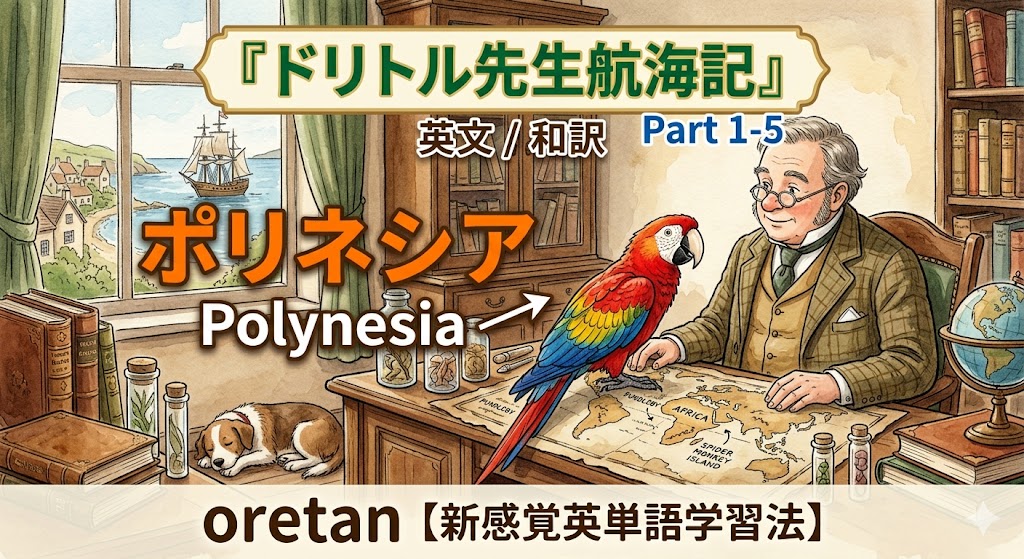
POLYNESIA
トミーがドリトル先生と歩きながら、先生に動物の言葉を教えたオウム「ポリネシア」の話を聞く場面です。ポリネシアの帰還、アフリカでの思い出、そしてトミーの家で母親と先生が出会う流れを、重要表現多めに色分けしています。
表示設定
“I THINK your house is the most interesting house I was ever in,” I said as we set off in the direction of the town.
「先生の家は、私がこれまで入った中でいちばん興味深い家だと思います」と、私たちが町のほうへ向かって出発したとき、私は言った。
“May I come and see you again to-morrow?”
「明日また先生に会いに来てもいいですか?」
“Certainly,” said the Doctor. “Come any day you like. To-morrow I’ll show you the garden and my private zoo.”
「もちろんだよ」と先生は言った。「好きな日に来なさい。明日は庭と私の私設動物園を見せてあげよう」
“Oh, have you a zoo?” I asked.
「えっ、動物園があるのですか?」と私は尋ねた。
“Yes,” said he. “The larger animals are too big for the house, so I keep them in a zoo in the garden.”
「そうだよ」と先生は言った。「大きな動物たちは家の中には大きすぎるので、庭の動物園で飼っているんだ」
“It is not a very big collection but it is in its way interesting.”
「それほど大きな集まりではないが、それなりに面白いものだよ」
“It must be splendid,” I said, “to be able to talk all the languages of the different animals.”
「いろいろな動物の言葉を全部話せるなんて、すばらしいに違いありません」と私は言った。
“Do you think I could ever learn to do it?”
「私にもいつかできるようになると思いますか?」
“Oh surely,” said the Doctor—“with practise. You have to be very patient, you know.”
「もちろんだよ」と先生は言った。「練習すればね。ただ、とても辛抱強くなければいけないよ」
“You really ought to have Polynesia to start you. It was she who gave me my first lessons.”
「本当なら、最初はポリネシアに教えてもらうのがいい。私に最初の授業をしてくれたのは彼女だったんだ」
“Who is Polynesia?” I asked.
「ポリネシアって誰ですか?」と私は尋ねた。
“Polynesia was a West African parrot I had. She isn’t with me any more now,” said the Doctor sadly.
「ポリネシアは、私が飼っていた西アフリカのオウムだよ。今はもう一緒にいないんだ」と先生は悲しそうに言った。
“Why—is she dead?”
「どうしてですか。死んでしまったのですか?」
“Oh no,” said the Doctor. “She is still living, I hope.”
「いやいや」と先生は言った。「まだ生きていると思うよ」
“But when we reached Africa she seemed so glad to get back to her own country. She wept for joy.”
「でも、アフリカに着いたとき、彼女は自分の国に戻れて本当にうれしそうだった。喜びの涙を流していたよ」
“And when the time came for me to come back here I had not the heart to take her away from that sunny land.”
「そして私がここへ帰る時が来たとき、私はあの陽の光あふれる土地から彼女を連れ去る気にはなれなかった」
“Although, it is true, she did offer to come. I left her in Africa—Ah well! I have missed her terribly.”
「もっとも、たしかに彼女は一緒に来ると言ってくれた。私は彼女をアフリカに残した。ああ、それでも私は彼女がひどく恋しかった」
“She wept again when we left. But I think I did the right thing.”
「私たちが出発するとき、彼女はまた泣いた。だが、私は正しいことをしたのだと思う」
“She was one of the best friends I ever had.”
「彼女は、私がこれまで持った中でも最高の友人の一人だった」
“It was she who first gave me the idea of learning the animal languages and becoming an animal doctor.”
「動物の言葉を学び、動物の医者になるという考えを最初に私に与えてくれたのは彼女だった」
“I often wonder if she remained happy in Africa, and whether I shall ever see her funny, old, solemn face again.”
「私はよく、彼女はアフリカで幸せに暮らしているだろうか、またあの面白くて年老いた、まじめな顔を見られるだろうかと思うんだ」
“Good old Polynesia!—A most extraordinary bird—Well, well!”
「懐かしいポリネシア! 本当に並外れた鳥だった。まあ、まあ!」
Just at that moment we heard the noise of some one running behind us.
ちょうどそのとき、私たちは後ろから誰かが走ってくる音を聞いた。
And turning round we saw Jip the dog rushing down the road after us, as fast as his legs could bring him.
振り返ると、犬のジップが、足の続く限りの速さで道を駆けて私たちを追いかけてくるのが見えた。
He seemed very excited about something.
ジップは何かにとても興奮しているようだった。
As soon as he came up to us, he started barking and whining to the Doctor in a peculiar way.
私たちに追いつくとすぐに、彼は先生に向かって独特な調子で吠えたり、クンクン鳴いたりし始めた。
Then the Doctor too seemed to get all worked up and began talking and making queer signs to the dog.
すると先生もすっかり興奮したようになり、犬に向かって話し、不思議な合図をし始めた。
At length he turned to me, his face shining with happiness.
やがて先生は、幸せで顔を輝かせながら私のほうを向いた。
“Polynesia has come back!” he cried. “Imagine it. Jip says she has just arrived at the house.”
「ポリネシアが戻ってきた!」と先生は叫んだ。「想像してごらん。ジップが言うには、彼女はたった今、家に着いたそうだ」
“My! And it’s five years since I saw her—Excuse me a minute.”
「なんと! 彼女に会うのは五年ぶりだ。ちょっと失礼」
He turned as if to go back home. But the parrot, Polynesia, was already flying towards us.
先生は家へ戻ろうとするように向きを変えた。だがオウムのポリネシアは、すでにこちらへ飛んできていた。
The Doctor clapped his hands like a child getting a new toy.
先生は、新しいおもちゃをもらった子どものように手をたたいた。
While the swarm of sparrows in the roadway fluttered, gossiping, up on to the fences.
その一方で、道路にいたスズメの群れは、おしゃべりしながら羽ばたき、柵の上へ飛び上がった。
They were highly scandalized to see a gray and scarlet parrot skimming down an English lane.
灰色と緋色のオウムがイギリスの小道を滑るように飛んでくるのを見て、彼らはひどく気分を害しているようだった。
On she came, straight on to the Doctor’s shoulder, where she immediately began talking a steady stream in a language I could not understand.
彼女はそのまま飛んできて、まっすぐ先生の肩に止まり、すぐに私にはわからない言葉で、途切れなく話し始めた。
She seemed to have a terrible lot to say.
彼女には、ものすごくたくさん言いたいことがあるようだった。
And very soon the Doctor had forgotten all about me and my squirrel and Jip and everything else.
そしてすぐに先生は、私のことも、私のリスのことも、ジップのことも、ほかのすべてのこともすっかり忘れてしまった。
Till at length the bird clearly asked him something about me.
やがてその鳥が、明らかに私について何かを先生に尋ねた。
“Oh excuse me, Stubbins!” said the Doctor. “I was so interested listening to my old friend here.”
「おお、失礼したね、スタビンズ!」と先生は言った。「この古い友人の話を聞くのがあまりに面白くてね」
“We must get on and see this squirrel of yours—Polynesia, this is Thomas Stubbins.”
「君のリスを見に行かなければ。ポリネシア、こちらはトーマス・スタビンズだ」
The parrot, on the Doctor’s shoulder, nodded gravely towards me.
先生の肩に止まったオウムは、私に向かって重々しくうなずいた。
Then, to my great surprise, she said quite plainly in English, “How do you do?”
それから、私がたいへん驚いたことに、彼女ははっきりした英語で「ごきげんよう」と言った。
“I remember the night you were born. It was a terribly cold winter. You were a very ugly baby.”
「あなたが生まれた夜を覚えているわ。ひどく寒い冬だった。あなたはとても不格好な赤ん坊だったわね」
“Stubbins is anxious to learn animal language,” said the Doctor.
「スタビンズは動物の言葉を覚えたがっているんだ」と先生は言った。
“I was just telling him about you and the lessons you gave me when Jip ran up and told us you had arrived.”
「ジップが走ってきて君が到着したと知らせてくれたとき、ちょうど君のことと、君が私にしてくれた授業の話をしていたところだった」
“Well,” said the parrot, turning to me, “I may have started the Doctor learning.”
「そうね」とオウムは私のほうを向いて言った。「私が先生に学び始めさせたのかもしれないわ」
“But I never could have done even that, if he hadn’t first taught me to understand what I was saying when I spoke English.”
「でも、先生がまず、私が英語を話すときに自分が何を言っているのか理解できるよう教えてくれなかったら、それさえできなかったでしょうね」
“You see, many parrots can talk like a person, but very few of them understand what they are saying.”
「つまりね、多くのオウムは人間のように話せるけれど、自分が何を言っているのか理解しているものはとても少ないの」
“They just say it because—well, because they fancy it is smart or, because they know they will get crackers given them.”
「彼らはただ、それが賢そうだと思っているから、あるいはそうすればクラッカーをもらえると知っているから言っているだけなのよ」
By this time we had turned and were going towards my home with Jip running in front and Polynesia still perched on the Doctor’s shoulder.
このころには、私たちは向きを変えて私の家へ向かっていた。ジップが前を走り、ポリネシアはまだ先生の肩に止まっていた。
The bird chattered incessantly, mostly about Africa; but now she spoke in English, out of politeness to me.
その鳥は主にアフリカのことについて絶え間なくしゃべっていたが、私への礼儀として、今は英語で話していた。
“How is Prince Bumpo getting on?” asked the Doctor.
「バンポ王子はどうしている?」と先生は尋ねた。
“Oh, I’m glad you asked me,” said Polynesia. “I almost forgot to tell you.”
「まあ、聞いてくれてよかったわ」とポリネシアは言った。「もう少しで話すのを忘れるところだった」
“What do you think?—Bumpo is in England!”
「何だと思う? バンポはイギリスにいるのよ!」
“In England!—You don’t say!” cried the Doctor. “What on earth is he doing here?”
「イギリスに! まさか!」と先生は叫んだ。「いったいここで何をしているんだ?」
“His father, the king, sent him here to a place called—er—Bullford, I think it was—to study lessons.”
「父親の王様が、勉強させるために彼をここへ送ったの。場所の名前は、ええと、ブルフォードだったかしら」
“Bullford!—Bullford!” muttered the Doctor. “I never heard of the place—Oh, you mean Oxford.”
「ブルフォード! ブルフォード!」と先生はつぶやいた。「そんな場所は聞いたことがない。ああ、オックスフォードのことだね」
“Yes, that’s the place—Oxford,” said Polynesia. “I knew it had cattle in it somewhere.”
「そう、それよ。オックスフォード」とポリネシアは言った。「どこかに牛に関係する言葉が入っていると思ったのよ」
“Oxford—that’s the place he’s gone to.”
「オックスフォード。彼が行ったのはそこよ」
“Well, well,” murmured the Doctor. “Fancy Bumpo studying at Oxford—Well, well!”
「いやはや」と先生はつぶやいた。「バンポがオックスフォードで勉強しているとは。いやはや!」
“There were great doings in Jolliginki when he left.”
「彼が出発するとき、ジョリギンキでは大騒ぎだったわ」
“He was scared to death to come. He was the first man from that country to go abroad.”
「彼は来るのを死ぬほど怖がっていた。その国から外国へ行く最初の人だったのよ」
“He thought he was going to be eaten by white cannibals or something.”
「彼は、白人の人食い人種か何かに食べられると思っていたの」
“You know what those niggers are—that ignorant!”
「あの人たちは本当に無知だからね、という言い方をポリネシアはした」
“Well!—But his father made him come. He said that all the black kings were sending their sons to Oxford now.”
「でも、父親が彼を来させたの。今では黒人の王たちはみな息子をオックスフォードへ送っている、と王様は言ったのよ」
“It was the fashion, and he would have to go.”
「それが流行で、彼も行かなければならないというわけ」
“Bumpo wanted to bring his six wives with him. But the king wouldn’t let him do that either.”
「バンポは六人の妻を一緒に連れてきたがった。でも王様はそれも許さなかった」
“Poor Bumpo went off in tears—and everybody in the palace was crying too. You never heard such a hullabaloo.”
「かわいそうなバンポは泣きながら出発した。そして宮殿のみんなも泣いていた。あれほどの大騒ぎは聞いたことがないでしょうね」
“Do you know if he ever went back in search of The Sleeping Beauty?” asked the Doctor.
「彼はその後、眠れる美女を探しに戻ったかどうか知っているかい?」と先生は尋ねた。
“Oh yes,” said Polynesia—“the day after you left.”
「ええ」とポリネシアは言った。「あなたが出発した翌日にね」
“And a good thing for him he did: the king got to know about his helping you to escape; and he was dreadfully wild about it.”
「彼にとっては、そうしてよかったのよ。王様は、彼があなたの逃亡を助けたことを知って、ひどく怒っていたから」
“And The Sleeping Beauty?—did he ever find her?”
「それで眠れる美女は? 彼は見つけたのかい?」
“Well, he brought back something which he said was The Sleeping Beauty.”
「まあ、彼は自分では眠れる美女だと言っている人を連れて帰ってきたわ」
“Myself, I think it was an albino niggeress.”
「私自身は、それはアルビノの黒人女性だったと思うわ」
“She had red hair and the biggest feet you ever saw.”
「彼女は赤い髪をしていて、あなたが見たこともないほど大きな足をしていたの」
“But Bumpo was no end pleased with her and finally married her amid great rejoicings.”
「でもバンポは彼女をとても気に入り、大きな祝賀の中でついに彼女と結婚したの」
“The feastings lasted seven days. She became his chief wife and is now known out there as the Crown-Princess Bumpah—you accent the last syllable.”
「宴会は七日間続いたわ。彼女は彼の第一夫人になり、今ではあちらで王太子妃バンパーとして知られているの。最後の音節にアクセントを置くのよ」
“And tell me, did he remain white?”
「それで教えておくれ。彼は白いままだったのかい?」
“Only for about three months,” said the parrot.
「三か月ほどだけね」とオウムは言った。
“After that his face slowly returned to its natural color. It was just as well.”
「その後、彼の顔はゆっくりと本来の色に戻ったわ。そのほうがよかったのよ」
“He was so conspicuous in his bathing-suit the way he was, with his face white and the rest of him black.”
「顔だけ白く、体のほかの部分は黒いまま水着を着ていると、あまりに目立っていたから」
“And how is Chee-Chee getting on?”
「それで、チーチーはどうしている?」
“Chee-Chee,” added the Doctor in explanation to me, “was a pet monkey I had years ago.”
「チーチーというのはね」と先生は私に説明を加えた。「昔、私が飼っていた猿なんだ」
“I left him too in Africa when I came away.”
「私が帰るとき、彼もアフリカに残してきたんだ」
“Well,” said Polynesia frowning, “Chee-Chee is not entirely happy.”
「そうね」とポリネシアは眉をひそめて言った。「チーチーは完全に幸せというわけではないの」
“I saw a good deal of him the last few years.”
「ここ数年、私は彼とかなり会っていたわ」
“He got dreadfully homesick for you and the house and the garden.”
「彼はあなたや家や庭が恋しくて、ひどくホームシックになっていたの」
“It’s funny, but I was just the same way myself.”
「不思議だけれど、私自身もまったく同じだったわ」
“You remember how crazy I was to get back to the dear old land?”
「私が懐かしい故郷に戻りたくて、どれほど夢中になっていたか覚えているでしょう?」
“And Africa is a wonderful country—I don’t care what anybody says.”
「それに、アフリカは本当にすばらしい国よ。誰が何と言おうとね」
“Well, I thought I was going to have a perfectly grand time.”
「だから私は、きっと最高に楽しい時間を過ごせると思っていたの」
“But somehow—I don’t know—after a few weeks it seemed to get tiresome.”
「でもどういうわけか、数週間たつと退屈に感じられるようになったの」
“I just couldn’t seem to settle down.”
「どうしても落ち着くことができなかったのよ」
“Well, to make a long story short, one night I made up my mind that I’d come back here and find you.”
「つまり、手短に言えば、ある夜、私はここへ戻ってあなたを探そうと決心したの」
“So I hunted up old Chee-Chee and told him about it.”
「そこで私は年老いたチーチーを探し出して、そのことを話したの」
“He said he didn’t blame me a bit—felt exactly the same way himself.”
「彼は私を少しも責めないと言ったわ。彼自身もまったく同じ気持ちだったの」
“Africa was so deadly quiet after the life we had led with you.”
「あなたと過ごした暮らしの後では、アフリカはあまりにも静かすぎたのよ」
“He missed the stories you used to tell us out of your animal books—and the chats we used to have sitting round the kitchen-fire on winter nights.”
「彼は、あなたが動物の本から私たちに聞かせてくれた物語や、冬の夜に台所の火のまわりに座ってしたおしゃべりを恋しがっていたわ」
“The animals out there were very nice to us and all that. But somehow the dear kind creatures seemed a bit stupid.”
「あちらの動物たちは私たちにとても親切だったわ。でもどういうわけか、その親切な生き物たちは少し鈍いように思えたの」
“Chee-Chee said he had noticed it too.”
「チーチーもそれに気づいていたと言っていたわ」
“But I suppose it wasn’t they who had changed; it was we who were different.”
「でも、変わったのは彼らではなく、私たちのほうだったのだと思うわ」
“When I left, poor old Chee-Chee broke down and cried.”
「私が出発するとき、かわいそうな年老いたチーチーは泣き崩れたわ」
“He said he felt as though his only friend were leaving him—though, as you know, he has simply millions of relatives there.”
「彼は、たった一人の友だちが去っていくように感じると言ったの。もっとも、あなたも知っているように、あそこには彼の親戚が何百万もいるのだけれど」
“He said it didn’t seem fair that I should have wings to fly over here any time I liked, and him with no way to follow me.”
「私には好きなときにここへ飛んでこられる翼があるのに、自分には私についてくる方法がないのは不公平だと言っていたわ」
“But mark my words, I wouldn’t be a bit surprised if he found a way to come—some day.”
「でも覚えておいて。いつか彼が来る方法を見つけたとしても、私は少しも驚かないわ」
“He’s a smart lad, is Chee-Chee.”
「チーチーは賢い子だからね」
At this point we arrived at my home.
この時点で、私たちは私の家に着いた。
My father’s shop was closed and the shutters were up; but my mother was standing at the door looking down the street.
父の店は閉まっていて、雨戸も上げられていた。だが母は戸口に立ち、通りの先を見つめていた。
“Good evening, Mrs. Stubbins,” said the Doctor. “It is my fault your son is so late.”
「こんばんは、スタビンズ夫人」と先生は言った。「息子さんがこんなに遅くなったのは私のせいです」
“I made him stay to supper while his clothes were drying.”
「服を乾かしているあいだ、彼を夕食まで引き止めてしまいました」
“He was soaked to the skin; and so was I.”
「彼はずぶぬれでした。私も同じでした」
“We ran into one another in the storm and I insisted on his coming into my house for shelter.”
「嵐の中で私たちはぶつかってしまい、雨宿りのために私の家へ来るよう、私が強く勧めたのです」
“I was beginning to get worried about him,” said my mother.
「私はこの子のことが心配になり始めていました」と母は言った。
“I am thankful to you, Sir, for looking after him so well and bringing him home.”
「この子をよく世話して家まで連れてきてくださって、感謝しております」
“Don’t mention it—don’t mention it,” said the Doctor. “We have had a very interesting chat.”
「どういたしまして、どういたしまして」と先生は言った。「私たちはとても興味深い話をしていたのです」
“Who might it be that I have the honor of addressing?” asked my mother, staring at the gray parrot perched on the Doctor’s shoulder.
「失礼ですが、どちら様でいらっしゃいますか?」と母は、先生の肩に止まっている灰色のオウムを見つめながら尋ねた。
“Oh, I’m John Dolittle. I dare say your husband will remember me.”
「ああ、私はジョン・ドリトルです。ご主人は私のことを覚えておいでだと思います」
“He made me some very excellent boots about four years ago.”
「四年ほど前に、ご主人は私にとてもすばらしい長靴を作ってくださいました」
“They really are splendid,” added the Doctor, gazing down at his feet with great satisfaction.
「本当に見事なものです」と先生は、自分の足元をたいへん満足そうに見つめながら付け加えた。
“The Doctor has come to cure my squirrel, Mother,” said I. “He knows all about animals.”
「先生は僕のリスを治しに来てくれたんだよ、お母さん」と私は言った。「先生は動物のことを何でも知っているんだ」
“Oh, no,” said the Doctor, “not all, Stubbins, not all about them by any means.”
「いやいや」と先生は言った。「全部ではないよ、スタビンズ。決して全部ではない」
“It is very kind of you to come so far to look after his pet,” said my mother.
「この子のペットを見るために、こんな遠くまで来てくださって、本当にご親切です」と母は言った。
“Tom is always bringing home strange creatures from the woods and the fields.”
「トムはいつも森や野原から変わった生き物を家に連れてくるのです」
“Is he?” said the Doctor. “Perhaps he will grow up to be a naturalist some day. Who knows?”
「そうですか」と先生は言った。「もしかすると、いつか博物学者になるかもしれませんね。誰にもわかりませんよ」
“Won’t you come in?” asked my mother.
「中へお入りになりませんか?」と母は尋ねた。
“The place is a little untidy because I haven’t finished the spring cleaning yet.”
「まだ春の大掃除が終わっていないので、少し散らかっていますけれど」
“But there’s a nice fire burning in the parlor.”
「でも、居間にはよい火が燃えています」
“Thank you!” said the Doctor. “What a charming home you have!”
「ありがとうございます!」と先生は言った。「なんて魅力的なお宅でしょう!」
And after wiping his enormous boots very, very carefully on the mat, the great man passed into the house.
そして巨大な長靴を玄関マットでとても、とても念入りに拭いたあと、その偉大な人物は家の中へ入っていった。