
カラフル対訳で紹介している作品について
カラフル対訳で紹介している作品は、すべてパブリックドメインの作品です。
このサイトで使われている作品は、著作権の切れた名作などの全文を電子化し、インターネット上で公開している Project Gutenberg(プロジェクト・グーテンベルク)、 および朗読音声を公開している LibriVox(リブリヴォックス/朗読図書館) の作品を出典としています。
原文はProject Gutenberg、音声はLibriVoxで公開されているパブリックドメイン作品を出典としています。
THE EIGHTH CHAPTER
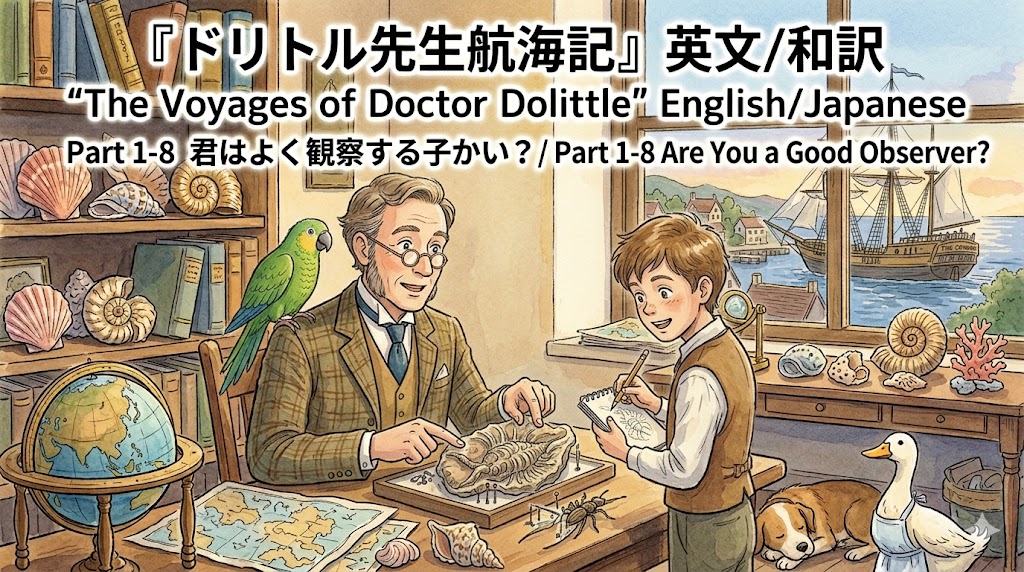
ARE YOU A GOOD NOTICER?
ポリネシアがトミーに、動物の言葉を学ぶために必要な「観察力」について教える場面です。動物のしぐさ、観察、学習、そしてトミーがドリトル先生を手伝う可能性が語られます。読解上重要な表現を多めに色分けしています。
表示設定
JUST at that moment Polynesia came into the room and said something to the Doctor in bird language.
ちょうどそのとき、ポリネシアが部屋に入ってきて、鳥の言葉で先生に何かを言った。
Of course I did not understand what it was.
もちろん、私にはそれが何なのかわからなかった。
But the Doctor at once put down his knife and fork and left the room.
しかし先生はすぐにナイフとフォークを置き、部屋を出ていった。
“You know it is an awful shame,” said the parrot as soon as the Doctor had closed the door.
先生が扉を閉めるとすぐに、オウムは言った。「本当にひどいことなのよ」
“Directly he comes back home, all the animals over the whole countryside get to hear of it.”
「先生が家に戻るとすぐ、田舎中の動物たちがそれを聞きつけるの」
“And every sick cat and mangy rabbit for miles around comes to see him and ask his advice.”
「そして何マイルも先から、病気の猫や毛の抜けたウサギがみんな先生に会いに来て、助言を求めるのよ」
“Now there’s a big fat hare outside at the back door with a squawking baby.”
「今も裏口の外に、ぎゃあぎゃあ鳴く赤ん坊を連れた、大きく太った野ウサギがいるの」
“Can she see the Doctor, please!—Thinks it’s going to have convulsions.”
「先生に会わせてもらえますか、ですって! 赤ん坊がけいれんを起こしそうだと思っているのよ」
“Stupid little thing’s been eating Deadly Nightshade again, I suppose.”
「あの愚かな小さな子は、またベラドンナを食べたんだと思うわ」
“The animals are so inconsiderate at times—especially the mothers.”
「動物たちはときどき本当に思いやりがないの。とくに母親たちはね」
“They come round and call the Doctor away from his meals and wake him out of his bed at all hours of the night.”
「彼らはやって来て、食事中の先生を呼び出したり、夜中のどんな時間にも先生をベッドから起こしたりするの」
“I don’t know how he stands it—really I don’t.”
「先生がどうやってそれに耐えているのか、私にはわからないわ。本当にわからない」
“Why, the poor man never gets any peace at all!”
「だって、かわいそうな先生には、少しの平穏もないんですもの!」
“I’ve told him time and again to have special hours for the animals to come.”
「私は何度も何度も、動物たちが来るための特別な時間を決めるように言ったの」
“But he is so frightfully kind and considerate.”
「でも先生は、ものすごく親切で思いやりがあるのよ」
“He never refuses to see them if there is anything really wrong with them.”
「本当に具合が悪い動物がいれば、先生は決して診るのを断らないの」
“He says the urgent cases must be seen at once.”
「緊急の症例はすぐに診なければならない、と先生は言うのよ」
“Why don’t some of the animals go and see the other doctors?” I asked.
「どうして動物たちは、ほかのお医者さんに診てもらわないのですか?」と私は尋ねた。
“Oh Good Gracious!” exclaimed the parrot, tossing her head scornfully.
「まあ、なんてこと!」とオウムは、軽蔑するように頭を振りながら叫んだ。
“Why, there aren’t any other animal-doctors—not real doctors.”
「だって、ほかに動物のお医者さんなんていないのよ。本物のお医者さんはね」
“Oh of course there are those vet persons, to be sure.”
「もちろん、獣医という人たちはいるにはいるわ」
“But, bless you, they’re no good.”
「でも、まったく役に立たないのよ」
“You see, they can’t understand the animals’ language; so how can you expect them to be any use?”
「だって、彼らは動物の言葉を理解できないでしょう。そんな人たちにどうして役に立つことを期待できるの?」
“Imagine yourself, or your father, going to see a doctor who could not understand a word you say.”
「あなた自身やあなたのお父さんが、自分の言うことを一言も理解できない医者に診てもらうところを想像してごらんなさい」
“Nor even tell you in your own language what you must do to get well!”
「しかも、よくなるために何をすべきかを、あなたの言葉で伝えることさえできないのよ!」
“Poof!—those vets! They’re that stupid, you’ve no idea!”
「ふん、あの獣医たちときたら! あなたには想像もつかないくらい愚かなのよ!」
“Put the Doctor’s bacon down by the fire, will you?—to keep hot till he comes back.”
「先生のベーコンを火のそばに置いてくれる? 先生が戻るまで温かくしておくためにね」
“Do you think I would ever be able to learn the language of the animals?” I asked, laying the plate upon the hearth.
「私にもいつか動物の言葉を覚えられると思いますか?」と私は尋ね、皿を炉辺に置いた。
“Well, it all depends,” said Polynesia. “Are you clever at lessons?”
「まあ、それは場合によるわ」とポリネシアは言った。「あなたは勉強が得意なの?」
“I don’t know,” I answered, feeling rather ashamed.
「わかりません」と私は、少し恥ずかしく思いながら答えた。
“You see, I’ve never been to school. My father is too poor to send me.”
「私は学校に行ったことがないんです。父には私を学校へ行かせる余裕がないので」
“Well,” said the parrot, “I don’t suppose you have really missed much—to judge from what I have seen of school-boys.”
「そうね」とオウムは言った。「私が学校の男の子たちを見てきた限りでは、あなたはそれほど多くを逃したとは思わないわ」
“But listen: are you a good noticer?—Do you notice things well?”
「でも聞いて。あなたはよく気づく人? 物事をよく観察する?」
“I mean, for instance, supposing you saw two cock-starlings on an apple-tree, and you only took one good look at them.”
「たとえば、リンゴの木に二羽の雄のムクドリがいて、あなたがそれを一度だけよく見たとするでしょう」
“Would you be able to tell one from the other if you saw them again the next day?”
「翌日もう一度その二羽を見たとき、片方ともう片方を見分けることができるかしら?」
“I don’t know,” I said. “I’ve never tried.”
「わかりません」と私は言った。「試したことがありません」
“Well that,” said Polynesia, brushing some crumbs off the corner of the table with her left foot—“that is what you call powers of observation.”
「それよ」とポリネシアは左足でテーブルの角からパンくずを払いながら言った。「それが観察力と呼ばれるものなの」
“Noticing the small things about birds and animals: the way they walk and move their heads and flip their wings.”
「鳥や動物についての小さなことに気づくこと。歩き方、頭の動かし方、羽をひょいと動かす様子などね」
“The way they sniff the air and twitch their whiskers and wiggle their tails.”
「空気を嗅ぐ様子、ひげをひくひく動かす様子、しっぽをくねくね動かす様子などよ」
“You have to notice all those little things if you want to learn animal language.”
「動物の言葉を学びたいなら、そういう小さなことすべてに気づかなければならないの」
“For you see, lots of the animals hardly talk at all with their tongues.”
「というのも、多くの動物は舌ではほとんど話さないからよ」
“They use their breath or their tails or their feet instead.”
「その代わりに、息やしっぽや足を使うの」
“That is because many of them, in the olden days when lions and tigers were more plentiful, were afraid to make a noise.”
「それは、ライオンやトラがもっとたくさんいた昔、多くの動物たちは音を立てるのを恐れていたからよ」
“For fear the savage creatures heard them.”
「獰猛な生き物たちに聞かれるのを恐れていたの」
“Birds, of course, didn’t care; for they always had wings to fly away with.”
「もちろん鳥たちは気にしなかったわ。いつでも飛んで逃げられる翼があったから」
“But that is the first thing to remember: being a good noticer is terribly important in learning animal language.”
「でも、まず覚えておくべきことはこれよ。動物の言葉を学ぶには、よく気づく人であることが非常に重要なの」
“It sounds pretty hard,” I said.
「かなり難しそうですね」と私は言った。
“You’ll have to be very patient,” said Polynesia.
「とても辛抱強くならなければいけないわ」とポリネシアは言った。
“It takes a long time to say even a few words properly.”
「ほんの少しの言葉を正しく言うだけでも、長い時間がかかるの」
“But if you come here often I’ll give you a few lessons myself.”
「でも、ここへよく来るなら、私が少し授業をしてあげるわ」
“And once you get started you’ll be surprised how fast you get on.”
「そしていったん始めれば、自分がどれほど早く上達するかに驚くでしょうね」
“It would indeed be a good thing if you could learn.”
「あなたが学べるようになれば、本当にいいことだわ」
“Because then you could do some of the work for the Doctor—I mean the easier work, like bandaging and giving pills.”
「そうすれば、あなたは先生の仕事の一部を手伝えるから。包帯を巻いたり、薬を飲ませたりするような、簡単な仕事のことよ」
“Yes, yes, that’s a good idea of mine.”
「そう、そうだわ。これは私のいい考えね」
“’Twould be a great thing if the poor man could get some help—and some rest.”
「かわいそうな先生が少しでも助けを得て、少しでも休めるなら、それはすばらしいことだわ」
“It is a scandal the way he works.”
「先生の働き方は、本当にひどすぎるもの」
“I see no reason why you shouldn’t be able to help him a great deal.”
「あなたが先生を大いに助けられない理由はないと思うわ」
“That is, if you are really interested in animals.”
「つまり、あなたが本当に動物に関心があるなら、ということだけれど」
「よく気づく人であることは非常に重要だ」
“Oh, I’d love that!” I cried.
「ああ、ぜひそうしたいです!」と私は叫んだ。
“Do you think the Doctor would let me?”
「先生は許してくれると思いますか?」
“Certainly,” said Polynesia—“as soon as you have learned something about doctoring.”
「もちろんよ」とポリネシアは言った。「あなたが治療について少し学んだらすぐにね」
“I’ll speak of it to him myself—Sh! I hear him coming.”
「私から先生に話しておくわ。しっ! 先生が来る音がする」
“Quick—bring his bacon back on to the table.”
「早く、先生のベーコンをテーブルへ戻して」