
カラフル対訳で紹介している作品について
カラフル対訳で紹介している作品は、すべてパブリックドメインの作品です。
このサイトで使われている作品は、著作権の切れた名作などの全文を電子化し、インターネット上で公開している Project Gutenberg(プロジェクト・グーテンベルク)、 および朗読音声を公開している LibriVox(リブリヴォックス/朗読図書館) の作品を出典としています。
原文はProject Gutenberg、音声はLibriVoxで公開されているパブリックドメイン作品を出典としています。
PART SIX
THE FOURTH CHAPTER
THE SEA-SERPENT
ドリトル先生はポプシペテルの王として忙しい日々を送り、故郷へ帰る話は次第に遠のいていきます。そんな中、ポリネシアは先生を再び博物学へ引き戻すきっかけを探し続けます。海辺でスタビンズが眠っているあいだに、島を揺らすような異変が起こり、浅瀬に巨大な「海蛇」のような生き物が現れます。それは伝説の海蛇ではなく、フィジットが語っていた「大ガラス海巻貝」ではないかと考えられます。故郷・責任・博物学・巨大生物・海・発見に関する重要表現を多めに色分けしています。
表示設定
カテゴリ別ハイライト
FOR a long time after that Cabinet Meeting of which I have just told you, we did not ask the Doctor anything further about going home.
今お話ししたあの閣議のあと、長いあいだ私たちは、家へ帰ることについて先生にそれ以上何も尋ねなかった。
Life in Spidermonkey Island went forward, month in month out, busily and pleasantly.
スパイダーモンキー島での生活は、月から月へと、忙しく、そして楽しく続いていった。
The Winter, with Christmas celebrations, came and went, and Summer was with us once again before we knew it.
クリスマスのお祝いを伴う冬が来ては去り、気がつけば再び夏が訪れていた。
As time passed the Doctor became more and more taken up with the care of his big family.
時がたつにつれて、先生は自分の大きな家族の世話にますます夢中になっていった。
And the hours he could spare for his natural history work grew fewer and fewer.
そして博物学の仕事に割ける時間は、ますます少なくなっていった。
I knew that he often still thought of his house and garden in Puddleby and of his old plans and ambitions.
私は、先生が今でもしばしばパドルビーの家や庭、そして昔の計画や大望のことを考えているのを知っていた。
Because once in a while we would notice his face grow thoughtful and a little sad, when something reminded him of England or his old life.
なぜなら、何かが彼にイギリスや昔の生活を思い出させると、時々、彼の顔が物思いに沈み、少し悲しげになるのに私たちは気づいたからだ。
But he never spoke of these things.
しかし先生は、そうしたことを決して口にはしなかった。
And I truly believe he would have spent the remainder of his days on Spidermonkey Island if it hadn’t been for an accident—and for Polynesia.
そして私は本当に、ある偶然の出来事とポリネシアがいなければ、先生は残りの人生をスパイダーモンキー島で過ごしていただろうと思っている。
The old parrot had grown very tired of the Indians and she made no secret of it.
老いたオウムはインディアンたちにすっかりうんざりしており、そのことを隠そうともしなかった。
“The very idea,” she said to me one day as we were walking on the seashore—“the idea of the famous John Dolittle spending his valuable life waiting on these greasy natives!”
「まったく考えられないよ」と、ある日、海辺を歩いているとき彼女は私に言った。「有名なジョン・ドリトルが、貴重な人生をこの脂ぎった原住民たちの世話に費やすなんて!」
“Why, it’s preposterous!”
「まったく、ばかげているよ!」
All that morning we had been watching the Doctor superintend the building of the new theatre in Popsipetel.
その日の午前中ずっと、私たちは先生がポプシペテルの新しい劇場の建設を監督しているのを見ていた。
There was already an opera-house and a concert-hall; and finally she had got so grouchy and annoyed at the sight that I had suggested her taking a walk with me.
すでにオペラハウスと音楽堂はあった。ついに彼女はその光景にあまりにも不機嫌でいら立ってしまったので、私は一緒に散歩しようと提案したのだった。
“Do you really think,” I asked as we sat down on the sands, “that he will never go back to Puddleby again?”
「本当に先生はもう二度とパドルビーへ帰らないと思う?」と、砂浜に腰を下ろしながら私は尋ねた。
“I don’t know,” said she.
「わからないね」と彼女は言った。
“At one time I felt sure that the thought of the pets he had left behind at the house would take him home soon.”
「一時は、家に残してきたペットたちのことを考えれば、すぐに彼を家へ連れ戻すだろうと確信していたんだ」
“But since Miranda brought him word last August that everything was all right there, that hope’s gone.”
「でも去年の八月にミランダが、あちらはすべて大丈夫だと知らせを持ってきて以来、その望みは消えてしまった」
“For months and months I’ve been racking my brains to think up a plan.”
「何か計画を考え出そうと、何か月も何か月も知恵を絞ってきたんだよ」
“If we could only hit upon something that would turn his thoughts back to natural history again—I mean something big enough to get him really excited—we might manage it.”
「もし先生の思いを再び博物学へ向けさせる何かを思いつければ、つまり先生を本当に興奮させるほど大きな何かを見つけられれば、何とかなるかもしれない」
“But how?”—she shrugged her shoulders in disgust.
「でも、どうやって?」彼女は嫌悪感をあらわにして肩をすくめた。
“How?—when all he thinks of now is paving streets and teaching papooses that twice one are two!”
「どうやってだい? 今の先生が考えることといえば、通りを舗装することや、子どもたちに一の二倍は二だと教えることばかりなのに!」
It was a perfect Popsipetel day, bright and hot, blue and yellow.
それは完璧なポプシペテル日和だった。明るく暑く、青と黄色に満ちていた。
Drowsily I looked out to sea thinking of my mother and father.
私は母と父のことを考えながら、眠たげに海を見つめていた。
I wondered if they were getting anxious over my long absence.
私の長い不在を心配し始めているのではないかと思った。
Beside me old Polynesia went on grumbling away in low steady tones.
私のそばでは、年老いたポリネシアが低く一定した声でぶつぶつ言い続けていた。
And her words began to mingle and mix with the gentle lapping of the waves upon the shore.
そして彼女の言葉は、岸にやさしく打ち寄せる波の音と混ざり合い始めた。
It may have been the even murmur of her voice, helped by the soft and balmy air, that lulled me to sleep.
彼女の声の平らなつぶやきと、やわらかく心地よい空気が合わさって、私を眠りへ誘ったのかもしれない。
I don’t know.
私にはわからない。
Anyhow I presently dreamed that the island had moved again—not floatingly as before, but suddenly, jerkily, as though something enormously powerful had heaved it up from its bed just once and let it down.
とにかく私はやがて、島が再び動いた夢を見た。以前のように浮かぶようにではなく、突然、ぎくしゃくと、まるで途方もなく強力な何かが、島を寝床から一度だけ持ち上げて落としたかのようだった。
How long I slept after that I have no idea.
そのあとどれくらい眠ったのか、私には見当もつかない。
I was awakened by a gentle pecking on the nose.
私は鼻をやさしくつつかれて目を覚ました。
“Tommy!—Tommy!” it was Polynesia’s voice.
「トミー! トミー!」それはポリネシアの声だった。
“Wake up!—Gosh, what a boy, to sleep through an earthquake and never notice it!”
「起きなさい! まったく、地震のあいだずっと眠っていて気づかないなんて、なんという子だい!」
“Tommy, listen: here’s our chance now. Wake up, for goodness’ sake!”
「トミー、聞きなさい。今こそ私たちの好機だよ。お願いだから起きなさい!」
“What’s the matter?” I asked sitting up with a yawn.
「どうしたの?」と私はあくびをしながら起き上がって尋ねた。
“Sh!—Look!” whispered Polynesia pointing out to sea.
「しっ! 見て!」とポリネシアは海のほうを指さしてささやいた。
Still only half awake, I stared before me with bleary, sleep-laden eyes.
まだ半分しか目が覚めていないまま、私はかすみ、眠気で重い目で前方を見つめた。
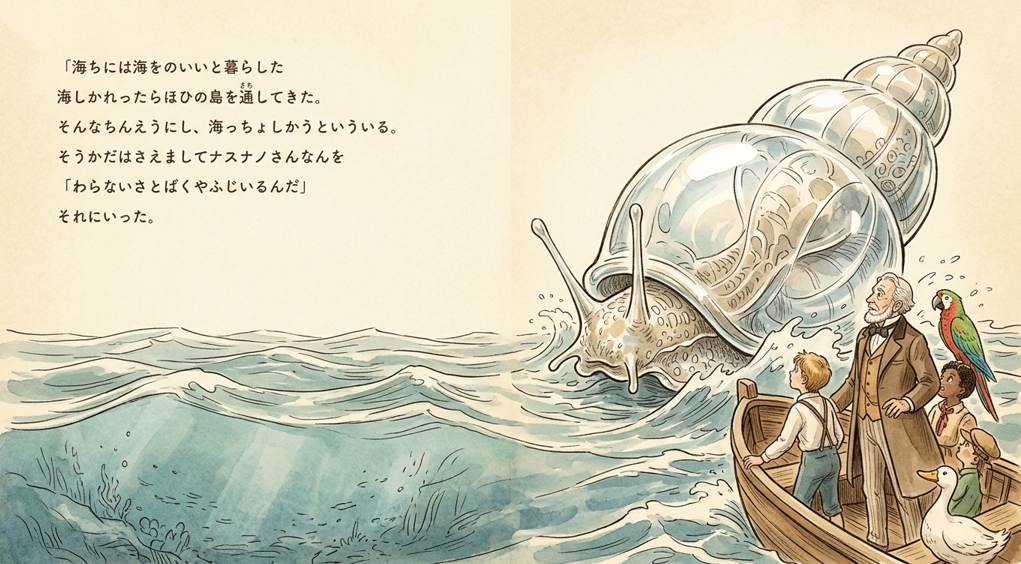
And in the shallow water, not more than thirty yards from shore, I saw an enormous pale pink shell.
すると岸から三十ヤードも離れていない浅瀬に、巨大な淡いピンク色の貝殻が見えた。
Dome-shaped, it towered up in a graceful rainbow curve to a tremendous height.
それはドーム形で、優美な虹のような曲線を描きながら、ものすごい高さまでそびえ立っていた。
And round its base the surf broke gently in little waves of white.
その根元の周りでは、白い小波となって波しぶきがやさしく砕けていた。
It could have belonged to the wildest dream.
それはまるで、とんでもなく奇妙な夢の中のもののようだった。
“What in the world is it?” I asked.
「いったいあれは何なの?」と私は尋ねた。
“That,” whispered Polynesia, “is what sailors for hundreds of years have called the Sea-serpent.”
「あれはね」とポリネシアはささやいた。「船乗りたちが何百年ものあいだ『海蛇』と呼んできたものだよ」
“I’ve seen it myself more than once from the decks of ships, at long range, curving in and out of the water.”
「私自身、船の甲板から遠くに、何度も見たことがある。水の中へ入ったり出たりしながら、曲がりくねっていたよ」
“But now that I see it close and still, I very strongly suspect that the Sea-serpent of history is no other than the Great Glass Sea-snail that the fidgit told us of.”
「でもこうして近くで、しかも静止しているのを見ると、歴史上の海蛇とは、フィジットが話していた大ガラス海巻貝にほかならないと、私は強く疑っている」
“If that isn’t the only fish of its kind in the seven seas, call me a carrion-crow.”
「もしあれが七つの海で唯一の種でないなら、私を死肉ガラスと呼んでくれていいよ」
“Tommy, we’re in luck.”
「トミー、私たちは運がいい」
“Our job is to get the Doctor down here to look at that prize specimen before it moves off to the Deep Hole.”
「私たちの仕事は、あの貴重な標本が深い穴へ戻ってしまう前に、先生をここへ連れてきて見せることだよ」
“If we can, then trust me, we may leave this blessed island yet.”
「それができれば、私を信じなさい。私たちはまだこの厄介な島を出られるかもしれない」
“You stay here and keep an eye on it while I go after the Doctor.”
「私が先生を呼びに行くあいだ、君はここにいて、それを見張っていなさい」
“Don’t move or speak—don’t even breathe heavy: he might get scared—awful timid things, snails.”
「動いても話してもだめ。息を荒くすることすらだめだよ。怖がるかもしれないからね。巻貝というのは、とても臆病なものなんだ」
“Just watch him; and I’ll be back in two shakes.”
「ただ見ていなさい。私はすぐに戻るから」
Stealthily creeping up the sands till she could get behind the cover of some bushes before she took to her wings, Polynesia went off in the direction of the town.
ポリネシアはこっそり砂浜を這うように進み、飛び立つ前に茂みの陰に隠れられるところまで行ってから、町の方角へ飛び去った。
While I remained alone upon the shore, fascinatedly watching this unbelievable monster wallowing in the shallow sea.
一方、私は岸に一人残り、この信じられない怪物が浅い海でもがくように動いているのを、魅了されて見つめていた。
It moved very little.
それはほとんど動かなかった。
From time to time it lifted its head out of the water, showing its enormously long neck and horns.
時々それは水面から頭を上げ、非常に長い首と角を見せた。
Occasionally it would try and draw itself up, the way a snail does when he goes to move.
時折それは、巻貝が動こうとするときのように、身を引き上げようとした。
But almost at once it would sink down again as if exhausted.
しかしほとんどすぐに、疲れ果てたようにまた沈み込んでしまった。
It seemed to me to act as though it were hurt underneath.
私には、それは下側を傷つけているかのように見えた。
But the lower part of it, which was below the level of the water, I could not see.
しかし水面の下にある下部は、私には見えなかった。
I was still absorbed in watching the great beast when Polynesia returned with the Doctor.
私がまだその大きな獣を夢中になって見ていると、ポリネシアが先生を連れて戻ってきた。
They approached so silently and so cautiously that I neither saw nor heard them coming till I found them crouching beside me on the sand.
二人はとても静かに、そして慎重に近づいてきたので、砂の上で私の横に身をかがめているのに気づくまで、私は彼らが来るのを見も聞きもしなかった。
One sight of the snail changed the Doctor completely.
その巻貝を一目見ただけで、先生は完全に変わった。
His eyes just sparkled with delight.
先生の目は喜びで輝いた。
I had not seen him so thrilled and happy since the time we caught the Jabizri beetle when we first landed on the island.
私たちが島に上陸してすぐジャビズリ甲虫を捕まえたとき以来、先生がこれほど興奮し、幸せそうにしているのを私は見たことがなかった。
“It is he!” he whispered—“the Great Glass Sea-snail himself—not a doubt of it.”
「彼だ!」と先生はささやいた。「大ガラス海巻貝そのものだ。疑いようがない」
“Polynesia, go down the shore away and see if you can find any of the porpoises for me.”
「ポリネシア、岸を向こうへ行って、ネズミイルカを見つけられるか見てきてくれ」
“Perhaps they can tell us what the snail is doing here.”
「彼らなら、この巻貝がここで何をしているのか教えてくれるかもしれない」
“It’s very unusual for him to be in shallow water like this.”
「彼がこのような浅瀬にいるのは、とても珍しいことだ」
“And Stubbins, you go over to the harbor and bring me a small canoe.”
「それからスタビンズ、君は港へ行って、小さなカヌーを一艘持ってきてくれ」
“But be most careful how you paddle it round into this bay.”
「ただし、それをこの湾へこぎ入れるときは、最大限に注意してくれ」
“If the snail should take fright and go out into the deeper water, we may never get a chance to see him again.”
「もし巻貝が怖がって深い水のほうへ出ていってしまったら、私たちは二度と彼を見る機会を得られないかもしれない」
“And don’t tell any of the Indians,” Polynesia added in a whisper as I moved to go.
私が行こうとすると、ポリネシアがささやき声で付け加えた。「それから、インディアンたちには誰にも言うんじゃないよ」
“We must keep this a secret or we’ll have a crowd of sightseers round here in five minutes.”
「これは秘密にしておかなければならない。そうしないと五分で見物人の群れがここへ集まってしまう」
“It’s mighty lucky we found the snail in a quiet bay.”
「この静かな湾で巻貝を見つけたのは、本当に幸運だよ」
Reaching the harbor, I picked out a small light canoe from among the number that were lying there.
港に着くと、そこに並んでいる多くのカヌーの中から、小さく軽いものを選んだ。
And without telling any one what I wanted it for, got in and started off to paddle it down the shore.
そして、それを何に使うのか誰にも言わずに乗り込み、岸沿いにこぎ出した。
I was mortally afraid that the snail might have left before I got back.
私は戻る前に巻貝が去ってしまっているのではないかと、ひどく心配していた。
And you can imagine how delighted I was, when I rounded a rocky cape and came in sight of the bay, to find he was still there.
だから、岩だらけの岬を回って湾が見えたとき、彼がまだそこにいるのを見つけて、私がどれほどうれしかったか想像できるだろう。
Polynesia, I saw, had got her errand done and returned ahead of me, bringing with her a pair of porpoises.
見るとポリネシアは用事を済ませ、私より先に戻ってきており、二頭のネズミイルカを連れていた。
These were already conversing in low tones with John Dolittle.
彼らはすでに、ジョン・ドリトルと低い声で会話していた。
I beached the canoe and went up to listen.
私はカヌーを浜に上げ、聞きに近づいた。
“What I want to know,” the Doctor was saying, “is how the snail comes to be here.”
「私が知りたいのは」と先生は言っていた。「この巻貝がどうしてここに来ることになったのかだ」
“I was given to understand that he usually stayed in the Deep Hole.”
「彼はふだん深い穴にいるものだと聞いていた」
“And that when he did come to the surface it was always in mid-ocean.”
「そして水面に出るとしても、それはいつも大洋の真ん中だと聞いていたんだ」
“Oh, didn’t you know?—Haven’t you heard?” the porpoises replied.
「ああ、ご存じなかったのですか。聞いていなかったのですか」とネズミイルカたちは答えた。
“You covered up the Deep Hole when you sank the island.”
「あなたは島を沈めたとき、深い穴をふさいでしまったのです」
“Why yes: you let it down right on top of the mouth of the Hole—sort of put the lid on, as it were.”
「そうです。あなたは島を穴の口の真上に下ろしたのです。いわば、ふたをしてしまったようなものです」
“The fishes that were in it at the time have been trying to get out ever since.”
「そのとき中にいた魚たちは、それ以来ずっと外へ出ようとしていました」
“The Great Snail had the worst luck of all: the island nipped him by the tail just as he was leaving the Hole for a quiet evening stroll.”
「大巻貝は、その中でも最も運が悪かったのです。静かな夕方の散歩に穴を出ようとしたちょうどそのとき、島が彼の尾を挟んでしまったのです」
“And he was held there for six months trying to wriggle himself free.”
「そして彼は六か月ものあいだそこに捕らえられ、身をよじって抜け出そうとしていたのです」
“Finally he had to heave the whole island up at one end to get his tail loose.”
「ついに彼は尾を自由にするため、島全体の一端を持ち上げなければなりませんでした」
“Didn’t you feel a sort of an earthquake shock about an hour ago?”
「一時間ほど前、地震のような揺れを感じませんでしたか?」
“Yes I did,” said the Doctor, “it shook down part of the theatre I was building.”
「確かに感じた」と先生は言った。「私が建てていた劇場の一部を揺り落としたよ」
“Well, that was the snail heaving up the island to get out of the Hole,” they said.
「それは、巻貝が穴から出るために島を持ち上げたのです」と彼らは言った。
“All the other fishes saw their chance and escaped when he raised the lid.”
「彼がふたを持ち上げたとき、ほかの魚たちは好機を見て逃げ出しました」
“It was lucky for them he’s so big and strong.”
「彼があれほど大きく強かったのは、魚たちにとって幸運でした」
“But the strain of that terrific heave told on him.”
「しかし、そのすさまじい持ち上げの負担が彼にこたえました」
“He sprained a muscle in his tail and it started swelling rather badly.”
「彼は尾の筋肉を痛め、それがかなりひどく腫れ始めたのです」
“He wanted some quiet place to rest up; and seeing this soft beach handy he crawled in here.”
「彼は静かに休んで回復できる場所を求めていました。そしてこの柔らかい浜辺が近くにあるのを見て、ここへ這い込んできたのです」
“Dear me!” said the Doctor.
「なんということだ!」と先生は言った。
“I’m terribly sorry.”
「本当に申し訳ない」
“I suppose I should have given some sort of notice that the island was going to be let down.”
「島が下ろされることについて、何らかの通知をしておくべきだったのだろうね」
“But, to tell the truth, we didn’t know it ourselves; it happened by a kind of an accident.”
「だが正直に言うと、私たち自身もそれを知らなかったのだ。あれは一種の偶然で起こったことだった」
“Do you imagine the poor fellow is hurt very badly?”
「あのかわいそうな彼は、かなりひどくけがをしていると思うかね?」
“We’re not sure,” said the porpoises; “because none of us can speak his language.”
「はっきりとはわかりません」とネズミイルカたちは言った。「私たちは誰も彼の言葉を話せないからです」
“But we swam right around him on our way in here, and he did not seem to be really seriously injured.”
「しかしここへ来る途中で彼の周りをぐるりと泳いでみましたが、本当に深刻に負傷しているようには見えませんでした」
“Can’t any of your people speak shellfish?” the Doctor asked.
「君たちの仲間で、貝類の言葉を話せる者はいないのかね?」と先生は尋ねた。
“Not a word,” said they.
「一語も話せません」と彼らは言った。
“It’s a most frightfully difficult language.”
「それは恐ろしく難しい言葉です」
“Do you think that you might be able to find me some kind of a fish that could?”
「それを話せる何らかの魚を、見つけてもらえると思うかね?」
“We don’t know,” said the porpoises.
「わかりません」とネズミイルカたちは言った。
“We might try.”
「試してみることはできます」
“I should be extremely grateful to you if you would,” said the Doctor.
「そうしてくれるなら、私は非常にありがたい」と先生は言った。
“There are many important questions I want to ask this snail.”
「この巻貝に尋ねたい重要な質問がたくさんあるのだ」
“And besides, I would like to do my best to cure his tail for him.”
「それに、彼の尾を治すために、できる限りのことをしてやりたい」
“It’s the least I can do.”
「それが私にできる最低限のことだ」
“After all, it was my fault, indirectly, that he got hurt.”
「結局、彼がけがをしたのは、間接的には私のせいなのだから」
“Well, if you wait here,” said the porpoises, “we’ll see what can be done.”
「では、ここで待っていてくだされば」とネズミイルカたちは言った。「何ができるか見てきましょう」