
『ロビン・フッド』のカラフル対訳について
カラフル対訳で紹介しているJ. Walker McSpadden『Robin Hood』は、パブリックドメインの作品を出典としています。
このサイトで使われている原文は、著作権の切れた名作などの全文を電子化し、インターネット上で公開している Project Gutenberg(プロジェクト・グーテンベルク)、 および朗読音声を公開している LibriVox(リブリヴォックス/朗読図書館) の作品を出典としています。
『ロビン・フッド』は、中世イングランドのシャーウッドの森を舞台に、弓の名手ロビン・フッドとその仲間たちの活躍を描いた 冒険・英雄伝説です。 義賊、森の仲間、王への忠誠、自由を求める精神などが物語の中心にあり、英語圏で長く親しまれてきた古典的な伝承文学の一つです。 カラフル対訳では、英文を読みやすくするために、重要語句や表現を色分けしながら紹介しています。
原文はProject Gutenberg、音声はLibriVoxで公開されているパブリックドメイン作品を出典としています。 本ページでは、英語学習用に英文・和訳・重要表現の色分けを加えた形で紹介しています。
“`『ロビン・フッド』英文/和訳 CHAPTER XX ウィル・ステュートリー救出
『Robin Hood』CHAPTER XX を、英語学習用に「英文→和訳」の順で読みやすく整理し、重要語句を多めに色分けしています。固有名詞の過剰な繰り返し色分けは避け、動作・心理・場面描写・重要表現を中心にしています。
Forth of the greenwood are they gone,
Yea, all courageously,
Resolving to bring Stutely home,
Or every man to die.
彼らは緑の森を出て行った。そう、皆、勇敢に。ステュートリーを連れ戻すか、さもなくば一人残らず死ぬ覚悟で。
The next day dawned bright and sunny.
翌日は、明るく晴れやかに夜が明けた。
The whole face of nature seemed gay, as if in despite of the tragedy which was soon to take place in the walls of Nottingham town.
自然全体の表情は陽気に見えた。まるで、まもなくノッティンガムの町の城壁の中で起ころうとしている悲劇に逆らうかのようだった。
The gates were not opened upon this day, for the Sheriff was determined to carry through the hanging of Will Stutely undisturbed.
その日、町の門は開かれなかった。保安官は、ウィル・ステュートリーの絞首刑を邪魔されずにやり遂げようと決心していたからである。
No man, therefore, was to be allowed entrance from without, all that morning and until after the fatal hour of noon, when Will’s soul was to be launched into eternity.
そのため、その朝いっぱい、そして正午という運命の時刻が過ぎるまでは、外から誰も入ることを許されなかった。その時刻に、ウィルの魂は永遠へ送り出されることになっていた。
Early in the day Robin had drawn his men to a point, as near as he dared, in the wood where he could watch the road leading to the East gate.
その日の早い時刻、ロビンは仲間たちを、東門へ続く道を見張れる森の中の地点まで、できる限り近づけて集めていた。
He himself was clad in a bright scarlet dress, while his men, a goodly array, wore their suits of sober Lincoln green.
彼自身は鮮やかな緋色の服を身につけ、仲間たちは立派な隊列をなし、落ち着いたリンカン・グリーンの服を着ていた。
They were armed with broadswords, and each man carried his bow and a full quiver of new arrows, straightened and sharpened cunningly by Middle, the tinker.
彼らは幅広の剣で武装し、それぞれが弓と、新しい矢でいっぱいの矢筒を持っていた。その矢は鋳掛け屋ミドルによって、まっすぐに整えられ、巧みに鋭くされていた。
Over their greenwood dress, each man had thrown a rough mantle, making him look not unlike a friar.
緑の森の服の上には、それぞれが粗末な外套を羽織っており、修道士に見えなくもない姿になっていた。
“I hold it good, comrades,” then said Robin Hood, “to tarry here in hiding for a season while we send some one forth to obtain tidings.”
「仲間たちよ」とロビン・フッドは言った。「しばらくここに隠れて待ち、誰かを送り出して知らせを得るのがよいと思う」
“For, in sooth, ’twill work no good to march upon the gates if they be closed.”
「実のところ、門が閉じられているなら、そこへ進軍しても何の役にも立たぬ」
“Look, master,” quoth one of the widow’s sons. “There comes a palmer along the road from the town.”
「見てください、頭領」と未亡人の息子の一人が言った。「町から来る道を、巡礼者が歩いてきます」
“Belike he can tell us how the land lies, and if Stutely be really in jeopardy.”
「おそらく、その者なら状況がどうなっているか、そしてステュートリーが本当に危機にあるのかを教えてくれるでしょう」
“Shall I go out and engage him in speech?”
「私が出て行って、話しかけましょうか」
“Go,” answered Robin.
「行け」とロビンは答えた。
So Stout Will went out from the band while the others hid themselves and waited.
そこで頑健なウィルは一団から出て行き、ほかの者たちは身を隠して待った。
When he had come close to the palmer, who seemed a slight, youngish man, he doffed his hat full courteously and said:
彼は、細身で若そうに見えるその巡礼者の近くまで来ると、たいへん丁寧に帽子を脱いで言った。
“I crave your pardon, holy man, but can you tell me tidings of Nottingham town?”
「お許しください、聖なる方。ノッティンガムの町の知らせを教えていただけますか」
“Do they intend to put an outlaw to death this day?”
「今日は、無法者を処刑するつもりなのでしょうか」
“Yea,” answered the palmer sadly. “’Tis true enough, sorry be the day.”
「そうです」と巡礼者は悲しげに答えた。「まったく本当です。なんと悲しい日でしょう」
“I have passed the very spot where the gallows-tree is going up.”
「私は、絞首台が立てられているまさにその場所を通ってきました」
“’Tis out upon the roadway near the Sheriff’s castle. One, Will Stutely, is to be hung thereon at noon, and I could not bear the sight, so came away.”
「それは保安官の城の近くの道にあります。ウィル・ステュートリーという男が、正午にそこへ吊るされるのです。私はその光景に耐えられず、立ち去ってきました」
The palmer spoke in a muffled voice; and as his hood was pulled well over his head, Stout Will could not discern what manner of man he was.
その巡礼者はくぐもった声で話した。頭巾を深くかぶっていたため、頑健なウィルには彼がどんな人物か見分けられなかった。
Over his shoulder he carried a long staff, with the fashion of a little cross at one end; and he had sandaled feet like any monk.
肩には、一端に小さな十字架のような形がついた長い杖を担ぎ、足にはどんな修道士とも同じようにサンダルを履いていた。
Stout Will noticed idly that the feet were very small and white, but gave no second thought to the matter.
頑健なウィルは、その足がとても小さく白いことに何気なく気づいたが、それ以上は考えなかった。
“Who will shrive the poor wretch, if you have come away from him?” he asked reproachfully.
「あなたがその哀れな男のもとから立ち去ってきたのなら、誰が彼の懺悔を聞くのですか」と彼は責めるように尋ねた。
The question seemed to put a new idea into the palmer’s head.
その質問は、巡礼者の頭に新しい考えを与えたようだった。
He turned so quickly that he almost dropped his hood.
彼はあまりにすばやく振り向いたため、頭巾を落としかけたほどだった。
“Do you think that I should undertake this holy office?”
「私がこの聖なる務めを引き受けるべきだと思いますか」
“By Saint Peter and the Blessed Virgin, I do indeed! Else, who will do it?”
「聖ペテロと聖母にかけて、まさにそう思います! ほかに誰がするというのです」
“The Bishop and all his whining clerks may be there, but not one would say a prayer for his soul.”
「司教と、その泣き言を言う聖職者たちはそこにいるかもしれませんが、彼の魂のために祈りを唱える者は一人もいないでしょう」
“But I am only a poor palmer,” the other began hesitatingly.
「ですが、私はただの貧しい巡礼者です」と相手はためらいながら言い始めた。
“Nathless, your prayers are as good as any and better than some,” replied Will.
「それでも、あなたの祈りは誰にも劣らず、ある者たちよりはましです」とウィルは答えた。
“Right gladly would I go,” then said the palmer; “but I fear me I cannot get into the city.”
「喜んで行きたいところです」と巡礼者は言った。「ですが、町へ入れないのではないかと恐れています」
“You may know that the gates are fast locked, for this morning, to all who would come in, although they let any pass out who will.”
「ご存じでしょうが、今朝は入ってこようとする者すべてに対して、門は固く閉ざされています。ただし、出て行く者は誰でも通しているのです」
“Come with me,” said Stout Will, “and my master will see that you pass through the gates.”
「私と一緒に来てください」と頑健なウィルは言った。「私の頭領が、あなたを門から通れるようにしてくれます」
So the palmer pulled his cloak still closer about him and was brought before Robin Hood.
そこで巡礼者は外套をさらに身に寄せ、ロビン・フッドの前へ連れて行かれた。
He told Robin all he knew of the situation, and ended with a careful suggestion.
彼は状況について知っていることをすべてロビンに話し、慎重な助言で話を締めくくった。
“If I may make so bold, I would not try to enter the city from this gate, as ’tis closely guarded since yesterday.”
「差し出がましいことを申し上げるなら、この門から町へ入ろうとはしないほうがよいでしょう。昨日以来、そこは厳重に守られています」
“But on the far side, no attack is looked for.”
「しかし反対側では、攻撃は予想されていません」
“My thanks, gentle palmer,” quoth Robin, “your suggestion is good, and we will deploy to the gate upon the far side.”
「感謝する、やさしい巡礼者よ」とロビンは言った。「あなたの助言はよい。われらは反対側の門へ展開しよう」
So the men marched silently but quickly until they were near to the western gate.
そこで男たちは静かに、しかしすばやく進み、西門の近くまで来た。
Then Arthur-a-Bland asked leave to go ahead as a scout, and quietly made his way to a point under the tower by the gate.
するとアーサー・ア・ブランドは斥候として先に行く許可を求め、門のそばの塔の下まで静かに進んだ。
The moat was dry on this side, as these were times of peace, and Arthur was further favored by a stout ivy vine which grew out from an upper window.
平和な時代だったため、この側の堀は乾いており、さらに上の窓から丈夫な蔦が伸びていたこともアーサーに味方した。
Swinging himself up boldly by means of this friendly vine, he crept through the window.
彼はこの都合のよい蔦を使って大胆によじ登り、窓から忍び込んだ。
In a moment more he had sprung upon the warder from behind and gripped him hard about the throat.
次の瞬間には、背後から門番に飛びかかり、喉を強くつかんでいた。
The warder had no chance to utter the slightest sound, and soon lay bound and gagged upon the floor.
門番にはわずかな声を出す機会もなく、まもなく床の上で縛られ、口をふさがれていた。
Arthur-a-Bland slipped himself into his uniform and got hold of his keys.
アーサー・ア・ブランドはその制服を身につけ、鍵を手に入れた。
’Twas the work of but a few moments more to open the gates, let down the bridge, and admit the rest of the band.
門を開け、橋を下ろし、残りの一団を入れるのは、ほんの数分の仕事だった。
They got inside the town so quietly that none knew of their coming.
彼らはとても静かに町の中へ入ったので、誰も彼らが来たことに気づかなかった。
Fortune also favored them in the fact that just at this moment the prison doors had been opened for the march of the condemned man.
幸運もまた彼らに味方した。ちょうどその時、死刑囚を行進させるために牢の扉が開かれていたのである。
Every soldier and idle lout in the market-place had trooped thither to see him pass along.
市場にいた兵士や暇な野次馬は、彼が通るのを見るために、皆そこへ群れをなして向かっていた。
Presently out came Will Stutely with firm step but dejected air.
まもなく、ウィル・ステュートリーが、しっかりした足取りながら、落胆した様子で出てきた。
He looked eagerly to the right hand and to the left, but saw none of the band.
彼は右へ左へと熱心に目を向けたが、一団の誰の姿も見えなかった。
And though more than one curious face betrayed friendship in it, he knew there could be no aid from such source.
好奇心をのぞかせる顔の中には友情を示すものも一つならずあったが、彼はそこから助けが得られないことを知っていた。
Will’s hands were tied behind his back.
ウィルの両手は背中の後ろで縛られていた。
He marched between rows of soldiery, and the Sheriff and the Bishop brought up the rear on horses.
彼は兵士の列の間を行進し、保安官と司教は馬に乗って後ろについていた。
They looked mightily puffed up and important over the whole proceeding.
彼らはその一連の出来事に対して、たいへん得意げで、重要人物ぶった様子をしていた。
He would show these sturdy rebels—would the Sheriff—whose word was law!
保安官は、この頑固な反逆者たちに、誰の言葉が法なのかを見せつけてやるつもりだった。
He knew that the gates were tightly fastened; and further he believed that the outlaws would hardly venture again within the walls, even if the gates were open.
彼は、門が固く閉ざされていることを知っていた。さらに、たとえ門が開いていたとしても、無法者たちが再び城壁の中へ踏み込むことはまずないと信じていた。
And as he looked around at the fivescore archers and pikemen who lined the way to the gallows, he smiled with grim satisfaction.
そして絞首台までの道に並ぶ百人の弓兵と槍兵を見渡すと、彼は冷酷な満足を浮かべて笑った。
Seeing that no help was nigh, the prisoner paused at the foot of the scaffold and spoke in a firm tone to the Sheriff.
助けが近くにないと見て、囚人は絞首台の足元で足を止め、しっかりした声で保安官に話しかけた。
“My lord Sheriff,” quoth he, “since I must needs die, grant me one boon.”
「保安官閣下」と彼は言った。「どうしても死なねばならぬのなら、一つ願いをお聞きください」
“For my noble master ne’er yet had a man that was hanged on a tree.”
「私の高貴な頭領は、まだ木に吊られた部下を一人も持ったことがないのです」
Give me a sword all in my hand,
And let me be unbound,
And with thee and thy men will I fight
Till I lie dead on the ground.
私の手に剣を持たせ、縛めを解いてください。そうすれば、私はあなたとあなたの部下たちと戦い、地面に死んで倒れるまで戦いましょう。
But the Sheriff would by no means listen to his request.
しかし保安官は、彼の願いを決して聞き入れようとはしなかった。
He swore that he should be hanged a shameful death, and not die by the sword valiantly.
彼は、ウィルが勇敢に剣で死ぬのではなく、恥ずべき死として絞首刑にされるべきだと誓った。
“O no, no, no,” the Sheriff said,
“Thou shalt on the gallows die,
Aye, and so shall thy master too,
If ever it in me lie.”
「いや、いや、いや」と保安官は言った。「お前は絞首台で死ぬのだ。そうだ、お前の頭領も、もし私にできるなら同じように死ぬことになる」
“O dastard coward!” Stutely cried,
“Faint-hearted peasant slave!
If ever my master do thee meet,
Thou shalt thy payment have!”
「卑怯な臆病者め!」とステュートリーは叫んだ。「弱虫の農奴め! もし私の頭領がお前に出会うことがあれば、お前はその報いを受けるだろう!」
“My noble master thee doth scorn,
And all thy cowardly crew,
Such silly imps unable are
Bold Robin to subdue.”
「私の高貴な頭領は、お前とその臆病な一味すべてを軽蔑している。そんな愚かな小鬼どもに、大胆なロビンを征服する力などない」
This brave speech was not calculated to soothe the Sheriff.
この勇敢な言葉は、保安官をなだめるようなものではなかった。
“To the gallows with him!” he roared, giving a sign to the hangman.
「そいつを絞首台へ!」と彼は怒鳴り、死刑執行人に合図した。
Stutely was pushed into the rude cart which was to bear him under the gallows until his neck was leashed.
ステュートリーは粗末な荷車へ押し込まれた。その荷車は、彼の首に縄がかけられるまで、彼を絞首台の下へ運ぶものだった。
Then the cart would be drawn roughly away and the unhappy man would swing out over the tail of it into another world.
それから荷車は乱暴に引き去られ、不幸な男はその後部から揺れ出して、別の世界へ行くことになるのだった。
But at this moment came a slight interruption.
しかしこの瞬間、小さな妨げが入った。
A boyish-looking palmer stepped forth, and said:
少年のように見える巡礼者が前へ進み出て、言った。
“Your Excellency, let me at least shrive this poor wretch’s soul ere it be hurled into eternity.”
「閣下、せめてこの哀れな者の魂が永遠へ投げ込まれる前に、懺悔を聞かせてください」
“No!” shouted the Sheriff, “let him die a dog’s death!”
「だめだ!」と保安官は叫んだ。「犬のように死なせろ!」
“Then his damnation will rest upon you,” said the monk firmly.
「それなら、彼の魂の破滅はあなたの上にかかります」と修道士はきっぱりと言った。
“You, my lord Bishop, cannot stand by and see this wrong done.”
「司教閣下、あなたはこの不正が行われるのを黙って見ていることはできないはずです」
The Bishop hesitated.
司教はためらった。
Like the Sheriff, he wanted no delay; but the people were beginning to mutter among themselves and move about uneasily.
保安官と同じく、彼も遅れを望んでいなかった。しかし人々は互いにざわめき始め、落ち着かなく動き始めていた。
He said a few words to the Sheriff, and the latter nodded ungraciously to the monk.
司教が保安官に数語話すと、保安官はその修道士に不機嫌そうにうなずいた。
“Perform your duty, Sir Priest,” quoth he, “and be quick about it!”
「務めを果たせ、司祭殿」と彼は言った。「そして急いで済ませろ!」
Then turning to his soldiers, he commanded: “Watch this palmer narrowly. Belike he is in league with those rascally outlaws.”
それから彼は兵士たちのほうを向き、命じた。「この巡礼者を厳しく見張れ。おそらく、あの悪党の無法者どもと通じている」
But the palmer paid no heed to his last words.
しかし巡礼者は、その最後の言葉を少しも気に留めなかった。
He began to tell his beads quickly, and to speak in a low voice to the condemned man.
彼はすばやく数珠を繰り始め、死刑囚に低い声で話し始めた。
But he did not touch his bonds.
しかし彼は、その縛めには触れなかった。
Then came another stir in the crowd, and one came pushing through the press of people and soldiery to come near to the scaffold.
すると群衆の中にまた別のざわめきが起こり、一人の男が人々と兵士たちの密集を押し分け、絞首台の近くへ進んできた。
“I pray you, Will, before you die, take leave of all your friends!” cried out the well-known voice of Much, the miller’s son.
「頼むぞ、ウィル、死ぬ前に、すべての友に別れを告げてくれ!」と、粉屋の息子マッチのよく知られた声が叫んだ。
At the word the palmer stepped back suddenly and looked to one side.
その言葉を聞くと、巡礼者は突然後ろへ下がり、横を見た。
The Sheriff also knew the speaker.
保安官もまた、その話し手を知っていた。
“Seize him!” he shouted. “’Tis another of the crew.”
「捕らえろ!」と彼は叫んだ。「一味のもう一人だ」
“He is the villain cook who once did rob me of my silver plate. We’ll make a double hanging of this!”
「あいつは、かつて私の銀の皿を盗んだ悪党の料理人だ。これで二人同時の絞首刑にしてやる!」
“Not so fast, good master Sheriff,” retorted Much.
「そう急ぐものではありませんよ、保安官殿」とマッチは言い返した。
“First catch your man and then hang him. But meanwhile I would like to borrow my friend of you awhile.”
「まず相手を捕まえてから吊るすことです。ですがその前に、しばらく私の友をあなたから借りたいのです」
And with one stroke of his keen hunting-knife he cut the bonds which fastened the prisoner’s arms.
そして鋭い狩猟ナイフの一振りで、彼は囚人の腕を縛っていた縄を切った。
Stutely leaped lightly from the cart.
ステュートリーは荷車から軽やかに飛び降りた。
“Treason!” screamed the Sheriff, getting black with rage. “Catch the varlets!”
「反逆だ!」と保安官は怒りで顔を黒くしながら叫んだ。「その悪党どもを捕らえろ!」
So saying he spurred his horse fiercely forward.
そう言うと、彼は馬に激しく拍車をかけて前へ進ませた。
Rising in his stirrups, he brought down his sword with might and main at Much’s head.
鐙の上に立ち上がると、彼はマッチの頭めがけて全力で剣を振り下ろした。
But his former cook dodged nimbly underneath the horse and came up on the other side, while the weapon whistled harmlessly in the air.
しかし元料理人は馬の下をすばやくくぐって身をかわし、反対側に出た。剣は空中をうなるだけで、何にも当たらなかった。
“Nay, Sir Sheriff!” he cried, “I must e’en borrow your sword for the friend I have borrowed.”
「いえいえ、保安官殿!」と彼は叫んだ。「借りた友のために、あなたの剣も借りなければなりません」
Thereupon he snatched the weapon deftly from the Sheriff’s hand.
そこで彼は、保安官の手からその武器を巧みに奪い取った。
“Here, Stutely!” said he, “the Sheriff has lent you his own sword.”
「さあ、ステュートリー!」と彼は言った。「保安官が自分の剣を貸してくれたぞ」
“Back to back with me, man, and we’ll teach these knaves a trick or two!”
「私と背中合わせになれ。こいつら悪党どもに、一つ二つ技を教えてやろう!」
Meanwhile the soldiers had recovered from their momentary surprise and had flung themselves into the fray.
そのあいだに、兵士たちは一瞬の驚きから立ち直り、戦いへ飛び込んでいた。
A clear bugle-note had also sounded, the same which the soldiers had learned to dread.
澄んだ角笛の音もまた響いた。それは、兵士たちが恐れるようになったあの同じ音だった。
’Twas the rallying note of the greenwood men.
それは、緑の森の男たちの集合の合図だった。
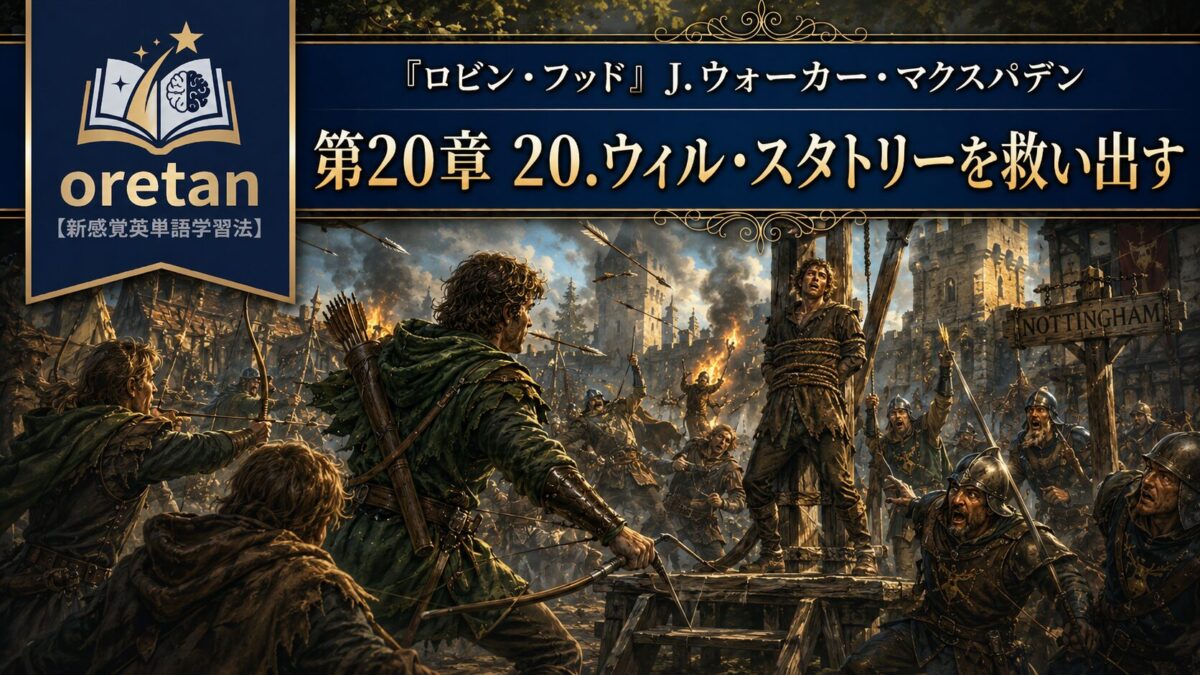
Cloth-yard shafts began to hurtle through the air, and Robin and his men cast aside their cloaks.
布一ヤードほどの長い矢が空を飛び始め、ロビンとその仲間たちは外套を脱ぎ捨てた。
They sprang forward, crying: “Lockesley! Lockesley! a rescue! a rescue!”
彼らは飛び出し、「ロックスリー! ロックスリー! 救出だ! 救出だ!」と叫んだ。
On the instant, a terrible scene of hand to hand fighting followed.
すぐさま、恐ろしい白兵戦の光景が続いた。
The Sheriff’s men, though once more taken by surprise, were determined to sell this rescue dearly.
保安官の部下たちは、再び不意を突かれたとはいえ、この救出を高くつかせてやろうと決意していた。
They packed in closely and stubbornly about the condemned man and Much and the palmer.
彼らは死刑囚とマッチ、そして巡礼者の周りに頑固に密集した。
It was only by desperate rushes that the foresters made an opening in the square.
森の男たちは、必死の突撃によってようやく、その密集した隊形に開口部を作った。
Ugly cuts and bruises were exchanged freely; and lucky was the man who escaped with only these.
ひどい切り傷や打撲が激しく交わされ、それだけで済んだ者は幸運だった。
Many of the onlookers, who had long hated the Sheriff and felt sympathy for Robin’s men, also plunged into the conflict.
見物人の多くも、長く保安官を憎み、ロビンの仲間たちに同情していたため、戦いへ飛び込んだ。
Although they could not well keep out of it, in sooth, they aided the rescuers no little.
実のところ、彼らは戦いから離れていることも難しかったのだが、それでも救出者たちを少なからず助けた。
At last, with a mighty onrush, Robin cleaved a way through the press to the scaffold itself.
ついにロビンは力強く突撃し、人の密集を切り開いて絞首台そのものへたどり着いた。
And not a second too soon; for two men with pikes had leaped upon the cart, and were in the act of thrusting down upon the palmer and Will Stutely.
しかも一秒たりとも早すぎることはなかった。二人の槍兵が荷車に飛び乗り、巡礼者とウィル・ステュートリーへ槍を突き下ろそうとしていたからである。
A mighty upward blow from Robin’s good blade sent the pike flying from the hand of one.
ロビンの見事な刃による力強い上向きの一撃が、一人の手から槍を吹き飛ばした。
A well-directed arrow from the outskirt pierced the other fellow’s throat.
外側から飛んできた正確な矢が、もう一人の喉を貫いた。
“God save you, master!” cried Will Stutely joyfully. “I had begun to fear that I would never see your face again.”
「神があなたを守られますように、頭領!」とウィル・ステュートリーは喜んで叫んだ。「もう二度とあなたのお顔を見られないのではないかと恐れ始めていました」
“A rescue!” shouted the outlaws afresh, and the soldiery became fainthearted and began to give back.
「救出だ!」と無法者たちは新たに叫び、兵士たちは弱気になって後退し始めた。
But the field was not yet won, for they retreated in close order toward the East gate, resolved to hem the attackers within the city walls.
しかし戦場はまだ勝ち取られていなかった。兵士たちは密集隊形で東門へ退き、攻撃者たちを町の城壁内に封じ込めようと決意していたからである。
Here again, however, they were in error, since the outlaws did not go out by their nearest gate.
しかしここでもまた、彼らは誤っていた。無法者たちは最も近い門から出て行かなかったからである。
They made a sally in that direction, in order to mislead the soldiery.
彼らは兵士たちを惑わせるため、その方向へ突撃するふりをした。
Then they abruptly turned and headed for the West gate, which was still guarded by Arthur-a-Bland.
それから急に向きを変え、まだアーサー・ア・ブランドが守っている西門へ向かった。
The Sheriff’s men raised an exultant shout at this, thinking they had the enemy trapped.
保安官の部下たちは、敵を閉じ込めたと思い、勝ち誇った叫びを上げた。
Down they charged after them, but the outlaws made good their lead, and soon got through the gate and over the bridge.
彼らは無法者たちを追って突撃したが、無法者たちは先行を保ち、まもなく門を通り、橋を渡った。
The bridge had been let down by Arthur-a-Bland.
その橋は、アーサー・ア・ブランドによって下ろされていた。
Close upon their heels came the soldiers—so close, that Arthur had no time to close the gate again or raise the bridge.
兵士たちはすぐ背後まで迫ってきた。あまりに近かったので、アーサーには門を再び閉じたり、橋を上げたりする時間がなかった。
So he threw away his key and fell in with the yeomen, who now began their retreat up the long hill to the woods.
そこで彼は鍵を投げ捨て、ヨーマンたちに加わった。彼らは今、森へ続く長い丘を上って退却し始めていた。
On this side the town, the road leading to the forest was long and almost unprotected.
町のこちら側では、森へ続く道は長く、ほとんど無防備だった。
The greenwood men were therefore in some distress, for the archers shot at them from loop-holes in the walls.
そのため、緑の森の男たちはいくらか苦境にあった。城壁の狭間から弓兵たちが彼らを射かけてきたからである。
The pikemen were reinforced by a company of mounted men from the castle.
槍兵たちは、城から来た騎馬兵の一隊によって増援を受けた。
But the outlaws retreated stubbornly and now and again turned to hold their pursuers at bay by a volley of arrows.
しかし無法者たちは粘り強く退き、時おり振り向いて矢を一斉に放ち、追っ手を食い止めた。
Stutely was in their midst, fighting with the energy of two.
ステュートリーは彼らの真ん中にいて、二人分の勢いで戦っていた。
The little palmer was there also, but took no part save to keep close to Robin’s side and mutter silent words as though in prayer.
小柄な巡礼者もそこにいたが、祈りのように黙って言葉をつぶやきながら、ロビンのそばに寄り添うほかは何もしなかった。
Robin put his horn to his lips to sound a rally, when a flying arrow from the enemy pierced his hand.
ロビンが集合の合図を吹こうとして角笛を口に当てた時、敵から飛んできた矢が彼の手を貫いた。
The palmer gave a little cry and sprang forward.
巡礼者は小さな叫びをあげ、前へ飛び出した。
The Sheriff, who followed close with the men on horseback, also saw the wound and gave a great huzza.
騎馬兵たちとともにすぐ後ろから追っていた保安官も、その傷を見て、大きな歓声をあげた。
“Ha! you will shoot no more bows for a season, master outlaw!” he shouted.
「はは! しばらくはもう弓を射ることはできまい、無法者の頭領め!」と彼は叫んだ。
“You lie!” retorted Robin fiercely, wrenching the shaft from his hand despite the streaming blood.
「嘘を言うな!」とロビンは激しく言い返し、流れる血にもかかわらず、手から矢を引き抜いた。
“I have saved one shot for you all this day. Here, take it!”
「今日一日、お前のために一射だけ取っておいたのだ。さあ、受け取れ!」
He fitted the same arrow, which had wounded him, upon the string of his bow and let it fly toward the Sheriff’s head.
彼は自分を傷つけたその同じ矢を弓の弦につがえ、保安官の頭へ向けて放った。
The Sheriff fell forward upon his horse in mortal terror, but not so quickly as to escape unhurt.
保安官は死ぬほどの恐怖で馬の上に前のめりに倒れ込んだが、無傷で逃れられるほど素早くはなかった。
The sharp point laid bare a deep gash upon his scalp and must certainly have killed him if it had come closer.
鋭い先端は彼の頭皮に深い切り傷をあらわにし、もしもう少し近ければ確実に彼を殺していただろう。
The fall of the Sheriff discomfited his followers for the moment.
保安官が倒れたことは、しばらくの間、彼の追随者たちを混乱させた。
Robin’s men took this chance to speed on up the hill.
ロビンの仲間たちはこの機会を利用し、丘を急いで上っていった。
The palmer had whipped out a small white handkerchief and tried to staunch Robin’s wound as they went.
巡礼者は小さな白いハンカチを取り出し、進みながらロビンの傷の血を止めようとしていた。
At sight of the palmer’s hand, Robin turned with a start, and pushed back the other’s hood.
巡礼者の手を見て、ロビンははっと振り向き、相手の頭巾を押し上げた。
“Marian!” he exclaimed, “you here!”
「マリアン!」と彼は叫んだ。「あなたがここに!」
It was indeed Maid Marian, who had helped save Will and been in the stress of battle from the first.
それは本当にメイド・マリアンだった。彼女はウィルの救出を助け、最初から戦いの激しさの中にいたのである。
Now she hung her head as though caught in wrong.
今、彼女は悪いことを見つかったかのように、うつむいた。
“I had to come, Robin,” she said simply, “and I knew you would not let me come, else.”
「来なければならなかったのです、ロビン」と彼女は素直に言った。「そうでなければ、あなたは私を来させてくれないと分かっていましたから」
Their further talk was interrupted by an exclamation from Will Scarlet.
二人のそれ以上の会話は、ウィル・スカーレットの叫びによって遮られた。
“By the saints, we are trapped!” he said, and pointed to the top of the hill, toward which they were pressing.
「聖人たちにかけて、われらは罠にかかった!」と彼は言い、彼らが向かっている丘の頂上を指さした。
There, from out a gray castle, poured a troop of men, armed with pikes and axes.
そこでは灰色の城から、槍と斧で武装した一隊の男たちがあふれ出ていた。
They shouted and came running down upon them.
彼らは叫びながら、ロビンたちめがけて駆け下りてきた。
At the same instant, the Sheriff’s men also renewed the pursuit.
同じ瞬間、保安官の部下たちも追撃を再開した。
“Alas!” cried poor Marian, “we are undone! There is no way of escape!”
「ああ!」と哀れなマリアンは叫んだ。「もうおしまいです! 逃げ道がありません!」
“Courage, dear heart!” said Robin, drawing her close to him.
「勇気を持て、愛しい人!」とロビンは言い、彼女を自分の近くへ引き寄せた。
But his own spirit sank as he looked about for some outlet.
しかし彼自身の気力も、どこか出口がないか見回すうちに沈んでいった。
Then—oh, joyful sight!—he recognized among the foremost of those coming from the castle the once doleful knight, Sir Richard of the Lea.
その時――ああ、なんと喜ばしい光景だろう!――城から来る者たちの先頭近くに、かつて悲しげだった騎士、リーのリチャード卿の姿を見分けた。
He was smiling now, and greatly excited.
彼は今や笑顔で、大いに興奮していた。
“A Hood! a Hood!” he cried; “a rescue! a rescue!”
「フッドに味方せよ! フッドに味方せよ!」と彼は叫んだ。「救出だ! 救出だ!」
Never were there more welcome sights and sounds than these.
これほどありがたい光景と声はなかった。
With a great cheer the outlaws raced up the hill to meet their new friends.
無法者たちは大きな歓声をあげ、新しい友人たちに会うために丘を駆け上がった。
Soon the whole force had gained the shelter of the castle.
まもなく全員が、城の守りの中へたどり着いた。
Bang! went the bridge as it swung back, with great clanking of chains.
バン! と音を立てて橋が跳ね上がり、大きな鎖の音が響いた。
Clash! went one great door upon the other, as they shut in the outlaw band, and shut out the Sheriff.
ガシャン! と大きな扉が互いに閉まり、無法者たちを中へ入れ、保安官を外へ締め出した。
The Sheriff dashed up at the head of his men, his bandaged face streaked with blood and inflamed with rage.
保安官は部下たちの先頭に立って突進してきた。包帯を巻かれた顔には血の筋がつき、怒りで燃え上がっていた。