
CHAPTER III のポイント
第3章では、セーラが学校でアーメンガードという少女と出会います。勉強が苦手で自信のないアーメンガードは、賢くて落ち着いたセーラに強く惹かれ、二人の間に友情の芽が生まれます。
この章の読みどころは、セーラが相手を能力だけで判断しないところです。アーメンガードの弱さや不器用さを受け止めるセーラの優しさが描かれ、後に彼女を支える大切な人間関係の土台になります。
この章の英語学習ポイントを開く
- friendship:友情。セーラとアーメンガードの関係が始まる、この章の中心テーマ。
- dull:頭の回転が遅い、ぼんやりした。アーメンガードが自分に自信を持てない理由を表す語。
- wonderingly:不思議そうに。新しい生徒セーラを見つめる周囲の視線を読む手がかりになる語。
- good-natured:気立てのよい。アーメンガードの性格を理解するために重要な表現。
- ashamed:恥ずかしく思って。勉強ができないことへのアーメンガードの劣等感を表す感情語。
3 Ermengarde
『A Little Princess』第3章「Ermengarde」を、英語多読用に読みやすく整えています。形容詞・副詞・熟語・心理描写・場面描写を中心に、やや多めに色分けしています。
aware thatdevoting itself tovery hard
その最初の朝、サラはミンチン先生のそばに座り、教室全体が自分を観察することに熱中しているのに気づいていた。するとすぐに、自分と同じくらいの年ごろの一人の女の子が、薄く、少しぼんやりした青い目で、彼女をじっと見つめていることに気づいた。
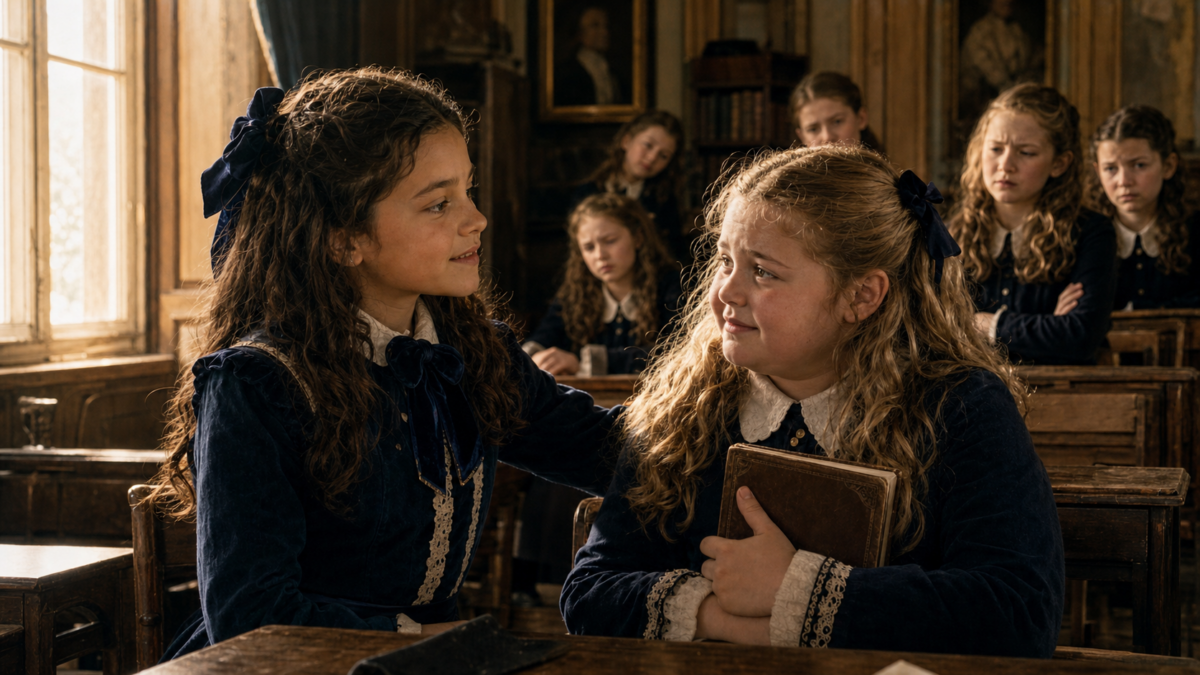
She was a fat childin the least clever, but she had a good-naturedly pouting mouth.
その子は太った子どもで、少しも賢そうには見えなかったが、気立てよく口を尖らせたような口元をしていた。
Her flaxen hairtight pigtailbiting the end of the ribbonstared wonderingly
彼女の亜麻色の髪は、リボンで結ばれたきついおさげに編まれていた。彼女はそのおさげを首のまわりに引き寄せ、机に肘をつきながらリボンの端を噛み、新しい生徒を不思議そうに見つめていた。
frightenedinnocent, appealing eyeswithout any warning, in French, the fat little girl gave a startled jump, and grew quite red in her awed amazement.
デュファルジュ先生がサラに話しかけ始めると、その子は少しおびえたように見えた。そしてサラが前に出て、無邪気で訴えるような目で先生を見つめ、何の前触れもなくフランス語で答えると、その太った小さな女の子はびっくりして跳び上がり、畏れを含んだ驚きで顔を真っ赤にした。
hopeless tearsalmost too muchfamiliar withmix them up withmere trifles.
彼女は、「la mere」が「母」で、「le pere」が「父」だということを覚えようとして、何週間も望みのない涙を流してきた。普通にわかりやすい英語を話せばよいものを、と思っていたのだ。だから、自分と同い年の子が、そうした単語にすっかり慣れ親しんでいるだけでなく、ほかにも数えきれないほどの単語を知っていて、それらを動詞とまるで何でもないことのように組み合わせられるらしいと突然知るのは、彼女にはほとんど耐えがたいことだった。
attracted the attention of Miss Minchin, who, feeling extremely cross at the moment, immediately pounced upon her.
彼女はあまりにじっと見つめ、おさげのリボンをあまりに激しく噛んでいたので、ミンチン先生の注意を引いてしまった。ちょうどその時ひどく不機嫌だったミンチン先生は、すぐに彼女に飛びかかった。
“Miss St. John!” she exclaimed severelyat once!”
「セント・ジョンさん!」と彼女は厳しく叫んだ。「その態度は何ですか。肘をどけなさい。リボンを口から出しなさい。すぐに姿勢を正しなさい!」
tittered
するとセント・ジョン嬢はまた跳び上がり、ラヴィニアとジェシーがくすくす笑うと、今まで以上に赤くなった。実際、そのかわいそうな、ぼんやりした子どもらしい目に涙が浮かびそうに見えるほど赤くなった。
And Sara saw her and was so sorry for her
サラはその様子を見て、とても気の毒に思ったので、彼女を少し好きになり始め、友だちになりたいと思った。
spring into any fray in which someone was made uncomfortable or unhappy.
誰かが居心地悪くさせられたり、不幸な気持ちにさせられたりしている争いごとを見ると、いつもそこへ飛び込もうとするのがサラの性分だった。
rescuing and defending everyone in distress.”
「もしサラが男の子で、数世紀前に生きていたなら」と父はよく言っていた。「彼女は剣を抜いて国中を歩き回り、困っている人をみんな救い、守っていただろう」
in trouble.”
「彼女は人が困っているのを見ると、いつも戦いたくなるのだ」
So she took rather a fancy to fat, slow, little Miss St. John, and kept glancing toward
こうしてサラは、太っていて動作のゆっくりした小さなセント・ジョン嬢に少し好意を持ち、その朝の間ずっと彼女の方をちらちら見ていた。
She saw that lessons were no easy mattershow pupil.
サラは、授業が彼女にとって決して楽ではないこと、また彼女が看板生徒として扱われて甘やかされる心配などまったくないことを見て取った。
Her French lesson was a pathetic thing.
彼女のフランス語の授業は、哀れなものだった。
Her pronunciation made even Monsieur Dufarge smile in spite of himselfgiggledwondering disdain.
彼女の発音は、デュファルジュ先生でさえ思わず微笑んでしまうほどだった。ラヴィニアやジェシー、そしてもっと恵まれた少女たちは、くすくす笑うか、驚き混じりの軽蔑の目で彼女を見た。
But Sara did not laugh.
しかしサラは笑わなかった。
She tried to look as if she did not hear when Miss St. John called “le bon pain,” “lee bong pang.”
セント・ジョン嬢が「le bon pain」を「リー・ボン・パン」と読んだ時、サラは聞こえていないふりをしようとした。
She had a fine, hot little temper of her own, and it made her feel rather savage when she heard the titters and saw the poor, stupid, distressed child’s face.
サラにはサラなりの、立派で激しい小さな気性があった。そのため、くすくす笑う声を聞き、かわいそうで、愚かで、困り果てた子の顔を見ると、かなり荒々しい気持ちになった。
“It isn’t funny, really,” she said between her teeth
「本当はおもしろくなんかないのに」と彼女は本に身をかがめながら、歯の間から言った。「笑うべきじゃないわ」
gathered togetherbundled rather disconsolately
授業が終わり、生徒たちがいくつかのグループに集まって話し始めると、サラはセント・ジョン嬢を探した。そして、彼女が窓際の席で、しょんぼりと丸まっているのを見つけると、そちらへ歩いて行って話しかけた。
by way of beginning an acquaintance, but there was something friendly about Sara, and people always felt it.
彼女は、少女たちが知り合いになるきっかけとして互いによく言うようなことを言っただけだった。しかしサラにはどこか親しみやすいところがあり、人はいつもそれを感じ取った。
“What is your name?” she said.
「あなたのお名前は?」とサラは言った。
To explain Miss St. John’s amazementuncertain thingexhausted by excitement and contradictory stories.
セント・ジョン嬢の驚きを説明するには、新入生というものは、しばらくの間、少しどう扱えばよいかわからない存在であることを思い出さなければならない。そしてこの新入生については、学校中が前の晩、興奮と矛盾したうわさ話にすっかり疲れて眠り込むまで話し続けていたのだった。
ordinary acquaintance.
馬車とポニーとメイドを持ち、インドからの船旅について話せる新入生は、普通の知り合いではなかった。
“My name’s Ermengarde St. John,” she answered.
「私の名前はアーメンガード・セント・ジョンです」と彼女は答えた。
“Mine is Sara Crewe,” said Sara. “Yours is very pretty. It sounds like a story book.”
「私はサラ・クルーよ」とサラは言った。「あなたの名前、とてもきれいね。物語の本に出てきそうだわ」
fluttered Ermengarde. “I–I like yours.”
「気に入ったの?」とアーメンガードはどぎまぎして言った。「わ、私はあなたの名前が好き」
Miss St. John’s chief trouble in life was that she had a clever father.
セント・ジョン嬢の人生における一番の悩みは、賢い父親を持っていることだった。
Sometimes this seemed to her a dreadful calamity.
時にはそれが、彼女には恐ろしい災難のように思えた。
learned by heartfamiliar with
もし、何でも知っていて、七つか八つの言語を話し、何千冊もの本をまるで暗記しているらしい父親を持っていたら、その父親はしばしば、少なくとも教科書の内容くらいはあなたが理解していることを期待する。
And it is not improbable
そして、歴史上の出来事をいくつか覚えたり、フランス語の練習問題を書いたりできるべきだ、と彼が考えるのも、十分ありそうなことだった。
Ermengarde was a severe trial to Mr. St. John.
アーメンガードは、セント・ジョン氏にとって大きな悩みの種だった。
notably and unmistakably dull creature who never shone in anything.
自分の子どもが、どうしてこれほど明らかに、紛れもなく鈍く、何一つ秀でるところのない存在であり得るのか、彼には理解できなかった。
「なんということだ!」と彼は彼女を見つめながら、何度も言ったことがあった。「この子はエライザ叔母さんと同じくらい愚かだと思う時がある!」
If her Aunt Eliza had been slow to learn and quick to forgetstrikingly like her.
もしエライザ叔母さんが覚えるのが遅く、いったん覚えたこともすっかり忘れるのが早かったのなら、アーメンガードは驚くほど彼女に似ていた。
She was the monumental dunce
彼女は学校でも記念碑的な落ちこぼれであり、そのことは否定しようがなかった。
“She must be MADE to learn,” her father said to Miss Minchin.
「この子には、何としても学ばせなければなりません」と彼女の父はミンチン先生に言った。
Consequently Ermengarde spent the greater part of her life in disgrace or in tears.
その結果、アーメンガードは人生の大部分を、叱られているか、涙を流しているかのどちらかで過ごしていた。
彼女は物事を覚えては忘れた。あるいは、覚えていても、それを理解してはいなかった。
profound admiration.
だからサラと知り合いになったあと、彼女が座って深い敬服のまなざしでサラを見つめたのは自然なことだった。
“You can speak French, can’t you?” she said respectfully.
「あなたはフランス語が話せるのね?」と彼女は敬意をこめて言った。
tucking up her feet, sat with her hands clasped round her knees.
サラは大きく奥行きのある窓際の席に上がり、足を折り込むと、両手で膝を抱えて座った。
“I can speak it because I have heard it all my life,” she answered.
「話せるのは、生まれてからずっと聞いてきたからよ」とサラは答えた。
「あなたも、ずっと聞いていたら話せるようになったわ」
「ああ、いいえ、私には無理よ」とアーメンガードは言った。「私は絶対に話せないわ!」
“Why?” inquired Sara, curiously.
「どうして?」とサラは不思議そうに尋ねた。
wobbled.
アーメンガードは、おさげが揺れるほど頭を振った。
queer.”
「さっき私のを聞いたでしょう」と彼女は言った。「私はいつもあんなふうなの。単語が言えないの。とても変なんだもの」
touch of awe in her voice, “You are CLEVER, aren’t you?”
彼女は少し間を置き、それから声に少し畏れを含ませて付け加えた。「あなたは賢いのね?」
dingy square, where the sparrows were hopping and twitteringsooty branches of the trees.
サラは窓の外の薄汚れた広場を見た。そこでは雀たちが、濡れた鉄の手すりや、すすけた木の枝の上で、ぴょんぴょん跳ねたり、さえずったりしていた。
彼女はしばらく考え込んだ。自分は「賢い」と言われるのを何度も聞いたことがあったので、本当にそうなのか、そしてもしそうだとしたら、どうしてそうなったのかを不思議に思った。
mournful look on the round, chubby face, she gave a little laugh and changed the subject.
「わからないわ」とサラは言った。「何とも言えないの」それから、丸くふっくらした顔に悲しそうな表情が浮かんでいるのを見ると、彼女は小さく笑って話題を変えた。
「エミリーを見たい?」とサラは尋ねた。
「エミリーって誰?」とアーメンガードは、ミンチン先生がしたのと同じように尋ねた。
“Come up to my room and see,” said Sara, holding out her hand.
「私の部屋に来て見て」とサラは手を差し出して言った。
二人は一緒に窓際の席から飛び降り、階段を上っていった。
all to yourself?”
「本当なの?」と廊下を通りながら、アーメンガードはささやいた。「あなた、自分だけの遊び部屋を持っているって本当なの?」
make up stories
「ええ」とサラは答えた。「パパがミンチン先生に、私に一部屋持たせてほしいと頼んだの。なぜかというと……ええと、私が遊ぶ時には物語を作って、自分に語るからなの。人に聞かれるのは好きじゃないの」
「人が聞いていると思うと、台無しになってしまうの」
stopped short, staring, and quite losing her breath.
この時には二人はサラの部屋へ続く廊下に着いていた。アーメンガードは急に立ち止まり、目を見開き、すっかり息をのんだ。
「あなた、物語を作るの!」と彼女は息をのんで言った。「フランス語を話せるだけじゃなくて、そんなこともできるの? 本当に?」
simple surprise.
サラは素朴に驚いた様子で彼女を見た。
「だって、誰でも物語くらい作れるでしょう」と彼女は言った。「試したことがないの?」
warningly on Ermengarde’s.
サラは注意を促すように、アーメンガードの手に自分の手を置いた。
quite suddenly; perhaps we may catch her.”
「とても静かにドアまで行きましょう」とサラはささやいた。「それから私が突然ドアを開けるの。もしかしたら、彼女を見つけられるかもしれないわ」
She was half laughing, but there was a touch of mysterious hope in her eyes which fascinated Ermengarde, though she had not the remotest idea
サラは半分笑っていたが、その目には神秘的な希望の気配があり、それがアーメンガードを魅了した。もっとも彼女には、それが何を意味するのか、サラが誰を「見つけたい」のか、なぜ見つけたいのか、まったくわからなかった。
delightfully exciting.
それが何を意味していようとも、アーメンガードは、それが楽しくわくわくする何かに違いないと確信していた。
So, quite thrilled with expectationtiptoe
そこで彼女は、期待で胸を躍らせながら、廊下をつま先立ちでサラについていった。
They made not the least
二人はドアに着くまで、ほんの少しの物音も立てなかった。
threw it wide open.
それからサラは突然取っ手を回し、ドアを大きく開け放った。
neat and quiet, a fire gently burningapparently reading a book.
ドアが開くと、部屋はとても整って静かで、暖炉の火が格子の中でやさしく燃え、そのそばの椅子にはすばらしい人形が座っていて、どうやら本を読んでいるようだった。
「ああ、私たちが見る前に席に戻ってしまったのね!」とサラは説明した。「もちろん、人形はいつもそうするの。稲妻のように素早いのよ」
アーメンガードはサラを見て、人形を見て、またサラを見た。
“Can she–walk?” she asked breathlessly.
「彼女は……歩けるの?」と彼女は息をのむように尋ねた。
「ええ」とサラは答えた。「少なくとも、私は歩けると信じているわ。少なくとも、信じているふりをしているの。そうすると、本当のように思えてくるのよ」
“Have you never pretended things?”
「あなたは何かのふりをしたことがないの?」
“No,” said Ermengarde. “Never. I–tell me about it.”
「ないわ」とアーメンガードは言った。「一度も。私……それについて教えて」
She was so bewitchedattractive doll person she had ever seen.
彼女はこの風変わりな新しい友だちにすっかり魅了されてしまい、エミリーではなくサラを見つめていた。エミリーが彼女の見た中で最も魅力的な人形の人物であったにもかかわらずである。
go on and on doing it always. And it’s beautiful.”
「座りましょう」とサラは言った。「そして私が教えてあげる。とても簡単で、始めると止められなくなるの。いつもどんどん続けてしまうのよ。それに、とても美しいの」
「エミリー、聞いていなければだめよ。こちらはアーメンガード・セント・ジョンよ、エミリー。アーメンガード、こちらがエミリーよ。抱いてみたい?」
「まあ、いいの?」とアーメンガードは言った。「本当にいいの? きれいだわ!」そしてエミリーは彼女の腕の中に置かれた。
Never in her dull, short lifequeer new pupilobliged to go downstairs.
セント・ジョン嬢は、その退屈で短い人生の中で、昼食のベルが鳴って階下へ行かなければならなくなるまで、風変わりな新入生と過ごしたこのような時間を夢見たこともなかった。
strange things.
サラは暖炉前の敷物の上に座り、彼女に不思議なことを話した。
She sat rather huddled up, and her green eyes shone and her cheeks flushed.
サラは少し体を丸めて座っていた。緑の目は輝き、頬は紅潮していた。
She told stories of the voyage, and stories of India; but what fascinated Ermengarde the most was her fancy
サラは船旅の話やインドの話をした。しかしアーメンガードを最も魅了したのは、人形たちが歩き、話し、人間が部屋の外にいる時には好きなことが何でもできるというサラの空想だった。
secret
けれども人形たちは自分たちの力を秘密にしておかなければならず、人が部屋に戻ってくると「稲妻のように」自分の場所へ飛び戻るのだった。
“WE couldn’t do it,” said Sara, seriously. “You see, it’s a kind of magic.”
「私たちにはそれはできないわ」とサラは真剣に言った。「だって、それは一種の魔法なのよ」
Once, when she was relating the story
ある時、サラがエミリーを探した話を語っていると、アーメンガードは彼女の顔が突然変わるのを見た。
put out the light in her shining eyes.
雲がその顔をよぎり、輝いていた目の光を消してしまったかのようだった。
sharplydetermined either to do or NOT to do something.
サラはあまりに鋭く息を吸い込んだので、奇妙で悲しい小さな音がした。それから唇を閉じ、何かをする、あるいは何かをしないと固く決めているかのように、きつく結んだ。
Ermengarde had an idea that if she had been like any other little girl, she might have suddenly burst out sobbing and crying.
アーメンガードは、もしサラがほかの普通の小さな女の子のようだったなら、突然すすり泣き、泣き出していたかもしれないと思った。
But she did not.
しかしサラはそうしなかった。
ventured.
「ど、どこか痛いの?」とアーメンガードは思い切って尋ねた。
「ええ」とサラは少し沈黙したあとで答えた。「でも、体の中ではないの」
Then she added something in a low voice which she tried to keep quite steady
それからサラは、できるだけ落ち着かせようとした低い声で、こう付け加えた。「あなたは、お父さまをこの世界の何よりも愛している?」
Ermengarde’s mouth fell open a little.
アーメンガードの口は少し開いた。
She knew that it would be far fromoccurred to you that you COULD love your father.
自分が父親を愛せるなどとは考えたこともなかった、と言うのは、選抜寄宿学校のきちんとした子どもらしい振る舞いからはほど遠いことだと、彼女はわかっていた。
That you would do anything desperate
父親と二人きりで十分快適に過ごすどころか、十分でも父親と二人きりになるのを避けるためなら、どんな必死なことでもするだろうということも。
She was, indeed, greatly embarrassed.
実際、彼女はひどく困惑していた。
stammered
「わ、私は父にほとんど会わないの」と彼女は口ごもった。「父はいつも書斎にいて、何かを読んでいるの」
ten times over
「私は、自分のパパを世界中の何よりも、十倍も愛しているの」とサラは言った。「それが私の痛みなの。パパは行ってしまったの」
She put her head quietly
サラは小さく丸めた膝の上に静かに頭をのせ、数分間じっと座っていた。
fearfully.
「声をあげて泣くんだわ」とアーメンガードは恐る恐る思った。
But she did not.
しかしサラは泣かなかった。
Her short, black locks tumbled about her ears, and she sat still.
短い黒髪が耳のまわりに乱れて垂れ、彼女はじっと座っていた。
それから彼女は頭を上げずに話した。
“I promised him I would bear
「私はパパに、耐えると約束したの」と彼女は言った。「そして耐えるわ。人は物事に耐えなければならないの」
deep wounds.”
「兵士たちが何に耐えるか考えてみて。パパは兵士なの。もし戦争があれば、行軍や喉の渇き、そしておそらく深い傷にも耐えなければならないのよ」
「それでもパパは一言も言わないわ。たった一言も」
Ermengarde could only gaze at her, but she felt that she was beginning to adore her.
アーメンガードはただサラを見つめることしかできなかったが、自分が彼女を崇拝するほど慕い始めているのを感じた。
different from anyone else.
サラはとてもすばらしく、ほかの誰とも違っていた。
shook back her black locks
やがてサラは顔を上げ、奇妙な小さな笑みを浮かべながら、黒髪を後ろへ振り払った。
“If I go on talking and talking
「もし私が話し続けて」と彼女は言った。「ふりをすることについてあなたにいろいろ話していれば、私はもっとよく耐えられると思うの。忘れるわけではないけれど、もっとよく耐えられるの」
Ermengarde did not know why a lump
アーメンガードには、なぜ喉に何かがつかえたようになり、目に涙が浮かんでいるように感じたのかわからなかった。
huskily
「ラヴィニアとジェシーは『親友』なの」と彼女は少しかすれた声で言った。「私たちも『親友』になれたらいいのに」
“Would you have me for yours? You’re clever, and I’m the stupidest child in the school
「私をあなたの親友にしてくれる? あなたは賢くて、私は学校で一番愚かな子だけれど、でも私……ああ、私はあなたが本当に好きなの!」
thankful
「それはうれしいわ」とサラは言った。「人に好かれると、ありがたい気持ちになるもの。ええ、私たちは友だちになりましょう」
gleam
「それにね」――突然のきらめきが彼女の顔を明るくした――「私、あなたのフランス語の授業を手伝えるわ」